Custom wall art for POD sellers: metal, acrylic, framed, and poster options compared by unit cost and print method
If you search “custom wall art,” every result assumes you want to buy something for your own home. CanvasVows, VistaPrint, NationsPhotoLab, CanvasChamp — all of them are talking to consumers placing personal orders. None of them are talking to you: the POD seller who wants to list and sell custom wall art products through Printful, Printify, or Gooten.
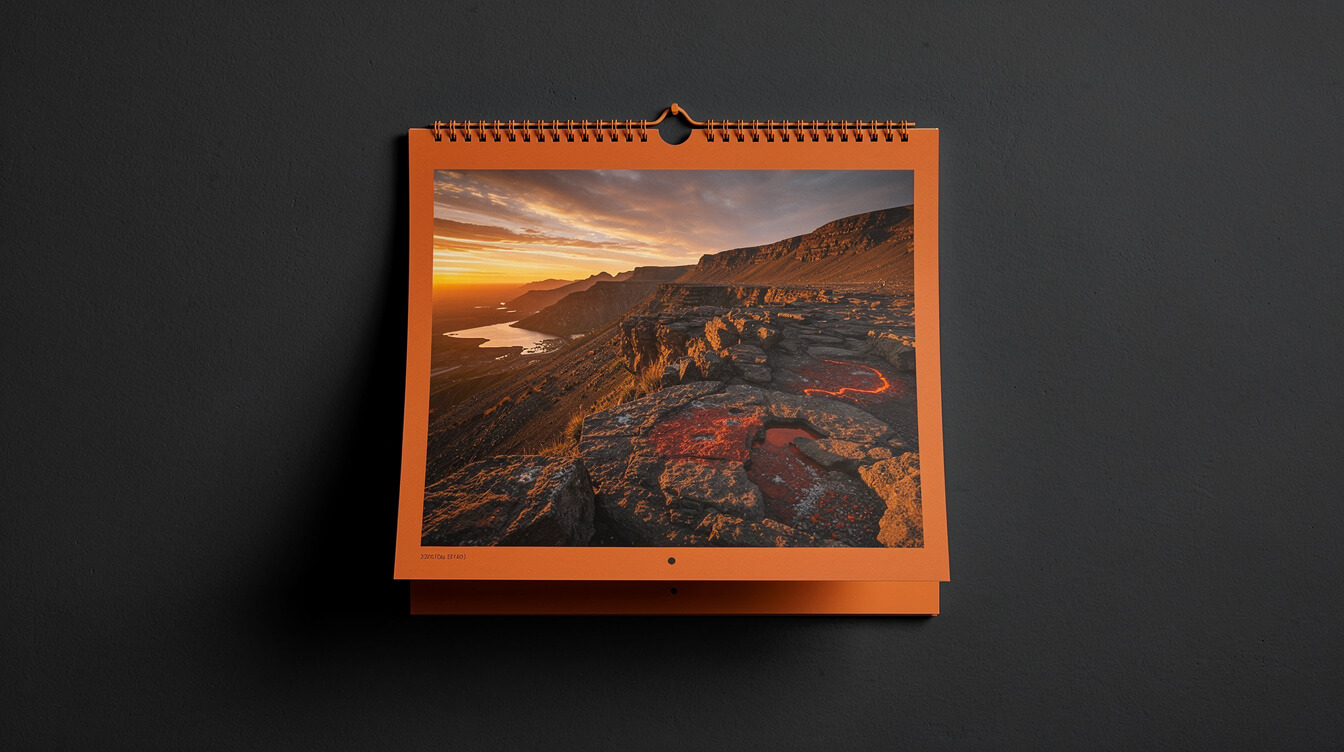
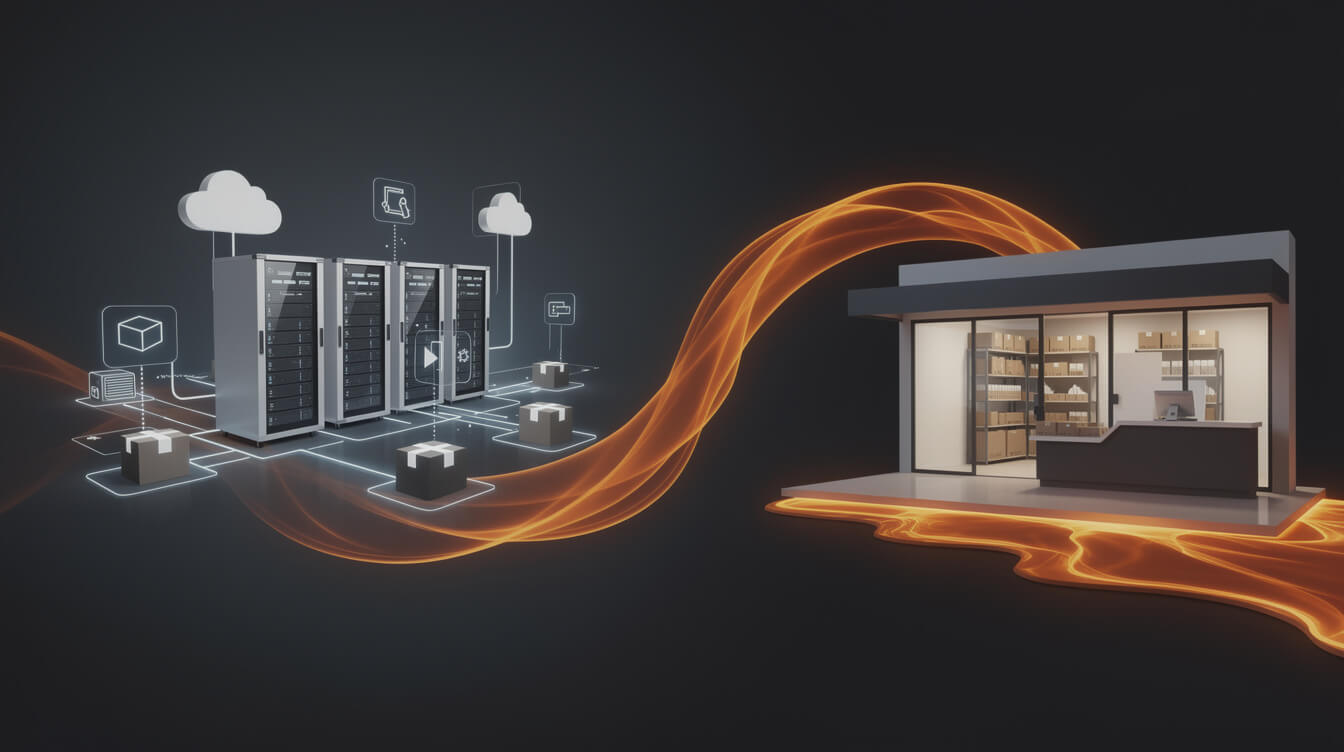
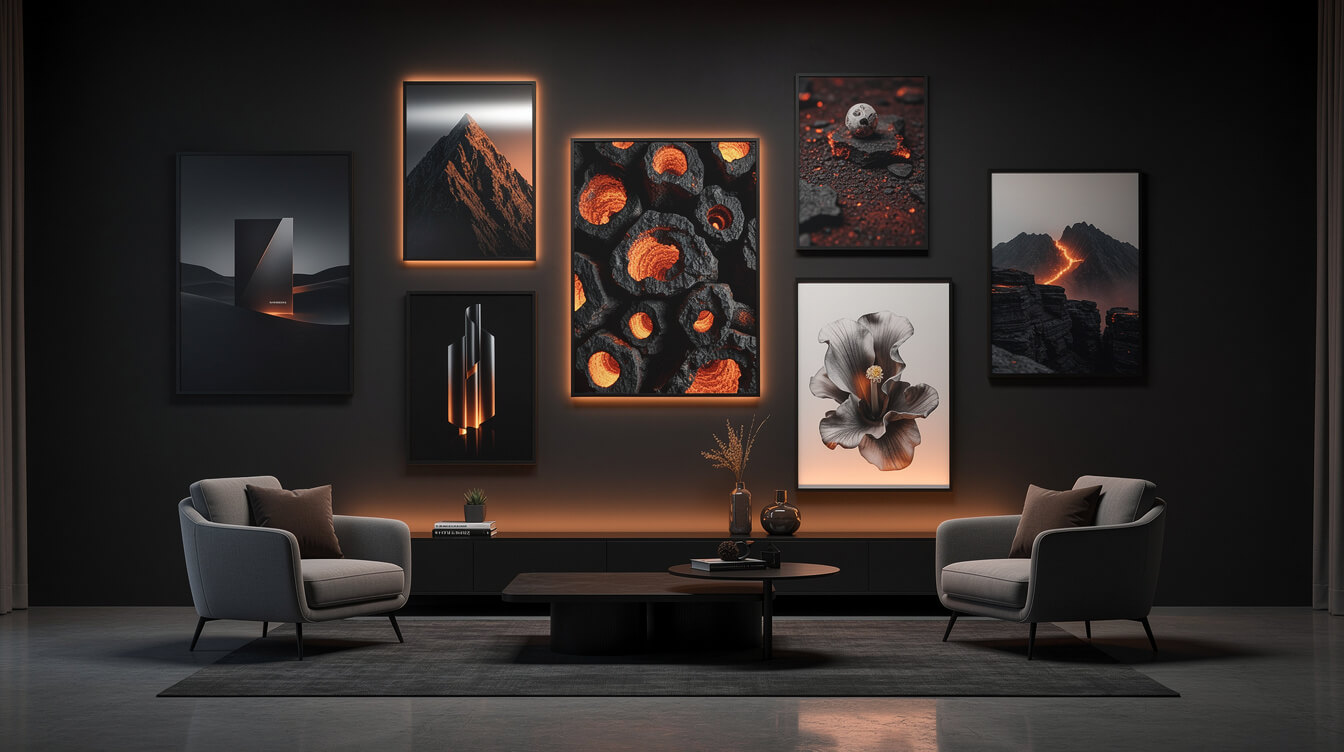
That gap is the reason this article exists. Custom wall art is not a single product — it is a category that spans at least six distinct formats, each with a different print method, a different provider, and a different cost structure. Canvas gets most of the attention (we covered it separately in our custom canvas print deep-dive). This post maps everything else: metal prints, acrylic panels, framed art, poster prints, and wooden prints, with provider availability and unit cost math for each.
What “custom wall art” means in the POD catalog
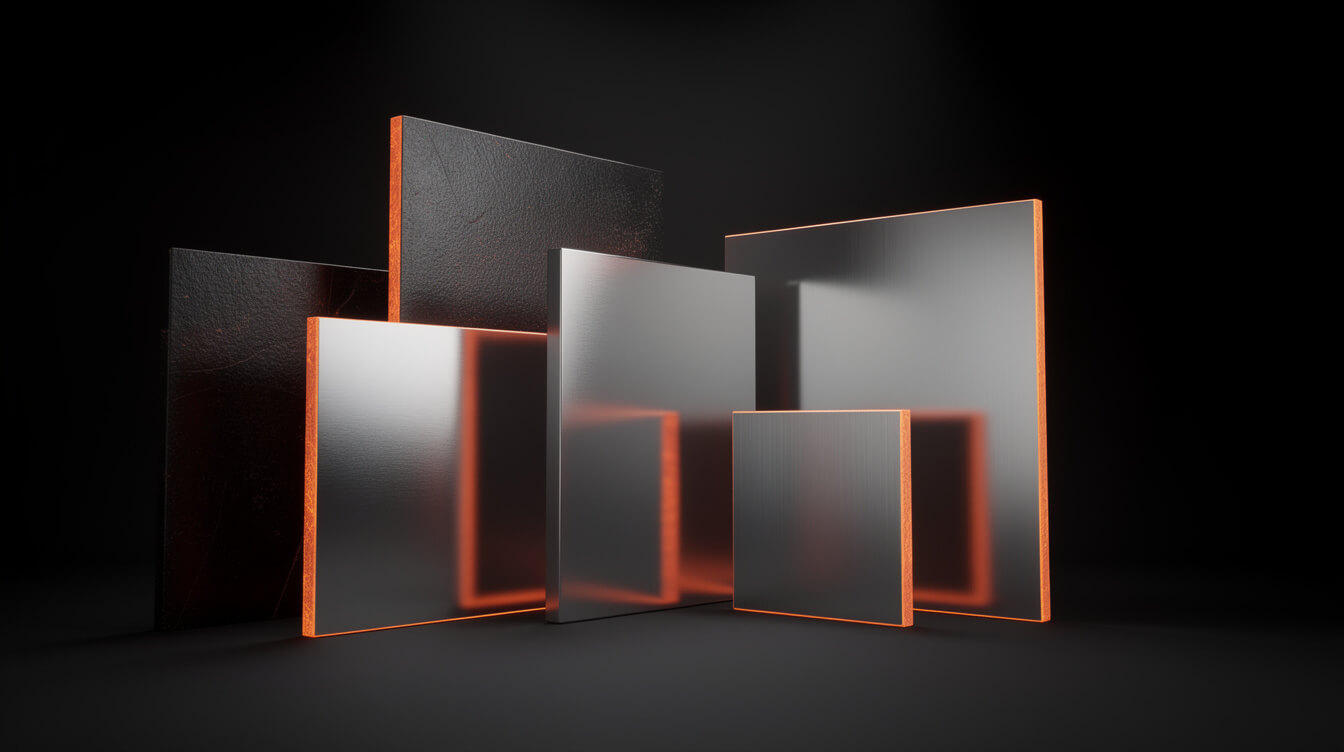
The phrase “custom wall art” collapses six different product types into one search query. For POD sellers, each type is a separate fulfillment decision:
- Canvas prints: Inkjet on cotton or polyester canvas, stretched over a wood frame. The most-searched format. Covered in depth in our canvas print guide.
- Metal prints: Dye-sublimation onto coated aluminum sheet. Vivid, scratch-resistant, no frame required. A distinct product and a distinct fulfillment path.
- Acrylic prints: UV inkjet directly onto acrylic, or face-mount (print sandwiched behind an acrylic panel). Gallery-grade look. Higher AOV, more fragile shipping.
- Framed art prints: Giclée inkjet on archival paper, mounted in an aluminum or wood frame. Ready-to-hang. Mid-range price point.
- Poster prints: Inkjet on paper, unframed. Lowest base cost. Highest volume potential. Widest size range.
- Wooden prints: UV inkjet on birch plywood panels. Rustic aesthetic. Growing demand in home-décor and cabin-culture niches.
Understanding the split matters because not every provider carries every format. A seller who decides to start a wall art store and defaults to a single provider may be leaving two or three formats — and two or three distinct buyer segments — on the table.
Which POD providers carry wall art and what formats each supports

Provider availability is the first thing to confirm before building a wall art catalog. Here is the current picture as of 2026:
Printful
Printful’s wall art catalog is the most straightforward for sellers who want a single fulfillment partner:
- Canvas prints: Yes. Stretched and gallery-wrap options in sizes from 8×10″ to 24×36″.
- Metal prints: Yes. Aluminum prints in sizes from 8×8″ to 30×45″ with both glossy and matte finishes. This is Printful’s strongest non-canvas wall art offering.
- Framed posters: Yes. Paper print with an aluminum frame, available in select sizes (8×10″ through 24×36″).
- Poster prints (unframed): Yes. Available in a wide size range. Base costs are low. These are the entry-level wall art product on Printful.
- Acrylic prints: No. Not in Printful’s standard catalog as of 2026.
- Wooden prints: No. Not in Printful’s standard catalog as of 2026.
Printify
Printify’s network model means product availability varies by vendor and region:
- Canvas prints: Yes, via multiple vendors. Regional availability differs.
- Metal prints: Yes, via select network vendors. Confirm in the product creator by region before launching.
- Acrylic prints: Available via some network vendors. Check the product creator for current availability.
- Framed posters: Available via select vendors, options are more limited than Printful.
- Poster prints: Yes. Wide vendor coverage, lowest base costs in the Printify network.
- Wooden prints (birch): Yes, via select network vendors. Printify is currently the most reliable path to wooden prints at no minimum order.
Gooten
Gooten covers the poster and canvas categories reliably. Metal print availability is more limited. Acrylic and wooden prints are inconsistently available depending on Gooten’s current vendor network. For sellers building a full wall art catalog, Gooten works well as a secondary partner for canvas and poster volume, but Printful or Printify are the better primary choices for format breadth.
Print methods by product type: inkjet, dye-sublimation, and UV-cured acrylic

The print method is not a detail — it determines your design file requirements, your product’s durability, and which substrates are compatible. Three methods cover the full custom wall art category:
Inkjet (giclée): canvas, poster, framed art
Canvas prints, poster prints, and framed art prints are all produced with inkjet technology — specifically giclée inkjet, which uses archival-grade inks in eight or more color channels. The result is a wide color gamut and fade resistance measured in decades under normal indoor conditions.
Design requirements: RGB or CMYK files, 300 DPI minimum at the finished print size. A 16×20″ print requires a file at 4,800×6,000 pixels minimum. The key limitation of inkjet on paper: it absorbs ink into the fiber. Dark backgrounds can look slightly muted compared to a screen preview. For poster prints, test a physical proof before scaling any dark-art design.
Dye-sublimation: metal prints
Metal prints use dye-sublimation — the same core process used in performance sportswear printing, applied to a coated aluminum sheet rather than fabric. The aluminum is coated with a white polymer layer that accepts dye molecules. Heat (375-400 degrees F) converts the dye into a gas that bonds into the coating at a molecular level. When the panel cools, the dye is locked inside the surface permanently.
The result is a print that cannot crack, chip, or peel because there is no ink sitting on the surface — the image IS the surface. Colors come out extremely vivid. The finish options (gloss, semi-gloss, matte) are set at the coating level, not at the printing stage. Dark and saturated images tend to perform especially well on metal compared to paper.
UV inkjet and face-mount: acrylic and wooden prints
Acrylic prints are typically produced as face-mounts: a giclée print on archival paper is flush-mounted behind a clear acrylic panel. The acrylic acts as a lens, intensifying colors and giving the print a gallery depth. Wooden prints use UV-curable inkjet printed directly onto a birch or MDF panel surface. UV inks cure instantly under UV light, and the natural grain of the wood shows through lighter areas of the design — in botanical or abstract art, this can be a visual feature rather than a flaw.
Unit cost comparison: what each format costs at realistic order volumes

Smash print-on-demand. Join the engine room.
One short email a week. Real numbers, real teardowns, the unfiltered economics behind every move.
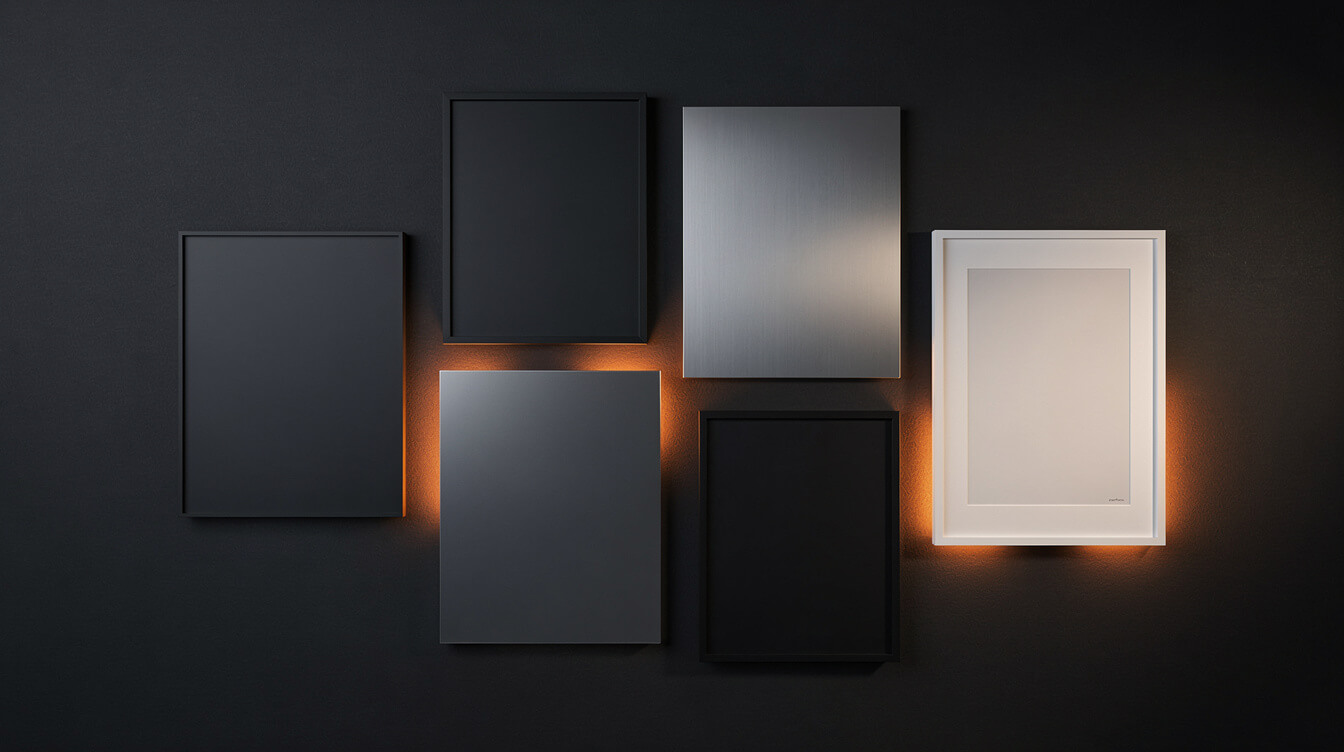
POD pricing is linear — you pay the same per-unit cost whether you ship one or fifty. That is the model’s advantage (no inventory) and its ceiling (no volume discount). Here is the cost structure across the six formats:
Poster prints (unframed)
- Base cost (18×24″): $8-12 depending on paper weight and vendor
- Shipping (flat, rolled): $4-6 domestic
- Retail price: $22-30 | Gross margin: 35-40%
The margin is the thinnest in the wall art category. The volume potential is the highest. Bundle strategy — a 3-poster gallery wall set for $59 — significantly improves per-transaction gross dollar margin versus selling individual prints.
Framed art prints
- Base cost (16×20″ with aluminum frame): $22-30
- Shipping (boxed, heavier): $6-8 domestic
- Retail price: $48-65 | Gross margin: 40-50%
Framed art eliminates the customer’s need to source a frame — they receive a ready-to-hang product. This justifies the higher retail price and the higher margin. The buyer’s perceived value is substantially higher than an unframed poster at the same print size.
Metal prints
- Base cost (12×18″): $18-28
- Shipping (flat, padded): $5-7 domestic
- Retail price: $42-65 | Gross margin: 38-52%
Metal prints command premium retail pricing because of perceived quality. The frameless edge-to-edge print with mounting hardware included reads as a gallery product, not a consumer photo print. Return rate is low because metal does not warp or crack in transit the way canvas can if improperly packaged.
Acrylic prints
- Base cost (12×16″): $28-45
- Shipping (reinforced box): $6-9 domestic
- Retail price: $65-120 | Gross margin: 34-58%
Acrylic is the highest-AOV format in the wall art category. The shipping risk is higher — acrylic can crack at the mounting points if improperly packed. Inspect vendor reviews for damage rates before adding acrylic to your primary catalog.
Wooden prints
- Base cost (12×16″ birch panel): $20-32
- Shipping (padded flat): $5-7 domestic
- Retail price: $45-70 | Gross margin: 38-54%
Wooden prints occupy a distinct aesthetic lane — craft-adjacent and premium. Botanical art, nature photography, and cabin or outdoor themes convert particularly well on wood panels. The print style that works best is high-contrast with limited fine detail, since UV inkjet on wood grain can lose subtle gradients in lighter tonal areas.
The AI-generated art angle: why AI images translate directly to wall print products

Most POD wall art sellers face a design production bottleneck: sourcing high-quality art files that are legally clear for commercial printing. Stock image licenses often prohibit printing for resale. Commissioning original art has lead times and minimum costs. Canva templates produce the same designs every other POD seller is using.
AI-generated images sidestep this. An original, unique art file generated in seconds has no copyright encumbrance — you own the output. MEGA is the research-to-product engine built for exactly this pipeline: generating art assets that go directly from generation to wall print product catalog, without manual design sessions in between.
The resolution math for wall art with current generation models: Flux 2 Pro generates at 2MP minimum resolution (approximately 1400×1400 pixels in square format). At 150 DPI, a 1400×1400 pixel image prints cleanly at 9.3×9.3 inches — suitable for small-format metal and acrylic prints. For poster prints at larger sizes (18×24″), AI-generated images work well as abstract or atmospheric art at 100-150 DPI, where some softness is an aesthetic feature rather than a defect.
The best-converting AI art styles for wall prints: abstract geometric (high contrast, flat color fields), botanical and floral (detail-rich but forgiving at 150 DPI), atmospheric landscape and nature, and dark moody interiors (which translate especially well to metal sublimation given its vibrancy on dark backgrounds). The canvas print format covers the photorealistic portrait end of the market — metal, acrylic, and wooden prints are better suited to AI-generated original art styles.
The Shopify 1% math on wall art pricing

Wall art is a high-AOV category compared to most POD products. That makes Shopify’s platform fees more damaging — and makes the WooCommerce vs Shopify fee math especially clear on a wall art store.
Shopify’s 1% platform override applies to every transaction when you use Printful or Printify as external payment processors. At a $55 AOV metal print store running 200 orders per month:
- Shopify 1% override: $55 x 200 = $110/month = $1,320/year in pure platform tax
- Shopify Basic plan: $29/month = $348/year
- Shopify apps for product variants and file upload: $19-49/month = $228-588/year
- Total Shopify overhead: $1,896-2,256/year
The same wall art store on WooCommerce:
- Hosting: $15-25/month = $180-300/year
- WooCommerce core: free
- Platform override on orders: $0
- Total WooCommerce overhead: $180-300/year
The difference at $55 AOV and 200 orders/month: $1,596-1,956/year in saved overhead. At a $90 acrylic print store running 200 orders/month, the Shopify 1% override alone is $180/month — $2,160/year — before the plan fee and app costs. WooCommerce overhead stays flat at $180-300/year regardless of revenue.
WooCommerce wall art store setup: collections, repeat gifting, and home-decor buyer retention
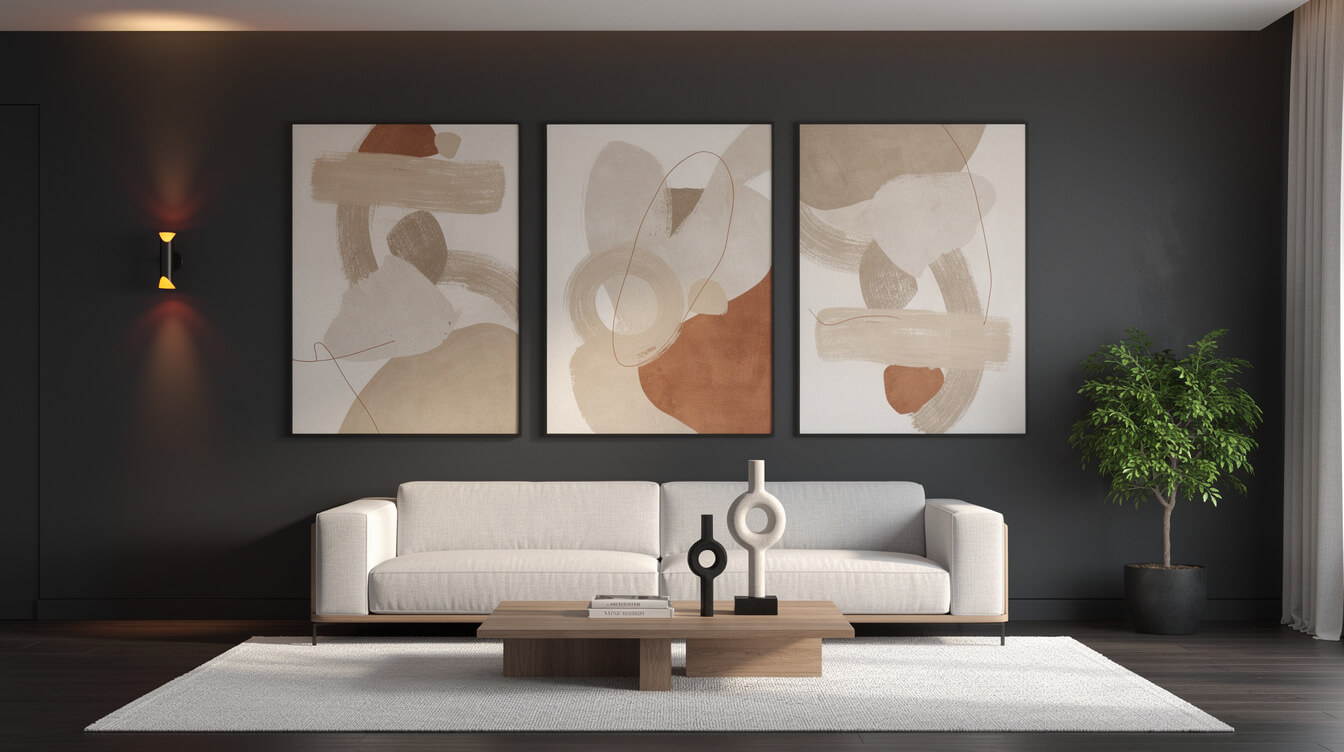
A wall art store organized well retains buyers better than a single-product shop. Home-decor buyers think in rooms, styles, and seasonal decorating cycles — not just single prints. Here is the store architecture that maps to how they actually browse and buy:
Collections by room and style
Organize products by where they hang and what aesthetic they serve:
- Bedroom wall art (calm, muted tones, botanical and abstract)
- Living room statement pieces (larger formats, bold colors, metal and acrylic)
- Home office and WFH wall art (motivational abstract, architectural)
- Kitchen and dining room (botanical, warm palette)
- Dark academia and moody interiors (deep blacks, high contrast — ideal for metal prints)
WooCommerce supports unlimited product categories and custom attributes. A single metal print can appear in “Abstract Art,” “Bedroom Collection,” and “Dark Academia” simultaneously — no duplication, just taxonomy. Shopify’s collection system requires manual curation or paid apps to replicate this behavior.
Gallery wall sets as the high-AOV bundle
A single 18×24″ poster at $26 is a $26 transaction. A coordinated 3-piece gallery wall set (one 18×24″ center piece, two 12×16″ flankers) at $69 is a 2.65x revenue multiplier at the same gross margin percentage. The buyer already intends to fill wall space — offering the set at a slight discount versus buying three individual prints converts at a higher rate than three separate add-to-carts. WooCommerce’s grouped product type makes this straightforward to set up without custom development.
Seasonal demand windows
Wall art has predictable seasonal peaks:
- Q4 (October-December): Holiday gifting peak. Framed art and metal prints are strong gift SKUs — premium, ready-to-hang.
- January-February: New Year redecorating. Abstract and minimalist styles peak.
- March-April: Spring refresh cycle. Botanical and nature themes spike. This is when outdoor landscape metal prints and wooden panels see the biggest volume.
A wall art buyer who purchases in Q4, January, and April is a three-transaction customer per year. WooCommerce’s built-in customer accounts let you reach past buyers at each seasonal inflection point using your own email tool — no platform lock-in, no per-subscriber fee driven by a Shopify app.
Personalization as the retention mechanism
Custom photo-to-wall-art prints — upload your own photo, we print on metal or acrylic — are the highest-retention product type. A buyer who uploads a family photo for a metal print has a product they cannot replicate anywhere else. The WooCommerce product add-on field for file uploads is native functionality — no $19-49/month Shopify app required to collect photo files from customers.
For sellers who want to go deeper on the unframed paper format, our custom poster guide covers poster-specific buyer profiles, size niche breakdowns, and design spec requirements in more depth.
Building a custom wall art catalog: where to start
If you are launching a wall art catalog from zero, here is the practical sequence:
- Start with poster prints and one metal print size. Posters are low-cost to test (no MOQ, low base cost). Metal prints give you a premium SKU to gauge demand without the shipping complexity of acrylic. Add canvas and framed once you know which styles convert in your niche.
- Generate 20-30 unique art files before launch. A wall art store with three products does not give buyers enough browse surface to convert. Aim for a minimum viable catalog of 20 products across 3-4 collections before any traffic acquisition.
- Price to absorb shipping on bundle orders. “Free shipping over $60” works at a 3-poster bundle price point. Single-unit poster pricing rarely justifies free shipping without margin compression.
- Upload to Printful and Printify simultaneously. Different formats, same design files. Metal prints via Printful, wooden panels via Printify, poster volume through whichever has the better paper vendor in your region. Multi-provider redundancy also insulates you against a single vendor backorder situation during Q4.
- Set up product categories before products. Taxonomy is harder to retrofit than to build from the start. A “bedroom wall art” category with ten products in it is more searchable than a flat catalog of ten individual products with no structure.
Custom wall art is one of the highest-AOV non-apparel POD categories. Buyers spend $35-90 on a single product — more than a mug, more than a sticker sheet, and close to the AOV of a framed jersey. The gross margins at that price point, with no Shopify override compounding on every transaction, make a WooCommerce wall art store a structurally sound long-term revenue channel for a POD seller who takes the catalog seriously.
Implement AI. 30x your throughput. Get a 30-min call with the founder.
Drop your details and book a free 30-minute discovery call. Personalized advice on your POD stack, your margin, and where AI fits. No pitch, no fluff.