Custom polo shirts for POD sellers: which providers support them, what embroidery costs, and the corporate client math
If you want to add custom polo shirts to your print-on-demand store, the first thing to know is that most guides online were not written for you. They were written for HR managers ordering 50 matching shirts for a corporate retreat. The economics, the decoration methods, and the platform choice are entirely different when you are a POD seller building a no-inventory storefront and targeting repeat B2B buyers at $35 to $55 per shirt.
This guide covers the practical side: which Printful and Printify catalog options actually support polo shirts, what embroidery costs versus other decoration methods, how to think about unit economics, and why the corporate client niche makes polo shirts one of the more durable repeat-order products in a POD catalog. We also run the Shopify 1% fee math at polo shirt AOV, because that number adds up faster than most sellers expect.
Which POD platforms support custom polo shirts
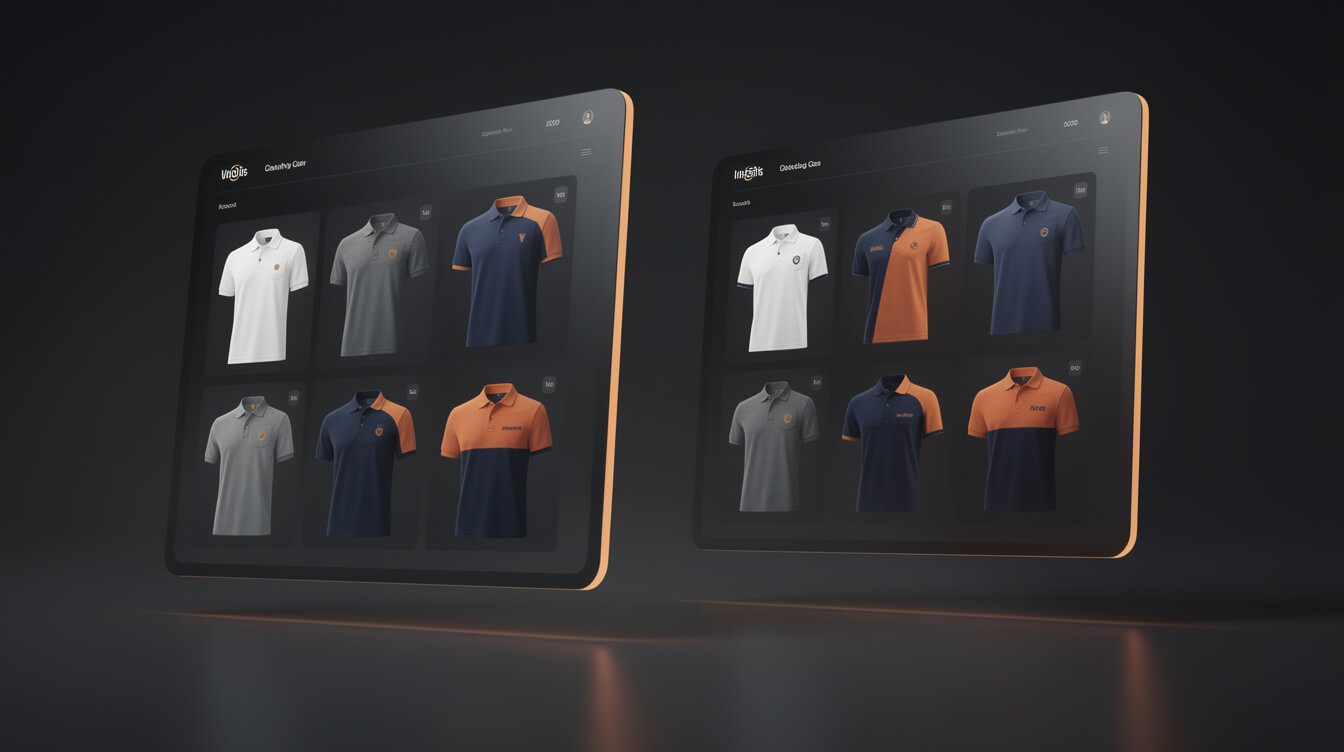
Printful and Printify both carry polo shirts, but the catalog depth differs.
Printful offers a few polo shirt options through its catalog, typically pique-fabric polos from brands like Gildan, Augusta Sportswear, and similar blanks. These are solid-color performance or casual polos with a left-chest embroidery position as the standard decoration method. Printful does not currently support all-over sublimation on polo shirts because the pique or textured fabric construction does not take dye-sublimation evenly. What you get is a classically decorated polo: embroidered chest logo, neck or sleeve options depending on the blank.
Printify has a broader selection because it aggregates multiple print providers. You may find options from providers like Jiffy Shirts or similar partners that carry polo blanks. Some providers in the Printify network do offer direct-to-garment (DTG) printing on polos, but results vary with pique fabrics. For crisp branding, embroidery remains the dominant method across both platforms.
A few practical points when comparing platforms for polo shirts:
- Printful’s embroidery quality is consistent because it is handled in-house at its own facilities. Quality control is tighter.
- Printify’s pricing can be lower on the base blank, but embroidery pricing per provider varies and is not always cheaper once digitization is factored in.
- Both platforms allow you to set up the product once and fulfill on demand. No minimum order is required.
- Check both catalogs before committing to one platform. Polo shirt blank availability changes, and some colors or sizes may only be available through one provider.
If you already run custom embroidered jackets or custom embroidered sweatshirts in your store, polo shirts slot into the same fulfillment workflow. Your digitization file can often be reused across products if the stitch count and size remain consistent.
Embroidery vs sublimation for polo shirts: what POD sellers need to know
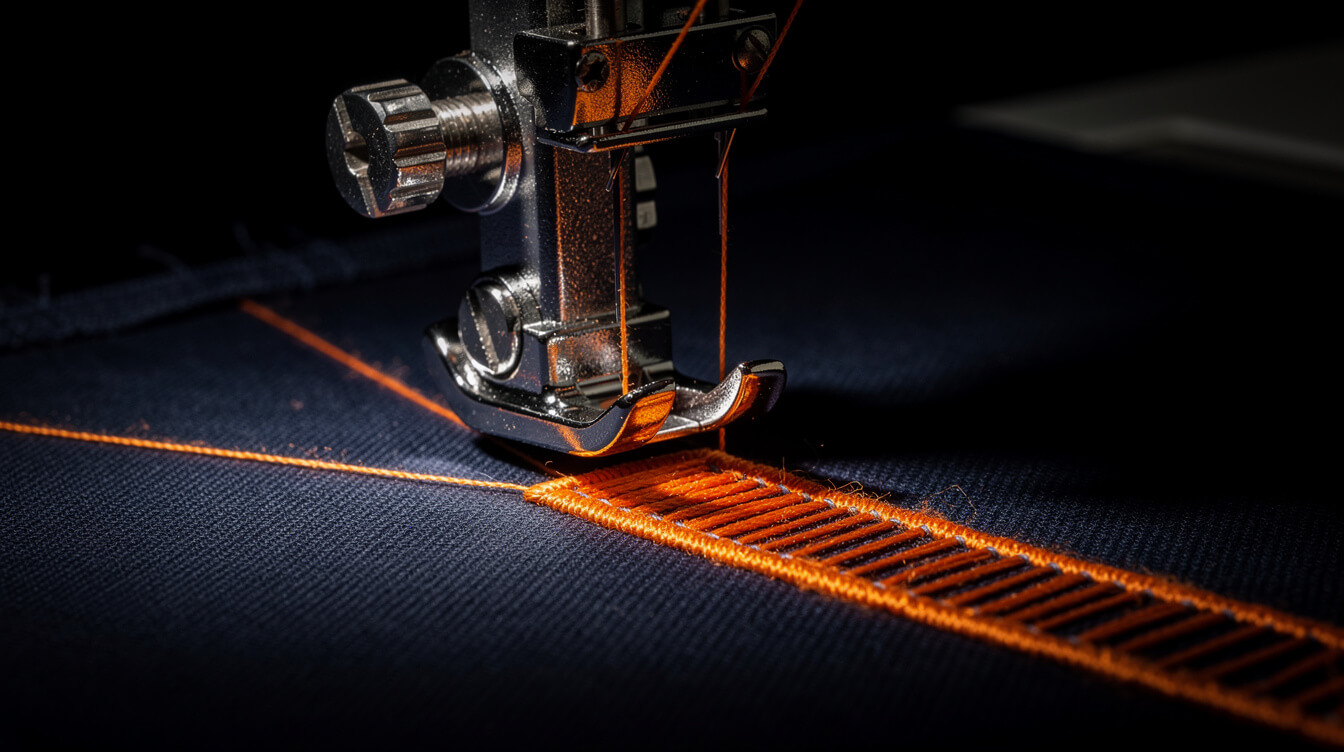
The decoration method question matters more for polo shirts than for most other garments. Here is why.
Polo shirts are almost always made from pique cotton, pique poly-cotton, or performance fabric with a textured knit construction. These textures are not flat surfaces. Dye-sublimation, which requires a smooth, high-polyester surface to bond dyes at the molecular level, does not produce clean results on pique fabric. You end up with bleeding edges, muted colors, and an inconsistent look that does not hold up to washing.
Embroidery, by contrast, sits on top of the fabric. The threaded design is physically sewn into the garment. It works on pique, it is durable over hundreds of wash cycles, and it reads as premium to customers in a way that DTG or sublimation does not always match.
The trade-off is cost and design limitations:
- Embroidery cost: You pay a one-time digitization fee when setting up a new design (typically $20 to $25 on Printful). After that, each shirt incurs a per-stitch cost. A standard 5,000-stitch left-chest logo costs roughly $3 to $5 per shirt. A 15,000-stitch design runs $8 to $12 per shirt on top of the blank cost.
- Design constraints: Embroidery is best for logos, initials, and simple geometric designs. Fine gradients, photographic imagery, and thin text below 6pt do not translate well to thread. If your brand is built around complex artwork, polo shirts are a tighter design space than a hoodie or t-shirt.
- Perceived quality: An embroidered polo reads corporate-ready. Customers paying $40 to $55 for a polo shirt expect embroidery, not a printed transfer. This expectation aligns with the B2B niche that makes polo shirts profitable.
The practical recommendation: use embroidery for polo shirts, keep your logo design clean and simple, and price your products at the upper end of the polo market where the embroidery premium is expected and accepted.
Unit cost math: what a custom polo shirt costs your store
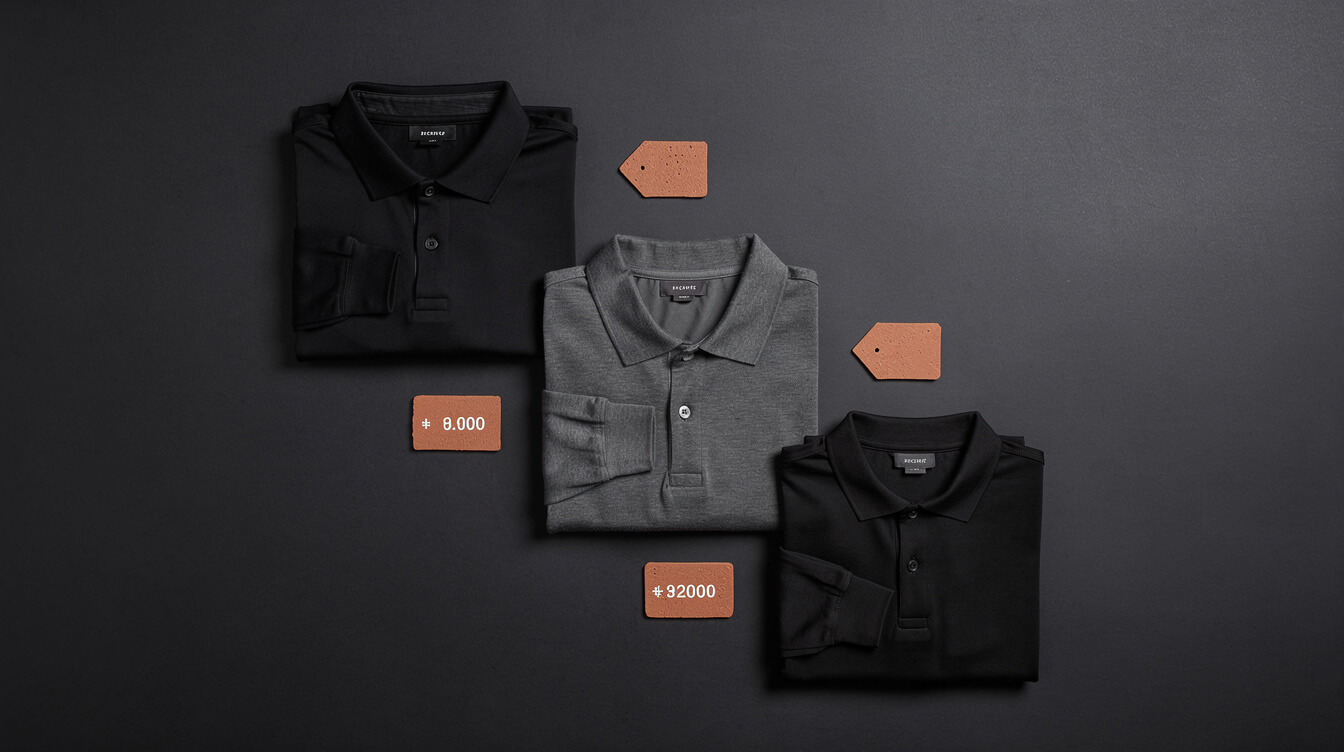
Let us run the actual numbers. The blanks and decoration costs below are representative ranges based on what Printful and Printify providers typically charge. Your actual costs will vary depending on which platform, which blank, and which embroidery stitch count you choose.
Base blank cost: A standard pique polo shirt (Gildan 3800, Augusta 5095, or similar) runs $14 to $20 from Printful depending on color and size. Printify providers can range from $11 to $18 for comparable blanks. Performance polos with moisture-wicking fabric are priced higher, typically $18 to $25.
Embroidery cost: A 5,000-stitch left-chest logo adds roughly $3 to $5. A 10,000-stitch design (logo plus text wrap) adds $6 to $9. Most corporate polo orders use a single left-chest placement, so budget $3 to $5 per shirt for standard complexity.
Total production cost:
- Basic polo with simple left-chest embroidery: $17 to $25 per shirt
- Performance polo with mid-complexity logo: $24 to $34 per shirt
- Premium blank with full front coverage embroidery: $30 to $42 per shirt
Recommended retail pricing: Polo shirts sell in the $35 to $55 range in the custom branded apparel market. A well-positioned basic polo with embroidery should retail at $42 to $48. A performance or premium blank can justify $50 to $65. At a $45 retail price on a $22 production cost, your gross margin is $23 per shirt, or roughly 51%. That is a healthy margin for a product with no inventory risk.
Digitization amortization: If you pay $22 to set up your embroidery file and then sell 50 polo shirts in the first three months, the digitization cost works out to $0.44 per shirt. At 200 shirts, it is $0.11 per shirt. Treat it as a one-time setup cost, not a recurring expense.
For a comparable look at how embroidery costs stack across different garment types, the custom quarter zip economics post covers the same cost structure for a related garment that often sells alongside polo shirts to corporate clients.
The corporate client opportunity: repeat B2B orders at $35 to $55 per polo

Smash print-on-demand. Join the engine room.
One short email a week. Real numbers, real teardowns, the unfiltered economics behind every move.
Here is the most important thing about polo shirts as a POD product: they are a repeat-order product in a way that t-shirts rarely are.
A business that orders polo shirts for its team does not order once and stop. They order when a new employee joins. They reorder when shirts wear out. They place a batch order every time they have a client-facing event, a trade show, or a quarterly team outing. If you are the vendor they trust, you own that recurring revenue stream with no MOQ friction because POD fulfills one shirt at a time.
The B2B corporate apparel market is also a different buyer psychology than the individual consumer. A corporate buyer is not price-shopping between your store and five others the same way a retail consumer might. They are buying based on trust, reliability, and the ability to reorder the same product reliably. Once your digitization file is on file with the buyer and they have tested the quality, switching costs go up significantly.
Practical positioning for corporate polo clients:
- No minimums: Most B2B apparel vendors require 12, 24, or 50 shirt minimums. POD has none. Lead with this in your product description and customer communication. A company that needs 3 polo shirts for a new hire cohort will choose you over a traditional printer every time.
- Consistent reorders: Store the customer’s approved design file. Make it easy for them to reorder without re-uploading or re-approving. This is a key service differentiator for small business clients.
- AOV impact: A company ordering 10 polos at $45 each is a $450 order. At 5 such orders per month, that is $2,250 in revenue. At 51% gross margin, that is $1,147 in gross profit from one product category with no inventory risk.
- Event and team-building demand: Polo shirts spike when companies have events, new office openings, or team-building programs. Position your store to capture this seasonal demand by targeting local business directories, LinkedIn outreach, or Google local listings with “no minimum custom polo shirts” as the hook.
MEGA automates the product research and listing pipeline that lets you identify which niche segments have the highest corporate apparel demand, then populate your WooCommerce store with those products in a fraction of the time it takes to do it manually. For a product like polo shirts with a clear B2B buyer, that pipeline advantage compounds quickly.
What Shopify’s 1% fee takes from your polo shirt sales
Polo shirts have a higher AOV than t-shirts or phone cases. That makes the Shopify 1% platform override fee more damaging, not less. Let us run the math.
Shopify charges a 0.5% to 2% transaction fee on every sale unless you use Shopify Payments. For most sellers using Printful or Printify as fulfillment partners with their own payment processor, the effective transaction fee is 1%. At polo shirt AOV, here is what that costs:
- $45 polo shirt sale: Shopify takes $0.45 per transaction. That sounds small.
- 100 polo shirts per month: $45 per month in Shopify fees on polo sales alone.
- 500 polo shirts per month: $225 per month in Shopify fees from this one product type.
- 1,000 polo shirts per month: $450 per month, or $5,400 per year, paid directly to Shopify from your polo revenue.
At a $23 gross margin per shirt, Shopify’s $0.45 fee represents 2% of your actual profit, not 1% of revenue. It looks like 1% on the surface and behaves like 2% on your bottom line.
WooCommerce charges zero transaction fees. You pay payment processor fees (Stripe is typically 2.9% plus $0.30, the same rate you would pay on Shopify), but there is no additional platform override. At 500 polo shirts per month, the WooCommerce seller keeps $225 per month that the Shopify seller hands to Shopify. Over a year, that is $2,700.
For a product with strong corporate repeat-order potential, the platform fee math matters more than it does for a one-time novelty purchase. Polo shirts are a vehicle for building a durable revenue relationship with business clients. Every dollar you retain matters.
The full platform economics are covered in the custom zip up hoodie POD economics post, which runs the same comparison across a similar premium apparel product category.
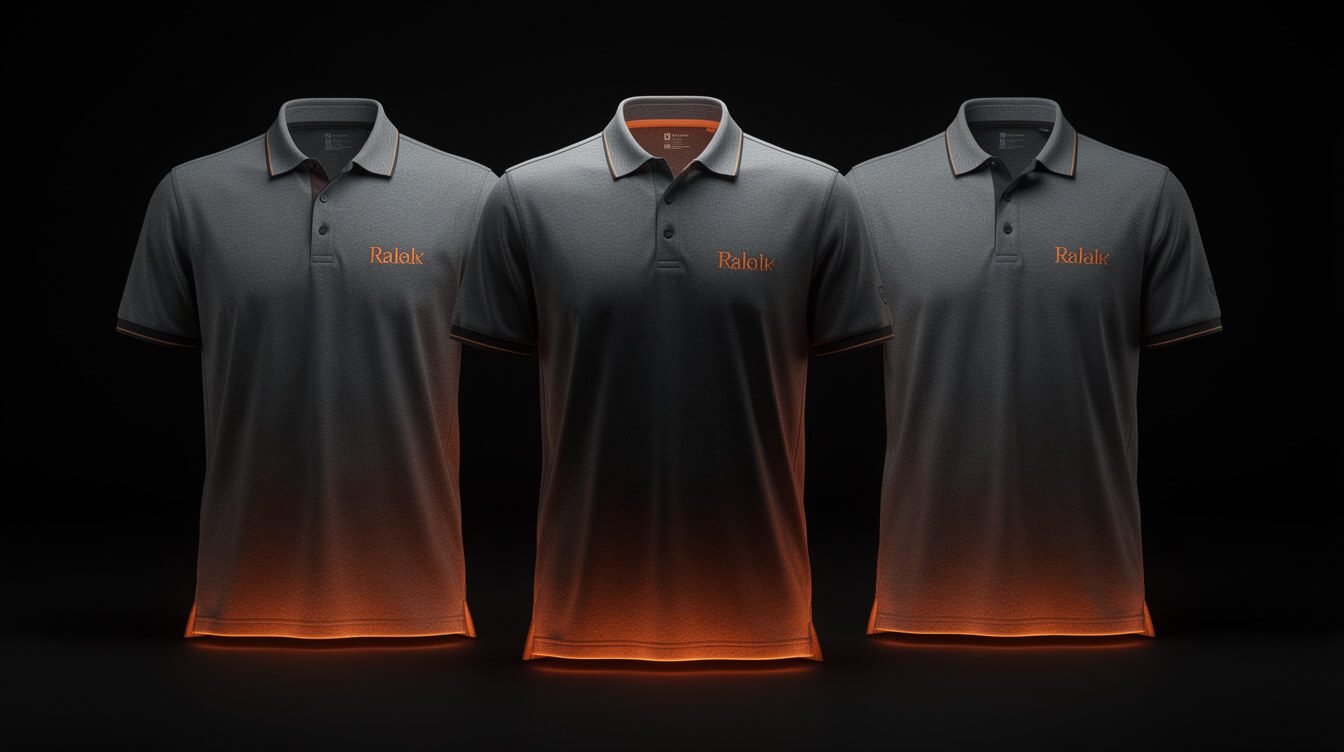
Research niches, build product lines, list polo shirts in under 7 minutes
MEGA is the research-to-product pipeline for POD sellers. Find the right niche, generate optimized listings, and publish to WooCommerce without the manual Canva workflow.
How to add custom polo shirts to your POD store efficiently
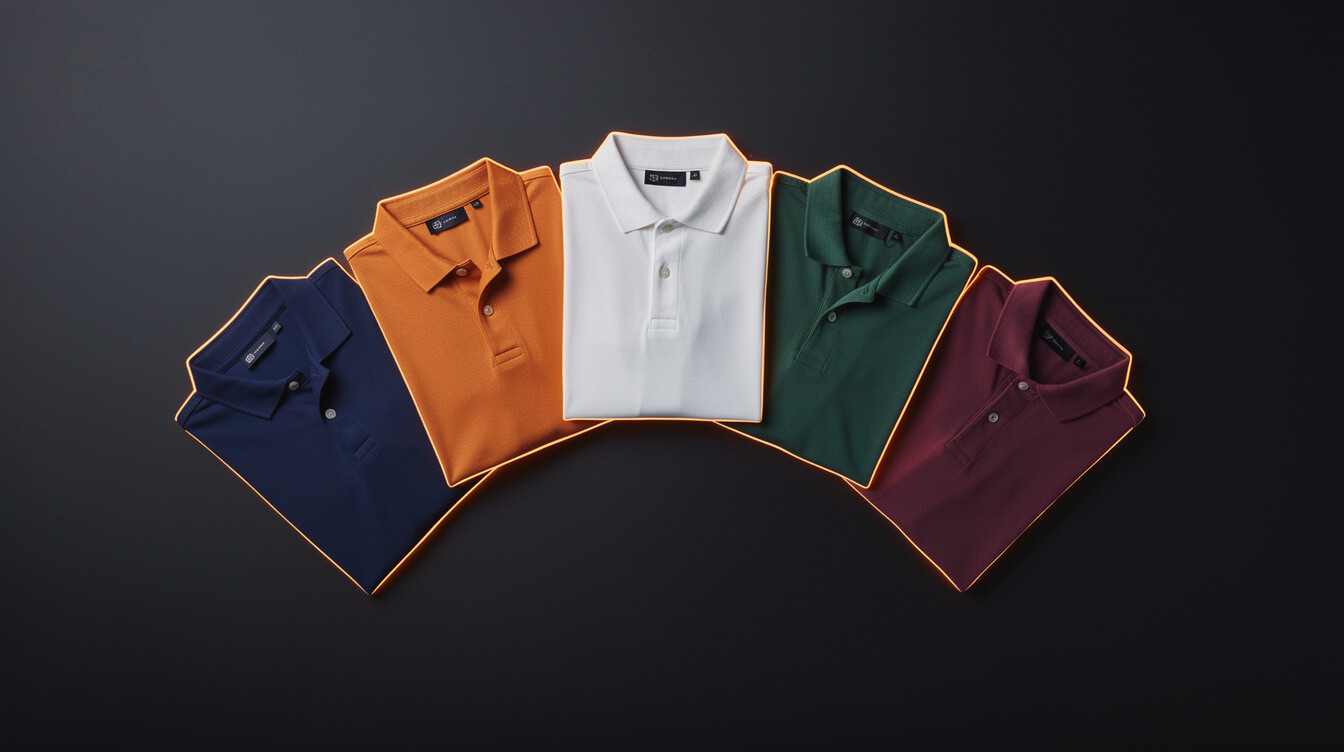
Setting up polo shirts in your POD store involves a few steps that differ from simpler products like t-shirts or phone cases. Here is the process in practical order.
Step 1: Get your design digitized. Before you can list a polo shirt with embroidery, you need an embroidery-ready digitization file. Printful handles this when you upload your design through their product creation tool. The one-time fee is deducted from your first order or charged upfront depending on the workflow. You receive a digital stitch file that Printful keeps on record for all future orders. Printify providers each handle digitization separately, so if you switch providers, you may need to re-digitize.
Step 2: Choose your blank carefully. Not all polo blanks photograph equally well. Order samples before listing. Check the fit (slim, regular, relaxed), the collar stiffness, and how the embroidery sits on the actual fabric. A single sample order costs $18 to $30 and saves you from customer returns based on fit expectations.
Step 3: Write product listings that speak to the corporate buyer. Most POD sellers write product descriptions for individual consumers. For polo shirts, write for a purchasing manager or small business owner. Mention: no minimum order, consistent color matching across reorders, reliable sizing, and the turnaround time. These are the decision criteria for B2B buyers, not individual consumers.
Step 4: Set up a size run with clear measurements. Corporate buyers order across multiple sizes in a single transaction. Your size chart needs to be accurate and detailed. Pull the actual measurements from the blank manufacturer’s spec sheet and include them in your listing.
Step 5: Consider offering 2 to 3 blank options at different price tiers. A $42 entry polo and a $55 performance polo serve different buyers. Some corporate clients have a budget they are working within. Others want the premium option and will pay for it. Having both lets you capture both segments from a single product category.
Sellers building out a broader corporate apparel line often start with polo shirts alongside embroidered jackets. The customer who orders polo shirts for their team often needs a jacket option for colder months. That cross-sell is built into the buyer profile. The custom embroidered jackets for POD stores post covers how to build that adjacent product line.
Final thoughts on custom polo shirts as a POD product
Polo shirts are not the most exciting product in a POD catalog. They are not the viral item you see shared on social media. They are something better: a repeat-order, high-AOV product with a buyer profile that rewards reliability over novelty.
The mechanics are straightforward. Both Printful and Printify support polo shirts with embroidery as the primary decoration method. Unit economics are solid at $17 to $34 production cost and $42 to $65 retail. The corporate client niche offers recurring revenue that compounds over time without requiring you to constantly acquire new customers.
The one question worth asking before you add polo shirts to your store is the platform question. If you are running on Shopify, the 1% override fee is a real cost on a $45 to $55 transaction. At 500 shirts per month, that is $225 per month you are paying Shopify instead of keeping. WooCommerce eliminates that cost entirely. For a product category built around repeat B2B orders, the platform economics deserve as much attention as the product economics.
If you want to build out the corporate apparel niche systematically, the research-to-product pipeline matters as much as the individual product decision. That is what MEGA is built to do: identify the right niche segment, generate optimized product listings, and publish them to your WooCommerce store without the six-hour Canva workflow that most POD sellers are still doing by hand.
Implement AI. 30x your throughput. Get a 30-min call with the founder.
Drop your details and book a free 30-minute discovery call. Personalized advice on your POD stack, your margin, and where AI fits. No pitch, no fluff.