Custom print on metal for POD stores: how ChromaLuxe sublimation works, which providers carry it, and the wall art margin math
The wall art market has a premium tier most POD sellers leave untouched. Custom print on metal is the product category where canvas gives way to aluminum, and retail prices climb past $80 without buyers flinching. This guide covers exactly what metal prints are, how the sublimation process works, which POD providers carry them at no minimum order, and what the unit cost math looks like at a $60-100 retail price point. By the end, you will have a clear picture of whether metal prints fit your store and how to price them for real margin.
What custom print on metal is (and why it sits above canvas in the wall art stack)
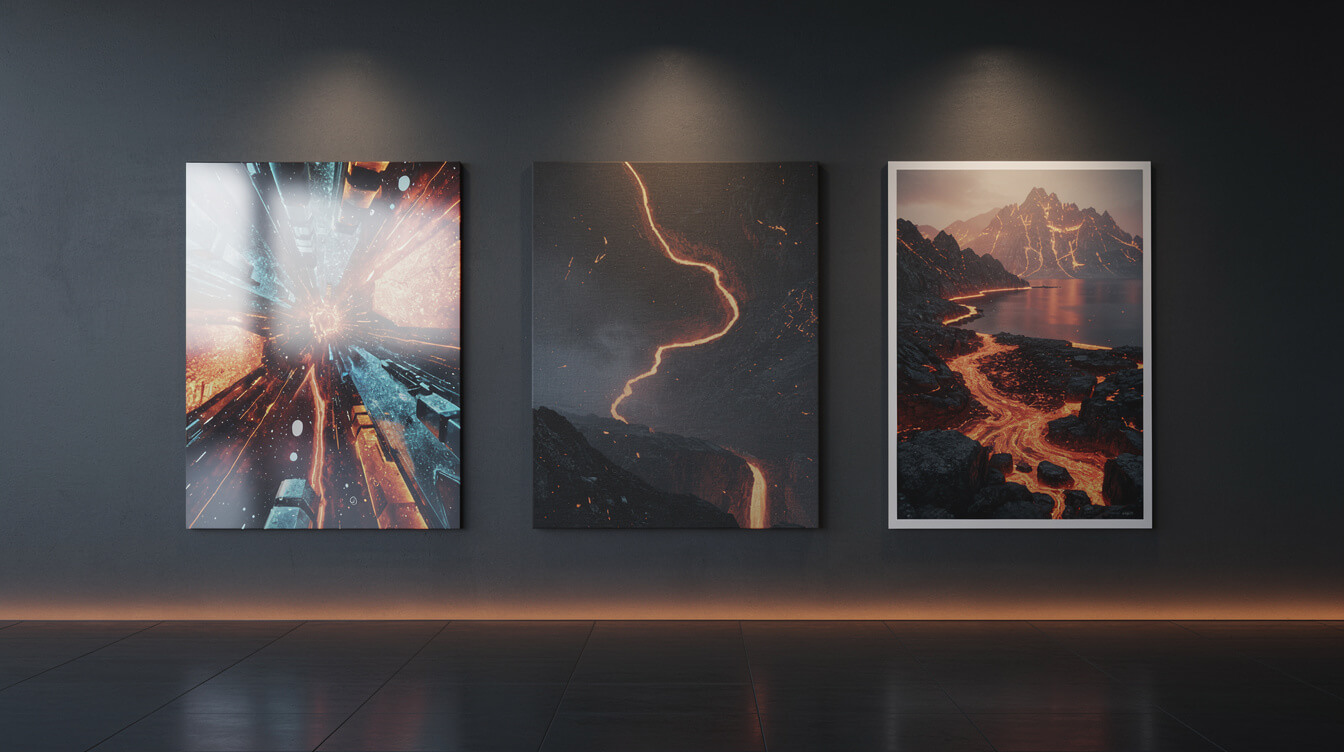
A metal print is a photographic or graphic image printed onto a coated aluminum panel using dye sublimation. The substrate is a thin, rigid sheet of aluminum (typically 0.045 inches) sold under the ChromaLuxe brand name when it comes from the dominant panel manufacturer. A polymer coating is baked onto the surface. That coating is what makes sublimation possible. The dye bonds into the polymer at the molecular level rather than sitting on top of it.
The practical result: colors that look like they are coming from inside the surface. Blacks are deep and pure. Highlights have a luminous quality that matte canvas cannot match. The surface is waterproof and scratch-resistant. There is no glass, no frame, no mat board. A metal print hangs directly on the wall, usually via a floating mount that leaves a quarter-inch gap between the panel and the surface.
For POD sellers, the wall art category breaks into three tiers by price and perceived value:
- Tier 1: Posters. Paper or cardstock, retail $15-30. Low barrier, low AOV, high competition.
- Tier 2: Canvas prints. Inkjet on artist canvas, stretched over wood frame, retail $35-75. Mid-market, strong demand, established category. See our full canvas print guide for the unit economics.
- Tier 3: Metal and framed prints. Aluminum sublimation or framed photo prints, retail $60-120+. Premium tier. Buyers self-select by price. Competition is thin.
Custom print on metal competes at the top of Tier 3. Buyers who search for metal prints already expect to spend $80 or more. That expectation is a structural advantage for your margins.
How ChromaLuxe sublimation works: the dye-infusion process in plain English
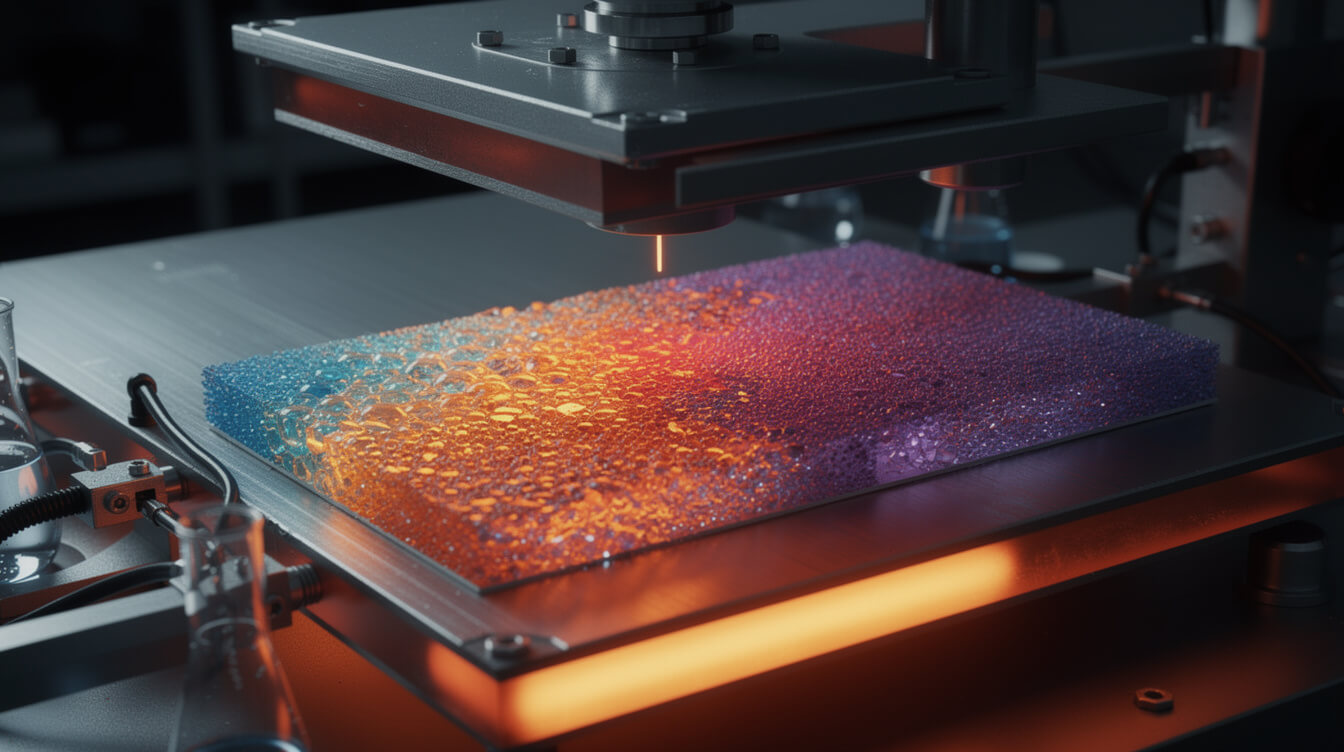
Sublimation is a phase-change process. The dye starts as a solid, converts directly to gas under heat and pressure, and then bonds into the polymer coating on the aluminum panel as it cools. No liquid phase. No surface film. The dye becomes part of the coating itself.
Here is what the production process looks like at a fulfillment facility:
- File prep: The image is mirrored and printed on sublimation transfer paper using dye-sub inks. Standard resolution requirement: 150 DPI at print size. A 16×20″ print needs a 2,400×3,000px minimum file.
- Panel prep: The ChromaLuxe panel is cleaned, inspected, and placed face-up on the heat press bed. The polymer coating is on the front surface.
- Press: The transfer paper is laid face-down on the panel. A heat press closes at 380-400 degrees F with firm pressure for 60-90 seconds. The dye converts from solid to gas and drives into the polymer.
- Reveal: The transfer paper is peeled back hot. The image is permanent before the panel fully cools.
Because the dye is inside the polymer rather than on top of it, the image cannot scratch off, peel, or fade in normal indoor conditions. This is a key selling point versus canvas prints, where the inkjet ink sits on the canvas surface and can crack if the frame flexes. Metal prints do not crack. They do not warp under humidity. They do not need glass or UV protection films.
One important substrate note: sublimation on metal requires a polymer-coated aluminum panel. Plain aluminum will not accept dye-sub inks. The ChromaLuxe brand name matters because it is the coating specification, not just the panel material. Uncoated metal, anodized aluminum, or any non-polymer surface will produce a washed-out, patchy result.
ChromaLuxe is the dominant supplier to the professional photo lab and POD space. Epson Dye Sub, Unisub, and a handful of other manufacturers also produce polymer-coated aluminum panels, but ChromaLuxe is the brand name you will see most often in provider catalogs and product descriptions.
Which POD providers carry metal prints in their 2026 catalog
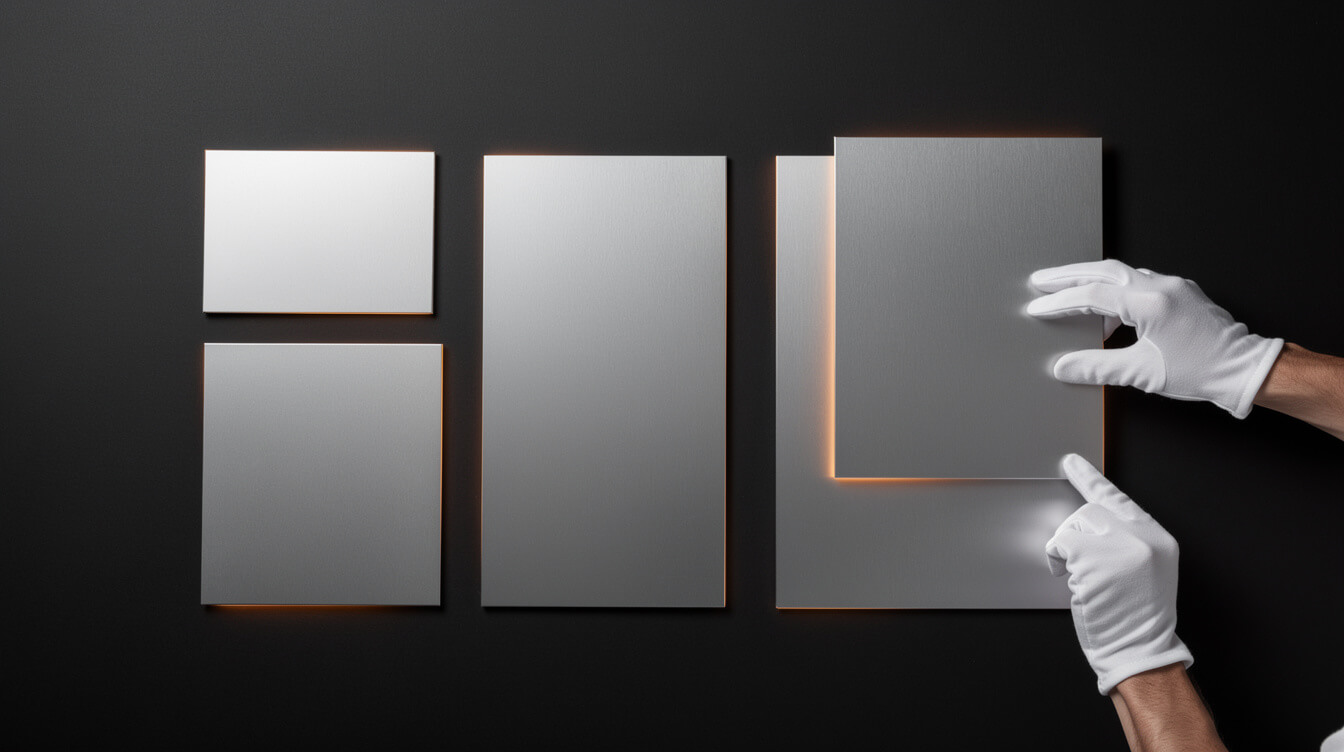
This is the most important research step before you invest time building metal print listings. Catalog availability varies significantly across providers, and some major names do not carry metal prints at all.
Printful: As of mid-2026, Printful does not carry ChromaLuxe aluminum metal prints as a distinct product in their standard catalog. They carry framed posters (snap-frame, no glass) and canvas, but not dye-sublimated aluminum panels. Verify this in your Printful dashboard before building listings, because catalog updates happen without announcement.
Printify: The Printify network includes vendors that do carry metal prints under various names: “metal photo print,” “aluminum photo print,” “chrome metal print.” Availability depends on which vendor is selected and which sizes they support. Standard sizes commonly available: 8×10″, 11×14″, 16×20″, 20×30″. Check the product creator in your Printify account and search for “metal print” or “aluminum print.” Vendor availability varies by region.
Prodigi: Prodigi carries metal prints under their “HD metal print” category. They serve primarily the UK and European markets, with US fulfillment available. Response times are longer than domestic-only providers. Worth evaluating if your audience skews UK or EU.
Gooten: Gooten’s catalog includes metal photo prints for the US market. Production is typically domestic, which keeps shipping times competitive. Check their catalog portal for current size options and pricing.
ArtisanHD and Bay Photo Lab: These are production labs, not dropship providers. They print and ship to you, not directly to your customer. Relevant only if you move to a batch model with warehousing. Production quality is excellent but they are not relevant for pure-play no-MOQ POD.
The actionable step: log in to your Printify account, search “metal print” in the product creator, and check which vendors are available for your ship-to country. Verify size options, base prices, and production times. Do this before publishing any metal print listings, because catalog availability changes.
For sellers already using framed prints as a premium tier, metal prints are a natural adjacent listing. Same buyer intent, different substrate, higher perceived modernity.
Unit cost math: from $25-45 base cost to $60-100 retail
Smash print-on-demand. Join the engine room.
One short email a week. Real numbers, real teardowns, the unfiltered economics behind every move.
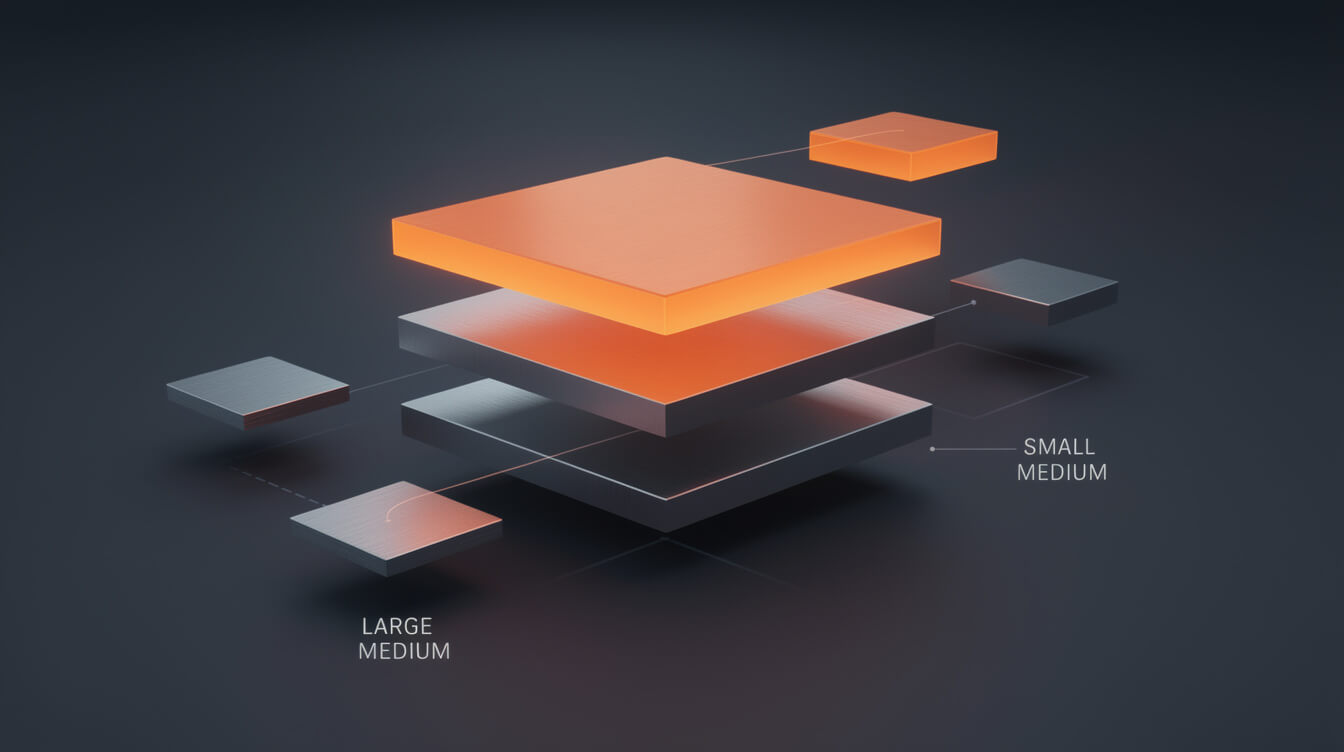
Metal prints are a premium product with premium base costs. The margin math only works if you price accordingly. Here is how the numbers break down at three common sizes.
8×10″ metal print:
- Base cost: $12-18 depending on provider and vendor
- Shipping: $6-9 (rigid, packaged with corner protection)
- Landed cost: $18-27
- Retail price: $45-55
- Gross margin: 33-51%
11×14″ metal print:
- Base cost: $18-26
- Shipping: $7-10
- Landed cost: $25-36
- Retail price: $60-75
- Gross margin: 35-50%
16×20″ metal print:
- Base cost: $28-42
- Shipping: $9-12
- Landed cost: $37-54
- Retail price: $80-100
- Gross margin: 30-49%
The dollar margin per unit matters most at low monthly order volumes. At 50 orders per month at an $85 AOV with a 40% gross margin, you keep $34 per sale, or $1,700 gross per month from one size. That is the same gross as 170 poster sales at $10 gross each. One product line, one-third the order volume.
Bundle opportunities improve the math further. A two-panel set (matching 11×14″ prints for a gallery wall) at $125-140 retail significantly improves the dollar margin per transaction. A mini gallery trio of three 8×10″ panels at $110-130 retail is another bundle format that converts well because it solves the complete wall, not just one panel.
One note on shipping: metal prints ship in rigid mailers or corner-protected cardboard boxes. They are heavier and bulkier than canvas rolls. Verify the shipping estimate in your provider’s product creator before setting retail prices. A $12 shipping cost on an $18 base item changes the math significantly.
MEGA automates the image generation, product listing creation, and SEO metadata for premium wall art products like metal prints, which means you spend 7 minutes per product instead of a full afternoon per design. Learn how the pipeline works at mega.management.
Who buys metal prints: the premium buyer profile and what they expect
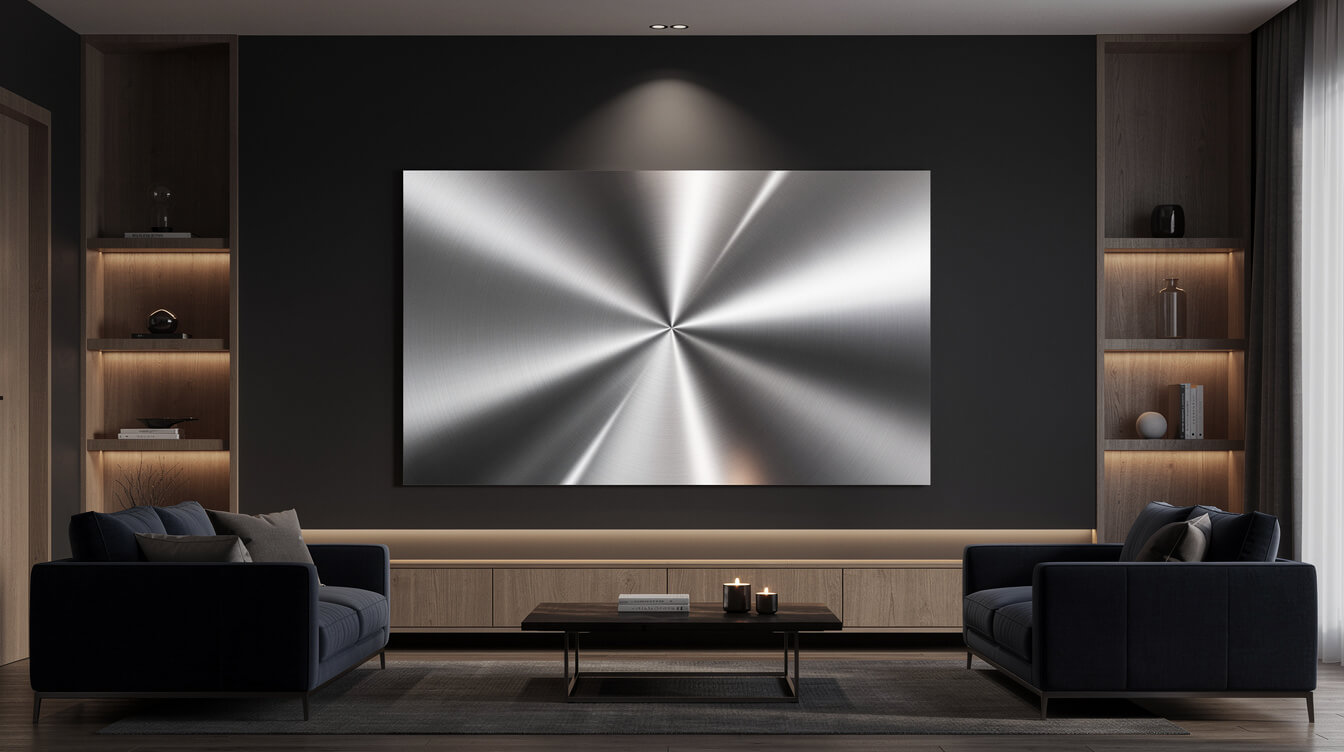
Metal print buyers are not the same buyers as poster buyers or even canvas buyers. Understanding who they are determines how you write your product descriptions, which images you generate, and which niches you target.
Homeowners upgrading their main living space. This is the largest segment. A person spending $80 on a metal print is decorating a space they want to impress: a living room, home office, or entryway. They are not buying budget filler. They expect the product description to acknowledge the premium nature of the format. No glass, no glare, scratch-resistant, waterproof, colors that glow from within. Write your listings to that expectation.
Photography enthusiasts and collectors. This buyer knows exactly what ChromaLuxe is. They are buying the format because they have done the research and decided aluminum is the best substrate for the image. For this buyer, your product description should confirm technical details: polymer-coated aluminum, sublimation dye infusion, glossy or matte finish option (if your provider offers both). Accuracy builds trust with this segment.
Premium gift buyers. Metal prints at the $60-90 price point sit in the “meaningful gift” category. Birthday gifts, anniversary presents, housewarming gifts. The emotional context of the purchase reduces price sensitivity significantly. A buyer spending $85 on a gift is not price-shopping. They want certainty about quality. Product photography that shows the print mounted on a wall, with scale context, converts better than a flat product shot.
Interior designers and Airbnb operators. This is a B2B-adjacent segment that orders multiple panels at a time for projects. A boutique hotel operator or an Airbnb host fitting out six rooms might buy 18-24 metal prints in one order. These buyers look for catalog depth (multiple sizes, consistent quality) and reliable fulfillment times. If you develop a relationship with this segment, the LTV is significantly higher than individual consumer buyers.
What all of these buyers share: they have already decided they want a metal print. Your listing does not need to convince them to want the format. It needs to convince them that your specific design or niche is the right one for their wall.
AI-generated art on metal: no photography portfolio required
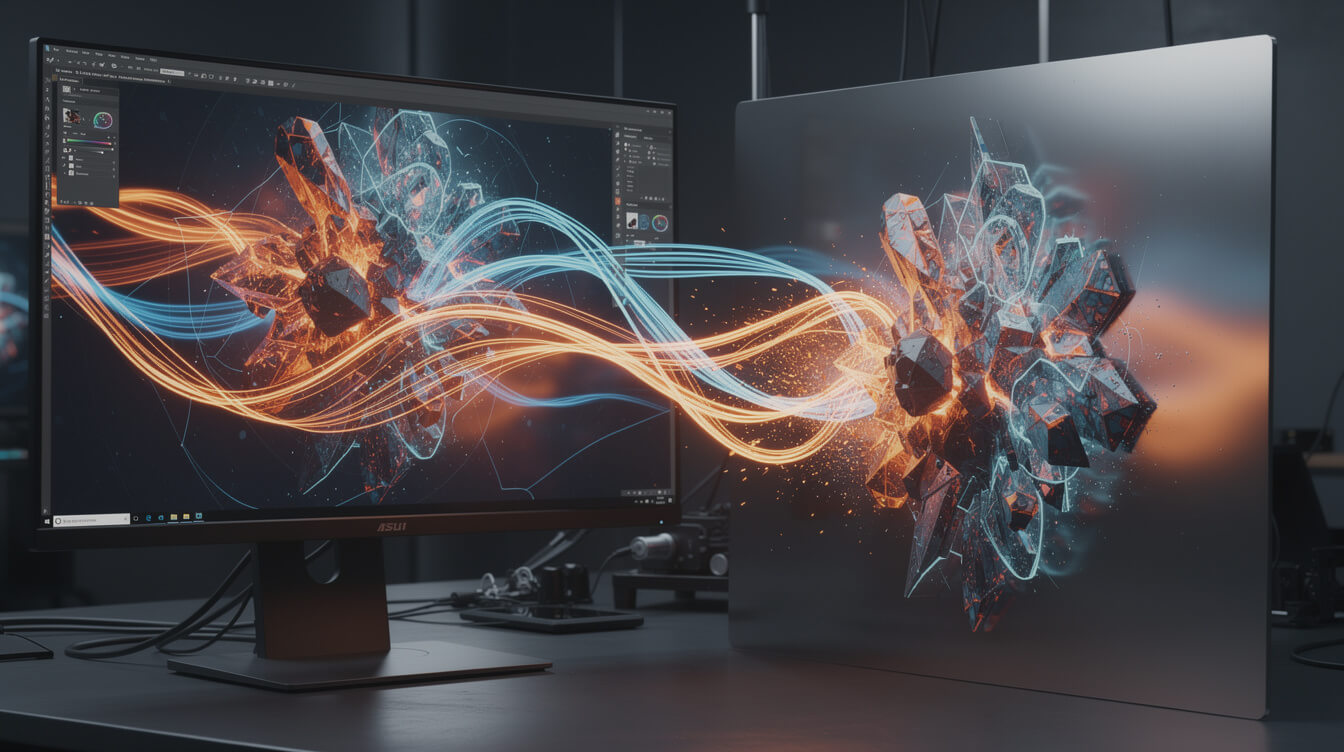
The traditional barrier to selling metal prints was access to high-resolution photography. Professional photographers sold their best work as metal prints because the format rewards sharpness and color accuracy, and they had the files. A POD seller without a photography portfolio had no obvious path into the category.
AI image generation removes that barrier entirely. Modern models generate images at megapixel resolutions with the color depth and sharpness that the ChromaLuxe sublimation process rewards. The model produces a file; you set up the product listing; the provider prints it on aluminum. No camera, no editing suite, no stock license.
The practical constraint: AI-generated images for metal prints should be at least 150 DPI at print size. For a 16×20″ print, that means a 2,400×3,000px source file. Most current AI models generate at 1024×1024 or higher natively. Verify your provider’s minimum DPI requirement before listing large sizes.
Niche directions that work well with AI-generated art on metal:
- Abstract and geometric art: Strong colors, hard edges, no photorealism expectation. AI generates these reliably. The metal substrate enhances contrast and vibrancy beyond what canvas or paper can render.
- Landscape and nature: Mountains, coastlines, forests at sunset. AI generates photorealistic landscapes with the color depth that metal prints excel at rendering.
- Celestial and space art: Nebulae, aurora borealis, galaxy abstracts. The luminous quality of the metal surface makes these designs particularly effective. Strong overlap with the interior design segment.
- Architectural and urban: City skylines, abstract cityscapes, geometric architecture. Buyers in this niche tend to be decorating modern urban-style interiors where metal panels fit naturally.
- Pet portraits: This overlaps with the gift buyer segment. A commissioned-style pet portrait on metal at $75-90 converts well for birthdays, anniversaries, and memorials. Highest AOV in the gift category.
Compare this approach to the manual-Canva workflow. A seller generating designs one at a time in Canva, exporting, resizing, and listing individually spends 2-4 hours per design. That same seller using an AI pipeline like the approach described in our poster guide can batch 30-50 designs in an afternoon and schedule listings across the week. The economics are not even close.
WooCommerce vs Shopify at $60-100 AOV: where the Shopify 1% override hurts most

The Shopify 1% additional fee (applied on top of payment processing when you use a non-Shopify payment gateway) becomes painful at premium AOVs. Most Shopify sellers running POD stores use third-party gateways like PayPal or Stripe because Shopify Payments has limited availability outside the US, Canada, UK, and a handful of European markets. That means the 1% override applies to every transaction.
At a $25 poster sale, the 1% override costs $0.25. Annoying but marginal.
At an $80 metal print sale, the 1% override costs $0.80 per transaction. That is $160 per month at 200 orders, or $1,920 per year. At the same time, your gross per sale at 40% margin on an $80 product is $32. The Shopify override takes 2.5% of your gross profit, not 1% of revenue. The math gets worse as your AOV increases.
Add the Shopify plan fee ($468-$1,188 per year depending on tier) and the apps you need for personalization and product variants ($228-$600 per year), and the total annual Shopify overhead on a 200-orders-per-month metal print store is $2,616-$3,708 per year.
WooCommerce has no transaction fee override. Hosting runs $180-$360 per year on a standard VPS or managed WordPress plan. Personalization text fields are native in WooCommerce with no paid app required. At 200 orders per month, the WooCommerce overhead is $180-$360 per year. The annual savings versus Shopify: $2,256-$3,348.
At a $100 metal print AOV, 200 orders per month generates $20,000 in monthly revenue. The Shopify 1% override alone costs $200 per month, or $2,400 per year. That is a 40% margin position getting a 1.2% haircut on revenue, or 3% of gross profit, before plan fees and app fees.
This is not a subtle difference. It is a structural tax on premium AOV products that compounds every month. For sellers building in the $60-100 AOV range, the full Shopify vs WooCommerce comparison covers the math at five revenue milestones.
Generate metal print listings in 7 minutes, not 7 hours
MEGA handles image generation, product listing creation, SEO metadata, and WooCommerce publishing end-to-end. One niche idea in. Live product listings out.
Conclusion: metal prints as a premium tier add-on for existing POD stores
Custom print on metal is not a replacement for canvas prints or posters. It is a premium tier you add on top of what you already carry. The buyers are different, the price point is different, and the gross dollar margin per unit is significantly higher.
The three questions to answer before launching metal print listings:
- Does your provider carry them? Check Printify’s product creator. Gooten’s catalog. Verify availability for your ship-to country and the sizes you want to offer. Do not list a product your provider cannot fulfill.
- Do your designs suit the format? High-contrast images with strong color depth perform best on aluminum. Flat, low-contrast designs will look underwhelming. AI-generated abstract art, landscapes, and celestial designs convert reliably in the premium buyer segment.
- Are you on a platform that lets you keep premium margin? At an $80 AOV, Shopify’s 1% override costs real money every month. WooCommerce’s fixed overhead is the structurally better choice for a store built on premium wall art products.
For sellers already building in the wall art category, the full suite looks like this: posters at $15-30 AOV for discovery and catalog volume, canvas prints at $40-75 AOV for the mid-market, and metal prints at $60-100 AOV for the premium buyer who knows what they want.
Implement AI. 30x your throughput. Get a 30-min call with the founder.
Drop your details and book a free 30-minute discovery call. Personalized advice on your POD stack, your margin, and where AI fits. No pitch, no fluff.