Custom embroidered patches near me: what POD sellers need to know about providers, unit costs, and the morale patch niche
When POD sellers search for custom embroidered patches near me, they are not actually looking for a local embroidery shop. They are looking for a no-minimum, fast-fulfillment option they can add to their store without buying an embroidery machine or managing a vendor relationship. The search reflects a sourcing intent that local directories and patch vendor product pages do not answer. This post is the editorial that fills that gap.
If you run a print-on-demand store and you are trying to add embroidered patches to your product lineup, here is what you need to know: which POD providers actually support them, what the unit cost math looks like, when a local shop genuinely wins, and how the morale patch niche has turned this product category into a serious revenue opportunity.
Why sellers search for custom embroidered patches near me (the intent gap)

Type “custom embroidered patches near me” into Google and you get Ninja Patches, Patches4Less, GS-JJ, local Yelp listings, and a FedEx Office result. Every result is a vendor selling to buyers. Not a single result addresses the POD seller who wants to add patches to their store catalog without holding inventory or negotiating minimum order quantities.
That is the intent gap. The search volume is 2,900 per month and rising, and the SERP is entirely unaddressed for the seller side.
The “near me” modifier tells you something important about who is searching. These are buyers who want patches fast, likely for a specific use case: a sports team jersey, a tactical vest, a streetwear drop, a company uniform. They want to know if something is available quickly and locally. As a POD store, you can serve that intent with 3-to-5 business day fulfillment from a provider like Printful, which matches or beats most local shop lead times for small quantities.
The opportunity for POD sellers is to capture this local-intent traffic by understanding both the product category and the fulfillment mechanics behind it. The buyer does not care whether the patch comes from a shop down the road or a fulfillment center. They care about turnaround time, quality, and cost.
The “near me” modifier as a buyer signal
Local-intent searches have historically been hard for e-commerce to capture because Google tends to favor local business listings. But for embroidered patches, there is no strong local establishment fighting for that traffic. The national vendors dominate it, and they do so as product pages, not as editorial. A well-optimized POD seller article that explains the fulfillment pipeline can rank for this keyword and convert the traffic because it answers the actual question behind the search.
Do Printful and Printify offer embroidered patches? (honest provider audit)
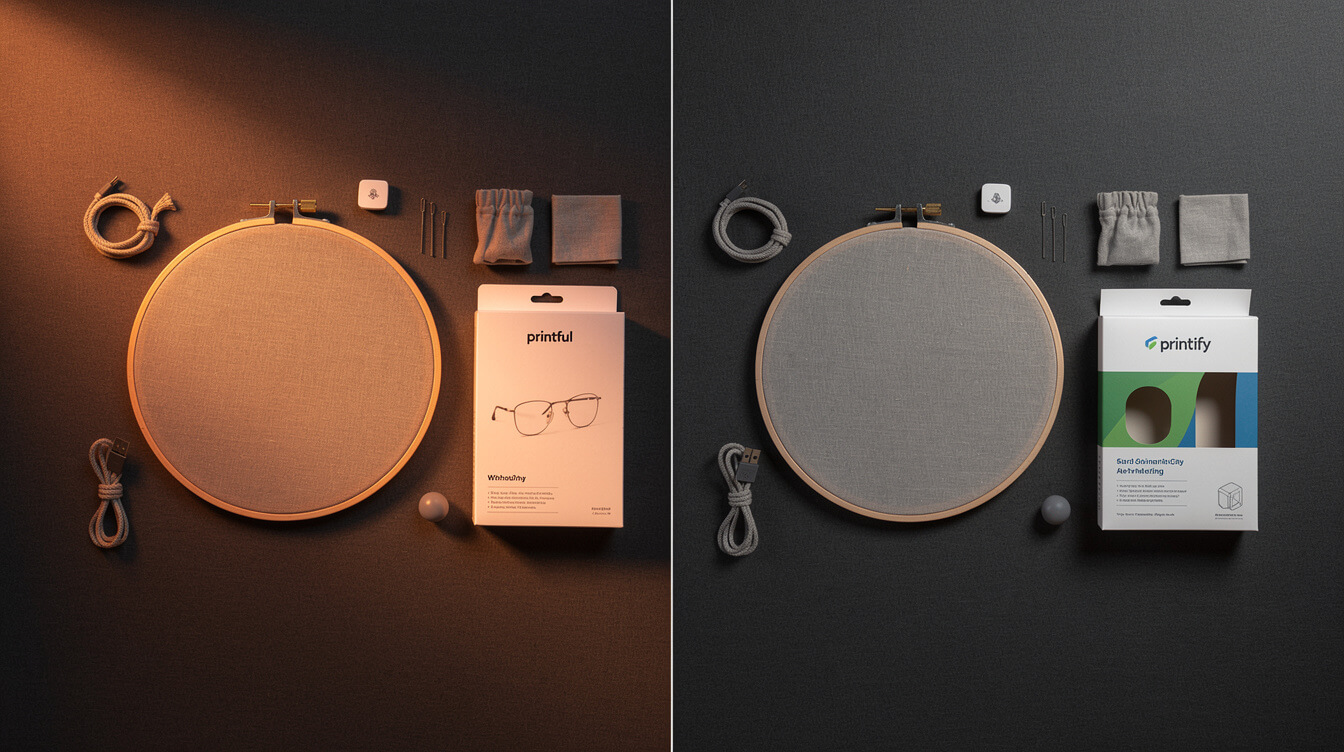
The honest answer is: it is complicated, and most comparison articles skip the nuance.
Printful: Printful does offer embroidered patches as a product category. They produce patches in-house at their fulfillment centers. Patches are offered in woven, PVC, and embroidered formats. The embroidered variant supports custom designs with a digitization fee for each new design (typically $6-10 for small patches under 4 inches). Printful’s patch product requires a minimum design setup, but there is no minimum order quantity per SKU. You can sell one patch at a time.
Printify: Printify’s catalog depends on which print provider you connect to. As of mid-2026, Printify does not have a strong first-party embroidered patch offering. Some third-party providers in the Printify network offer patches, but coverage is inconsistent by region and provider. If you are building a patch product line on Printify, you will likely need to vet individual providers carefully and test sample quality before listing.
Gooten: Gooten’s catalog includes patches through select providers, but patch selection is narrower than Printful and the digitization workflow is less standardized. Worth checking if you are already using Gooten for other products.
Provider decision framework for patches
For most POD sellers starting a patch product line, Printful is the most reliable choice. The digitization fee is a one-time cost per design, not per order, which means once you pay for the setup, every subsequent order is fulfilled at the standard unit cost. The key question is whether the unit economics make sense at your price point, which the next section covers in detail.
If Printful’s patch margins are too thin for your niche, explore direct-sourcing options from patch manufacturers like GS-JJ or Ninja Patches who offer low minimums (as low as 5-10 pieces per design). This is not POD fulfillment in the traditional sense, but for a seller who wants patch products without holding a large inventory, a hybrid approach can work: manufacture a small run, pre-stage the inventory, and fulfill manually for orders. You lose the zero-inventory advantage but gain on margin.
Unit cost math: what a custom embroidered patch actually costs per unit
Here is the cost breakdown POD sellers need to understand before listing patches.
Printful embroidered patch (standard, 2 inch diameter):
- Base product cost: approximately $6-9 per unit (varies by size and stitch count)
- Digitization fee: $6-10 per design (one-time, amortizes across orders)
- Shipping: $3.50-5.00 for domestic US single-item order
- Total landed cost for one unit: approximately $15-24 depending on size and shipping
Average patch retail price: $15-30 depending on size, design complexity, and niche. Morale patches in the tactical and streetwear categories consistently retail for $18-28 per patch on platforms like Etsy and specialty e-commerce stores.
Gross margin at a $22 retail price: If your Printful cost is $16 all-in, you clear $6 gross margin per patch, or about 27%. That is workable if you are selling through your own WooCommerce store where you keep every dollar of margin. It gets much tighter on Shopify, where the 1% override fee on a $22 sale takes $0.22 before you count any other transaction fees.
Digitization fee amortization
The digitization fee matters most in the early stages of building your patch catalog. At $8 per design, you break even on digitization after selling about 2-3 patches (depending on your margin). After that, every additional sale has the full margin available. This means patches are a catalog product that rewards volume over time, not a single-order revenue play.
If you are building a line of 10 unique patch designs, budget approximately $80-100 in one-time digitization costs before you make your first sale. Factor this into your launch economics.
Local embroidery shop comparison
A local embroidery shop charging for patch production typically prices at:
- Setup/digitization: $20-50 per design (higher than Printful for small designs)
- Per-unit cost: $3-7 per patch for a minimum run of 25-50 pieces
- Total for 50 patches: approximately $150-400 depending on complexity
At scale (50+ units), local shops can be cheaper per unit than POD fulfillment. The trade-off is inventory risk and capital outlay upfront. That is the core of the break-even question explored in the next section.
When local patch sourcing wins over online POD (the break-even question)
Smash print-on-demand. Join the engine room.
One short email a week. Real numbers, real teardowns, the unfiltered economics behind every move.
Local sourcing wins when the following conditions are true:
- You have confirmed demand for a specific design and can pre-sell at least 25-50 units
- You have working capital to pay for the batch upfront (typically $150-400 for a 50-piece run)
- You have a place to store inventory and a system for fulfilling individual orders
- Your margin math on the local-sourced unit cost beats Printful by enough to justify the operational overhead
Online POD wins when you need any of the following:
- Zero inventory: sell before you produce, no pre-purchase required
- Instant catalog expansion: add a patch design today and sell it tomorrow
- Validation: test whether a design sells before committing to a batch run
- Multiple designs: a catalog of 10 designs at 1 unit per design costs nothing to hold with POD
The practical answer for most POD sellers starting out: use Printful for validation and catalog building. If a specific design consistently sells 20+ units per month, run a cost analysis on switching to local or direct-to-manufacturer sourcing for that SKU while keeping the rest of the catalog on POD fulfillment.
This hybrid approach is how mature POD businesses often operate. They are not dogmatically attached to one model. They run the math per SKU and route accordingly. MEGA can help automate the product listing side of this pipeline, so you can expand your patch catalog rapidly and identify winners faster. MEGA’s research-to-product engine handles product listing at scale, meaning the operational cost of adding 20 patch variants to your catalog approaches zero.
The morale patch niche: military, tactical, outdoor, and streetwear demand rising
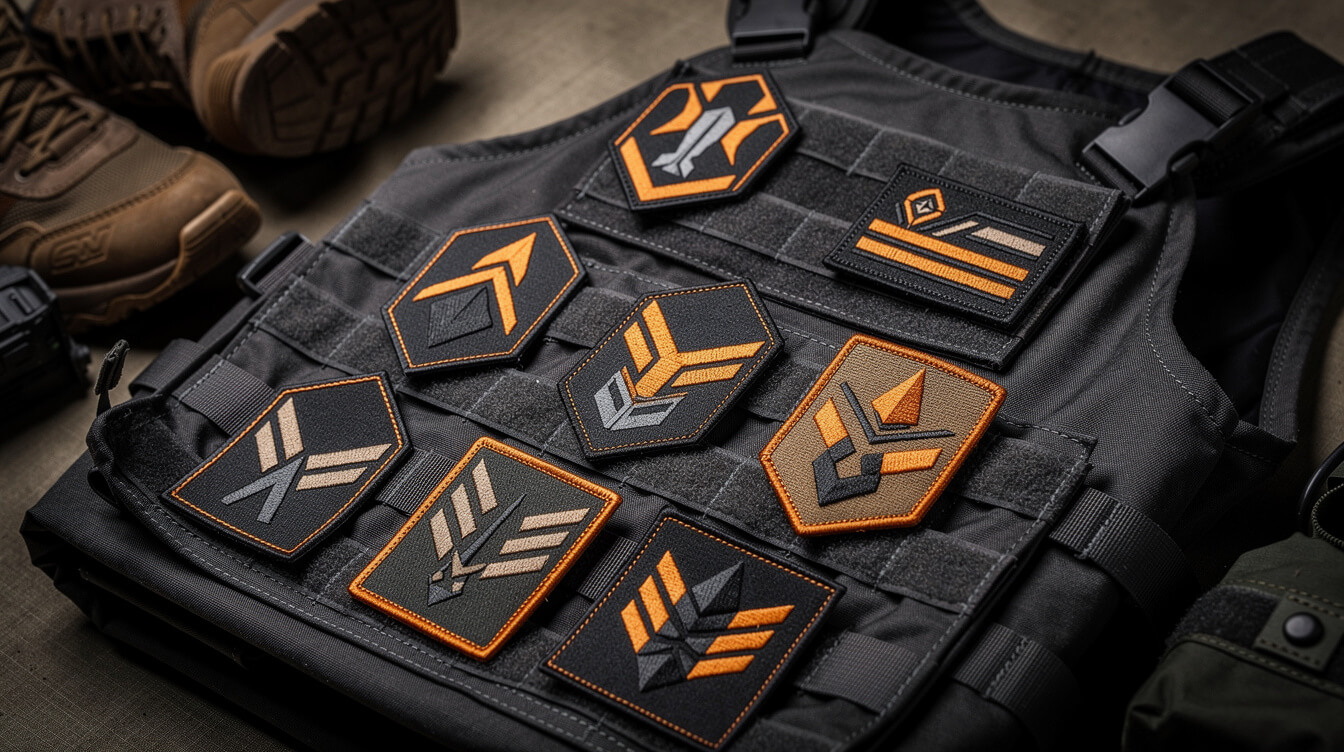
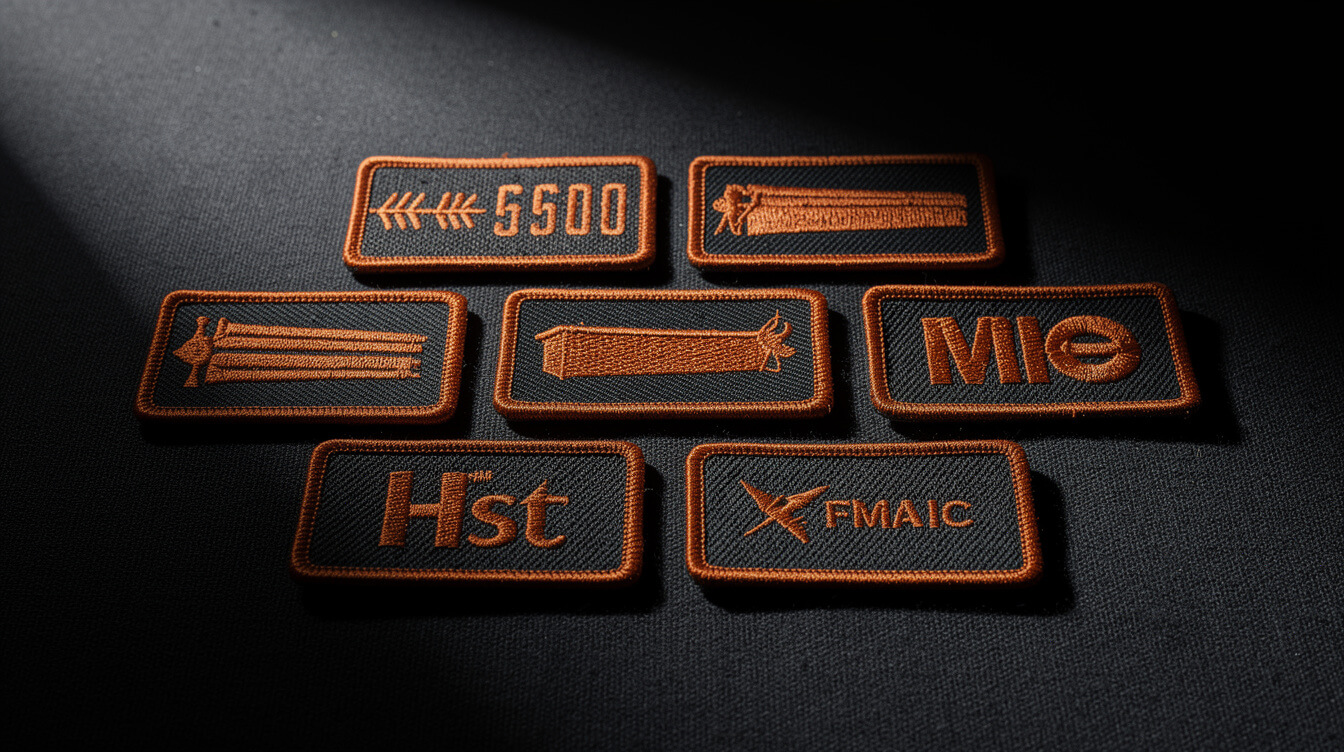
The morale patch niche is one of the fastest-growing product categories for POD sellers in 2026. Understanding why requires a quick look at where morale patches came from and where demand is flowing now.
Morale patches originated in the US military as unofficial unit identifiers, humorous commentary pieces, and camaraderie symbols that soldiers velcro’d onto bags, vests, and headwear. They moved into law enforcement, then outdoor recreation communities (hiking, hunting, overlanding), and now they are a legitimate streetwear and collector item category.
Where demand is concentrated
The four primary demand clusters in the morale patch niche:
Military and veteran communities: High loyalty buyers who purchase patches to represent units, deployments, or veteran service branches. Designs in this category often sell at a premium ($20-35 per patch) because they carry emotional significance.
Tactical and law enforcement: Similar to the military cluster but with more variety in design themes. Buyers are often active duty or former law enforcement who are looking for humor-based patches alongside the serious ones. This community shops on niche platforms and through social media.
Outdoor recreation: Hikers, overlanders, and hunters add patches to gear as a personalization layer. This cluster is growing as the overlanding community (off-road expedition vehicles) has expanded significantly over the past three years. Patch designs here tend toward nature themes, route markers, and humor.
Streetwear and hypebeast culture: Patches have crossed into mainstream fashion through the rise of utility vests, cargo-style garments, and customizable outerwear. The streetwear cluster values visual complexity, limited availability, and cultural references. These buyers are younger, social-media-driven, and responsive to scarcity framing.
How to enter the morale patch niche as a POD seller
Three entry points that do not require you to already have a community:
- Thematic collections: Build around a single theme (e.g., hiking trails, marine wildlife, regional landmarks) and create 5-10 patch designs that form a cohesive set. Collectors buy sets more reliably than individual patches.
- Community partnerships: Identify a Reddit community, Discord server, or niche forum and design patches that serve their inside jokes or community symbols. This is a direct route to a ready-made buyer pool.
- Limited drops: Time-limited releases create urgency and allow you to test demand before committing to ongoing production. A “drop” of three patch designs for a weekend can generate both sales and mailing list sign-ups for future drops.
For velcro-backed patches specifically, which are the dominant format in the military and tactical communities, see our guide on custom patches velcro: sourcing, pricing, and selling without a warehouse. The velcro format has specific fulfillment considerations that differ from iron-on or sew-on patches.
Add 20 patch designs to your catalog in one afternoon
MEGA generates product titles, descriptions, SEO metadata, and Printful listings end-to-end. Research a niche, generate designs, and go live without a Canva workflow or a 6-hour manual listing session.
WooCommerce vs Shopify: fee impact on $15-25 AOV patch orders
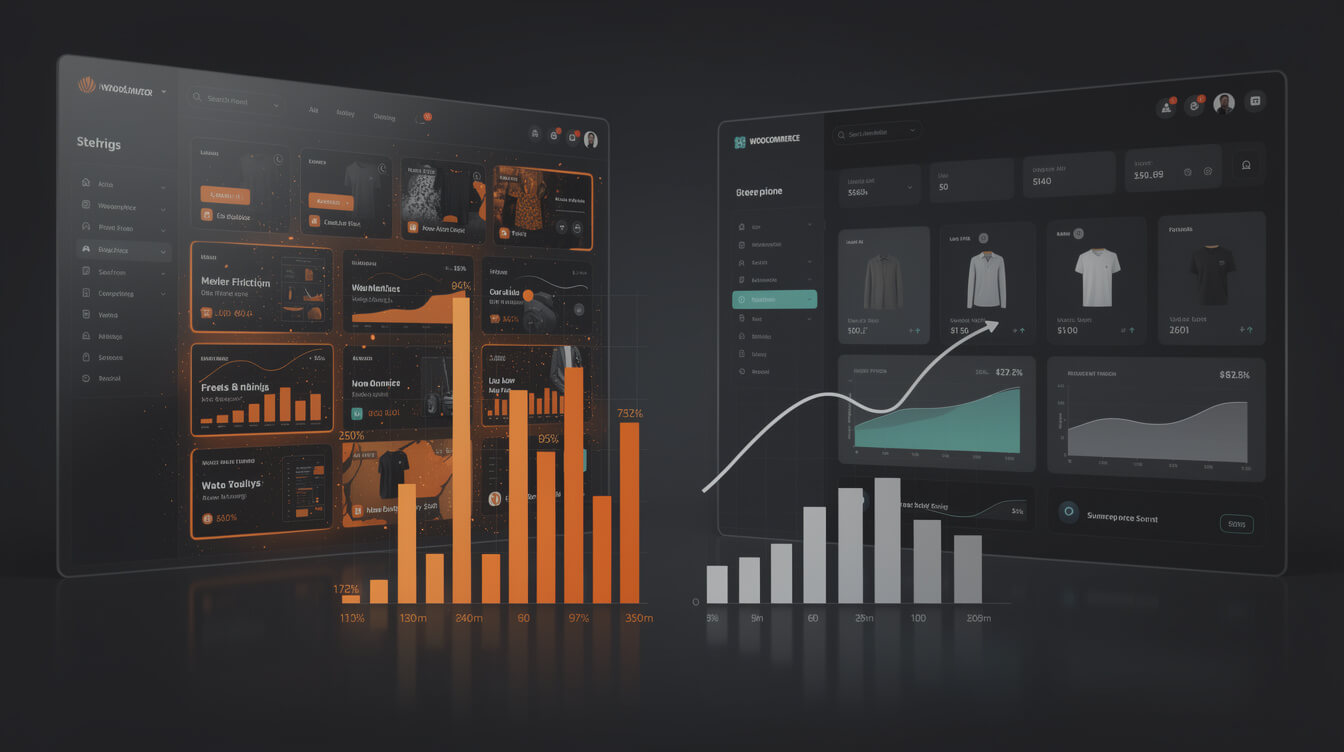
Embroidered patches have a low average order value by POD standards. A single-patch order at $22 retail is a typical transaction. This makes platform fee structure a meaningful variable in your profit math.
Here is how the fee structures compare at a $22 order:
Shopify Basic ($39/month plan):
- Transaction fee: 2% if using non-Shopify Payments (or 0.5% on Basic with Shopify Payments)
- Payment processing: 2.9% + $0.30 (Shopify Payments)
- On a $22 sale: $0.94 in payment processing + potential transaction fee
- The Shopify 1% override fee: applies when apps charge their own transaction fee on top of Shopify’s. Not all apps trigger this, but third-party payment gateways always do.
WooCommerce (self-hosted on WordPress):
- No platform transaction fee
- Payment processing: typically 2.9% + $0.30 via Stripe (same as Shopify Payments)
- On a $22 sale: $0.94 in payment processing, nothing else
- Monthly platform cost: hosting (~$10-20/month) rather than a per-revenue fee
The difference at a single $22 order looks small. At scale, it compounds. A store doing $5,000/month in patch sales pays approximately $50-100 per month in Shopify transaction overhead that a WooCommerce store avoids entirely. Over a year, that is $600-1,200 in fees that go to Shopify instead of back into your business.
Why patches amplify the Shopify fee problem
Patches are often sold in bundles and as add-ons to larger orders. A customer buying a custom logo hat from your store might add two patches to the cart. In that scenario, the AOV climbs but the Shopify transaction fee percentage remains fixed. Every dollar you add to the cart on Shopify generates another fraction of a percent in platform overhead.
WooCommerce removes that ceiling. Your patch catalog, your hoodie catalog, your hat catalog, all share the same checkout without platform fees on each additional product.
For a deeper look at the WooCommerce advantage for POD sellers, see our breakdown of custom hoodie embroidery for POD stores, which covers the same fee math at a higher AOV product category where the numbers are even starker.
Building a patch product line: fulfillment workflow and listing automation
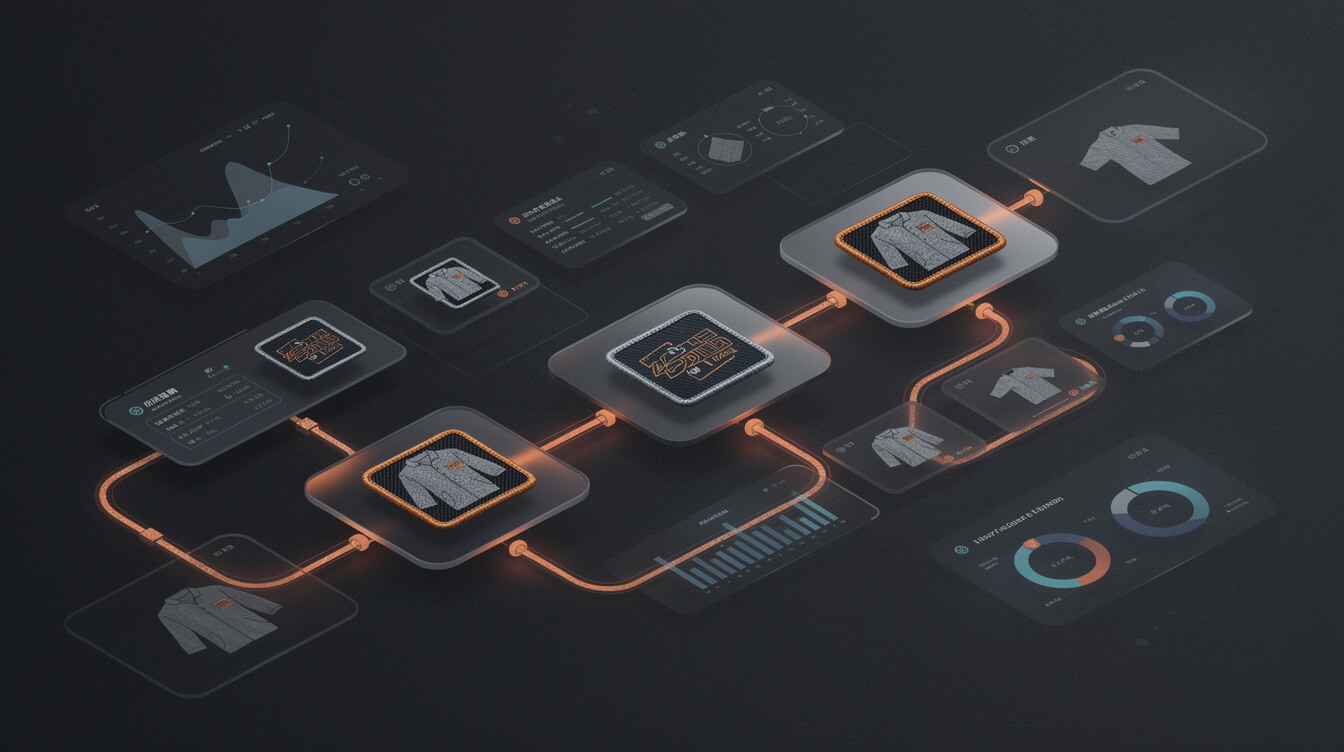
A viable patch product line on a WooCommerce store requires four operational components: design sourcing, digitization, Printful product setup, and listing creation. Here is how each piece of the workflow fits together.
Design sourcing
You have three options:
- Commission original designs from a graphic designer. Typical cost: $30-80 per design depending on complexity. One-time cost, permanent asset you own.
- Use AI image generation tools to create patch-ready artwork. Results vary but have improved significantly in 2026. You still need to prep the artwork for embroidery (flat colors, no gradients, clear outlines).
- Adapt existing brand assets you already own. If you have a brand logo or mascot, a patch format version is a natural product extension.
Digitization
Digitization is the process of converting a flat artwork file into embroidery machine instructions. Every unique patch design needs to be digitized once. Printful handles digitization in-house and charges $6-10 per design. For third-party sourcing from providers like GS-JJ, digitization may be free but minimum order quantities apply.
The digitization cost is a fixed overhead per design. Budget it into your launch costs, not your per-unit COGS.
Printful product setup and listing creation
Once a design is digitized in Printful’s system, you create a product mockup, set your retail price, and connect it to your WooCommerce store via the Printful WooCommerce plugin. The manual version of this process takes 20-30 minutes per design if you are writing product titles, descriptions, and tags by hand.
For sellers building a catalog of 10, 20, or 50 patch designs, that manual time becomes a real bottleneck. The full patch listing workflow, including niche research, design generation, product description writing, SEO metadata, and Printful setup, is exactly the pipeline MEGA was built to automate. MEGA’s engine runs research to live product listing in under seven minutes, which changes the economics of catalog expansion entirely.
For additional context on how this automation approach applies to branded merchandise more broadly, see our piece on custom brand clothing without the minimum order, which covers the no-minimum, no-inventory model that patches fit directly into.
Conclusion
Custom embroidered patches are a real product category with a real buyer community, and the POD seller editorial gap is wide open. The “near me” search intent is buyer-driven, the morale patch niche is growing across four distinct buyer clusters, and the Printful fulfillment pipeline handles patches with a workable unit cost at $15-25 retail price points.
The key decisions are: which provider to use (Printful for most sellers), at what volume to consider switching to local or direct-manufacturer sourcing (25+ units per design per month), and whether to build on WooCommerce instead of Shopify to preserve margin at low AOV transaction sizes.
Build a catalog, not a single SKU. The morale patch buyer is a collector. Give them a set of designs to choose from and the average basket size goes up without any additional marketing effort.
Implement AI. 30x your throughput. Get a 30-min call with the founder.
Drop your details and book a free 30-minute discovery call. Personalized advice on your POD stack, your margin, and where AI fits. No pitch, no fluff.