Custom sticker sheets for POD sellers: which providers support them, what they cost, and the low-AOV math
Custom sticker sheets have a growing buyer base: planners, fan communities, indie artists, and parents shopping for kids. If you run a print-on-demand store, the appeal is obvious. But finding clear answers about which POD providers actually carry sticker sheets, what the unit economics look like, and how platform fees eat into your margin at low order values is harder than it should be. This guide covers all of it: provider options, print methods, unit cost math at 1, 10, and 50 units, and the specific reason that Shopify’s 1% override fee is more damaging on a $12 sticker sheet than on a $55 hoodie.
What a custom sticker sheet means in the POD context
The phrase “custom sticker sheet” means different things depending on who is using it. A consumer typing it into Google usually wants to order 50 packs for a birthday party. A print shop hearing it thinks about substrate, lamination, and minimum print runs. For a POD seller, the relevant question is different: can I list a sticker sheet product in my store, have it fulfilled per order by a third party, and sell it without holding inventory?
The answer is yes, but with important caveats. A sticker sheet in the POD sense is a printed vinyl sheet, usually A4 or letter-sized, carrying multiple individual sticker designs that the buyer peels and places. The print method is almost always digital inkjet onto die-cut vinyl with a protective laminate coating. What distinguishes it from ordering in bulk is the no-minimum-order structure: your fulfillment partner prints and ships each sheet individually as orders come in.
This model is economically viable only if your fulfillment partner can print single-sheet orders at a cost that leaves room for margin after platform fees. That is where the math gets interesting, and why provider selection matters more for sticker sheets than for higher-ticket products like hoodies or canvas prints.
Sticker sheets are also distinct from individual kiss-cut stickers. A sheet may contain 12 to 30 sticker designs printed together on one backing, which the buyer removes separately. Some sellers list a single-design large sticker as a “sheet,” which creates customer confusion. The most defensible positioning is a multi-design collection sheet, because it offers the buyer clear value and allows the seller to build a product line around a niche theme.
Which POD providers carry custom sticker sheets
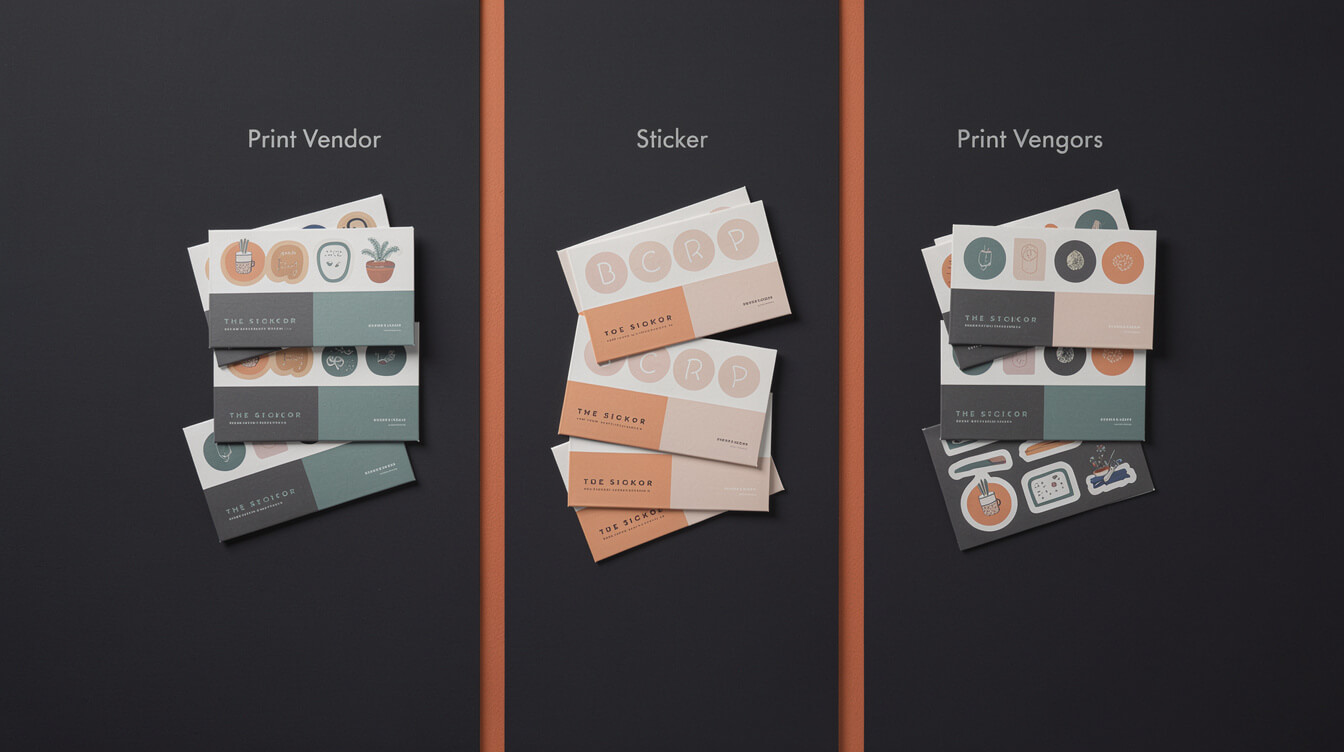
The provider landscape for sticker sheets is narrower than for apparel or home decor. Not every Printful or Printify product category includes a true multi-design sticker sheet, and the distinction matters for how you structure your product listing and price your item.
Printful carries individual kiss-cut stickers, not pre-designed multi-sticker sheets in the traditional sense. Their sticker product is a single design printed on vinyl with a kiss-cut around the contour, available in sizes from 2×2 inches up to 5.5×5.5 inches. Sellers who want to offer a “sticker sheet” look through Printful typically create a single large rectangular sticker that contains multiple designs arranged on one backing. This is technically one sticker with multiple elements, not a traditional die-cut sheet with separable individual stickers. It works, but it limits the peel-and-place experience buyers expect from a sticker sheet.
Printify has a broader catalog through its network of print providers, and several Printify partners offer true multi-sticker sheets. Providers within the Printify network, including several US-based vinyl sticker specialists, offer A6 and A4 die-cut sticker sheets with individual kiss-cut designs on a single backing. Availability and pricing vary by provider location, so US-based sellers generally get better unit costs and shipping times from US print providers in the Printify network.
Third-party fulfillment options fill the gap if Printful and Printify do not meet your requirements. Sticker Mule offers white-label fulfillment for sticker sheets starting at around $1.85 per sheet at 25 units. StickerYou provides a dropshipping-friendly sticker sheet program with per-unit fulfillment. Both require integration work that Printful and Printify handle automatically through WooCommerce plugins, but the product quality and cut precision from specialty sticker printers is generally higher than what generic POD platforms provide.
For most POD sellers launching a first sticker product, the practical path is: start with Printify’s sticker sheet providers for a true sheet format, use Printful’s large rectangular sticker format as a fallback if Printify routing has availability issues in your region.
Kiss-cut vs die-cut sticker sheets: what the difference means for POD
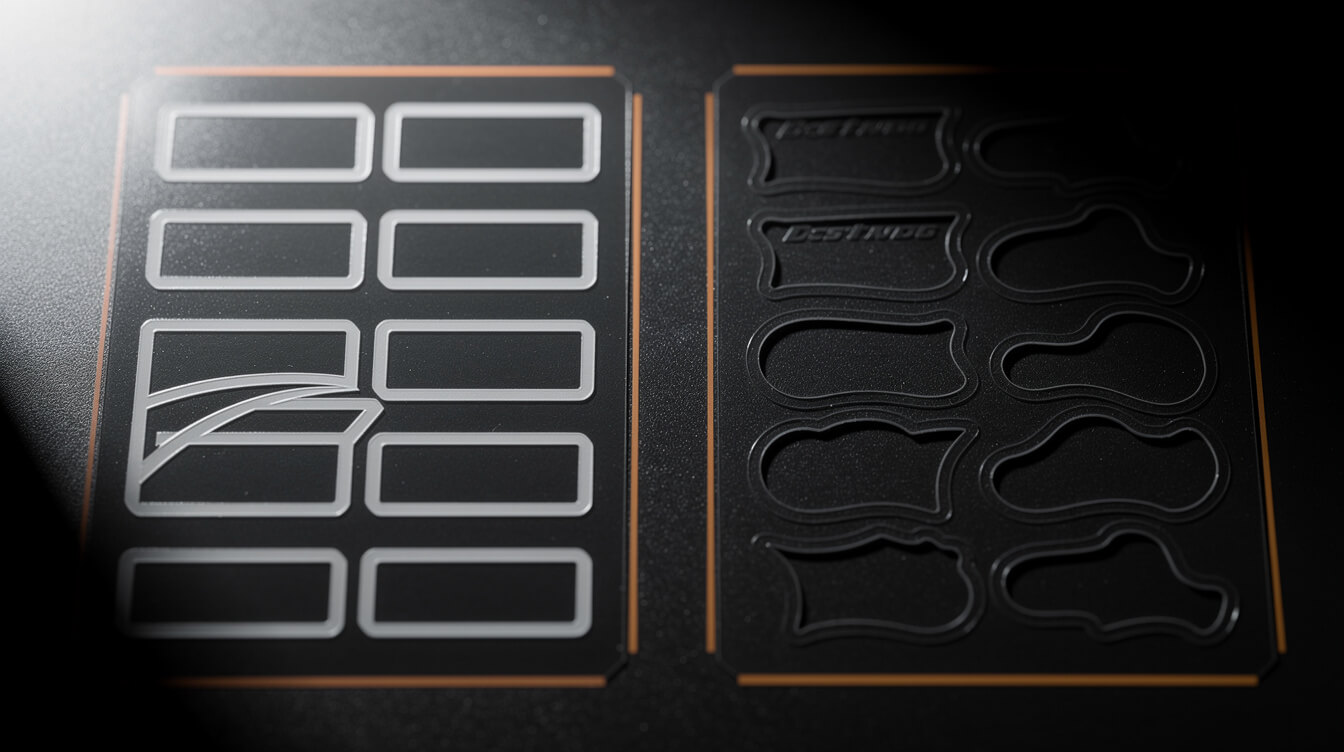
The cut type determines the product experience and, to a smaller degree, the unit cost. Understanding the difference helps you write accurate product descriptions and set the right buyer expectations.
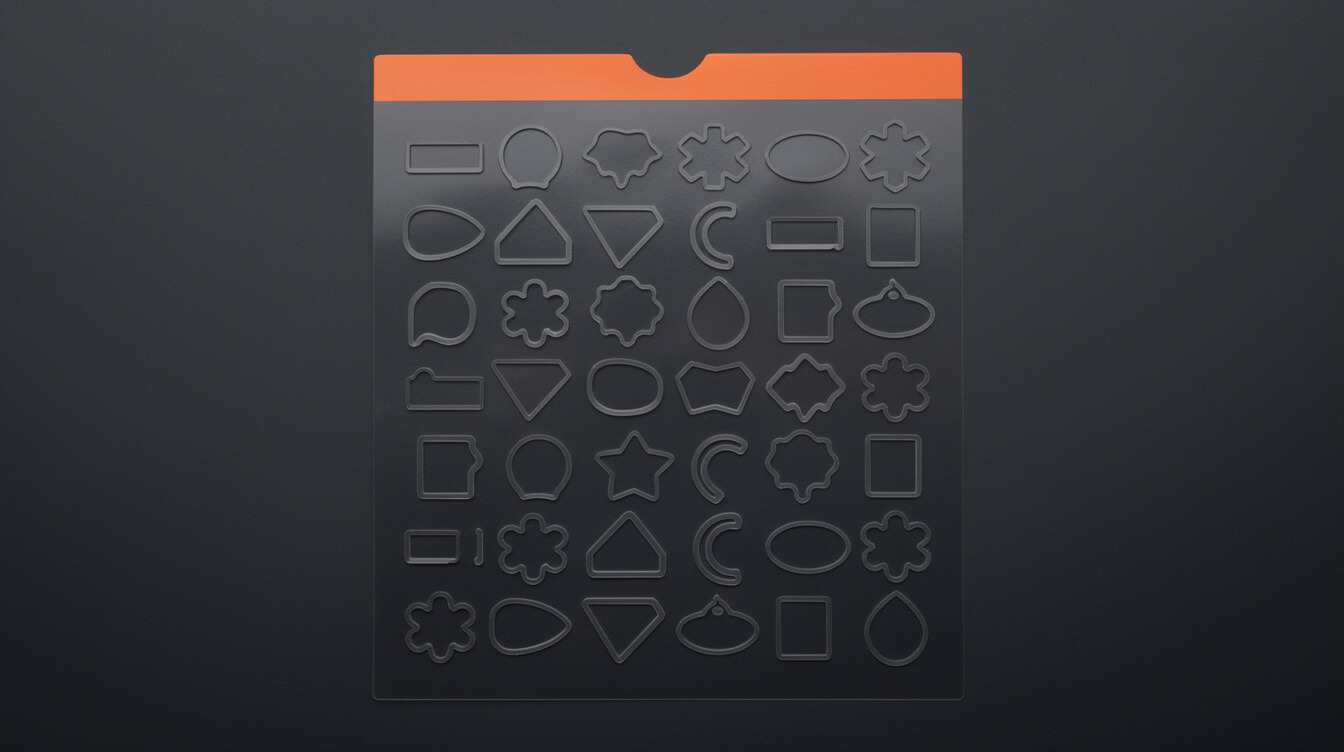
Kiss-cut means the cutting blade goes through the sticker vinyl but not through the backing sheet. Each sticker stays attached to the backing until the buyer peels it. The sheet itself remains intact as one piece. When buyers say they want a sticker sheet, they usually mean kiss-cut: the whole collection arrives on one backing, each sticker peels off cleanly, and nothing falls out during shipping.
Kiss-cut is the standard for multi-design sticker sheets in POD. It is the default cut method at Printify’s sticker providers. Machine setup is simple because the cutting path can handle complex shapes on a single backing without requiring individual packaging for each sticker.
Die-cut means the cutting blade goes all the way through both the vinyl and the backing, producing individually shaped sticker cutouts that are not attached to a shared backing. Die-cut stickers look premium and are popular for laptop or water bottle stickers where the buyer wants to use one design at a time. However, die-cut stickers are not a “sheet” in the traditional sense: they are individual stickers, often sold in packs.
For POD sticker sheets, kiss-cut is the right format because it preserves the sheet structure, which is what buyers are searching for. Die-cut is better for individual sticker listings at higher per-unit prices.
The cost difference between kiss-cut and die-cut at the fulfillment level is small, typically $0.20-0.50 per sheet, because both require the same substrate, ink, and laminate. The difference comes from cut complexity: intricate die shapes take slightly more machine time. For most POD sellers, kiss-cut on a standard rectangular backing is the better unit economics choice.
Unit cost math: what one custom sticker sheet actually costs to fulfill

Smash print-on-demand. Join the engine room.
One short email a week. Real numbers, real teardowns, the unfiltered economics behind every move.

Sticker sheets are low-ticket items, which means unit cost math works differently than it does for apparel. The goal is to understand your gross margin per order and how it shifts as your store volume grows.
At 1 unit (a single order), POD fulfillment for a standard A4 or letter-sized kiss-cut sticker sheet typically costs $3.50-5.00. Printify’s US-based sticker providers sit in the $3.50-4.50 range for a sheet with 12-20 sticker designs. Sticker Mule white-label pricing starts higher per unit but drops sharply with volume. At a $3.50-4.50 base cost with $4-5 shipping, your total cost to deliver one sheet to a US buyer is $7.50-9.50.
If you price the sheet at $12, your gross margin per order is $2.50-4.50 before platform fees. That is a 21-38% gross margin range. It is workable but thin. The margin pressure comes from two directions: the shipping cost is nearly as large as the product cost at single-unit volumes, and any platform fee eats directly into that margin.
At 10 units per month, your economics do not change because POD pricing is per-unit regardless of your monthly volume. POD does not offer tiered wholesale pricing the way factory bulk orders do. Your fulfillment cost stays at $3.50-4.50 per sheet whether you sell 10 or 100 in a month. This is both a feature (no inventory risk) and a constraint (no volume discount). The upside is that you can add 20 different sticker sheet designs to your store and test which niches convert, with zero upfront inventory cost.
At 50 units per month through a third-party like Sticker Mule, you can access wholesale pricing that brings fulfillment cost to $1.85-2.50 per sheet. At that cost and a $12 retail price, your gross margin before fees climbs to 50-60%, which changes the business entirely. However, moving from POD fulfillment to inventory-held wholesale requires upfront capital, warehouse space, and a fulfillment operation. Most POD sellers start with the higher per-unit cost and move to hybrid fulfillment when one design has proven consistent demand.
A practical sticker sheet pricing target: $10-14 for a standard multi-design sheet. Below $10, margin disappears under shipping cost. Above $16, you compete with premium sticker brands that have better perceived value and catalog depth. $12 is a defensible anchor for an indie POD sticker store.
The Shopify 1% problem at $8-18 AOV

Shopify charges a 1% platform override fee on gross revenue when you use third-party payment processors. On a $55 hoodie, that is $0.55 per order. Painful but manageable at decent margin. On a $12 sticker sheet, that same 1% is $0.12 per order. That sounds small in absolute terms, but the proportional impact is what matters.
If your gross margin on a $12 sticker sheet is $3.00 after fulfillment and shipping, the Shopify 1% fee takes $0.12 of that, which is 4% of your gross margin gone to the platform. Now add Shopify’s payment processing fee of approximately 2.9% plus $0.30 per transaction, which on a $12 order is $0.65. Total platform costs: $0.77 per order. That leaves you $2.23 gross margin on a $12 sale.
If you run 200 sticker sheet orders per month at $12, that is $2,400 in revenue. Shopify’s platform fees (override plus processing) come to roughly $154. Your gross margin pool is $600 before fees. Platform fees alone consume 25.6% of your gross margin. That is before any marketing spend, before returns, before the cost of your time.
On WooCommerce, the story is different. WooCommerce has no 1% platform override fee. Payment processing costs are similar (Stripe is 2.9% plus $0.30), but you are not paying the platform tax on gross revenue. At 200 orders per month at $12, you save approximately $24 in override fees compared to Shopify. Over 12 months, that is $288. It is not dramatic, but sticker sellers who add other low-AOV products (keychains, temporary tattoos, individual stickers) stack these savings across their catalog.
The more important point for sticker sheets specifically is that low-AOV product categories expose platform fee math faster than high-ticket products do. A WooCommerce store is the natural home for POD sellers who build their catalog around accessories, novelty items, and low-ticket collectibles. If sticker sheets are your entry product, building on WooCommerce from the start avoids migrating later when the fee math becomes obvious. For a deeper look at how the numbers compare across a full store, see our breakdown of WooCommerce vs Shopify for POD sellers.
Niche verticals that buy sticker sheets
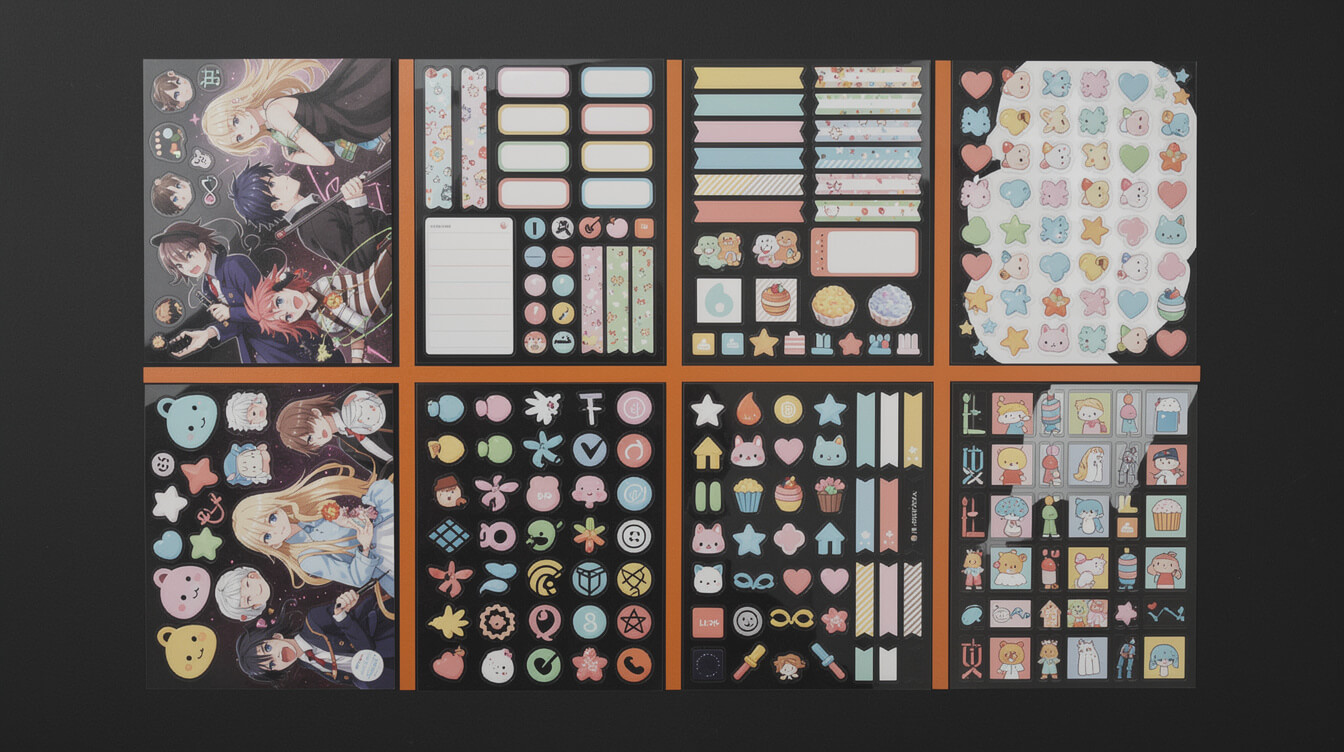
Sticker sheets sell well in niches where buyers have strong identity investment and collect around themes. The strongest performing categories share a common trait: the buyer sees the sheet as an expression of a specific interest, not just a generic product.
Fandoms and media communities are the highest-volume opportunity for indie POD sellers, but require careful navigation of intellectual property. Original fan-inspired designs that evoke a fandom without directly reproducing copyrighted characters or logos are the sustainable path. Watercolor-style character silhouettes, thematic icon packs referencing a fictional world’s aesthetic, and color palette collections inspired by media properties all generate strong search traffic from fandom communities without the legal exposure of direct reproduction.
Journaling and planner communities are the most consistent buyers of decorative sticker sheets. The bullet journaling audience, in particular, spends heavily on sticker sets: weekly and monthly planner tabs, doodle-style decoration stickers, and minimalist icon sets. This audience is organized, buys in multiple transactions per year, and shares products across community platforms. A sticker sheet targeted at the Hobonichi Techo or Midori Traveler community, for example, reaches a buyer base that actively maintains wishlists and makes purchase decisions based on niche fit.
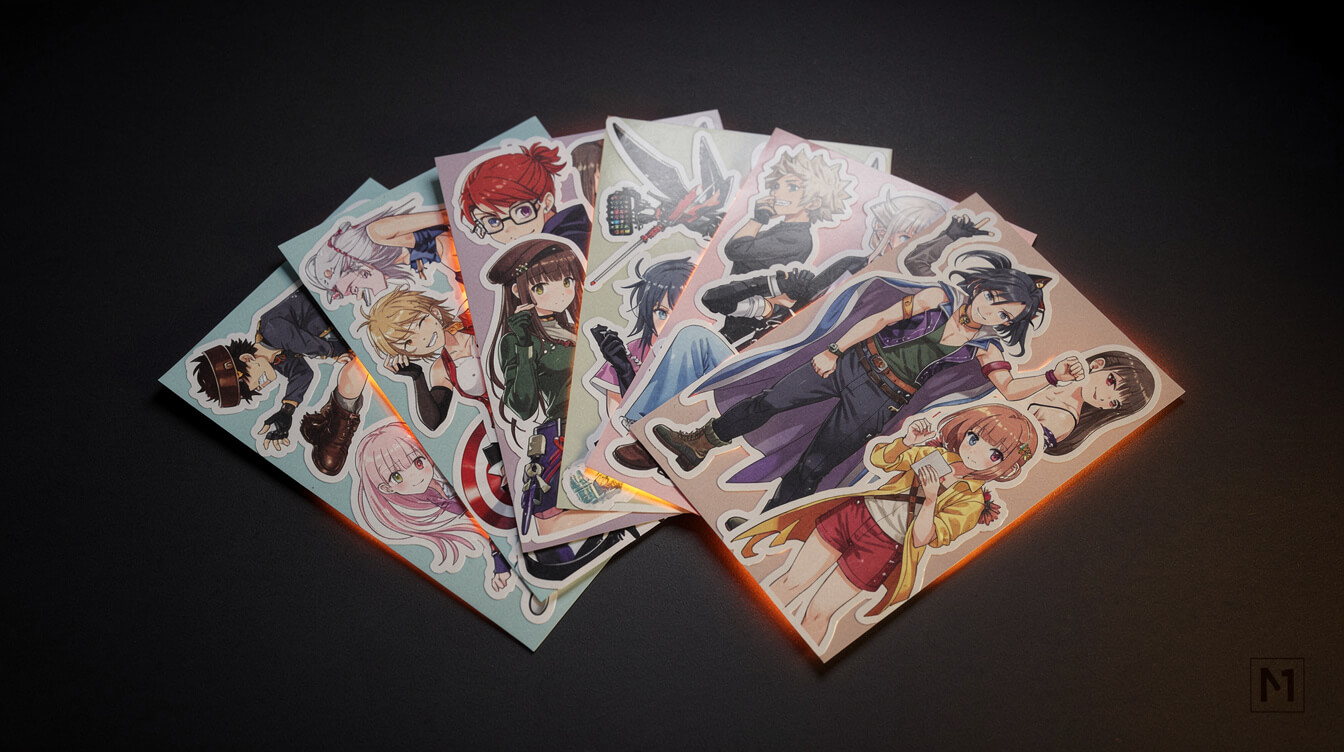
Anime and gaming communities overlap heavily with fandom sticker demand but skew younger and more digital in their discovery behavior. Anime-adjacent original characters, chibi-style designs in the aesthetic of specific genres, and gaming culture reference packs (pixel art, isometric icons, achievement badge designs) all perform well and are easier to defend as original work than directly recognizable character reproductions.
Kids’ themes generate gift-driven purchases: parents and relatives looking for birthday or holiday additions. Educational sticker sheets (alphabet, numbers, shapes in playful styles), reward chart stickers for classroom use, and seasonal holiday collections (Easter, Halloween, Christmas) all have predictable demand curves with clear Q4 spikes.
Independent artists and illustrators are both a customer type and a category within POD. Many independent artists sell their own sticker sheet collections as a low-barrier merchandise product alongside prints and apparel. For POD sellers who partner with independent illustrators on a revenue-share basis, sticker sheets are often the easiest product to launch first because the design adapts well to vinyl printing and the niche appeal is easy to communicate in product descriptions.
The strongest POD sticker sheet stores pick one or two of these verticals and go deep. A store that sells sticker sheets across all of these categories simultaneously has no identity and struggles to build repeat buyers. Depth within a vertical, such as 12 different planner sticker sheet designs for bullet journaling enthusiasts, builds trust with a specific community faster than breadth across all niches. For comparison to another low-AOV accessories category with similar niche dynamics, see our guide on custom keychains for POD sellers.
Setting up a sticker sheet product on WooCommerce
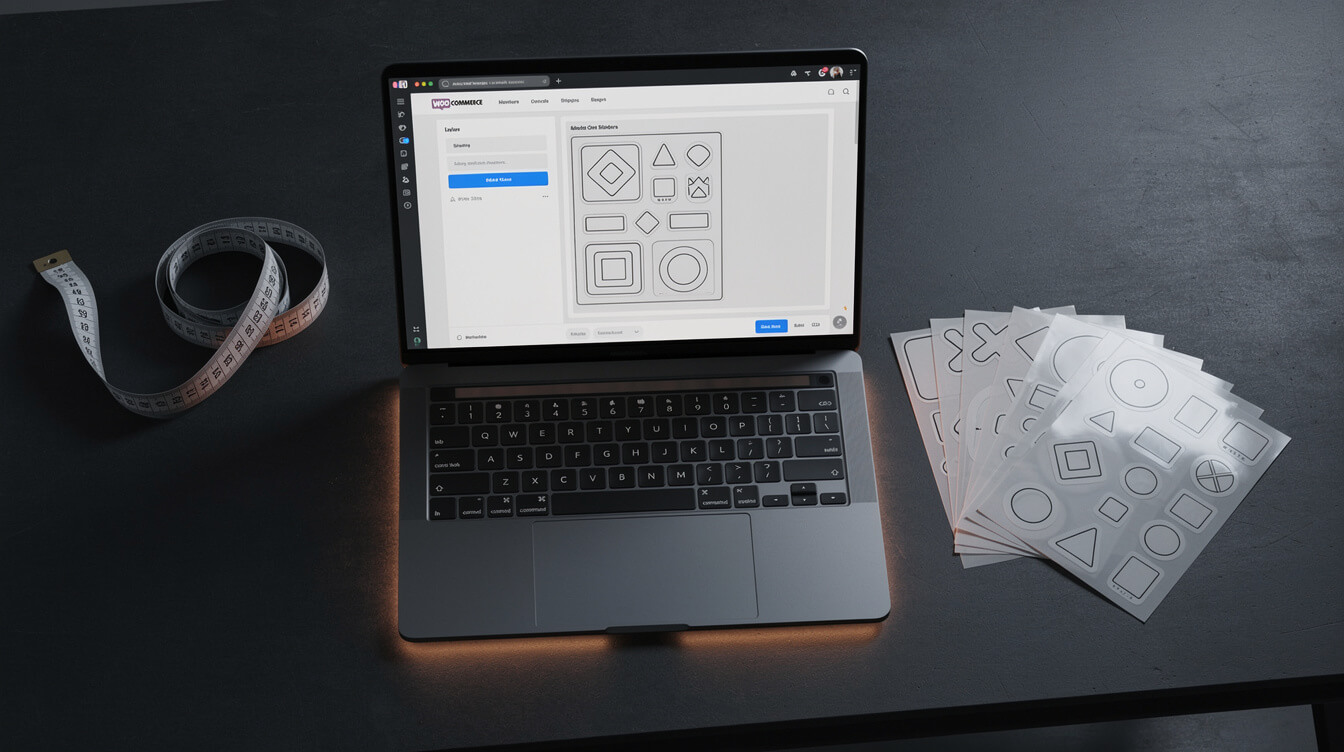
The product setup decisions for sticker sheets have a few specific considerations that differ from apparel or home decor.
Dimensions and variants. Standard sticker sheets run A4 (210x297mm) or US letter (216x279mm). If you offer both sizes, set them as product variants in WooCommerce rather than separate products. The variant structure lets you track which size converts better without splitting your product URL and its SEO equity. If you only offer one size, choose US letter for a North American audience and A4 for European and international focus.
Finish options. Most fulfillment providers offer matte or glossy laminate finishes. Matte is preferred by the journaling community (no fingerprints, good for writing over the sticker). Glossy is preferred by kids’ products and collectors who value visual pop. If your provider supports both, set finish as a second variant dimension. If matte costs more to fulfill, add a $1-2 variant premium.
Mockup photography. Sticker sheet mockups need to show the sheet in context: held in a hand with the backing partially peeled, laid on a planner page, or scattered on a desk. Flat-lay product photography against a plain white background performs poorly for sticker sheets because it does not communicate scale or use context. Printify’s built-in mockup generator includes lifestyle sticker sheet scenes. Use these as a starting point, but replace them with custom images as your store matures.
Product title SEO. Include the sticker count, sheet size, and a thematic descriptor in your WooCommerce product title. “12-sticker journaling planner sticker sheet, A4, bullet journal decoration pack” has more search surface than “custom sticker sheet.” Long-tail product titles capture specific buyer queries and signal niche relevance.
Pricing strategy. Start at $12 for a 12-20 design sheet and test upward. If conversion rate holds at $14, you have added $2 gross margin per order without losing volume. Some niche sticker stores price at $10 to compete on Etsy but find that the $12-14 range on their own WooCommerce store converts comparably because customers who find you through SEO have higher purchase intent than marketplace browsers. For reference on how similar low-ticket POD accessories perform in a WooCommerce context, our guide on custom mouse pads for POD sellers covers the same stationery and desk-accessory buyer segment.
Shipping configuration. Sticker sheets ship as flat mail items, which often qualify for lower shipping rates than padded envelopes used for apparel. Confirm with your fulfillment provider whether they ship in rigid mailers (to prevent bending) or standard poly mailers. Rigid mailers add $0.50-1.00 per shipment but protect the product and reduce damage claims. Configure your WooCommerce shipping zones to reflect your fulfillment provider’s actual carrier rates rather than flat-rate shipping, which will either overcharge your buyer or undercharge and compress your margin further.
The sticker sheet opportunity in 2026
The sticker sheet SERP is dominated by consumer print shops. UPrinting, ZapCreatives, and JukeboxPrint rank for “custom sticker sheet” because they are selling to buyers who want to order 50-100 units with their own designs. That is a different buyer than the one who shops at a POD store.
The POD sticker buyer is not printing their own design. They are buying someone else’s design because they love the niche, the aesthetic, or the theme. That buyer is on Etsy, Instagram, Reddit communities, and increasingly finding stores through Google searches that include niche qualifiers: “journaling sticker sheets,” “anime sticker pack,” “retro gaming sticker collection.”
These long-tail searches have almost no editorial competition. None of the consumer print shops rank for niche-specific sticker sheet queries because they do not carry curated niche designs. That is the POD seller’s competitive space: the intersection of a specific community and a physical product format that community values.
The economics at 2026 prices make sticker sheets viable at small scale (50-200 orders per month) if your platform costs are controlled and your niche is specific enough to generate repeat purchases. The platform cost control argument points toward WooCommerce. The niche specificity argument points toward the verticals covered above: planners, fandoms, anime, and kids. Sticker sheets are not a high-margin product in isolation. They are a catalog anchor that builds buyer relationships for cross-sells into higher-margin items like framed prints, apparel, or accessories. If you are building a POD store and want to automate the research-to-product pipeline across a full catalog, MEGA handles the niche research, AI design generation, and listing creation end to end, so sticker sheets become one product type in a system rather than a manual one-off effort.

Implement AI. 30x your throughput. Get a 30-min call with the founder.
Drop your details and book a free 30-minute discovery call. Personalized advice on your POD stack, your margin, and where AI fits. No pitch, no fluff.