
Print on demand companies compared: the automation and ownership test (2026)
Most comparisons of print on demand companies answer the wrong question. They rank Printful against Printify against Gelato on product quality, shipping times, and catalog size. Those metrics matter to someone placing a one-off order. For a seller building a repeatable pipeline, they are secondary. The questions that actually determine whether a POD company fits your business are about automation, ownership, and API quality. This guide applies those tests instead.
The seller reading this already knows what print on demand is. They have probably used two or three platforms. They are trying to figure out which one to build on, and why the standard comparison articles keep sending them in circles. Here is a different scorecard.
Why the standard POD company ranking misses what serious sellers need
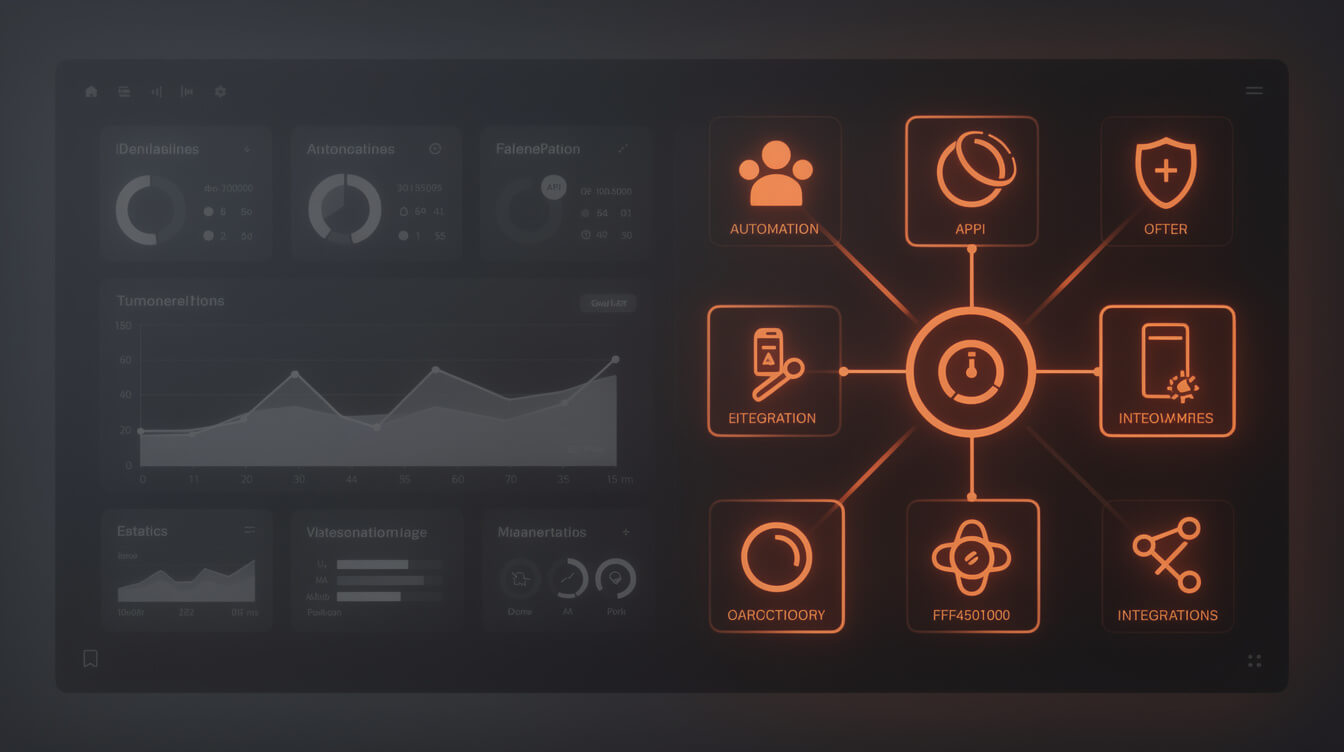
The typical comparison article ranks print on demand companies by product catalog size, base cost per unit, and shipping speed. All three metrics are real. None of them predict whether you can build a business on a platform.
A seller testing 5 designs manually will never hit a catalog ceiling. A seller running 200 SKUs per niche, publishing 30 new products a week, will hit rate limits, sync failures, and manual bottlenecks within the first month of trying to scale. The catalog size comparison does not capture that.
Shipping speed comparisons are based on averages. The outlier that wrecks your review score is never the average. What matters is how each platform handles fulfillment errors, whether you can automate order routing around a slow provider, and what happens when a print job fails.
Base cost tables are directionally useful but incomplete. They do not account for platform fees on your storefront. Printful costs more per unit than Printify on most products. That difference shrinks or reverses entirely when you add Shopify’s 1% transaction fee to the Printify-plus-Shopify equation. A seller running $10,000 per month in revenue is paying $100 per month to Shopify before they count a single app subscription. On WooCommerce, that fee is zero. The print on demand company comparison changes when you include the full stack cost.
The right questions are: does this platform have a real API, how good is the WooCommerce integration, can you run batches without hitting walls, and who actually owns the customer relationship. This guide tests all four.
The 4-question test: API access, WooCommerce plugin quality, batch capability, and store ownership

Before picking a print on demand company for your pipeline, run it through four questions. The answers will narrow the field quickly.
Question 1: Is there a real API?
A real API means documented endpoints, OAuth 2.0 or API key authentication, consistent versioning, and a rate limit you can actually work within. It means you can push products, pull order status, and update variants without opening a browser.
Several POD companies advertise API access that amounts to a handful of read-only endpoints with no write capability. That is not useful for an automation pipeline. You need to be able to create product listings, sync mockups, and trigger orders programmatically.
Question 2: How is the WooCommerce plugin maintained?
WordPress powers 43% of the web. WooCommerce is the dominant e-commerce layer on WordPress. A POD company that takes WooCommerce seriously will have a plugin with active commits, a low issue-to-fix ratio, and compatibility with current WooCommerce versions. A company that treats WooCommerce as an afterthought will have a plugin last updated 18 months ago, with known sync bugs left open.
Check the plugin changelog before you commit. If the last update was more than 6 months ago, assume WooCommerce is not a priority for that company.
Question 3: Can you run batches?
Batch capability means publishing 20, 50, or 200 products in a single automated run without manual intervention. This requires the API to support bulk product creation, mockup generation, and variant assignment at scale. It also requires the platform’s rate limits to be high enough that a batch run does not take 3 hours to complete.
Most sellers do not discover their platform’s batch ceiling until they hit it mid-campaign. Testing this before you build your workflow saves significant pain later.
Question 4: Who owns the storefront and the customer?
This is the question that separates building a business from building on someone else’s platform. If your storefront lives on a marketplace, the platform owns the search algorithm, the customer’s email address, and the ability to remove your products for any reason. If you own a WooCommerce store, you own all three.
The ownership question is particularly sharp for Amazon Merch and marketplace POD options. More on that in the marketplace section below.
Printful: the automation benchmark for print on demand companies

Printful passes the 4-question test better than any other print on demand company currently available. That is the short answer. The longer answer includes where it hits a ceiling and what you pay for the reliability.
The Printful API is production-grade. It supports product creation, variant management, mockup generation, and order management via documented REST endpoints. OAuth 2.0 authentication is available. The API has been stable across versions. Rate limits are permissive enough for real batch operations.
The WooCommerce plugin is actively maintained. The Printful team has treated WooCommerce as a first-class integration for several years. Sync is reliable. Order routing works without manual intervention. When WooCommerce releases a major version update, Printful’s plugin typically ships compatibility within weeks, not months.
Batch publishing works. A seller running a research-to-product automation pipeline can push 30+ new products per niche through Printful and into WooCommerce in a single run. Image generation, sizing, mockup creation, title writing, and listing publication all happen without a manual Canva session in the middle. That is the throughput that makes Printful the default anchor for serious POD pipelines.
The ceiling: Printful’s base costs are the highest among major POD companies. A standard unisex t-shirt runs roughly $12-14 before your markup, compared to $8-10 from the cheapest Printify providers. For sellers with thin margins, this difference is real. For sellers with strong design differentiation and higher average order values, Printful’s reliability and automation quality offset the base cost difference.
Printful also does not solve for design generation or niche research. It is a fulfillment-and-sync layer. What you research, what you design, and how fast you can iterate product lines is determined by your tooling above Printful, not Printful itself. That is where pipeline orchestration above the fulfillment layer becomes the lever.
Printify: network breadth vs pipeline reliability

Smash print-on-demand. Join the engine room.
One short email a week. Real numbers, real teardowns, the unfiltered economics behind every move.

Printify’s core proposition is the largest network of print providers available through a single integration. Over 90 providers, 900+ products, and significant geographic diversity give Printify a catalog breadth that Printful cannot match. For sellers who need specialty products, regional fulfillment, or the absolute lowest base cost on standard items, Printify is worth understanding in depth.
The API exists and supports the key operations. Product creation, order management, and variant sync are all available. The documentation is less polished than Printful’s, and the rate limits are tighter for bulk operations. Sellers running large batch creation runs sometimes hit throttling that requires retry logic in their pipeline. It is solvable, but it requires more engineering overhead than Printful.
The WooCommerce plugin has a history of sync issues that have improved but not disappeared. Product variants occasionally fail to sync correctly. Inventory status can lag. These are not dealbreakers for low-volume sellers, but they create friction for high-throughput pipelines that depend on consistent state between Printify and WooCommerce.
The provider network is a double-edged feature. More providers mean more variability. Print quality, shipping time, and customer service depend on which provider fulfills a given order. When you sell through multiple niches using different product types, you may end up with 5-8 active providers, each with its own reliability profile. Managing that complexity is real work that does not show up in catalog size comparisons.
If you are researching Printify in depth before committing, the full Printify review for WooCommerce sellers and batch automation covers the sync behavior, rate limits, and provider selection in detail.
Printify’s Pop-Up Store feature is worth noting only because it is limited to Shopify. If you are building on WooCommerce, that product does not apply to your setup. The Printify Pop-Up Store breakdown explains what the product does and where the WooCommerce alternative sits.
Bottom line on Printify: it is the right choice for sellers who need the widest product selection and are willing to invest in the pipeline engineering to work around its inconsistencies. It is a harder platform to automate at scale than Printful, but the catalog access and base cost advantages are real for the right use case.
Gelato: the global niche play among print on demand companies
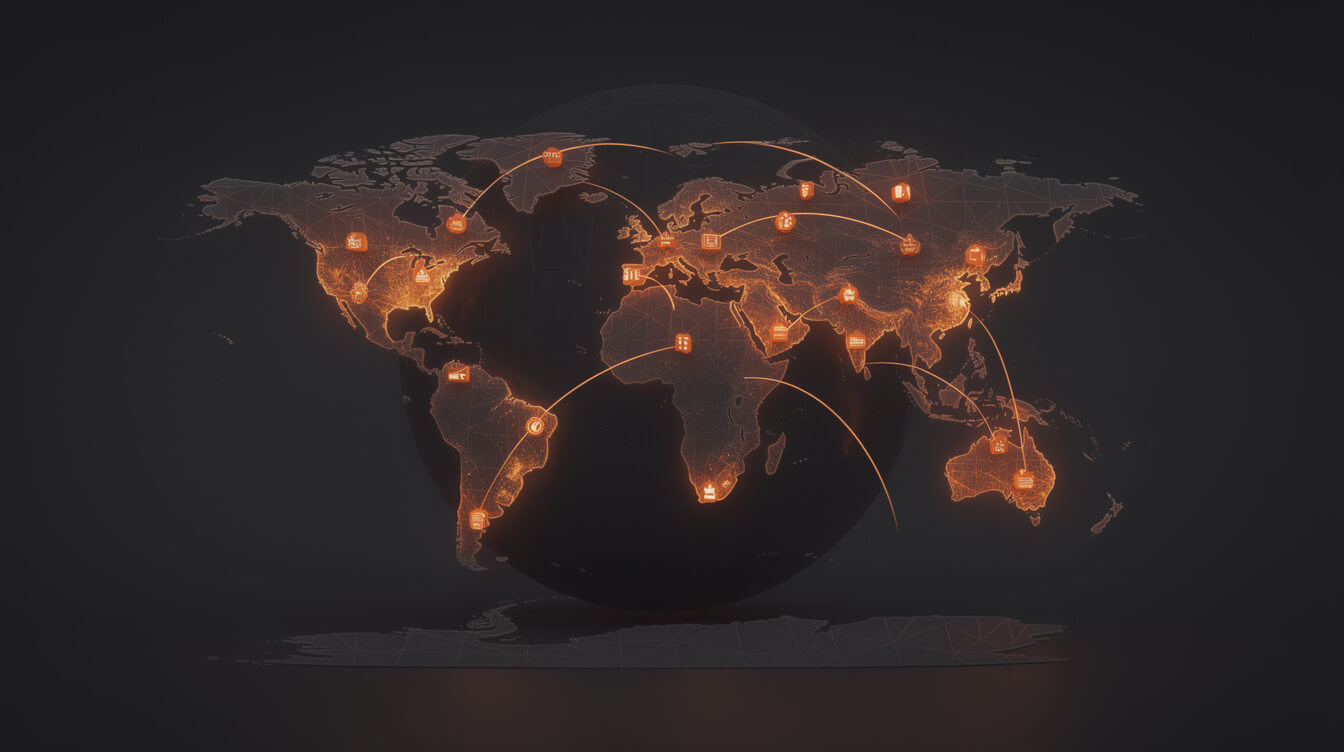
Gelato’s differentiator is geographic distribution. With 32 production facilities across North America, Europe, Asia, and Australia, Gelato can fulfill orders from a hub close to the customer in most major markets. For sellers targeting European customers or running a globally distributed store, Gelato’s local fulfillment advantage translates to faster delivery and lower international shipping costs.
The API is functional and covers the core operations. WooCommerce integration is available. For a seller whose primary market is Western Europe, Gelato’s WooCommerce plugin performs competitively with Printful’s. For a seller whose primary market is North America, Gelato’s North American catalog and provider network are thinner than either Printful or Printify.
Gelato does not have a batch automation product in the way Printful does. Product creation through the API works for individual listings, but the tooling for bulk creation is less developed. A seller running a high-throughput research-to-product pipeline will find Gelato harder to integrate than either of the top two options.
The strongest Gelato use case is a seller who already has Printful or Printify as a North American base and wants to add Gelato as a European fulfillment layer for a specific product line. Running them in parallel, with geographic routing logic, is a more advanced setup but delivers real cost and shipping-speed wins for international audiences.
For sellers just starting to build their POD pipeline, Gelato is typically not the first integration to prioritize. Once you have a functioning pipeline on Printful or Printify, adding Gelato for specific geographic markets is a meaningful optimization.
Automate your POD pipeline. 30x your throughput.
MEGA handles niche research, image generation, mockup creation, title writing, and listing publication end-to-end, running on top of Printful and WooCommerce. No Canva sessions. No manual uploads. A complete product in under 7 minutes.
Marketplace POD: the store ownership tradeoff you are not told

Amazon Merch on Demand, Redbubble, and Teepublic represent a different category of print on demand companies. They are not fulfillment partners you integrate with your store. They are marketplaces where you upload designs and the platform handles everything, including the customer relationship.
The business model has a clear upside: no setup cost, no storefront to manage, and access to Amazon’s search traffic for Merch by Amazon. For a new seller who wants to test a design idea without any infrastructure investment, Merch by Amazon is a reasonable starting point.
The limits become apparent once you try to scale. Amazon Merch uses a tier system that caps how many designs you can upload based on your sales history. Tier 10 allows 10 active designs. Tier 25 allows 25. Moving up through tiers requires sales velocity, which requires existing traffic, which is circular for a new account. Many sellers spend months at Tier 10 with no clear path to meaningful volume.
The deeper problem is ownership. On Merch by Amazon, Amazon owns the customer. You receive a royalty per sale, but you do not receive the customer’s email address, purchase history, or lifetime value. If Amazon decides to remove your products, suspend your account, or change the royalty structure, your revenue disappears with no recourse. The full Merch by Amazon breakdown covers the tier math and royalty economics in detail.
Redbubble and Teepublic operate on a similar marketplace model. Your designs live on their platform. Discovery happens through their search algorithm. When the algorithm changes, your traffic changes. When a design gets flagged, it is removed. You have no direct relationship with the customer who bought your work.
This is not an argument that marketplace POD is worthless. It is an argument that marketplace POD is a distribution channel, not a business foundation. The sellers who build durable POD businesses do so on platforms where they own the storefront, the customer email, and the margin structure. The cost and complexity of running a WooCommerce store look different when you account for what you own versus what you rent.
For a detailed look at why the owned-store economics beat the marketplace model at scale, the POD economics for existing businesses breaks down the numbers across different revenue levels.
Which print on demand company fits your business stage

The right print on demand company depends on where you are building from and where you are trying to go. Here is a practical framework for matching platform to stage.
Stage 1: testing your first niche
If you are running your first product tests with a small catalog and limited capital, Printify’s lower base costs on standard items give you more margin to experiment. Set up a WooCommerce store, connect the Printify plugin, and run 20-30 product variants to find what your audience responds to. Accept that some sync friction is part of the cost. Your goal at this stage is market signal, not pipeline efficiency.
Stage 2: building a pipeline you can scale
Once you have a working niche and want to scale throughput, Printful becomes the better anchor. The API quality and WooCommerce plugin reliability reduce friction at exactly the point where friction costs you the most: when you are trying to publish 50 products a week without manual intervention. The higher base cost is a real trade, but the reduction in pipeline engineering overhead is worth it for most sellers at this stage.
At Stage 2, the Shopify question also becomes concrete. If you are still on Shopify, you are paying a 1% transaction fee on every order plus monthly app subscriptions that add up faster than the plan page suggests. A seller doing $10,000 per month is paying $100 per month in transaction fees before a single app. At $20,000 per month, that is $200 per month. The full cost breakdown of Shopify at $5k, $10k, and $20k per month puts the real numbers on the table. Moving to WooCommerce at Stage 2 typically pays for itself within the first quarter.
MEGA was built to solve the Stage 2 bottleneck directly. The research-to-product pipeline handles niche research, image generation, mockup creation, title writing, SEO metadata, and listing publication end-to-end, generating a complete product in under 7 minutes. It runs on top of Printful’s API and pushes directly to WooCommerce, which means the full stack cost at Stage 2 includes zero Shopify platform fees. Try MEGA and see what 30x throughput looks like on your first niche.
Stage 3: expanding to international markets
Once you have a stable domestic pipeline, adding Gelato for European or Asia-Pacific fulfillment is the logical next optimization. Run Printful for North American orders, Gelato for international, with geographic routing in your WooCommerce setup. This adds complexity but delivers meaningful shipping-cost and delivery-time improvements for global audiences.
Most sellers do not need to think about Stage 3 until they have Stage 2 fully operational. The tendency to over-engineer the platform stack before product-market fit is confirmed is one of the most common sources of wasted effort in POD.
What to avoid at every stage
Building your primary revenue stream on a marketplace you do not control is a risk that does not show up until it does. Supplement with Merch by Amazon if the traffic makes sense. Do not depend on it. Do not build your customer list there, because there is no customer list to build.
The best Shopify alternative for POD sellers covers the WooCommerce migration path for sellers already on Shopify who are ready to move their primary store to an owned platform.
Frequently asked questions about print on demand companies

Which print on demand company has the lowest base cost?
Printify’s network includes providers with lower base costs than Printful on standard apparel. The cheapest providers on Printify can be 20-30% less expensive per unit on basic t-shirts. The trade is reliability variability across the provider network. For sellers prioritizing margin on commodity products, Printify is typically cheaper. For sellers prioritizing pipeline reliability, Printful’s higher base cost is the price of consistency.
Can you use multiple print on demand companies at the same time?
Yes. Many serious sellers run Printful for core product lines and add Gelato for international fulfillment or Printify for specialty items not in Printful’s catalog. WooCommerce supports multiple fulfillment integrations. The complexity of managing multiple providers is real but manageable with the right pipeline tooling. Each integration adds SKU management overhead, so the decision to run multiple platforms should be driven by a specific product or market need, not the assumption that more options are always better.
Is Printful worth the higher cost?
For sellers building an automated pipeline, yes. The API quality, WooCommerce plugin reliability, and batch capability translate directly into less time debugging sync issues and more time publishing products. For sellers at low volume testing designs manually, Printify’s lower base cost is the better starting point. The answer changes at scale.
Do marketplace POD platforms like Merch by Amazon count as print on demand companies?
They use print on demand fulfillment, but they operate as marketplaces, not as fulfillment partners. The business model is fundamentally different: you are a supplier to their marketplace rather than a store owner using their fulfillment. That distinction matters when you think about customer ownership, pricing control, and long-term business resilience.
What is the best print on demand company for WooCommerce?
Printful. The WooCommerce integration is the most reliable and actively maintained. The API supports the full product creation and order management workflow needed for a serious automated pipeline. For sellers on WooCommerce building at volume, Printful is the anchor integration. Printify is a strong secondary option for catalog breadth and lower base costs on specific products.
The final score: picking a print on demand company for the long term
The standard comparison answers the question for a one-time buyer. This guide answers it for a builder.
Print on demand companies are not interchangeable. Printful offers the best automation foundation for a WooCommerce pipeline. Printify offers the widest catalog and lowest base costs, at the cost of more pipeline engineering overhead. Gelato is the right international fulfillment layer once your domestic pipeline is stable. Marketplace platforms are distribution channels, not business foundations.
The most important variable in your POD economics is not which print on demand company you choose. It is how fast you can iterate product lines, find what the market responds to, and publish at volume without a manual Canva session in between every new design. That throughput problem lives above the fulfillment layer. Solving it is what separates sellers who scale from sellers who plateau.
If you are on WooCommerce and Printful and want to see what automated research-to-product looks like at 30x the throughput of a manual workflow, the WooCommerce vs Shopify numbers for POD sellers will give you the full cost picture for the stack.

Implement AI. 30x your throughput. Get a 30-min call with the founder.
Drop your details and book a free 30-minute discovery call. Personalized advice on your POD stack, your margin, and where AI fits. No pitch, no fluff.