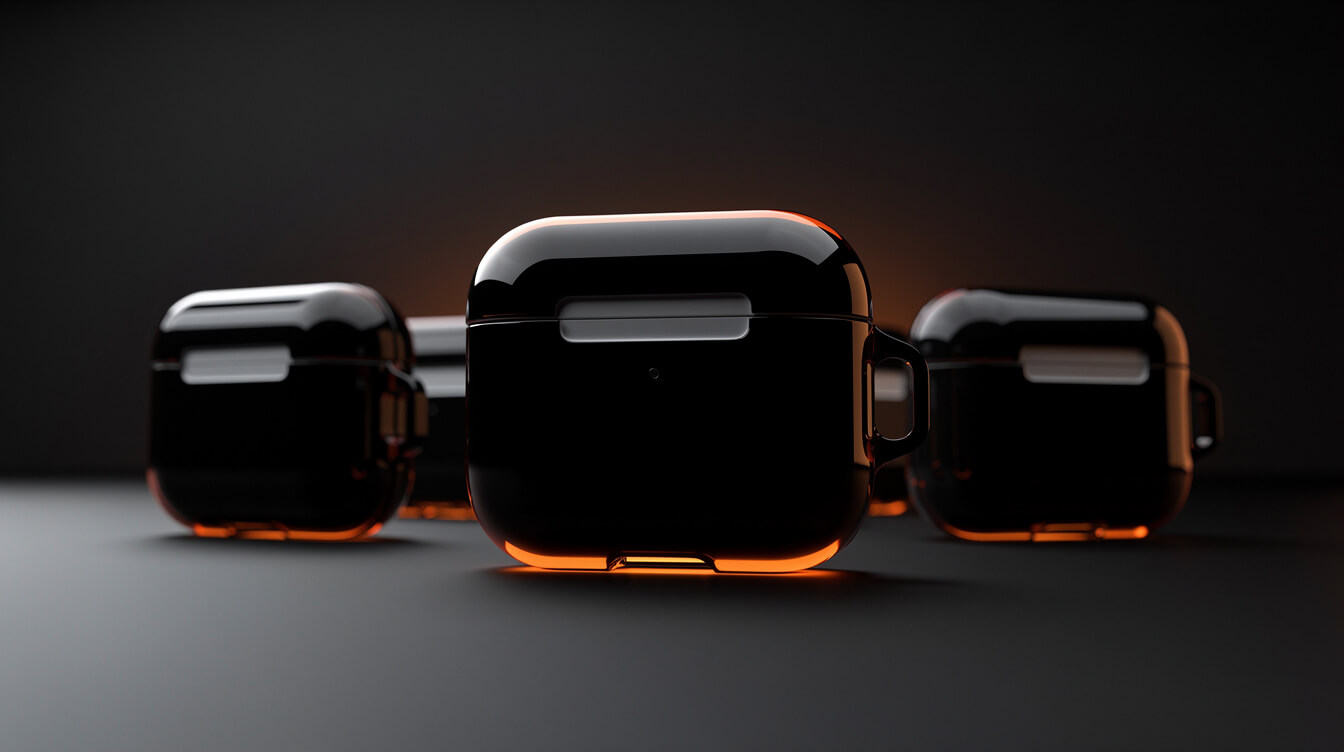
Custom AirPod cases for POD stores: which providers support them, UV printing explained, and the margin math at $20 retail
Custom AirPod cases are one of those products that looks simple on the surface. Small. Lightweight. Low ticket. But for POD sellers evaluating whether to add them to an existing tech accessories lineup, the question is not “can I sell this?” It is “does the unit economics work, and which provider can actually fulfill them?”
At $20 retail on Shopify, the platform’s 1% override costs you $0.20 per sale. That $0.20 is 1 to 1.5 percent of your entire gross margin on that unit, gone to the platform before you pay for shipping. WooCommerce captures that back. Over 200 orders a month, the difference is $480 a year on a single low-ticket SKU.
This guide covers which POD providers carry custom AirPod cases, how UV printing on hard plastic actually works (and how it differs from sublimation on fabric), the full unit cost math at 1, 10, and 50 units, the niche verticals that convert, and how to set up the no-minimum dropship workflow on WooCommerce plus Printful.
Which POD providers carry custom AirPod cases
Before you source anything, you need to know who can fulfill it at no minimum order quantity. The landscape here is more limited than apparel, but there are clear options.
Printful. Printful carries custom AirPod cases in their accessories catalog. The print method is UV printing directly onto hard TPU plastic shells. Printful supports multiple AirPod generations, including AirPods 3rd generation, AirPods 4, and AirPods Pro 2. Each generation is a separate SKU because the physical dimensions differ. There is no MOQ. You list, a customer orders, Printful prints and ships.
Printify network. Printify does not manufacture AirPod cases in-house, but their vendor network includes suppliers who carry them. Availability varies by vendor and region. When you browse Printify’s product catalog, filter for “accessories” or search “AirPod” to see what is available in your preferred fulfillment region. US-based vendors are the strongest option for domestic orders.
Third-party fulfillment. If neither Printful nor Printify carries the specific AirPod generation your audience uses, a third path is white-label suppliers on Alibaba or Faire who offer custom UV printing at low MOQs (25 to 50 units minimum). This path requires upfront inventory and introduces the logistics and quality-control overhead that makes POD attractive in the first place. Unless you have a confirmed audience with demonstrated demand, stick with Printful or Printify to start.
One practical note: Apple updates AirPods hardware roughly every 18 to 24 months. When a new AirPods model launches, POD providers take time to add the new SKU. Check your chosen provider’s catalog for the current supported models before building product listings. Selling an AirPods case for a model your buyer doesn’t own is a guaranteed return.
For a comparison on how the UV printing method applies to phone cases more broadly, see our guide on custom phone cases for POD stores, which covers the same provider landscape for a higher-volume tech category.
UV printing on TPU plastic: how it differs from sublimation on fabric
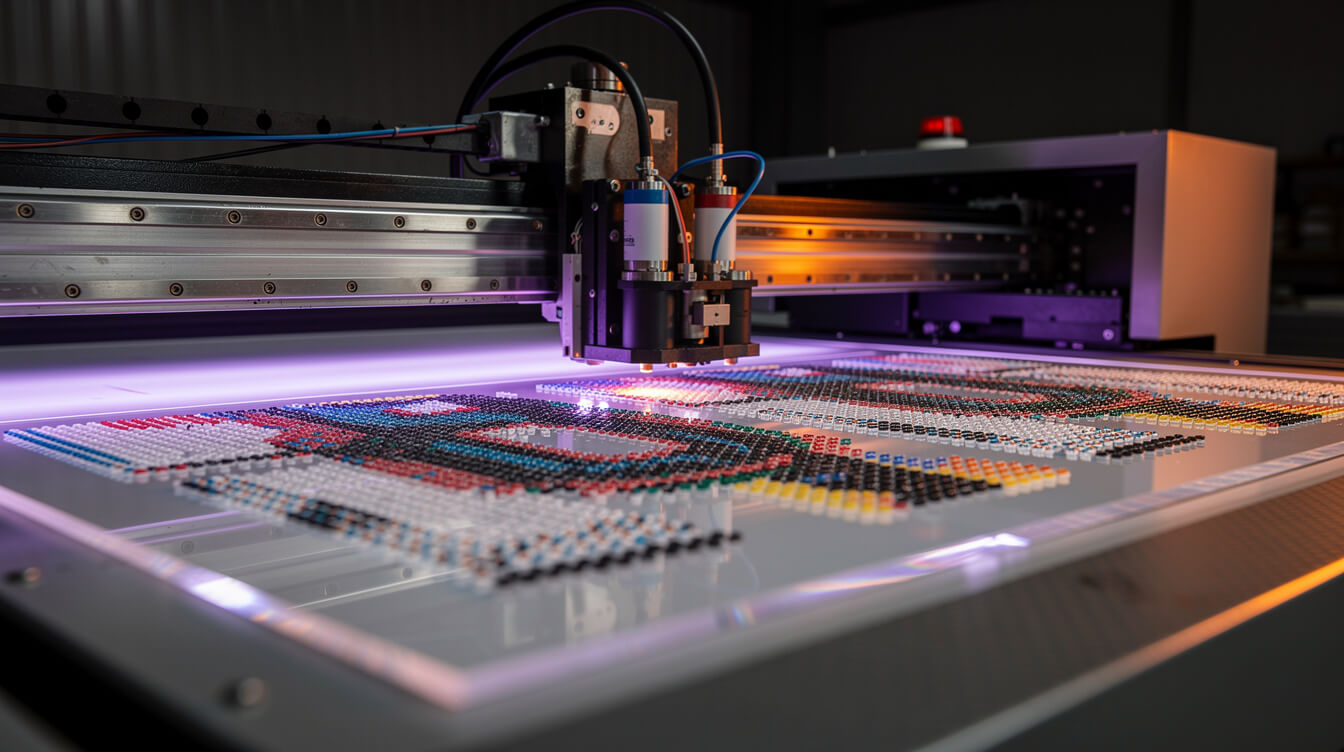
If you have sourced sublimated bandanas, mouse pads, or beach towels, your instinct will be to assume the same print mechanism applies to AirPod cases. It does not. Understanding the difference matters for artwork preparation and for setting realistic expectations on print quality and durability.
Sublimation is a dye-transfer process that requires two conditions: (1) a substrate that is at least 80% polyester, and (2) heat and pressure to convert the dye from solid to gas, bonding it at the molecular level into the fabric fibers. The result is a print that becomes part of the fabric itself. It cannot crack, peel, or wash out, because the dye is not sitting on the surface.
Sublimation does not work on hard plastic. AirPod cases are made from TPU (thermoplastic polyurethane), a rigid or semi-rigid polymer. It has no fiber structure for the dye to bond into. Attempting sublimation on TPU produces no usable output.
UV printing is a fundamentally different process. A UV flatbed printer applies UV-curable ink directly onto the surface of the case using inkjet nozzles. As the ink is deposited, UV LEDs instantly cure it, locking the ink to the surface in its liquid state. The result is a hard, smooth layer of cured ink bonded to the plastic shell.
The practical implications for sellers:
- Artwork file format: UV printing supports full-color JPEG and PNG files with no substrate color limitations. Unlike sublimation on white polyester, you can print dark or light designs on both clear and solid-color TPU shells.
- Durability: UV-cured ink on hard plastic holds up well under normal use. It will not bubble or peel under standard conditions. Abrasive surfaces (keys in a pocket, for example) can scratch UV prints over time, similar to any painted hard plastic product.
- Design resolution: AirPod cases are small. The printable surface area is roughly 4 cm x 5 cm on most models. Fine detail at small scale is achievable with UV printing, but text under 8 to 10 points will be hard to read at this size. Plan designs accordingly.
- Color accuracy: UV printing uses CMYK ink. Designs built in RGB (standard for screen) should be converted to CMYK before submitting to avoid color shift. Printful’s design tool handles this conversion automatically if you use their editor.
The bottom line: if you are adding AirPod cases alongside fabric products in your store, the provider for your apparel or home goods may not be the right provider for the cases. Printful handles both categories well because they have dedicated UV printing equipment in addition to their DTG and sublimation lines.
Unit cost math: POD wholesale vs. consumer retail at 1, 10, and 50 units
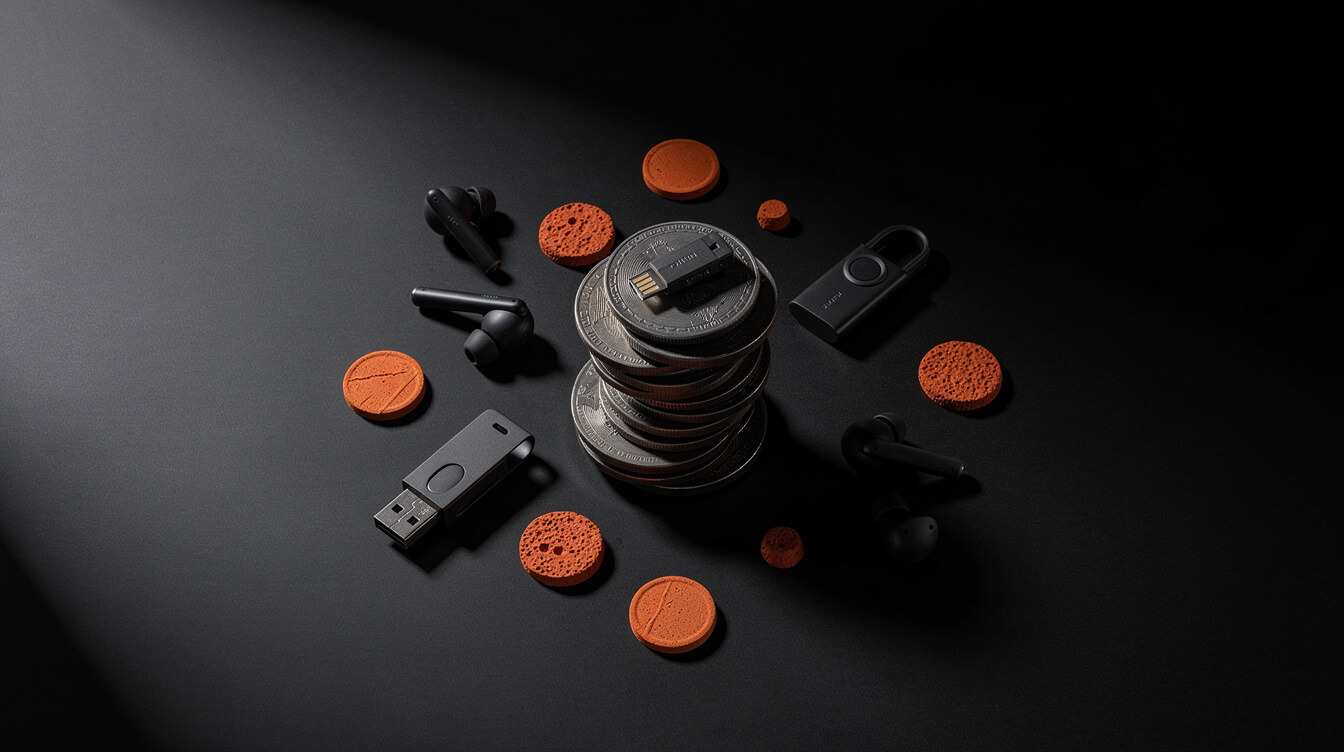
The margin math on AirPod cases is thinner than on high-ticket items like hoodies or canvas prints, but it is workable, especially at volume. Here is the breakdown.
At 1 unit (standard POD dropship):
Base cost via Printful: approximately $10 to $13 per case, depending on model and variant.
Shipping: $3.50 to $4.50 domestic US (standard).
Landed cost to your store: $13.50 to $17.50.
Retail price: $20 to $25.
Gross margin: 28 to 43%, or $5.50 to $10 per unit in dollar terms.
The margin percentage is lower than on a $55 hoodie, but the product requires no design complexity and no customer-service friction when quality is consistent.
At 10 units (batch order for a specific design):
The Printful base cost does not change with quantity on standard dropship orders. POD pricing is flat per unit regardless of how many units are in a run. If you want cost breaks, you need to move to manufacturer-direct sourcing with a 25+ MOQ, which introduces inventory risk. For most POD stores, the flat per-unit pricing is a feature, not a bug.
At 50 units (manufacturer-direct, for stores with proven demand):
At a UV printing specialist with a 50-unit run, per-unit cost drops to $4 to $6. At $22 retail, your gross margin climbs to 73 to 82%, but you now hold $200 to $300 in inventory plus the risk of model mismatch if Apple releases new AirPods mid-run.
The POD math favors the flat-pricing model for stores in the 0 to 50 orders per month range. Only consider manufacturer-direct fulfillment once you have sold more than 100 units of a specific design with a specific case model, and you are confident in the demand signal.
Compare this to the unit cost analysis we ran for custom mugs, where the base cost and margin structure are similar at the low end but mugs have a higher natural gifting ceiling at $25 to $35 retail.
The Shopify 1% override fee at $18-22 AOV: why low-ticket products feel it proportionally hardest

Smash print-on-demand. Join the engine room.
One short email a week. Real numbers, real teardowns, the unfiltered economics behind every move.

Shopify’s platform override fee is 1% on transaction revenue for stores using third-party payment processors (not Shopify Payments). At a $55 hoodie, the 1% is $0.55 per sale, roughly 1 to 2% of your gross margin. Manageable.
At a $20 AirPod case, the 1% is $0.20 per sale. That $0.20 represents 2 to 3.6% of your gross margin on that unit, depending on your pricing. The fee does not scale proportionally to your margin. It scales to your revenue. Low-ticket products with thin margins get hit hardest in percentage terms.
Here is the annual math for a store selling 200 AirPod cases per month at $20:
- Shopify 1% fee: $0.20 per sale x 200 orders x 12 months = $480 per year
- WooCommerce hosting cost: $15 to $30 per month = $180 to $360 per year, regardless of revenue
- Annual advantage of WooCommerce at this volume: $120 to $300 in kept margin
At 500 orders per month, the Shopify fee becomes $1,200 per year on AirPod cases alone, while WooCommerce stays flat at $180 to $360. The delta widens as volume grows.
The same math applies to other low-ticket POD products. We ran the numbers for custom socks, where the $18 to $22 AOV makes the Shopify 1% the single largest controllable cost after the base case price. Sellers who moved to WooCommerce captured that margin without changing their product or pricing.
MEGA automates the WooCommerce side of this pipeline, including product creation, variant setup, SEO, and Printful sync, so you are not trading the Shopify fee for manual setup overhead. The economics work because the workflow is automated from the start. See how MEGA handles the full product pipeline.
One important note: Shopify Payments (Shopify’s in-house processor) waives the 1% override fee if you use it exclusively. This is not available in all countries, and switching processors mid-business has practical trade-offs. Many international sellers and sellers who use Stripe for subscription products cannot access Shopify Payments without restructuring their entire payment setup. WooCommerce has no such constraint.
Niche verticals for custom AirPod cases that work in POD
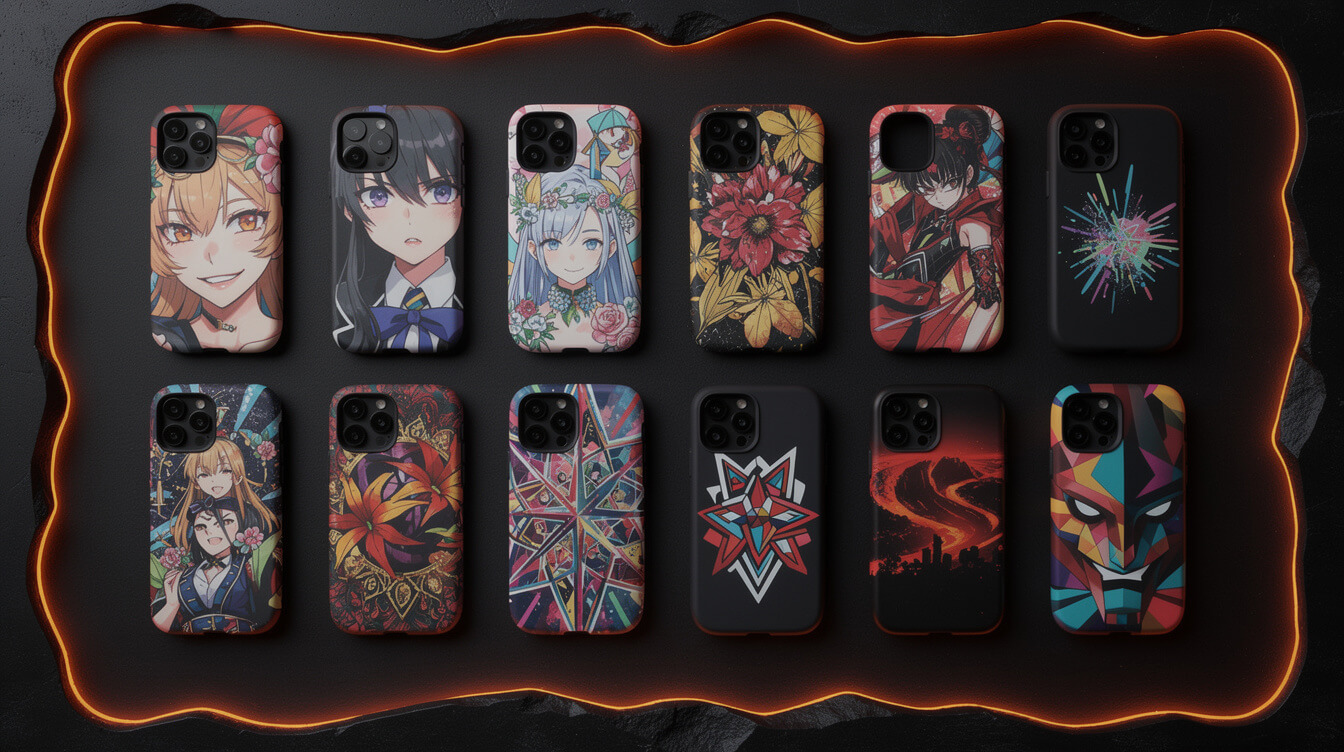
AirPod cases are a personal item that people carry everywhere. The purchase decision is often emotional, not functional. The best-converting niches tap into identity, fandom, and affection.
Fan art and anime. This is the highest-volume niche for small tech accessories. Anime, manga, and video game fan communities are vocal, online, and willing to spend on branded merchandise. The key constraint: you cannot print licensed characters (Naruto, Pokémon, Attack on Titan) without a license. Original fan-inspired art that evokes the aesthetic without reproducing specific characters is the workaround many sellers use. Commission or generate artwork in the visual style of the fandom without reproducing protected intellectual property.
Pet portraits. A custom AirPod case with your dog or cat on it is an impulse purchase at $20 to $25. Pet portrait cases require a customization workflow (buyer uploads a photo, seller routes the file to a design step before fulfillment), which adds complexity. If you have a WooCommerce product add-on field for file upload, this workflow is manageable. On Shopify, you would typically pay $19 to $49 per month for a Personalization App to handle this. WooCommerce Product Add-Ons is native without a recurring fee.
Monogram and initials. Clean, minimal monogram cases are perennially popular. Two to three initials in a stylized font on a solid or marbled background. No copyright risk, high perceived personalization, and design files are simple to produce at scale. This vertical also benefits from WooCommerce’s native product variation system, where you can set up an initial-selector dropdown without a paid app.
K-pop and music artist fandom. K-pop fandoms are among the most active product-buying communities online. Original artwork celebrating a band aesthetic (color schemes, motifs, non-portrait imagery) converts well. Actual artist photography or trademarked logos are off-limits. The design challenge is creating something that reads as “for this fandom” without reproducing protected assets.
Gaming and esports. Gamer identity is strong, and tech accessories are natural merchandise for a gaming-adjacent audience. Original pixel art, character silhouettes, and gaming-themed abstract designs (controller shapes, game UI elements in artistic form) work well. Color palette: dark, high-contrast, neon accents.
Sports teams (non-licensed). Schools, local sports leagues, and amateur teams cannot afford licensed merchandise. A POD store offering team-color AirPod cases with a school mascot or team name fills a genuine gap. Outreach to team managers or school merchandise coordinators is a direct sales channel for this vertical, with 10 to 30 unit batch orders per team per season.
Listing custom AirPod cases on WooCommerce plus Printful: the no-minimum dropship workflow
The operational setup for custom AirPod cases on WooCommerce with Printful fulfillment is straightforward, but there are a few steps specific to hard-case products that differ from the apparel workflow.
Step 1: Set up the Printful WooCommerce plugin. Install the official Printful plugin from the WooCommerce marketplace. Connect your Printful account via API key. The plugin syncs your Printful product catalog directly into WooCommerce, including all product variants, pricing, and fulfillment routing.
Step 2: Create the product in Printful’s product creator. Inside Printful, navigate to your product catalog and find AirPod cases. Select the AirPod generation you want to sell. The design area shows the exact printable surface. Upload your artwork as a PNG (transparent background recommended for cases where the base color shows through the design). Set your retail price in Printful’s retail price field. Printful calculates your profit margin automatically.
Step 3: Sync to WooCommerce. After setting up the product in Printful, push it to your WooCommerce store. The plugin creates the product automatically with variants (AirPod model), your retail price, and a Printful-managed order routing rule. When a customer buys the product in your WooCommerce store, Printful receives the order automatically and begins production.
Step 4: Optimize the product listing for SEO. The Printful sync creates a base product listing, but it does not write your SEO title, meta description, or product description for you. This is where most POD sellers leave money on the table. A product titled “AirPod Case” with no description will not rank. A product titled “Custom AirPods 4 case, anime art, no minimum order” with a full description covering material, print method, care instructions, and shipping timeline will.
Step 5: Set up the variant structure. Each AirPod generation is a separate product or a separate variant within a product. The safer approach for SEO is to create separate products per AirPod model, each with its own optimized title and meta description. One product per model means cleaner keyword targeting and no variant-selection confusion for buyers who are already committed to one model.
The full workflow from listing to first sale requires no upfront inventory, no warehousing, and no fulfillment overhead. The only variable cost is the Printful base price per unit at time of order.
Tech accessories as a POD category: the opportunity, the compatibility risk, and how to manage model-specific SKUs
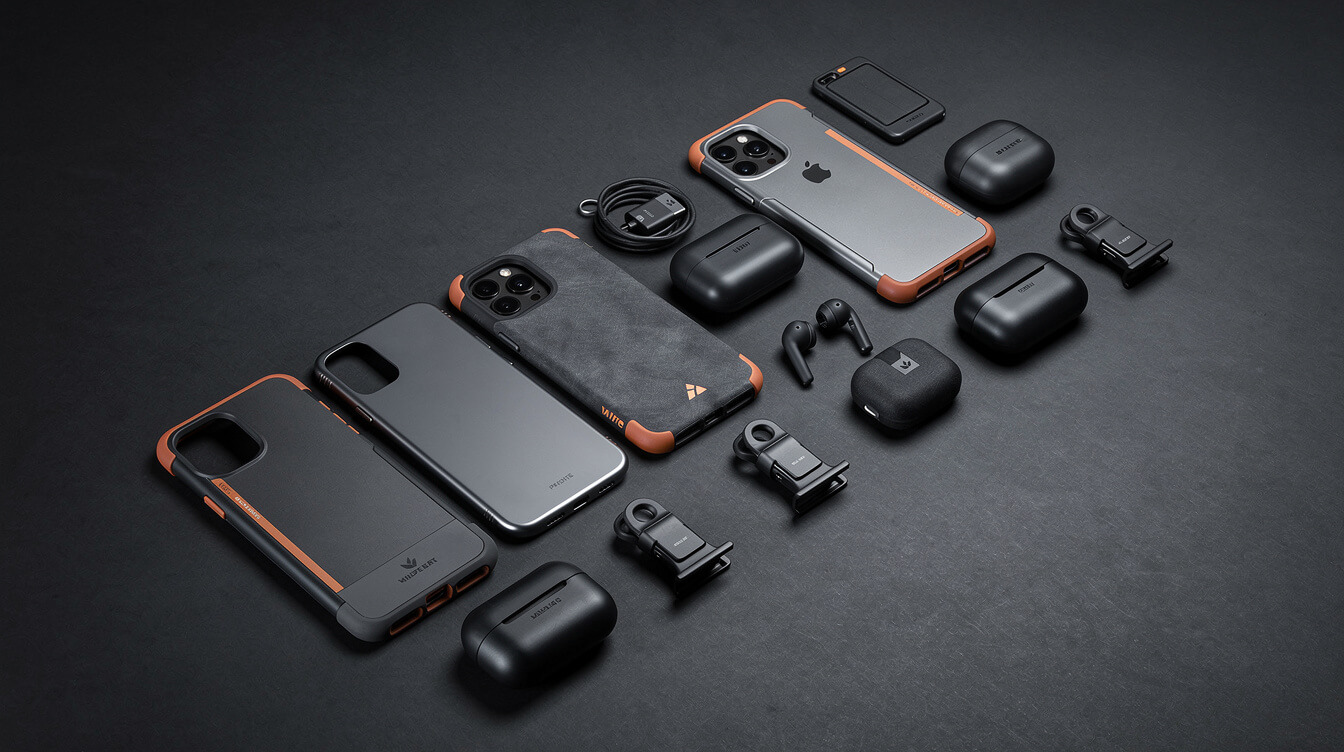
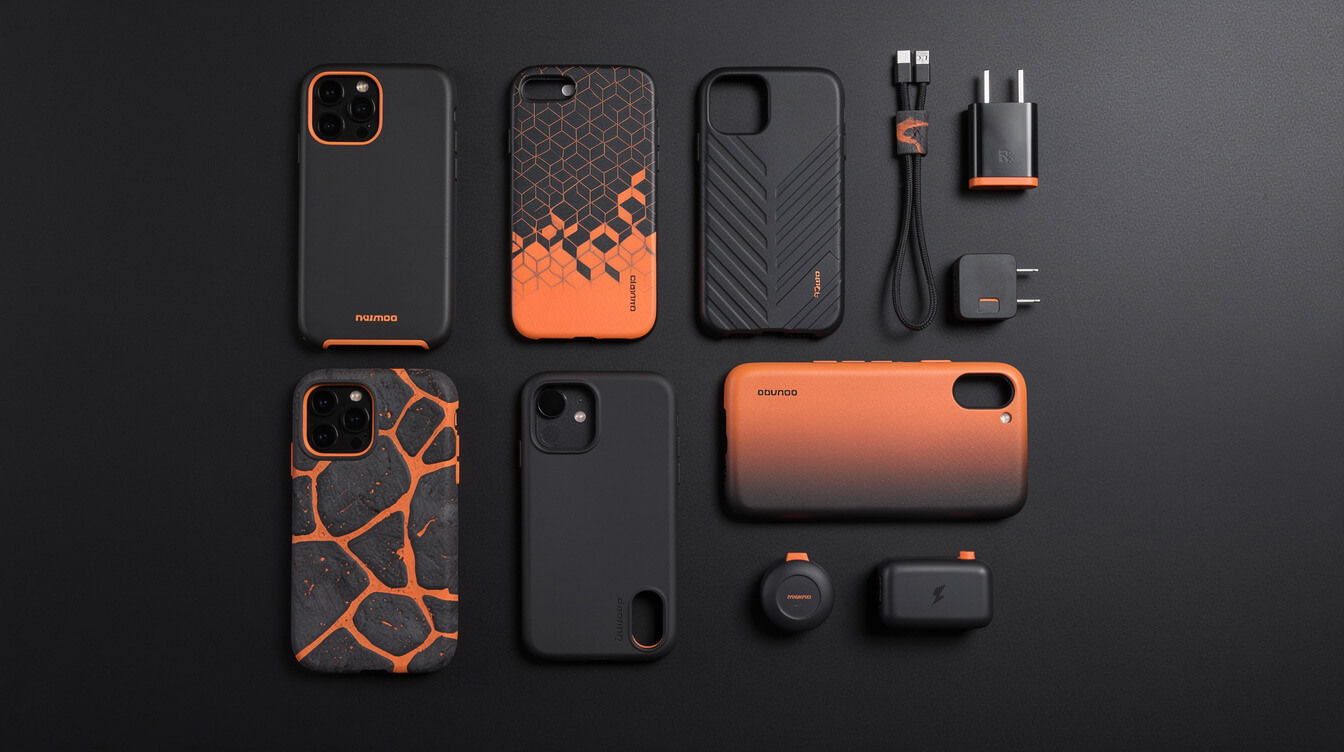
Custom AirPod cases sit within a broader POD category that includes phone cases, laptop sleeves, tablet cases, and cable organizers. The category has genuine growth momentum because consumers are buying more wireless audio products every year and personalizing tech is a natural extension of personalized apparel.
The structural opportunity: zero editorial content exists for POD sellers on tech accessory product economics. The SERP for “custom AirPod case” is 100% B2C consumer brands selling to end consumers. Not one result explains the POD seller workflow, the provider landscape, or the unit economics from a store operator’s perspective. That is the same gap that made custom phone cases a high-performing content topic, and it applies here.
The compatibility risk is real, however, and must be managed proactively. There are currently four main AirPod product lines with physical case differences: AirPods 3rd generation, AirPods 4, AirPods Pro 2, and AirPods Max (the over-ear model). Each requires a different case mold. AirPods Max cases are very different products (full-sized headphone covers, not small plastic shells) and are typically not in standard POD catalogs.
How to manage model-specific SKUs:
- List only currently supported models. Do not list AirPods Pro 1 or AirPods 2nd generation if your provider has discontinued support. A case that does not fit is a return, a bad review, and a refund.
- Update listings when Apple announces new hardware. Set a calendar reminder for Apple event dates (typically September and March). When a new AirPods model launches, check your provider’s catalog within 30 days. If the new model is not yet supported, temporarily mark the affected listings as unavailable rather than letting buyers order a non-existent variant.
- Use product titles that specify model clearly. “Custom AirPods Pro 2 case” in the product title reduces the chance of a buyer ordering the wrong case model. Ambiguous titles (“custom AirPod case”) invite model mismatch complaints even when the product listing has a dropdown for model selection.
- Keep design files resolution-matched to the printable area. Each AirPod case model has slightly different dimensions. A file built for an AirPods 3 case may crop differently on an AirPods Pro 2 case. Maintain separate design files, properly dimensioned, for each model in your lineup.
For sellers who have already built out a phone case catalog, adding AirPod cases is a natural catalog extension with minimal new infrastructure. The design aesthetic, the niche audience, and the Printful + WooCommerce workflow are identical. The unit economics are thinner than phone cases (lower retail ceiling), but the market demand is real and the SERP is uncontested from a POD seller editorial standpoint.
Looking at the broader POD catalog format, our custom body pillow guide covers how to structure product listings for niche-specific accessories that require detailed variant management, which applies directly to the model-specific SKU challenge here.
Conclusion: custom AirPod cases work in POD with the right provider and platform
Custom AirPod cases are not a hero product. They are a catalog addition that fills a genuine consumer demand, works within the no-minimum Printful dropship model, and gives you a natural upsell alongside phone cases and other tech accessories.
The economics work on WooCommerce. At $20 retail and 200 orders per month, you save $480 per year compared to running the same store on Shopify with a third-party payment processor. That margin is not recovered by selling more units. It is captured by choosing the right platform from the start.
The niche works because no POD editorial content exists for this product. Sellers who publish product listings and educational content on the category while it is uncontested will hold rankings when competition eventually appears.
Printful is the most reliable fulfillment path for AirPod cases today. Confirm the supported AirPod models before launching, maintain model-specific design files, and update your listings when Apple releases new hardware. Those three operational habits prevent the returns and mismatch complaints that hurt tech accessory stores disproportionately.
The category has a ceiling. AirPods are a premium product and their owner base is engaged but finite. That ceiling is plenty large for a focused POD seller running a tech accessory catalog alongside apparel or home goods. It does not need to be your anchor product. It just needs to earn its space in the catalog.
Implement AI. 30x your throughput. Get a 30-min call with the founder.
Drop your details and book a free 30-minute discovery call. Personalized advice on your POD stack, your margin, and where AI fits. No pitch, no fluff.