Custom socks for POD stores: which providers support them, print methods explained, and the margin math at $20 retail
Custom socks sit at a strange intersection: 14,800 searches per month, zero difficulty, and almost no editorial content written for POD sellers. Every result in Google is a vendor product page. DivvyUp. CustomSockShop. Amazon. SockClub. None of them explain how to add custom socks to your own print-on-demand store, how much they cost at Printful or Printify, or whether the margin math works at $20 retail.
This guide covers all of it. Which providers carry custom socks, how they are printed, what you pay at 1, 10, and 50 pairs, how to price for a workable margin, and which niches have proven demand. If you are building or expanding a POD store and wondering whether socks belong in your product mix, here is the honest breakdown.
Why custom socks belong in your POD product mix (and why most sellers skip them)
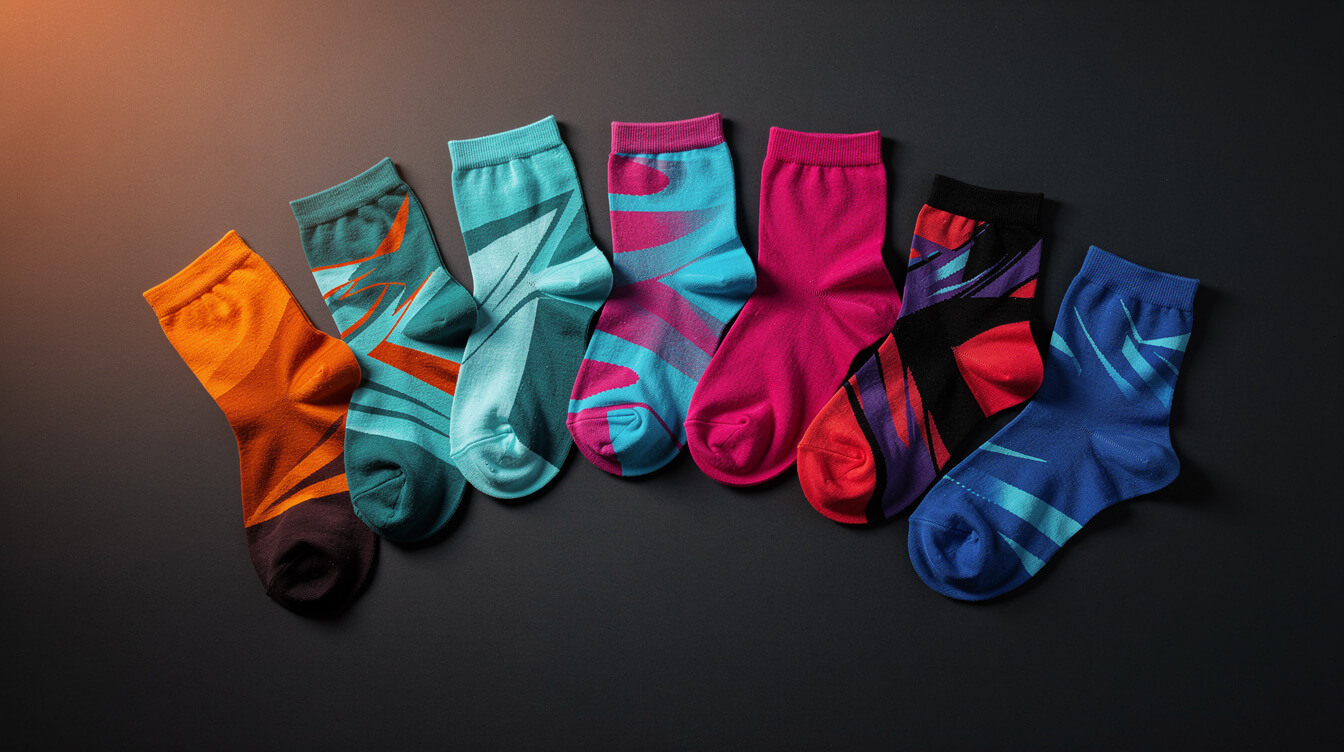
Most POD sellers default to shirts, hoodies, and mugs. Those are the right starting categories, but they create a common problem: every store in your niche looks identical. Custom socks break that pattern at a unit cost that keeps margins intact.
The economic case starts with the search data. At 14,800 monthly searches with a difficulty score of zero, “custom socks” is one of the most underserved high-volume terms in the accessories cluster. Sellers are skipping it not because the margin is bad, but because they have not looked at the numbers.
There are three reasons socks work as a product category for POD stores:
- Universal fit. Unlike shirts and hoodies, socks are sized loosely (S/M/L) or one-size-fits-most. That eliminates size-chart friction and reduces return risk, which is meaningful when you are operating without inventory.
- Gift-friendly. Socks convert well as gifts across almost every niche — pets, sports teams, holidays, brand merch. Gift buyers are less price-sensitive than utility buyers, which supports the $20-$28 retail band without friction.
- Repeat purchase potential. Socks wear out. A customer who buys custom socks for their dog’s birthday is a candidate for a repeat order the following year. That lifecycle is longer than it appears.
The reason sellers skip them is simpler: they assume socks require knitting machines and minimum order quantities. That was true for custom socks five years ago. It is not true today. Printful and Printify both carry sublimation-printed custom socks with no minimums, no inventory, and direct fulfillment to your customer.
Accessories like socks also complement your existing apparel products. A store selling custom pet portrait shirts can add matching socks without any new brand positioning. The design assets often transfer directly. One image set, two product listings.
Which POD providers carry custom socks: Printful vs Printify catalog comparison
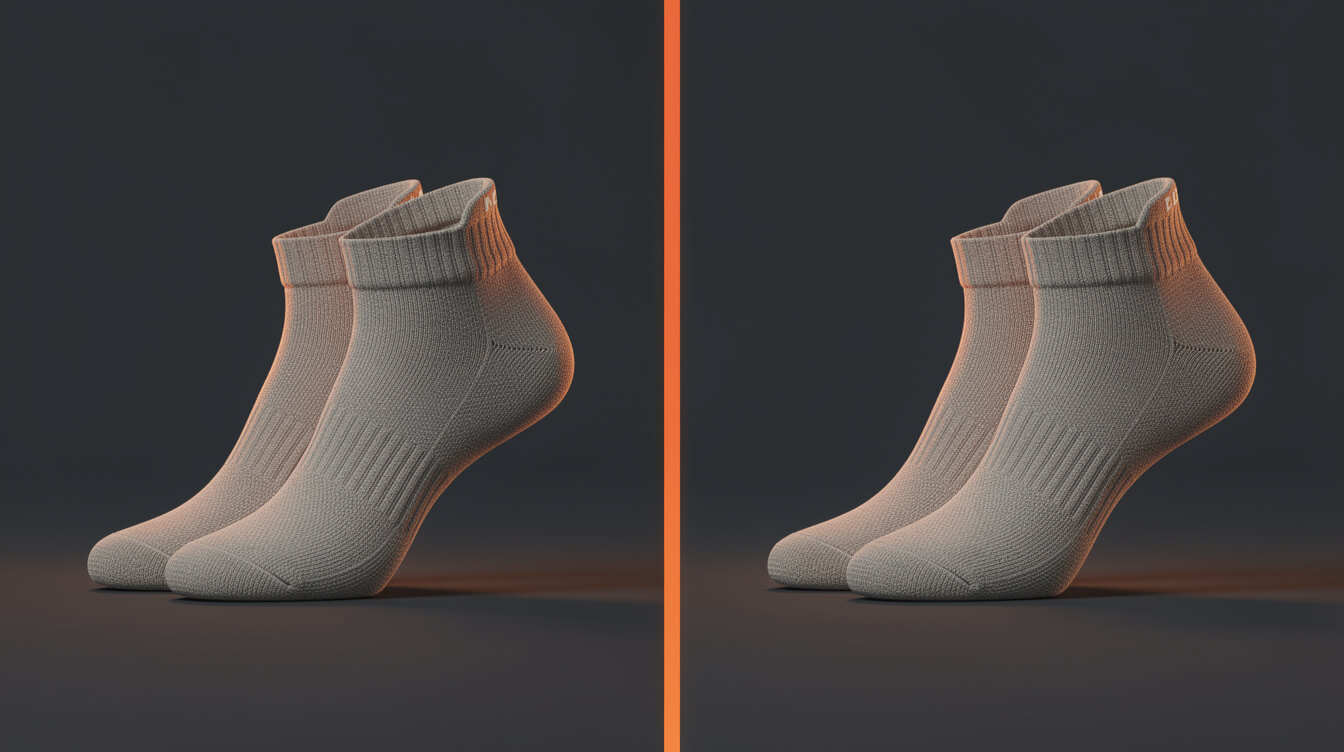
Both Printful and Printify carry custom socks, but the catalog depth, print methods, and base costs differ in ways that matter to your product strategy.
Printful custom socks
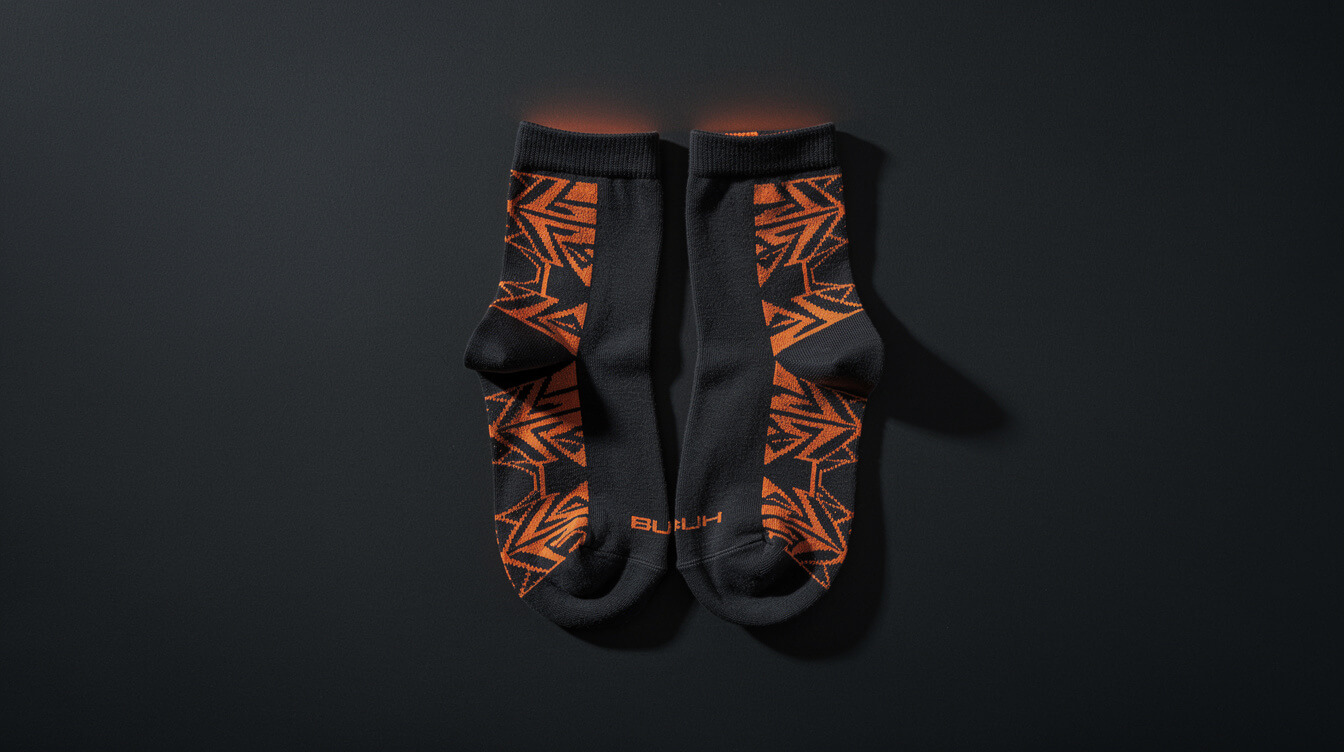
Printful offers full-print sublimation socks in men’s and women’s styles. Their sock catalog includes crew-length and ankle styles, printed from cuff to toe with your design on a polyester base fabric. Sublimation on polyester is the standard print method for Printful socks — more on that in the next section. Base costs at Printful typically run $9-11 per pair depending on style, with standard production and shipping timelines consistent with their apparel catalog.
Printful’s advantage is integration depth. If you are already running a WooCommerce store with Printful connected, adding socks is a product listing exercise. No new provider, no new shipping rules, no new billing relationship. Everything routes through the existing pipeline.
Printify custom socks
Printify’s sock catalog runs through a network of print providers. Sockprints is one of the better-known providers in their network, offering full-sublimation socks in multiple lengths and sizes. Other providers including Monster Digital also carry sock options. Base costs through Printify typically range from $6-10 per pair depending on the specific provider, with the lower end available on Printify Premium subscriptions.
The trade-off with Printify is provider variability. The print quality, color accuracy, and shipping speed differ between providers. If you are testing a sock product, run a sample order through your chosen provider before listing it. A polyester sock printed at a provider with weaker sublimation quality will show color banding and dull saturation — both of which generate negative reviews.
Other providers worth knowing
Gooten also carries custom socks through select partner facilities. Their catalog is smaller than Printful or Printify, but they integrate directly with WooCommerce and serve as a useful backup fulfillment option for volume sellers. SPOD does not carry custom socks as of mid-2026. Gelato’s sock catalog is limited and varies by region.
For most POD sellers, the decision comes down to whether you are already on Printful (stay on Printful, add socks there) or on Printify (use Sockprints or Monster Digital as your provider). Running both platforms for a single sock SKU adds operational complexity without proportional benefit.
How custom socks are printed: sublimation vs photo-print vs knitted construction
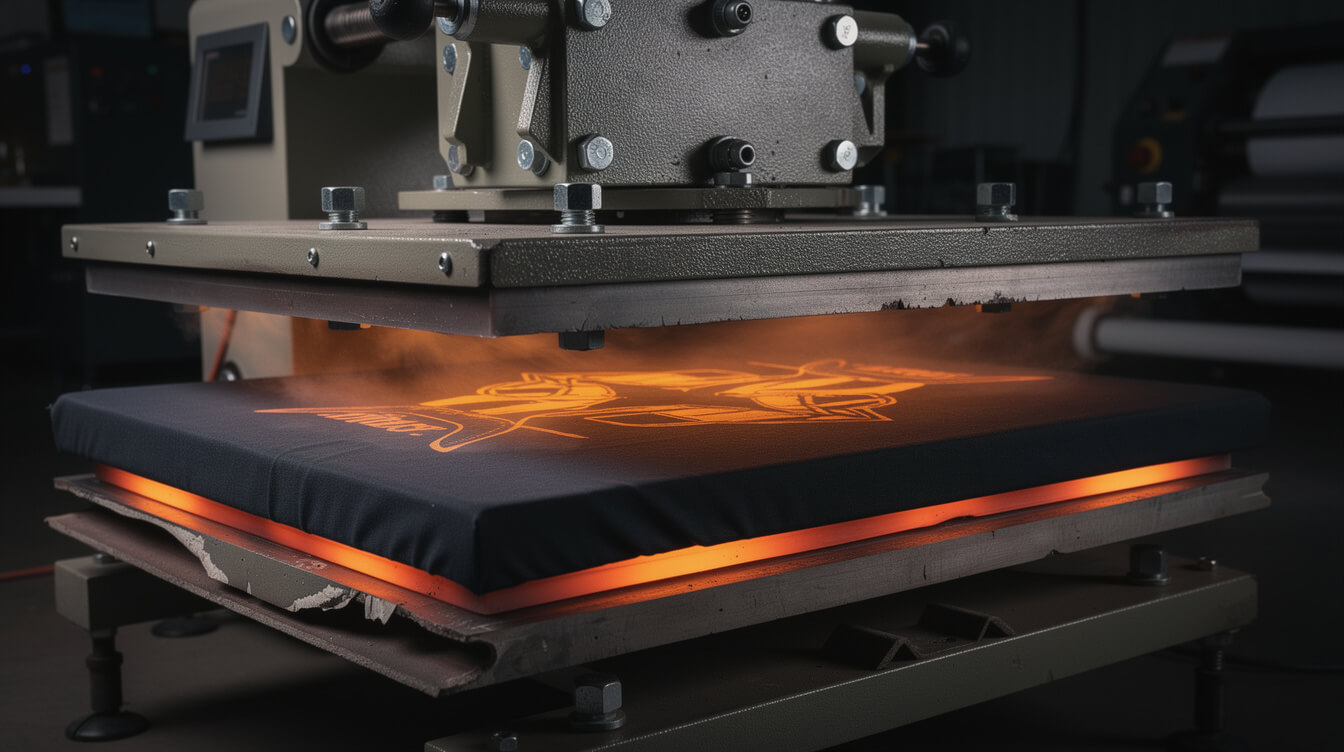
Understanding the print method matters because it determines the design requirements, the fabric options, and the final product quality. POD socks are produced through three primary methods, and the one your provider uses shapes what you can and cannot design.
Dye sublimation (the POD standard)
Sublimation is the method used by Printful, Printify’s Sockprints network, and most other POD sock providers. The process works by heating dye until it turns to gas, then bonding it directly into the polyester fibers. The result is a print that will not crack, peel, or fade the way direct-to-garment prints can on fabric that flexes under wear.
The key constraint is fabric composition. Sublimation only works on polyester or polyester-blend fabrics. Cotton does not accept sublimation dye. This means POD socks are inherently polyester-dominant — typically 95% or higher polyester content. That affects the feel. Polyester socks are lighter and more moisture-wicking than cotton, which is a feature for athletic and outdoor niches but a potential negative for buyers expecting a thick, cushioned sock.
Design-wise, sublimation supports full-bleed, edge-to-edge printing with unlimited color. There are no screen-printing setup fees, no color minimums, and no design complexity surcharges. A photo-realistic pet portrait prints at the same base cost as a simple geometric pattern.
Photo-print (consumer-grade, lower resolution)
Some consumer-facing platforms offer “photo-print” socks where a customer uploads an image and it is transferred to the sock surface using a lower-resolution inkjet-adjacent process. The output quality is noticeably inferior to sublimation — visible pixelation at edges, lower color depth, and faster fading after washing. This method is common on mass-market gift sites but is not the standard for Printful or Printify’s sock catalog. If a provider pitches “photo-print socks” as an alternative to sublimation, that is a downgrade, not an equivalent.
Knitted construction (not POD-compatible at no minimum)
True custom knitted socks — where the pattern is woven into the fabric using jacquard or dobby looms — produce the most premium result. The design is structurally part of the sock, not a surface print. However, knitted custom socks require minimum orders (typically 100-300 pairs per design) and lead times measured in weeks, not days. This is a private-label sourcing model, not a POD model. Sites like DivvyUp and SockClub operate on knitted construction, which is why they require minimums and cannot serve the no-inventory, dropship model.
The practical takeaway: if you are adding socks to a POD store today, you are working with sublimation. Design for full-color, full-print coverage on polyester, and set buyer expectations accordingly in your product descriptions.
For a broader comparison of print methods across product categories, see our guide to screen printing and embroidery for POD sellers.
Unit cost math: 1 pair, 10 pairs, 50 pairs — what you actually pay

Smash print-on-demand. Join the engine room.
One short email a week. Real numbers, real teardowns, the unfiltered economics behind every move.

POD unit costs do not drop meaningfully at low volumes. This is the trade-off for no-minimum fulfillment. Here is what the numbers actually look like for custom socks in 2026.
Printful custom socks — sublimation crew
- 1 pair: approximately $10.25 base + $4.99 standard shipping to the US = $15.24 landed
- 10 pairs (separate orders): $10.25 × 10 + $4.99 × 10 = $152.40 total, still $15.24/pair
- 50 pairs: same per-pair cost structure — Printful does not offer volume discounts through its standard plan
Printful Pro subscribers get reduced costs on select items, but socks are not typically a category where the Pro discount is material. The $10.25 base figure is an approximation — check your Printful dashboard for current pricing as catalog costs are updated periodically.
Printify custom socks — via Sockprints
- 1 pair: approximately $7.65 base + $3.99 shipping = $11.64 landed (standard plan)
- 10 pairs: same per-pair structure at $11.64/pair
- 50 pairs: on Printify Premium ($29.99/month), base cost drops approximately 20%, bringing 1 pair to roughly $6.12 base + $3.99 = $10.11 landed
Margin implications at $20 retail
If you retail at $20 per pair:
- Printful: $20 – $15.24 landed = $4.76 gross margin (23.8% margin before payment processing)
- Printify standard: $20 – $11.64 landed = $8.36 gross margin (41.8% margin)
- Printify Premium: $20 – $10.11 landed = $9.89 gross margin (49.5% margin)
The margin gap between Printful and Printify Premium at this AOV is significant: nearly $5 per pair. At 100 sales per month, that is $500 in gross margin difference before you touch advertising or overhead. At 500 sales per month, the gap reaches $2,500 monthly.
The right choice depends on your existing setup. If you are already on Printful and happy with the quality, switching providers for $4-5 margin difference requires a platform migration. If you are starting fresh, Printify Premium’s sock pricing is difficult to argue against at volume.
The drinkware margin math follows a similar pattern. If you are already analyzing per-unit economics across categories, see our custom tumbler cost breakdown for the drinkware equivalent of this analysis.
Pricing custom socks for margin: the $18-$28 retail band and bundle plays
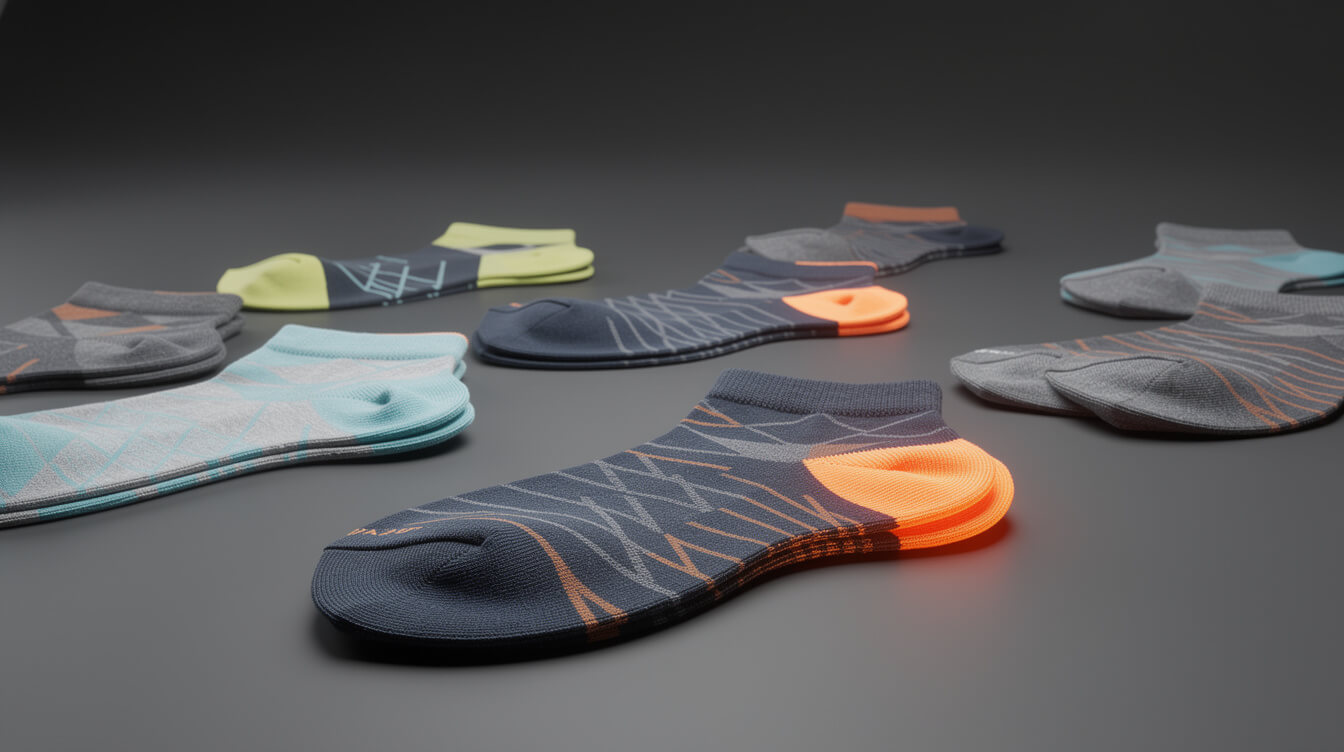
Custom socks have a retail ceiling shaped by buyer expectations. A buyer who pays $8 for a multipack of standard socks at a department store will balk at $35 for a single pair of custom printed socks. The window that works in practice is $18-$28 per pair, with most POD sellers landing in the $20-$24 range.
Pricing by tier
At $18 per pair, you are competing on value. This works for brand merch (corporate gifting, team stores) where the buyer has a relationship with the brand and is price-driven. Margin at $18 using Printify Premium is approximately $7.89 per pair — workable at volume, tight for a store that needs individual sales to be profitable.
At $22 per pair, you are in the gift market sweet spot. This is the price point where custom sock gift purchases feel deliberate but not extravagant. Pet portrait socks, holiday design socks, and sports team socks all convert well at $22. Margin on Printify Premium lands around $11.89 per pair — solid territory for a POD accessory product.
At $26-$28, you are selling premium custom socks. This works when the design is unique (MEGA-pipeline AI art, licensed artist collaborations), when the niche has high identity affinity (breed-specific pet portrait socks, ultra-specific team socks), or when you are selling to corporate buyers who are expensing the purchase. Margin at $26 on Printify Premium reaches approximately $15.89 per pair.
Bundle plays
Socks bundle naturally. Three-pack and five-pack options increase AOV without meaningfully increasing the buyer’s decision friction — someone already committed to buying custom socks will often upgrade to a bundle when the per-pair price on the bundle is lower.
A three-pair bundle at $55 (versus $22 × 3 = $66 individual) presents a 17% discount while pushing AOV from $22 to $55. Gross margin on three Printify Premium pairs at $55 retail is approximately $55 – ($10.11 × 3 + $3.99 shipping) = $55 – $34.32 = $20.68, or 37.6% — lower margin percentage than single-pair, but higher absolute dollars per transaction. For stores running any paid traffic, the higher AOV makes paid acquisition more sustainable.
MEGA automates this step entirely. When you are generating product listings at scale — running 30+ sock SKUs across multiple niches — pricing logic and bundle configuration are set once and applied across the batch. The manual Canva-and-spreadsheet workflow breaks at that volume. The MEGA pipeline handles it as a default output.
Automate your POD product listings at 30x the speed
MEGA handles image generation, product listings, SEO, and publishing to both WooCommerce and your print provider. Research to live product in under 7 minutes.
The Shopify 1% override at a $20 AOV: the math your platform hopes you skip
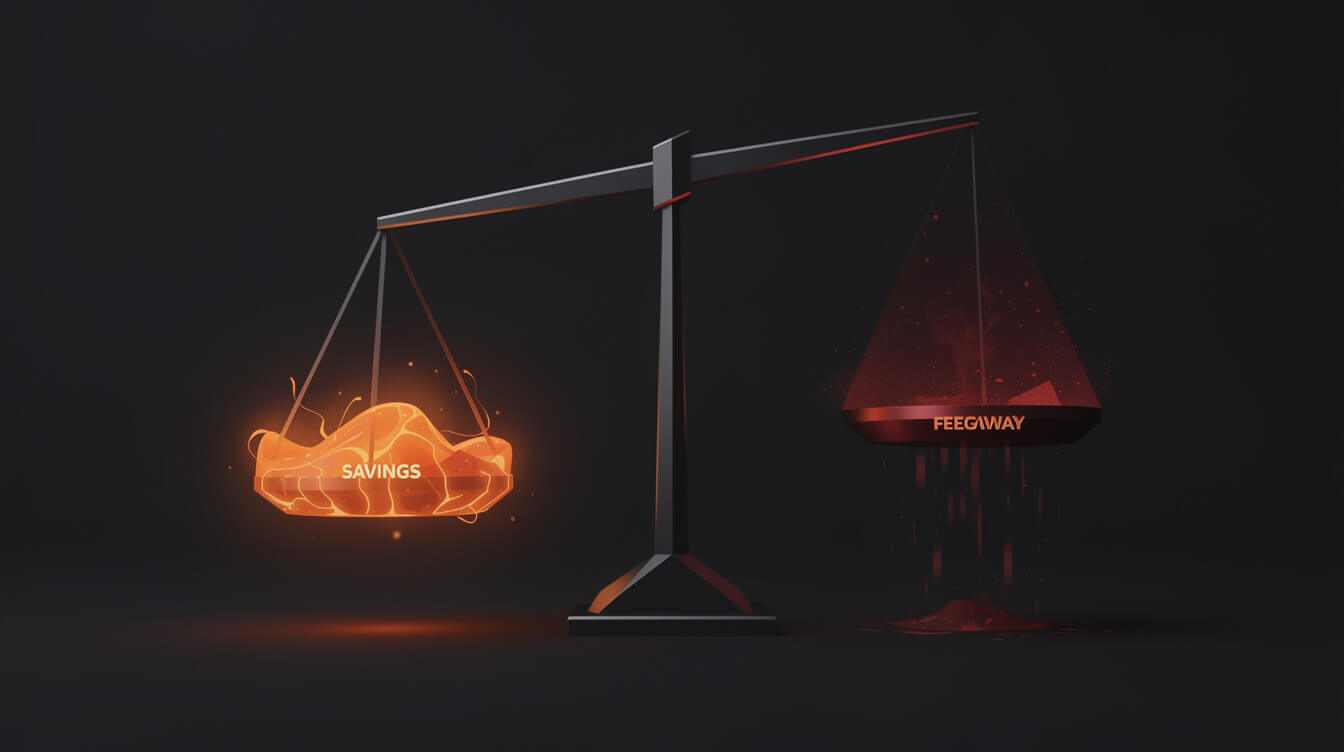
Socks are a low-AOV product. At $20 retail, the math on platform fees is unforgiving in a way that high-AOV products obscure. Let us run the numbers on a Shopify Basic plan versus WooCommerce.
Shopify Basic: 2% transaction fee
On the Shopify Basic plan, every sale that does not use Shopify Payments incurs a 2% transaction fee. With Shopify Payments, you avoid the transaction fee but pay 2.9% + $0.30 per transaction for credit card processing.
Assuming Shopify Payments on Basic plan at $20 sock retail: 2.9% × $20 + $0.30 = $0.58 + $0.30 = $0.88 per transaction in credit card fees.
Using the Shopify plan ($79/month), the transaction fee drops to 0% with Shopify Payments, but the monthly platform cost is higher. At low volumes, that monthly fee may exceed what the 1% override would have cost you.
The 1% platform override explained
The “Shopify 1% override” refers to the additional transaction fee Shopify charges on sales made through third-party payment processors on their mid-tier plan. On Shopify’s growth plan, this override applies at 1% of each transaction. At a $20 custom sock sale: $0.20 per pair sold.
$0.20 per pair sounds negligible. Here is what it looks like at volume:
- 100 pairs per month: $20 in platform override fees
- 500 pairs per month: $100 in platform override fees
- 1,000 pairs per month: $200 per month = $2,400 per year
- 5,000 pairs per month: $1,000 per month = $12,000 per year
At 1,000 custom sock sales per month — a realistic target for a successful niche sock store with 30+ SKUs — $2,400 per year flows to Shopify’s platform overhead. That is money that could fund six months of paid traffic, a content pipeline, or simply stay in your margin.
WooCommerce at $20 AOV
WooCommerce itself charges no transaction fee. You pay payment processor fees (typically 2.9% + $0.30 via Stripe or similar) and hosting, but there is no platform override on each sale. At 1,000 sock sales per month, the absent 1% fee represents $200 per month in retained margin.
This advantage compounds on low-AOV products precisely because the 1% is applied to revenue, not profit. The fee does not care that your margin on a $20 sock is $9.89. It takes 1% of the $20 regardless. On a product with 49% gross margins, a 1% revenue tax represents a 2% hit to gross margin percentage — a meaningful drag on a product that already runs thin.
The seasonal gifting angle makes this particularly visible. Custom ornaments follow the same low-AOV, high-volume pattern in Q4. Our breakdown on custom ornament economics for POD stores shows how the Shopify platform math hits harder during Q4 spikes when volume is highest.
The best niche verticals for custom socks: where buyers are already spending
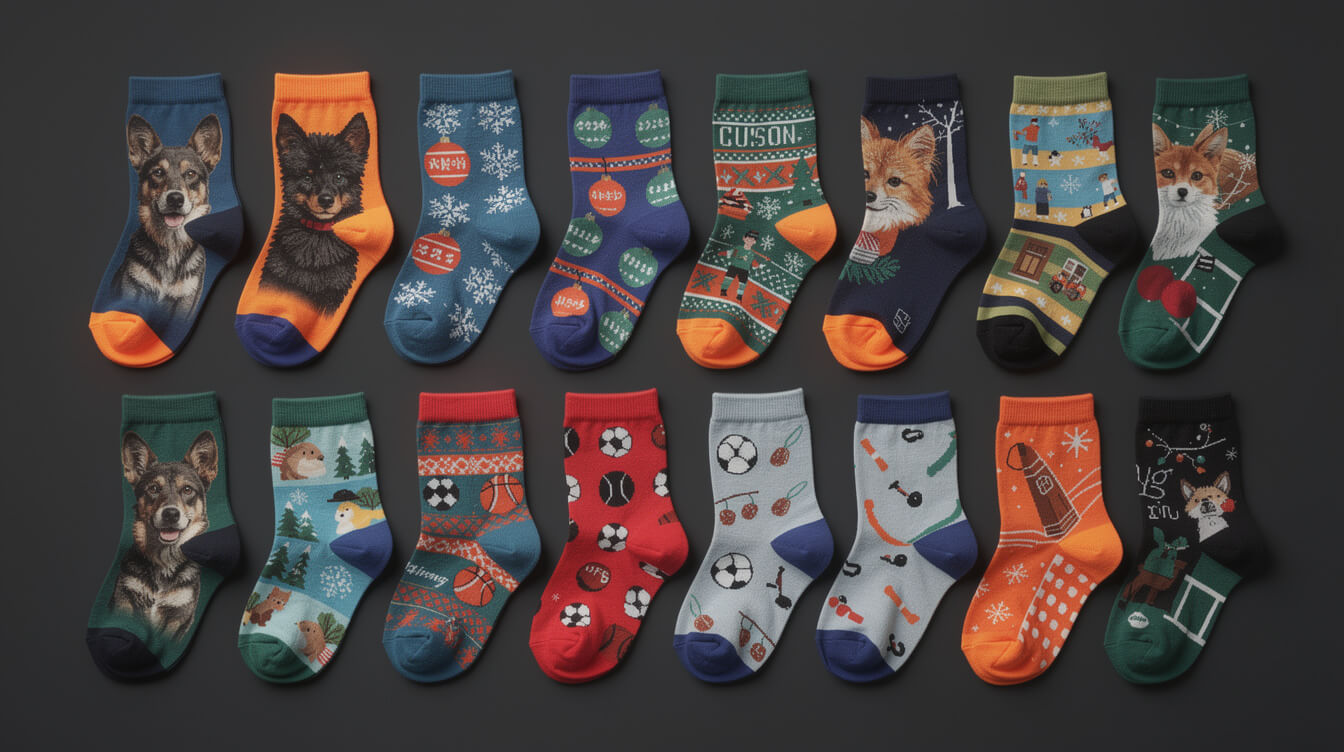
Custom socks work across a wider range of niches than most accessories. The format is flexible enough that almost any design transfers directly from your existing print catalog. Here are the verticals with confirmed buyer demand.
Pet portrait socks
This is the single highest-converting niche for custom socks. Pet owners buy custom socks featuring their dog or cat faces for themselves, as gifts for other pet owners, and as seasonal purchases (holiday-themed pet portrait socks for Christmas, Valentine’s Day, and birthdays). The target demographic skews toward women 25-45, a group that consistently over-indexes on pet-related discretionary spending.
The design pipeline for pet portrait socks is straightforward: customer provides a photo, you generate or process the portrait art, and it runs as a sublimation print. MEGA’s image generation pipeline handles the upscaling and format prep without manual intervention in the design step.
Sports teams and fan gear
Custom socks for sports teams — recreational leagues, school teams, club sports — represent a reliable B2B adjacent opportunity. Team stores often want matching socks as part of a uniform set. The purchase is typically handled by a team manager or coach, which means the decision is less price-sensitive than individual consumer purchases and more likely to result in multi-unit orders.
The opportunity here is speed. Sublimation POD socks can be produced and shipped in 5-10 business days, which competes favorably with the 3-6 week timelines from traditional uniform suppliers. For league seasons with known start dates, a reliable fast-production POD sock option is a real competitive advantage.
Holiday and seasonal gifting
Custom socks spike predictably in Q4. Christmas-themed custom socks, both personalized (family name, pet face) and novelty (holiday patterns), see search volume increases of 3-5x between October and December. For a POD store with custom socks already in the catalog, this seasonal demand requires no additional product investment — just updated listings with seasonal design variants.
The pattern mirrors what we see in the ornament and blanket categories. Holiday timing is the single most reliable sales predictor for custom accessory products. A store that lists holiday sock variants in September is positioned for the demand window without Q4 scramble.
Brand merch for creators and small businesses
Custom branded socks work as merchandise for creators (YouTube, Twitch, Instagram) and as promotional items for small businesses. This is the “Adjacent 2” audience in MEGA’s ICP: existing business operators with latent merch upside. A local coffee shop selling branded socks to regulars, a podcast selling socks to listeners, a fitness brand adding branded socks to their apparel line — all of these are viable sock product plays with no inventory risk under a POD model.
For business-brand buyers, the per-unit price sensitivity is lower than the consumer gifting market. A business paying for branded socks is often treating it as a marketing expense, not a discretionary consumer purchase. That shifts the pricing ceiling upward and opens the door to the $26-$28 retail band.
The niche mechanics here parallel the corporate apparel category. See how similar product-economics play out in our custom golf polo shirt analysis for the embroidered apparel version of this same audience dynamic.
Should you add custom socks to your POD store?
The answer is almost certainly yes, if you are in any of the niche verticals above. The unit economics work at Printify Premium pricing ($10.11 landed at $20 retail = 49.5% gross margin). The niche demand is confirmed by search volume. The competitive gap — zero editorial content from anyone who actually runs a POD store — makes this a first-mover moment that is unlikely to last once more sellers run the analysis you just read.
The one case where socks do not make sense: a store built entirely on apparel, where brand identity is tied tightly to clothing and accessories feel off-brand. In that case, the energy is better spent deepening the apparel catalog than broadening into accessories. But for most stores — especially those built around gifting, pet niches, or team merchandise — socks belong in the catalog.
Adding socks manually means creating a listing for each design variant, configuring sizing, writing product descriptions, pricing bundles, and pushing to both WooCommerce and Printful or Printify. At one or two sock SKUs, that is manageable. At 30+ SKUs across multiple niche angles, the manual workflow breaks. The MEGA pipeline generates product listings end-to-end — image, sizing, title, SEO, and full listing on both WooCommerce and your print provider — without the per-SKU overhead that caps how many products a manual workflow can support.
Implement AI. 30x your throughput. Get a 30-min call with the founder.
Drop your details and book a free 30-minute discovery call. Personalized advice on your POD stack, your margin, and where AI fits. No pitch, no fluff.