Custom gym bags for POD stores: which providers support them, what print methods cost, and the fitness niche math
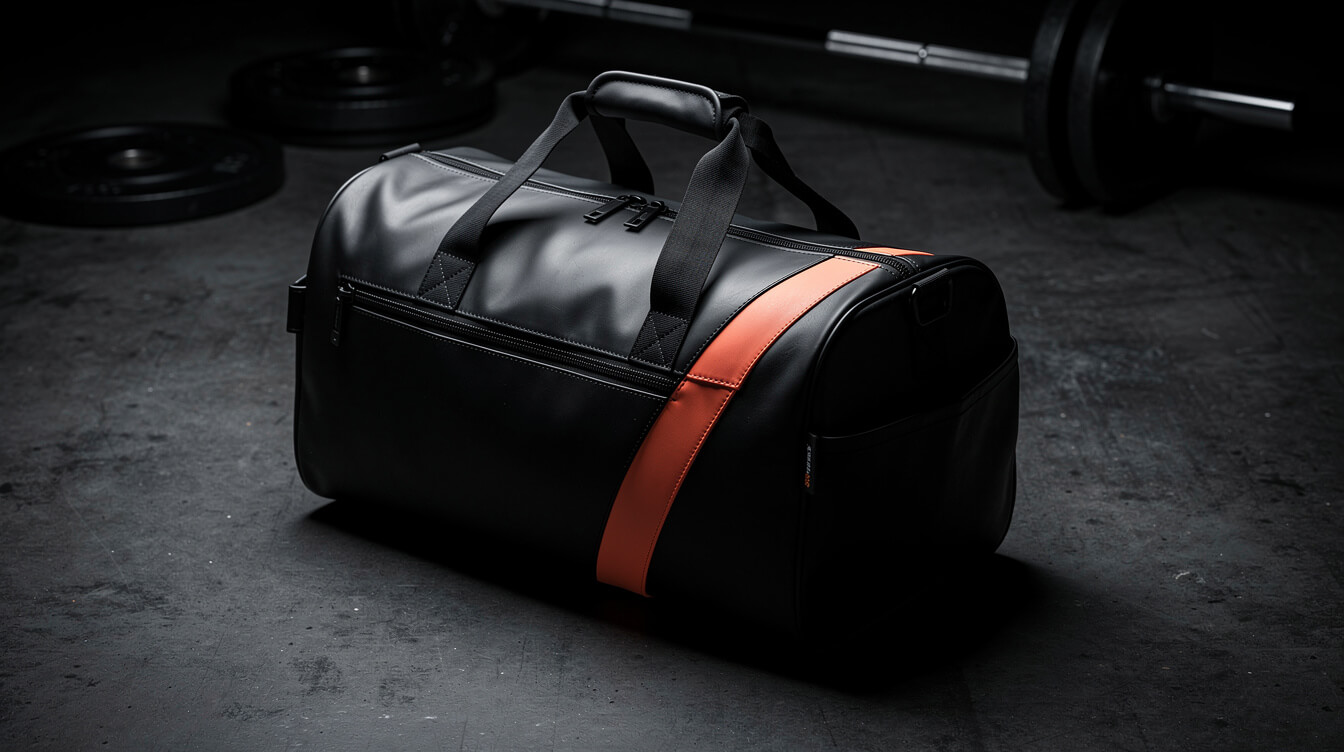
Custom gym bags sit in an interesting blind spot for print-on-demand sellers. Search the term and you land on page after page of B2B promo vendors with 50-unit minimums, $15 per-unit pricing on bulk runs, and lead times measured in weeks. Not one of the top results addresses what a POD seller actually needs to know: which providers carry gym bags with no minimums, what the print method does to your margin, and whether the numbers work at the prices fitness buyers are willing to pay. This post answers all three questions for a custom gym bag on a POD store.
Why gym bags are underserved in most POD catalogs

Most POD catalogs skew toward apparel. T-shirts, hoodies, and hats dominate because they are easy to print, easy to ship, and carry predictable costs. Bags require more production steps, more material variation, and more SKU complexity, so platforms have historically added them slowly.
The result is a gap. Consumers searching for a custom gym bag typically find either mass-market brands or bulk corporate vendors. Independent sellers who could own this space and fill custom orders at no minimum are mostly absent from the market. That absence is an opportunity.
Gym bags also carry a price point that rewards POD economics. A quality duffel retail-prices at $45 to $65. At those numbers, the platform fee and fulfillment cost leave enough room for real margin, provided you pick the right provider and print method. The math only breaks down if you choose wrong on either dimension.
It is worth noting that the fitness accessory category compounds well. A buyer who orders a custom gym bag for a sports team is also a candidate for matching water bottles, custom t-shirts, and branded polo shirts. The bag is often the anchor SKU in a larger merch relationship.
Which POD providers actually carry custom gym bags
Availability varies more than most sellers expect. Here is what each major platform currently offers.
Printful
Printful carries several bag options including all-over-print (AOP) duffels and tote-style bags. Their AOP duffel uses sublimation printing on a polyester canvas exterior. The bag arrives in a standard gym duffel shape, with a main zip compartment and side pockets. Printful handles fulfillment from their own facilities, which gives consistent quality control. Retail price point is typically $55 to $70 depending on size and design complexity.
Printify
Printify works through a network of print providers, so bag availability depends on which provider you connect to. Some providers in the Printify network carry embroidered bags and duffels, though selection is narrower than on Printful. Cost tends to run slightly lower because Printify’s model passes print-provider pricing to the seller with a smaller platform margin. You need to vet the provider’s production quality independently, since Printify does not own the production facilities.
Gooten
Gooten offers bags including duffel and sport bag styles. Their network model is similar to Printify, connecting sellers to partner printers. Gooten tends to be favored by sellers who want API-first integration and more granular order routing. Bag selection on Gooten is limited but present. They are worth checking for sellers already in their ecosystem who want to add a bag SKU without changing platforms.
What to look for when evaluating providers
Three things matter most: print method, minimum order, and base cost. You want a provider that supports no-minimum ordering (all three above do), uses a print method suited to your design aesthetic, and has a base cost that gives you at least 30% margin at a $50 retail price. Run the numbers before committing to a catalog listing.
Print methods for gym bags: sublimation, embroidery, and screen print compared
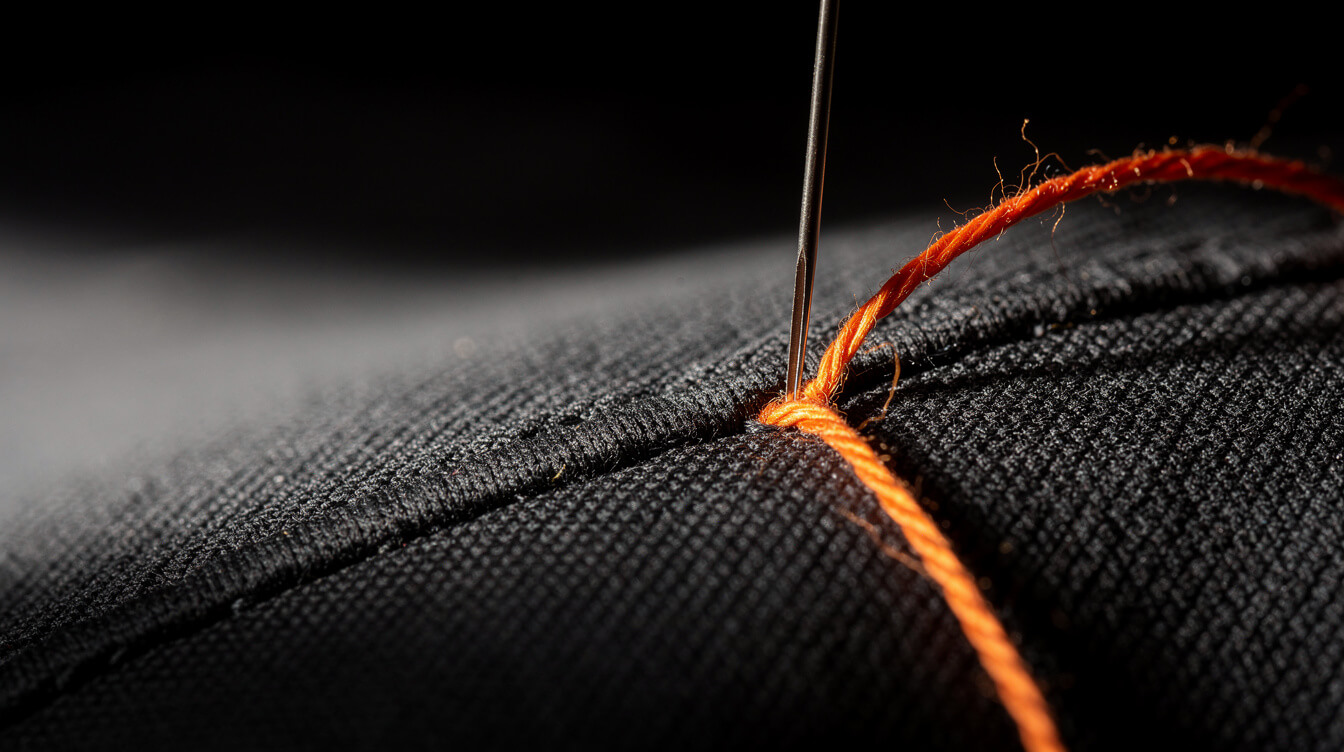
The print method you choose affects how the bag looks, how much it costs, and what design types work. Each method has a distinct application in the gym bag context.
Sublimation (AOP)
Sublimation printing is heat-transfer dye applied to polyester fabric. On a gym bag, this means the design can cover the entire exterior surface, with no visible seams or breaks in the print. Colors are vivid and permanent. The limitation is fabric: sublimation only bonds to polyester, so it will not work on cotton canvas or nylon bags. Printful’s AOP duffel uses this method.
Sublimation works best for bold, graphic-heavy designs. Fitness brands that want a visually loud bag, or streetwear-adjacent designs, are good candidates. The full-wrap capability also opens up design territory that embroidery cannot match.
For more on how sublimation compares to other methods across product types, the comparison of screen printing and embroidery for POD sellers covers the method differences in detail.
Embroidery
Embroidery is thread stitched into the bag fabric. It works on polyester, nylon, and canvas bags, which gives more material flexibility than sublimation. The tradeoff is design complexity: embroidery suits logos and simple graphics but does not handle photographic images or gradient colors well.
On a gym bag, embroidery typically appears on a panel, pocket, or strap rather than covering the full exterior. It is the preferred method for corporate wellness programs and sports team logos. A branded logo on a clean dark bag looks premium. The key cost factor is digitization: converting a logo to an embroidery file usually costs $15 to $50 as a one-time fee, paid to the fulfillment provider. After that, the per-unit embroidery cost folds into the base price.
The unit cost breakdown for embroidered tote bags shows how digitization fees affect the first-order math and why the cost amortizes fast on repeat buyers. The same dynamic applies to gym bags.
Screen print
Screen printing on bags is less common in POD because it requires setup per color layer. Most no-minimum POD providers do not offer screen printing on bags. It becomes viable at higher volumes, where setup costs amortize across 50 or more units. For POD sellers starting out, sublimation or embroidery are the practical options.
Unit cost math: 1 unit, 10 units, 50 units

Smash print-on-demand. Join the engine room.
One short email a week. Real numbers, real teardowns, the unfiltered economics behind every move.

This is the number that determines whether the product belongs in your store. Here is how it breaks down across order volumes.
POD at 1 unit (AOP sublimation duffel, Printful)
- Base cost: approximately $28 to $32 depending on size
- Shipping: $8 to $12 domestic US
- Total fulfilled cost: approximately $38 to $44
- Retail price: $55 to $65
- Gross margin: approximately $11 to $27 per unit (20 to 40%)
That margin range is wide. The low end reflects a small bag with minimal markup. The high end reflects a large bag priced at the top of what the market accepts. Knowing where your niche sits on that range matters before you list.
Bulk promo vendor at 10 units
- Base cost: approximately $15 to $22 per unit at 10-piece minimum
- Shipping: often bundled, $2 to $4 per unit estimated
- Total cost per unit: approximately $17 to $26
- Retail price: $55 to $65
- Gross margin: approximately $29 to $48 per unit (50 to 70%)
The margin advantage at 10 units is significant. The tradeoff is that you carry inventory, absorb the risk of unsold units, and face a lead time of 2 to 4 weeks from most promo vendors. For a POD seller validating a niche, holding 10 units of an untested bag design is a meaningful financial bet.
Bulk vendor at 50 units
- Base cost: $10 to $14 per unit
- Margin at $60 retail: approximately $44 to $50 (70 to 80%)
At 50 units, the economics are compelling. But 50 units of gym bags requires storage, and a slow-moving SKU means capital tied up in boxes. POD gives you the ability to test the market at 1 unit. Switching to bulk only makes sense once you have confirmed demand and a consistent reorder pattern.
The full break-even analysis for bags: bulk vs POD walks through the decision math in detail, including the inventory risk equation. Apply the same framework to gym bags.
MEGA automates the product listing side of this equation, generating titles, SEO copy, and mockup images for bag SKUs without manual Canva sessions. If you are adding gym bags to an existing store, the MEGA pipeline handles the product research and listing generation end to end.
Generate gym bag listings in under 7 minutes
MEGA is the research-to-product pipeline for POD sellers. Pick a niche, connect Printful, and get complete listings with SEO titles, meta descriptions, and AI images, without a single Canva session.
The Shopify 1% fee at $45-65 bag AOV

Shopify charges a platform override fee of 1% on every transaction processed through third-party payment gateways. At a $60 gym bag sale, that is $0.60 per order. That does not sound large until you model it at volume.
Run 100 gym bag orders per month through a Shopify store at $60 average order value. The 1% fee costs $720 per year on bag sales alone. At $60 AOV and $15 to $20 gross margin per unit, $720 is the equivalent of 36 to 48 bag orders going entirely to Shopify’s platform. That is 3 to 4 months of sales vanishing into the platform fee.
The fee is not the only cost. Shopify stores paying for fulfillment apps, marketing plugins, and premium themes can spend another $50 to $150 per month on the app stack. WooCommerce eliminates the transaction fee entirely, and plugin costs are generally lower for equivalent functionality.
For sellers in the mid-margin POD space, platform fees have a proportional impact that compounds over time. A bag at $15 margin absorbs the $0.60 Shopify fee more painfully than a product with $40 margin. The corporate polo shirt comparison is instructive: at higher-AOV items like embroidered polos, the 1% math still adds up, but the margin cushion is larger.
The practical implication: if you are adding gym bags to a new store, WooCommerce is the better host platform for margin preservation. If you already sell on Shopify, the fee is a known cost that belongs in your unit economics model.
Niche verticals that drive gym bag sales
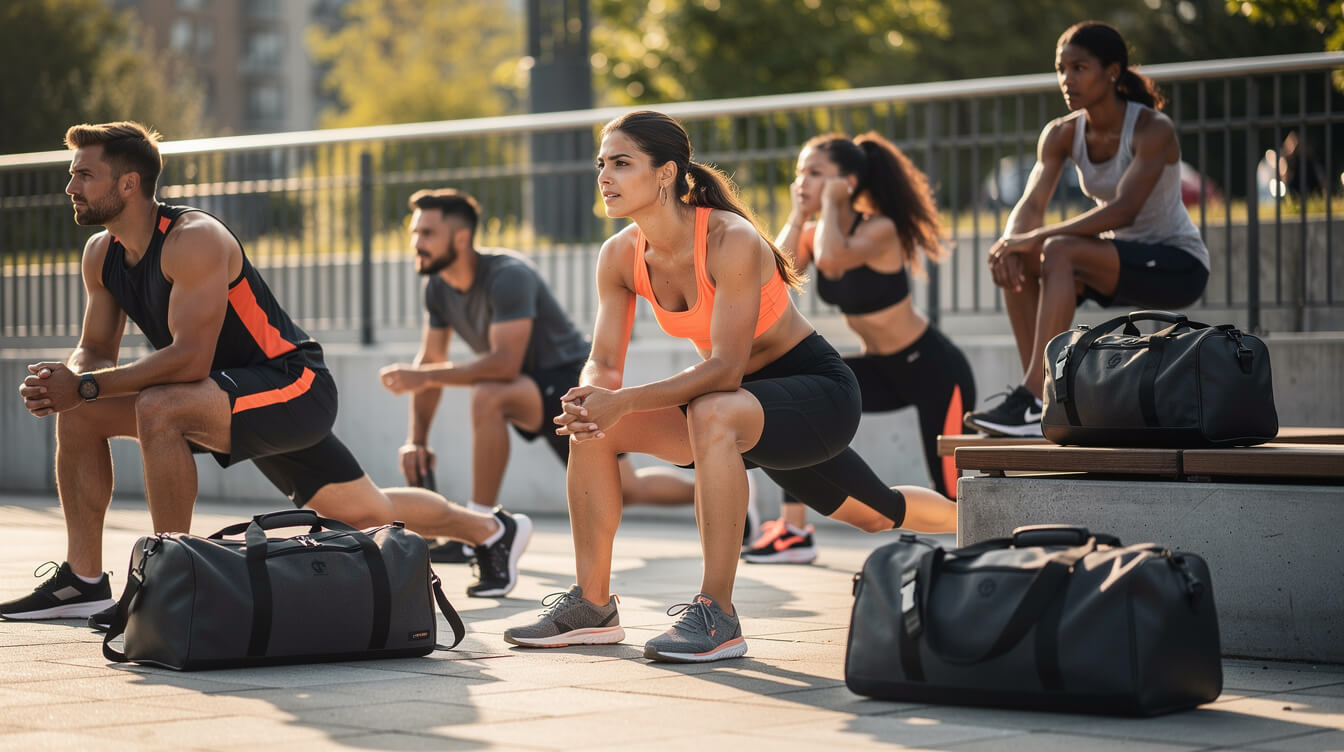
Gym bags without a specific buyer in mind are hard to market. The three verticals below have consistent demand and respond well to POD economics.
Fitness brands and personal trainers
Personal trainers and small fitness brands use custom gym bags as client gifts, merchandise items, and studio giveaways. The order pattern is typically small batches of 1 to 10 bags for specific clients or cohorts. POD is the natural fit. A trainer who gifts a branded bag at the end of a 12-week program is not ordering 50 units at a time. They need 5 or 10, on demand, when the program wraps.
Targeting this vertical means producing content and listings that speak to the gifting use case, not just the product itself. The buyer is a trainer or brand operator, not an individual athlete shopping for themselves.
Sports teams and leagues
Recreational sports leagues, youth sports programs, and adult amateur teams are consistent buyers of custom bags. They need matching equipment that shows team identity. Embroidery works well here because logos translate cleanly and the look is appropriately athletic without being flashy.
The order size varies. A small recreational team might order 12 to 15 bags. A youth sports program might need 30. POD handles the low end; for larger orders, a hybrid approach, using Printify for test runs and a bulk vendor for confirmed reorders, can optimize cost.
Corporate wellness programs
Corporate wellness is a growing buyer category. Companies running internal wellness challenges or fitness programs often budget for branded merchandise as incentives. A custom gym bag with the company logo is a high-perceived-value reward. Budgets in this segment run $50 to $100 per recipient, which covers POD pricing with room for margin.
B2B buyers in this segment typically order through procurement or HR, not through consumer storefronts. Reaching them requires different marketing than direct-to-consumer fitness content. Email outreach and LinkedIn advertising are more effective than Instagram for corporate wellness buyers.
Festival and event merchandise
Music festivals, wellness retreats, and athletic events sell merchandise on-site and online. A branded gym bag that doubles as an event souvenir carries strong purchase motivation. The timing dependency (event-specific demand) makes POD particularly useful, because sellers can list the product, generate orders before the event, and fulfill through Printful or Printify without holding presale inventory.
WooCommerce vs Shopify for fitness merch stores

The platform decision matters more for fitness merch than for some other POD categories, because fitness brands often blend product types.
Personal trainers who sell a 12-week program alongside branded gym bags and custom water bottles need a store that handles mixed subscription and physical product orders cleanly. WooCommerce Subscriptions handles this natively. Shopify requires a third-party app for subscription products, adding cost and complexity to a setup that should be simple.
Repeat buyer rate in fitness is also higher than in general POD. Clients who trust a trainer or brand are likely to come back for the next cohort, the next merch drop, or the next event. WooCommerce’s customer data stays entirely under your ownership. You can build email segments based on purchase history, lifetime value, and product affinity without paying per-contact fees to a third-party CRM. Shopify stores that want equivalent customer data access generally pay for additional apps.
The transaction fee difference is worth restating in concrete terms. At $60 per bag and 100 orders per month, Shopify’s 1% fee costs $720 per year on bag sales alone. Add matching water bottles at $30 (an additional $360 per year) and branded polo shirts at $55 (an additional $660 per year) and a fitness merch store doing modest volume loses nearly $1,800 per year to platform fees before accounting for the app stack. WooCommerce eliminates that cost category entirely.
For sellers already on Shopify, migration is not a trivial decision. But for new stores entering the fitness merch space, WooCommerce is worth the slightly steeper initial setup. The margin recaptured over 12 months pays for the setup time many times over.
Custom gym bags are one of the more overlooked product types in POD, primarily because the SERP is buried under bulk promo vendors and B2B corporate suppliers. For a POD seller with the right design aesthetic and niche focus, the gap is real and the economics work. The key decisions are provider selection, print method, and platform. Get all three right and gym bags become a dependable, higher-AOV addition to any fitness or lifestyle merch catalog.
Implement AI. 30x your throughput. Get a 30-min call with the founder.
Drop your details and book a free 30-minute discovery call. Personalized advice on your POD stack, your margin, and where AI fits. No pitch, no fluff.