Printful review 2026: honest assessment for WooCommerce sellers running a POD business
If you have spent any time researching print-on-demand fulfillment partners, you have run into a printful review that gave you a star rating and a list of pros and cons written for a generic Shopify store. That format is not useless, but it answers the wrong questions. This review is written for WooCommerce sellers who run or are planning to run an automated POD business: people who care about API depth, batch workflow, variant mapping, and unit economics at real volume, not just whether the interface is friendly.
Printful is the largest on-demand fulfillment company in North America, with 14 production facilities across the US, Europe, Canada, and Australia. As of 2026, they fulfill over 1 million items per month and hold 4.4 out of 5 stars across 7,564 Trustpilot reviews. Those numbers matter, but they tell you nothing about whether Printful fits your WooCommerce automation stack. This review does.
What Printful is (and the one thing most reviews get wrong about it)
Printful is a white-label print-on-demand fulfillment company, not a marketplace. That distinction matters more than most reviews acknowledge. When you connect Printful to your WooCommerce store, your customer places an order on your site, Printful produces and ships the item under your brand, and the end customer never sees Printful’s name on anything. You own the customer relationship, the pricing, the brand experience.
Compare that to selling on Redbubble or Merch by Amazon, where Printful’s competitors might handle both manufacturing and distribution inside a marketplace you do not control. Printful’s model is entirely B2B: they are a production engine sitting behind your store, invisible to your buyer.
The thing most reviews get wrong is treating Printful as a standalone product. Printful is a component in a fulfillment stack. Whether it is the right component depends entirely on what the rest of your stack looks like. For Shopify sellers, the integration is straightforward. For WooCommerce sellers running automation pipelines, the question is more specific: how deep does the WooCommerce plugin go, how reliable is the sync, and how does Printful behave when you are creating 50 products at once rather than one at a time.
Those are the questions this review answers.
WooCommerce + Printful integration: the honest setup experience
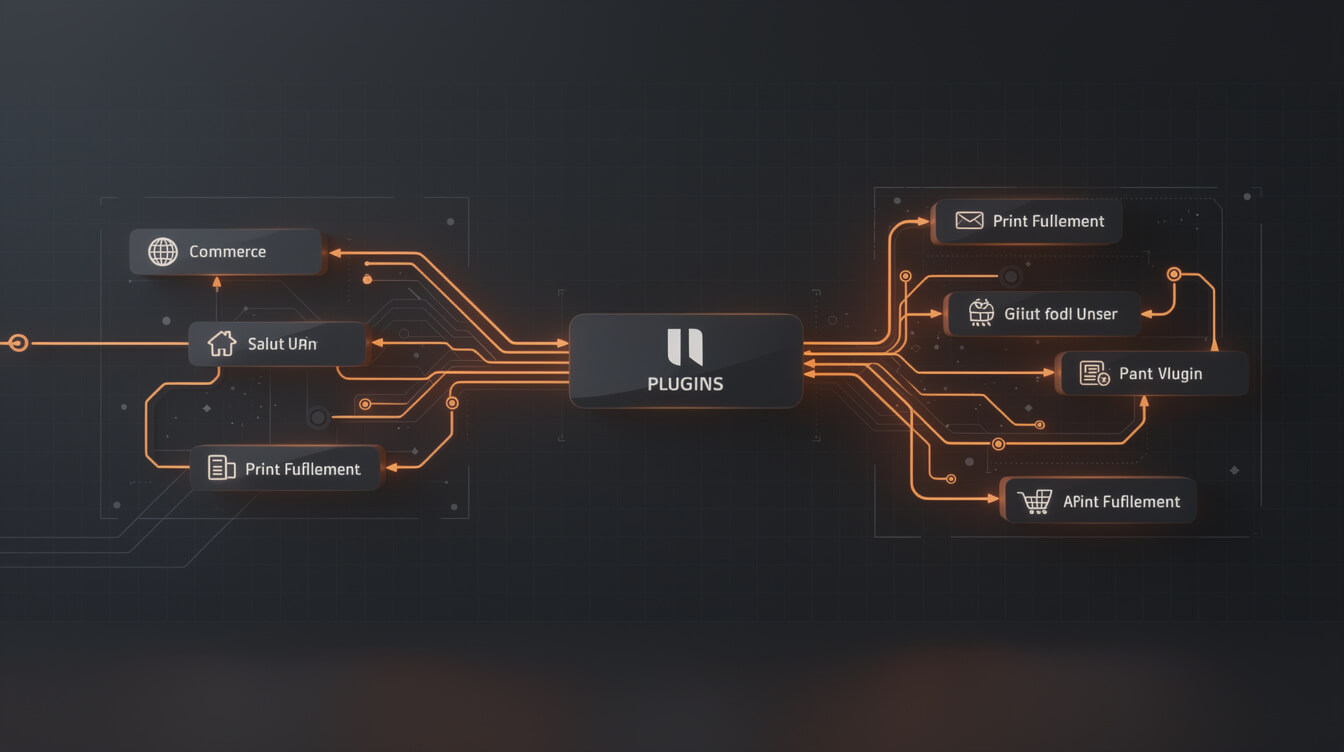
Printful’s WooCommerce plugin installs from the standard WordPress repository. Setup is a three-step OAuth flow: install the plugin, connect your Printful account, and authorize the store. The connection takes under five minutes if your hosting environment is standard.
Where the real complexity starts is variant mapping. Printful’s product catalog uses its own size and color variant identifiers. When you create a product in Printful and push it to WooCommerce, the plugin generates WooCommerce variation attributes that correspond to Printful’s internal catalog. The sync is automated, but it is not invisible: you need to verify that Printful’s size labels match your product descriptions and that color names are consistent across similar products. Mismatches cause order routing failures, which Printful flags via email but which can create support overhead if you are running high volume.
Batch product creation through the standard Printful interface is manual by design. You create one product at a time in their dashboard, set your pricing, choose mockups, and push to WooCommerce. For a seller adding 5-10 products per month, this is workable. For a seller running a research-to-product pipeline at scale, the one-at-a-time flow is the primary constraint. The WooCommerce plugin does not expose a batch-creation endpoint through its own UI. Automation at that level requires using the Printful API directly.
The Printful API itself is well-documented and reliable. Endpoints cover product creation, variant management, order submission, and webhook events for order status changes. For sellers building automated pipelines, this is where real integration lives. The plugin handles the baseline sync; the API handles scale.
One integration detail worth noting: Printful’s WooCommerce plugin calculates shipping rates in real time based on the customer’s location. This requires that your WooCommerce store’s currency and address fields are configured correctly. A misconfigured store address can cause shipping rate calculation errors at checkout, which manifests as unexpected checkout failures rather than an obvious error message.
Print quality and shipping: what the Reddit complaints get right (and wrong)
The most common Printful complaints on Reddit cluster around two issues: DHL shipping speed and weekend production delays. Both complaints are accurate, and both require context.
On DHL shipping: Printful routes a significant portion of international orders through DHL eCommerce, which uses a ground-sort network that is slower than DHL Express. Customers used to two-day Amazon delivery find 7-10 business day international shipping frustrating. If your audience is primarily in the US and you are shipping from Printful’s Charlotte or Los Angeles facilities, domestic shipping runs 3-5 business days via USPS Priority or UPS, which is more competitive. The DHL complaints are predominantly international order complaints.
On weekend production: Printful’s stated production time is 2-7 business days. That window does not shrink because a customer ordered on a Friday. Orders placed Thursday afternoon may not enter production until Monday, meaning a domestic customer could see 8-10 calendar days before delivery even on a standard US order. This is not a defect; it is how their production scheduling works. The fix is setting accurate delivery estimates in your WooCommerce store, not switching fulfillment partners.
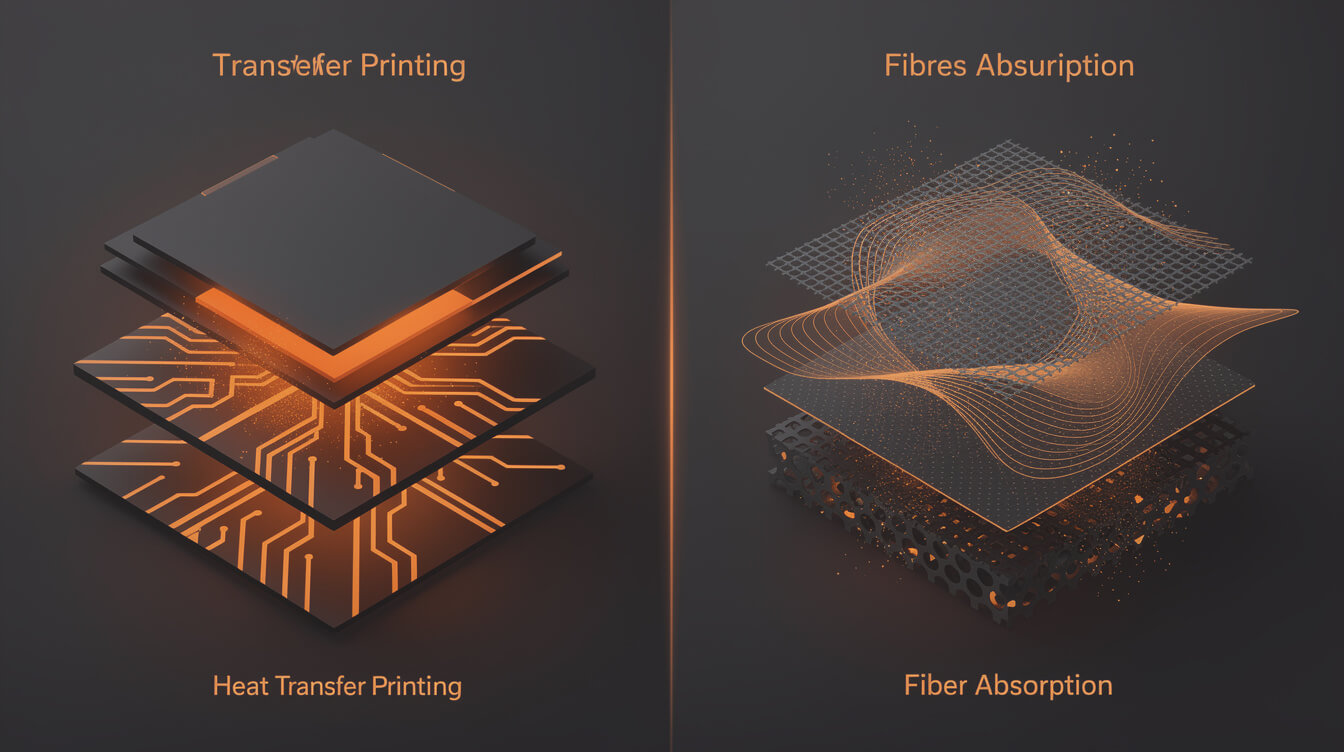
Print quality is where Printful genuinely differentiates itself. Their direct-to-garment (DTG) printing uses Kornit machines, which are the industry standard for consistent color accuracy and wash durability. Trustpilot reviewers consistently praise print quality as the strongest aspect of the product. Printful’s embroidery quality is also strong, with tight stitch counts and accurate color matching.
The quality caveat is file preparation. Printful requires 300 DPI files with transparent backgrounds for DTG printing. Designs submitted at 72 DPI or with white backgrounds produce noticeably degraded results, and Printful’s automated file check will catch major issues but will not reject a file that is merely suboptimal. For POD sellers running AI-generated designs through an automated pipeline, file format validation is a mandatory step before submission, not an afterthought.
If you want to see how Printful compares to Gelato across the same quality and shipping dimensions, our Gelato print on demand review covers both platforms on the same criteria.
Printful pricing and unit economics: the real numbers at 50 products

Smash print-on-demand. Join the engine room.
One short email a week. Real numbers, real teardowns, the unfiltered economics behind every move.

Printful charges no monthly fee on its base plan. You pay only for production costs when orders come in. The tradeoff is that Printful’s base costs sit above Printify’s network pricing on most products, which we will cover in the next section.
Here are the real numbers for a standard unisex t-shirt in 2026. Printful’s base cost for a Bella+Canvas 3001 in black is approximately $15.95 in the US. Add standard domestic shipping of $4.39, and the per-unit cost to the seller is $20.34 before your WooCommerce costs. A $29.99 retail price produces a gross margin of $9.65 per unit, or roughly 32 percent before any ad spend.
At 50 orders per month, that is $482.50 in gross profit on t-shirts alone. Monthly WooCommerce costs (hosting at $20-$50/month, domain, Printful plugin at no charge) run $30-70/month total, leaving roughly $410-450 in net margin. There is no Shopify 1% platform override fee eating into that margin because you own your WooCommerce store. A Shopify store at the same 50-unit volume pays $300 extra per year in platform fees before accounting for app costs.
For premium products, the economics shift. An embroidered Flexfit 6277 cap has a base cost of $16.58 plus $5.99 shipping, totaling $22.57. A retail price of $34.99 produces $12.42 gross margin per unit, or 35.5 percent. Hoodies run higher. A Champion S700 pullover hoodie from Printful costs $30.50 at base, making a $49.99 retail price tight. Pricing strategy on hoodies requires volume discounts via Printful’s paid Growth plan, which reduces base costs by up to 20 percent starting at $10,000 in annual fulfillment spend.
If automating your entire Printful product pipeline is the goal, MEGA handles the research, AI design generation, file formatting, and live listing creation in under seven minutes per product. The manual economics described above apply regardless of how you create your listings; what changes is how many listings you can profitably run.
Printful vs Printify for WooCommerce sellers: a direct comparison

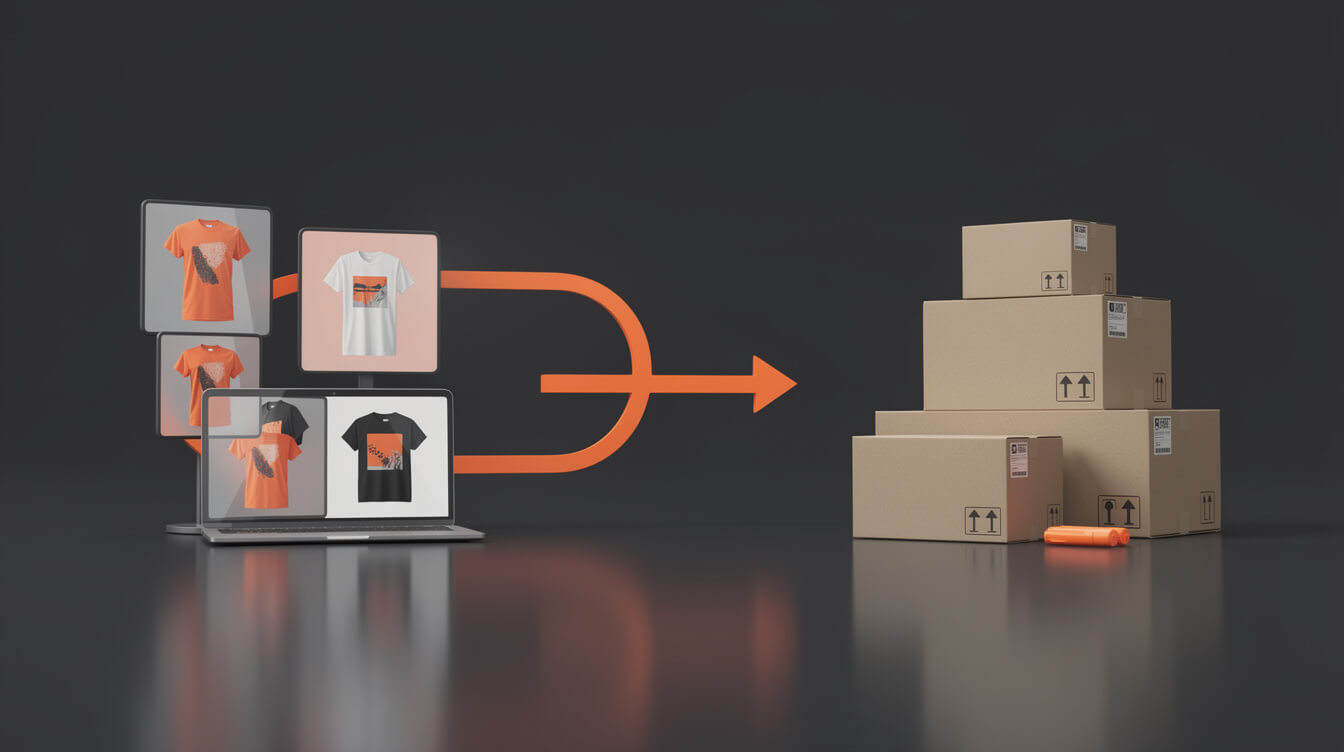
Automate your Printful workflow end to end
MEGA generates research, AI designs, and live Printful listings in under seven minutes. One pipeline, zero manual steps.
This comparison is framed specifically for WooCommerce sellers. Shopify-framed comparisons, which dominate the SERP, tell you nothing useful about WooCommerce-specific behavior.
On WooCommerce integration depth, both platforms maintain actively supported WooCommerce plugins. Printful’s plugin has slightly cleaner variant sync in testing, with fewer variant-mapping conflicts on standard apparel. Printify’s plugin has more configuration options but requires more initial setup to reach stable operation.
On base cost, Printify’s print provider network consistently undercuts Printful on standard items. The Bella+Canvas 3001 t-shirt that costs $15.95 at Printful runs $8.85-$11.50 at Printify’s network providers, depending on which provider you select. The margin difference on a $29.99 t-shirt is $4-7 per unit, which compounds significantly at volume. Printify’s cost advantage is real and material.
The tradeoff is consistency. Printful operates its own production facilities. Quality control is centralized and auditable. Printify routes orders to third-party print providers, and quality consistency varies by provider. Sellers running product lines where consistent print color matching matters across a catalog (particularly brand merchandise) report fewer issues with Printful than with Printify’s network.
On international reach, Printful has production facilities in North America, Europe, and Australia, with Latvian production covering EU orders efficiently. Printify has a larger global network of providers, which gives flexibility but not necessarily reliability. For sellers shipping primarily to US and EU customers, both platforms cover the geography adequately.
The summary is direct: if margin optimization is the primary goal and you are running casual apparel at scale, Printify’s cost structure wins. If brand consistency, reliable quality across an automated pipeline, and WooCommerce integration stability are the priority, Printful is the stronger choice. For a broader view of how both platforms fit into the full print on demand companies landscape, we have compared seven providers on the same automation and ownership criteria.
Printful AI tools and mockup generator: tested for POD automation

Printful released an AI image generation tool in 2024, embedded inside their design editor. It generates design concepts from text prompts and applies them to product mockups. The tool is genuinely useful for sellers who do not have design backgrounds and need a starting point. It is not a production-grade design automation solution.
The practical limitations are three. First, Printful’s AI generator produces designs optimized for its own editor, meaning file resolution and format are suitable for their platform but not for export and reuse across other contexts. Second, prompt engineering inside Printful’s editor is basic: there is no batch generation, no style consistency controls, and no way to systematically iterate on a design concept across multiple colorways or product types. Third, the generated designs cannot be automatically applied to a batch of products. Each product still requires individual setup in the dashboard.
The mockup generator is more mature than the AI design tool. Printful’s mockup library is extensive, covering thousands of product and lifestyle context combinations. Mockup generation is fast and the output quality is print-catalog grade. For WooCommerce product listings, the mockups produce professional product images that convert well.
For sellers running an automated pipeline where designs are generated externally (via tools like Midjourney, Stable Diffusion, or Flux) and need to be routed into Printful listings at scale, the Printful API handles this workflow better than the dashboard does. The API accepts design files, applies them to products, and generates mockup URLs programmatically. This is the integration path for automation.
Sellers building on Printful’s WooCommerce integration who also want to see how a hoodie-specific product line performs should read our Printful custom hoodies guide, which covers the full variant setup and margin model for one of Printful’s strongest product categories.
When Printful is the right print partner for your POD stack

Printful is the right choice in four specific situations.
First, if you are running brand merchandise for an existing business, creator, or organization where print consistency and packaging quality matter. Printful’s white-label options, including custom packing slips, stickers, and inserts, are more developed than Printify’s. The unboxing experience is more controllable.
Second, if you are building a WooCommerce store and want a fulfillment partner whose plugin and API have been extensively tested in that environment. Printful’s WooCommerce integration has fewer sharp edges than Printify’s for sellers setting up automated order routing.
Third, if you are selling into the US and EU and need reliable production in both regions. Printful’s own facilities in Charlotte, Los Angeles, Chicago, Toronto, Riga, and Barcelona give you geographic coverage without relying on third-party providers whose quality you cannot audit.
Fourth, if you are at a stage where you are willing to pay a higher base cost per unit in exchange for operational reliability. This trade makes sense at low to mid volume, where the cost difference between Printful and a cheaper alternative is $200-400/month but the time and support cost of managing quality inconsistencies would exceed that. At very high volume, the margin difference between Printful and Printify becomes significant enough to re-evaluate.
Printful is not the right choice if margin optimization at scale is the primary goal and you are selling commodity apparel where brand differentiation is minimal. It is also not the right choice if you need the lowest possible entry cost and are comfortable managing quality variation across a print provider network.
For sellers who have not yet decided between WooCommerce and Shopify as the platform underneath their Printful integration, our Shopify alternative for POD sellers analysis covers the real numbers on platform fees, total cost of ownership, and why the Shopify 1% override fee changes the margin math at scale.
Frequently asked questions
Does Printful work with WooCommerce? Yes. Printful maintains an officially supported WooCommerce plugin that handles product sync, variant mapping, and automated order routing. Setup takes under 15 minutes for a standard installation.
How long does Printful take to ship? Production time is 2-7 business days. Domestic US shipping adds 3-5 business days via USPS Priority or UPS. International shipping via DHL eCommerce runs 7-14 business days. Total delivery time for a US customer is typically 5-12 business days from order date.
Is Printful cheaper than Printify? No. Printful’s base costs run $4-7 higher per unit on standard apparel compared to Printify’s cheapest network providers. The trade is quality consistency: Printful operates its own facilities; Printify routes to third-party providers whose quality varies.
Does Printful charge a monthly fee? The base plan is free. Printful offers a paid Growth plan that reduces base costs by up to 20 percent, starting at $10,000 in annual fulfillment spend. At that volume, the Growth plan pays for itself within the first month.
Can I automate Printful product creation? Yes, via the Printful API. The dashboard is single-product by design. Batch creation at scale requires API integration, which is well-documented and reliable. Automated pipelines that connect research, AI design generation, and Printful listing creation can process products in minutes rather than hours.
Final thoughts on this printful review
Printful is a reliable, quality-focused fulfillment partner with strong WooCommerce integration and a well-documented API. The honest tradeoff is that reliability and brand quality come at a higher per-unit base cost than Printify’s network can offer. For sellers where consistency and integration depth outweigh margin compression, Printful is a defensible long-term choice.
The constraint that most automation-focused sellers will hit is the one-at-a-time product creation flow in the dashboard. The API solves it. Building an end-to-end pipeline that moves from niche research through AI design generation to live Printful listings is technically straightforward; it just requires the tooling to connect those steps efficiently.

Implement AI. 30x your throughput. Get a 30-min call with the founder.
Drop your details and book a free 30-minute discovery call. Personalized advice on your POD stack, your margin, and where AI fits. No pitch, no fluff.