Print on demand for existing businesses: how to add a $2k per month merch revenue stream
You already have the audience. You have the brand trust. You have customers who open your emails, follow your account, or walk through your door. Adding print on demand for business is not about building a new company from scratch. It is about adding a revenue line to the operation you already run.
This guide is for existing businesses: service providers, content creators, brick-and-mortar operators, and brand owners who have been watching POD from the sidelines. The economics are real, the setup is faster than most people think, and the risk is as close to zero as any revenue channel gets. Here is exactly how a typical business gets to $2,000 per month in merch revenue without inventory, design staff, or a Shopify account.
Why print on demand for business is the lowest-risk revenue channel you can add

The defining feature of print on demand is no upfront inventory. You create the product, list it, and the supplier prints and ships each unit after a customer buys it. If nobody buys, you pay nothing. There is no warehouse, no minimum order quantity, no dead stock.
For an existing business, this changes the math entirely. Most new revenue streams require capital: hire staff, rent space, buy stock. POD requires none of those. The only real costs are a small amount of time, your existing website, and optional design tooling.
Here is how it compares to other common revenue adds an existing operator might consider:
- Physical product line: $5,000-$50,000 upfront, inventory risk, logistics overhead
- Course or digital product: $2,000-$10,000 to produce, ongoing tech fees
- Consulting uplift: Requires your time at scale; limited throughput
- Print on demand: $0-$500 to launch, zero inventory cost, unlimited catalog size
The risk is not just financial. It is reputational, too. If you source physical inventory and it arrives with quality issues, you own the problem. POD suppliers like Printful and Printify handle production quality on their end. If a specific product underperforms, you remove it from your catalog. No sunken cost, no clearance sale.
The one genuine risk in POD is margin compression when selling on third-party marketplaces. That is the Etsy and Amazon Merch problem: those platforms take fees, restrict your pricing, and own the customer relationship. The fix is selling on your own WooCommerce store, which is covered in section four below.
For businesses with an email list or social following, the sales channel already exists. POD just adds a product to it.
The three types of existing businesses that benefit most

Not every business is equally positioned for a merch add-on. Three archetypes consistently see the strongest results.
Brands and retailers with visual identity
If your business already has a logo, a color palette, or an aesthetic that customers associate with it, you have 80% of the design work done. Branded apparel and accessories sell because customers want to signal affiliation. A specialty coffee shop, a fitness studio, a local record store: any of these has customers who will wear the brand.
The design work is minimal. Take your existing mark, apply it to quality blanks, price at two to three times the base cost. This is not complex creative work. It is logistics.
Service businesses with repeat client relationships
Lawyers, accountants, consultants, coaches, and agencies have clients who trust them over years. Branded merchandise deepens that relationship at low cost. A financial planner who sends branded notebooks to new clients is not running a merch business in the primary sense. But if those notebooks are also available for purchase in a WooCommerce store, the infrastructure supports both goals.
Service businesses also tend to have email lists. A well-timed merch launch to that list is a different conversion problem than cold acquisition.
Creators with an established audience
Podcasters, YouTubers, newsletter writers, and course creators are the most obvious category. They have audiences already in relationship with them. The missing piece is usually the operational side: product creation, fulfillment logistics, and store setup. POD solves all three. As we covered in our Printify review for WooCommerce sellers, the API integrations available to creators today are considerably better than they were two years ago.
The throughput limitation for creators is usually design volume, not demand. Creators who generate designs at scale consistently outperform those who do not.
The economics: real margin breakdown on branded merch at $25-$50 price points

The POD economics are predictable and worth understanding before you launch. Here is the actual math at two price points.
$25 t-shirt (entry tier)
- Base cost (Printful Bella+Canvas 3001): $12.25
- Shipping, if absorbed: $4.99-$6.99
- Payment processing (~3%): ~$0.75
- Net margin with customer-paid shipping: $25 – $12.25 – $0.75 = $12.00 (48% gross margin)
$45 t-shirt (premium tier)
- Same base cost: $12.25
- Payment processing (~3%): ~$1.35
- Net margin with customer-paid shipping: $45 – $12.25 – $1.35 = $31.40 (70% gross margin)
The pricing elasticity is real. Customers buying because of brand affinity are not price-sensitive in the same way as bargain shoppers. A well-positioned brand can price premium blanks at $40-$50 and see stronger conversion than a commoditized $18 shirt competing on price alone.
Expand to accessories and the catalog mix improves: mugs at $15 cost and $32 retail, tote bags at $10 cost and $28 retail. A basket with a tee and a mug approaches $75 in revenue on roughly $25 in combined production cost.
The $2,000/month target at $30 average order value requires 67 orders per month. That is roughly two to three orders per day. For a business with an email list of 2,000 people or a social following of 5,000, this is achievable in the first full month. Not guaranteed, but achievable with a proper launch sequence.
The economics break down on Shopify primarily because of platform overhead. On Shopify, you are paying $39-$399/month in base fees, plus apps, plus Shopify’s 1% override on external payment processors if you do not use Shopify Payments. At $2,000/month in revenue, that adds up quickly. We ran the full breakdown in our print on demand for Shopify cost analysis.
Platform choice: why WooCommerce beats Etsy and Shopify for your existing operation

Smash print-on-demand. Join the engine room.
One short email a week. Real numbers, real teardowns, the unfiltered economics behind every move.
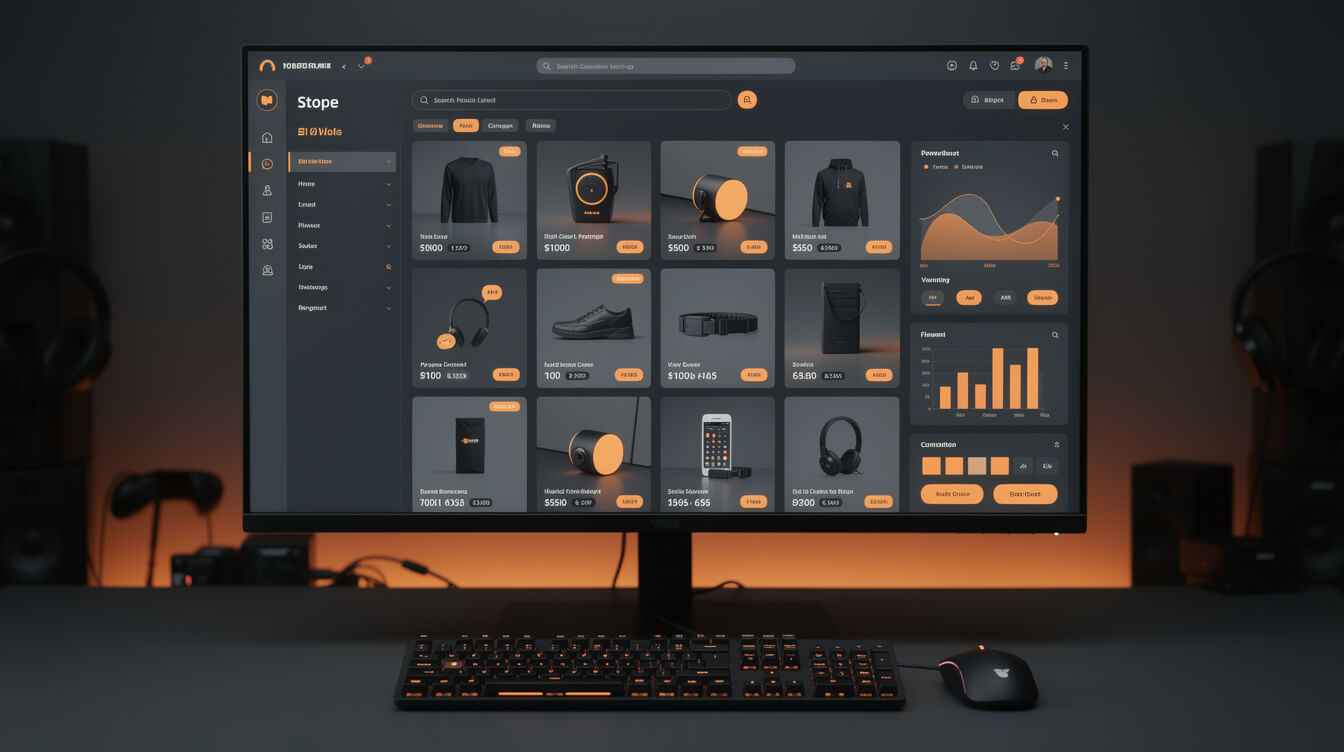
If you already have a website, you already have a WooCommerce option. If your site runs on WordPress, you can install WooCommerce and connect Printful or Printify in under an hour. That single decision separates owned-channel POD from marketplace POD.
Etsy takes 6.5% transaction fees plus $0.20 per listing plus a separate payment processing fee. You do not own the customer relationship. Etsy can suspend your account. Etsy controls your organic visibility. And Etsy buyers search Etsy, not your brand, so repeat purchase rates are structurally lower.
Shopify gives you more ownership than Etsy but still charges platform fees at every tier, requires separate apps for anything beyond the basics, and imposes a 1% override on external payment processors. The full Shopify overhead on a $2,000/month store is approximately $80-$150/month before apps. At $10,000/month, the Shopify tax is meaningfully higher.
WooCommerce on a site you already own has none of these structural costs. WooCommerce itself is free. The Printful and Printify plugins are free. Hosting you are already paying for. Payment processing via Stripe is 2.9% + $0.30 per transaction, the same as everywhere else. You own the customer email list.
For an existing business that already runs a WordPress site, the incremental cost of adding WooCommerce plus a Printful connection is close to zero. The incremental revenue is additive to your existing operation.
The one objection here is technical: “I don’t know how to set up WooCommerce.” The complexity is consistently overstated. The setup is a two-hour task with documentation. The ongoing management is lighter than Shopify because there are fewer moving parts and no surprise fee tiers.
Connecting MEGA to your WooCommerce store adds the product generation layer, which is where most businesses lose time.
How to create and launch 20 products without a design team or Canva sessions
The traditional POD workflow looks like this: open Canva, find a template, drag in your logo, adjust placement, export the file, upload to Printful, configure sizes, set mockups, write a product title, write a description, set pricing, publish. Repeat for every product.
That workflow takes four to six hours to produce twenty products. It is not sustainable at the catalog volume required to build meaningful depth, especially alongside running an existing business.
The alternative is a batch pipeline. You define your brand assets once, feed a product brief, and the engine generates the design, the mockup, the title, the description, and the product listing in sequence.
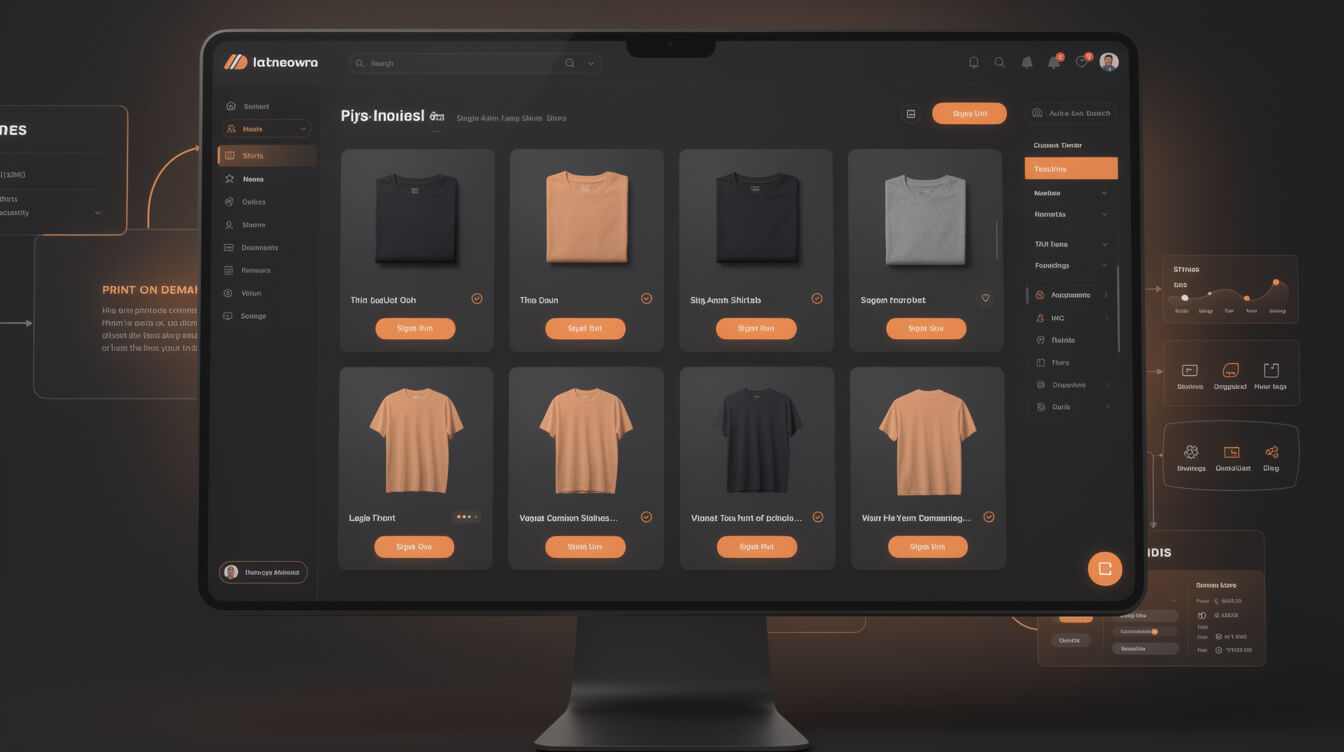
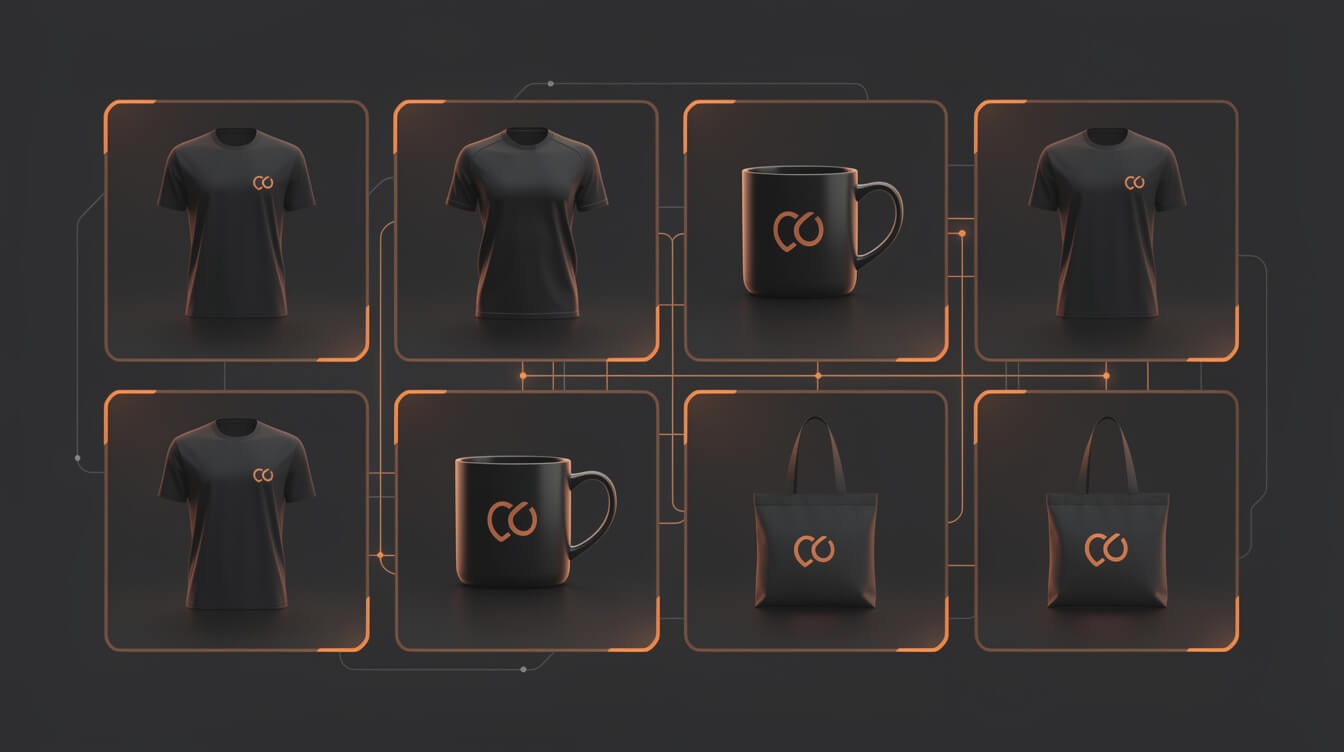
MEGA runs this pipeline end-to-end. You connect your WooCommerce store and your Printful account, define the niche and aesthetic, and MEGA generates 20+ unique products in under 7 minutes. The AI handles design generation via Flux Pro image models, sizing and crop coordinates for each garment type, mockup rendering, product title and SEO description, and the full listing on both WooCommerce and Printful simultaneously.
The throughput difference is significant. A manual Canva workflow produces two to four products per hour at full concentration. A MEGA pipeline run produces 20+ in under seven minutes. For an existing business building catalog depth alongside other priorities, that difference is the difference between launching this month and launching next quarter.
The product quality constraint that kills most POD stores is not design talent. It is consistency and volume. Brands that succeed in POD have broad catalogs covering different use cases, price points, and design variations. Building that catalog manually is a part-time job. Automating it changes the economics of the entire operation.
Generate 20+ print-on-demand products in under 7 minutes
MEGA handles design generation, sizing, mockups, titles, and product listings end-to-end. Connect your WooCommerce store and go from niche idea to live product in minutes, not hours.
What $2,000 per month in merch actually looks like
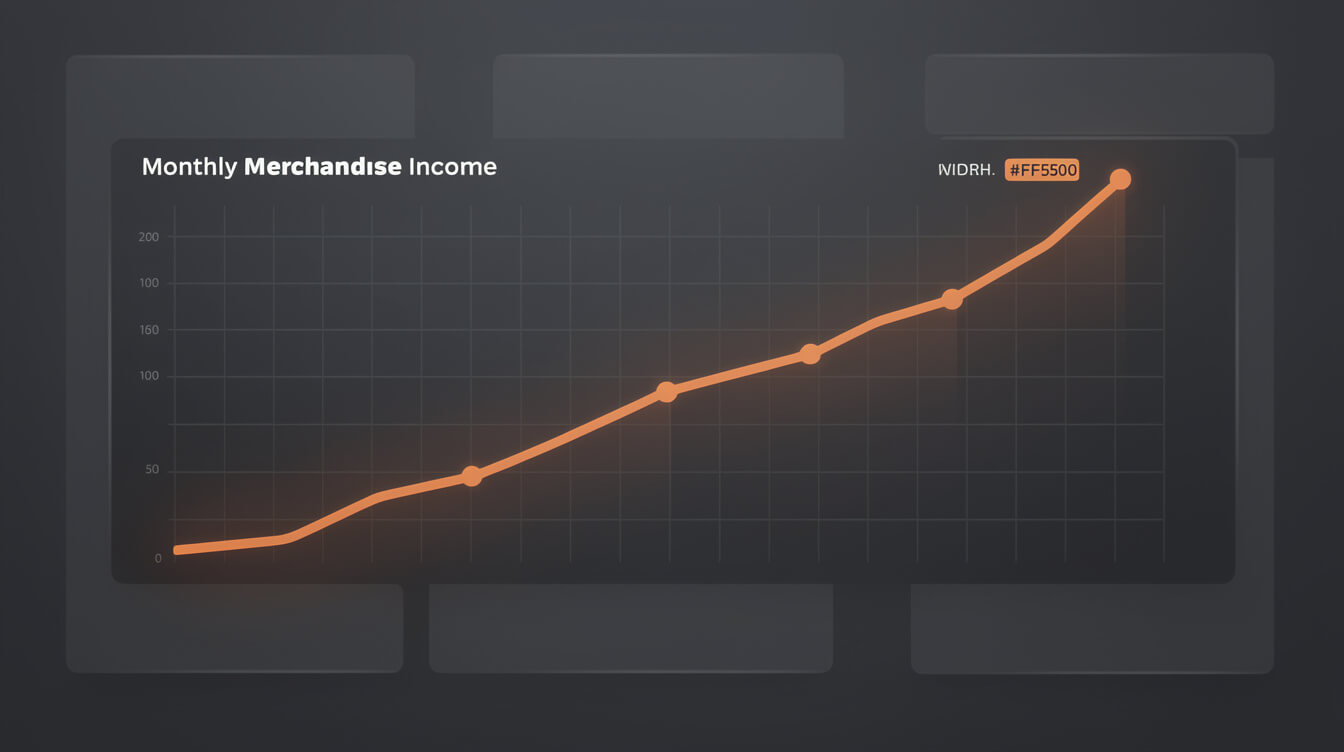
Let us make the $2,000/month target concrete.
At a $32 average order value, a realistic mix of tees, mugs, and accessories, you need 63 orders in a month. That is 2.1 orders per day.
Email list: the highest-conversion channel
A list of 2,000 engaged subscribers with a 1% purchase rate on a launch email generates 20 orders from one send. A follow-up email with social proof generates another 8-12. Two emails in a launch week can cover a third of your monthly target.
Organic search traffic
A WooCommerce store indexed by Google can drive passive purchases from search traffic within two to three months of launch. The volume is small early but compounds without ongoing effort. A well-structured product catalog covering your niche terms builds this over six to twelve months.
Existing clients and warm network
For service businesses, a warm offer to existing clients can generate early orders without marketing spend. A newsletter announcement or a mention in your next client onboarding email reaches people who already trust your judgment.
The product mix effect
Stores that only sell t-shirts plateau faster than those with catalog variety. Adding mugs, tote bags, phone cases, and prints increases average order value and creates gift occasions that drive purchases outside your expected launch window. A catalog of 30 products across four product types gives you more conversion surface than 30 t-shirt designs alone.
$2,000/month requires consistency, not viral moments. A steady catalog, an email sequence, and a live WooCommerce store will get an established business there without paid advertising.
Your 48-hour print on demand for business launch plan

Here is the minimum viable path from zero to a live POD channel in 48 hours. This plan assumes you have an existing WordPress site and a modest email list.
Hours 1-2: WooCommerce and Printful setup
Install WooCommerce on your WordPress site. Install the Printful plugin. Connect your Printful account. This is documented step-by-step on Printful’s help center and takes most operators under 90 minutes.
Hours 3-4: Brand assets and product brief
Export your logo in vector format or high-resolution PNG. Identify three to five core product types to lead with: apparel, drinkware, and accessories cover most audiences. Write a one-paragraph brand brief: who your audience is, what aesthetic they respond to, and what message your merch should carry.
Hours 5-8: Product generation
Run a MEGA pipeline with your brand brief and assets. In under seven minutes you have 20+ products with designs, mockups, titles, and descriptions ready for review. Approve what fits, remove anything that does not. Publish the approved batch to WooCommerce and Printful.
Hours 9-12: Store configuration
Set up your WooCommerce payment gateway. Configure shipping zones or pass shipping cost to buyers. Write a short “About this store” page that connects the merch to your main brand identity. Verify the checkout flow works end-to-end.
Hours 13-24: Launch communications
Write your launch email. Keep it short: here is the merch, here is why it exists, here is the link. Send to your list. Post on whichever social channel is most active for your brand.
Hours 25-48: First orders and feedback loop
Monitor orders. Check Printful’s fulfillment status on the first two to three orders to confirm the pipeline is working. Read customer feedback if any arrives. Adjust pricing or product descriptions based on initial conversion data.
Most of the time in this plan is setup, not creation. The product creation step is seven minutes. The rest is configuration, review, and communication. That ratio is the whole point of a batch pipeline.
Start adding merch revenue to your existing business
Print on demand for business is not a side hustle. It is a revenue channel for operators who have already done the hard work: building an audience, earning trust, and creating a brand that people want to affiliate with. The infrastructure to monetize that affiliation is simpler and cheaper than it has ever been.
The manual-Canva workflow was the blocker for most operators. Four hours to create 20 products is a full working shift, and most owners do not have that. The automation layer changes the calculation entirely.
If you are running an existing operation with any audience at all, the question is not whether POD is viable for your business. The question is how fast you want to build the catalog.

Implement AI. 30x your throughput. Get a 30-min call with the founder.
Drop your details and book a free 30-minute discovery call. Personalized advice on your POD stack, your margin, and where AI fits. No pitch, no fluff.