Custom t-shirt screen printing vs print on demand: the break-even math every seller needs
If you have been researching custom t-shirt screen printing, you have already found the service pages. A per-unit price for 24 pieces. Another tier for 50. A note about setup fees. What you have not found is the actual math: what custom t-shirt screen printing costs at different order sizes, where print on demand undercuts it on economics, and the exact unit count where screen printing becomes the smarter choice. This post covers all of it. You will leave knowing the full cost structure of screen printing, the per-unit economics at every tier, and how POD automation compares at each volume.
The comparison matters because the answer is not obvious. Screen printing wins at high volumes. POD wins at low volumes. The number where the math flips is different for every design complexity, and no one in the SERP right now has published it. Here it is.
What custom t-shirt screen printing actually costs (full breakdown)
Custom t-shirt screen printing pricing follows a predictable structure once you know the three components: blank garment cost, per-unit printing cost, and setup fees. Most quoting tools bury setup fees in a footnote. They matter more than the per-unit line.
A standard print from Uberprints runs approximately $8.29 per shirt at 50 pieces for a one-color front print on a standard tee. At 100 pieces, that drops to roughly $6.49. At 250 pieces, you are looking at $4.50 to $5.50 depending on the blank and color count. Those numbers look competitive until you add setup fees (more on those in section 3) and factor in the cost of unsold inventory.
Printers like Jakprints, Threadbird, and similar trade shops run comparable tier pricing. The economics are structurally similar across the industry because the cost drivers are the same: screen making, press time, and drying. The blank cost is largely fixed at wholesale.
Breaking down what you actually pay per shirt at volume:
- 12–23 pieces: $12–18/unit at most printers (plus setup). Only available at printers that accept small runs.
- 24–47 pieces: $8–12/unit (plus setup). Standard entry tier for most printers.
- 48–71 pieces: $6–9/unit. The most common “sweet spot” tier.
- 72–143 pieces: $4.50–7/unit. Economics start tilting clearly toward screen printing.
- 144+ pieces: $3.50–5.50/unit. Screen printing clearly wins here.
Those per-unit numbers assume a single color, front print, on a standard 100% cotton tee. Each additional color adds cost. Front and back adds cost. Premium blanks (tri-blends, Bella Canvas) add $1.50–4 per unit to the blank cost before printing.
If you are planning custom t-shirt screen printing for a product launch, the design itself matters more than people realize. A print that works in screen printing is usually 1–4 solid colors with clean edges and no gradients. Understanding what prints well before you spend money on screens is covered in our guide to t-shirt printing design for POD sellers.
The minimum order problem: why screen printing requires 24–50 pieces minimum
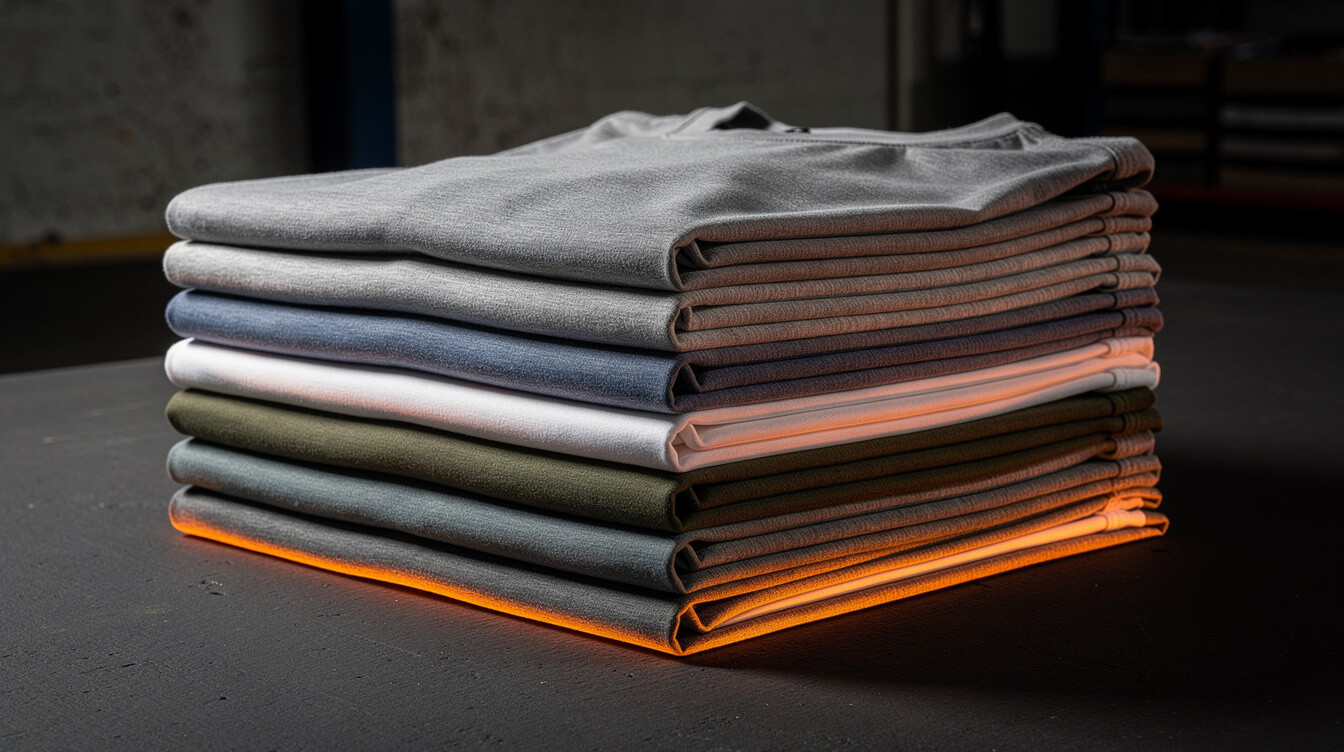
The minimum order requirement in screen printing is not arbitrary. It is economic. A printer has to burn 15–30 minutes of press setup time for every job, regardless of size. That setup time has to pay for itself. At 6 shirts, it cannot. At 24 or more, it starts to.
Most production screen printers set their floor at 24 pieces. Some accept 12 as a minimum with a higher per-unit rate and no setup fee discount. A few boutique printers take one-off runs, but their pricing reflects the setup cost baked into every shirt, which typically lands you at $15–25 per shirt for small quantities.
The minimum order problem creates a specific risk for POD sellers: you have to commit capital to a design before you know if it sells. The mechanics look like this.
- You have a design idea for a niche.
- You want to validate it with a small run.
- Screen printing requires 24–48 pieces minimum.
- At $9/unit + $50 setup, you are spending $266 to validate one design.
- If the design does not sell, you are holding inventory with zero liquidation value.
This is why most POD sellers who have done screen printing runs talk about the “box of unsold shirts” problem. One Reddit thread in r/streetwearstartup summarized it well: “I spent $400 on a run of 48 shirts and sold 11. The other 37 are in a box.” The unit economics looked good on paper. The inventory risk did not show up in the quote.
Print on demand eliminates the minimum order entirely. That is not a feature. It is the business model. You sell one, they ship one. You do not hold inventory. The economics change, but the risk profile changes more.
Screen printing setup fees: what you pay before a single shirt prints
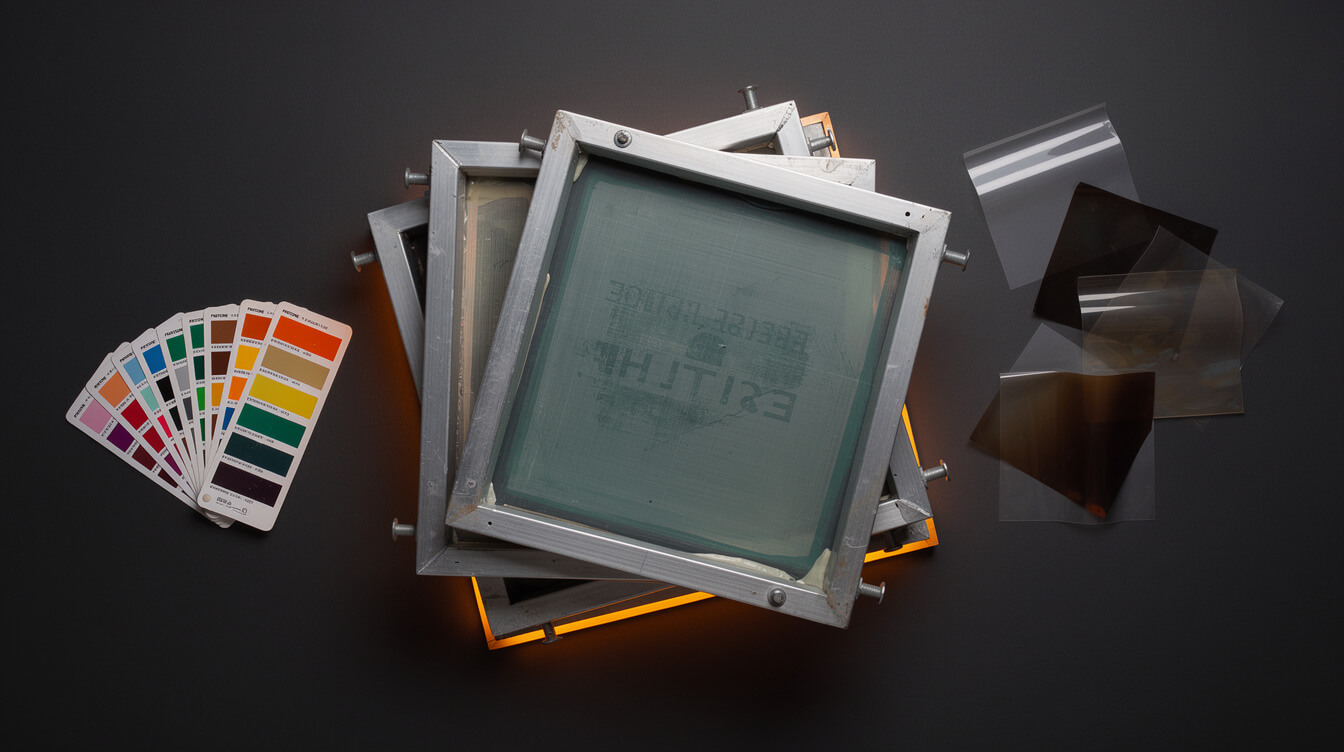
Setup fees are the line item that makes screen printing math more complicated than the per-unit pricing suggests. Most printers charge a setup fee per screen, and each color in your design requires its own screen.
A typical range: $20–50 per screen at regional printers. A $25/screen fee on a 3-color design is $75 before a single shirt is printed. At $45/screen, that same 3-color design costs $135 in setup. Add those to your run cost and recalculate your true per-unit cost, including setup amortized across the order.
Here is what that looks like in practice:
- 1-color design, 24 pieces at $8/unit, $30 setup: Total $222, true per-unit $9.25
- 2-color design, 24 pieces at $9/unit, $60 setup: Total $276, true per-unit $11.50
- 3-color design, 24 pieces at $10/unit, $90 setup: Total $330, true per-unit $13.75
- 1-color design, 100 pieces at $6/unit, $30 setup: Total $630, true per-unit $6.30
- 3-color design, 100 pieces at $7/unit, $90 setup: Total $790, true per-unit $7.90
At 100 pieces with a 3-color design, true per-unit is $7.90. That is competitive. At 24 pieces with the same design, true per-unit is $13.75, which is roughly the same as a Printful DTG price with no minimums and no inventory risk.
Repeat orders can change this slightly. Some printers store your screens and charge a reduced restrike fee ($10–20 per screen) for repeat orders. That lowers the amortized setup cost on subsequent runs, but only if your design stays the same, you use the same printer, and you order again within 6–12 months before the screens are reclaimed.
Setup fees also mean that color complexity directly penalizes your economics. A simple 1-color design can reach price parity with POD at 30–40 units. A 5-color design may never reach parity in the quantities that most small POD operations run.
Print on demand as the no-minimum alternative (and when it wins on economics)
Smash print-on-demand. Join the engine room.
One short email a week. Real numbers, real teardowns, the unfiltered economics behind every move.
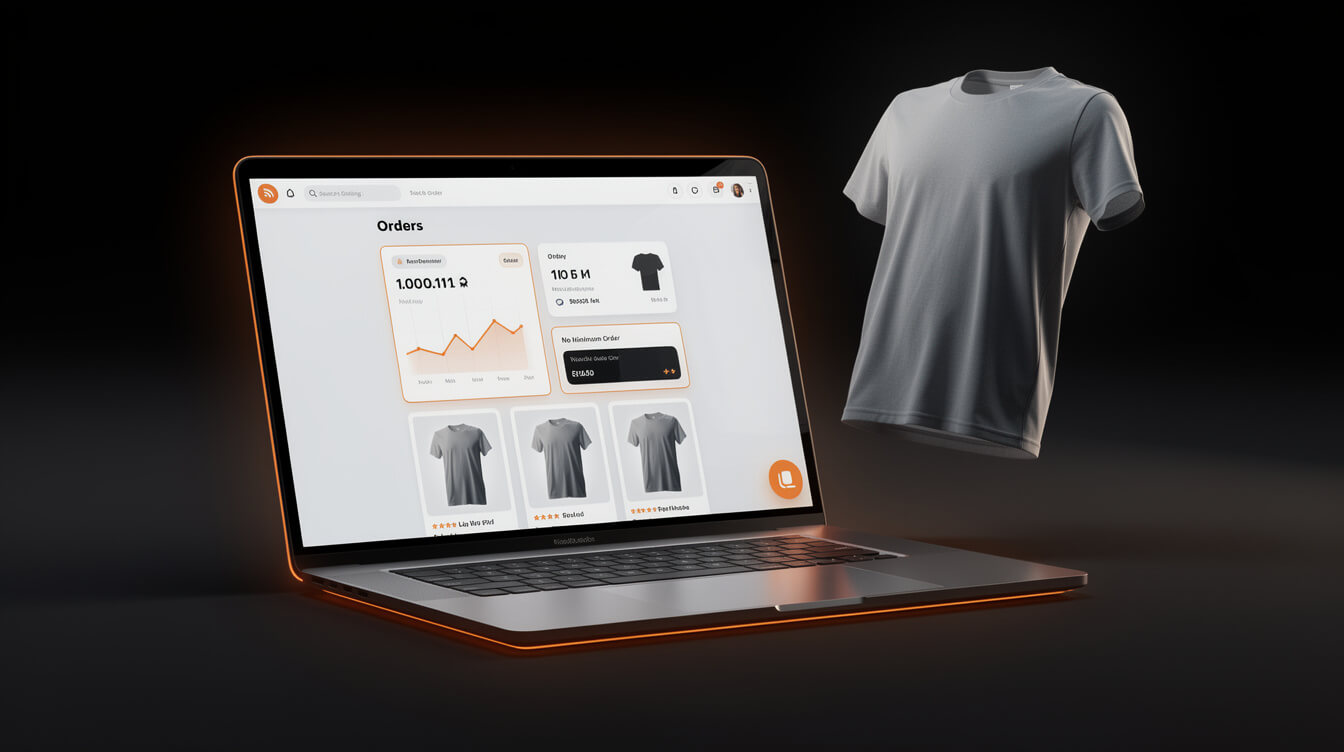
Print on demand operates on a fundamentally different cost structure. There are no setup fees, no minimums, and no inventory. You pay per unit when a sale is made. The trade-off is a higher per-unit cost than screen printing at volume, and a print method (usually DTG or DTF) with different quality characteristics than screen printing.
Printful’s standard DTG pricing on a Bella Canvas 3001 unisex tee runs approximately $12.95–15.95 per unit depending on design complexity and placement. Printify’s network partners run roughly $9.50–13 on comparable blanks depending on the print provider. Both have $0 setup, no minimums, and handle fulfillment automatically.
When does POD win on economics?
- Testing a new design: You need sell-through data before committing to a 48-piece screen printing run. One order validates the design. POD handles this; screen printing cannot.
- Low-volume ongoing sales: Selling 5–15 units per month per design. At those volumes, screen printing’s amortized setup never pencils out.
- Multi-design catalogs: If you have 40 designs and average 8 sales per design per month, screen printing would require 40 separate setup fees and minimum orders. POD runs all 40 designs from a single integration.
- Full-price margin business: If your retail price is $28–35 on a standard tee, POD at $13 leaves $15–22 in gross margin before platform fees. That is a viable business, not a race to the bottom.
POD is not better than screen printing in every scenario. It is better in the scenarios where most POD sellers actually operate. High volume, proven designs, consistent reorder demand: that is screen printing territory. New designs, catalog-width assortment, no-inventory model: that is POD territory.
If you are running a POD store and managing product creation manually, the design-to-listing process is where most of the friction lives. T-shirt printing at home covers the DIY path for early-stage sellers who are not yet at volume. For sellers ready to automate, MEGA handles the research-to-product pipeline end to end, from niche ideation through image generation, sizing, mockup, and full listing on WooCommerce and Printful, without the manual Canva workflow.
Break-even math: custom screen printing vs POD for custom t-shirts

The break-even point is where screen printing’s lower per-unit cost at volume exactly offsets its fixed setup costs compared to POD. Below that point, POD is cheaper. Above it, screen printing is cheaper. The math is straightforward once you have the inputs.
Scenario 1: 1-color design, simple geometry
- Screen printing: $30 setup + $7.50/unit
- POD (Printify): $11/unit
- Break-even formula: Setup cost / (POD per-unit – Screen per-unit) = $30 / ($11 – $7.50) = $30 / $3.50 = 8.6 units
- Break-even: 9 units. At 9+ shirts of the same exact 1-color design, screen printing is cheaper per unit. But you need to order 24 minimum, so you are committing to 24 pieces to capture that savings.
Scenario 2: 3-color design, standard run
- Screen printing: $90 setup + $9/unit
- POD (Printful): $14/unit
- Break-even: $90 / ($14 – $9) = $90 / $5 = 18 units
- Break-even: 18 units. At 18+ shirts, screen printing wins on unit economics. Again, you need 24 minimum to order, so 24 is your real floor to capture the advantage.
Scenario 3: 5-color design, premium blank
- Screen printing: $150 setup + $12/unit (premium blank)
- POD (Printful): $16/unit (premium blank, complex design)
- Break-even: $150 / ($16 – $12) = $150 / $4 = 37.5 units
- Break-even: 38 units. You need to sell nearly 40 units of the exact same design just to match POD economics on total cost.
The pattern is clear. For simple 1–2 color designs, screen printing reaches economic parity relatively quickly. For complex multi-color designs, the setup cost keeps the break-even unit count high enough that POD automation stays competitive through most of the volume range small POD stores actually operate in.
There is also the hidden cost most break-even tables ignore: unsold inventory. When you calculate screen printing economics, you are implicitly assuming 100% sell-through. Every unsold shirt converts into a higher true per-unit cost on the units you did sell. A 24-piece run where you sell 18 means your effective unit economics are based on 24 pieces of cost but 18 pieces of revenue. POD has no unsold inventory by definition. That changes the risk-adjusted comparison in POD’s favor for any design without a proven sell-through history.
The practical rule: screen printing makes sense when you have a proven design, consistent reorder demand, and order quantities above 72–100 pieces per design. Below that, or before you have sell-through data, POD automation carries better total economics once you account for inventory risk.
Skip the minimum order math entirely
MEGA automates the research-to-product pipeline for POD sellers. Niche idea to live listing on Printful and WooCommerce in under 7 minutes. No minimums. No setup fees. No Canva.
Print quality comparison: screen printing vs DTG vs DTF for POD sellers
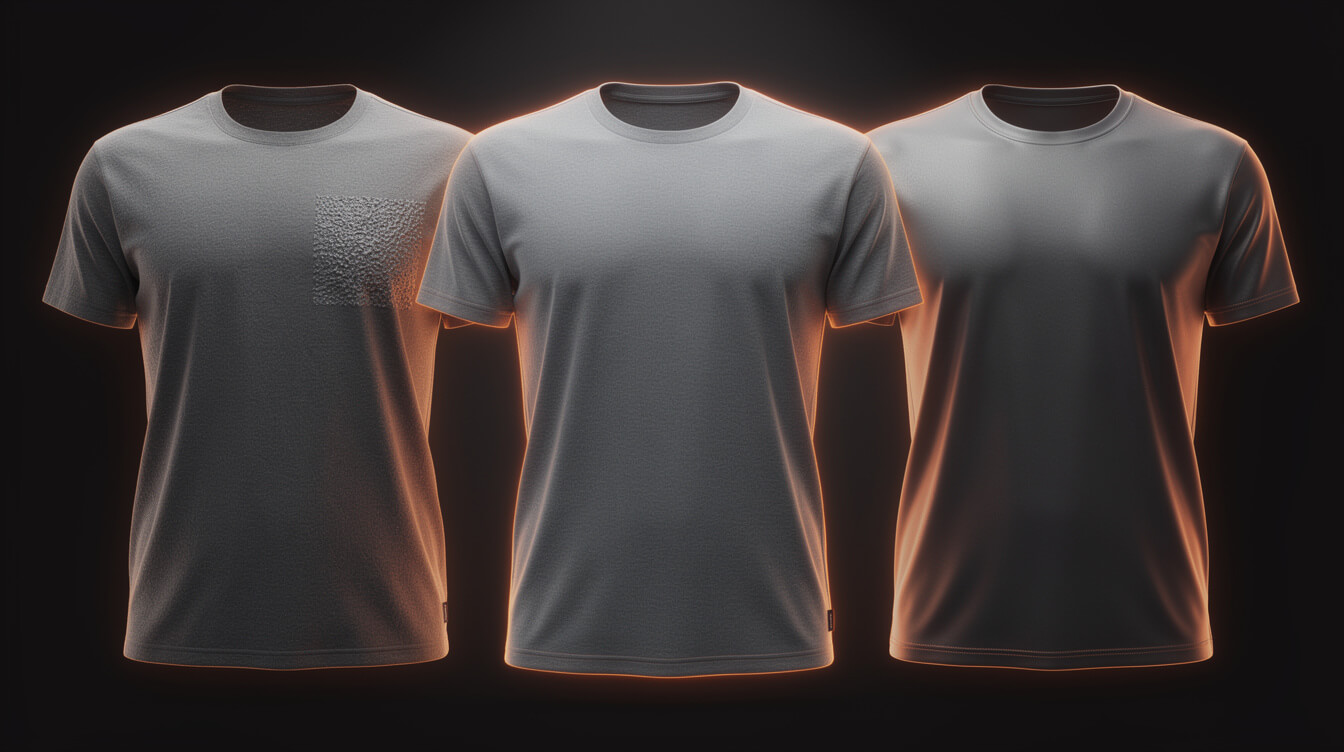
The economics question matters, but so does the quality question. The three methods you will encounter as a POD seller produce different results on different design types. Understanding the differences helps you decide which method fits your design catalog, not just your order volume.
Screen printing
Screen printing lays ink directly on the fabric through a mesh screen. The ink sits on top of the fabric rather than penetrating the fibers, which creates bold, vibrant color with excellent durability. Wash after wash, a properly cured screen-printed design holds up. The limitation is design complexity: screen printing requires one screen per color, which makes photorealistic multi-color work prohibitively expensive at small volumes. Bold graphics, flat illustrations, and solid-color text designs are where screen printing is at its best.
DTG (direct-to-garment)
DTG printers spray water-based ink directly into the fabric fibers, producing photorealistic prints with unlimited color complexity and no setup fees. DTG handles gradients, photography, and detailed illustration work that screen printing cannot. The trade-off is that DTG quality on dark garments depends heavily on pretreatment quality, and some DTG prints fade faster than screen prints under repeated washing if the printer’s cure temperature and dwell time are not calibrated correctly. Printful and high-end Printify providers have largely solved this at the printing side; variability exists at the lower end of the Printify network. We covered DTG printing vs screen printing in depth if you want the technical breakdown.
DTF (direct-to-film)
DTF transfers a printed film onto the garment using adhesive powder and a heat press. It works on virtually any fabric, handles dark garments without pretreatment, and produces vibrant, durable results. DTF is gaining ground in the POD space because it removes the pretreatment variable from DTG while maintaining color accuracy. The print has a slight raised texture that is noticeable on touch but generally invisible in photos. Our DTG vs DTF breakdown covers the specifics for POD sellers choosing between the two methods.
Which method for which use case
- Bold 1–4 color logos, team designs, event shirts at volume: Screen printing. Durability and vibrancy at scale.
- Photorealistic art, gradients, complex illustration on light garments: DTG.
- Complex designs on dark garments, athletic or synthetic fabrics: DTF.
- Mixed design catalog, no minimums, automated fulfillment: DTG via Printful or equivalent POD partner. DTF is available through select Printify providers.
For most POD sellers building a mixed catalog of evergreen designs, DTG and DTF via a POD partner give you design flexibility, no minimums, and automated fulfillment that screen printing cannot match at small volumes.
For POD sellers: automating design-to-ship without the screen printing overhead
Custom t-shirt screen printing requires you to make six decisions for every single design: the design itself, the print supplier, the color count, the minimum order quantity, the setup timeline, and the delivery and shipping management. Each decision takes time. Most of them require coordination with an external party. If you are running a catalog of 50 designs, those six decisions repeat 50 times.
POD automation collapses the overhead. You make one decision per product: the design concept. The rest follows automatically through the pipeline.
The contrast is sharpest when you look at the time math. A single screen printing order involves quoting, approving artwork, paying a deposit, waiting for production (typically 7–14 business days), and handling inventory receipt. A single POD product on Printful or WooCommerce via an automated pipeline takes minutes to create and begins fulfilling the moment an order comes in, with no production lead time on your end.
This is what MEGA was built to solve. The research-to-product pipeline handles niche ideation, AI image generation, sizing, cropping, mockup creation, and product listing on both Printful and WooCommerce in under 7 minutes per product. The Shopify 1% override fee that erodes margin on Shopify-based POD stores does not exist on WooCommerce. The platform you own is the one that actually benefits from building a product catalog.
That does not mean screen printing has no place in a POD business. It has a clear place: proven designs with documented sell-through history, ordered at 100+ units, where the per-unit cost advantage is real and the inventory risk is known and manageable. Getting to that point requires sell-through data. Sell-through data requires having designs live and generating orders. POD automation is how you build the data set that eventually justifies a screen printing run for your top performers.
The practical playbook
- Launch designs via POD automation. No minimums, no setup fees, immediate listing.
- Track sell-through by design. Identify which designs sell consistently at 10+ units per month.
- Convert top performers to screen printing at 72–100+ units. Now your break-even math is real, not speculative.
- Keep the long tail on POD. The 80% of designs that sell 2–5 units per month stay on POD. Screen printing is only for proven winners.
This is the research-first, economics-first approach that builds a sustainable POD business. Screen printing is a tool in the kit, not the entry point. The entry point is a pipeline that gets designs live, collects data, and informs the decisions downstream.
Frequently asked questions about custom t-shirt screen printing vs POD
What is the typical minimum order for custom t-shirt screen printing?
Most production printers require 24 pieces as their floor. Some accept 12 with a higher per-unit rate. Boutique printers occasionally accept single-piece runs but price them at $15–25 per shirt, which negates any cost advantage over POD for small volumes.
How many colors can a screen print have?
There is no hard limit, but each color requires a separate screen, which adds $20–50 per screen in setup fees. Most commercial screen prints use 1–6 colors. Beyond 6 colors, the setup cost typically makes DTG or DTF a more economical choice unless you are running very high volumes.
Is screen printing better quality than print on demand?
For bold, simple designs, screen printing produces more vibrant color and better wash durability. For complex, multi-color, photorealistic work, DTG and DTF have closed the quality gap significantly. The honest answer is that the quality comparison depends on the design type, not a blanket statement about one method being superior.
At what order quantity does screen printing become cost-effective?
For a 1-color design, break-even against POD is approximately 9–15 units on unit cost alone. The minimum order requirement means your practical floor is 24 pieces. For 3-color designs, break-even is closer to 18–30 units. For 5-color complex designs, break-even can exceed 40 units before screen printing matches POD economics.
Can I use screen printing for a WooCommerce POD store?
Yes, but the integration is manual. You manage inventory, receive shipments, and fulfill orders yourself. Screen printing does not connect to WooCommerce the way Printful or Printify does. If you want automated fulfillment on WooCommerce, DTG via Printful is the standard path. Screen printing is best for high-volume, proven designs where you handle the fulfillment operations yourself or outsource to a 3PL.
Implement AI. 30x your throughput. Get a 30-min call with the founder.
Drop your details and book a free 30-minute discovery call. Personalized advice on your POD stack, your margin, and where AI fits. No pitch, no fluff.