
Custom pillows for POD stores: Printful and Printify options, sublimation print quality, and the home decor margin math
The custom pillow market gets 12,100 searches a month and has a keyword difficulty score of zero. That combination is unusual. Most high-volume home decor searches are already dominated by B2C consumer gift sites that have no interest in writing for POD sellers. The gap is open. Printerpix, Walmart Photo, and Snapfish own the “custom pillow” SERP by selling directly to gift buyers. None of them explain how to source throw pillows through a POD provider, what sublimation costs at different volumes, or why WooCommerce changes the margin calculation at this price point. This post covers all of it. If you are adding custom pillows to your POD catalog or building a home decor store from scratch, here is the complete breakdown on providers, print methods, unit economics, and pricing strategy.
Custom pillows as a POD home decor product: why the opportunity is underserved
Home decor is one of the most overlooked categories in POD. Most sellers default to apparel because that is where the tutorials point. T-shirts, hoodies, hats. The category is saturated. Custom pillows sit in a different lane.
The search volume is real. 12,100 searches a month for “custom pillow” in the United States alone. Difficulty score of zero. That means the SERP is wide open from an editorial standpoint. The results that rank are all consumer-facing storefronts: Pillowfort on Target, Printerpix, Walmart Photo Center. Not one of them is writing educational content for POD sellers.
Home decor as a category also has favorable economics for POD. The average order value runs $35-55 on a standard throw pillow. That is higher than a t-shirt and often lower than a hoodie, but the buyer intent is different. Home decor buyers expect to pay more for personalization. A custom photo pillow priced at $45 feels reasonable. A custom t-shirt at $45 requires more justification.
There is also a gifting angle. Custom pillows sell well as wedding gifts, anniversary presents, pet memorial keepsakes, and holiday items. That means demand is not purely evergreen. It spikes around key gifting seasons, which you can plan for.
The competitive dynamic on the SERP reinforces the opportunity. You are not competing against editorial juggernauts like Printful’s blog or Printify’s guides. You are competing against product listing pages. Those pages are not trying to rank for informational queries. A well-structured educational post on custom pillow sourcing for POD sellers has a clear path to page one.
The question is which providers to use, what print method to choose, and how to price it so the margin holds after fees.
Which POD providers carry custom throw pillows

Three POD providers carry throw pillows in a no-minimum format: Printful, Printify, and Gooten. Each has different product options, base costs, and integration support. Here is what the catalog looks like across all three.
Printful is the most straightforward choice for WooCommerce sellers. They offer two core throw pillow formats: pillow cover only (printed fabric, no insert) and pillow with insert (stuffed, ready to ship). Sizes run from 14×14 inches up to 20×20 inches. The print method is sublimation, which means full-coverage, edge-to-edge design on both sides is supported. Base prices for a Printful pillow with insert run roughly $14-18 depending on size. That is before shipping, which typically adds $5-8 per order for domestic US delivery.
Printify gives you more supplier options at the cost of consistency. The Printify network includes multiple print providers who carry throw pillows, including MyLocker, Textildruck Europa, and AOP+ (depending on region). Base costs through Printify typically run $10-15 per unit for a standard 18×18 inch pillow with insert, which is lower than Printful. The trade-off is that you are working with a marketplace model, not a single fulfillment partner. Quality and turnaround times can vary between suppliers.
Gooten carries throw pillows as well, positioned as a midmarket option between Printful’s consistency and Printify’s price competition. Their pillow catalog is smaller than Printify’s but their integration support for WooCommerce is solid. Base prices are in the $12-16 range for a standard pillow.
For most WooCommerce sellers starting a home decor catalog, Printful is the simplest starting point. Their WooCommerce plugin is mature, the product returns process is clear, and the sublimation print quality on their throw pillows is consistent enough to resell at the $35-55 price point without quality issues. If you want to optimize for margin and are willing to manage supplier variability, Printify’s network gives you more room.
One thing to verify with any provider: whether the pillow listing includes the insert or covers only. “Pillow cover” and “throw pillow” are different SKUs on most platforms. Selling a cover-only product to a buyer who expects a stuffed pillow is a guaranteed return. Check the product description at the supplier level before you list.
If you want to expand your home decor catalog beyond pillows, custom blankets follow a similar no-minimum model through Printful and Printify, with slightly higher base costs and a different print method depending on the product type.
How sublimation printing works for pillows (and when DTF is the alternative)
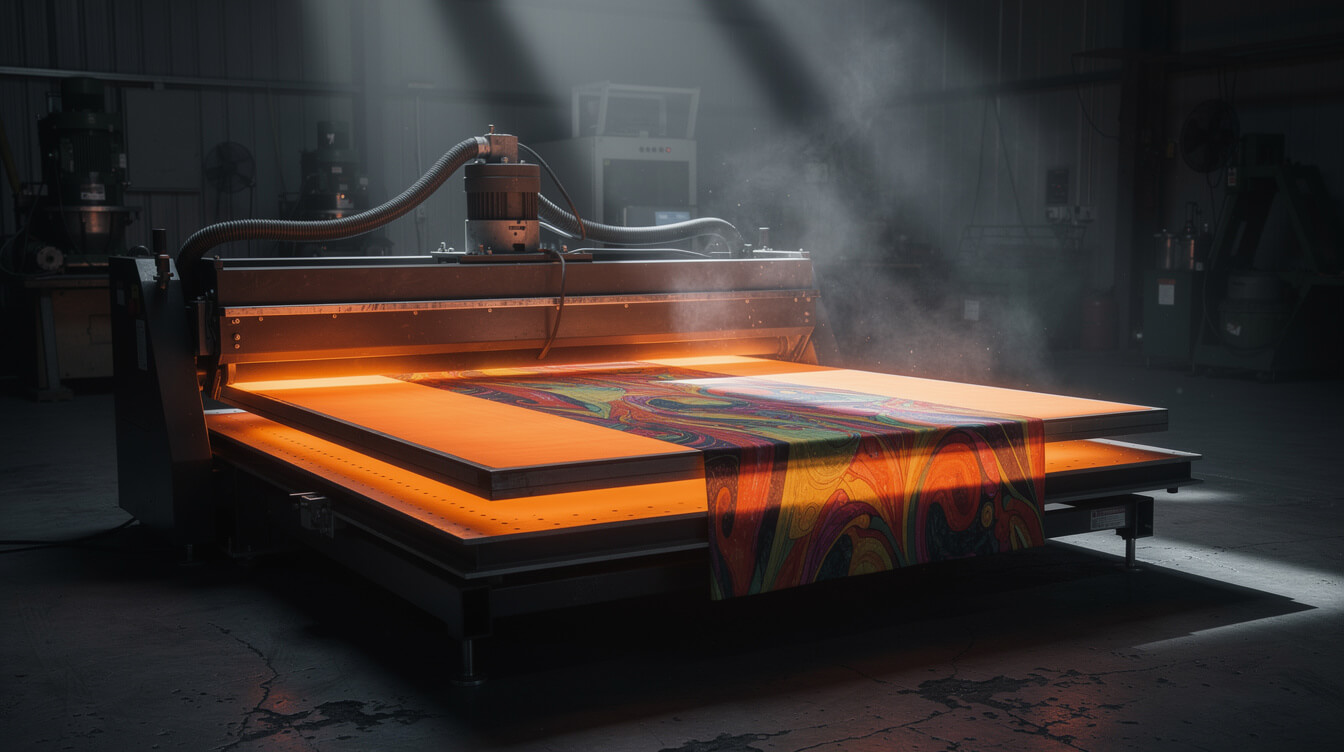
Sublimation is the dominant print method for custom throw pillows in the POD space. Understanding why it works for this product type helps you set design expectations and explain quality to buyers.
Sublimation printing converts dye from solid to gas under heat and pressure, then bonds the dye directly into the fabric fibers. The result is a print that does not sit on top of the fabric. It is part of the fabric. Colors are vibrant, the print is soft to the touch, and there is no peeling or cracking over time. For throw pillows, which are handled and washed frequently, this durability is a significant advantage over other print methods.
The constraint is fabric composition. Sublimation only works reliably on polyester or high-polyester blends. For pillows, this is generally fine. Most POD throw pillows are 100% polyester or a polyester-spandex blend because these materials produce the sharpest sublimation output. The downside: pure polyester can feel synthetic compared to a cotton or cotton-poly blend. If your brand emphasizes premium texture and feel, it is worth sourcing samples before committing to a supplier.
The other constraint is color on dark backgrounds. Sublimation dye is transparent, so it relies on the base fabric color to anchor the image. On white polyester fabric, the results are excellent. On dark fabric, sublimation washes out. Most POD pillow providers do not offer dark-colored sublimation options for this reason. If you want a charcoal or black pillow with a bright design, check whether the supplier offers direct-to-film (DTF) heat transfer printing as an alternative.
DTF vs sublimation for pillows: DTF printing produces a heat-transfer film that is pressed onto the fabric surface. Unlike sublimation, it works on both light and dark fabrics and on cotton blends. The trade-off is a slightly raised print surface, which some buyers find less premium than a sublimation print on polyester. For a home decor throw pillow at $40-50 retail, most buyers are not scrutinizing print method. They are looking at the image quality and color accuracy. Both methods deliver acceptable results at that price point. Sublimation at scale is typically cheaper because it requires less consumable material per unit.
For photo-based custom pillow designs, especially the personalized gift segment (pet portraits, couple photos, family images), sublimation on white polyester is the standard for good reason. The color reproduction on a Printful sublimation pillow is accurate enough to satisfy gift buyers if you set correct file requirements upfront: minimum 150 DPI at print size, RGB color mode, no JPEG compression artifacts.
Unit cost breakdown: what a custom pillow costs to produce at 1, 10, and 50 units

Smash print-on-demand. Join the engine room.
One short email a week. Real numbers, real teardowns, the unfiltered economics behind every move.

The economics of POD pillows are straightforward once you lay out the numbers. No minimums means no inventory risk, but the per-unit cost is higher than bulk manufacturing. Here is what the numbers look like across production volumes.
At 1 unit (POD, no-minimum):
Printful throw pillow with insert (18×18): ~$16.00 base
Domestic US shipping: ~$6.50
Total fulfillment cost: ~$22.50
Retail price at $45: gross margin of $22.50 (50%)
At 10 units (POD, same model):
Base cost per unit: ~$16.00 (no volume break at this level)
Shipping remains per-order unless customer orders multiple
Effective margin per unit: same as single-unit, assuming one pillow per order
Note: Printful and Printify do not offer bulk discounts within their standard POD model. Each order is fulfilled individually.
At 50 units (bulk manufacturing comparison):
A dedicated custom pillow manufacturer (Pillowflex, 4imprint, CustomUSA) typically offers 50-unit minimums. At 50 units, bulk costs can run $8-12 per unit including printing, excluding shipping. You save $4-8 per unit versus POD, but you carry inventory, manage quality control, and handle storage.
The break-even comparison matters. At a $45 retail price, POD delivers a $22.50 gross margin per unit with zero upfront capital. To match that margin percentage at bulk pricing, you would need to sell all 50 units at full price. A single unsold batch at bulk eliminates several months of POD profits.
For a new product test, POD wins. For a proven bestseller with stable demand of 50+ units per month in the same design, the math starts to shift. Most POD sellers never reach that threshold for any single design, which is why no-minimum fulfillment remains the better model for most use cases.
Printify vs Printful cost comparison at 1 unit:
Printify (via MyLocker or similar): ~$12-14 base + $5-7 shipping = ~$18-21 total
Printful: ~$16 base + $6.50 shipping = ~$22.50 total
Difference: roughly $1.50-4.00 per unit in favor of Printify
At $45 retail, that is 3-9 points of additional gross margin through Printify. For high-volume stores, that matters. For testing new designs, the Printful consistency advantage often outweighs the cost savings.
Setting your retail price: the $35-55 AOV and what Shopify’s 1% override costs at this range

Custom throw pillows fit naturally in the $35-55 retail range. Below $35, the margin is too thin if you are using Printful as your fulfillment partner. Above $55, buyer hesitation increases unless you are selling in a clearly premium or luxury positioning (personalized wedding gift sets, high-resolution pet portrait pillows, etc.).
The $45 price point works well as a default for a standard 18×18 custom photo pillow with insert. It delivers a $22.50 gross margin before platform fees, returns, and ad spend. That is a workable foundation.
Now add Shopify’s platform fee structure. Shopify’s Basic plan charges 2% on external payment processing (dropping to 0.5% on Advanced). The Shopify ecosystem also adds up in app costs: Product Personalization apps run $19-49/month, which adds to your overhead. But the most significant fee for high-volume POD stores is Shopify’s 1% platform override on third-party payment gateways.
At $10,000/month in pillow sales, that 1% override costs you $100/month before any app subscriptions. At $30,000/month, you are paying $300/month to Shopify as an infrastructure tax. The fee does not buy you anything additional at the higher revenue tier. It is a percentage of revenue that compounds as you grow.
On a $45 throw pillow, the Shopify 1% override eats $0.45 per order. That sounds small. Across 200 orders a month, it is $90. Across 500 orders, it is $225. The cost structure gets attention once stores reach the $15,000-20,000/month range, which is when switching costs start to look reasonable.
MEGA automates the full product listing pipeline for home decor POD products, including custom pillows, on WooCommerce. The MEGA platform handles image generation, sizing, mockup creation, SEO titles, and meta descriptions, so you can move from a niche idea to a live WooCommerce listing without a Canva session or a manual upload workflow.
WooCommerce vs Shopify for a home decor POD store

The platform decision compounds over time. For a home decor POD store built around custom pillows, the WooCommerce vs Shopify comparison has a clear answer once you run the numbers.
WooCommerce is free software. Hosting costs $15-25/month at entry-level managed WordPress providers (Kinsta, SiteGround, Cloudways). The Printful plugin for WooCommerce is free. The Printify integration is free. You own your customer data, your product catalog, and your store infrastructure. There is no 1% override on revenue. There are no mandatory platform app subscriptions. The fees you pay are the ones you choose to pay.
Shopify has a lower barrier to entry and a polished product. For a seller who wants to be live in 48 hours without touching a server, Shopify makes sense at the beginning. The fee structure starts to matter once monthly revenue clears $5,000-8,000. At that point, the compounding cost of Shopify’s override and app subscriptions creates a real spread against a WooCommerce stack.
For a custom pillow store at 200 orders/month at $45 average order value ($9,000/month gross):
Shopify Basic fees: ~$29/month + 1% override = $29 + $90 = $119/month in platform costs
WooCommerce costs: hosting ($20/month) + no override = $20/month in platform costs
Monthly spread: $99
Annually, that is approximately $1,188 in additional cost on Shopify versus WooCommerce for the same store. As the store grows, the gap widens because the override is a percentage.
The WooCommerce migration is real work. You need a WordPress host, a theme, WooCommerce, the Printful or Printify plugin, and a checkout configuration. For a seller comfortable with basic WordPress setup, it is a weekend project. For someone who has never used WordPress, it is a learning curve of two to four weeks. That is the honest trade-off. The economics favor WooCommerce. The execution path is longer upfront.
If you are already researching custom photo blankets for your home decor catalog, the same WooCommerce infrastructure supports blankets, pillows, and the full home decor product line without adding per-product platform overhead.
Build your home decor POD catalog 30x faster on WooCommerce
MEGA automates the end-to-end pipeline for custom pillow and home decor listings: image generation, sizing, mockups, SEO titles, and product descriptions. No Canva. No manual uploads. From niche idea to live WooCommerce listing in under 7 minutes.
Niche verticals with strong custom pillow demand
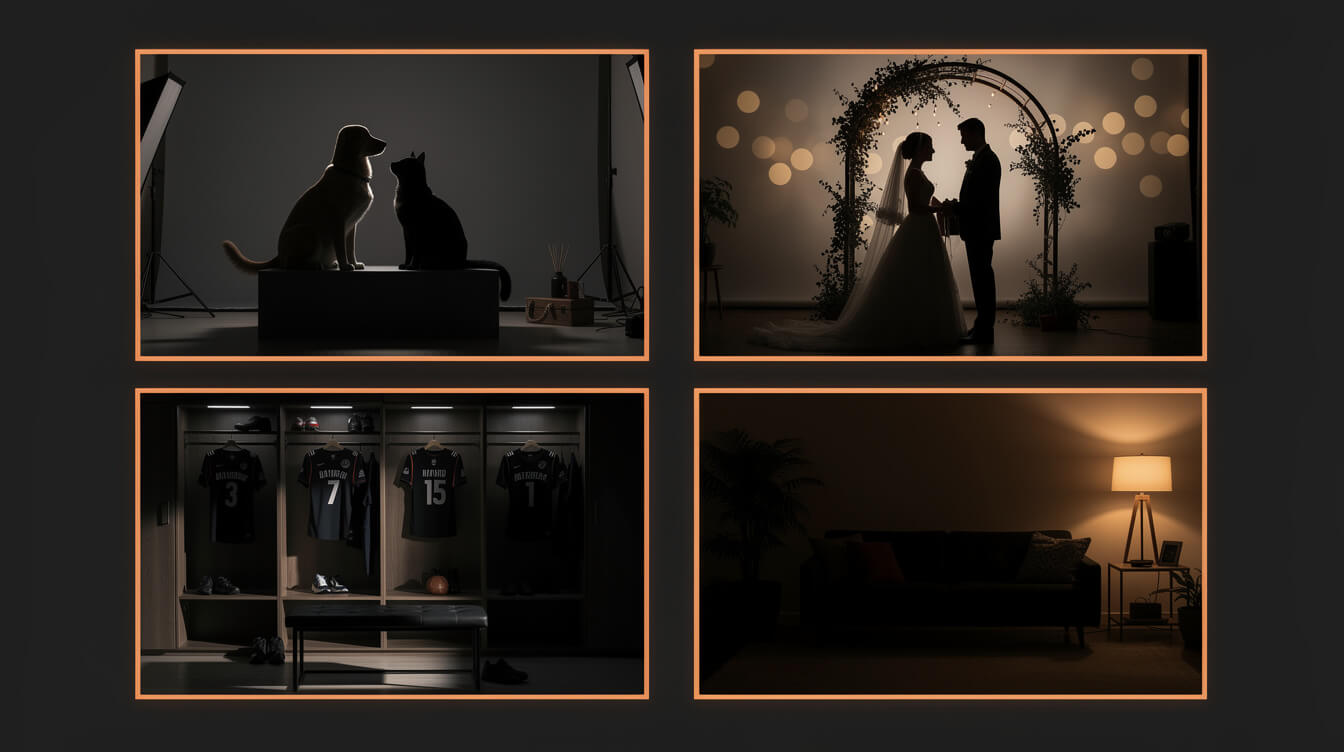
Custom pillows work across several distinct buyer segments. Each segment has different design conventions, price tolerance, and buying triggers. Understanding the segment you are targeting changes how you write product listings, which platforms you promote on, and what image style converts best.
Pet portrait pillows: One of the highest-converting custom pillow niches. Pet owners are emotionally motivated buyers who will pay premium prices for a quality rendering of their pet on a home decor item. A custom pet portrait pillow at $45-55 converts well on Instagram, Pinterest, and Etsy (if you run a hybrid model). The design work is heavier than standard photo sublimation because pet portrait quality matters: photo quality requirements, background removal, and artistic upscaling all affect the end product. Set clear file guidelines at checkout.
Wedding and anniversary gifts: Custom photo pillows are a reliable wedding gift category. Couples photos, wedding date, engagement photos. The buying window is concentrated (pre-wedding season is March to June, with a secondary wave in September to November). Price point tolerance in this segment skews toward the $45-65 range because gift buyers are willing to pay more for perceived personalization. A gift box upgrade option adds margin.
Custom character and fan art: A niche that moves volume on platforms where creator communities are active. Custom character art pillows (original characters, fandom-adjacent designs that avoid copyright infringement, original illustrator merchandise) perform in specialty POD stores with an existing audience. The design assets must be original or properly licensed. The buyer is a collector, not a gift buyer, so the price floor is different and the repeat purchase rate is lower.
Sports team home decor: Custom pillows in team colors with clean geometric designs (not trademarked logos) sell in communities with strong local sports followings. School spirit, local club teams, recreational leagues. This segment rewards a fast turnaround between design and listing. A winning local team creates a three-week demand window. If your POD pipeline can produce new listings quickly, this is a high-frequency niche.
Holiday and seasonal gifting: Christmas, Mother’s Day, Valentine’s Day. Custom pillows peak sharply in October and November as buyers plan ahead for holiday delivery. A pillow designed for a specific holiday (Christmas family photo, Mother’s Day “best mom” format with sublimated photo) can have a sharp demand curve. Plan your catalog additions six to eight weeks before the season to capture SEO and paid traffic.
The home decor category rewards sellers who think in terms of product lines rather than single SKUs. A custom pillow buyer who converts may also be in the market for a custom photo blanket or a matching set. Cross-listing complementary products within a home decor catalog increases average order value without adding acquisition cost.
The decision that compounds
Custom pillows are a low-competition, moderate-volume opportunity in a category that most POD sellers skip because they default to apparel. The unit economics work at the $35-55 retail range on a WooCommerce store without the Shopify override eating into already-thin POD margins.
The provider decision matters. Printful offers consistency on WooCommerce at a slightly higher base cost. Printify gives you more supplier options and better unit pricing at the cost of some variability. Both support the sublimation-on-polyester workflow that makes throw pillow quality predictable.
The niche you pick within custom pillows determines your listing strategy, your design requirements, and your platform choice for promotion. Pet portraits, weddings, and seasonal gifting all have different buyer triggers and different design standards. Start with one vertical, validate the demand, then expand the catalog.
If your goal is to build a home decor POD catalog efficiently, the manual Canva workflow is the bottleneck. Designing each product, resizing for print specs, creating mockups, writing SEO titles, and uploading to WooCommerce by hand limits throughput to a handful of products per day. MEGA automates that entire pipeline, so you can build the catalog that the home decor opportunity calls for without the per-product time cost.
Implement AI. 30x your throughput. Get a 30-min call with the founder.
Drop your details and book a free 30-minute discovery call. Personalized advice on your POD stack, your margin, and where AI fits. No pitch, no fluff.