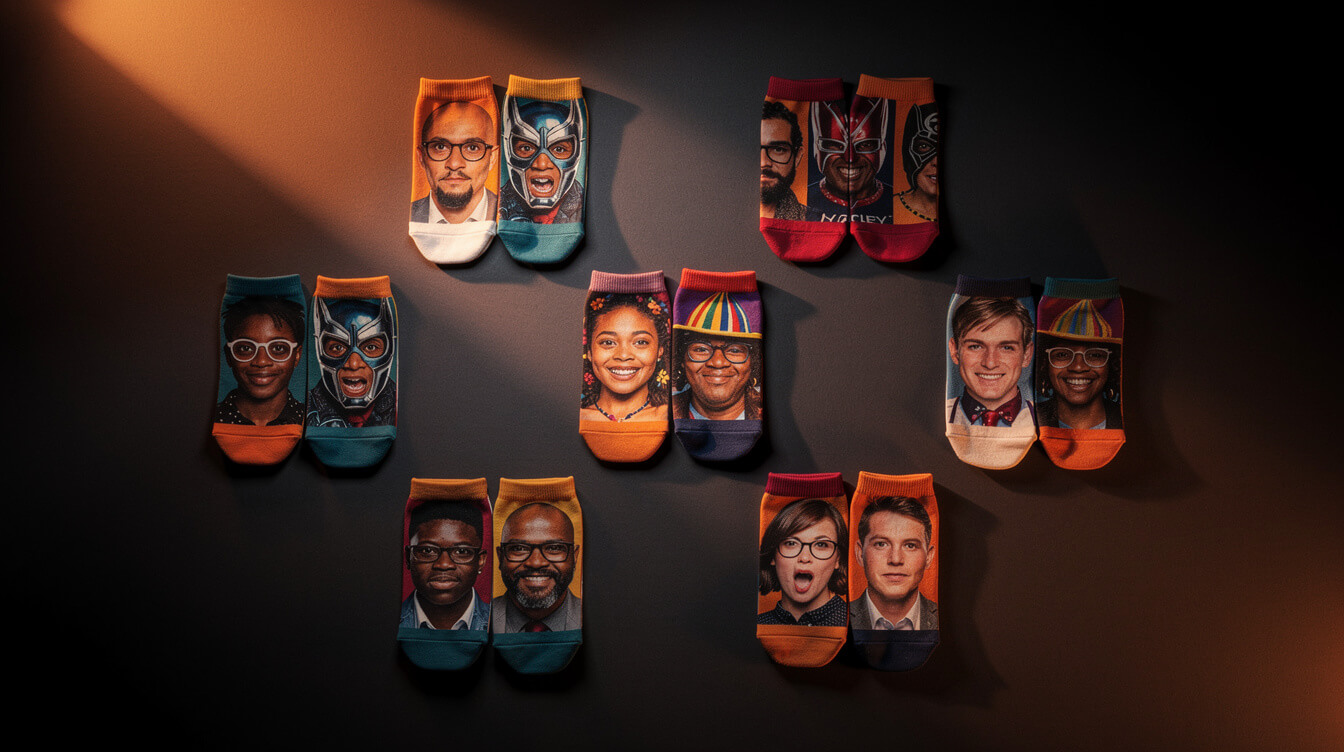
Custom face socks for POD stores: photo print options, unit cost math, and the novelty gift niche
A pair of socks with your dog’s face printed across the ankle. A wedding favor bag holding matching socks with the couple’s photo. A bachelorette set where every bridesmaid gets her face on a pair.
Custom face socks have found a permanent home in the novelty gift economy. The market is not seasonal — it is event-driven, personal, and repeat-purchase by nature. But if you search for “custom face socks” right now, you will find B2C brands selling socks directly to consumers, not a single guide explaining how to build a POD store around them.
This article covers what custom face socks are, which POD providers support them, how the printing actually works, and the unit cost math that determines whether this category is worth building into your store.
What are custom face socks and why the novelty gift market is bigger than it looks
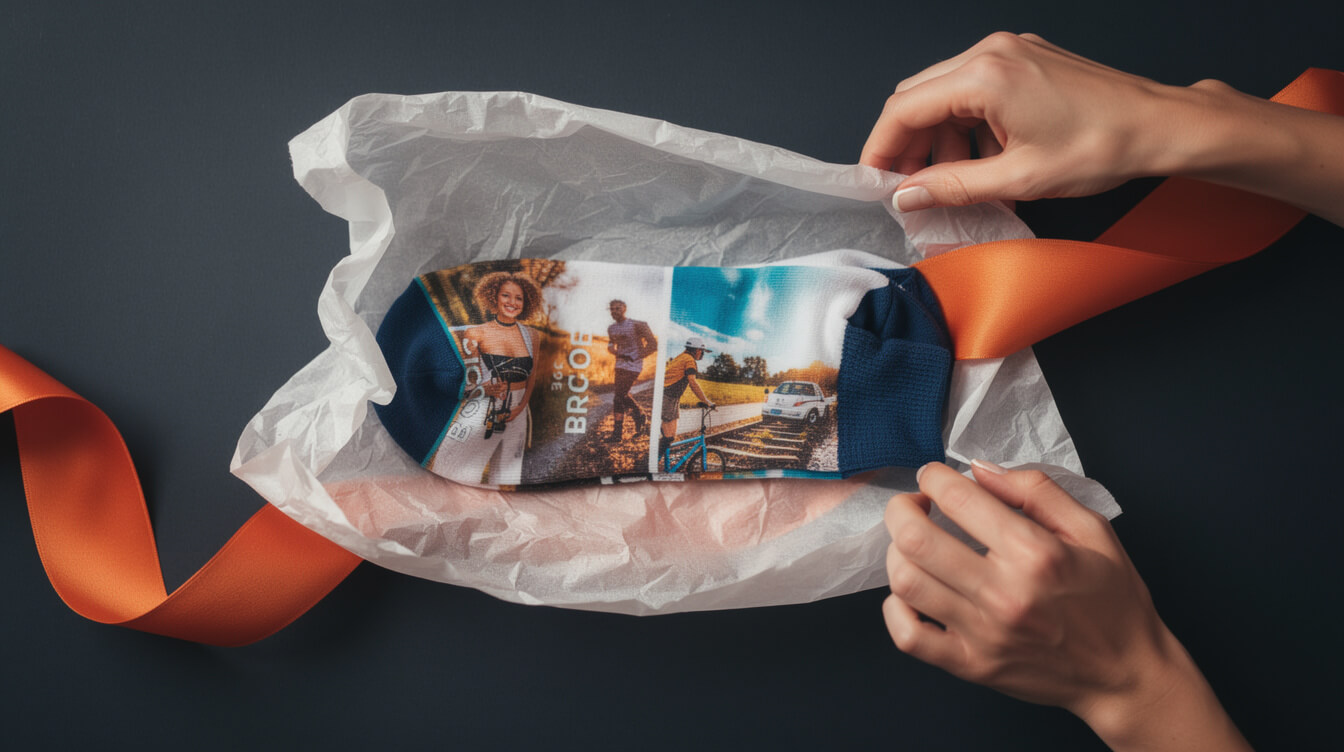
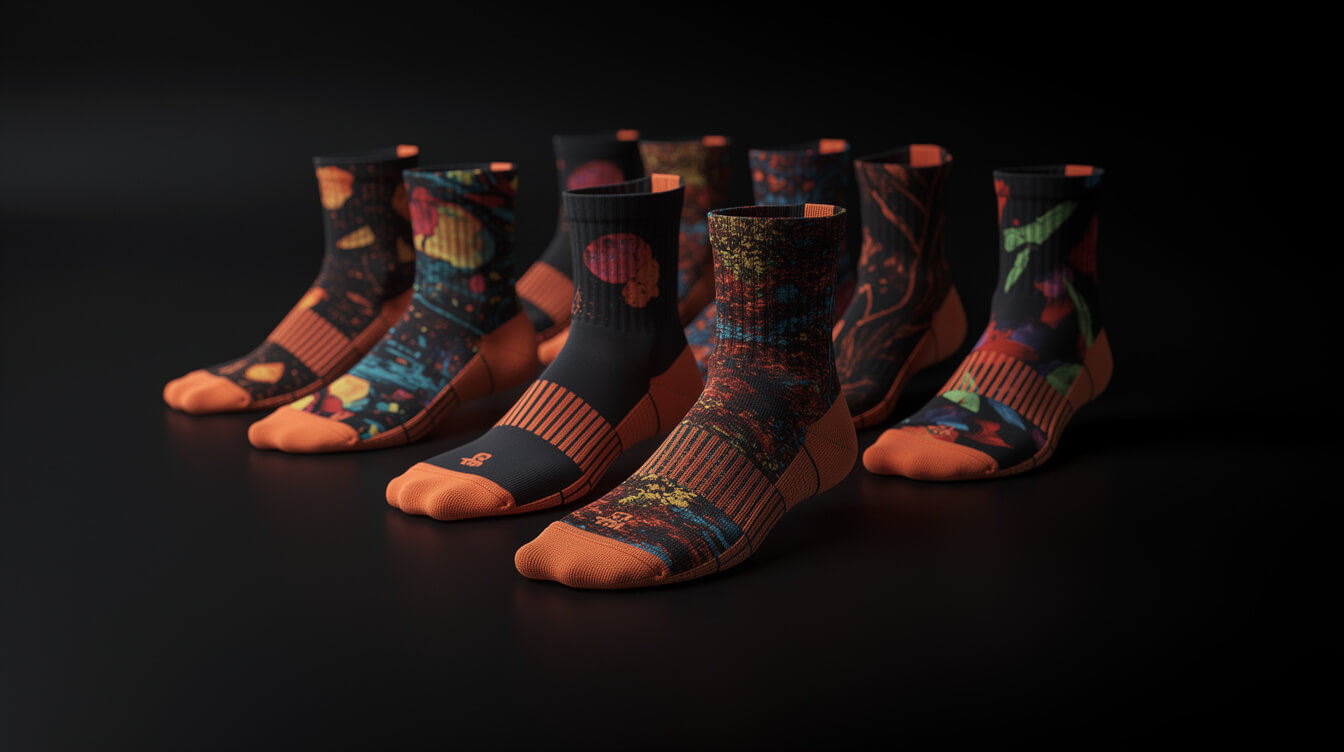
Face socks are crew-length or ankle-length socks with a customer’s photo printed across the body of the sock. The print can be of a person, a pet, a logo, or any image the customer uploads. The finish is typically full-bleed — the photo covers most or all of the visible surface.
The novelty gift market for face products is larger than raw search volume suggests. People searching “custom face socks” have a specific event in mind: a birthday, a bachelorette party, a sports team photo, or a holiday. They are not browsing — they are ready to order. That intent quality is more valuable to a POD store than raw traffic.
Three things make custom face socks structurally valuable for a POD store:
Gift economy positioning. Novelty products like face socks are bought as gifts more than 80% of the time. The buyer is not the end user. Gift buyers are less price-sensitive because the product has an emotional function that justifies the premium. At $22-26 per pair, face socks carry significantly higher perceived value than the production cost suggests.
Viral sharing mechanics. Face socks are a social object. When someone opens a pair at a bachelorette party or birthday celebration, it gets photographed and shared. Organic reach per order in this category is materially higher than for apparel basics, which translates to organic customer acquisition cost of approximately zero on each shared post.
Repeat purchase pattern. Gift occasions repeat annually. A dog portrait sock buyer who orders for Christmas is likely back the following year. The same customer who orders a bachelorette set in April becomes a regular gift buyer for birthdays and baby showers. The repeat purchase dynamic is structural, not dependent on a discount strategy.
The structure of the existing market also creates an opening. Every top-ranking result for custom face socks is a B2C brand selling directly to consumers: Sockologie, DivvyUp ($26/pair), FaceSocks.com, and individual Etsy listings. None of them explain how a store owner without inventory can carry this product via print-on-demand. That is the gap a well-positioned POD store can fill with editorial content and a straightforward product listing.
Which POD providers support custom face socks
Not every POD platform carries face-printable socks. Here is the reality of what is available and what is not.
Printful carries sublimated crew socks as a standard catalog item. The base product is a polyester-spandex blend crew sock that accepts full-panel dye sublimation. Any photo can be uploaded via the Printful product creator and placed across the sock body. No minimum order quantity. Production happens per order, fulfilled from Printful’s facility network.
Printify has sock options via its vendor network, and availability varies by region and supplier. Some vendors in the Printify marketplace offer full-panel photo printing suitable for face socks. Others focus on logo placement only, which is a different product. Before building your store around Printify for face socks, open the product catalog directly and confirm full-panel sublimation support with your chosen vendor. Order a sample pair before listing.
SPOD (Spreadshirt POD) carries sublimation socks with a 48-hour domestic production guarantee. If fast turnaround is a competitive differentiator for your market — for example, last-minute gift buyers in the week before Valentine’s Day — SPOD is worth evaluating alongside Printful.
Gooten has socks available via its supplier network. Photo fidelity and quality control vary more than with Printful, so a sample run before your first live listing is non-negotiable.
What is absent from the standard POD catalog: true knit-in photo socks. Knit-in images are woven directly into the sock fiber during manufacturing, producing a premium textile result. They require specialized knitting machinery, minimum orders of 25 or more pairs, and upfront inventory. This is a manufacturing model, not print-on-demand. Some boutique brands carry knit-in socks from held stock, but this path is incompatible with a no-MOQ POD operation.
For a no-MOQ face sock store, sublimated polyester crew socks via Printful or a verified Printify vendor are the viable path.
How face printing on socks actually works: sublimation versus knit-in versus DTF

Understanding the print method matters because it determines fabric requirements, color fidelity, wash durability, and the limitations of what you can offer buyers.
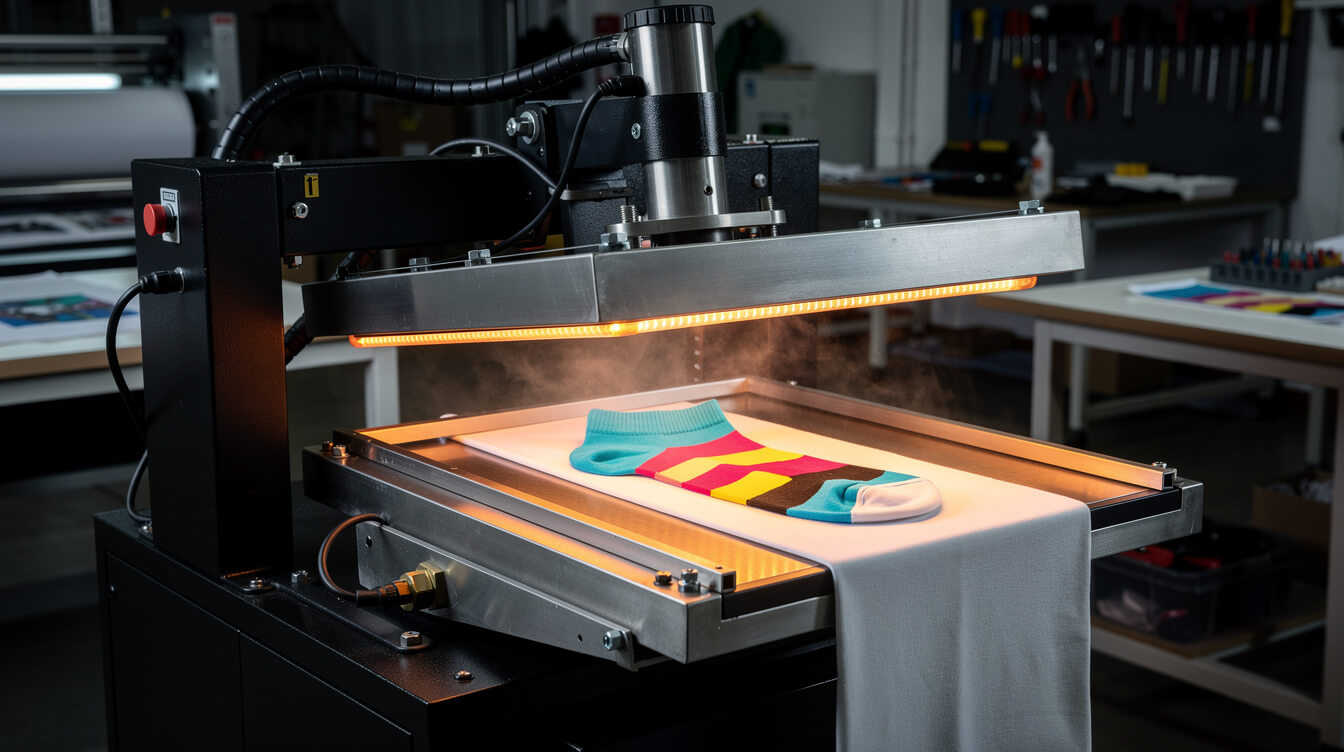
How dye sublimation works on sock fabric:
The sock starts as a finished garment in white or light grey. The design is printed in reverse on heat-transfer paper using sublimation ink. The paper is pressed against the sock under 380-400°F of heat for 30-60 seconds. At that temperature, the polyester fibers open and the dye bonds at a molecular level. When the fibers cool, they close permanently around the dye molecules.
The result is a print that is part of the fabric, not a layer on top of it. The sock can be washed hundreds of times without the image fading, cracking, or peeling, because there is no surface layer to degrade. This is a meaningful quality claim for a gift product where the buyer expects durability.
Why polyester content determines the outcome:
Sublimation only bonds with polyester fibers. Cotton fibers do not accept sublimation dye at any heat level. This is why custom face sock blanks are always a high-polyester blend, typically 85-95% polyester with nylon-spandex for stretch.
Attempting sublimation on a cotton-heavy sock produces a washed-out, low-saturation result that fades after a few wash cycles. If a supplier claims to sublimate on “any sock,” ask for the specific polyester content before ordering a sample. Anything below 80% polyester will produce noticeably inferior results.
Comparison with alternative print methods:
DTF (direct-to-film) transfers can work on lower-polyester and cotton socks, but the image sits as a thin film on the fiber surface rather than bonding into the weave. The print has a slightly raised feel and lower long-term durability compared to sublimation. DTF is viable for small runs where a cotton feel is preferred, but it is not the standard for high-volume face sock production.
Knit-in photos produce the most premium aesthetic result, with the image woven directly into the sock’s structure. However, as noted above, the minimum order requirement and inventory model make this incompatible with a no-MOQ POD store.
Photo file requirements:
Printful requires a minimum 150 DPI at the print size for acceptable output. For a full-panel sock print covering approximately 3.5 x 7 inches, that means an image of at least 525 x 1,050 pixels. Most smartphone portraits shot at 12 megapixels or higher exceed this requirement significantly.
Design tip: face photos work best when the face fills most of the upload frame. A tight crop from the shoulders up produces cleaner results than a full-body shot where the face is small relative to the frame size.
Unit cost math: Printful face socks versus what B2C competitors charge at retail

Smash print-on-demand. Join the engine room.
One short email a week. Real numbers, real teardowns, the unfiltered economics behind every move.
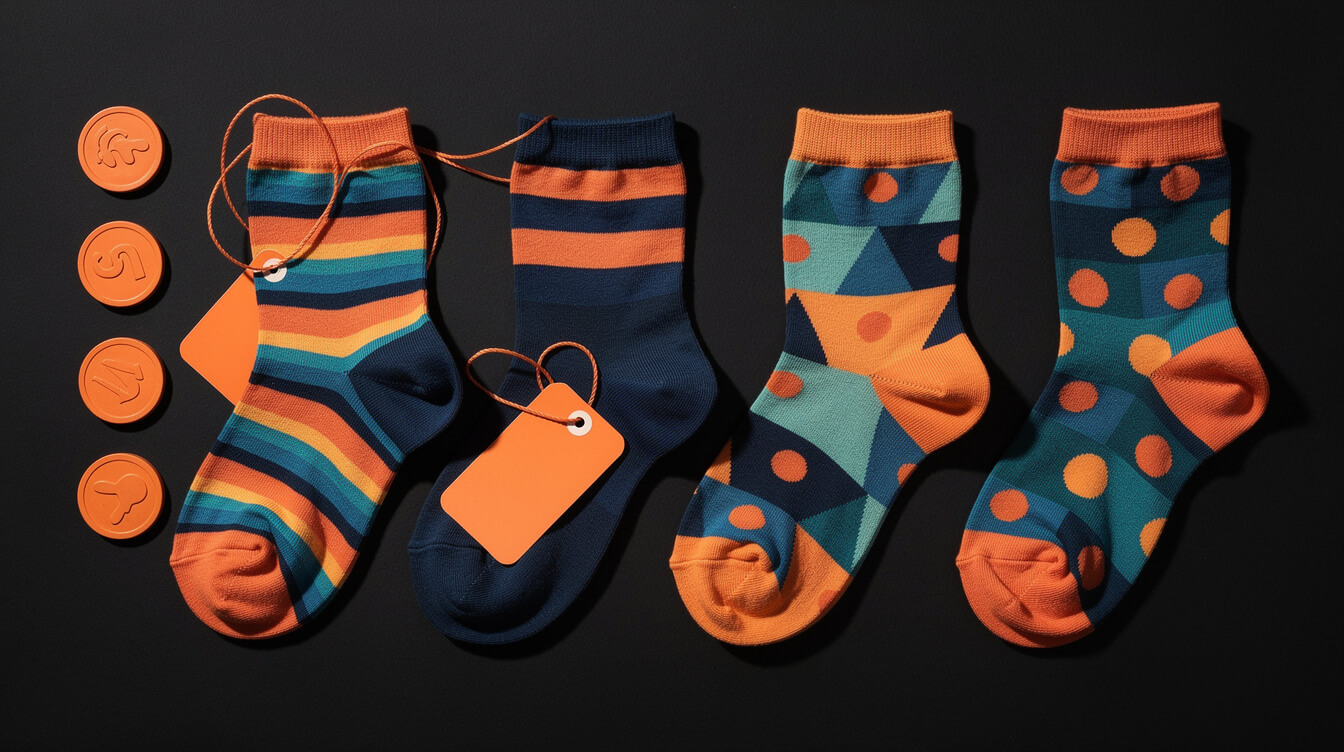
Understanding the cost structure determines whether this product is worth building. Here is the math at a single-pair and bundle level.
Printful base cost for sublimated crew socks: approximately $9-11 per pair (varies by size and whether the design covers one side or both). Domestic shipping: $3.50-4.50 for the first item.
Total landed cost per pair to your customer: $12.50-15.50.
Retail pricing range: $18-28 per pair, consistent with what established B2C face sock brands charge.
- At $22 retail: $22 minus $13 landed = $9 gross margin, 41%
- At $26 retail: $26 minus $13.50 landed = $12.50 gross margin, 48%
- At $28 retail: $28 minus $13.50 landed = $14.50 gross margin, 52%
Compare that to the B2C competition. DivvyUp charges $26/pair. Sockologie charges $22-28/pair. FaceSocks.com (the PupSocks brand) charges $28/pair for dog portrait socks. These brands are selling at full consumer retail, some carrying inventory. Your POD store competes without holding a single pair or managing fulfillment.
Bundle strategy substantially improves the economics:
A 3-pack bundle (three pairs of matching face socks) reduces per-unit shipping cost and increases average order value. At $55 for a 3-pack versus $22 each for three individual orders, the buyer perceives a deal. Your landed cost on 3 pairs is approximately $36-39 with shipping. Gross margin on the bundle: $16-19, or 29-34%.
A bachelorette 4-pack at $72 changes the numbers further. Four pairs at roughly $47 landed cost leaves $25 gross margin at 35%. The buyer pays less per pair than ordering individually, and your revenue per transaction nearly quadruples compared to a single-pair sale.
MEGA runs this kind of product-level cost and pricing analysis as part of the research-to-listing pipeline, before you build the product, not after it is already live. See the full workflow at mega.management.
Top niche verticals: where demand for custom face socks is already waiting
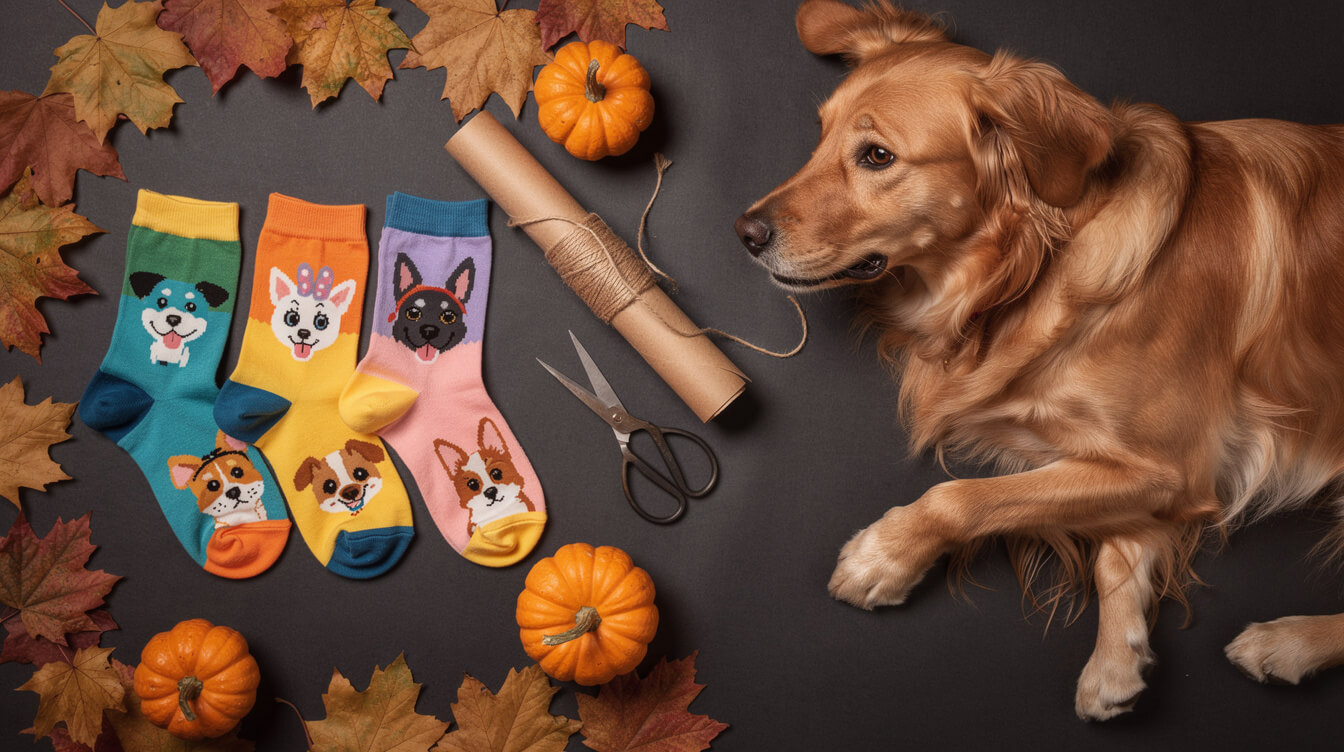
Not all niches perform equally in this category. Here are the verticals with the clearest demand signal and strongest purchase intent:
Pet portrait socks (the strongest single niche):
Dog and cat face socks are the highest-converting niche in the face sock category. The buyer profile is a dog owner aged 28-45, purchasing for another dog owner as a gift. The emotional connection to the pet is the product’s primary value proposition, not the sock itself.
The pet portrait niche has a built-in audience-building advantage. Breed-specific social media accounts (French bulldog groups, golden retriever communities, dachshund pages) actively share novelty pet products. A single share from a relevant breed account can generate a sustained purchase wave at near-zero acquisition cost. For more on the pet accessories POD category, see our guide to custom dog bandanas for POD sellers, which covers the same breed-specific buyer psychology and repeat-gift purchase pattern.
Wedding and bachelorette favors:
Bachelorette parties generate high-volume single transactions. The party organizer orders 6-10 pairs with each bridesmaid’s face printed individually. Average order value for an 8-person bachelorette set: $150-220. The buyer is typically the maid of honor, motivated, on a deadline, and largely price-insensitive compared to a single-pair shopper.
This is a category where WooCommerce’s photo upload workflow and variant management create a meaningful operational advantage. Offering a “Name + Photo Upload” option for each pair in the order can be handled natively via WooCommerce product add-ons, without paying $29-49/month for a Shopify personalization app.
Birthday sets:
Birthday buyers skew toward humor and novelty. A curated 2-pack offering (a “Classic” and a “Funny Pose” from the same uploaded photo) increases order value without adding logistical complexity. Birthday gift searches have low seasonal dependency compared to Christmas or Valentine’s Day, which means steady demand throughout the calendar year.
Sports team photo socks:
Youth sports leagues, recreational basketball teams, and softball leagues order matching team photo socks for end-of-season celebrations and tournaments. For our analysis of sports-adjacent POD verticals, see the guide to custom sportswear for POD sellers. A single team order of 12-14 pairs at $22/pair generates $264-308 in a single transaction, and the repeat purchase cycle runs with the next season.
Brand mascot socks:
Small businesses with a recognizable mascot, store pet, or brand character use face socks as customer gifts and trade show swag. This is a B2B-adjacent use case where the repeat order cycle runs quarterly or semi-annually, and the buyer is a business decision-maker rather than an individual consumer.
Shopify’s 1% override fee at a $22-28 AOV: why the low-ticket math does not work

Custom face socks land at a price point where Shopify’s transaction fee structure is disproportionately damaging to your margin.
Shopify’s Basic and standard Shopify plans charge 2% and 1% per transaction, respectively, on top of payment processor fees, when using a non-Shopify payment provider. On Advanced, the platform override drops to 0.5%. Most POD sellers run on Basic or Shopify plan, which means a 1% or 2% per-transaction fee paid directly to Shopify.
At $22 average order value (AOV) with 200 orders per month:
- Monthly revenue: $4,400
- Shopify 1% override: $44/month
- Annual platform tax at this volume: $528
That $528 does not fund your server, your email list, your customer data ownership, or your store improvements. It funds Shopify’s growth. Your WooCommerce monthly overhead at the same volume is approximately $15-20 in hosting and extension costs. The 12-month gap: $408-513 in kept gross margin annually, at just 200 orders per month.
At 500 orders/month and $24 AOV:
- Monthly revenue: $12,000
- Shopify 1% override: $120/month
- Annual platform tax: $1,440
The fee feels small on any single transaction. At volume, it is a significant recurring cost for zero operational value returned to your store. For a full comparison of the platform fee economics across low-ticket POD products, see our guide to custom bandanas for POD stores, which runs the same math on a comparable AOV product.
Building a face sock store on WooCommerce: no per-transaction tax, owned customer data, and seasonal campaign playbook

WooCommerce removes the per-transaction platform override entirely. Your payment processor fee (Stripe at 2.9% + $0.30, or a comparable provider) is the only transaction cost. The platform does not take a percentage of each sale.
Beyond the fee structure, WooCommerce provides three operational advantages specific to a face sock store:
Customer data ownership:
Every face sock buyer who completes a purchase enters your email list. You own that relationship. On Shopify, you have access to customer data, but the relationship is mediated by a platform that can change its pricing, restructure its app ecosystem, or adjust fee terms on any notice cycle it chooses. On WooCommerce, the customer list is yours permanently, portable to any email provider, and not subject to any platform’s terms of service.
That list is your Q4 Christmas campaign audience. It is your Valentine’s Day reminder sequence. It is your Mother’s Day early-bird offer. The acquisition cost for these campaigns is approximately zero once the list is built, because you are emailing people who already bought from you.
Seasonal campaign structure:
The face sock gift calendar has five predictable peaks: Christmas (Oct-Nov build), Valentine’s Day (Jan build), Mother’s Day (March build), bachelorette season (April-June), and birthday gift buying (year-round, lower amplitude). Each window benefits from a 4-6 week lead email campaign to your prior buyers.
This seasonal demand pattern is similar to how novelty calendar products work. For context on the seasonal window logic, see the analysis in our guide to custom calendars for POD sellers, which covers the 90-day pre-season listing and campaign strategy in detail.
Photo upload and personalization workflow:
WooCommerce supports custom file upload fields natively via the built-in product add-ons or the free WooCommerce Product Add-Ons community plugin. The buyer uploads their photo at checkout. The order arrives with the file attached. You send the photo and order details to Printful via their dashboard or API. No Shopify app required. No $19-49/month personalization plugin subscription.
The operational overhead of running a face sock store on WooCommerce is lower than on Shopify for this product category, the per-transaction cost is lower, and the repeat-purchase infrastructure (owned email list, no platform mediation) is substantially more durable over time.
Final thoughts on custom face socks as a POD product category
Custom face socks are a profitable novelty product with structural repeat-purchase demand and a clear market gap: the SERP is full of B2C sellers but empty of editorial content for POD store owners. That gap is the opportunity.
The unit economics work at single-pair pricing (40-48% gross margin at $22-26 retail) and improve significantly with bundles. Sublimation on polyester produces a durable, photographic-quality print that justifies the retail price. Printful carries the product at no minimum order quantity, which means you carry zero inventory risk.
The platform economics favor WooCommerce at any meaningful volume. Shopify’s 1% override on a $22-24 AOV product costs $528/year at 200 orders per month. WooCommerce’s fixed overhead does not scale with your revenue.
The seasonal demand is predictable and repeating. Pet portrait buyers come back before every major gift-giving holiday. Bachelorette organizers tell their friends. Sports team coaches reorder every season. The repeat-purchase and word-of-mouth dynamics in this niche are better than in most POD categories.
If you want to build this kind of product pipeline efficiently — from niche identification through listing generation, SEO, and pricing analysis — MEGA runs the full research-to-product workflow end to end. See how the engine works at mega.management.
Implement AI. 30x your throughput. Get a 30-min call with the founder.
Drop your details and book a free 30-minute discovery call. Personalized advice on your POD stack, your margin, and where AI fits. No pitch, no fluff.