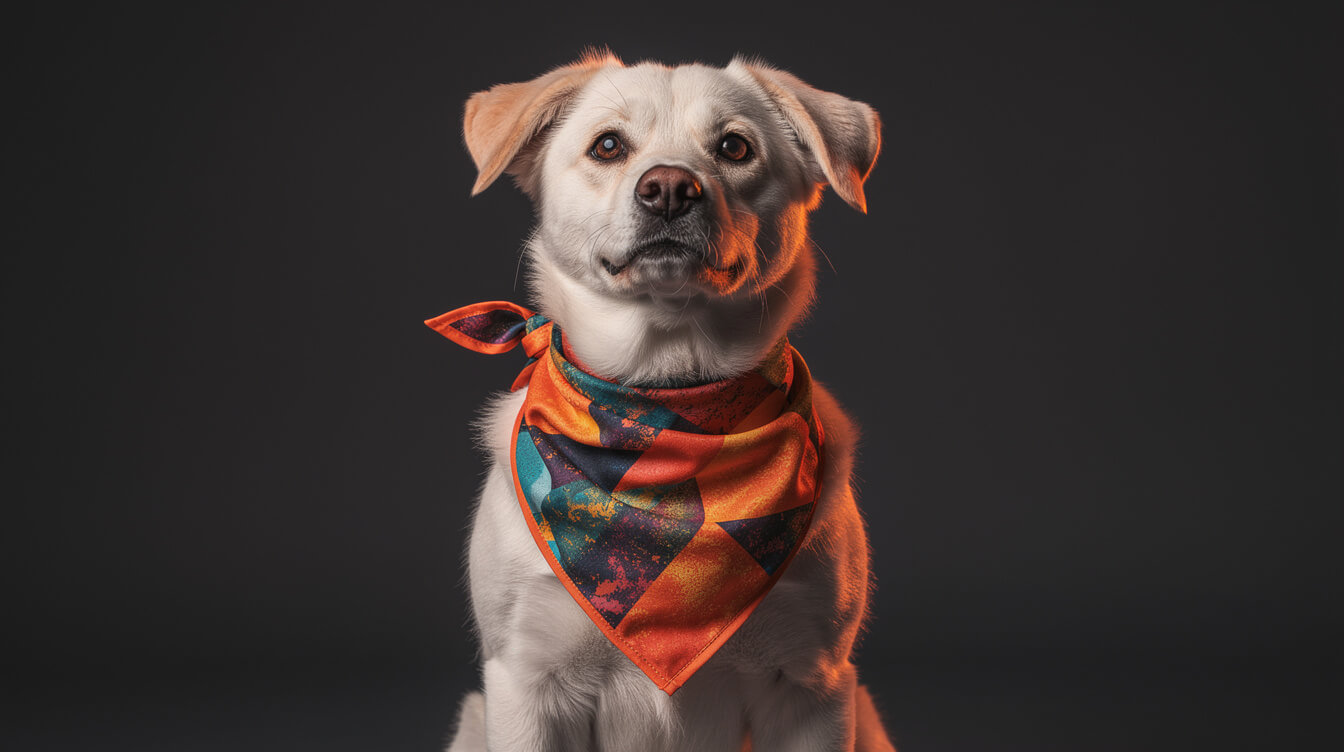
Custom dog bandanas for POD sellers: which providers carry them, what they cost, and the pet niche opportunity
Custom dog bandanas are one of the most consistent sellers in the pet accessories category. At $18-28 retail, they fit cleanly into the impulse-buy range that gift buyers reach for during holidays, birthdays, and breed-specific events. The problem is that most of the content written about custom dog bandanas is aimed at pet owners who want to order one or two for their own dog. There is almost nothing for print-on-demand sellers who want to add dog bandanas to their store, find a reliable fulfillment partner, and price them for a sustainable margin. This article fills that gap.
Here is what you will find: which POD providers actually carry dog bandanas, how sublimation printing works on bandana fabric, the real unit cost math, and how the Shopify 1% override fee hits pet accessories harder than most categories. If you are considering dog bandanas as a product line for your WooCommerce POD store, this covers everything you need to know before your first order ships.
Custom dog bandanas in POD: how drop-ship fulfillment differs from wholesale pet retail

Most of the top-ranking results for “custom dog bandana” come from brands like The Foggy Dog, TagsForHope, and CottonCreations. These companies are not your competitors as a POD seller. They are wholesale pet retailers and consumer personalization shops targeting people who want one or five bandanas with their dog’s name embroidered on it. They buy fabric in bulk, carry inventory, and ship from their own warehouse.
Print-on-demand fulfillment works differently. You list the product on your store. A customer places an order. Your POD provider prints the bandana to order and ships it directly to the customer. No inventory. No minimum order quantity. No capital tied up in stock before you have made a single sale.
This model has a genuine advantage over wholesale in one specific scenario: niche designs. A wholesale pet retailer cannot carry 200 different breed-specific bandana designs without a warehouse full of dead stock. A POD seller can list 200 unique designs and only print the ones that sell. The economics of variety are completely different.
The trade-off is unit cost. At one unit, your POD bandana costs more to produce than a wholesale bandana at 50 units. If you are running a breed-specific store or a holiday-focused pet accessories brand, the no-MOQ model is the correct one. If you are comparing it to a $0.80 cotton bandana from a Chinese wholesale supplier at 500-unit minimums, the comparison is not meaningful because you are in completely different markets.
Which POD providers carry dog bandanas: Printful, Printify, and third-party print network options
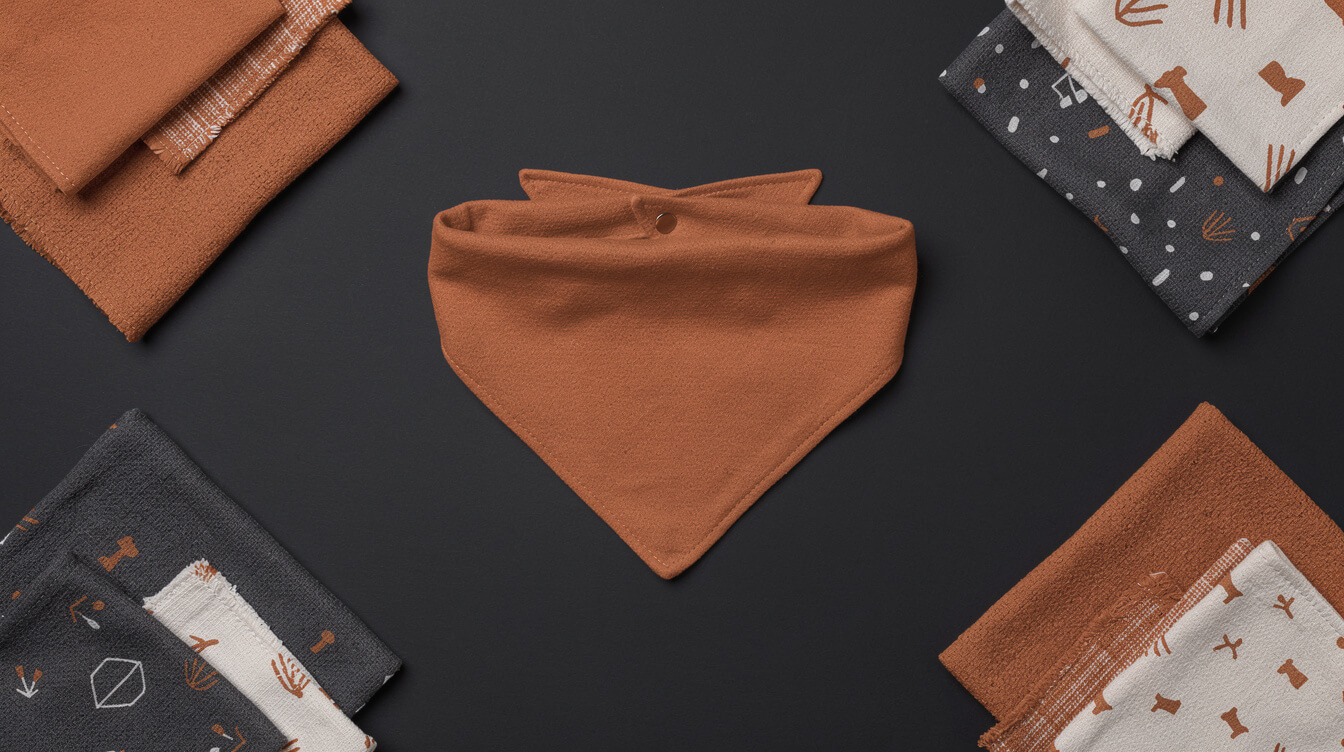
Not every POD provider carries dog bandanas as a distinct SKU. Here is the honest breakdown.
Printful carries sublimated all-over-print bandanas. These are polyester bandanas designed for pets, typically in a triangle or bibs shape. The all-over-print sublimation means you can cover the entire surface with your design, not just a logo patch in one corner. Printful’s bandanas are produced at their in-house facilities, which gives them consistent quality control and predictable production times. Check their current catalog for exact sizes and SKU availability, as product lineups are updated regularly.
Printify connects you to a network of independent print providers. Within the Printify network, some suppliers carry dog bandanas. The availability varies by supplier and region. The advantage here is that you can sometimes find lower base costs than Printful by selecting a supplier closer to your customer base. The trade-off is less consistency in quality control because you are working with third-party print partners rather than a vertically integrated facility.
Third-party white-label options are worth considering if you want to offer cotton bandanas rather than polyester. Traditional cotton bandanas cannot be sublimation-printed effectively because sublimation requires polyester content (typically 80% or higher) to bond the dye at a molecular level. If your audience prefers cotton feel over polyester, you are looking at screen print or DTF print providers, or white-label manufacturers that offer bulk cotton bandanas with your artwork at low minimums (25-50 units). Brands like CottonCreations operate in this space.
The practical path for most POD sellers is to start with Printful or Printify for the no-MOQ, drop-ship simplicity, and expand into white-label cotton options only once you have validated that there is real demand in your niche. Similar decisions come up with other accessories in the pet space, as I covered in the guide to custom pet portrait products for POD sellers.
Print methods on bandana fabric: sublimation, screen print, and DTF — what works and what doesn’t
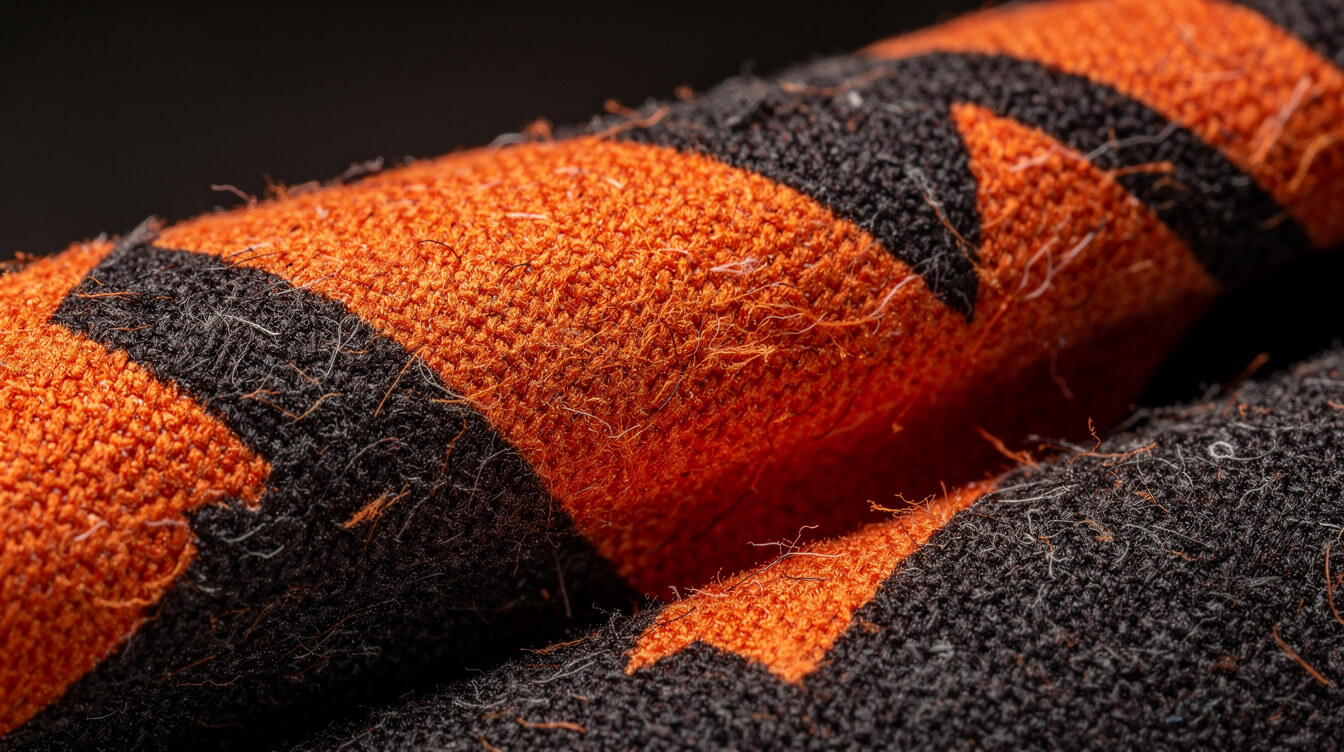
The print method determines the fabric you can use, the design complexity you can achieve, and the durability of the final product. Here is how each method applies to dog bandanas.
Sublimation is the standard method for most POD dog bandanas. Dye-sublimation works by converting solid dye into gas under heat and pressure, bonding the color directly into the polyester fiber. The result is a print that is part of the fabric itself rather than a layer sitting on top. It will not crack, peel, or fade the way screen print can on lower-quality blanks. The catch is the 80% polyester requirement. Sublimation on cotton comes out faded and washed out because the dye has nothing to bond to. If your supplier is using a 100% polyester blank, sublimation is your best option for vibrant, durable, full-coverage designs.
Screen print is the traditional method for cotton bandanas. It works by pushing ink through a mesh screen onto the fabric surface. It is cost-effective at volume but requires a separate screen per color, which makes multi-color designs expensive at low quantities. Screen print on cotton looks flat and opaque, which works well for bold, limited-color designs but is not suitable for photographic or gradient artwork. For POD sellers, screen print is rarely practical because it requires minimum quantities per design to recover setup costs.
DTF (Direct-to-Film) is a newer method that prints artwork onto a transfer film, which is then heat-pressed onto the fabric. DTF works on cotton, polyester, and blended fabrics. It supports full-color photographic designs without the polyester requirement of sublimation. The print sits on top of the fabric (like a high-quality transfer) rather than bonding into it. Durability is good but not at sublimation levels for items that get washed frequently. Some Printify network suppliers offer DTF printing on bandanas. If you want to offer a cotton bandana with a detailed multi-color design, DTF is your most practical option.
For most POD sellers, sublimation on polyester is the correct starting point. The no-MOQ, the vibrant output, and the durability make it the right choice for a drop-ship product that needs to survive regular washing. If you are already familiar with sublimation from other accessory categories, the setup is identical to what I covered in the custom apron guide for POD sellers.
Unit cost math: what a POD dog bandana costs to fulfill and how to price at $18-28 retail

Smash print-on-demand. Join the engine room.
One short email a week. Real numbers, real teardowns, the unfiltered economics behind every move.

Here are the real numbers. Printful’s AOP pet bandanas run approximately $8-10 as a base product cost before shipping. Add standard shipping to a US customer at $4-5 and your total fulfillment cost is $12-15 per order.
At a retail price of $22, your gross profit per unit is $7-10. That is a 32-45% gross margin, which is on the lower end for POD accessories. At $28 retail, the margin improves to $13-16 per unit, or 46-57% gross. The brief from content-researcher pegged the target range as $18-28 retail, and I would lean toward $22-25 as the sweet spot that clears the impulse-buy threshold while preserving enough margin to run occasional promotions.
A few things affect your realized margin. First, your supplier’s location relative to your customer. If you are using a Printify supplier in Europe to ship to US customers, international shipping adds cost. Second, your design cost. If you are generating designs with AI tools rather than paying a designer per file, your per-design cost is effectively zero at scale, which means you can list 50 breed-specific bandana designs for the same overhead as one. Third, platform fees. This is where the Shopify math becomes particularly painful at this AOV, which brings us to the next section.
The unit economics here are comparable to other low-AOV pet accessories. If you are building a multi-product pet store, dog bandanas pair well with items like custom keychains where the Shopify fee math is similar and the buyer profile overlaps.
MEGA automates the research-to-product pipeline for sellers building stores like this. Rather than spending six hours in Canva designing 50 bandana variants manually, the engine generates unique, size-correct designs at throughput the manual workflow cannot match. You can try MEGA to see what that looks like in practice.
The Shopify 1% math at low to mid AOV: where pet accessories feel the platform fee

Shopify’s override fee is roughly 1% on most payment gateways outside of Shopify Payments. At a $55 hoodie, that is $0.55 per sale — annoying but not structural. At a $22 dog bandana, it is $0.22 per sale. That sounds trivial until you do the monthly math.
At 200 bandana orders per month, you are paying $44 in pure Shopify fees on top of your gateway processing fees. At 500 orders per month, that is $110 per month, $1,320 per year. This is margin that goes to Shopify, not to you, not to your supplier, not to your customers. It is a platform override that does not buy you anything you are not already paying for through your monthly plan and gateway fees.
The pattern repeats across every low-AOV POD accessory category. Sticker sheets at $12 retail. Keychains at $15. Dog bandanas at $22. The Shopify fee is proportionally more damaging at lower price points because it eats a larger percentage of an already thin margin.
An owned WooCommerce store eliminates this fee. WooCommerce’s transaction fee on sales is $0 beyond your payment gateway processing rate. Your monthly platform overhead is the cost of hosting ($5-15/month on quality shared hosting) plus any plugins you choose to run. Against Shopify’s $79-399/month plan plus the 1% fee plus the app stack, WooCommerce is structurally cheaper for a seller doing meaningful volume on low-AOV products. For more on this comparison, the guide to custom sticker sheets and the low-AOV math walks through the same calculation in detail.
Generate 30x more POD designs without Canva
MEGA goes from niche idea to published product in under 7 minutes. No manual design work. No Shopify override fee. Your store, your margin, your customer data.
The pet niche as a POD vertical: buyer psychology, repeat purchase rate, and seasonal peaks
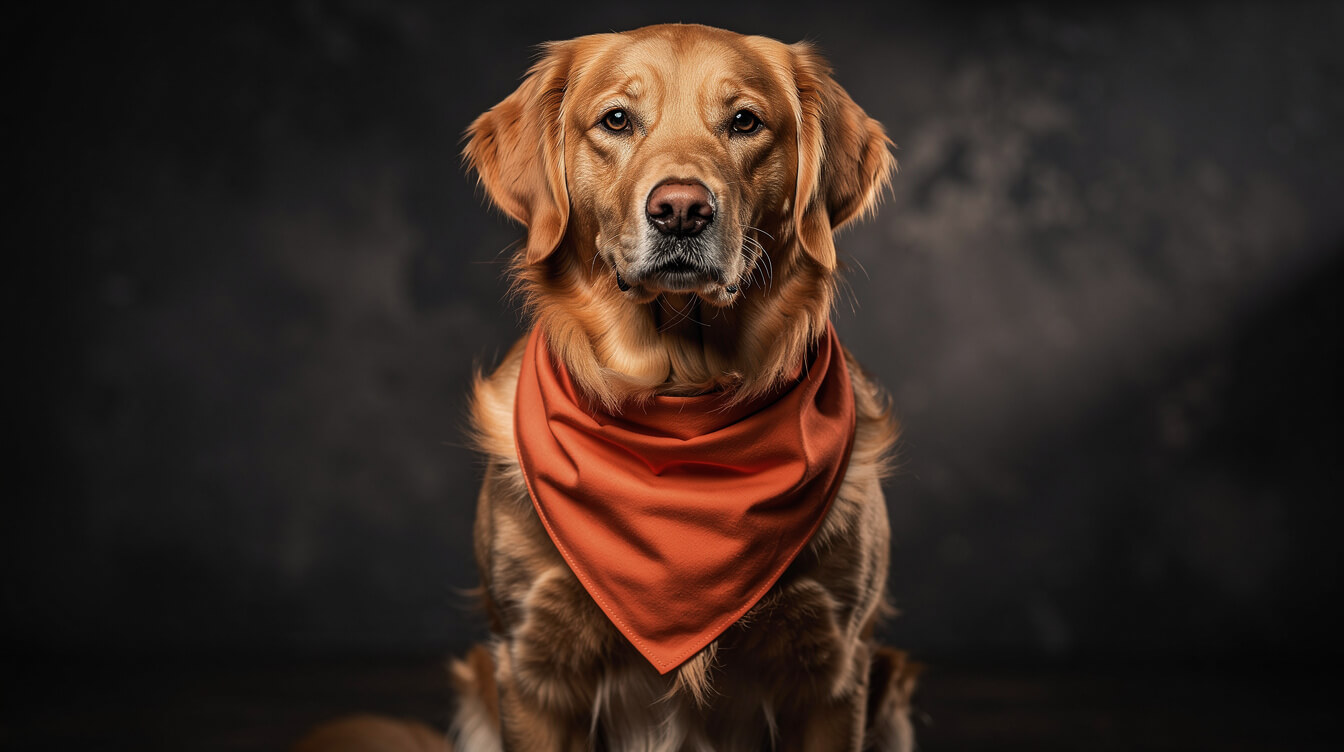
Pet accessories is the second-fastest-growing POD vertical after apparel. Understanding why requires understanding who buys this category and when.
The primary buyer for a custom dog bandana is not the dog owner buying for themselves. The primary buyer is a gift giver. Dog moms buying for a friend’s puppy birthday. Holiday shoppers who want something personal for the dog in their life. Event organizers looking for a branded item for a dog-friendly fundraiser. This gift-economy dynamic matters for your product strategy because it means your marketing should reach non-dog-owners as often as dog owners themselves.
Seasonal peaks in the pet accessories category are sharp and predictable. Halloween drives significant demand for pet costume accessories from late September through October. Christmas and the December holiday window is the largest peak, with dog owners more willing to spend on premium or personalized items for their pets. Valentine’s Day creates a smaller but real spike for breed-specific and “dog mom” gifting. New Year brings less demand, but Easter has a growing novelty market in the pet space.
Repeat purchase rate in pet accessories is higher than in most POD categories. A dog owner who discovers your breed-specific store and buys a bandana for their golden retriever is likely to return when you drop a new design, when the next holiday comes around, or when they want to buy a gift for another dog owner they know. The breed identity angle in particular drives repeat purchasing. Someone who identifies as a “golden retriever person” wants to own multiple golden retriever products. Building a store around one breed and going deep on design variety is a viable strategy.
Niche verticals within dog bandanas: breed-specific stores, holiday drops, dog mom brands, and rescue awareness
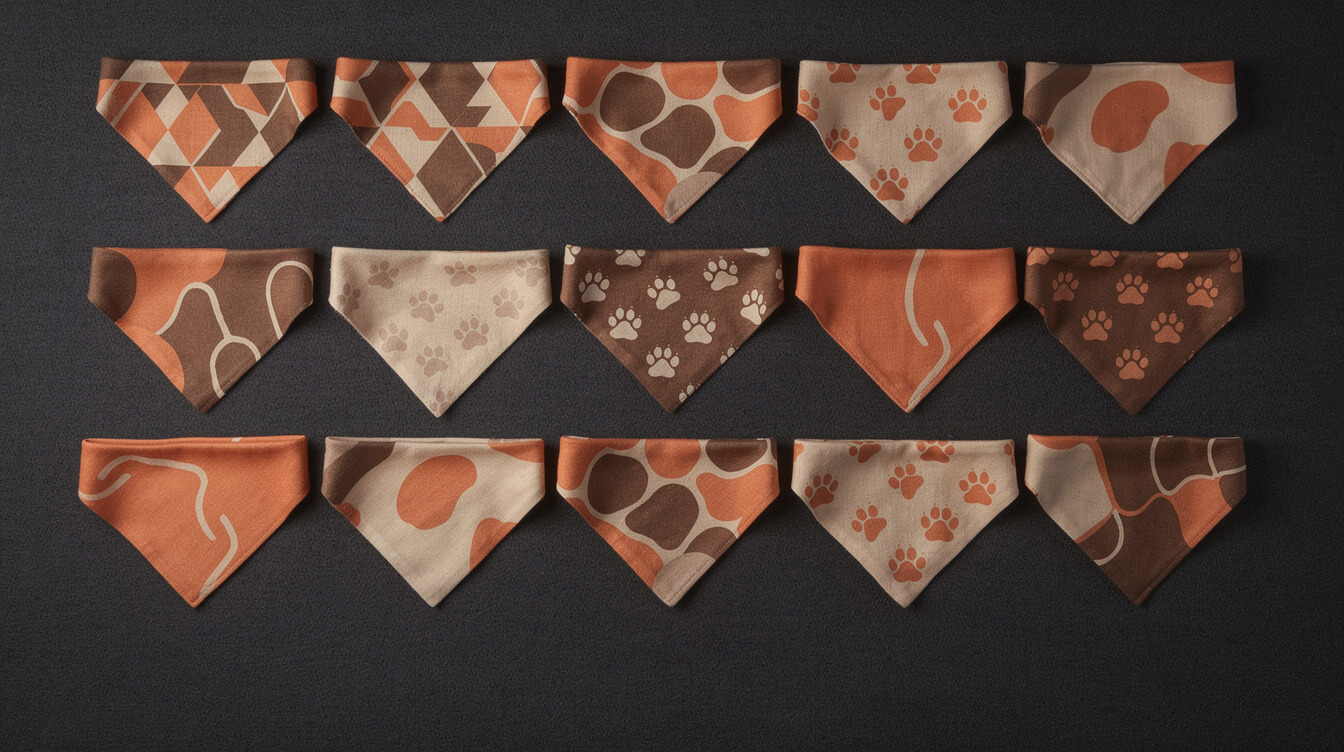
The broadest version of “custom dog bandana” is the most competitive. The most profitable versions are specific. Here are the four niche verticals that consistently produce results in this category.
Breed-specific stores are the highest-conviction play. A store that sells only golden retriever accessories has a focused audience, a clear search intent, and a natural content strategy. Pinterest and Instagram both have active communities organized around specific breeds. Golden retrievers, French bulldogs, dachshunds, and corgis all have outsized social followings relative to their actual ownership numbers, which means their owners are extremely online and actively purchasing breed-specific products. Starting with the top five or six most popular Instagram dog breeds and building 10-15 bandana designs per breed gives you a catalog of 60-90 SKUs before you have spent a single dollar on inventory.
Holiday drops work because they are time-limited and gift-oriented. A Halloween bandana collection (ghosts, pumpkins, bats, skeleton prints in breed-appropriate illustrations) has a natural 6-week sales window from mid-September through early November. A Christmas collection runs from early November through December 23. These are not evergreen products, which means you need to plan the drops 8-12 weeks in advance to have time for design iteration and marketing. The advantage is that holiday buyers have higher average order values and are less price-sensitive than everyday buyers.
Dog mom brands appeal to the gifting market rather than the dog owner buying for themselves. “Dog mom” as an identity category is well-established on social media. Products designed for the owner rather than the dog (though the dog models them) — “proud golden retriever mom” style designs, coordinates that match both owner and dog — sit at the intersection of pet accessories and personalized gifting. This niche has lower search volume than pure breed searches but higher purchase intent because the buyer is explicitly looking for a gift product.
Rescue awareness is a high-engagement niche that often drives referral traffic from rescue organizations. A bandana collection designed around rescue breeds — a dog with a “Foster Dog” or “Rescue Dog” bandana, or a design that includes a small percentage donation to rescue organizations — attracts both the rescue community and the broader audience of people who follow rescue content on social media. Rescue communities share product recommendations actively within their networks, which can drive organic word-of-mouth sales without paid advertising.
Conclusion: custom dog bandanas as a viable POD product line
Custom dog bandanas sit in a genuinely attractive position for POD sellers. The SERP is 100% consumer brands and wholesale retailers, which means there is no editorial content competing for the attention of sellers who want to understand the economics. The product itself is lightweight, easy to fulfill, and backed by a gift-economy that repeats across multiple seasonal peaks per year.
The unit cost math is honest. At $8-10 to produce and $22-25 retail, you are working with 40-55% gross margins. That is viable, not spectacular. The path to making it work is volume, niche specificity, and keeping your platform costs low. On an owned WooCommerce store, those margins hold. On Shopify at 200+ orders per month, the 1% override fee chips away at the economics in ways that compound over time.
If you are building a pet accessories store, dog bandanas are a natural anchor product. They photograph well, they are gift-friendly, and they have seasonal demand that keeps your marketing calendar full throughout the year. The breed-specific angle in particular offers a clear content and SEO strategy. Start with the breed communities that are most active online, build depth in those verticals, and let the repeat purchase behavior in pet accessories compound your customer lifetime value.

Implement AI. 30x your throughput. Get a 30-min call with the founder.
Drop your details and book a free 30-minute discovery call. Personalized advice on your POD stack, your margin, and where AI fits. No pitch, no fluff.