Custom sportswear for POD sellers: which products qualify, sublimation vs screen print on performance fabric, and the fan merch math
Custom sportswear covers two completely different markets, and most POD sellers walk into the wrong one. The B2B team uniform market — $62 per piece and up, 6–8 week lead times, minimum order quantities — is dominated by traditional manufacturers. The fan merch market — performance tees, athletic shorts, track jackets — is wide open for print-on-demand sellers with no minimums and no upfront stock. This guide covers which Printful and Printify products qualify as custom sportswear for POD, what sublimation versus screen print versus DTG means for polyester performance fabric, and the unit cost math at $45–65 AOV that makes sportswear one of the more defensible POD niches in 2026.
Custom sportswear for POD: team uniforms vs fan merch are two completely different businesses
The SERP for “custom sportswear” is entirely B2B: Ragecustom ($62+ per piece, teams and clubs), Boathouse Sports (handmade Philadelphia, 6–8 week lead times), Atlantic Sportswear (schools and businesses since 1984). Every result targets buyers who need uniform kits — coaches, athletic directors, club administrators with a roster to kit out.
POD sellers cannot win that fight, and they should not try. Minimum order quantities, production lead times, and the need for consistent sizing across 15 or more players all cut against what POD does well.
But here is what POD does exceptionally well: fan merch.
Fan merch is everything a team uniform is not — bought by one person, worn by choice, designed around a vibe rather than a specification. Music artist tour hoodies, gym culture tees, fantasy league gear, sports fandom apparel — all of these are performance-adjacent, all of them use the same polyester-blend fabrics, and none of them require a $62 minimum.
The custom sportswear niche for POD sellers is the fan merch lane, not the team uniform lane. Knowing this distinction saves months of misaligned product development and targeting. For a closer look at how jerseys fit into the fan merch angle, see our guide on custom baseball jerseys for POD sellers.
Which Printful and Printify products qualify as custom sportswear
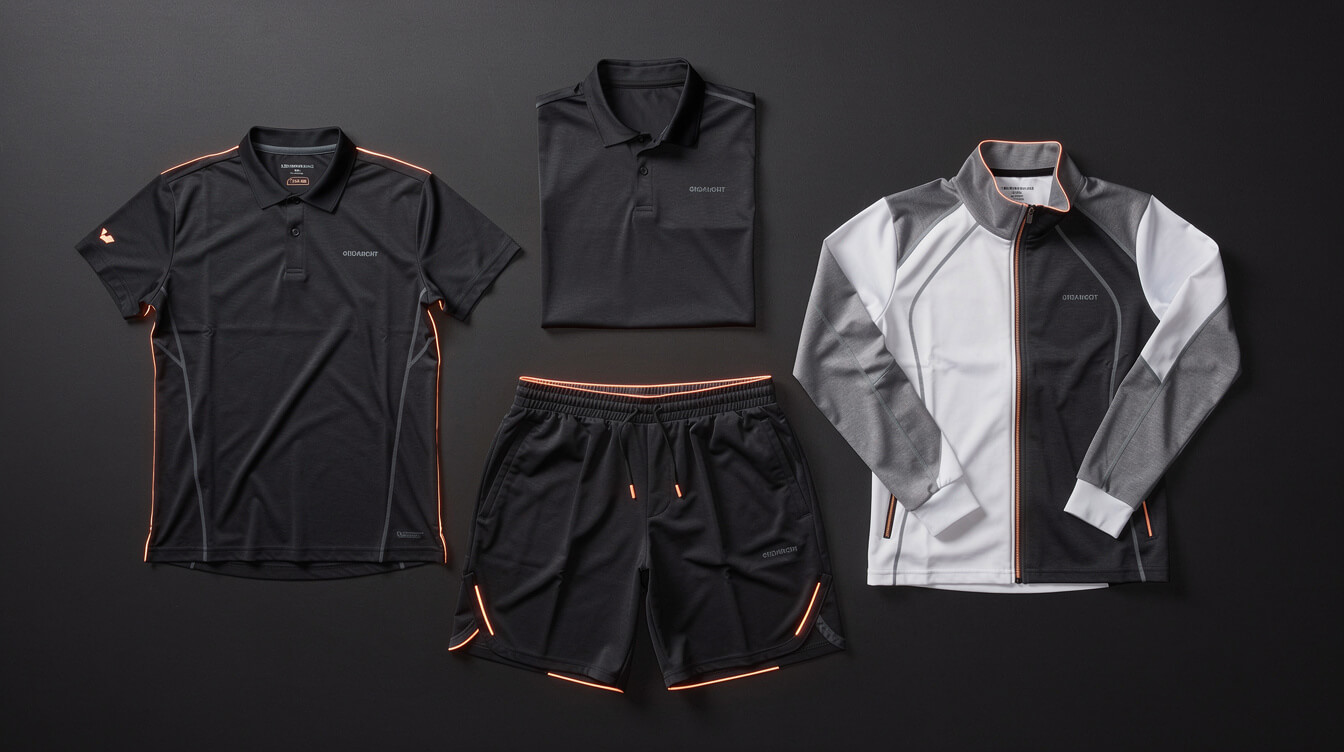
Printful and Printify both carry a useful range of performance-style garments. Here is what to look for when building a sportswear catalog.
Performance tees
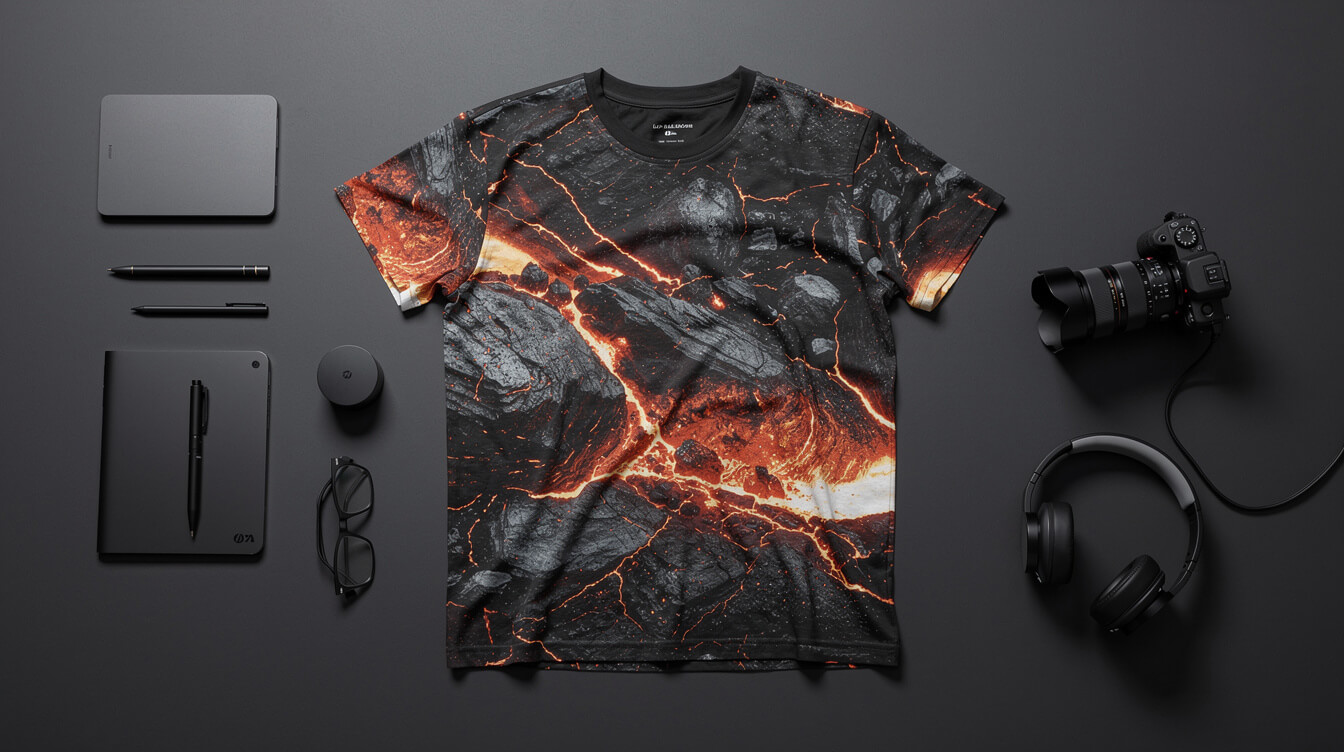
Printful carries moisture-wicking unisex performance tees in 100% polyester, sublimation-ready. These are the backbone of the sportswear catalog: no MOQ, ships in 2–5 business days, available in a range of sizes. The all-over-print option gives you full-coverage artwork rather than a chest patch.
Athletic shorts
Both Printful and Printify offer sublimation-ready athletic shorts. Printful’s all-over-print shorts are fully sublimated polyester, meaning the design wraps the entire garment, not just a patch on the front.
Polo shirts
A crossover product with corporate gifting and golf niches. Printful carries both embroidered and sublimated polo options. The embroidered route suits logo-heavy brand kits. The sublimated route opens up full-coverage artistic designs. For a deeper comparison of the two approaches, the custom golf polo shirt guide covers the cost math in detail.
Track jackets and zip-ups
Track jackets in full-zip polyester are available via select Printify vendor networks. Lead times and blank availability vary by vendor, so test a sample order before adding them to your storefront.
What to skip
Cotton jersey fabrics do not sublimate. If a Printful or Printify blank is listed as cotton, assume it is a DTG product, not a sportswear product. DTG on polyester washes out faster than sublimation and limits you to lighter base colors. A practical shortcut: filter Printful’s catalog by “all-over print” to surface all sublimation-capable blanks. These are your sportswear candidates.
Sublimation vs screen print vs DTG on performance polyester: what the print method changes for your designs
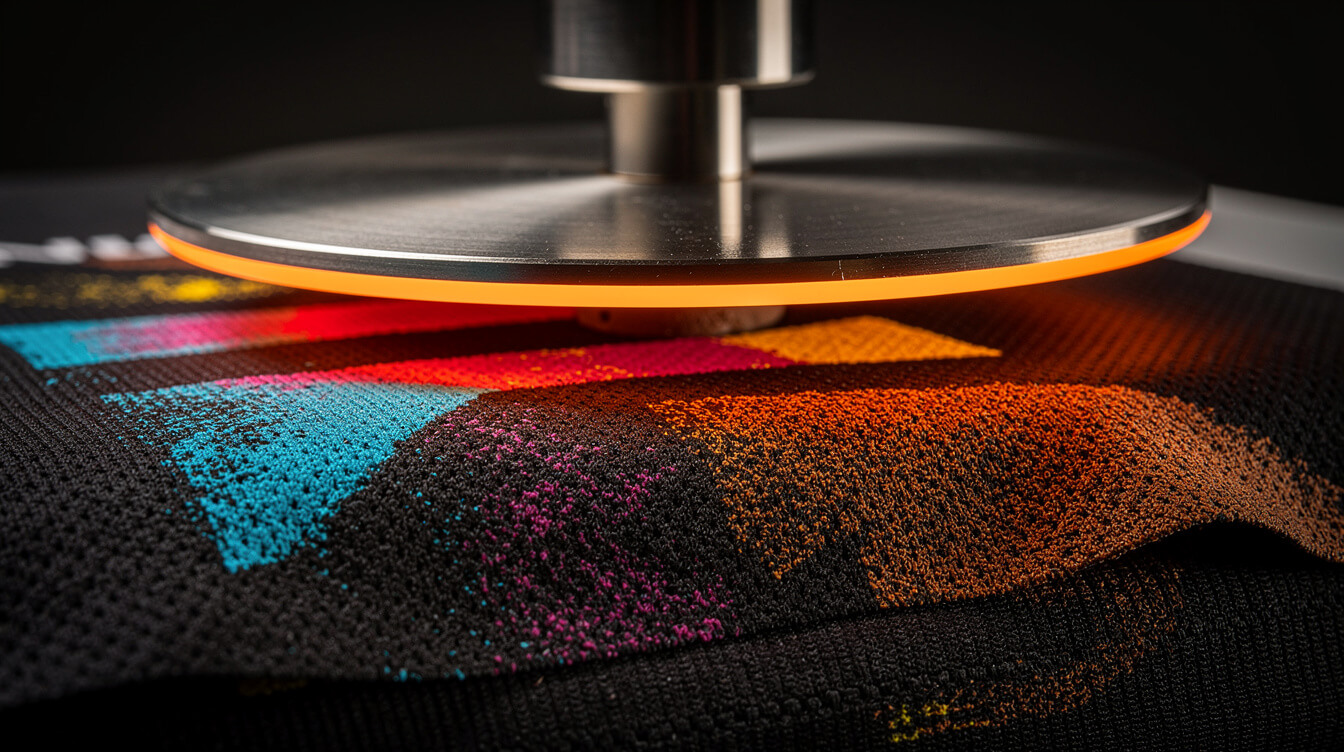
Print method matters more for polyester than it does for cotton, because polyester behaves differently under every printing technique.
Dye sublimation
Sublimation is the native method for performance polyester. Dye sublimates — converts from solid to gas — under heat and pressure, bonding permanently with polyester fibers at the molecular level. The result: a print that does not crack, fade, or peel. It breathes with the fabric. Colors are vivid and can cover the entire garment.
The constraint: sublimation only works on polyester content of 80% or higher, and only on white or very light-colored base garments. If a buyer wants a navy blue performance tee, sublimation cannot give them dark background coverage without printing on white first and overlapping the design edge to edge. For a full technical breakdown of how all-over sublimation works on apparel, the sublimation printing for t-shirts guide covers the method in depth.
Screen printing on polyester
Screen printing on polyester requires heat-set inks formulated for synthetic fabrics. Regular plastisol ink bleeds and discolors on polyester. When a vendor uses polyester-specific screen printing inks, results are clean — but this is a specialty service, and most POD vendors do not offer it. For POD sellers, screen printing on sportswear fabrics is largely unavailable. If you need screen-print aesthetics on a polyester feel, DTG is a closer approximation.
DTG on polyester
Direct-to-garment on polyester is technically possible but problematic. DTG inks are water-based and designed for cotton. On polyester, the print sits on top of the fiber instead of bonding with it, resulting in lower color vibrancy, faster fading, and a visible texture difference from sublimation prints. If your design calls for a black background, some Printify vendors offer dark-fabric DTG that works acceptably on cotton-poly blends. Test a sample before committing to a full product listing.
The practical takeaway
For sportswear POD, sublimation is the right answer in almost every case. Build your designs for white or light polyester blanks, use full-coverage all-over artwork or border-edge designs, and avoid design elements that require fine serif text at small scale. Sublimation handles gradients well but small type at 72 or more characters can soften at print size.
Unit cost math: Printful sportswear blanks at 1-unit and 50-unit pricing
Smash print-on-demand. Join the engine room.
One short email a week. Real numbers, real teardowns, the unfiltered economics behind every move.

Pricing transparency is where POD sellers often undercut themselves. Here is a realistic cost breakdown for custom sportswear at the two volume levels that matter: a single unit (your cost when a customer orders one), and a 50-unit batch (your cost if you run a preorder or team kit drop).
Performance tee (all-over print)
- 1 unit: ~$22–25 (Printful base cost, 2026 pricing)
- 50 units: Printful does not offer volume discounts. The per-unit cost stays flat.
- Retail target: $40–48
- Gross margin per unit: ~$18–23 (45–50% gross)
Athletic shorts (all-over print)
- 1 unit: ~$18–22 (Printful base cost)
- Retail target: $35–42
- Gross margin per unit: ~$13–20 (40–50% gross)
Polo shirt (embroidered)
- 1 unit: ~$25–28 (Printful base, including digitization amortized at 100+ units)
- Digitization one-time fee: $15–50
- Retail target: $45–55
- Gross margin per unit: ~$17–27 (35–50% gross, dependent on embroidery complexity)
Track jacket (all-over print, via Printify network)
- 1 unit: ~$30–38 (varies by Printify vendor)
- Retail target: $55–70
- Gross margin per unit: ~$17–32 (35–50% gross)
A few notes on these numbers. Printful does not offer Printify-style network pricing where you can shop vendors by cost. On Printful you pay the listed price. Printify’s network gives you optionality — a manufacturer in the US will cost more than one overseas, with different lead times. Factor shipping separately; POD shipping for apparel typically runs $4–8 to US addresses.
At $40–48 retail for a performance tee, you sit inside the sweet spot for impulsive fan merch purchases. Above $50, conversion rates for unknown brands drop meaningfully. Below $35, the margin erodes to less than $13 per unit, which is uncomfortable for a product with a 3-day print-and-ship lead time.
The fan merch opportunity: who buys sports-themed POD apparel and why
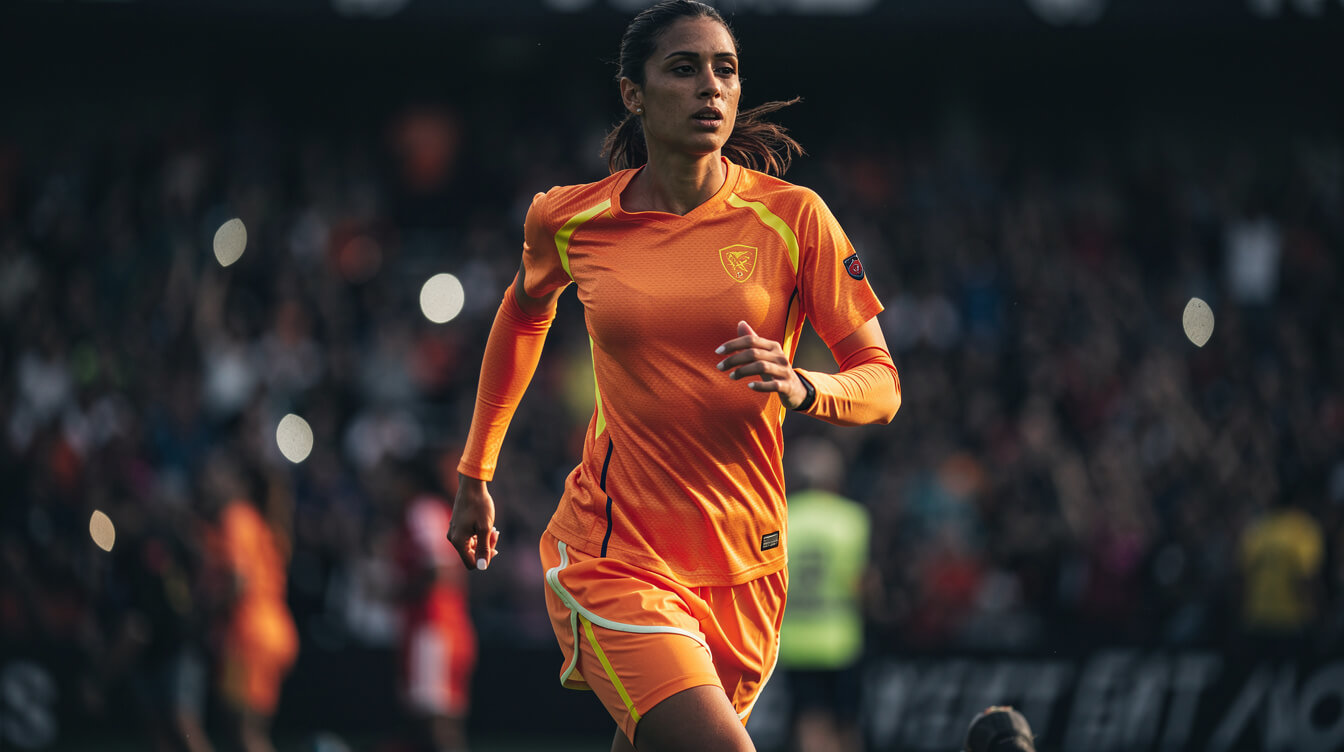
The fan merch buyer is not the same person as the team uniform buyer. Understanding who buys performance-style POD apparel — and when — is how you build a product catalog that moves.
Music artist and event merch
Tour merch and festival drops are the highest-volume, highest-urgency category in fan merch. A performance tee in an artist’s colors, with tour dates as a design element, sells in the window between announcement and event. POD with no-minimum fulfillment is the only infrastructure that makes this economical at sub-10,000-unit scale. The margin is there because the buyer is motivated by the moment, not by comparison shopping.
Fantasy sports and league kits
Fantasy football leagues, local soccer leagues, and pickup basketball groups all want custom gear. A 10-person fantasy league ordering custom performance tees at $42 retail each generates $420 in revenue with zero inventory risk. WooCommerce with Printful handles group orders without a minimum, and the order lands in your store like any individual sale.
Gym and fitness brands
Independent gym instructors, personal trainers, and CrossFit-adjacent micro-brands all need branded performance gear. The difference from generic merch: this audience wears the apparel while working out, which means sublimation durability — no cracking, no peeling after 100 washes — is a genuine selling point you can name in your product copy.
Sports fan and team spirit niches
Original artwork — not licensed team IP, which requires a license — in a team’s colors, with fan-culture references, is a viable niche. Sellers on Etsy and WooCommerce have built meaningful monthly revenue from fan-adjacent designs for major sports markets using city themes and sport aesthetics without trademarked logos or wordmarks.
Streetwear and athleisure crossover
Performance fabric has moved out of the gym and into everyday wear. A moisture-wicking tee in a clean colorblock design with minimal branding sells to streetwear buyers who want the fabric properties without the gym-specific aesthetic. This is where custom sportswear overlaps with the broader custom apparel market — and where design quality becomes the competitive edge.
For each of these segments, the common thread is design-first purchasing. Buyers choose the design before they choose the product. Your job as a POD seller is to get the design right, price the product correctly, and let Printful or Printify handle the rest.
Generate custom sportswear listings in under 7 minutes
MEGA automates the full research-to-product pipeline. One niche, one idea — MEGA generates the images, sizing, mockups, titles, and WooCommerce listings. No Canva session required.
The Shopify 1% override fee at $45-65 sportswear AOV vs WooCommerce

Sportswear sits in the $40–65 AOV range. At this price point, the Shopify 1% transaction fee becomes a meaningful line item, not a rounding error.
Here is the math at three volume levels:
$5,000 per month revenue (about 110 performance tees at $45 average)
- Shopify 1% override: $50 per month
- Shopify Basic plan: $39 per month
- Shopify apps (reviews, email, SEO, analytics): $40–80 per month average
- Total Shopify overhead: ~$129–169 per month
$10,000 per month revenue (about 220 units)
- Shopify 1% override: $100 per month
- Plans and apps: same as above
- Total Shopify overhead: ~$179–219 per month
$25,000 per month revenue (about 555 units)
- Shopify 1% override: $250 per month
- Shopify Grow plan ($105 per month at this volume), apps included
- Total Shopify overhead: ~$395–455 per month
On WooCommerce: the 1% override does not exist. Hosting runs $15–30 per month on a managed provider. The Printful WooCommerce plugin is free. Payment processing via Stripe is 2.9% plus $0.30 per transaction — the same card rate as Shopify Payments. The WooCommerce overhead at $25,000 per month is $15–30, not $395.
Over 12 months at $25,000 per month, the Shopify overhead gap represents $4,440–5,100 in fees that WooCommerce sellers keep as margin. At a 45% gross margin on sportswear, that is the equivalent of more than 1,100 extra units of profit per year without selling a single additional item.
For a complete comparison of the full cost stack, the WooCommerce vs Shopify guide for POD sellers breaks down the math across product categories and volume levels. MEGA automates the product listing pipeline on WooCommerce — image generation, sizing, Printful sync, product upload — so the infrastructure advantage is accessible without a 6-hour Canva workflow. Try MEGA at mega.management.
Building a custom sportswear POD store: WooCommerce setup and niche strategy
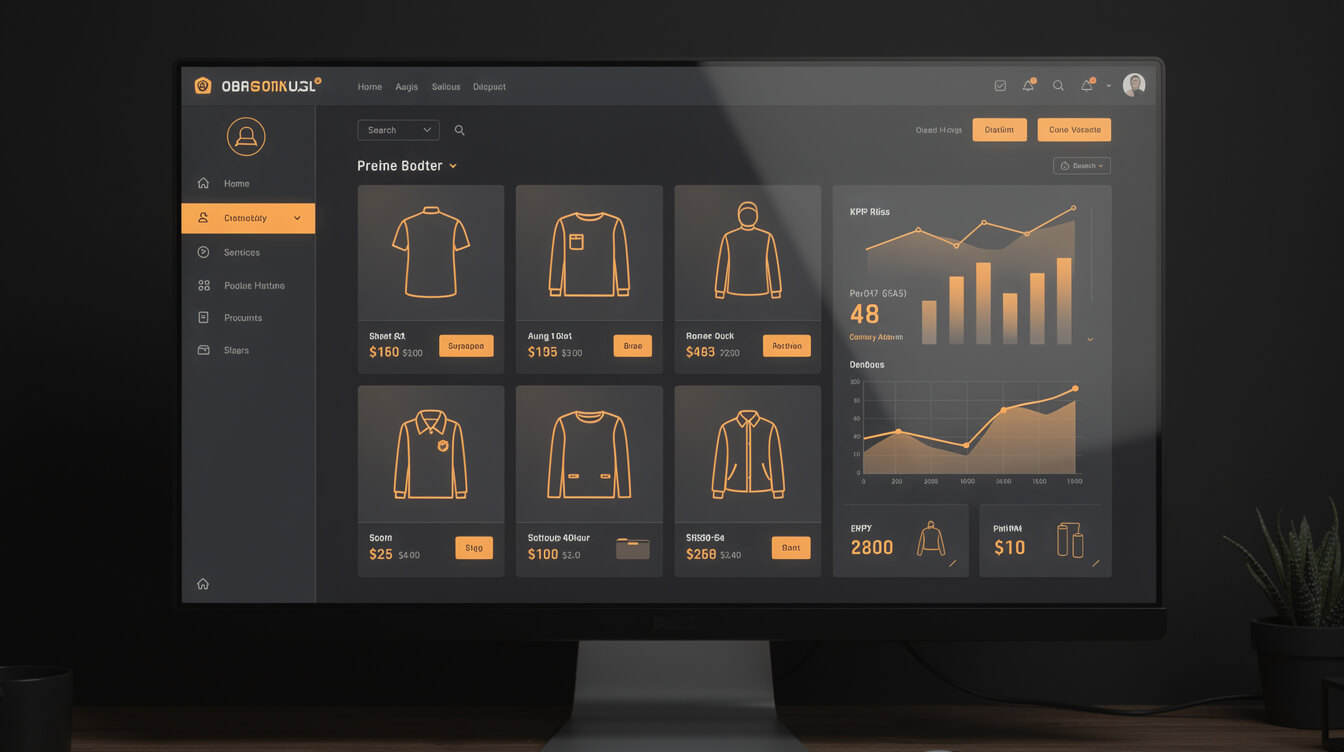
A sportswear POD store is a niche bet, not a catalog play. The stores that convert do not list 200 products across every category. They pick 3–5 designs in 2–3 products each, target one audience segment clearly, and iterate based on which designs move.
Product setup in WooCommerce with Printful
- Connect Printful to WooCommerce via the Printful plugin, free at printful.com/integrations.
- Create a product in Printful: select your blank (performance tee, athletic shorts, polo), upload your design, configure print placement (front, back, all-over).
- Sync the product to WooCommerce: Printful auto-populates the title, base description, and variants (sizes, colors).
- Edit the WooCommerce product listing: rewrite the title and description with your focus keyword, set retail price (Printful cost plus your margin), add product images using Printful mockups.
- Assign to your sportswear category, set up payment processing, and publish.
Niche strategy: the one-audience rule
The stores that fail spread too thin. “Custom sportswear” is not a niche. “Custom gym culture tees for independent CrossFit coaches” is a niche. “Fantasy football league kits for 8–14 person leagues” is a niche. Specificity reduces your paid traffic cost and increases word-of-mouth conversion. Pick one audience, build 5 designs for that audience, and run them for 60 days before expanding. Most POD stores that fail do so at 200 products and zero sales, not at 5 products and decent sales. Constraints force better design decisions.
Sizing and variant discipline
Sportswear buyers care about fit. Provide accurate size charts — Printful provides them per blank, and you should include the relevant PDF data as a product tab or description section. Incorrect sizing information drives returns and negative reviews. For sublimated all-over-print products, note that sizing runs slightly different from cotton blanks; mention this in your product description.
Design considerations for performance fabric
Designs that work on cotton do not always translate to performance fabric. On a moisture-wicking tee, the weave texture is more visible through the print. High-contrast, bold designs — solid color blocks, geometric patterns, clean graphic shapes — perform better than photo-realistic prints with fine detail. Design for the wearability of the product, not just the visual appeal at thumbnail scale.
Custom sportswear as a POD niche: the case for fan merch in 2026
The SERP for custom sportswear belongs to B2B team uniform manufacturers. The fan merch lane — performance tees, athletic shorts, track jackets with no MOQ — is available to any POD seller with a Printful or Printify integration and a design that targets a specific audience.
The unit cost math works at $40–65 AOV if your designs convert. Sublimation on polyester is well-supported by both major platforms. The print method distinction between sublimation, screen print, and DTG matters more on polyester than on cotton — get it right before building your catalog.
The Shopify fee math at this AOV range makes WooCommerce the economically rational platform choice. The infrastructure cost difference compounds faster at $45–65 tickets than at $15–20 low-AOV products. Over 12 months at meaningful volume, the gap is significant enough to represent the equivalent of months of additional profit without a single additional sale.
Custom sportswear is not the easiest POD niche — it requires designs suited for performance fabric and a clear audience definition. But the B2B noise in the SERP means anyone targeting fan merch buyers is competing in a largely uncrowded market. That gap is worth taking seriously.
Implement AI. 30x your throughput. Get a 30-min call with the founder.
Drop your details and book a free 30-minute discovery call. Personalized advice on your POD stack, your margin, and where AI fits. No pitch, no fluff.