Custom embroidered patches no minimum: what POD sellers and small brands need to know before promising no-MOQ
If you’ve searched for custom embroidered patches no minimum, every result you’ve seen is a vendor product page. Ninja Patches promises low minimums. GS-JJ shows prices per piece. Vivipins has a configurator. What none of them tell you clearly is that “no minimum” in the embroidered patch world usually means a floor of 10 pieces, not 1. For POD sellers who want to add patches as an accessory product line, that distinction matters a great deal. This post covers what the market actually looks like, whether true single-unit POD fulfillment exists for patches, the unit cost math at 1, 10, and 50 pieces, and how to build a viable no-inventory patch business using a pre-order workflow in WooCommerce.
What no minimum really means in the custom embroidered patch market
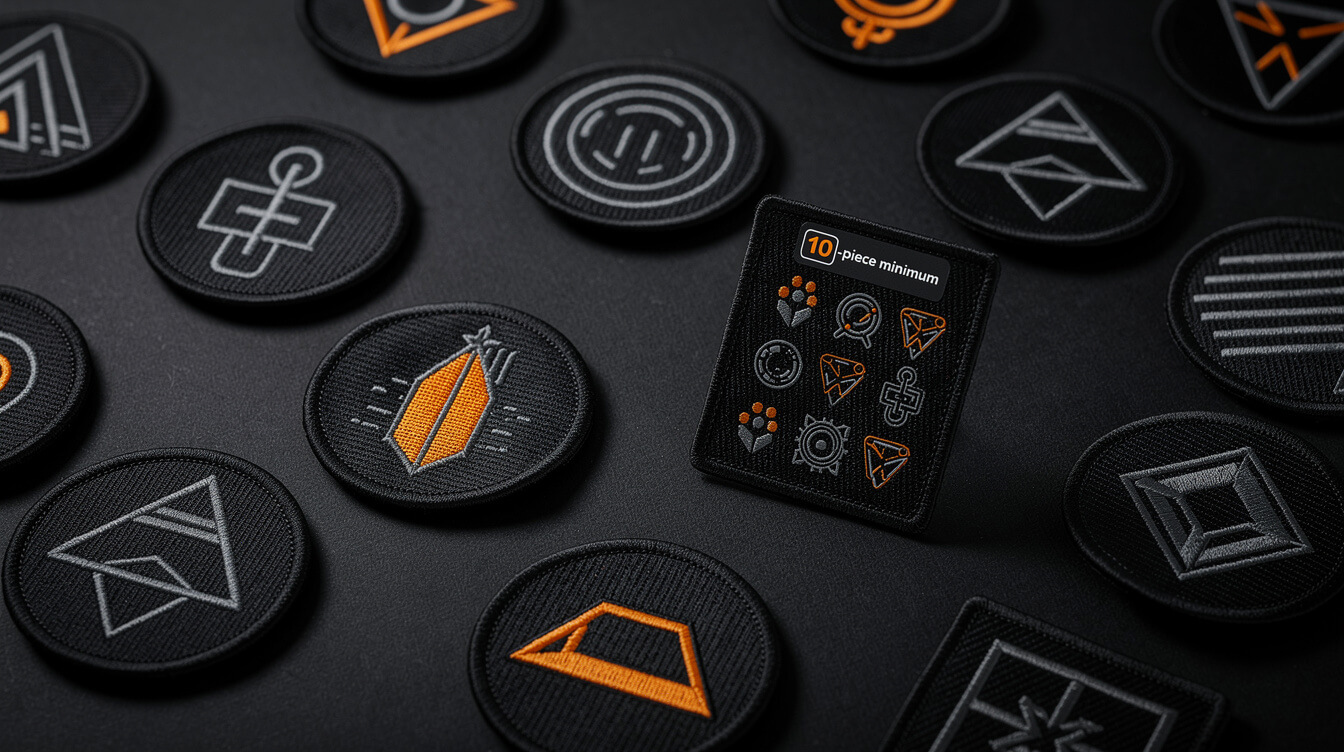
The phrase “no minimum order” is technically accurate from most patch vendors — if you consider 10 pieces the new minimum. That is not a knock on these suppliers. Embroidered patches require a digitization step before any production can start. A skilled digitizer converts your artwork into machine-readable stitch instructions, a process that typically costs $8-25 depending on complexity. That setup cost has to be amortized across the order. At 1 piece, the digitization alone exceeds the cost of the patch itself.
The real question for POD sellers is not whether a vendor will take a small order. It is whether the economics of small-order patches can sustain a retail product line. At 10 pieces, the digitization cost becomes manageable — roughly $1-2.50 per unit. At 1-3 pieces (the actual quantity most searchers want), you are paying $8-25 in digitization plus $3-8 per patch in production, which puts a single 3-inch embroidered patch at $11-33 in pure landed cost before any platform fees or shipping to your customer.
This is the gap the SERP completely misses. Every search result is written for the buyer, not the seller. If you are building a product line and need to promise customers “no minimum” on your storefront, the mechanics behind that promise look very different depending on whether you are routing through a POD platform or working directly with a specialist vendor.
The good news is that a no-minimum storefront for patches is achievable. The mechanics involve either accepting a higher per-unit cost at low quantities (specialist vendor, single-unit orders), or batching customer orders before production (pre-order drop model, covered in section 5). The bad news is that neither Printful nor Printify makes this easy, which we cover next.
True POD for embroidered patches: does Printful or Printify actually offer single-unit fulfillment?
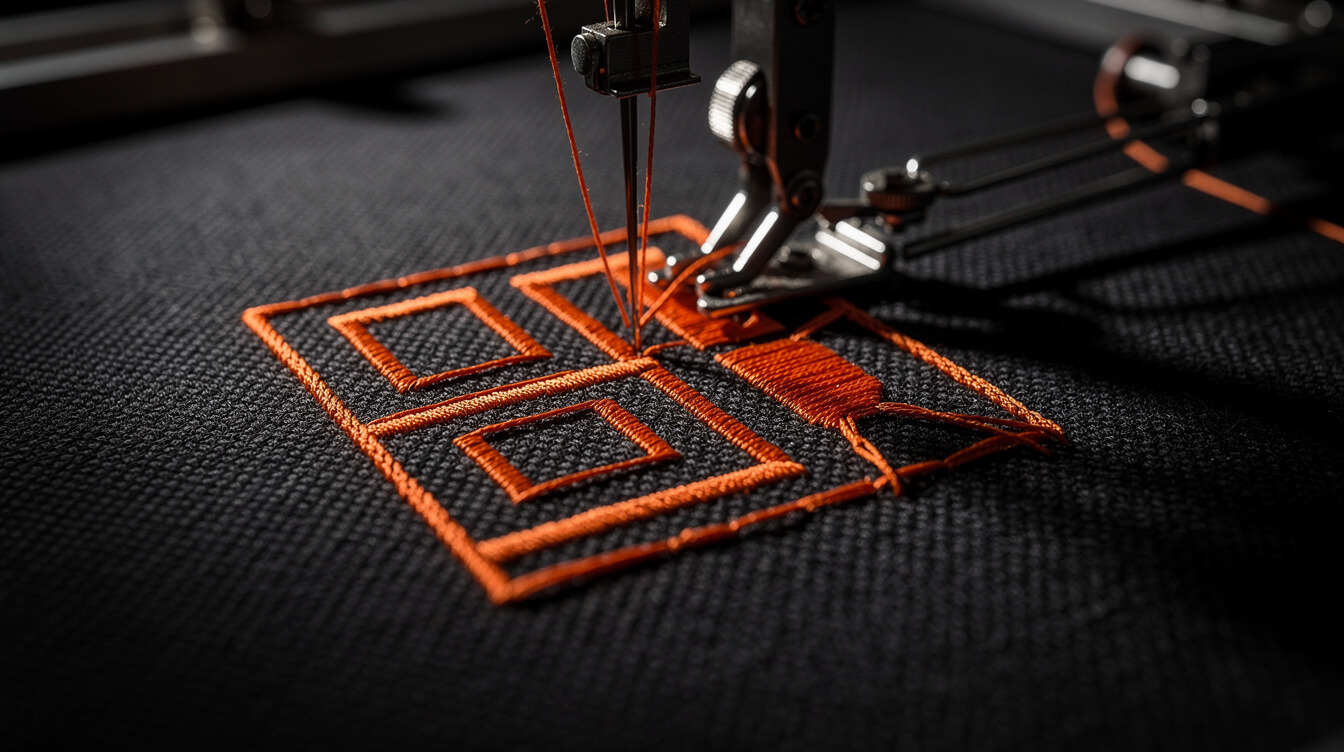
The short answer is: not as a standalone patch product. Printful and Printify both offer embroidery as a decoration method — but for garments, not for loose patches. Printful does embroidery on hats, jackets, sweatshirts, and polo shirts. Printify has embroidery available through select print providers for hats and apparel. Neither platform lets you list an embroidered patch as a product that ships on its own.
This surprises a lot of POD sellers who are used to the “design it, list it, we ship it” model that works so cleanly for t-shirts. Patches are a different manufacturing category. The embroidery machines that produce patches are set up for batch runs, not single-piece print-on-demand. The digitization file is loaded once and run repeatedly. That workflow doesn’t map cleanly to the zero-inventory, one-at-a-time fulfillment that Printful and Printify are built around.
There are some workarounds that sellers attempt. Printful has an accessories line, and a small number of print providers on Printify catalog have iron-on patches — but coverage is thin and the selection of patch types (woven vs embroidered, backing types, sizes) is extremely limited compared to what specialist vendors offer. If you want embroidered patches with iron-on, velcro, or sew-on backing in your specific design, you will almost certainly need a specialist vendor.
For sellers who have built their whole business on Printful or Printify’s zero-inventory model, this is a meaningful shift. It doesn’t mean patches are off the table. It means patches require a different supply chain layer — and the pre-order batching model in section 5 is specifically designed to bridge that gap. Exploring Printful’s full product catalog confirms embroidery is available for apparel but not loose patches as of mid-2026.
Specialist low-MOQ patch vendors: Ninja Patches, GS-JJ, and Vivipins compared
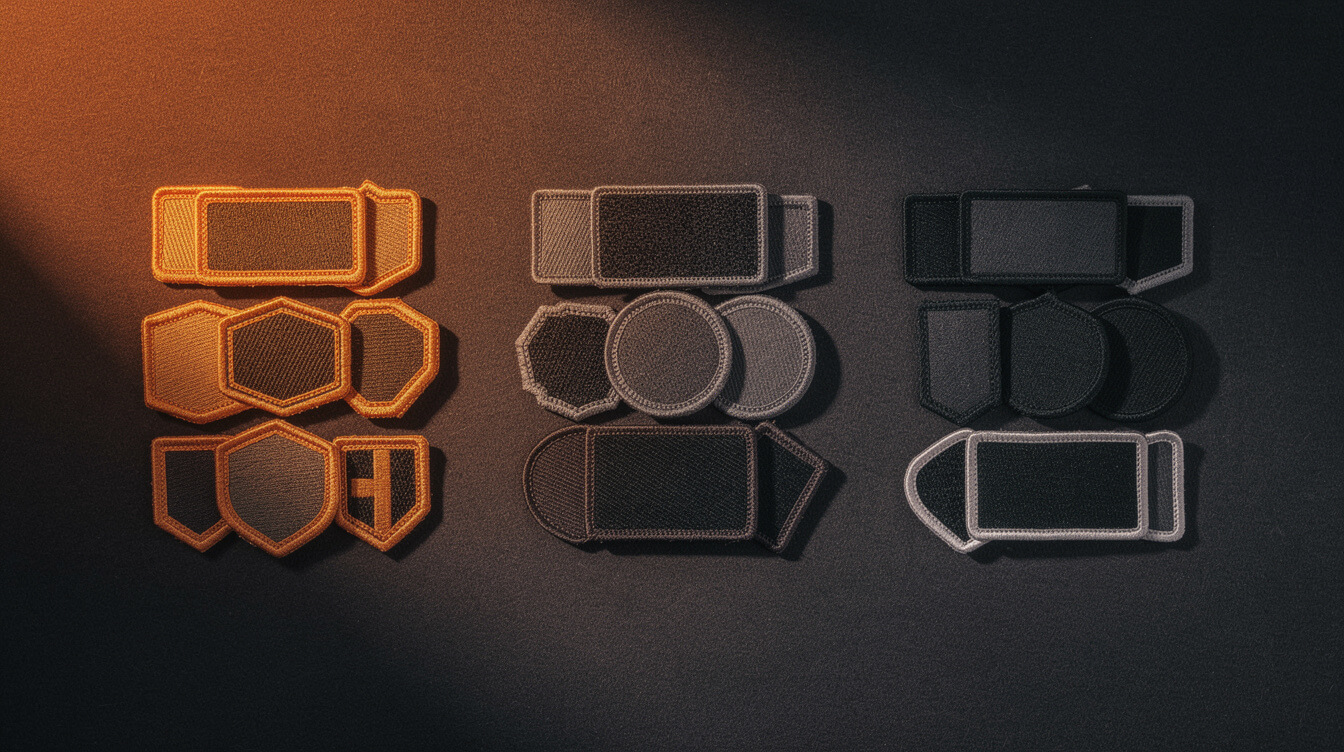
If POD platforms don’t offer patch fulfillment, the next question is which specialist vendors are worth working with for a low-MOQ or pre-order patch model. Three vendors come up consistently in Reddit threads and search results: Ninja Patches, GS-JJ, and Vivipins. Here is what each looks like in practice.
Ninja Patches markets itself specifically on low minimums. Their stated floor is 10 pieces for most patch types. For a 2-inch embroidered patch with iron-on backing, prices run approximately $3.20-4.50 per piece at 10 units, dropping to $1.80-2.50 per piece at 50 units. Turnaround is typically 10-15 business days for production, plus shipping from their production facility (often overseas). The 10-piece minimum is genuine — they do accept orders below 25 pieces, which puts them at the low end of specialist vendors.
GS-JJ has a broader product catalog and runs slightly larger minimums — typically 25-50 pieces for embroidered patches, with an absolute floor around 20 for certain configurations. Per-piece pricing at minimum order runs $2.50-4.00 for a standard 3-inch embroidered patch. GS-JJ is better suited for sellers who have validated demand and are placing batch orders, not for starting a product line at zero risk.
Vivipins is positioned more at the gifting and promotional market, with minimums around 50 pieces for most configurations. Their quality is strong and pricing competitive at quantity, but 50 pieces as an entry point is not a pre-order model — it is an inventory purchase.
For POD sellers entering the patch market, Ninja Patches’ 10-piece floor is the most workable starting point. For sellers who have already verified demand and want to add custom patches with velcro backing as a premium accessory SKU, GS-JJ at 25+ pieces often delivers better per-unit economics.
Unit cost math at 1, 10, and 50 patches — where the break-even lives
Smash print-on-demand. Join the engine room.
One short email a week. Real numbers, real teardowns, the unfiltered economics behind every move.
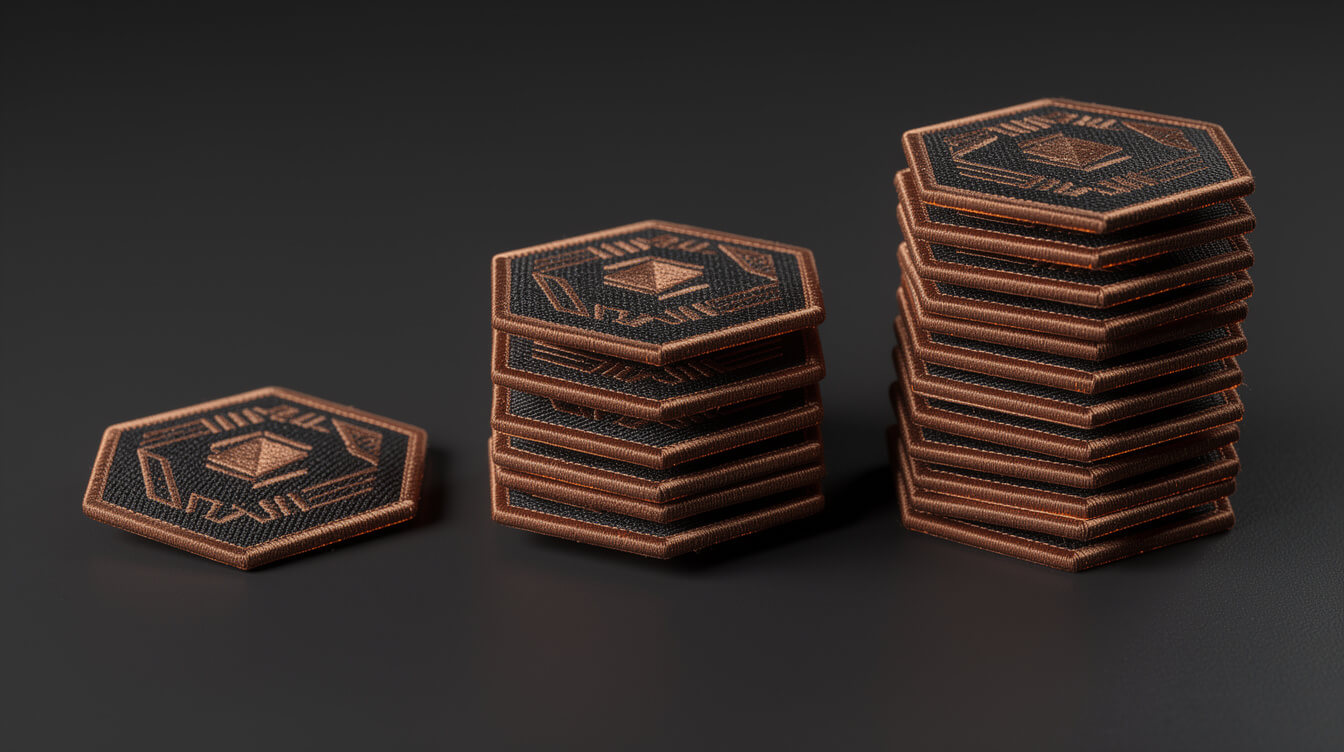
Let’s run the actual numbers. For a standard 3-inch embroidered patch with iron-on backing, using Ninja Patches as the benchmark at their 10-piece minimum:
- Digitization: $15 one-time setup fee (amortized across the order)
- At 10 pieces: ~$4.00/patch production + $1.50 digitization amortized = $5.50 total landed cost per patch, before international shipping to your customer. With DHL Express shipping at ~$18 for a small padded envelope: add $1.80/patch at 10 pieces.
- At 10 pieces total landed: ~$7.30/patch
- At 50 pieces: ~$2.20/patch production + $0.30 digitization amortized + $0.50 shipping share = ~$3.00/patch landed
For retail pricing, embroidered patches typically sell at $8-18 retail depending on size, complexity, and brand positioning. A morale patch or tactical patch with a strong brand fetches $12-16. A simple logo patch on a garment accessory listing might sell at $8-10.
At 10-piece batches with $7.30 landed cost and $12 retail, you are at a 39% gross margin. At 50-piece batches with $3.00 landed cost and $12 retail, you are at 75% gross margin. The economics improve dramatically at scale, but 10 pieces is viable enough to test demand without meaningful inventory risk.
Compare this to print-on-demand stickers, which are true single-unit POD at $0.80-1.50 per sticker with retail pricing of $3-6 — stickers remain a lower-friction accessory add for stores that want zero-inventory extras. Patches have higher margin at scale but require the pre-order or batch model that stickers don’t.
The break-even math for a patch product line: if you can collect 10 pre-orders before placing your first production run, you have no inventory risk and healthy margins from day one. The question is how to build that pre-order flow inside WooCommerce.
Add specialty products like patches to your POD pipeline without the manual workflow
MEGA automates product catalog management across WooCommerce and Printful, so adding a specialty product like patches integrates into your existing POD workflow instead of running as a separate manual process.
How to structure a pre-order patch drop for your WooCommerce store

The pre-order model solves the patch minimum problem cleanly. Instead of listing a patch as an in-stock item with immediate fulfillment, you list it as a pre-order product with a specific batch close date. Customers order and pay. Once you hit 10 orders (or whatever your batch target is), you place a single production run with Ninja Patches or your chosen vendor, then ship to customers when the batch arrives.
In WooCommerce, the simplest way to implement this uses the WooCommerce Pre-Orders plugin or a “backorder allowed” product configuration with a custom availability note. The key customer-facing elements are:
- Expected ship date displayed on the product page (be specific: “ships approximately July 28” not “ships soon”)
- Payment collected at order, not at shipment — WooCommerce Pre-Orders can handle payment at order or at fulfilment; choose at order for cash flow purposes
- Clear batch framing in the product description — “this design runs in batches of 10, current batch closes [date]”
For the production workflow: once the batch closes, export the order list from WooCommerce, place the order with your vendor, and update the product to “sold out” until the next batch. When patches arrive, pack and ship manually or use a 3PL if volume justifies it. The first few batches will be manual. Once you have a design that sells 20+ per cycle, it may be worth exploring if a local embroidery shop can match the overseas vendor’s quality at faster turnaround for ongoing inventory.
The batch model has one significant advantage over true POD: you control the production timeline and can quality-check a sample before the full run ships. That matters for embroidery, where digitization quality can vary and a color shift in thread can render a design off-brand.
One practical note: set your minimum batch size at the vendor’s MOQ, not above it. If Ninja Patches’ floor is 10 pieces, run batches of 10. There is no reason to wait for 25 orders if you can be profitable at 10. Build the demand data, then raise batch sizes as confidence grows.
Shopify 1% fee math on custom embroidered patch orders — why WooCommerce wins on low-AOV accessories
Patches are a low-to-mid AOV product. A single patch sells at $8-16. A 3-pack might hit $25-35. At these price points, Shopify’s 1% platform override fee (Shopify Payments’ additional 0.5%-2% on top of the processing fee, plus the mandatory platform tier) creates real margin drag that WooCommerce does not have.
Here is the math on a $12 single-patch order on Shopify Basic ($39/month tier):
- Shopify’s transaction fee (if not using Shopify Payments): 2.0% = $0.24
- Shopify Payments processing fee: 2.9% + $0.30 = $0.65
- Total platform take on a $12 order: $0.89
- Effective platform fee rate: 7.4% of revenue
At the same $12 order on WooCommerce with Stripe:
- Stripe processing fee: 2.9% + $0.30 = $0.65
- WooCommerce platform fee: $0
- Total: $0.65
- Effective platform fee rate: 5.4% of revenue
The difference is $0.24 per order — small in isolation, but patches are a volume accessory. At 100 patch orders per month at $12 AOV, WooCommerce saves $24/month in platform fees alone. At 500 patch orders, that is $120/month, or $1,440/year. You are not running a high-AOV business on patches. Every point of margin matters.
For POD sellers who already run WooCommerce for their apparel business, adding patches as an accessory SKU is a natural extension with no new platform cost. For sellers on Shopify considering whether to run a separate WooCommerce store for specialty accessories, the fee math is one input. The bigger input is workflow — and WooCommerce’s native pre-order and backorder tooling gives you more flexibility without needing to pay for additional apps. Read our breakdown of Shopify transaction fees for POD sellers for the full fee structure across plan tiers.
The no-minimum promise made real: WooCommerce plus specialist vendor workflow
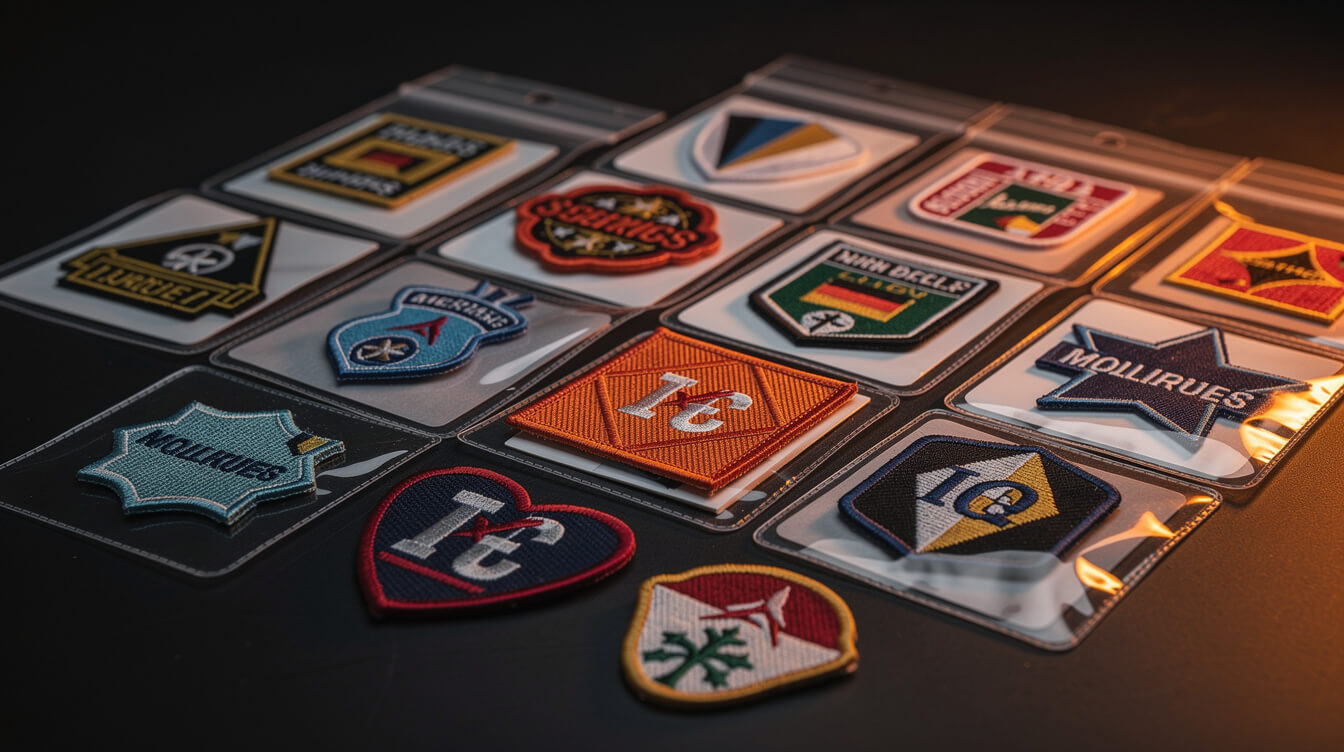
Let’s bring this together. The “no minimum” promise on your storefront is achievable for custom embroidered patches no minimum. The workflow that makes it real looks like this:
- Design and digitize once — pay the $15 digitization fee upfront. This is a fixed cost you absorb. It is the price of entry for a patch product line.
- List as a pre-order in WooCommerce — set batch close date 2-3 weeks out. Collect payment at order. Show expected ship date clearly.
- Batch at the vendor’s MOQ — once you hit 10 pre-orders (Ninja Patches floor), place the production run. If you haven’t hit 10 by the batch close date, you can either wait, extend the date, or absorb the cost of a 10-piece run at a slight loss on the unsold units. At $7.30 per patch landed and $12 retail, you can cover 2-3 unfulfilled units and still come out ahead on a first run.
- Quality check on arrival — before shipping, check one patch against your design file. Embroidery color and digitization quality vary between vendors and runs. Catching a production issue before shipping to 10 customers saves significant friction.
- Build demand data — after 2-3 successful batches, you have enough sales velocity to decide whether to hold a small buffer inventory, raise batch sizes, or introduce additional colorways. MEGA can automate the catalog management side of this as your product line grows — adding new SKUs, updating pricing as vendor costs change, and syncing inventory states across WooCommerce without manual data entry.
Frequently asked questions about custom embroidered patches no minimum
Can I order a single embroidered patch for a customer? Technically yes from some vendors, but the economics are difficult. At 1 piece, digitization plus production will cost $18-35+ landed, which is hard to cover at standard retail pricing unless you sell into a premium or custom niche at $25+. A better model is listing as pre-order and batching.
Does Printful do embroidered patches? No. Printful does embroidery on garments (hats, jackets, sweatshirts) but does not offer standalone embroidered patches as a product category. For patch products, you need a specialist vendor.
What is the minimum order for Ninja Patches? Approximately 10 pieces for most embroidered patch configurations. This is among the lowest minimums available from production-quality vendors. At 10 pieces with a $15 digitization fee, landed cost runs $7-8 per standard 3-inch patch including shipping.
How long does it take to produce a batch of custom embroidered patches? Most overseas specialist vendors (Ninja Patches, GS-JJ, Vivipins) run 10-15 business days for production after artwork approval. Add 3-7 days for international shipping. Plan for 3-4 weeks from order to delivery when setting your pre-order ship date.
Is WooCommerce better than Shopify for selling custom patches? For low-AOV accessories like patches, WooCommerce’s zero platform fee structure saves $0.24+ per order compared to Shopify Basic. For a patch product line generating 200+ orders per month, that difference becomes $500+ per year. WooCommerce also has better native backorder and pre-order tooling without requiring paid plugins.
Adding custom embroidered patches to your POD store: what the numbers say
Custom embroidered patches no minimum is a solvable problem. It is not a true POD product in the Printful sense — you cannot design, list, and have single patches ship automatically. But it is a viable accessory product line for POD sellers who are willing to run a pre-order or batch model and work with specialist vendors.
The unit economics work at 10-piece batches once you amortize the digitization cost. The margin is strong at 50+ pieces. The pre-order model eliminates inventory risk at launch. And WooCommerce’s fee structure means you keep more of each low-AOV patch sale than you would on Shopify.
The sellers who do this well are not treating patches as afterthoughts. They pick 1-2 core designs, validate demand through pre-orders, and expand once they have 3-4 successful batch runs behind them. The no-minimum promise to your customers is real. The batching happens on your side, invisibly, as a fulfillment workflow — not as an inventory risk passed onto the buyer.
Implement AI. 30x your throughput. Get a 30-min call with the founder.
Drop your details and book a free 30-minute discovery call. Personalized advice on your POD stack, your margin, and where AI fits. No pitch, no fluff.