Custom table runners for POD sellers: which providers carry them, sublimation cost math, and the wedding-to-holiday demand calendar
Custom table runners sit in one of the most underserved gaps in the print-on-demand seller playbook. Search volume is real — around 2,900 searches a month — yet the top SERP results are almost entirely trade-show supply companies and bulk promotional vendors. Zero editorial exists for sellers who want to list personalized table runners as retail home and gift products. This guide covers which POD providers carry custom table runners, what sublimation looks like on this substrate, the unit cost math at realistic volumes, and the two seasonal demand windows that make table runners worth adding to a catalog.
Two markets, one search term: B2B event supply runners vs. retail POD personalized table runners
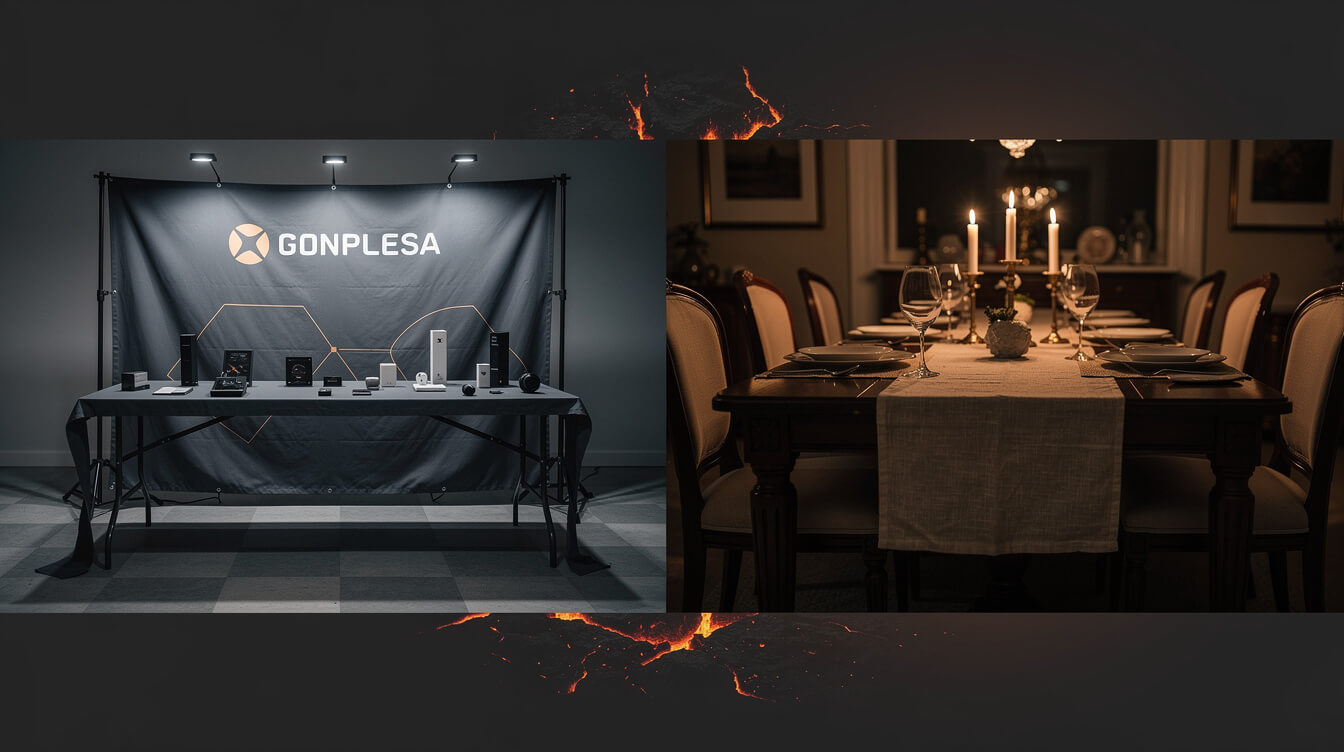
When someone searches “custom table runner,” they could mean two very different things. The first meaning is the B2B trade-show market: businesses that want printed fabric runners with a company logo to dress up an exhibition booth or conference table. These buyers want 12, 50, or 500 units, printed on specific stretch fabrics with full-color dye sublimation, shipped to an event venue in 5 business days. Companies like BannerBuzz, Signs.com, and TotallyPromotional own this lane. Their minimum orders, pricing structures, and fulfillment timelines are designed for corporate event coordinators, not retail shoppers.
The second meaning is the retail POD market: individual consumers who want a personalized table runner for a wedding reception, a Thanksgiving dinner, or a farmhouse-style kitchen. These buyers want one piece — maybe two — with a family name, a date, or a pattern that matches their home aesthetic. This is the lane POD sellers occupy, and it is almost entirely unaddressed by the current SERP.
The distinction matters because the products, providers, and economics are completely different. A trade-show table runner is typically 72-120 inches long, printed on stretch polyester, and designed to drape over a folding table and touch the floor. A retail personalized table runner is 12-16 inches wide and 72-90 inches long, laid flat across a dining table, and designed to be an everyday household or event item. Understanding which product you are selling determines which provider you can use.
Which POD providers carry custom table runners
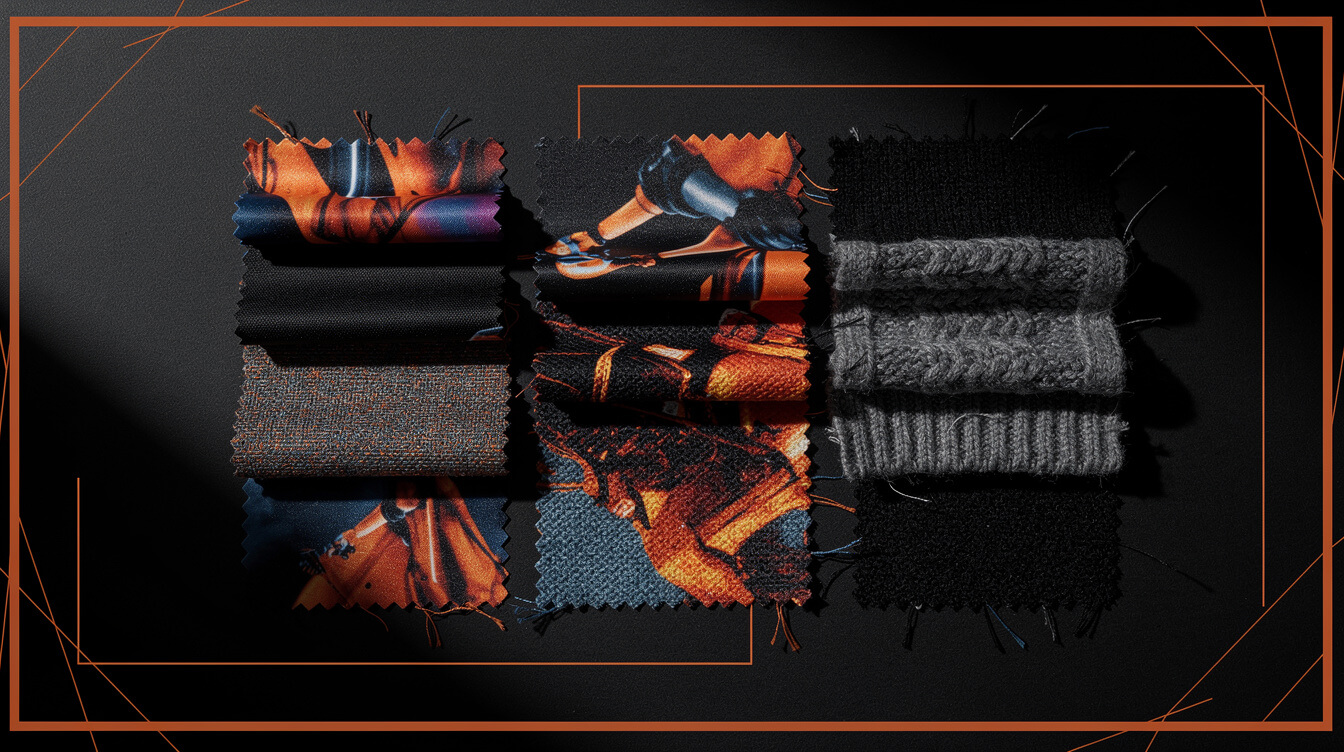
Provider availability for table runners is narrower than for apparel or mugs. Here is the realistic landscape as of 2026.
Printful does not list a standard fabric table runner in its core product catalog. Printful’s home and living lineup covers things like pillows, blankets, and wall art, but flat table linens are not there. If a seller is committed to Printful as their primary provider, they would need to either offer a workaround product (such as a custom canvas print laid horizontally as a table accent) or wait for catalog expansion.
Printify’s network does include table runner options through select third-party vendors. The availability depends on which print provider is selected inside the Printify platform. Vendors like Subliminator and AOP+ have offered sublimated table runners at various points, but availability and specifications change over time. Sellers should verify current availability in the Printify product creator before building a store around this product category.
Gooten has historically offered table runners through its catalog and is worth checking as an alternative fulfillment partner if Printify’s network options are limited or lead times are too long. Gooten tends to have strong home goods coverage.
Contrado is a premium option that offers fabric-by-the-meter and finished table runner products. Contrado’s base costs are higher, but the product quality and fabric options are excellent for sellers targeting the premium wedding or hospitality market where buyers will pay $50-70 for a single runner.
The practical takeaway: before building a table runner product listing, go directly into your provider’s product creator and confirm the specific table runner SKU is available in your region and at the dimensions you intend to sell. Do not plan a launch around a product that has disappeared from the catalog. For sellers comparing provider options across home decor products, the custom canvas print for POD sellers guide covers similar provider evaluation principles.
Print method explained: sublimation on polyester vs. digital print on cotton-blend fabric
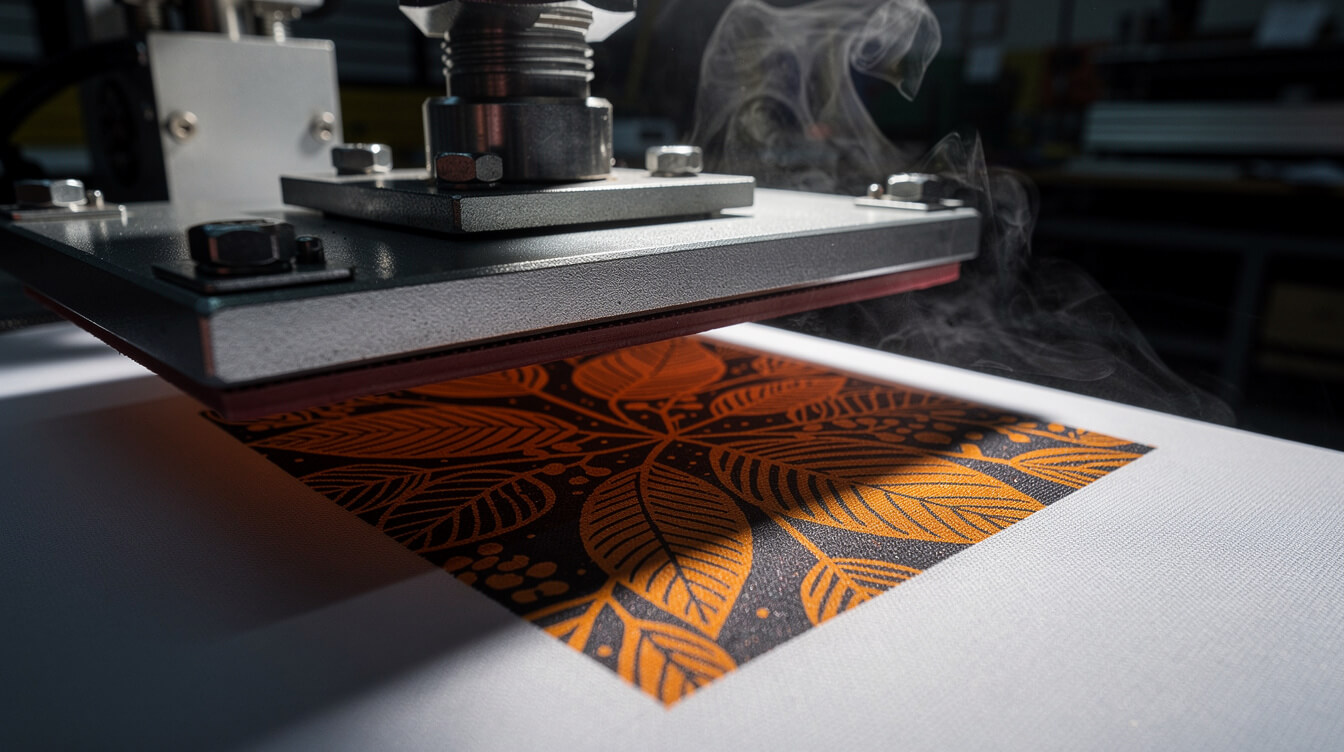
Most POD table runners use dye sublimation, and understanding how sublimation works on this substrate is important for setting seller and buyer expectations correctly.
Sublimation works by converting dye into a gas under heat and pressure (typically 380-400°F), which then bonds with the polyester fibers at a molecular level. The result is a color that does not sit on top of the fabric — it becomes part of the fiber itself. This means the print will not crack, peel, or fade with normal washing the way screen-printed or heat-transfer designs do. Colors are vibrant, photographic quality is achievable, and edge-to-edge coverage is possible with no color limits.
The critical limitation: sublimation only works on fabrics with at least 80% polyester content. Cotton, linen, and other natural fibers do not have the chemical structure to bond with sublimation dye. A seller who tries to source cotton table runners and run them through a sublimation process will end up with washed-out, off-color prints that fade in the first wash. If your supplier is offering sublimated table runners on “natural fabric,” they are almost certainly using a polyester-blend that mimics the look of linen — this is fine for the product, but be transparent about the substrate with buyers.
Some providers offer digital print on cotton-blend fabric using inkjet-style direct-to-fabric methods. This expands substrate options but typically produces less vibrant colors than sublimation and may have different care requirements. For most retail POD sellers, sublimated polyester is the better starting point: it is more durable, requires less buyer education about care, and produces images that photograph better for product listings.
Design specifications for table runners vary by provider but typically require a print file at 150 DPI minimum at the final output size. A 14″x72″ table runner at 150 DPI requires a file at 2,100×10,800 pixels. At 300 DPI the file becomes very large — confirm with your provider what their maximum upload size and recommended resolution are before building a design library.
Unit cost math at 1, 10, and 50 units — and what $25-45 retail actually returns

Smash print-on-demand. Join the engine room.
One short email a week. Real numbers, real teardowns, the unfiltered economics behind every move.
The unit economics of table runners make them a mid-tier POD product. They are not as high-margin as apparel or wall art at the top end, but the demand profile — wedding and seasonal peaks with real repeat potential — makes them worth the catalog slot.
Here is a realistic cost table for a standard 14″x72″ sublimated polyester table runner through a Printify network vendor:
- 1 unit: $12-16 base cost + $5-8 shipping = $17-24 landed. At $35 retail, that is 31-51% gross margin, or $11-18 gross per sale.
- 10 units (same customer or batch): Some providers offer volume pricing starting at 6-10 units. If the base drops to $10-13, the gross margin at $35 retail improves to 36-57%.
- 50 units: At this scale, a seller might consider a white-label fulfillment partner or direct manufacturer rather than Printify, where minimum order costs at the 50+ unit tier can drop to $6-9/unit. The gross margin at $35 retail hits 60-71%, but inventory risk increases.
At a $35 AOV on the single-unit retail model, a POD seller doing 100 orders a month generates $3,500 in revenue and roughly $1,100-1,800 in gross profit before marketing and platform fees. That is a reasonable contribution from a single product category, especially when seasonal peaks push that number significantly higher.
Bundle pricing unlocks better economics. A wedding table runner set — runner plus matching napkin rings or a coordinated placemat — can push the AOV to $55-75, more than doubling the gross dollar margin per transaction. If your provider network supports the complementary products, building sets is the most direct path to improving table runner margin. The same bundle logic applies to custom blanket POD sellers who pair blankets with pillow covers for gifting sets.
MEGA automates the provider selection and cost lookup step entirely — including surfacing which Printify vendors have the best base cost for a given product category in a given region, before a listing is ever built. That beats running the numbers manually in a spreadsheet every time a new product category appears.
The Shopify 1% fee on a $35 AOV product — why WooCommerce wins harder at this price point
The Shopify 1% platform override (applied on top of payment processing fees on lower-tier Shopify plans) is a fixed percentage of revenue, which means it disproportionately hurts low-AOV products. Table runners at $30-45 are exactly in the zone where the override is most painful relative to the gross margin available.
Here is the math at different volumes:
- 100 orders/month at $35 AOV: $3,500 revenue. Shopify override: $35/month. That is $420/year in pure platform tax on a product category generating $3,500/month.
- 200 orders/month at $35 AOV: $7,000 revenue. Shopify override: $70/month = $840/year.
- 500 orders/month at $35 AOV: $17,500 revenue. Shopify override: $175/month = $2,100/year.
WooCommerce charges no platform override. The fixed hosting and plugin overhead for a WooCommerce store is typically $15-30/month regardless of revenue volume. At 200 orders/month, that is a $40-55/month cost advantage over Shopify — which compounds into $480-660/year that stays in the seller’s pocket.
The personalization angle makes WooCommerce even more attractive for table runners. Wedding buyers want a name and date. Family buyers want a family surname. Airbnb hosts want a property name. All of these require a text input or file upload field on the product page. WooCommerce handles this natively through product add-ons without requiring a separate paid app. On Shopify, personalization fields typically require a third-party app at $19-49/month — an additional overhead that further erodes the thin-margin table runner economics.
For a full breakdown of how this math plays out across revenue levels, the WooCommerce vs Shopify for POD sellers post covers the fee calculation at 5 different revenue milestones.
Two demand peaks every POD table runner seller should plan for
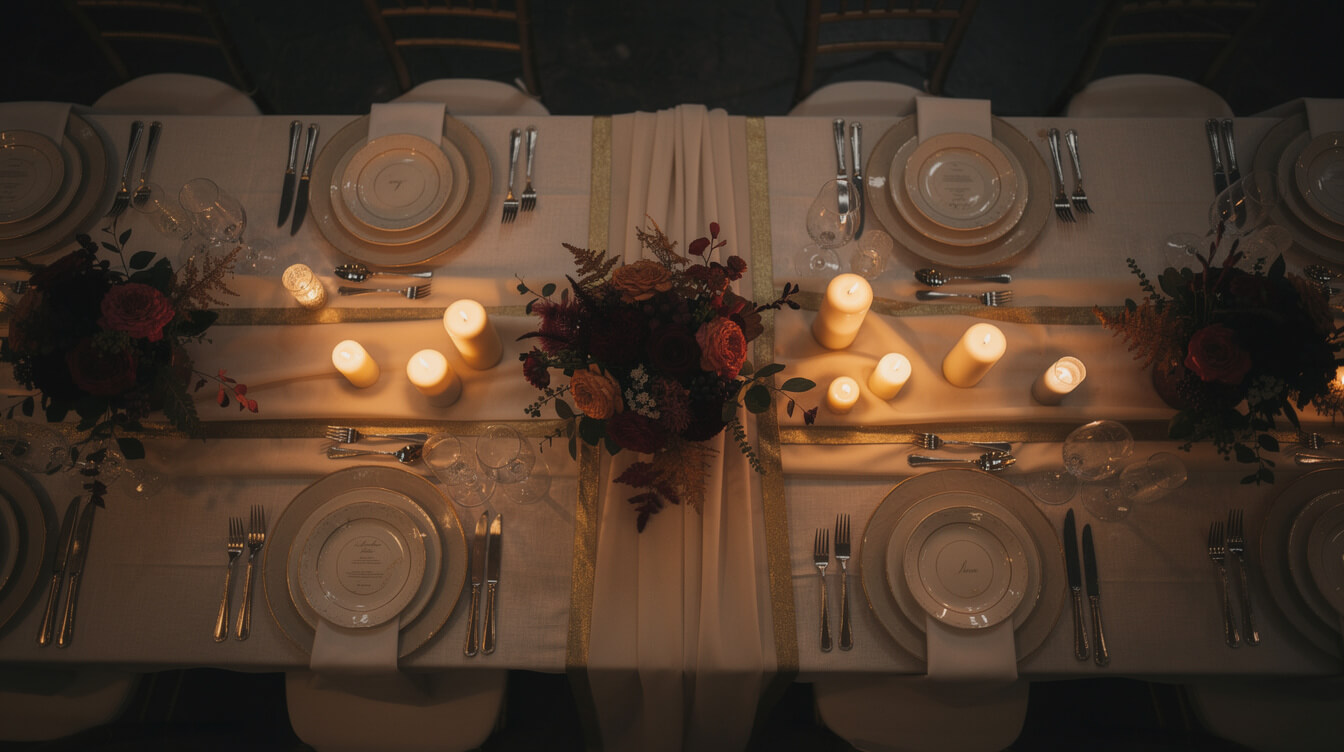
Table runners have two distinct demand windows, and a seller who plans around both can build a product category that earns consistently rather than sporadically.
Peak one: wedding season (March-June)
Wedding receptions are the single largest driver of custom table runner purchases. Couples want personalized runners with their names and wedding date for the head table, the gift table, or throughout the reception venue. The typical wedding order is 2-6 runners, and buyers are researching 3-6 months before the wedding date.
This means the traffic peak for “custom table runner wedding” keywords begins in January and February (engagement season, early planning), with purchase intent peaking in March-May for spring and summer weddings. A seller whose listings are not indexed and ranking by January misses a significant portion of this window. For Q1 revenue, table runner listings should be live by late November of the prior year.
Peak two: holiday home decor (October-December)
The second peak is the Q4 holiday season. Thanksgiving table decor, Christmas dining room setups, and New Year’s entertaining all drive demand for seasonal table runners. Unlike wedding orders (which are one-time, high-intent purchases), holiday runners can become annual repeat purchases if a seller builds designs that buyers want to refresh each year.
Holiday runner listings should be live by September to allow Google indexing time. October-November is the purchase window. Designs that are season-specific — Thanksgiving harvest themes, Christmas traditional, or winter modern — convert better than generic year-round designs because buyers are searching with specific seasonal intent.
Beyond these two primary peaks, smaller demand windows exist around Valentine’s Day, Easter, and back-to-school periods. A table runner catalog with 15-20 designs across these occasions can generate steady low-volume revenue in the off-peak months while capturing the two major spikes. The same planning discipline applies to custom drinkware POD sellers who navigate Q4 gifting demand across multiple seasonal windows.
Niche verticals worth building table runner collections around
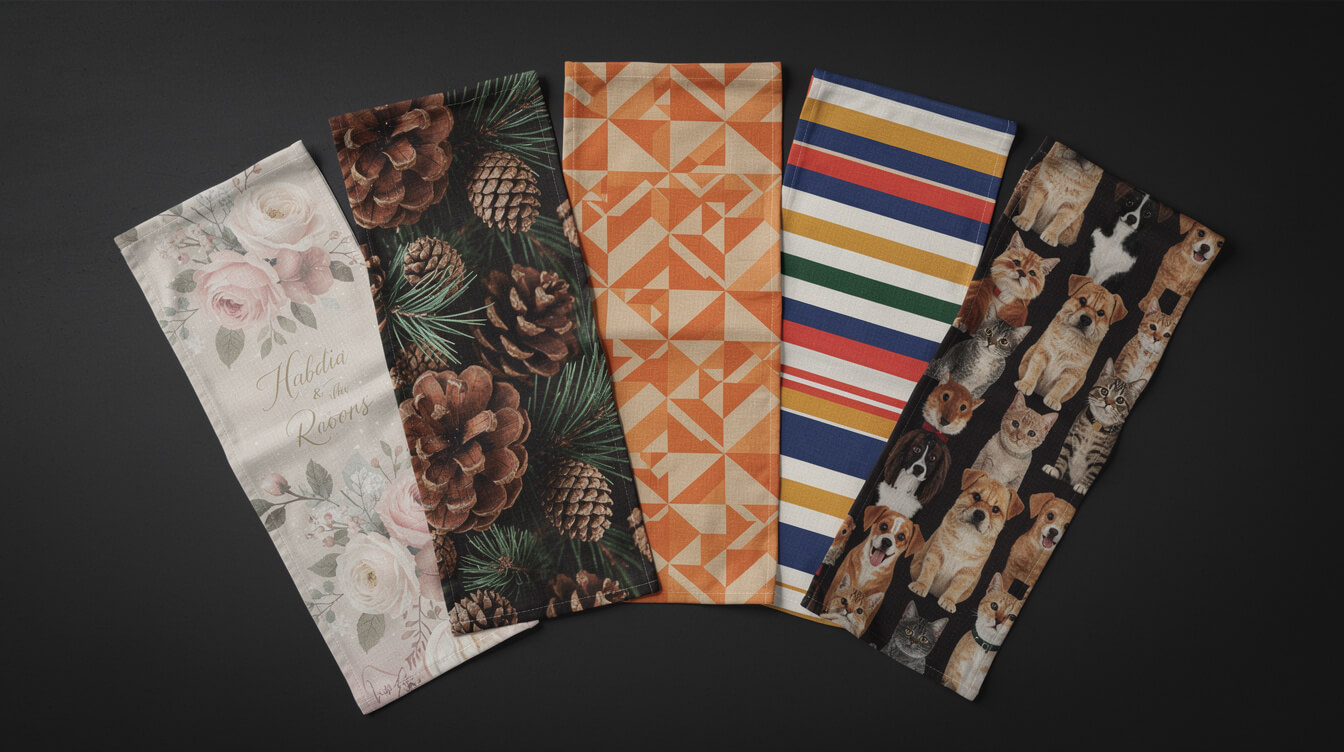
Not all table runner niches are equal. Some have higher search volume, some have better AOV, and some have more loyal repeat buyers. Here is a breakdown of the verticals most worth pursuing.
Wedding personalization
The highest-volume niche, with the best-quality buyer intent. A buyer searching “custom table runner wedding names and date” is ready to purchase, not just browsing. The design requirements are straightforward: clean typography, a name and date text field, and elegant colorways that photograph well for a venue. Gross margin is stable because these buyers are not price-comparing across 20 stores — they want a specific product with specific text.
Seasonal holiday and home decor
The easiest repeat-purchase niche. A buyer who loved their Halloween table runner will return next year. A Thanksgiving harvest runner and a Christmas plaid runner from the same store can generate two Q4 purchases from a single customer. Design investment pays back over multiple seasons.
Restaurant and hospitality branding
A B2B-adjacent niche with real volume potential. Independent restaurants, boutique hotels, bed-and-breakfasts, and Airbnb superhosts want branded or themed table runners that make their dining experience distinctive. These buyers often want 4-10 runners per order — enough to cover every table in a small dining room — and are willing to pay $40-60 per piece because it is a business expense, not a personal purchase. This is the closest a retail POD seller gets to B2B economics without needing a wholesale setup.
Sports fan home decor
Fans who have decorated their living rooms and man caves with team colors will also want team-themed dining room decor. Non-licensed original team-color designs (not reproducing official logos) are the path here. A seller who already has team-color apparel or wall art designs can extend those into a table runner SKU with minimal additional design work.
Pet portrait table decor
The pet niche extends into every home product category. A golden retriever owner who bought a custom dog portrait blanket is a strong candidate for a matching table runner. Breed-specific designs or personalized pet portrait runners convert well in the pet owner gift economy.
Farmhouse and boho home aesthetic
A design-driven niche rather than a personalization-driven one. Sellers who create table runners with farmhouse linen aesthetics (using polyester that mimics the texture of natural linen), boho geometric patterns, or Scandinavian minimalist motifs can capture buyers who are decorating their dining rooms with a specific interior design language. These buyers are looking for a product that matches their home aesthetic, not just their name on a piece of fabric. Etsy competitors are strong in this space, which means a WooCommerce seller with better SEO and faster Google indexing can displace them over time.
What to do next: validate your provider, build 3-5 anchor designs, time your launch
Custom table runners reward sellers who plan the launch rather than adding them as an afterthought. The category has two clear demand peaks, a manageable unit cost at single-order volumes, and a SERP that is almost entirely occupied by B2B trade-show vendors who are not competing for the retail buyer. That is the structural advantage: you are not fighting Wayfair or Amazon for the home decor buyer. You are filling a gap that the incumbent results have completely ignored.
Three steps to launch well. First, confirm provider availability — go into Printify’s product creator and verify a table runner SKU exists in your region at the dimensions you want to sell. Second, build 3-5 anchor designs before publishing listings: a wedding runner, a Christmas runner, a Thanksgiving runner, and one or two design-aesthetic runners give you enough catalog depth to test what your specific audience responds to. Third, publish by September for Q4 holiday traffic and by November for the following year’s wedding season. Both windows require indexing lead time that most sellers underestimate.
The combination of seasonal demand clarity, an underserved SERP, and a product with real personalization upside makes custom table runners a strong addition to a POD catalog that already covers apparel and standard home goods.
Implement AI. 30x your throughput. Get a 30-min call with the founder.
Drop your details and book a free 30-minute discovery call. Personalized advice on your POD stack, your margin, and where AI fits. No pitch, no fluff.