Custom mouse pads for POD sellers: which providers carry them, what sublimation costs, and the desk niche math
Custom mouse pads are one of the quietest product categories in print on demand — quiet because almost nobody in the POD seller community is writing about them. Search “custom mouse pad” and you get Walgreens Photo, Walmart Photo, and InkedGaming. No editorial. No unit cost breakdowns. No provider comparisons for sellers who want to drop-ship these without touching inventory. That gap is exactly where this article lives.
If you run a POD store on WooCommerce or Shopify and you have not added custom mouse pads to your catalog, the math here will probably change your mind. The product is simple to produce, ships flat, has near-zero defect rates, and fits a buyer profile — gamers, remote workers, gift shoppers — who already spends freely on desk accessories. This guide covers what providers carry them, how sublimation printing works on the rubber-backed fabric, what the unit cost looks like at one unit versus fifty, how to price for margin, and which niches actually convert.
What custom mouse pads POD sellers can actually offer
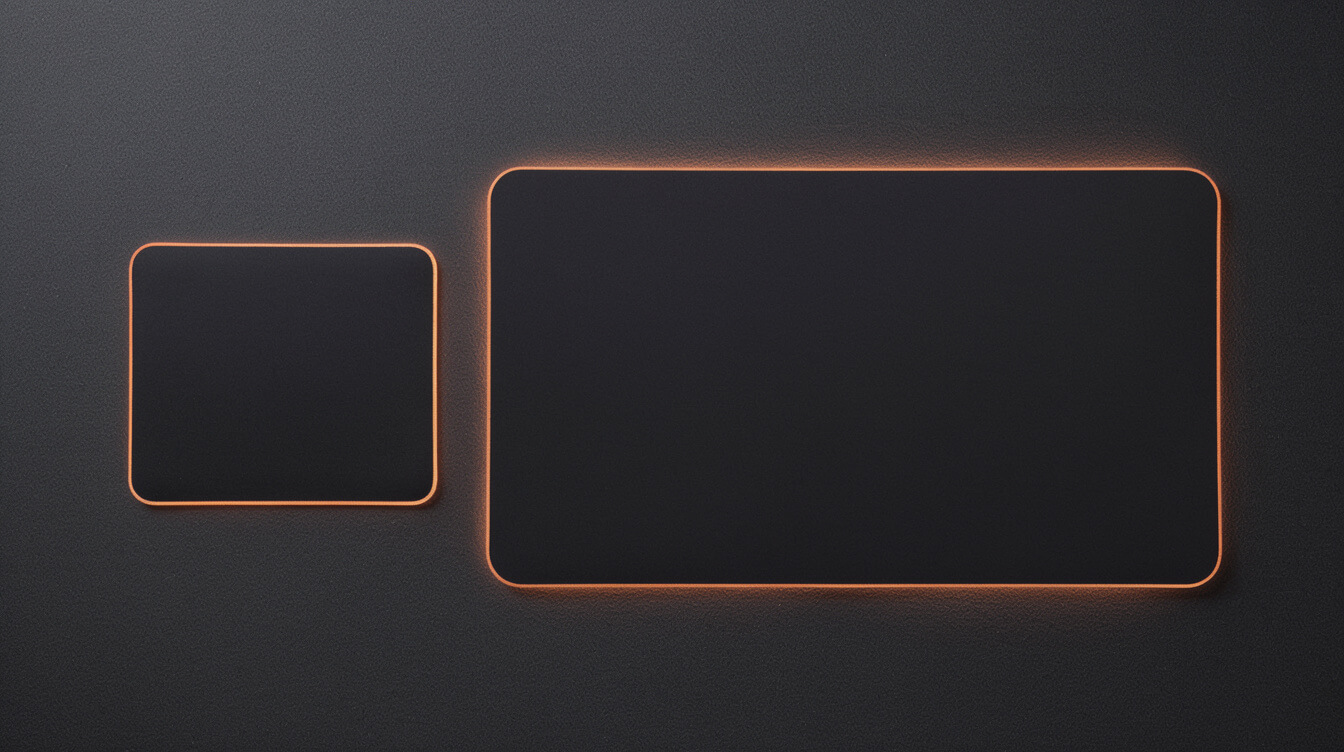
Mouse pads sold through print-on-demand fall into three physical formats, and the format you choose determines your price point, your buyer, and your margin.
Standard desk pad (9×7.75 inches). This is the default format — the rectangular pad most people picture when they hear “custom mouse pad.” It fits on any desk, ships in a flat poly mailer, and has a base cost that stays low enough to compete with Amazon listings at $15-18 retail. The small surface area means the design has to do a lot of work, but for niches like pet portraits, anime fan art, or sports team logos, a strong graphic on a standard pad is enough.
Extended desk mat (36×18 inches). This is where margins open up. An extended desk mat covers the full desk surface — keyboard, mouse, and everything between. It commands $35-55 retail, and buyers in the gaming and work-from-home segment will pay it without hesitation. Production cost is higher, but the AOV lifts your revenue per order meaningfully. Any provider that offers desk mats usually prints them via the same sublimation method as standard pads, so the design workflow is identical.
Gaming XL mat. Some providers carry an extra-large format — typically around 36×18 or slightly wider — marketed specifically at the gaming audience. InkedGaming built an entire brand around XL mats at $49.99 and up. If you are targeting esports streamers or high-end gaming setups, the XL format is worth adding as a premium SKU alongside your standard and extended options.
The key insight for product strategy: do not list only the standard pad. Offer all three sizes at different price points. A buyer who finds your gaming design and only sees one size will either buy or not. A buyer who sees three sizes — standard at $18, extended at $38, XL at $55 — is far more likely to choose the version that fits their budget and upgrade to a higher AOV than you expected.
Which POD providers carry custom mouse pads

Not every POD platform carries mouse pads, and the ones that do vary significantly in format options and production speed.
Printful. Printful carries sublimation-printed mouse pads in standard and extended desk mat formats. Their base cost for a standard 9×7.75″ pad runs approximately $7.95-9.95 depending on your tier. Extended desk mats are priced higher, in the $16-22 range. Printful’s North American and European production centers both handle mouse pads, which keeps shipping times reasonable for US and EU buyers. The Printful mock-up generator includes mouse pad previews, which matters for your store listings.
Printify. Printify connects you to multiple print partners, and several of them carry mouse pads. The pricing varies by partner — some run as low as $5-7 for a standard pad, which gives you more margin headroom at the same retail price as Printful. The tradeoff is production consistency. When you source from a single Printify partner, consistency is predictable. When orders route across multiple partners (which can happen on Printify unless you manually lock a preferred partner), quality can vary.
Gooten. Gooten carries custom mouse pads through their catalog. Gooten is less commonly discussed in the POD seller community, but their pricing is competitive and they offer integrations with WooCommerce and Shopify. If you are already using Gooten for other products, adding mouse pads is a natural extension without requiring a new vendor relationship.
SPOD (Spreadshirt). SPOD offers mouse pads with their standard 48-hour production guarantee. Their coverage is strongest in Europe, so if your buyer base skews EU, SPOD is worth considering. Their pricing and design tool are accessible, though their catalog is less comprehensive than Printful’s on the accessories side.
For most sellers starting with mouse pads: Printful is the low-friction entry point. The catalog is clear, the mock-ups are solid, and the production reliability is proven. Once you have validated demand, you can evaluate whether Printify partners offer better margin at the volume you are doing.
How sublimation printing works on mouse pad fabric
Understanding the print method matters because it affects which designs will look great, which will look flat, and what color behavior to expect across different providers.
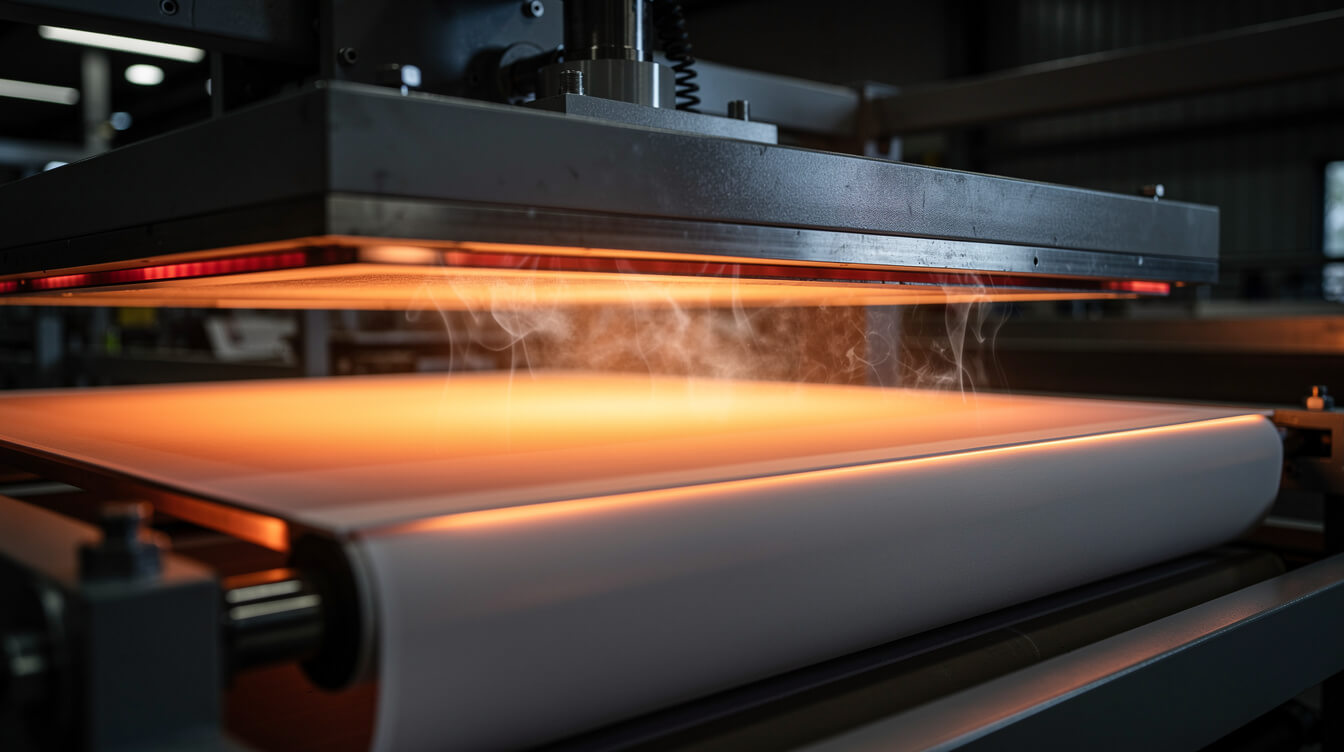
Mouse pads use dye sublimation — the same method used on polyester apparel, mugs, and most soft goods in the POD catalog. The process works in two stages. First, your design is printed in reverse onto transfer paper using sublimation dye inks. Then, a heat press applies heat and pressure simultaneously. Under heat, the dye converts from solid to gas and bonds chemically with the polyester fibers. When the pad cools, the dye is permanently fused — not sitting on top of the fabric, but embedded inside it.
The result is a print that will not peel, crack, or fade with normal use. Sublimation is washing-machine resistant on polyester fabric, though mouse pads are more commonly wiped clean than washed. The edges of a well-produced mouse pad have a clean, stitched hem that locks the polyester fabric to the rubber base and prevents fraying.
The rubber base matters more than sellers often realize. Cheap rubber bases tend to curl at the edges over time, especially in warm or humid environments. Higher-quality pads use a dense anti-slip rubber that stays flat. Printful and most major providers use adequate rubber for their pads, but if you source through a Printify partner, reading their product spec sheet before committing is worth the ten minutes.
Design implications. Sublimation on mouse pads is edge-to-edge — the entire surface of the pad is printable, including the edges up to the stitched border. You can run a design all the way to the edge, which is not possible with DTG on apparel (where you always have a bleed zone). Full-bleed designs on mouse pads look premium and photograph well for store listings.
Colors in sublimation print best on white or very light base fabrics. Mouse pad bases are white polyester under the surface, so you get accurate, vibrant color across the full spectrum. Neon colors are somewhat saturated by the dye-bond process, so designs with neon elements may print at 80-90% of screen vibrancy. For most customer niches this is irrelevant, but if you are designing for customers who will notice the difference, test a sample before scaling.
Unit cost math: what Printful and Printify charge per unit

Smash print-on-demand. Join the engine room.
One short email a week. Real numbers, real teardowns, the unfiltered economics behind every move.

Here is where POD economics get real. Mouse pads have a relatively low base cost, which makes them attractive — but the unit economics look different depending on whether you are selling one at a time or building volume.
Standard 9×7.75″ mouse pad — representative base costs:
- Printful: approximately $8.95 per unit at 1 unit, no volume discount below 25 units
- Printify (competitive partner): approximately $5.50-6.50 per unit at 1 unit; volume pricing tiers available through some partners
Extended desk mat (36×18″) — representative base costs:
- Printful: approximately $18.95-22.00 per unit depending on current production pricing
- Printify (competitive partner): approximately $14-16 per unit depending on partner selection
These are approximate figures. Printful and Printify both update pricing based on production costs and negotiated rates. Check current pricing in their respective product catalogs before building your margin model.
Shipping. Mouse pads ship flat in a poly mailer. A standard pad ships domestically (US) for approximately $4-5 via Printful. Extended desk mats require a larger flat mailer and typically cost $5-7 to ship domestically. International shipping is significantly higher — EU buyers add $10-15 in shipping cost, which affects how you price or whether you restrict shipping zones.
At 1 unit (standard pad, Printful): Base $8.95 + Shipping $4.50 = $13.45 landed cost. At $22 retail, that is $8.55 gross margin before platform fees.
At 10 units per month: Unit costs hold at the same base rate on most POD platforms. Unlike traditional manufacturing, POD does not offer meaningful volume discounts below 25-50 units. This is a known ceiling of the model — but the benefit of no MOQ offsets it for most early-stage sellers.
At 50 units per month: Some Printify partners offer tiered pricing at volume. If you are moving 50 standard pads per month, negotiating a partner-direct rate or exploring Printify’s premium subscription (which includes base cost discounts) can improve margin by 10-15%. At $6.00 base cost versus $8.95, the math on 50 units per month is $147.50 in additional margin monthly — over $1,700 per year from that single product SKU.
Pricing for your store: retail targets at $18-35 depending on size
The pricing model for mouse pads follows a straightforward logic: standard pads at $18-24, extended desk mats at $32-45, XL gaming mats at $45-65. Here is why those numbers work and why undercutting them is a mistake.
Standard pad at $22 retail. At $8.95 base + $4.50 shipping, your gross margin is $8.55. That is a 38.9% gross margin before platform fees. On Shopify at $22 retail, the 1% transaction override costs $0.22. On a WooCommerce store, that $0.22 stays in your pocket. Multiply by 50 orders per month and the difference is $11/month — not dramatic on its own, but it compounds across every product in your catalog.
Buyers comparing custom mouse pads against Amazon listings at $12-15 (mass-produced, no custom design) will pay $20-24 for a design they actually want. The premium for personalization holds across mouse pads just as it does for custom mugs or custom socks. The key is presenting the product well — good mock-ups, clear size comparisons, and a reason for the specific design to exist.
Extended desk mat at $38-42 retail. This is where the margin math gets interesting. At $19.50 base + $6.00 shipping for a desk mat, your landed cost is $25.50. At $40 retail, your gross margin is $14.50 — a 36.25% margin, similar to the standard pad percentage-wise, but nearly double the absolute dollar amount per order.
The desk mat buyer is not the same as the standard pad buyer. They have already decided they want a premium desk setup. They are comparison shopping between $40-55 extended mats on different sites. If your design is distinctly better than a generic competitor listing, you will convert at a premium price with very little friction.
Multi-pack or bundle strategy. If you are targeting the corporate gifting or sports-team market, consider bundling three standard pads at a price slightly below 3x single-unit retail. Team buyers ordering pads for an office event or a gaming LAN party do not want to place multiple individual orders. A simple pack option captures that buyer without requiring a custom quoting workflow.
MEGA automates the research-to-listing pipeline, including generating product titles, SEO metadata, and design prompts for desk accessory niches. If you are launching 10 mouse pad designs across three size variants, the time savings on title and description generation alone covers the subscription cost.
The Shopify 1% fee math at low AOV

The Shopify 1% platform override fee is a documented cost that Shopify charges on top of payment processor fees for stores not using Shopify Payments. For stores on the Basic plan using a third-party processor, the rate is 2%. On the Shopify plan, it is 1%. On Advanced, it is 0.5%. Many sellers absorb this as a cost of doing business. Here is why it hurts more on low-AOV products than it does on high-ticket items.
At $55 (a custom hoodie), the 1% override is $0.55. That is 1% of an $8-12 gross margin — roughly 5-7% of your margin erased.
At $22 (a standard custom mouse pad), the 1% override is $0.22. That sounds like nothing. But consider the full picture alongside Shopify’s monthly platform fees. Shopify Basic at $39/month plus the 2% transaction fee on 100 mouse pad orders at $22 = $44 in transaction fees alone. Total platform cost: $83/month on $2,200 in gross revenue. That is 3.8% of revenue absorbed by the platform before payment processing costs.
Shopify Payments can reduce the transaction fee to zero — but Shopify Payments is not available in all countries (including Taiwan, where the MEGA team operates). Sellers who cannot use Shopify Payments pay that fee on every order. For a desk accessory store doing volume on $18-28 AOV products, the fee structure is worth modeling before committing to a platform.
This is not an argument against Shopify. It is an argument for running the numbers with your actual AOV, your actual volume, and your actual available payment processors. Many sellers who do this calculation correctly move desk accessories — and eventually their full catalog — to WooCommerce. Others find Shopify’s conversion tools and customer experience justify the cost. The math is specific to your situation. Make sure you have run it.
WooCommerce advantage for desk accessory sellers

If you are already selling POD products on a WooCommerce store, adding mouse pads to your catalog is a zero-cost extension. If you are evaluating platforms for the first time, desk accessories are a category where the WooCommerce math is worth understanding before you commit to a monthly subscription.
No platform transaction fee. WooCommerce is free software. You pay for hosting ($5-20/month on most managed WordPress hosts) and a payment processor (2.9% + $0.30 per transaction with Stripe or compatible processors). There is no Shopify-style platform override on top of processor fees. On 100 mouse pad orders at $22, that saves you $44/month in platform transaction fees versus Shopify Basic.
Plugin-based extensibility. WooCommerce connects to Printful and Printify through their official plugins. Both integrations are free. Order routing, fulfillment status syncing, and product variant creation all happen the same way they do in Shopify — the difference is that you own the infrastructure and there is no recurring app fee for core fulfillment integration.
Owned customer data. When someone orders a custom mouse pad from your WooCommerce store, their email, order history, and lifetime value data live in your database on your server. You can segment these buyers for retargeting, add them to email automations, and build repeat purchase flows without paying a platform a fee for the privilege.
For desk accessory niches in particular — gaming setups, WFH aesthetics, corporate gifting — repeat buyer potential is real. The person who buys a custom desk mat is often also interested in a matching custom phone case in the same aesthetic, or a custom blanket for their gaming setup. Building that cross-sell relationship on owned infrastructure means the platform takes nothing out of every follow-up sale.
Niche verticals where custom mouse pads actually sell
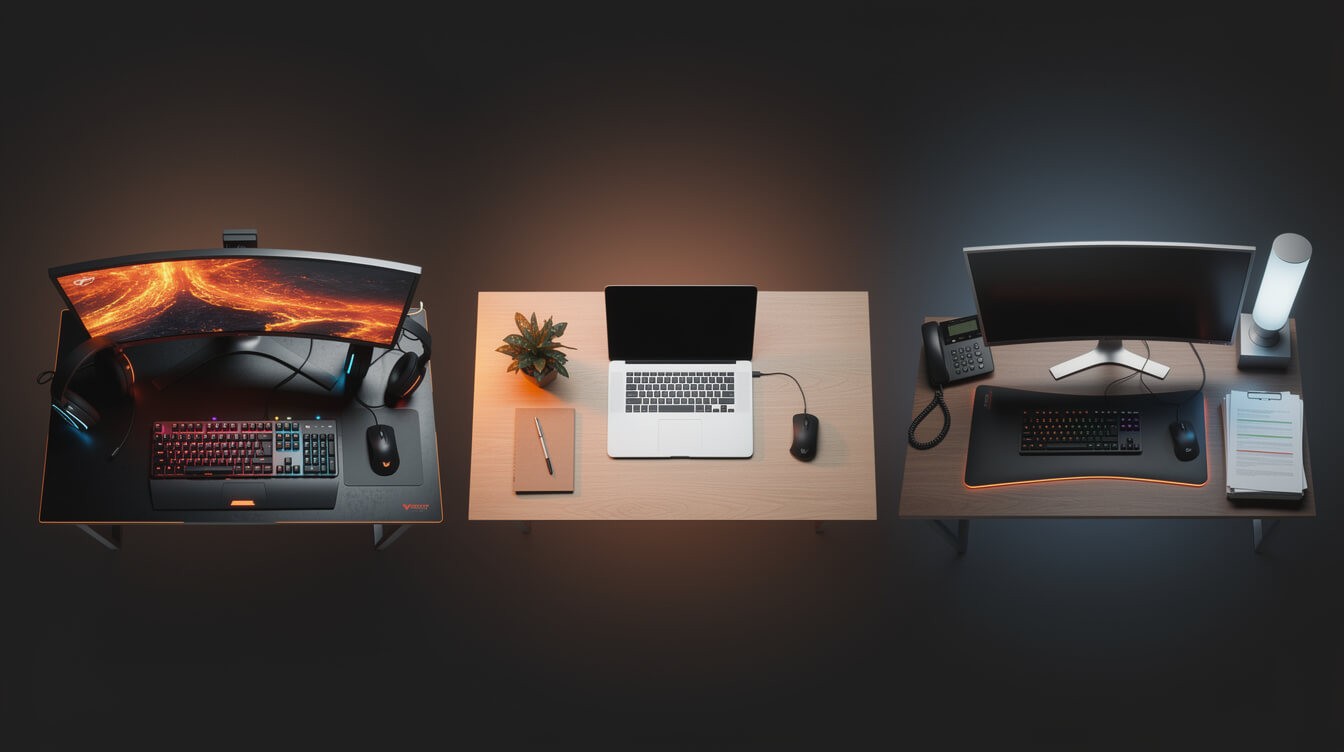
Mouse pads are not a commodity product if you approach them with a niche strategy. The buyers who pay $22-45 for a custom mouse pad are not buying generic desk accessories — they are buying something that represents an identity, a passion, or a relationship. Here is where that demand actually lives.
Gaming and esports. The gaming community has always had a custom mouse pad culture. Team logos, game-specific art, streamer branding, and esports aesthetics all sell reliably in this vertical. Gaming buyers research products on Reddit, YouTube, and Discord before they buy, so your SEO and social presence matters. Extended desk mats at $38-50 are the preferred format in this niche — standard pads read as an afterthought.
Work-from-home aesthetics. The remote work shift created a buyer segment that invests in their home office setup. Custom desk mats with minimal, motivational, or nature-inspired designs appeal to this buyer. They are typically buying for themselves, not as a gift, which means your store description needs to address self-purchase logic: “Upgrade your desk. Show your space some personality.” WFH buyers often cross-purchase with desk accessories like custom mugs and cable management products.
Corporate desk gifts. Companies ordering custom mouse pads for employee gifts or conference swag are buying at volume. A buyer ordering 20 pads with a company logo for an offsite retreat is a $440 order at $22/pad — versus a single $22 consumer order. If you can position your store for this buyer (clear product photography, a simple bulk inquiry option, and professional listing copy), you will see occasional high-value B2B orders from what is primarily a B2C catalog.
Pet portrait mouse pads. Custom pet portrait products are one of the most reliable gift categories in POD. A mouse pad with someone’s dog or cat on it is a $22-25 impulse gift that converts well during birthday and holiday windows. The same customer who buys a pet portrait blanket is a natural repeat buyer for a matching desk pad with the same photo. Positioning both products together in a “pet portrait bundle” lifts AOV.
Anime and fan art. Fan merchandise on mouse pads is a large and persistent category. Platform terms of service prohibit direct copyright infringement, but original fan-art derivatives in an artist’s style are commonly sold. If you are working with artists or creating original character art, mouse pads are a natural extension of any artist-merchandise catalog alongside prints, stickers, and apparel.
Sports teams and school groups. Youth sports teams, school clubs, and recreational leagues order custom merchandise in small runs. A baseball team of 12 players ordering matching custom mouse pads is a $264 order at $22/pad. This buyer is not browsing — they are searching specifically for custom mouse pads for their team with purchase intent. Good SEO on your product pages, clear turnaround time communication, and a straightforward ordering experience convert this buyer reliably.
Frequently asked questions about custom mouse pads in print on demand
Do custom mouse pads from Printful hold up over time? Yes. Sublimation-printed mouse pads are durable under normal desk use. The dye-bond printing method is permanent — it does not peel, crack, or wash off. The rubber base stays flat on most surfaces. The stitched edge hem prevents fraying. A well-produced mouse pad should last 2-3 years with regular use.
Can I sell custom mouse pads without a Shopify or WooCommerce store? You can list on Etsy or Amazon Handmade through Printful or Printify’s marketplace integrations. But without an owned store, you are building a business on a platform that can delist you at any time and that captures customer data on your behalf. For desk accessories with repeat purchase potential, owned infrastructure is a better long-term investment.
What image resolution do I need for mouse pad designs? Printful recommends a minimum of 150 DPI at print size. For a standard 9×7.75″ pad at 150 DPI, that is approximately 1,162 x 1,162 pixels minimum. For an extended desk mat at 36×18″, 150 DPI requires 5,400 x 2,700 pixels. If you are using AI image generation and upscaling with a tool like Topaz Gigapixel, you can reach the required resolution. Test a sample before launching to verify print quality at scale.
Is there a minimum order quantity for custom mouse pads via POD? No. Printful, Printify, and most POD platforms fulfill mouse pad orders at one unit. This is the defining advantage of POD over traditional manufacturing, where custom mouse pads from a factory typically require 25-50 unit minimums.
Are extended desk mats worth the higher production cost? Yes, for the right niches. If you are selling to gaming or WFH buyers, desk mats at $38-42 retail carry similar margin percentages to standard pads at $22 but double the gross dollar amount per order. One extended mat sale at $14.50 margin equals 1.7 standard pad sales at $8.55 margin. At any meaningful volume, the AOV difference compounds significantly.
The desk accessory opportunity in print on demand
Custom mouse pads are not a saturated category — at least not from the seller-education side. Every buyer who searches for guidance on how to sell custom mouse pads as a POD product currently finds consumer photo-printing services and gaming retailer listings. There is no authoritative editorial content for POD sellers on this topic. That gap is both an SEO opportunity and a product opportunity simultaneously.
The unit economics work at standard pad prices because the base cost is low, the product ships flat, and the defect rate is near zero. The extended desk mat format works even better because the AOV nearly doubles while the margin percentage holds. And the niche verticals — gaming, WFH aesthetics, pet portraits, fan art, sports teams — are large enough to sustain meaningful monthly revenue without requiring a massive catalog or a media budget.
If you are running a POD store already, mouse pads are a natural adjacent product to whatever you are selling. If you are starting fresh and looking for a desk accessory niche with clear buyer demand and limited educational competition, mouse pads are a solid entry point. Run the numbers with your specific provider, set your retail price for 35-40% gross margin, and create mock-ups that show the design clearly on a realistic desk setup. That is the full playbook.
Implement AI. 30x your throughput. Get a 30-min call with the founder.
Drop your details and book a free 30-minute discovery call. Personalized advice on your POD stack, your margin, and where AI fits. No pitch, no fluff.