Custom onesie for newborn: POD providers, DTG on cotton costs, and the baby shower gift math
Search “custom onesie for newborn” and every result sells to a parent. Kateandmeri ships in two days. RushOrderTees shows Rabbit Skins blanks. Amazon runs product listings. None of these tell you how to build a store that sells them. That gap is where this article lives.
This is the POD seller perspective: which providers stock baby bodysuits at no minimum order quantity, what you keep per sale at $22-28 retail, how the baby shower economy drives repeat purchase behavior, and why the Shopify 1% fee bites harder on low-ticket items than most sellers realize before they see the math. By the end, you will know whether a custom newborn onesie store fits your economics and exactly which niche angle to lead with.
What counts as a custom onesie in a POD context
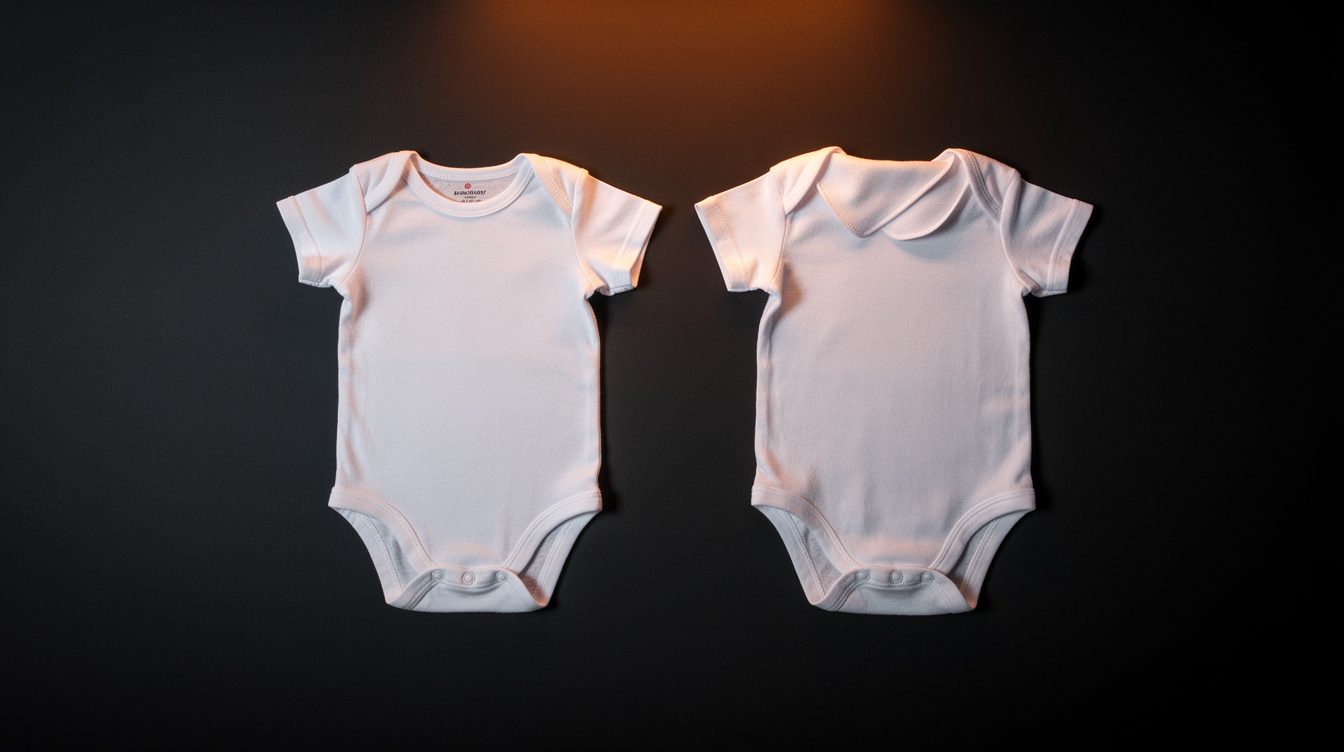
The word “onesie” gets used loosely in retail, which creates confusion when you are sourcing for a POD store. In a print-on-demand context, two distinct products answer to the name.
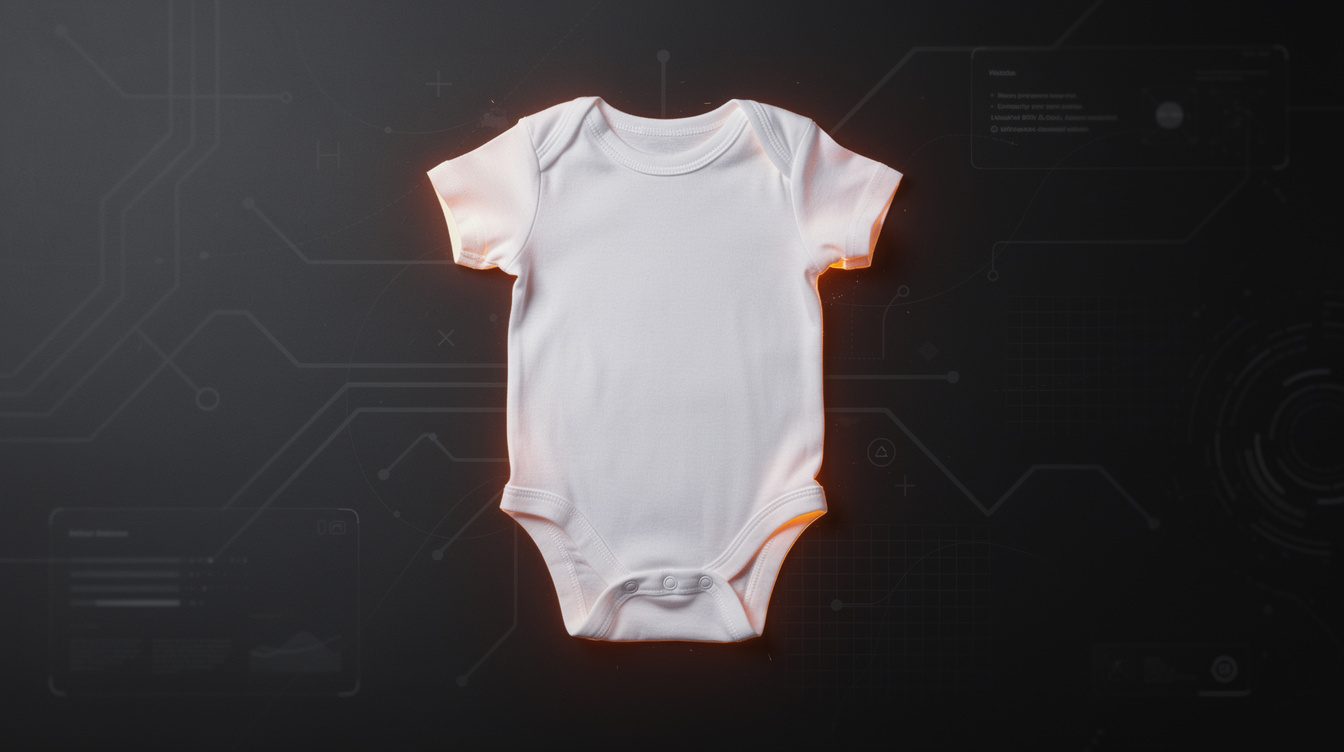
The first is the baby bodysuit — the snap-bottom, short-sleeve or long-sleeve garment that defines newborn and infant dressing. Gerber popularized the form factor. The snaps at the crotch keep the garment tucked, which is why parents buy them by the dozen for newborns through 18 months. This is the product most buyers mean when they search “custom onesie for newborn,” and it is the product this article covers.
The second is the toddler t-shirt — a standard pullover with no snaps, sized for children 2T and up. Some shops sell these as “toddler onesies,” but they are not onesies in the technical sense. POD providers catalog them separately. If you are building a newborn-focused niche store, these are a logical upsell (the same buyer returns when the child outgrows bodysuits), but they are a different product line with different sizing, different print method compatibility, and different demand timing.
For this article: custom onesie for newborn means the snap-bottom baby bodysuit, sizes newborn through 18 months. That is the keyword, the search intent, and the product your buyers expect when they land on your store.
One more distinction worth naming: sublimation-compatible polyester-blend bodysuits versus DTG-compatible 100% cotton bodysuits are not the same product even when they look similar on a product page. The print method determines which fabric works. More on that in section three.
Which POD providers carry custom baby bodysuits
Not every POD fulfillment partner stocks baby bodysuits. Here is the 2026 picture across the major platforms.
Printful carries baby bodysuits as a standard catalog product. The product is a short-sleeve infant bodysuit available in sizes newborn through 18 months. Print method is DTG on a cotton-blend fabric. No minimum order. Fulfilled at Printful’s existing fulfillment centers, so shipping timelines are consistent with their other apparel. This is the most reliable no-MOQ option for a seller building a dropship-first store.
Printify’s partner network also carries baby bodysuits through select vendors. Because Printify aggregates from multiple print providers, availability depends on which vendor you select in the product creator. As of mid-2026, check the Printify product catalog and filter by “baby” to see current vendor options and their print methods. Some vendors offer sublimation on polyester-blend bodysuits; others offer DTG on cotton. The unit costs and base pricing differ by vendor, so compare before committing to a niche store build.
SPOD (Spreadshirt’s fulfillment arm) carries infant bodysuits with fast turnaround times (typically 48-hour production). SPOD’s catalog has shrunk since 2023 and the baby category is thinner than Printful’s, but it remains a viable secondary option if you want a domestic US or European fulfillment source as a backup.
Gooten also has infant bodysuits through their network. Worth checking if you are already using Gooten for other products in the store, since consolidated orders can simplify packaging and customer service.
Printful does NOT carry: toddler onesies (those are in the kids apparel category as t-shirts, not bodysuits), ceramic bibs, or other baby-adjacent accessories under the “onesie” umbrella. Know the distinction in the product creator before you build listings.
For a research-first POD seller, Printful is the right starting point for the newborn bodysuit niche: confirmed no-MOQ, consistent catalog, predictable shipping. Use Printify vendor options if you want to test sublimation on polyester as an alternative print method.
Print method breakdown: DTG on cotton vs AOP sublimation on polyester
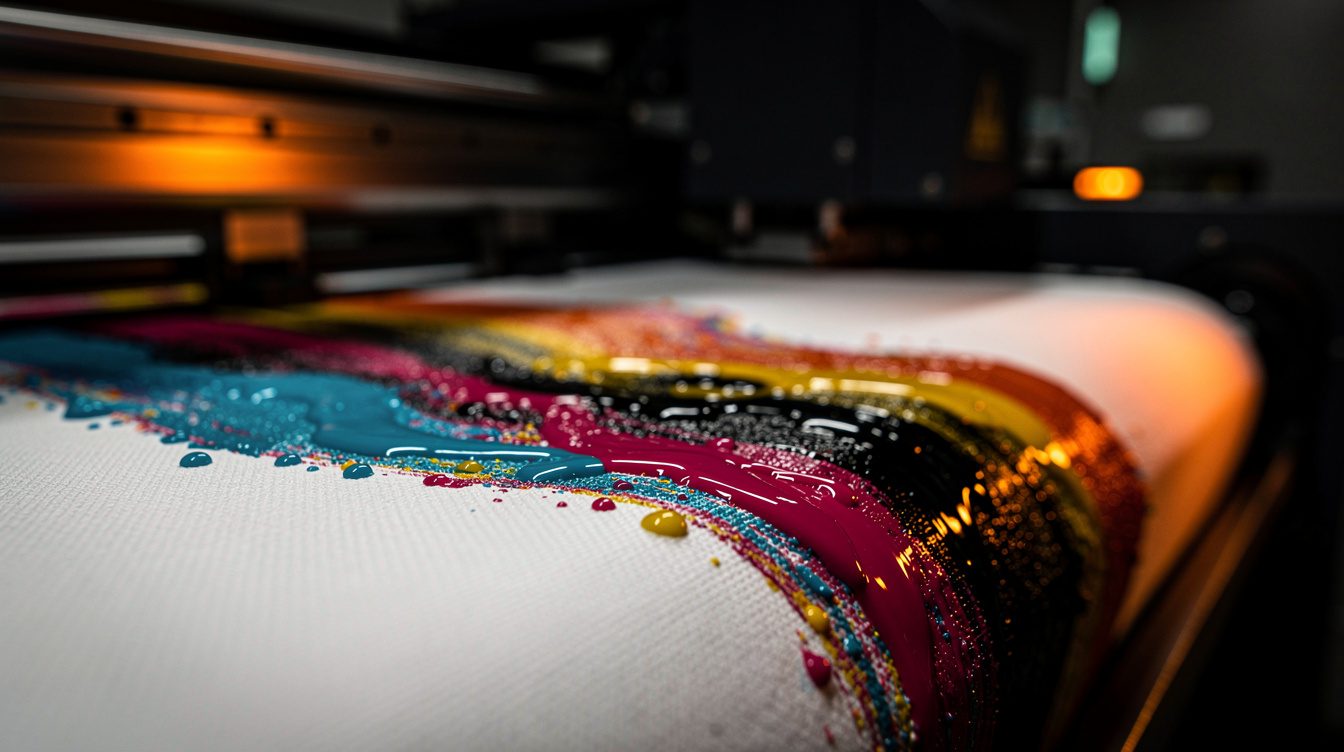
Understanding the print method matters because it affects design compatibility, fabric feel, color vibrancy, wash durability, and the types of designs that actually sell. For baby bodysuits, two methods dominate.
DTG on 100% cotton (or cotton-blend) bodysuits
Direct-to-garment printing jets water-based ink directly onto the fabric. The ink bonds with the cotton fibers. For baby bodysuits, DTG is the dominant print method because cotton is the standard fabric for infant skin comfort — parents specifically look for 100% cotton or high-cotton-content blends when buying for newborns.
What DTG does well: photorealistic prints, full-color art with gradients, small-scale text at readable sizes, dark designs on light fabric, and designs with transparent backgrounds that sit cleanly on the garment.
DTG limitations: Printing on dark cotton requires a white underbase, which adds cost and can slightly affect hand-feel. Very fine detail below 1mm can lose crispness. Colors are slightly softer than sublimation because ink sits on top of the fiber rather than bonding into it at the molecular level.
AOP sublimation on polyester-blend bodysuits
Dye sublimation converts solid ink into a gas under heat (375-400°F) and bonds it permanently into the polyester fiber structure. The result is a full-panel design that cannot crack, peel, or wash off — the color is inside the fabric, not on top of it.
What sublimation does well: edge-to-edge all-over prints, extremely vibrant color saturation, no color count limit, no white underbase on light fabric, and designs that integrate with the garment construction rather than sitting as a patch on the chest.
Sublimation limitations: It only works on 100% polyester or very high polyester-content fabric (80%+). Cotton fibers do not have the molecular structure required for dye bonding. For baby bodysuits specifically, polyester-blend baby garments exist but are less common than cotton in mainstream parenting.
The practical decision: Lead with DTG on cotton via Printful for your core catalog (widest buyer acceptance, standard fabric preference, reliable fulfillment). Add AOP sublimated bodysuits via Printify if you are targeting buyers who want all-over pattern designs — the novelty onesie niche (galaxy prints, tie-dye patterns, full-panel animal designs) where edge-to-edge coverage is the product appeal.
Unit cost math: what you keep per custom onesie for newborn

Smash print-on-demand. Join the engine room.
One short email a week. Real numbers, real teardowns, the unfiltered economics behind every move.
The unit economics for a custom newborn bodysuit store are tight relative to adult apparel but workable at the right price points. Here is the math.
Single-unit dropship via Printful (DTG, cotton bodysuit)
- Base cost (production): approximately $8-11 per unit depending on size and design complexity
- Shipping: $3.50-5.00 to US address (first item, standard fulfillment)
- Total landed cost: $11.50-16 per order
- Suggested retail: $22-28
- Gross margin: $6-16.50 per sale, or 27-59% gross
The wide margin range reflects design complexity (simple single-color art vs full DTG print with white underbase) and retail price confidence. A personalized onesie with a name and birthdate commands $26-28 without resistance. A generic novelty print competes with Amazon and typically prices at $20-22.
Two-pack bundle economics
The bundle is the most reliable way to lift gross dollar margin without changing your supplier. A newborn-to-3-months and 3-6-months two-pack at $44-48 retail gives you $12-22 gross depending on print method and fulfillment cost. The same order ships together from Printful, so shipping cost for the second unit is incremental (typically $1.50-2.50 extra), not double.
Baby shower gifters specifically buy bundles. Parents know babies grow fast, so a two-size gift is more practical than a single onesie. Price accordingly: $44-48 for a two-pack with custom name and birth stats is below what specialty personalization shops charge for a single piece, and you are still competitive.
Gift set add-on potential
A onesie plus matching custom socks plus a bib in a gift set at $55-65 total significantly improves gross dollar margin per transaction, even though each individual item has thin standalone margins. This is the gift niche play: sell a moment, not a garment.
The baby shower and gift economy
Custom newborn onesies are not primarily a baby products purchase — they are a gift products purchase. This distinction shapes your entire marketing and inventory approach.
The buyer is almost always buying for someone else’s baby. Baby shower gifts represent a significant share of total custom onesie demand. The gift buyer is willing to pay a premium for personalization and presentation that a parent buying for their own child might not. That premium is where your margin lives.
When they buy
Baby showers peak between February and May (spring baby season) and again in September and October (fall baby season). These patterns follow birth rate seasonality, which in the US shows peaks in July-September births — meaning baby showers cluster six to nine months prior, in the spring. For a POD seller, this means your spring window (February through May) is the highest-demand period for baby shower gift onesies.
Christmas and holiday season (October through December) creates a second, distinct demand peak for themed baby onesies — “first Christmas,” holiday-pattern all-over prints, and seasonal novelty designs. List these products by mid-September to capture the Google Shopping and organic search index window before peak demand.
Newborns happen year-round, so your catalog stays active outside peak windows. But the gift buyer concentration drops sharply in the summer, which matches what most custom onesie sellers see in their analytics.
Who buys
Four buyer profiles drive most custom newborn onesie revenue:
- Baby shower gift buyers — the core segment. High willingness to pay. Motivated by personalization (baby’s name, arrival date, “little sister,” sports team affiliation). Typically buying 2-4 weeks before the shower date.
- Pregnancy reveal buyers — buying a custom onesie to announce to family and friends. Often pair with a photoshoot. Higher AOV because the onesie is a prop, not just clothing.
- Grandparents — repeat buyers. Once you have the baby’s name on file, they return for each size, each holiday, each milestone. Lifetime value significantly higher than the first transaction suggests.
- First-time parents buying for themselves — lower willingness to pay but higher repeat potential. This buyer tends to buy multiple sizes at once because they have learned that babies grow faster than expected.

Generate your entire custom onesie catalog in one afternoon
MEGA builds the product descriptions, SEO metadata, size variants, and WooCommerce listings for every SKU in your onesie catalog. Research to live listing in under 7 minutes per product.
The Shopify 1% override fee on a $22-28 onesie
The Shopify 1% platform override applies to every transaction on your store, in addition to your payment processor fee and your Shopify subscription. At a $25 average order value, that is $0.25 per transaction. At 200 orders per month, that is $50 per month, or $600 per year — just for the platform tax.
The fee compounds differently depending on your AOV. Here is the math at four revenue levels for a custom onesie store averaging $25 per order:
- 100 orders/month ($2,500 revenue): $25/month Shopify platform override = $300/year
- 200 orders/month ($5,000 revenue): $50/month = $600/year
- 400 orders/month ($10,000 revenue): $100/month = $1,200/year
- 800 orders/month ($20,000 revenue): $200/month = $2,400/year
On a $25 onesie with $8-10 gross margin, that Shopify override eats 2.5-3.1% of your gross profit per transaction. At 400+ orders per month, you are paying Shopify more than most small businesses pay for their accounting software, for the privilege of using their payment infrastructure.
WooCommerce charges $0 platform override. Your fixed costs are hosting ($15-30/month on a quality managed WordPress host), plus any plugins you choose. For a custom onesie store doing $10,000-$20,000 per month in revenue, WooCommerce saves $1,200-2,400 annually on platform fees alone — before counting the Shopify app fees for personalization features that WooCommerce ships natively.
The WooCommerce vs Shopify comparison for POD sellers breaks this down across 5 revenue levels with the full fee stack, including payment processing and app fees. For a newborn onesie store specifically, the WooCommerce personalization edge is significant: WooCommerce supports native text fields for baby name input on product pages without a $19-49/month Shopify app. That app fee alone often exceeds the platform override at low volume.
MEGA handles the WooCommerce product build end-to-end — the research-to-listing pipeline that generates unique product descriptions, SEO metadata, size variants, and personalization fields for each onesie SKU in under seven minutes. That automation matters more at scale: generating 40 onesie variants manually in a Canva-to-WooCommerce workflow takes a full working day. The same output through MEGA’s pipeline takes an afternoon.
Top niche verticals for a custom onesie POD store
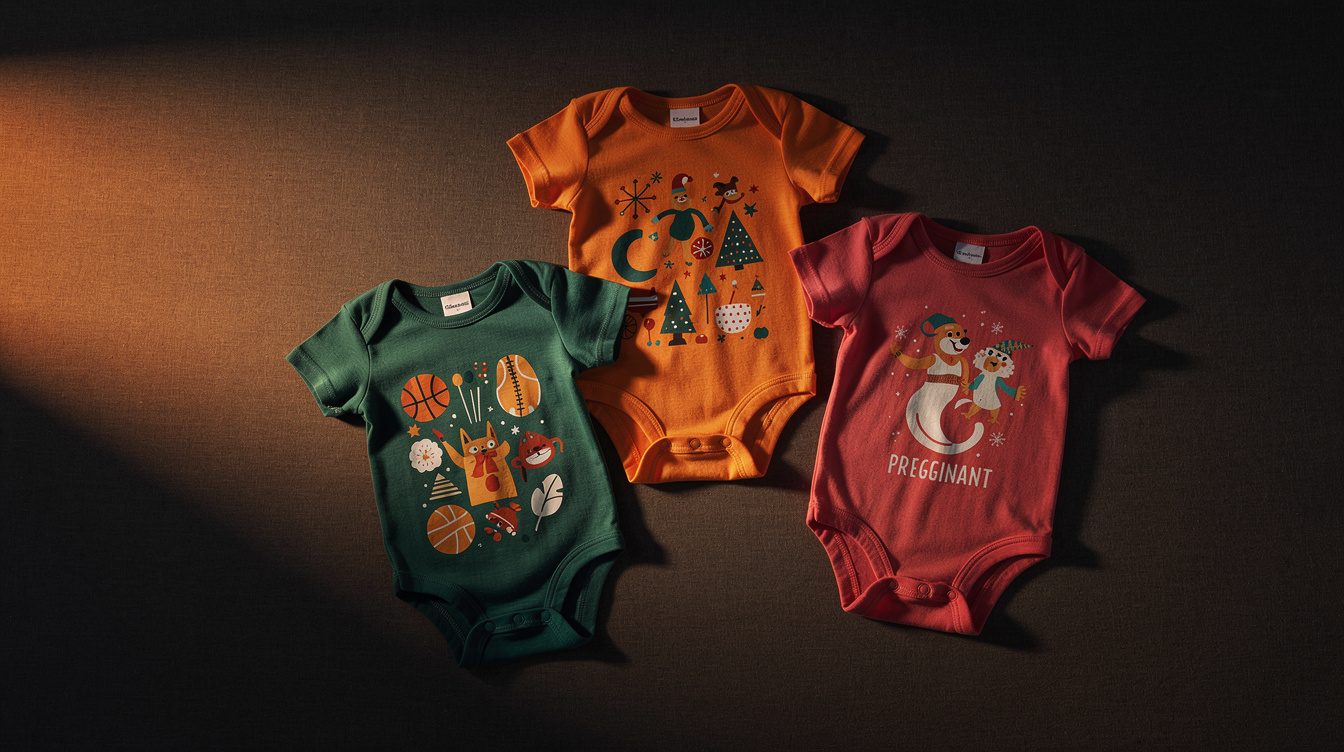
The “custom onesie for newborn” keyword pulls a wide audience. Narrowing your store to a specific niche significantly reduces ad costs and improves organic conversion rate. Here are the verticals with the strongest economics.
Pregnancy reveal and gender reveal
The pregnancy reveal niche has a distinct buyer intent: the onesie is a prop, not a clothing purchase. The buyer wants something visually clear for a photo or video — “We’re having a baby,” sports team rivalries expressed through matching baby gear, or pet sibling announcements. Price sensitivity is lower than in the general gift category because the moment matters. Recommended retail: $26-30 per onesie, or $55-75 for a reveal gift set with matching accessories.
First holiday: first Christmas and first birthday
Milestone onesies are evergreen in search. “First Christmas onesie,” “first birthday onesie,” “my first Halloween” — these terms have consistent year-round search volume with strong seasonal peaks. The advantage for a POD seller is that the designs are relatively simple (text-forward with seasonal iconography) and translate well to DTG on cotton without complex all-over art. Build the catalog in September; let the organic rankings compound before the November-December peak.
Sports team and hometown pride
Non-licensed regional and local sports team onesies are a strong, defensible niche for POD sellers who cannot access licensed NFL or NBA merchandise. City-pride designs (“Tiny New Yorker,” “Future Cubs Fan,” local university colors) are original art you own. The buyer is a grandparent or uncle who has no other way to get this specific combination of city, team colors, and personalized baby name. High emotional value, low direct competition from mass retail.
Pair with custom baseball jerseys as an upsell: the same sports-fan parent who buys a newborn onesie will want a toddler jersey 18 months later. Capturing that lifecycle is the difference between a single transaction and a multi-year customer.
Pet sibling announcement onesies
Dog and cat sibling announcements are a fast-growing novelty subcategory. “I’m the big brother now” with a dog illustration, “promoted to big sister” with a cat graphic. This buyer overlaps with the pet portrait niche (high willingness to pay for custom art) and the new parent niche (novelty gift buyers who want something unique rather than another white onesie from Amazon). The combination of high buyer intent and low mass-retail competition makes this one of the more attractive micro-niches in the category.
Funny novelty text onesies
Original-art novelty text onesies (“I don’t do mornings,” “send snacks”) have wide organic reach but lower conversion rates because the designs lack personalization. These work best as catalog-padding products in a store anchored by personalized pieces. The design asset can be reused across hundreds of listings with size and color variation. Use MEGA’s pipeline to generate the product variants and SEO metadata efficiently; the design work is low-cost per SKU at scale.
Conclusion
The custom onesie for newborn niche is real and the SERP is empty of editorial content for POD sellers. The top five results sell to consumers; not one of them tells you how to sell. That gap is still open in 2026.
The economics work at the right price points. A personalized name onesie at $26-28 via Printful DTG gives you 40-55% gross margin at no-MOQ. A baby shower gift set at $55-65 pushes gross dollar margin to a level that makes acquisition economics viable. The gift economy drives reliable seasonal demand twice a year, with a steady baseline from year-round birth rates.
WooCommerce removes the Shopify platform override and the personalization app fees that eat into every baby niche transaction. For a store doing 200+ orders per month at $25 AOV, the fee difference alone covers a year of hosting costs.
The niche works best with a clear vertical: pregnancy reveal, first holiday, sports team pride, or pet sibling announcement. Pick one, build the catalog deep rather than wide, and let the organic traffic compound from the long-tail personalization queries that broad retailers ignore.
For the full drinkware POD economics comparison or the custom socks unit cost breakdown, both link to the broader product economics series on this site.
Implement AI. 30x your throughput. Get a 30-min call with the founder.
Drop your details and book a free 30-minute discovery call. Personalized advice on your POD stack, your margin, and where AI fits. No pitch, no fluff.