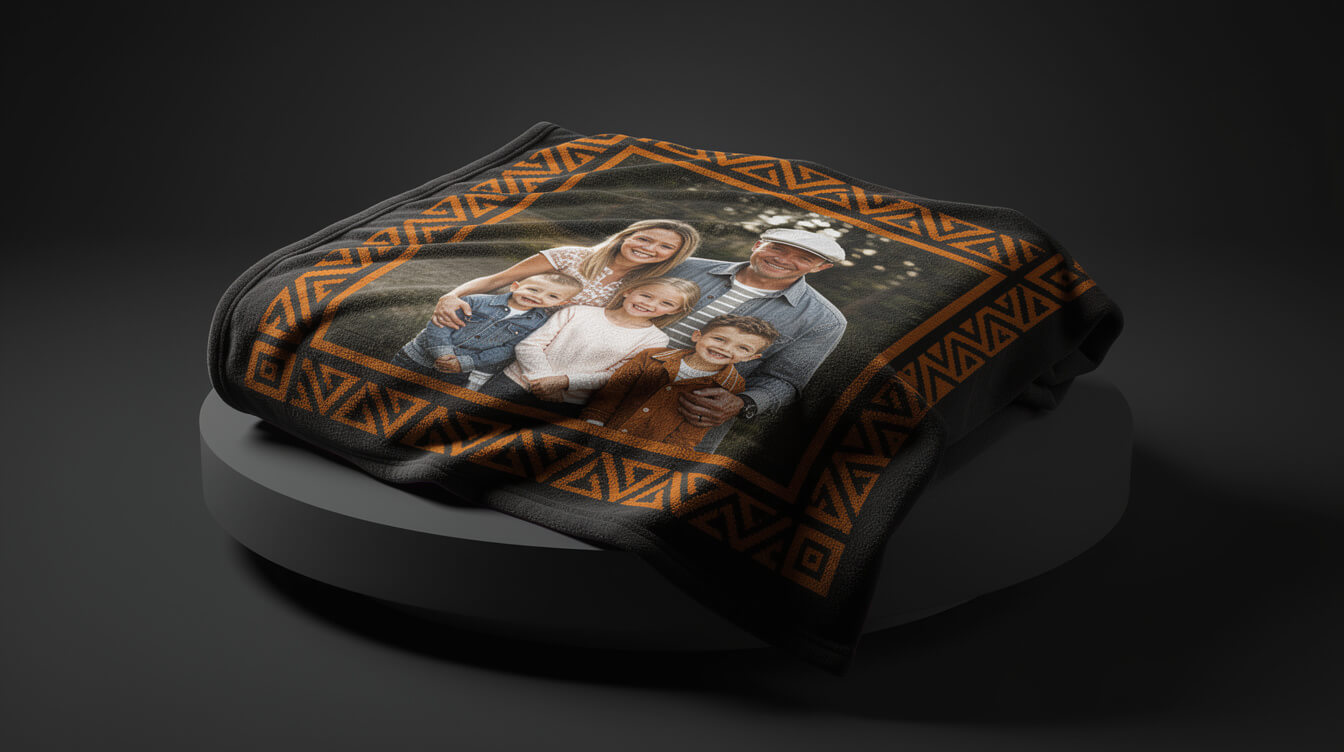
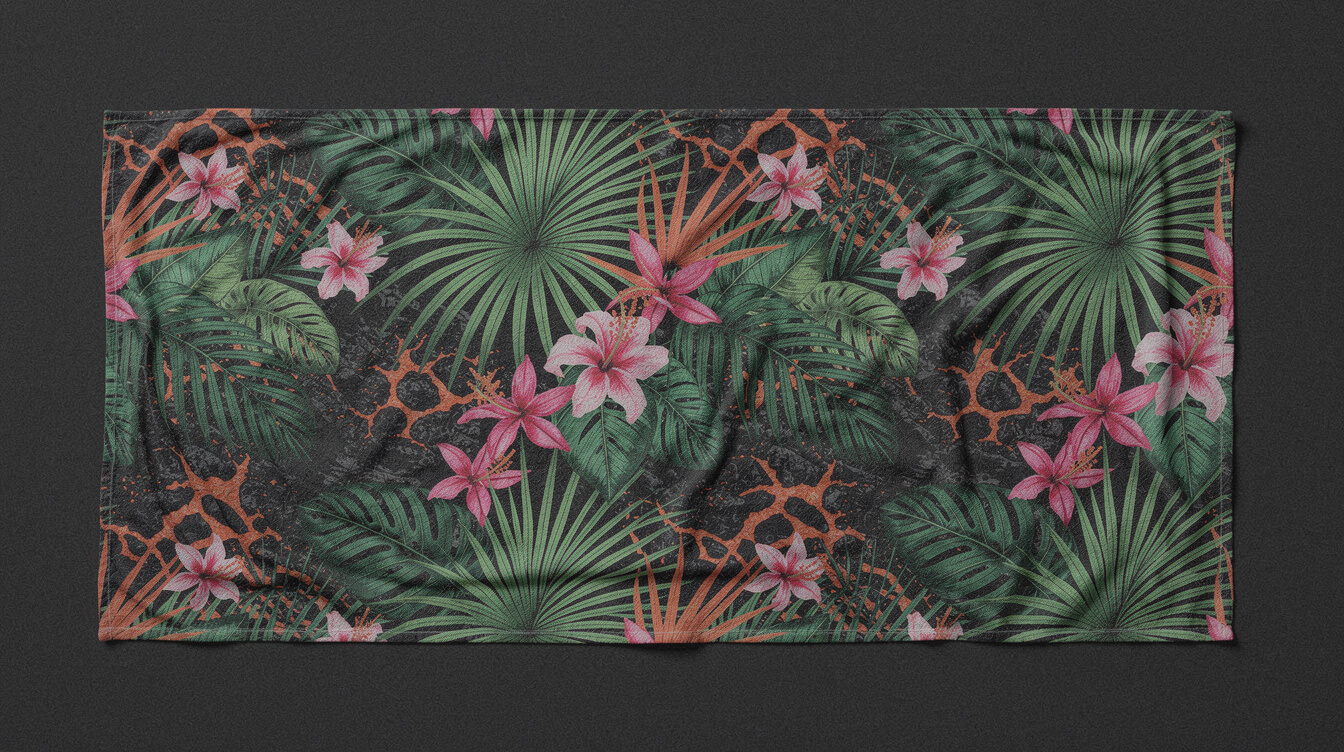
Custom beach towels for POD sellers: which providers carry them, sublimation on velour explained, and the summer niche math
When a customer searches for a custom beach towel, they are not looking for a generic souvenir. They want their dog’s face on a towel, their bachelorette squad name printed edge to edge, their kid’s favorite design on something that will survive a summer of sand and sun. That buyer intent is worth understanding. This guide covers what every POD seller needs to know about the custom beach towel market: which providers carry them, how sublimation on microfiber velour actually works, what the unit cost math looks like, and which niches generate consistent, repeatable demand. There are no major competitors covering this from a seller perspective. The lane is wide open.
Which POD providers carry custom beach towels
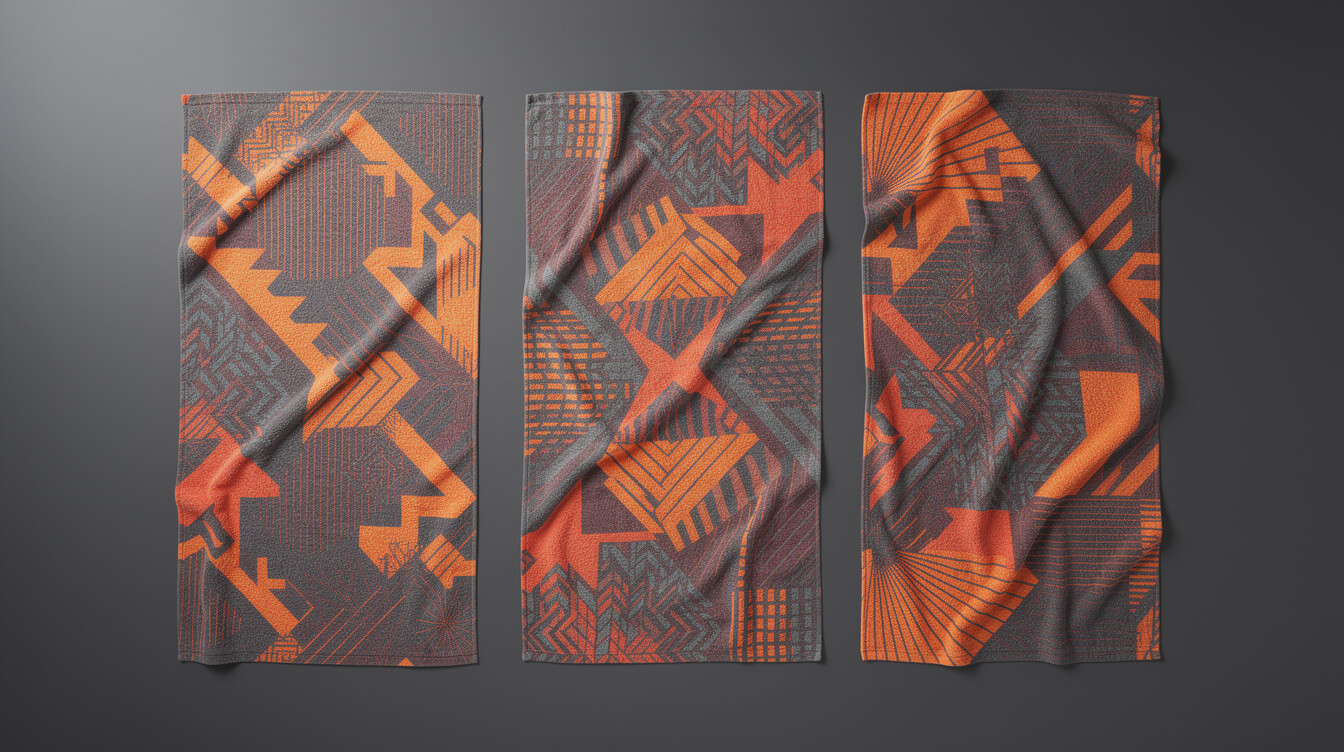
The provider landscape for custom beach towels is narrower than it is for apparel or mugs, but the options that exist cover the core use cases for most POD sellers.
Printful carries microfiber velour beach towels as a catalog product. The standard size is 30 inches by 60 inches with full-panel sublimation print, no minimum order quantity. You design it, a customer orders it, Printful fulfills and ships it. That is the full workflow. The towel uses a polyester-nylon microfiber velour construction, which is the correct substrate for sublimation at no MOQ.
Printify network vendors vary by region. Some carry sublimated microfiber beach towels through vendors like Subliminator and AOP+. You need to verify current availability in the Printify product creator before building out listings, because vendor catalogs change. Filter by product type, check US and EU fulfillment separately, and confirm the exact size and fabric specs before designing.
SPOD (Spreadshirt POD) carries beach towels with their 48-hour production guarantee in the US. If your store prioritizes speed-to-ship as a selling point, SPOD is worth checking against Printful on unit cost.
Gooten carries towels through their vendor network, though their primary strength is apparel and wall art. Verify current beach towel availability directly in the Gooten dashboard before building listings.
The no-MOQ advantage across all of these providers is what separates this from traditional custom towel ordering. B2B suppliers like ProTowels and ShopHighway3 require you to buy dozens or hundreds of units upfront and hold inventory. With a POD provider, you list the product, and each customer order is fulfilled individually. No warehouse. No capital tied up in stock. The risk profile is fundamentally different.
For most sellers starting out, Printful is the cleanest path to a first custom beach towel listing because their catalog item is straightforward, the file spec is documented, and fulfillment is reliable. Once you have a proven design, you can compare Printify vendors on price for margin improvement.
Sublimation on velour: why the polyester blend matters for custom beach towels
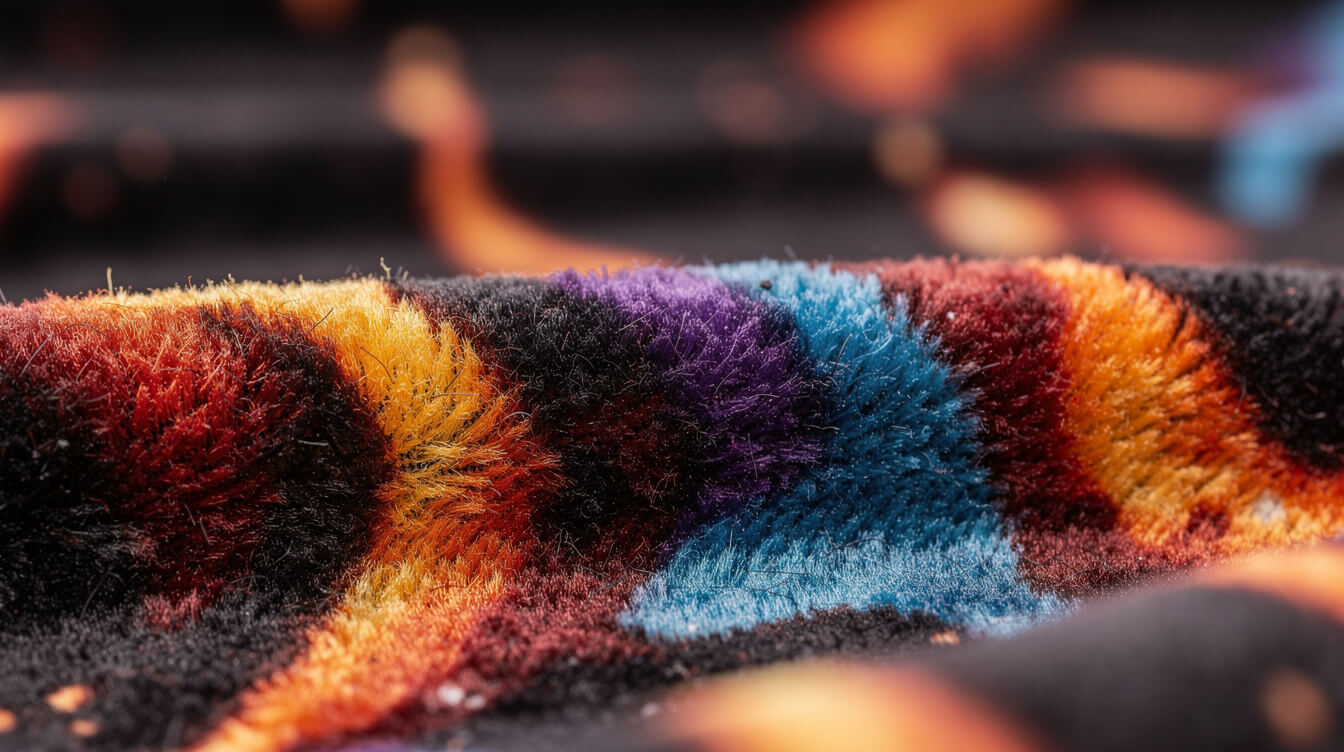
This is where most sellers stumble. The word “towel” triggers an association with cotton terry cloth. Cotton beach towels are what you find at Target, at hotel pools, at every beach rental shop. But cotton terry cloth cannot be sublimated. Understanding why this matters will save you from a failed product launch.
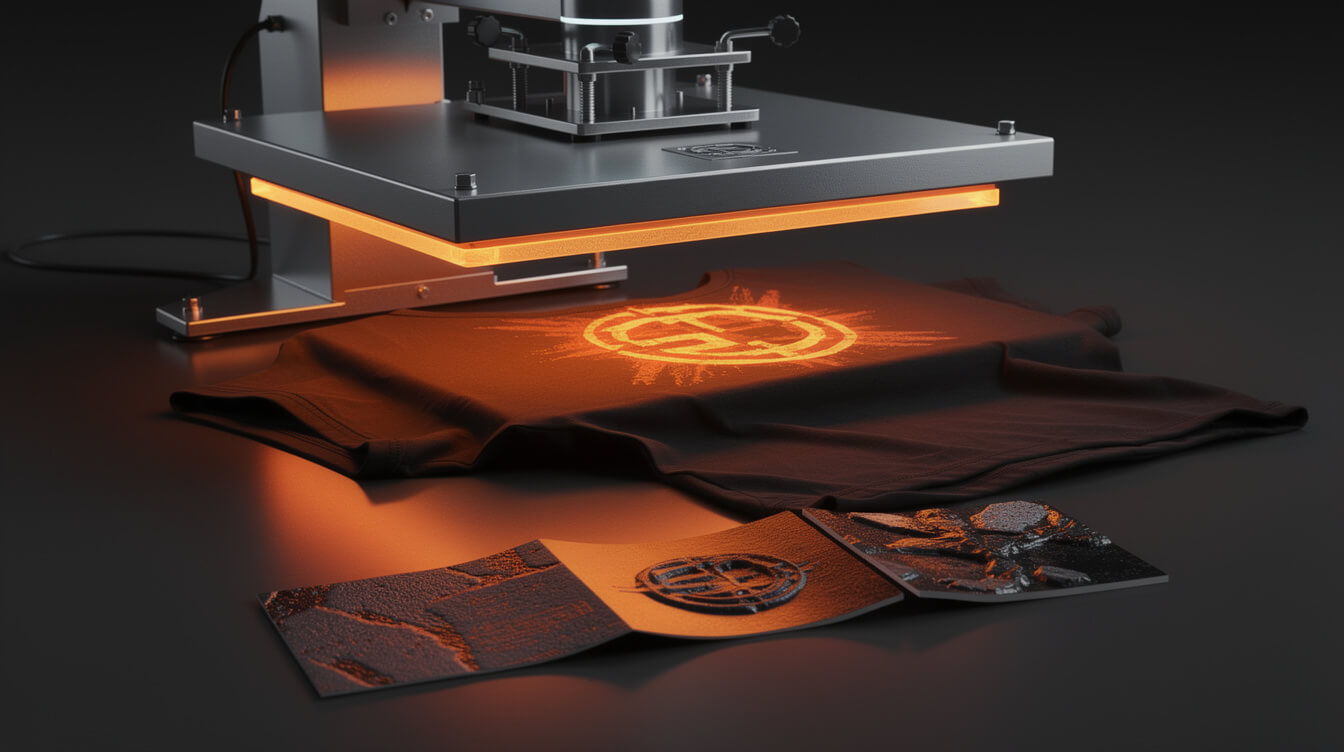
Sublimation is a dye-bonding process. The sublimation ink converts from solid to gas under heat (375 to 400 degrees Fahrenheit) and bonds directly into the polyester polymer at the molecular level. The dye does not sit on top of the fabric. It becomes part of the fiber. That is why sublimated prints do not crack, peel, or fade after hundreds of washes. The color vibrancy you see in the product mock-up is the color vibrancy your customer receives.
Cotton has no polyester polymer structure. There is nothing for the sublimation dye to bond to. The ink sits on the surface and washes out after the first or second wash. If you have ever seen a “sublimated” cotton product that faded immediately, this is why.
Microfiber velour towels used by Printful and similar POD providers are typically 80% polyester and 20% nylon. That polyester content is high enough for full sublimation bonding. The velour texture (a sheared pile surface on one side) creates the soft, premium feel your customer expects from a beach towel, while the polyester structure enables edge-to-edge full-panel printing with photographic-quality color reproduction.
There is one constraint you need to design around: sublimation ink is transparent. It can only work on a white or very light base. If you are designing a custom beach towel, your design file is your background. You control the entire surface from edge to edge. Dark backgrounds in your design will appear dark on the towel. There is no “white base” layer you can add after the fact. Plan your design as if you are painting on a white canvas, because that is exactly what you are doing.
The practical takeaway is that the substrate on the product page matters. Always confirm 80%+ polyester before designing. Do not assume “microfiber” means sublimation-compatible. Check the product specs. Custom bandanas follow the same polyester rule for the same reason, and sellers who skip this step end up with returned orders and refund requests.
Design specs and file requirements for beach towel sublimation
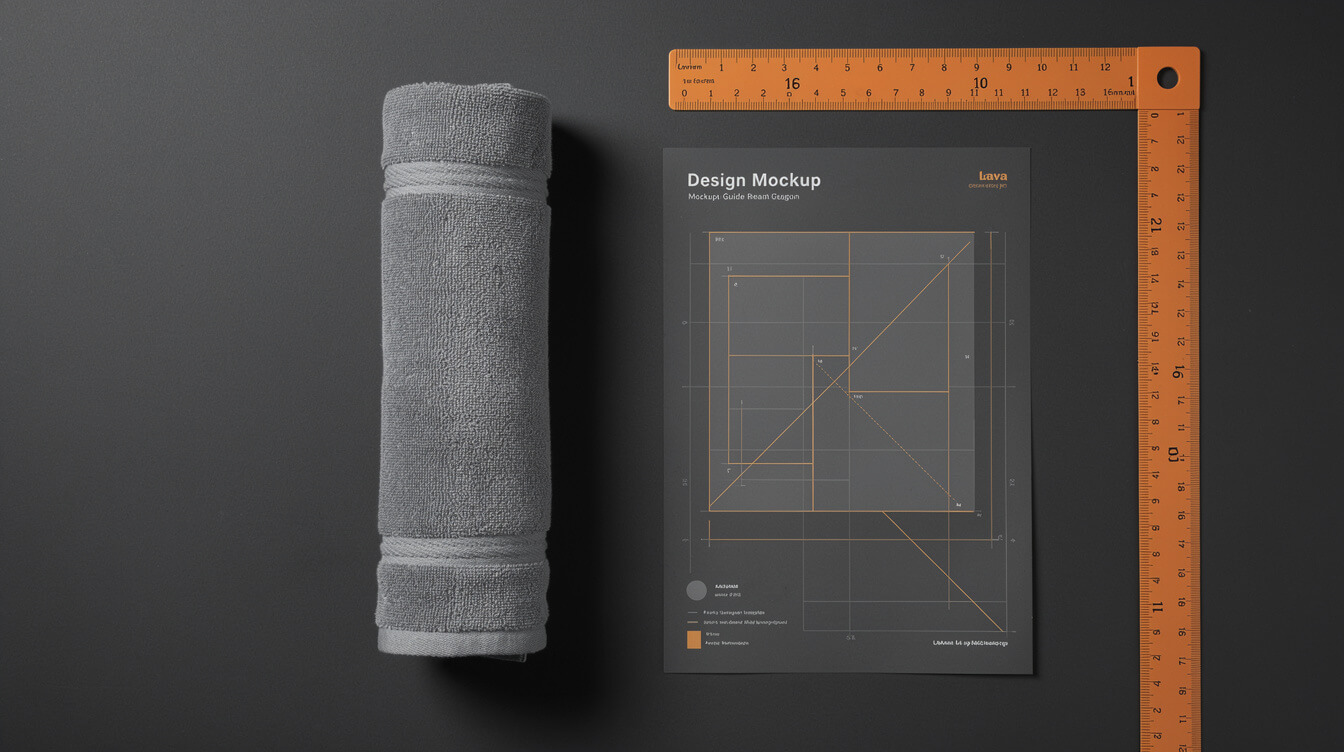
Getting the file right before you submit saves you redesign time later. These are the technical requirements for a standard 30×60 inch sublimated beach towel.
File format: PNG is the standard for POD beach towels. Use RGB color mode, not CMYK. Sublimation printing uses a dye-sublimation process that is calibrated to RGB color values. CMYK files will produce slightly muted or shifted colors in the final output.
Resolution: 150 DPI is the minimum at full print size. For a 30×60 inch towel at 150 DPI, that translates to 4,500 pixels by 9,000 pixels. Most design software will show this as the canvas size when you set up the artboard correctly. Going higher (200 DPI) is not harmful, but the file size increases substantially and the visual improvement is minimal on a velour substrate.
Bleed: Add 0.25 inches of bleed on all four edges. The bleed area extends your design slightly beyond the trim line, so if the towel is cut at a slightly different position during production, you do not end up with a thin white border on one side. Your main design elements should not extend into the bleed area.
Safe zones: Keep all text, important graphic elements, and faces at least 0.5 inches from the finished edge. The area within the safe zone is guaranteed to be visible and undistorted. Anything outside the safe zone may get trimmed or lost in the hem.
Text at small sizes: Fine text below 12-point equivalent tends to blur slightly on velour because of the pile texture. Bold, high-contrast designs at larger scales read much more crisply. If you are adding names or short phrases (a common personalization use case), use bold fonts at 18-point equivalent or larger.
Color calibration: Bright, saturated colors reproduce very well on sublimation velour. Pastel and muted tones can come out slightly lighter than they appear on screen. If you are building designs for a specific color-accurate application (like brand merchandise), order a sample before listing at scale.
These specs apply to Printful’s beach towel product as of this writing. If you are using a Printify vendor, download their specific template file from the product creator. Vendor specs vary, and using the wrong canvas size is the most common cause of print positioning errors.
Unit cost math: what a custom beach towel costs and what it sells for

Smash print-on-demand. Join the engine room.
One short email a week. Real numbers, real teardowns, the unfiltered economics behind every move.
Beach towels sit in the mid-range of POD economics. They are not as thin-margin as a $12 mug, and they are not as high-margin as a $200 framed print. But the repeat-purchase dynamics and bundle opportunities make the unit math more attractive than the single-order numbers suggest.
Single unit economics: Printful’s 30×60 inch beach towel runs approximately $18 to $22 base cost depending on current pricing. Domestic US shipping for a towel in this size and weight category runs $6 to $10. Landed cost per order sits in the $24 to $32 range. At a retail price of $38 to $45, your gross margin is 35% to 44%. At $50 to $55 retail (which bachelorette and premium gift niches will support), gross margin improves to 42% to 50%.
Bundle math: A two-towel bachelorette set at $78 retail (bride plus one bridesmaid) changes the economics significantly. If your landed cost for two towels is $52 to $60, the gross dollar margin per transaction doubles compared to a single-unit sale, at a similar percentage. Bundled AOV is the fastest path to improving the profitability of a custom beach towel store without changing suppliers or print methods.
Personalization premium: Buyers in the bachelorette and kids categories expect to pay more for a towel with their name or a custom design. A standard retail price of $38 becomes $48 to $55 for a named personalized towel. The cost to produce it is identical. WooCommerce handles the name input field natively through product add-ons, at no additional app cost.
If you are managing multiple product designs and want to move faster than listing products individually, MEGA automates the product creation step entirely, handling images, titles, descriptions, and SEO in under 7 minutes per product. You can review the pipeline at mega.management. At 20 or 30 beach towel variants (different designs, niches, and seasonal bundles), that automation advantage compounds quickly.
The per-unit gross margin on beach towels compares favorably to custom bandanas ($6 to $10 gross per unit) and slightly below custom canvas prints ($25 to $40 per unit). Beach towels are a mid-high AOV product that earns its place in a diversified POD store.
The Shopify 1% fee on custom beach towel sales and the WooCommerce cost comparison

The Shopify 1% platform override fee is a fixed tax on your revenue regardless of your margin. For a $38 to $45 beach towel, that is $0.38 to $0.45 per sale, before payment processing. On its own, it sounds trivial. At volume, it is not.
The math at 200 orders per month: 200 towel sales at $40 average order value generates $800 in Shopify override fees per year. Add the Shopify Basic plan at $468 per year, and you are at $1,268 annually before apps. Add a personalization app ($19 to $49 per month, required for any text customization like names) and total Shopify overhead for a 200-order-per-month beach towel store runs $1,496 to $1,856 per year.
WooCommerce comparison: WooCommerce has no percentage-based platform override. Your fixed overhead is hosting ($15 to $40 per month for managed WooCommerce hosting) plus payment processing (Stripe or PayPal, same rates as Shopify). At 200 orders per month on WooCommerce, total platform overhead is approximately $180 to $480 per year. The personalization field for customer names is handled natively through WooCommerce Product Add-Ons, with no monthly app fee.
The fee gap at 200 orders per month is $1,000 to $1,500 per year. At 500 orders per month ($5,000 monthly GMV), the Shopify override alone exceeds $2,400 annually. WooCommerce fixed overhead stays the same regardless of revenue.
The customer relationship is the other dimension. On Shopify, Shopify owns the platform and the email opt-in data. On WooCommerce, you own the customer list, the email sequence, and the repeat-purchase relationship. For a beach towel store where bachelorette groups and sports teams are your core buyers, that relationship is worth building on infrastructure you own.
For a detailed comparison of both platforms with fee tables at multiple revenue levels, see our full breakdown at WooCommerce vs Shopify for POD sellers.

30x your POD throughput with MEGA
MEGA generates product images, titles, descriptions, and SEO for each beach towel design in under 7 minutes. Stop listing products one at a time.
Which niches drive custom beach towel demand
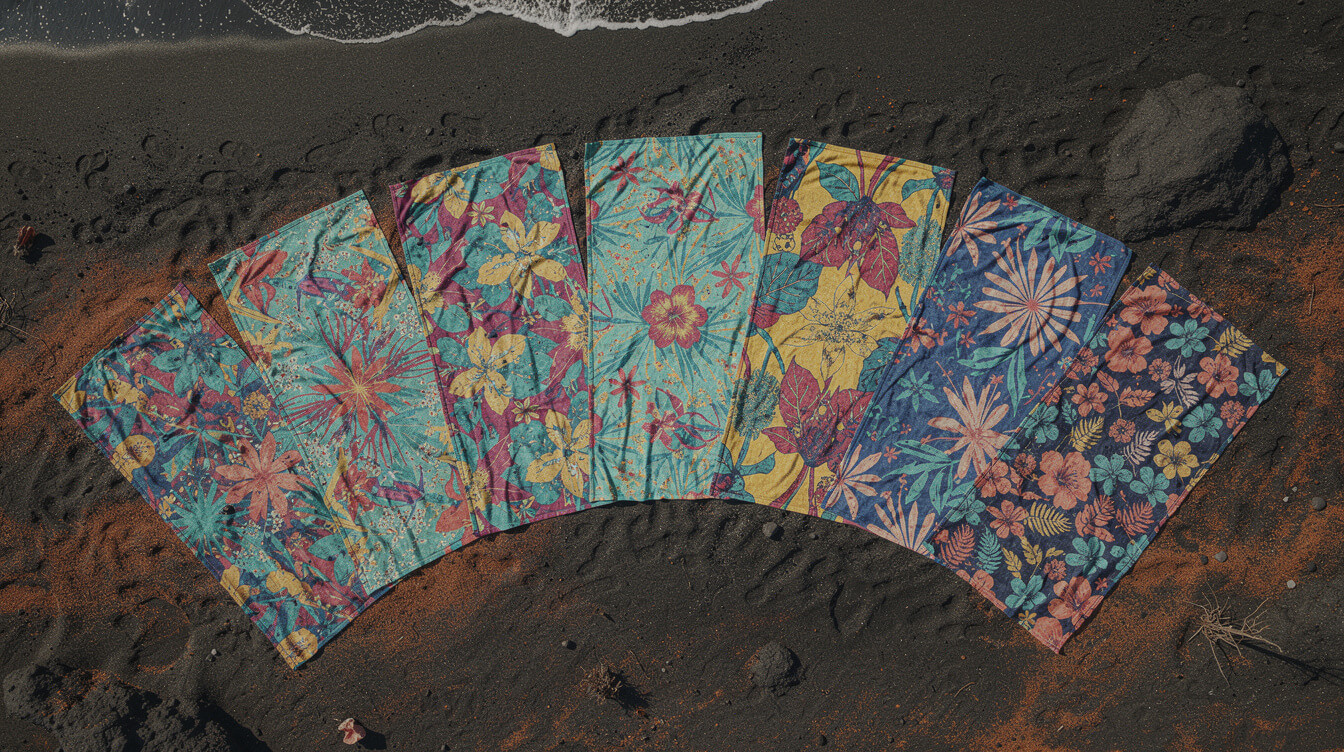
Beach towels are a gift-economy product more than they are a personal-purchase product. The majority of buyers are purchasing for someone else, for a group occasion, or for a branded event. That shapes which niches produce consistent demand.
Bachelorette party favors: This is the highest-AOV niche in the custom beach towel category. A bridal party of 8 to 12 women each needs a matching towel for a beach bachelorette. The AOV for one transaction is $300 to $450. The buyer (typically the maid of honor) has low price sensitivity because the towels are a one-time event purchase, and she wants something that looks cohesive and personal. Matching sets with the bride’s name and “squad” design consistently convert at premium prices. This niche has year-round demand because weddings happen year-round.
Sports team spirit towels: Fan gear for college teams, regional sports clubs, and fitness brands converts well in the $35 to $45 price range. Custom sportswear POD products share the same buyer base. Important constraint: do not use licensed NFL, NBA, MLB, or NCAA logos and trademarks. Original fan art, team color schemes with creative original designs, and custom team names for local leagues are all viable and lower your IP risk to zero.
Pet portrait beach towels: Custom dog or cat portraits on a beach towel follow the same virality mechanics that make pet portrait face socks and custom face socks strong performers. Pet owner communities share these products organically because the product is inherently shareable. Breed-specific communities on Facebook and Reddit are high-intent audiences. Full-panel sublimation on a beach towel gives a photographic-quality portrait that a mug or a sticker cannot replicate. The AOV of $45 to $55 with name personalization is strong for a repeat-gift category.
Resort and vacation aesthetic: Coastal and tropical designs personalized with a family name, a vacation year, or a destination resonate strongly with the gift buyer who wants something memorable from a trip. The demand here is more diffuse but consistent across search and social.
Kids beach towels: Cartoon characters and personalized name towels in this category sell well as birthday gifts, particularly to grandparent buyers. The price point ($35 to $42) is acceptable as a gift item. Unicorn, dinosaur, and hobby-specific designs perform well here. Age-appropriate personalization (name plus age number) is a reliable format.
Wedding welcome bags and destination events: Couples hosting destination weddings in beach or tropical settings often include a custom towel in the welcome bag. Group order size is 20 to 80 units. This is adjacent to the bachelorette niche but has distinct timing (orders placed 3 to 6 months in advance) and slightly different design requirements (more formal, brand-coherent aesthetic).
Seasonal demand windows and the Q4 custom beach towel play
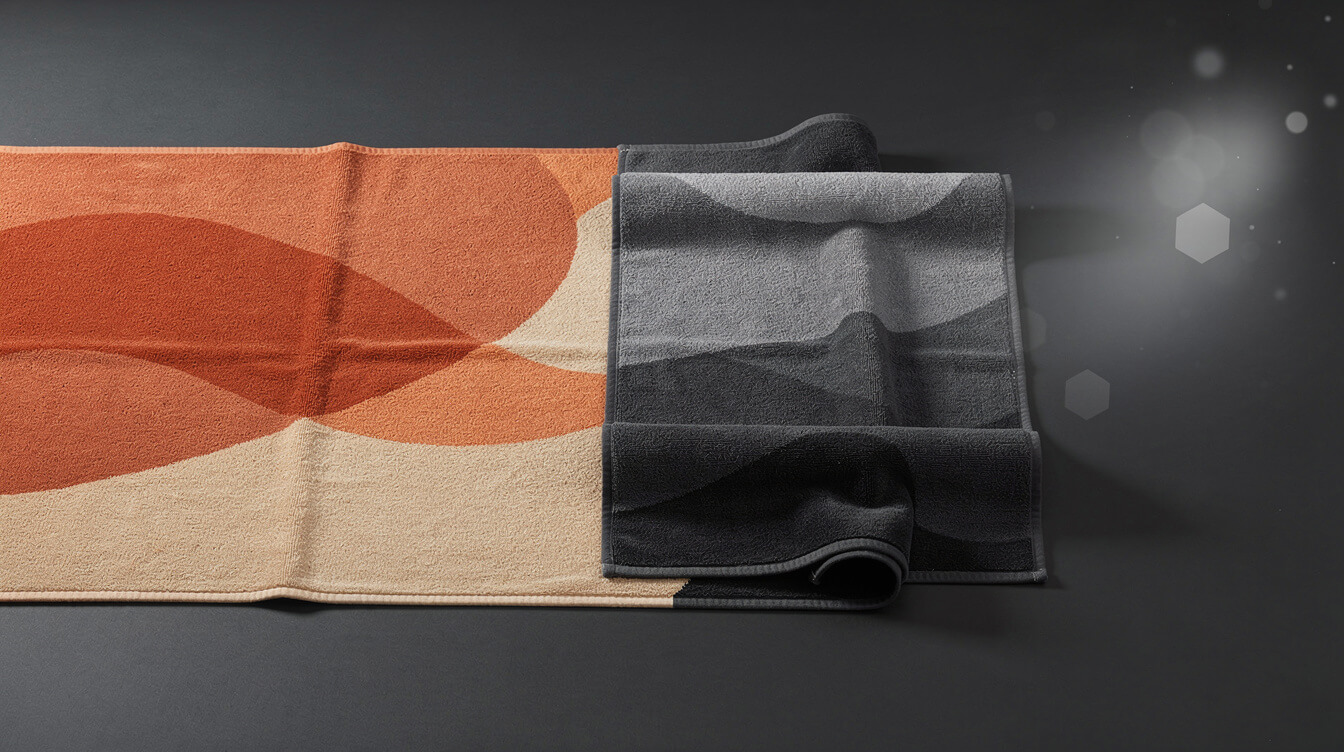
The demand curve for custom beach towels is seasonal, but the sellers who do best in this category treat it as a year-round product with a summer peak, not as a product they sell only in summer.
Primary season: May through August. This is when organic search volume for custom beach towels and related terms is highest. If your listings are not Google-indexed before April 15, you are missing the ramp-up to the summer peak. New product pages typically require 6 to 8 weeks to rank for their target keywords. April 15 is the practical cutoff date for summer-ready listings. Listings created in May or June will miss the peak even if they eventually rank.
Secondary season: November through December. Beach towels cross over into the holiday gift economy for this period. “Personalized beach towel” performs as a gift search during Q4 gift buying, particularly for the grandparent-to-grandchild, bachelorette planning, and destination wedding categories. The search volume is lower than summer, but the buyer intent is high and the price sensitivity is lower in a gift context.
Year-round categories: Bachelorette, pet portrait, and sports fan niches generate demand in every month of the year. Bachelorette in particular shows almost no seasonality, because weddings are planned for all seasons. If you build your initial beach towel listings around the bachelorette niche, you are not dependent on seasonal peaks to generate consistent monthly revenue.
Practical listing calendar: Create and publish your summer-focused designs in February and March. Create and publish your holiday gift designs in August and September. Create and publish your bachelorette and pet portrait designs any time, because they sell year-round. The same lead-time logic applies to beach towels as it does to custom ornaments, custom blankets, and any other product that has a known seasonal peak: get the listing live before the demand curve rises, not after.
Final thoughts on the custom beach towel opportunity for POD sellers
Custom beach towels are an underserved product category in the POD editorial landscape. Every major search result for this keyword is a consumer personalization brand selling directly to end buyers. There is no competition for the POD seller editorial lane. That is the gap this article fills, and it is the same gap your listings should fill: the buyer looking for a no-MOQ, single-unit custom beach towel with photographic-quality sublimation print, fulfilled by Printful or a Printify vendor, with personalization options you own and control on your own WooCommerce store.
The unit economics are solid in the $38 to $55 retail range, and the bundle math for bachelorette sets and group orders lifts the gross dollar margin per transaction significantly above what single-product POD categories deliver. The seasonal demand pattern is manageable with a simple listing calendar. The niches that drive year-round demand (bachelorette, pet portrait, sports fan) are proven high-converters in adjacent product categories.
Start with Printful for your first listing. Verify the file spec, build a design around one high-demand niche, and publish before the demand curve for that niche rises. The same principles that apply to custom bandanas apply here: the polyester rule, the design file specs, and the repeat-purchase niche targeting are all transferable knowledge.
Implement AI. 30x your throughput. Get a 30-min call with the founder.
Drop your details and book a free 30-minute discovery call. Personalized advice on your POD stack, your margin, and where AI fits. No pitch, no fluff.