Custom tank tops for POD sellers: which providers carry them, what the print method changes, and the unit cost math
The search results for custom tank top are dominated by screen print shops with 13-unit minimums and B2C design tools built for consumers, not sellers. If you run a print-on-demand store and want to add tank tops to your catalog, the SERP offers almost nothing useful. No provider comparisons. No unit cost breakdowns. No explanation of how fabric content changes your print method options.
This guide fills that gap. You will learn which POD platforms carry tank tops and in what styles, how cotton versus polyester fabric determines whether you use DTG or sublimation, what each style costs per unit at 1, 10, and 50 orders, and why the Shopify 1% override hurts proportionally more on a $30 summer garment than on a $60 hoodie. You will also see which niche verticals have genuine demand for printed tank tops and why a WooCommerce-based store captures more margin from those buyers.
What the custom tank top SERP is selling (and why it misses POD sellers entirely)

Search “custom tank top” in Google and you will see three categories of results. First, B2B screen print shops: DTLA Print, UberPrints (13-unit minimum), BlueCotton. They quote per-unit pricing that only makes sense at bulk, require setup fees for each design color, and expect you to stock inventory before they ship. Second, B2C design tool platforms: CustomizedGirl, Zazzle, Custom Ink. These are consumer-facing products where the end buyer creates their own shirt. They are not dropship suppliers for resellers. Third, promotional merchandise vendors focused on corporate event apparel with logos.
Nowhere in the top results does any article explain that a POD seller can add custom tank tops to a WooCommerce or Shopify store, connect Printful or Printify as the fulfillment layer, and ship a single unit on demand with zero screen printing setup fee and no minimum order. That is the gap this post addresses.
The business model these results assume is: buy 50 units minimum, hold inventory, fulfill yourself. The model POD sellers actually use is: list the product, customer orders, Printful prints and ships it the next day. The unit economics are completely different, and the fabric and print method knowledge needed to succeed is specific to POD workflows.
Which POD providers carry tank tops: Printful vs Printify styles and catalog
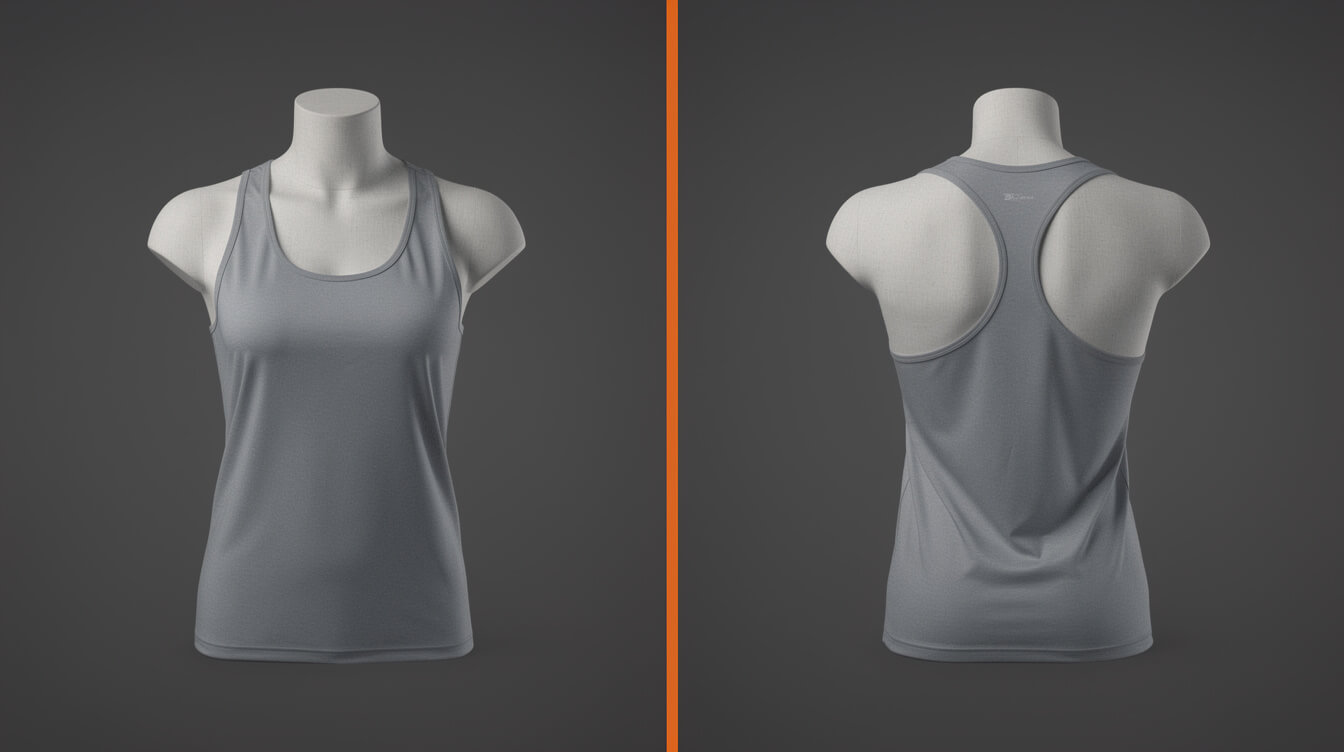
Both Printful and Printify carry tank tops, but the style selection and catalog depth differ enough to matter for your niche decision.
Printful tank top catalog
Printful carries several tank top styles across their apparel catalog. The primary options are:
- Men’s muscle tank: Classic A-frame cut, typically 100% combed and ring-spun cotton. Available in multiple colors including black, white, navy, and heather variants. Print area covers the full front and back via DTG.
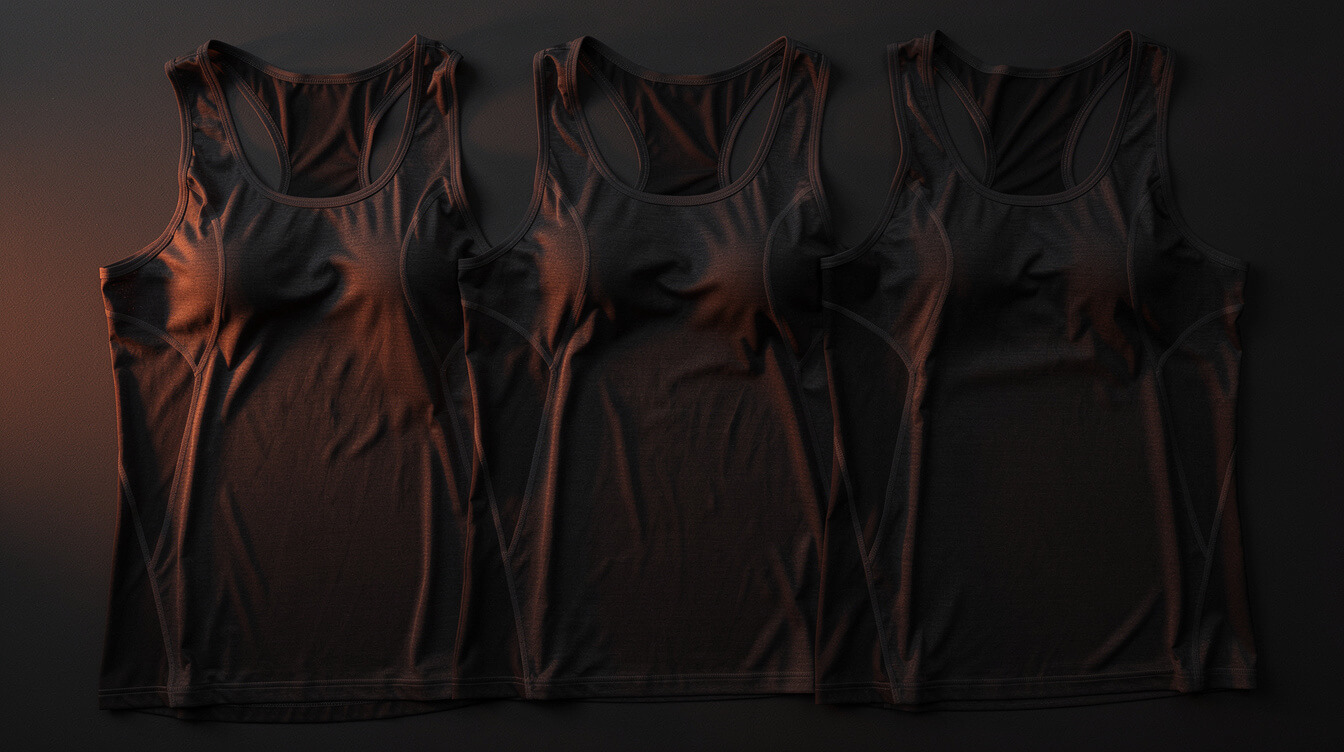
- Women’s racerback tank: Fitted cut with racerback strapping, available in cotton-blend and polyester-blend variants. Print method depends on fabric content (see Section 3).
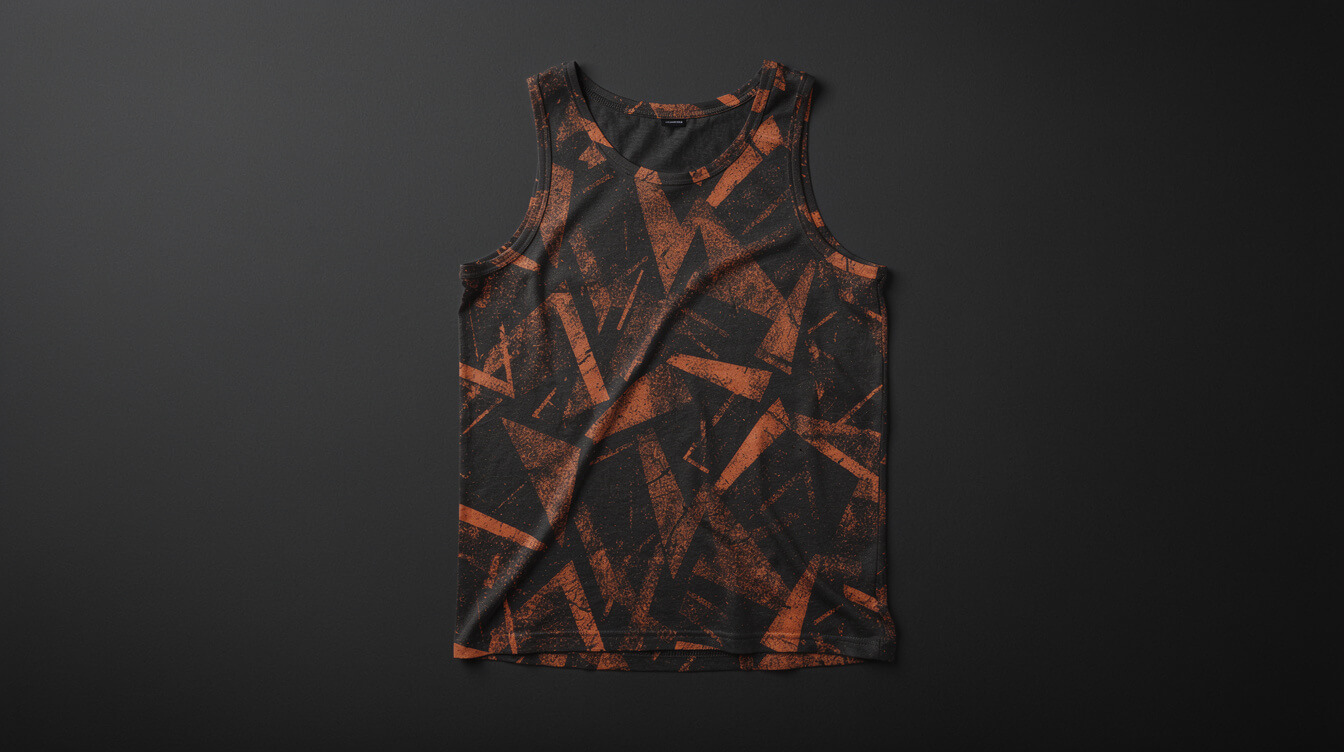
- All-over print tank: Full sublimation-printed tank on 100% polyester. The entire garment surface is printed, including seams and straps. Higher per-unit cost but zero white space constraints.
- Crop tank: Cropped length, typically a cotton-blend, available in women’s sizing. DTG print on the front.
Printful handles fulfillment from their own facilities in North America, Europe, and parts of Asia, which means more predictable quality control and consistent sizing across orders.
Printify tank top catalog
Printify sources from a network of third-party print providers, which gives you more SKU options but adds variability. Tank top availability depends on which print provider you select in your Printify account:
- AOP-printed tanks: Available through providers like Monster Digital, which specializes in all-over sublimation on polyester. Strong for bold full-print designs.
- DTG muscle tanks and racerbacks: Available through providers including Printify’s Express delivery options. Cotton-based tanks are DTG only.
- Price variation by provider: The same product can vary $2-4 per unit depending on which fulfillment center you route orders through. Set your primary provider before launch and avoid mixing.
For sellers focused on apparel unit economics, the same provider logic applies to polo shirts: Printful gives you consistency, Printify gives you price flexibility with more management overhead.
Fabric content and print method: why cotton tanks use DTG and polyester racerbacks can use sublimation
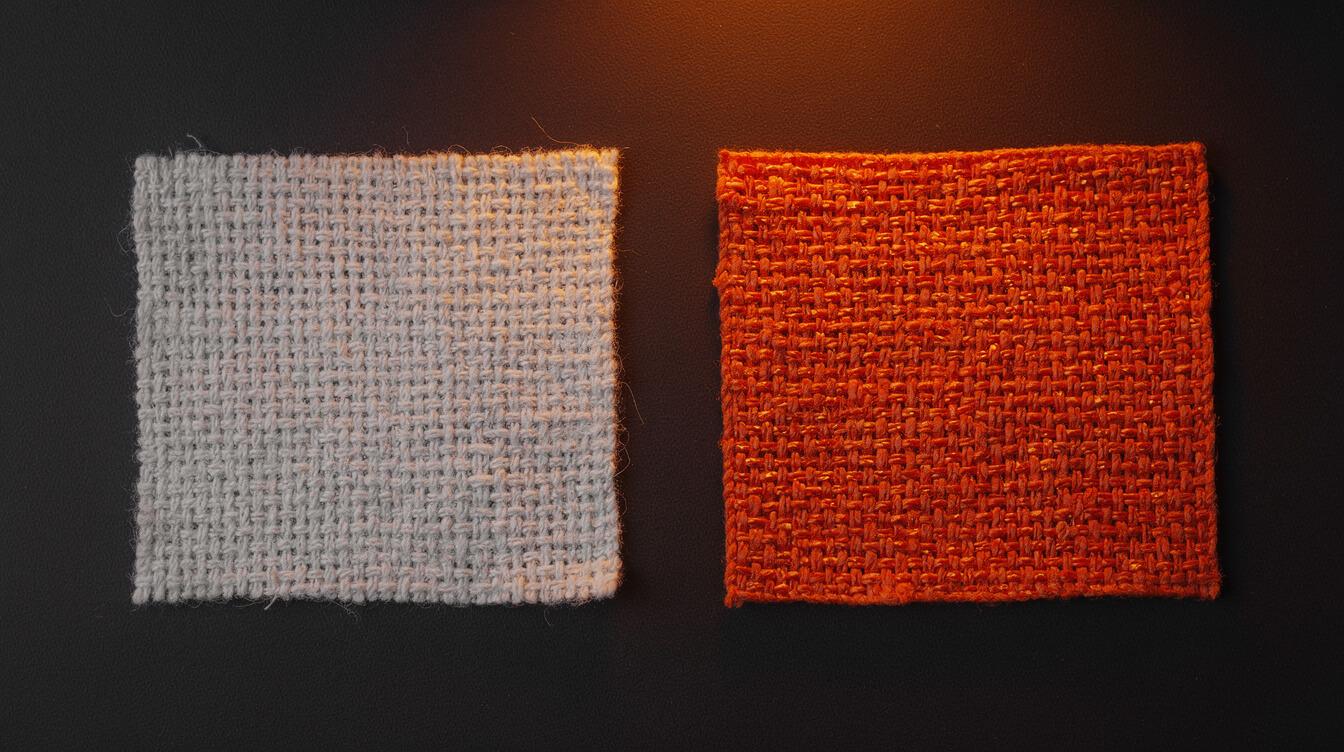
This is the part that B2C design tools and screen print vendor sites never explain, because it only matters when you are choosing a fulfillment method, not when you are ordering a one-off custom shirt for yourself.
DTG printing on cotton
Direct-to-garment (DTG) printing uses water-based inks that bond to natural fibers. Cotton tank tops are the standard substrate for DTG. The process works like an inkjet printer on fabric, meaning you can print photographic detail, gradients, and complex multi-color designs with no additional cost per color.
The trade-off: DTG on cotton requires a pre-treatment step on dark garments, which adds a slight texture to the print area. White and light-colored tanks skip the pre-treatment step and have cleaner print surfaces. Cotton also fades faster than polyester in repeated washing, which affects how the print holds up over 50+ washes.
For muscle tanks in cotton, DTG is your only realistic POD option. Sublimation requires high polyester content, and cotton muscle tanks (typically 90-100% cotton) will not sublimate correctly.
Sublimation on polyester
Sublimation printing uses heat to transfer dye directly into polyester fibers at a molecular level. The result is vibrant color with no ink layer sitting on top of the fabric, so the garment feels identical to an unprinted version. Colors are more saturated than DTG, and the print is wash-permanent because the dye is part of the fiber rather than applied on top.
The constraint: sublimation only works on high-polyester-content fabrics (85% or higher). On cotton or cotton blends below 50% polyester, the dye does not bond properly, resulting in muted colors and uneven print coverage. This is why all-over print (AOP) tank tops sold through Printful and Printify are 100% polyester.
Racerback tanks in performance fabric (polyester athletic material) are natural candidates for sublimation. The athletic fabric also aligns well with the gym and fitness niche, where full-print sublimated racerbacks sell alongside leggings and sports bras.
If you are building a fitness apparel store, understanding AOP sublimation on performance fabric applies across your entire catalog, not just tank tops.
The blended fabric gray zone
Blended fabrics (50% cotton / 50% polyester, or similar ratios) exist for tank tops, but they create complications for POD. The DTG pre-treatment behaves differently on blends, and sublimation on a 50/50 blend produces a faded, vintage-washed look rather than saturated color. Some sellers use this deliberately for a retro aesthetic, but most POD sellers want predictable, consistent output.
The practical rule: for a clean DTG print, choose 100% cotton or high cotton-content tanks. For bright sublimation, choose 100% polyester. Avoid 50/50 blends unless you specifically want the washed-out effect and communicate it clearly in your product photos.
Unit cost math: muscle tank, racerback, crop tank at each provider
Smash print-on-demand. Join the engine room.
One short email a week. Real numbers, real teardowns, the unfiltered economics behind every move.
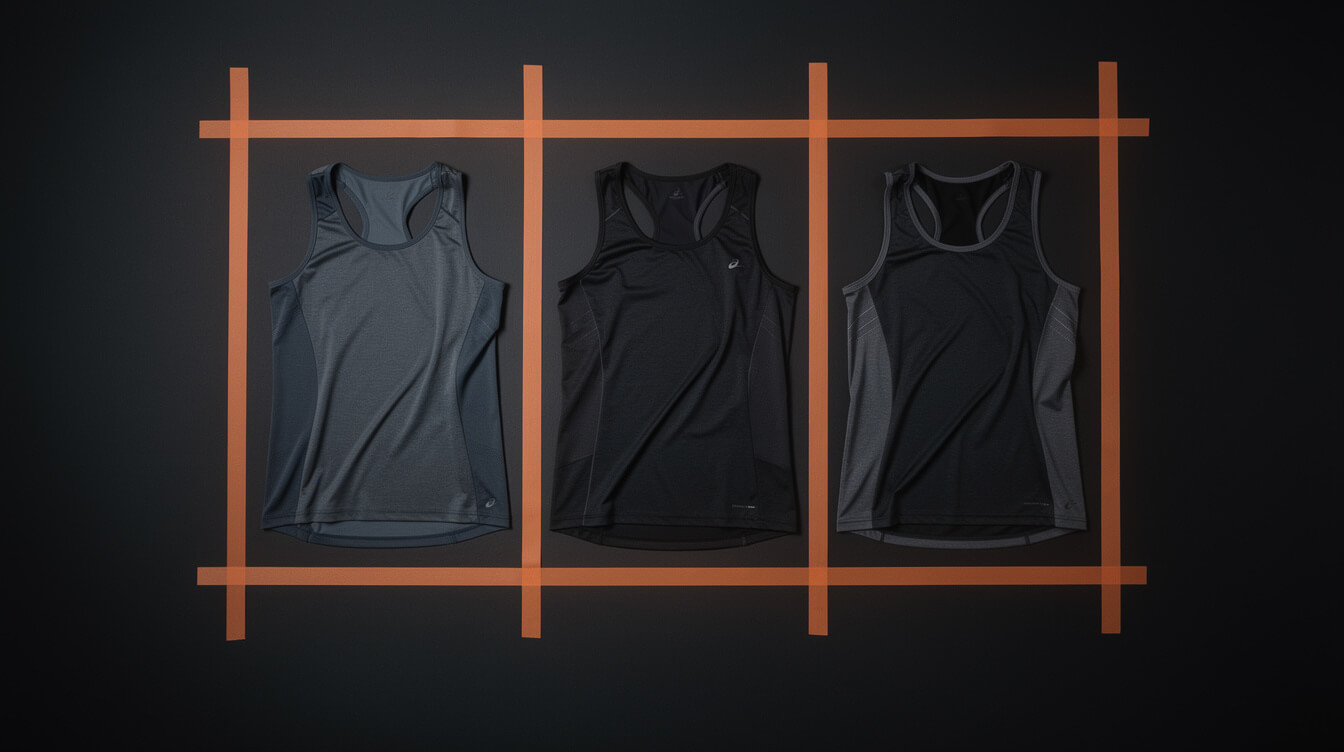
Tank tops have a lower average order value (AOV) than hoodies or zip-ups, which means the per-unit cost matters more. Here is a realistic breakdown of what you pay Printful or Printify before factoring in shipping, and what a $30-40 retail price yields.
Muscle tank (cotton, DTG, Printful)
- Printful base price: approximately $13-15 per unit for a men’s cotton muscle tank with a front print
- Shipping (US domestic): approximately $4-5 for the first item
- Landed cost per order: $17-20
- Retail price target: $28-34
- Gross margin: $10-17 before payment processing and platform fees
Racerback tank (polyester AOP, sublimation, Printful)
- Printful base price: approximately $18-22 per unit for an all-over print racerback
- Shipping (US domestic): approximately $4-5
- Landed cost per order: $22-27
- Retail price target: $38-48
- Gross margin: $13-24 before fees
The AOP racerback commands a higher retail price because the all-over print is visually distinctive and harder for buyers to find as a commodity product. This makes it the better margin vehicle of the two styles, even though the base cost is higher.
Crop tank (cotton-blend, DTG, Printful or Printify)
- Printful base price: approximately $15-17 per unit
- Shipping (US domestic): approximately $4-5
- Landed cost per order: $19-22
- Retail price target: $30-38
- Gross margin: $9-18 before fees
These numbers change if you route through Printify’s lower-cost provider options, where base costs on muscle tanks can drop to $11-12. The trade-off is variability in print quality and longer handling time on some providers.
Compared to a zip-up hoodie at $60-70 retail (with $30-35 base cost from Printful), tank tops have lower absolute margins but can sell in higher volume during summer months. For a full apparel unit cost comparison, see how zip-up hoodie unit economics work at a higher AOV point.
If you want to streamline generating full product listings for tank top SKUs across sizes and colors, MEGA automates the research-to-listing pipeline end-to-end, handling image generation, sizing, mockups, and product descriptions without manual Canva workflows.
The Shopify 1% fee at $25-40 AOV: the margin hit on summer apparel
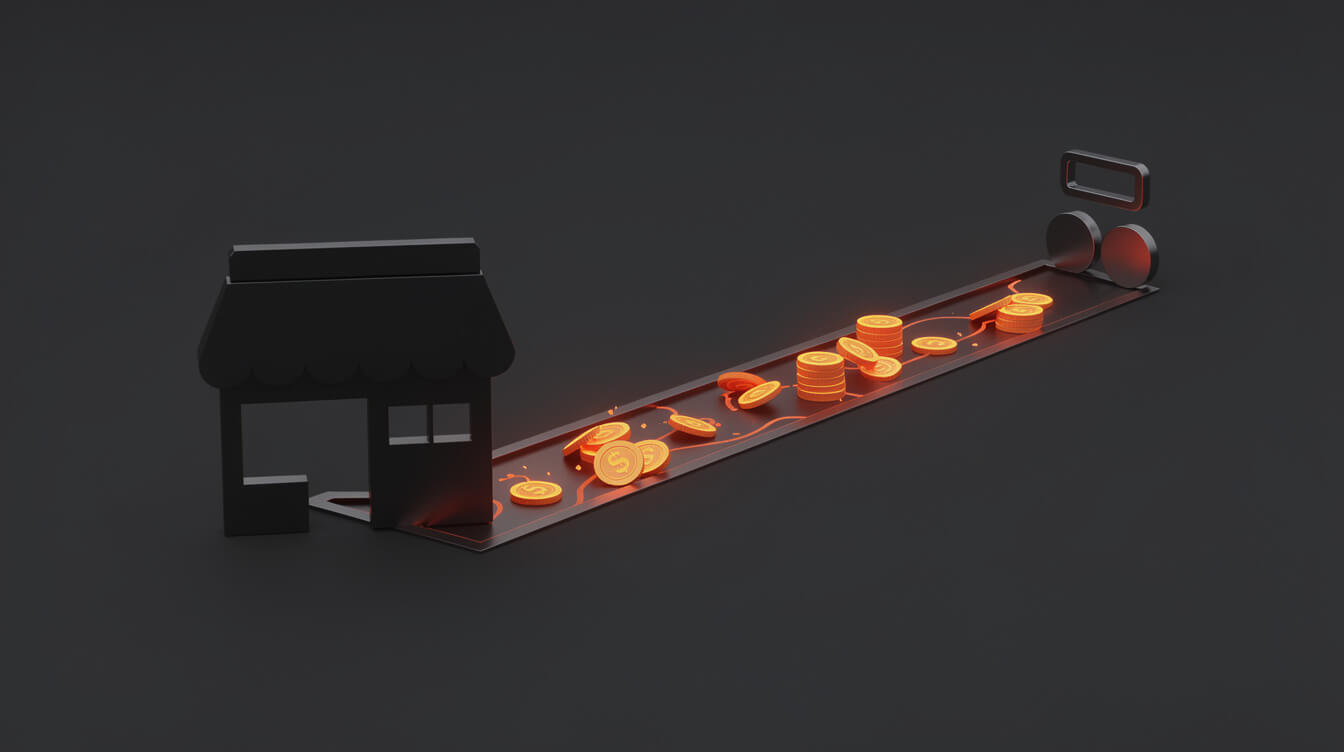
At a $60 hoodie price point, Shopify’s 1% override fee (on the Shopify Basic plan) costs you $0.60 per sale, which feels manageable. At a $30 muscle tank, that same 1% costs $0.30 per sale, but the absolute margin available is also $10-15 instead of $20-25. The fee takes a proportionally larger bite.
Here is the concrete math on a $30 muscle tank selling 200 units per month:
- Gross revenue: $6,000
- Printful base cost (200 units at $15): -$3,000
- Shopify 1% override fee: -$60
- Shopify Basic plan ($39/mo): -$39
- Net before apps and payment processing: $2,901
The $60 monthly Shopify override fee on this volume seems small in isolation. But tank tops also tend to generate lower average cart values than technical outerwear. If your tank top buyers are impulse purchasers adding one item at $30, your Shopify override applies to every transaction individually.
At 1,000 tank top units per month at $30, the override fee alone reaches $300/month. That is $3,600 annually, on sales of a product where gross margin per unit might be $13-15 after base costs. Sellers running summer apparel drops feel this most acutely: you pay the fee on every unit during the spike, and the fee does not disappear when the season ends.
Shopify’s fee structure treats a $30 tank top and a $90 hoodie as equivalent transaction events from a fee perspective. The fixed percentage applies uniformly, which means lower-AOV products carry a higher relative fee burden against their available margin.
WooCommerce vs Shopify for a tank top and summer apparel POD store
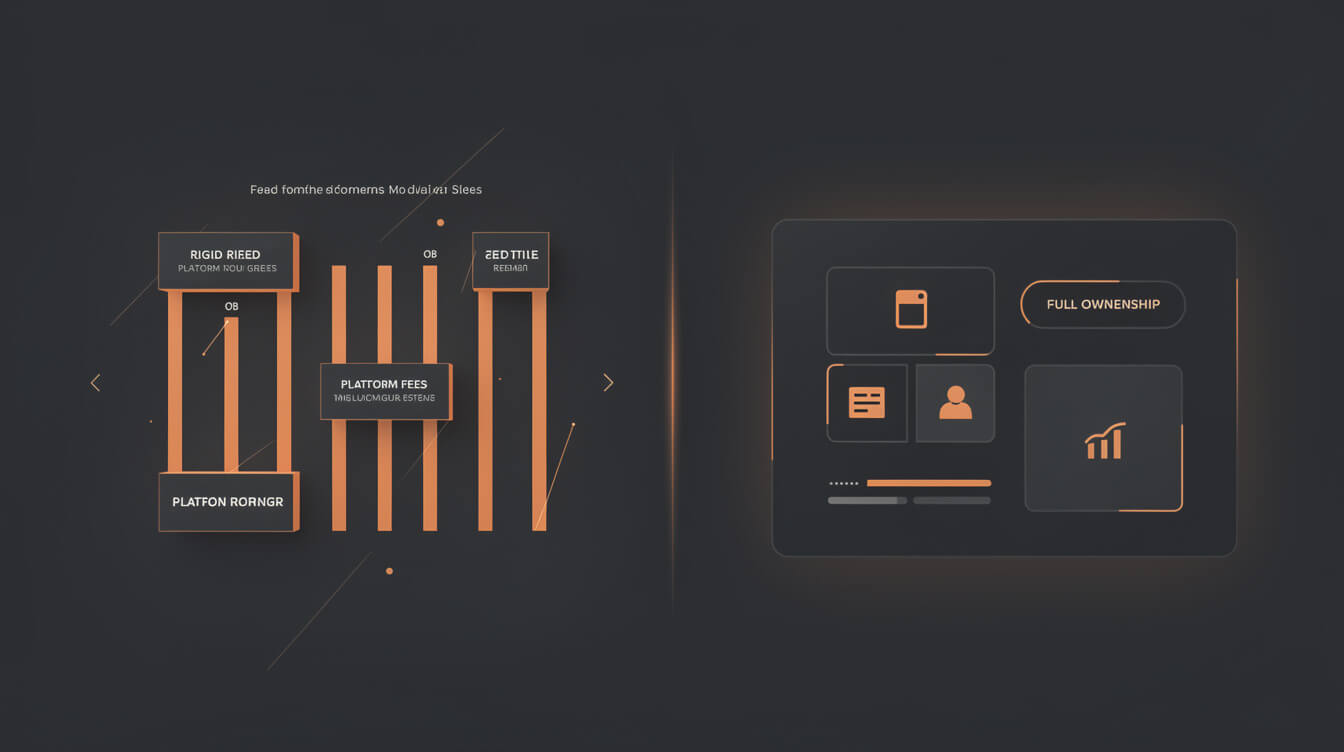
WooCommerce eliminates the platform override fee entirely. The economics of running a custom tank top POD store on WooCommerce versus Shopify come down to four factors: platform fee, hosting cost, plugin ecosystem, and control over your customer data.
Platform fee: zero vs 1%
WooCommerce charges no platform fee on sales. Your payment processor (Stripe, PayPal, or your bank’s gateway) takes 2.9% plus $0.30 per transaction, which is the same fee Shopify also charges on top of their override. On a $30 tank top, WooCommerce sellers keep the $0.30 Shopify charges as its cut. At 1,000 units per month, that is $300 back in your pocket monthly, or $3,600 per year.
Hosting cost
A WooCommerce store on managed WordPress hosting costs $25-40/month at meaningful traffic levels. Shopify Basic costs $39/month plus the override fee. At equivalent traffic, WooCommerce hosting runs roughly equal to or slightly below Shopify’s base plan, and you own your store entirely: no platform can change your pricing, restrict your products, or shut your account for policy reasons.
Printful and Printify integration
Both Printful and Printify have native WooCommerce plugins that work identically to their Shopify integrations. Order routing, automatic fulfillment, and product syncing all work the same way. There is no technical disadvantage to using WooCommerce for a Printful-powered tank top store.
Summer apparel drops and customer data ownership
If you run seasonal drops, your customer email list is your most valuable repeat-purchase asset. On WooCommerce, that email list is yours: stored in your own database, exportable to any email marketing tool, and not subject to platform data restrictions. Running a June tank top launch to your previous buyers costs you nothing extra. On Shopify, that list lives inside Shopify’s ecosystem, and export options come with friction.
For sellers considering moving a summer apparel catalog from Shopify to WooCommerce, the crop top economics breakdown covers the same migration math at a similar AOV point and applies directly to tank top stores.
Niche verticals for custom tank tops: gym and fitness, festival merchandise, sports teams, streetwear
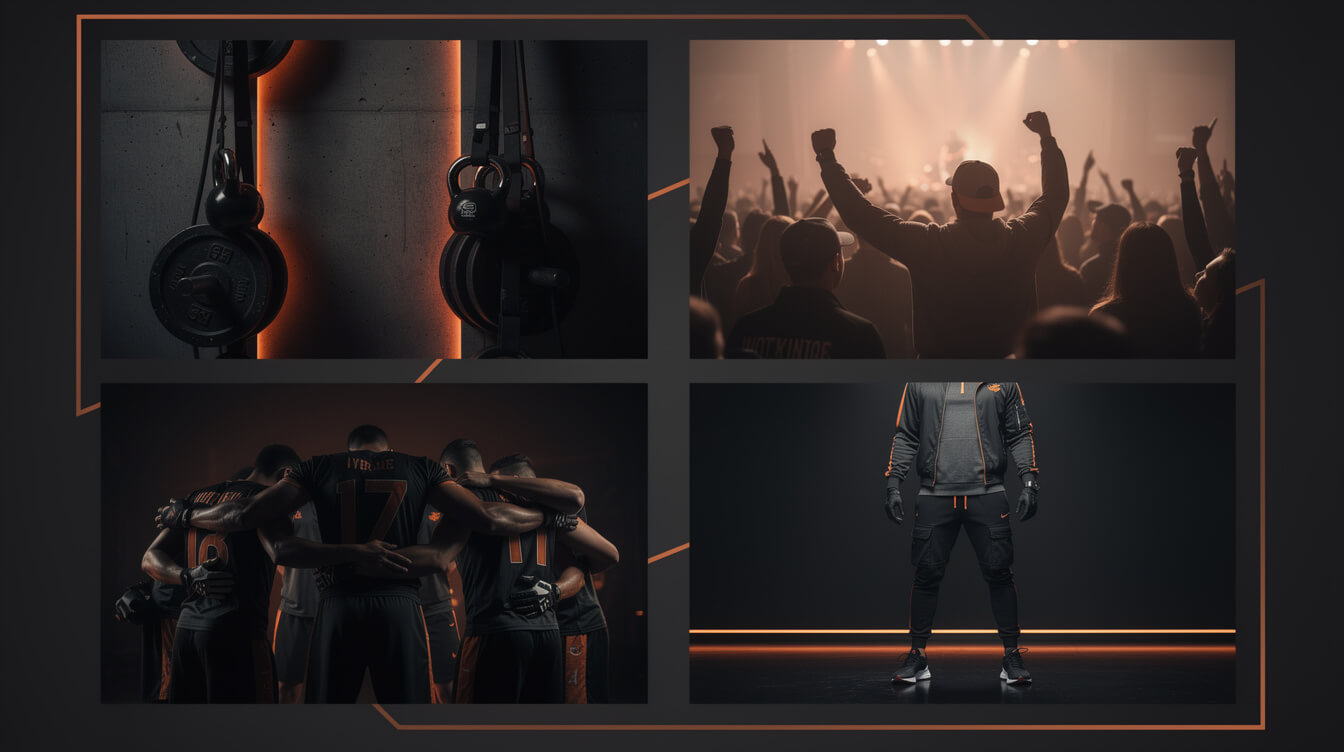
Custom tank tops have four meaningful niche markets with distinct buyer psychology, seasonal patterns, and margin implications.
Gym and fitness
The fitness apparel buyer is repeat-purchase motivated. Gym-goers replace worn training gear regularly, and brand loyalty in fitness apparel is high when the product performs. The key product for this niche is the polyester AOP racerback for women and the cotton muscle tank for men. Pair tank tops with matching sublimated leggings and sports bras to increase average cart size and reduce reliance on single-item orders.
Buyers in this niche respond to size inclusivity. Offering extended sizing (XS to 3XL) consistently captures buyers that pure gym brand collections ignore. Abstract geometric prints, bold color blocking, and performance visual cues (mesh detail references, technical shapes) sell well.
Festival merchandise
Festival season runs April through September in the US market, with peaks around major music festival dates. The buyer is event-driven: they want something distinctive to wear at a specific event. Limited-edition drops work well because the scarcity framing matches the event itself.
Festival merchandise buyers share images on social media while wearing the item, which makes your design organic marketing. Prioritize bold, graphic-forward designs with strong contrast. Black base with bright accent colors translate well in outdoor photography at events.
Sports teams and leagues
Community sports leagues, youth athletic programs, and recreational sports teams need uniforms and team apparel without the 50-unit minimums that screen printers require. A POD store targeting the coach or team manager buyer can capture a repeat customer who reorders every season as team rosters change.
Tank tops are common in summer sports: softball leagues, beach volleyball teams, summer basketball, and running clubs. The no-minimum POD model is the entire value proposition for this buyer. They need 8 units in specific sizes, not 50 identical units in one size run.
Streetwear crop tanks
The crop tank occupies streetwear and athleisure intersections where buyers expect fashion-grade presentation. This niche rewards differentiation: oversized fits, vintage washing effects, or bold graphic treatments that look premium in product photography.
The crop tank buyer spends slightly more ($32-40 vs $28-32 for a standard muscle tank) and is more likely to browse the full store before buying. Cross-sell to matching shorts, sweatpants, or accessories. If you are already selling custom design sweatpants in a streetwear catalog, tank tops are the natural summer companion product and should share visual branding and color palettes.
Seasonal timing
Tank top demand follows summer seasonality in the US, with search volume rising in March and peaking in June-July. Start setting up your tank top listings in February to capture pre-summer search traffic. SEO rankings take 4-8 weeks to build from a new listing. Sellers who add tank tops to their catalog in May miss the early-season traffic that converts at the highest rate in April and early May when buyers are planning summer wardrobes.
Frequently asked questions about custom tank tops for POD sellers
Can I sell custom tank tops on Etsy through Printful?
Yes. Printful integrates with Etsy in the same way it integrates with WooCommerce or Shopify. You list the tank top on Etsy, Printful fulfills automatically when an order comes in. The unit costs are identical regardless of which storefront you use. The fee difference is Etsy’s listing fee ($0.20 per listing) plus their 6.5% transaction fee on every sale.
What is the minimum order for custom tank tops via POD?
One unit. That is the entire point of the POD model. Printful and Printify both fulfill single-unit orders for custom tank tops. You do not need to hold inventory or meet any minimum before adding a tank top to your store.
Can I offer custom tank tops with a photo printed on them?
Yes, for both DTG and sublimation. On a cotton muscle tank via DTG, a photographic image prints at the same quality as any other graphic. On an AOP polyester racerback via sublimation, the photo wraps around the entire garment surface. Photo-print tank tops sell particularly well in the pet portrait and fan merchandise niches.
How long does Printful take to ship a tank top?
Printful’s standard handling time for apparel is 2-7 business days for DTG products and 2-5 business days for sublimation. Shipping time adds on top of handling and depends on the carrier and destination. For a summer drop where timing is critical, set realistic delivery expectations in your store before the season starts.
Do tank tops sell year-round or only in summer?
Search volume is seasonal, peaking April-July in North American markets. Year-round sellers exist in gym apparel (fitness buyers train year-round) and warm-climate markets. If you are targeting a national US audience, expect 60-70% of your annual tank top revenue to arrive in the April-August window.
Adding custom tank tops to your POD catalog: the bottom line
Custom tank tops are accessible through both Printful and Printify with no minimum order requirements. The key decision is fabric and print method: cotton muscle tanks and crop tanks use DTG, polyester AOP racerbacks use sublimation, and the distinction affects not just your unit cost but your design flexibility and the visual quality of the finished garment.
At $25-40 retail, the margin per unit is thinner than higher-AOV apparel. That makes platform fee selection critical. The Shopify 1% override takes a proportionally larger bite on a $30 tank top than on a $60 hoodie, and at summer-season volumes, that fee compounds into hundreds of dollars of annual cost that WooCommerce eliminates entirely.
The niche verticals with the most reliable demand, gym and fitness, festival merchandise, community sports teams, and streetwear, each have distinct buyer psychology and product requirements. Building a tank top catalog that serves one of these verticals specifically gives you clearer positioning and higher conversion rates than a generic custom tank top store competing against every screen print vendor in the country.
The summer window is short. Start your tank top listings before the season, not during it. Rankings need weeks to build, and the buyers who convert at the highest rate are the ones searching in April before the heat arrives, not in July when every competitor is also running promotions.
Implement AI. 30x your throughput. Get a 30-min call with the founder.
Drop your details and book a free 30-minute discovery call. Personalized advice on your POD stack, your margin, and where AI fits. No pitch, no fluff.