Custom laptop cases for POD sellers: which providers carry them, what sublimation on hard shell costs, and the tech niche math
The search for a custom laptop case returns handcrafted wood covers at $59–124 and premium leather sleeves from fashion brands. None of it is written for the POD seller who wants to list laptop cases without a minimum order quantity.
That is the gap. The SERP for “custom laptop case” is 100% consumer-facing premium brands. No operational content for print-on-demand stores exists. This guide fills it.
What follows covers how to sell custom laptop cases as a POD product in 2026: which providers carry them at no MOQ, how sublimation works on a polycarbonate hard shell, what the unit cost math looks like across size SKUs, and which niche verticals actually convert for this product category.
What “custom laptop case” actually means: hard shell, sleeve, and skin
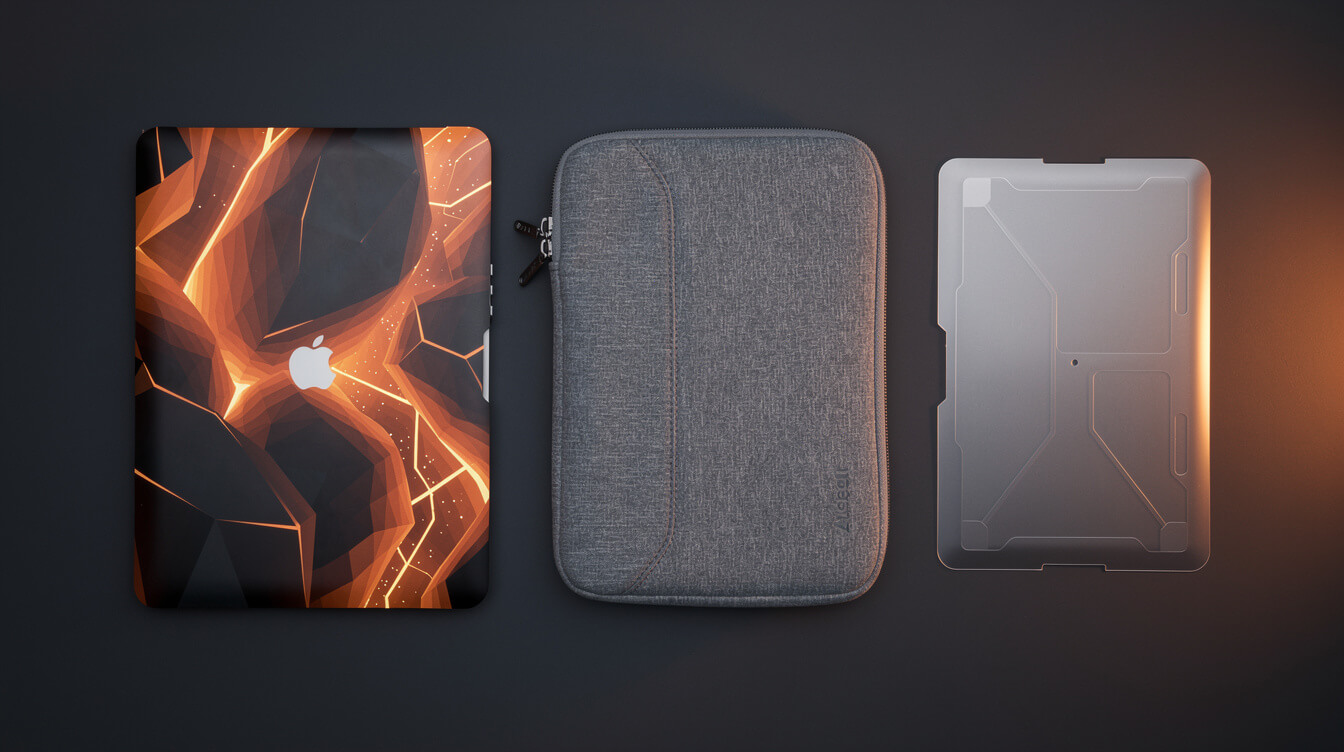
Three product types share the same search term. They are not interchangeable. Understanding which is which determines which POD providers you can work with and what your margin looks like.
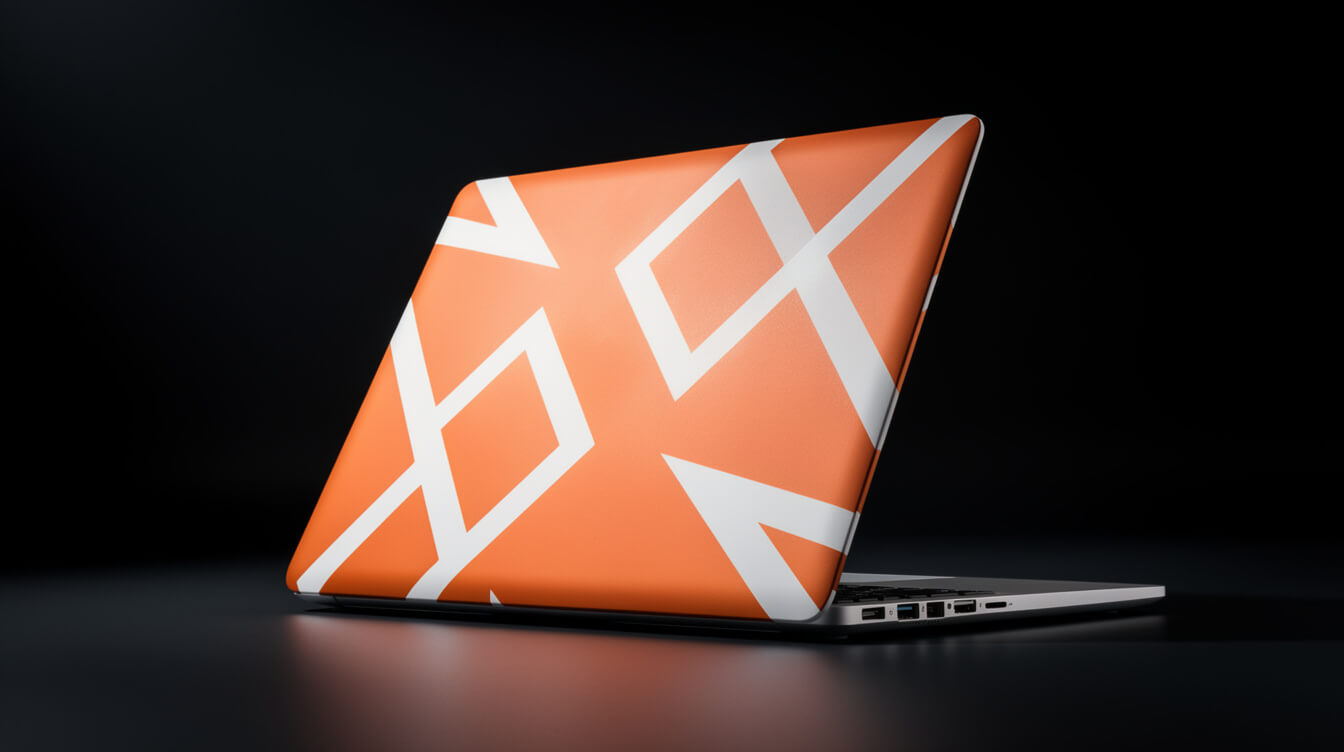
Hard shell snap case: A two-piece polycarbonate shell that clips over the laptop body, covering the lid and bottom panel. This is the most common format sold by fashion brands. The print surface is rigid. It requires a sublimation-coated polycarbonate substrate. Full-coverage designs are possible. This is what most POD sellers mean when they search for custom laptop cases.
Soft sleeve: A padded fabric pouch the laptop slides into. Material is typically neoprene or polyester. Polyester variants support dye sublimation for full-panel printing. Closer to a fabric product than a tech accessory. Lower AOV ($18–25), lower barrier to entry, narrower design possibilities.
Skin or decal: A precision-cut vinyl sheet adhered to the exterior of the laptop lid. Printed via large-format inkjet. Not a POD-native format. It requires model-specific cutting templates and does not translate well to standard fulfillment workflows.
For most POD sellers, the decision comes down to hard shell snap case versus soft sleeve. Hard shell cases carry higher retail prices ($28–45) and a more defined niche appeal. Sleeves are easier to produce but compress into lower-margin territory.
This guide focuses on hard shell cases as the primary product, with sleeve economics noted in the unit cost section.
Which POD providers carry custom laptop cases in 2026
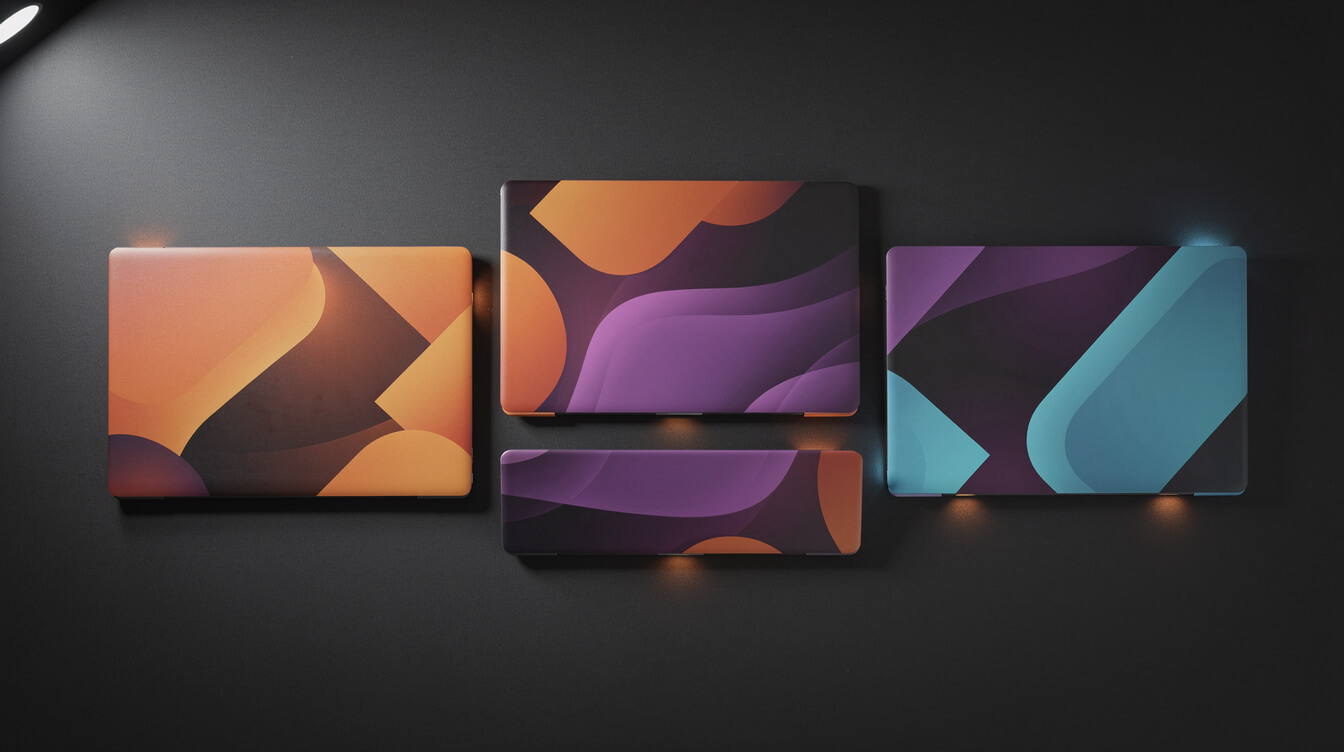
Not every POD provider has laptop cases in their catalog. Here is where the market stands as of mid-2026.
Printful carries both hard shell laptop snap cases and fabric sleeves. Hard shell cases are available for common MacBook and generic sizes (13″, 15″). Print method is dye sublimation on polycarbonate shells with a sublimation-receptive coating layer. Full-color coverage with no minimum order quantity. Sleeves are cut-and-sewn polyester with sublimation on the exterior panel.
Printify network: The Printify marketplace aggregates multiple print vendors. Laptop case availability varies by partner. Several Printify vendors carry sublimated hard shell cases, primarily for MacBook sizes. Verify current availability in the product creator before building listings, as catalog depth and size range shift as vendors update their offerings.
Gooten: Carries printed laptop sleeves and some hard case options. Worth checking for US and EU fulfillment if Printful’s catalog does not cover your target size range.
Sublimation-specialist vendors: Some Printify network vendors specializing in all-over-print products carry wider size ranges, including Windows laptop sizes (Dell 15.6″, HP 15.6″) that Printful’s standard catalog may not include. These are worth adding to your fulfillment mix if your target niche skews toward Windows users.
The operational note before you build any listing: laptop cases are model-specific. A 13″ MacBook Air snap case and a 13″ MacBook Pro snap case are not interchangeable shells, even if they appear similar. Verify physical size compatibility in the provider catalog before setting up any variant structure.
What to check before you build a listing
Before you upload a design, log into each provider’s product creator and run through this checklist:
- Size availability: Confirm which laptop models are in the catalog. Do not assume Printful’s US catalog matches its EU production options. Check both if you plan to sell internationally.
- Template download: Each model has a unique template. MacBook Air 13″ (M2) and MacBook Air 15″ (M2) use different template dimensions. Download the template for each model you plan to list before designing anything.
- Fulfillment time: Laptop cases typically ship in 2–5 business days from Printful. Printify vendor times vary. Check estimated production times during checkout setup, especially before listing during Q4 peak season (October through December).
- Return policy: Sublimated hard shell cases cannot be returned to stock if the customer ordered the wrong model. Clear sizing guidance in your product listing prevents most of these disputes.
The custom AirPod case guide covers the adjacent tech accessories category if you are building a full desk and tech setup product line. The buyer profile overlaps significantly with the laptop case buyer.
How sublimation printing works on a polycarbonate hard shell
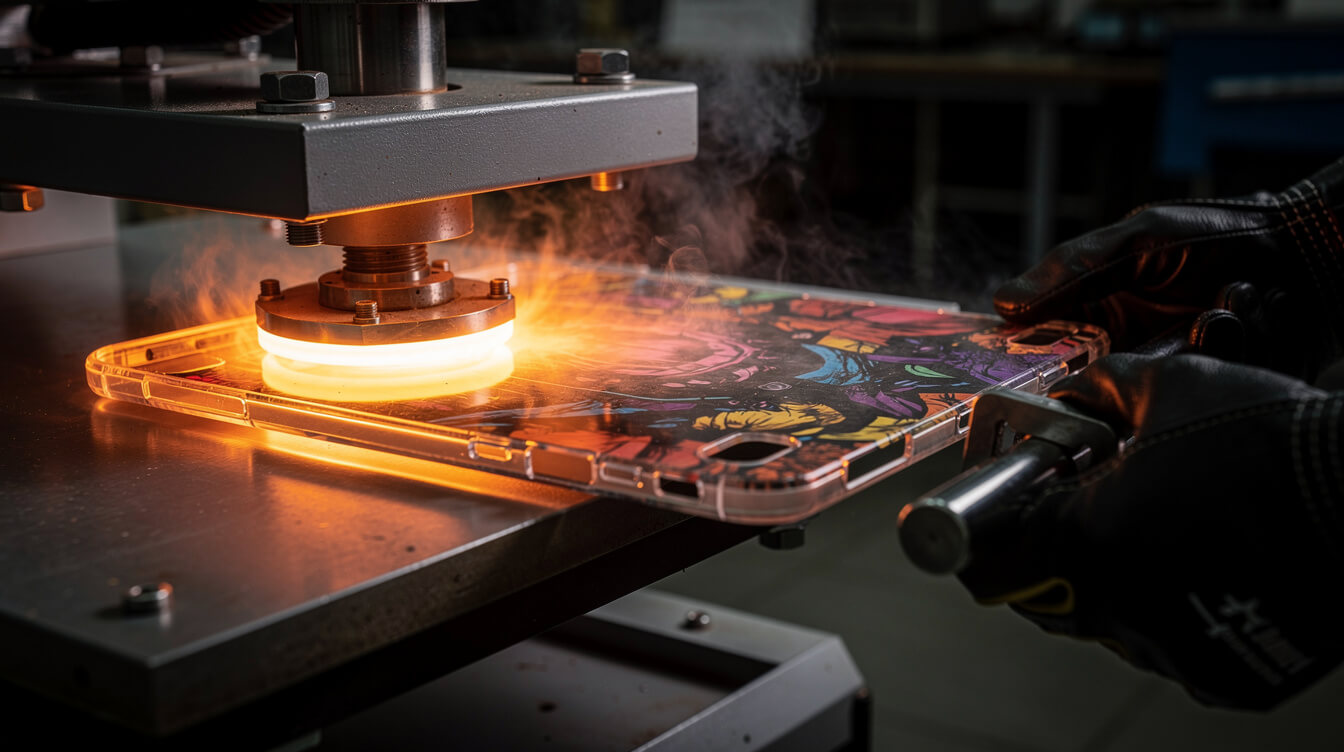
Standard polycarbonate cannot accept dye sublimation ink on its own. The base material has no receptive polymer structure. What makes sublimation possible on a laptop case is a coating applied to the polycarbonate surface before printing.
The process works as follows. The blank polycarbonate shell receives a thin polymer coating, typically a polyester-based or sublimation-receptive compound. When a printed transfer film is applied under heat at 375–400°F for 50–60 seconds, the sublimation dyes convert from solid to gas and bond molecularly to the coating. The result is a print that sits inside the coating layer, not on top of it.
This has direct durability consequences. Because the dye bonds inside the coating rather than sitting on the surface, the image cannot peel, crack, or wash off. Normal wear from sliding the case on and off the laptop does not affect the print. This is the same chemistry that makes sublimated mugs and polyester apparel wash-resistant. Only the substrate shape differs.
For POD sellers, this means no color limits, no minimum order quantities, and no post-process coating step. Turnaround times mirror other sublimated products, typically 2–4 business days at Printful.
File specifications to get right before designing
Providers require approximately 150 DPI at the final print size. For a 13″ hard shell covering the full lid, that means roughly 1,950×1,300px for the lid panel at a 3:2 aspect ratio. Download the provider’s official design template before starting. The cut line, safe zone, and bleed area vary by laptop model. Designing without the template is the fastest path to a rejected file or a design that clips at the edges.
Unit cost math and the model-specific SKU challenge

Smash print-on-demand. Join the engine room.
One short email a week. Real numbers, real teardowns, the unfiltered economics behind every move.
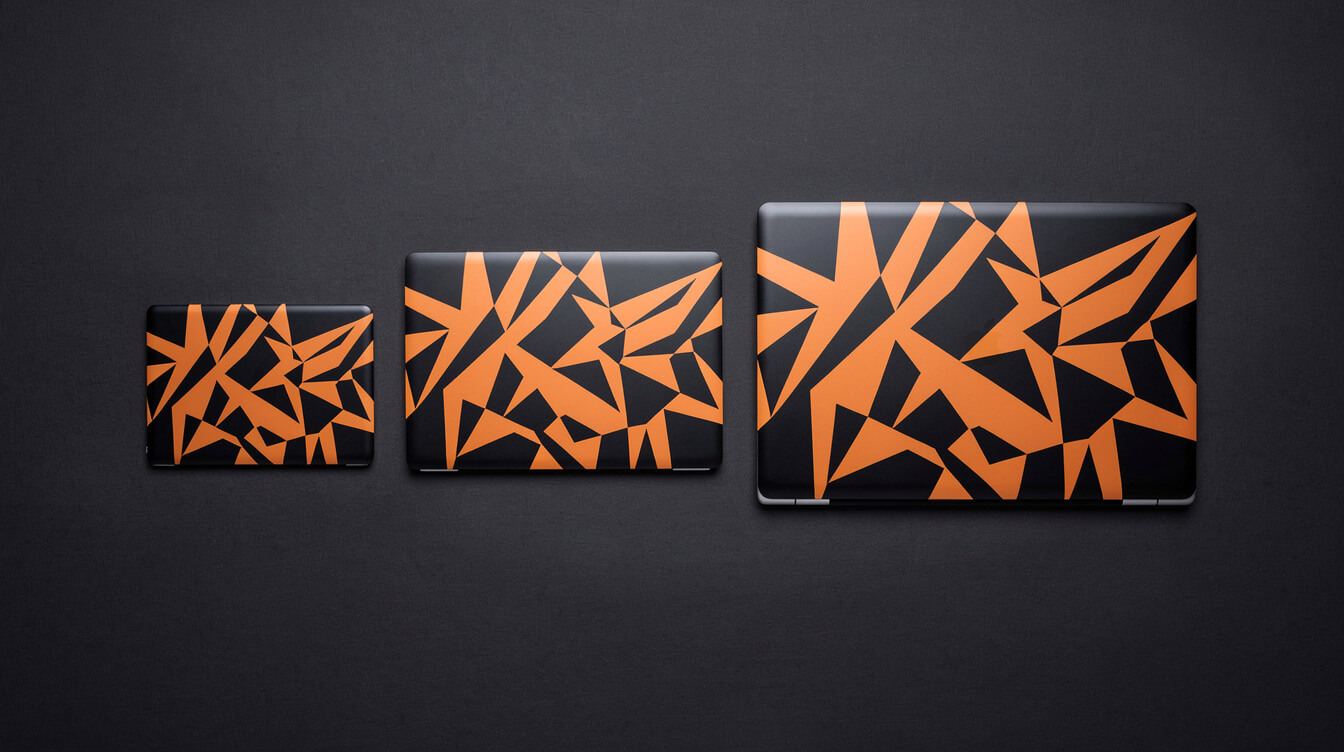
These are estimated base costs based on Printful pricing ranges and Printify vendor data as of mid-2026. Verify current pricing in the product creator before committing to a margin structure.
Printful hard shell snap case, 13″ (MacBook):
- Base cost: $14–18
- Shipping (domestic US): $3.50–5.00
- Landed cost: $17.50–23
Printful hard shell snap case, 15″ (MacBook or generic):
- Base cost: $16–20
- Shipping: $4–5.50
- Landed cost: $20–25.50
Soft sleeve, 13–15″ polyester (Printful):
- Base cost: $10–14
- Shipping: $3.50–5
- Landed cost: $13.50–19
The numbers look manageable in isolation. The challenge appears when you build the actual listing structure.
A laptop is not a phone. Every major laptop model has different physical dimensions. MacBook Air 13″ (M2) is not the same shell as MacBook Air 13″ (M1). MacBook Pro 14″ has different dimensions from MacBook Air 13″. Dell XPS 13″ differs from Dell Inspiron 15.6″. Each requires a unique product variant or separate listing.
A well-built laptop case store will carry six to eight SKU variants for a single design just to cover common laptop models. That is not a problem for the product itself. It is a problem for Shopify’s variant management, which we cover in the next section.
The practical startup approach: list MacBook Air 13″ and MacBook Pro 13–14″ first. These sizes account for the majority of laptop case searches from design-conscious buyers who purchase based on aesthetics. Expand to Windows models once base listings prove the design concept.
What custom laptop cases sell for: retail pricing and margin math
The retail sweet spot is $28–45. Most sales cluster in the $32–38 range for single hard shell designs. Premium designs, meaning full-bleed original art or branded cases for tech teams, reach $40–50.
Budget tier ($28 retail, 13″ hard shell):
- Landed cost: $19–23
- Gross margin: $5–9 per unit = 18–32% gross
- Thin. Only viable as a traffic-building SKU or bundle anchor.
Standard tier ($35 retail, 13″ hard shell):
- Landed cost: $19–23
- Gross margin: $12–16 per unit = 34–46% gross
- This is the working margin that sustains a laptop case operation. Target this range from day one.
Premium tier ($42 retail, 15″ hard shell):
- Landed cost: $22–26
- Gross margin: $16–20 per unit = 38–48% gross
- Original art, gaming designs, branded merchandise. Achievable once the store has established reviews and social proof.
The bundle opportunity worth building early
A custom laptop case paired with a custom mouse pad for the same desk setup reaches $60–75 AOV. At a $68 bundle AOV with 42% margin, that is $28.56 gross per order. More than three times the gross dollar amount of a single t-shirt sale at the same margin percentage.
Tech accessories bundle naturally because the buyer is setting up a workspace, not just buying one product. A mouse pad, a laptop case, and a custom keychain is a $85–95 cart that costs $38–42 to fulfill.

From research to live listing in under 7 minutes
MEGA automates the end-to-end POD pipeline, including tech accessories like laptop cases. AI design generation, Printful listing, WooCommerce publish. No Canva. No manual upload. No 6-hour workflow.
Shopify’s 1% override fee on tech accessories and why it compounds

The Shopify 1% platform override on Shopify Payments does not feel significant on a single transaction. At $35 per laptop case, the override is $0.35. That is not the problem.
The problem is twelve months of that fee applied across a catalog that requires multiple SKUs per design.
At 200 orders per month, $35 AOV:
- Monthly revenue: $7,000
- Shopify 1% override: $70/month = $840/year
- Shopify Basic plan: $468/year
- Total Shopify overhead: $1,308/year
At 200 orders per month, $42 AOV (premium tier):
- Monthly revenue: $8,400
- Shopify 1% override: $84/month = $1,008/year
- Shopify Basic plan: $468/year
- Total Shopify overhead: $1,476/year
WooCommerce fixed overhead: $180–360/year. No transaction percentage. No override scaling with revenue.
Now add the multi-SKU issue. Six laptop model SKUs under one design means six product variants or six separate listings. WooCommerce handles this natively as a single variable product with a size or model attribute. No app required. On Shopify, managing a large accessory catalog with model-specific variants often requires a third-party app or custom development. A variant management or product options app runs $9–49/month. At $29/month, that is another $348/year.
Shopify overhead at 200 orders per month: $1,308–1,824/year. WooCommerce overhead: $180–360/year.
The difference is $948–1,464/year that stays in your margin rather than Shopify’s platform revenue. At 200 orders per month, that is roughly one month of gross profit going back to you on WooCommerce versus to Shopify.
The full platform comparison, including fee tables at five revenue milestones, is at mega.management/woocommerce-vs-shopify-pod-sellers/.
The niche verticals that convert for custom laptop cases
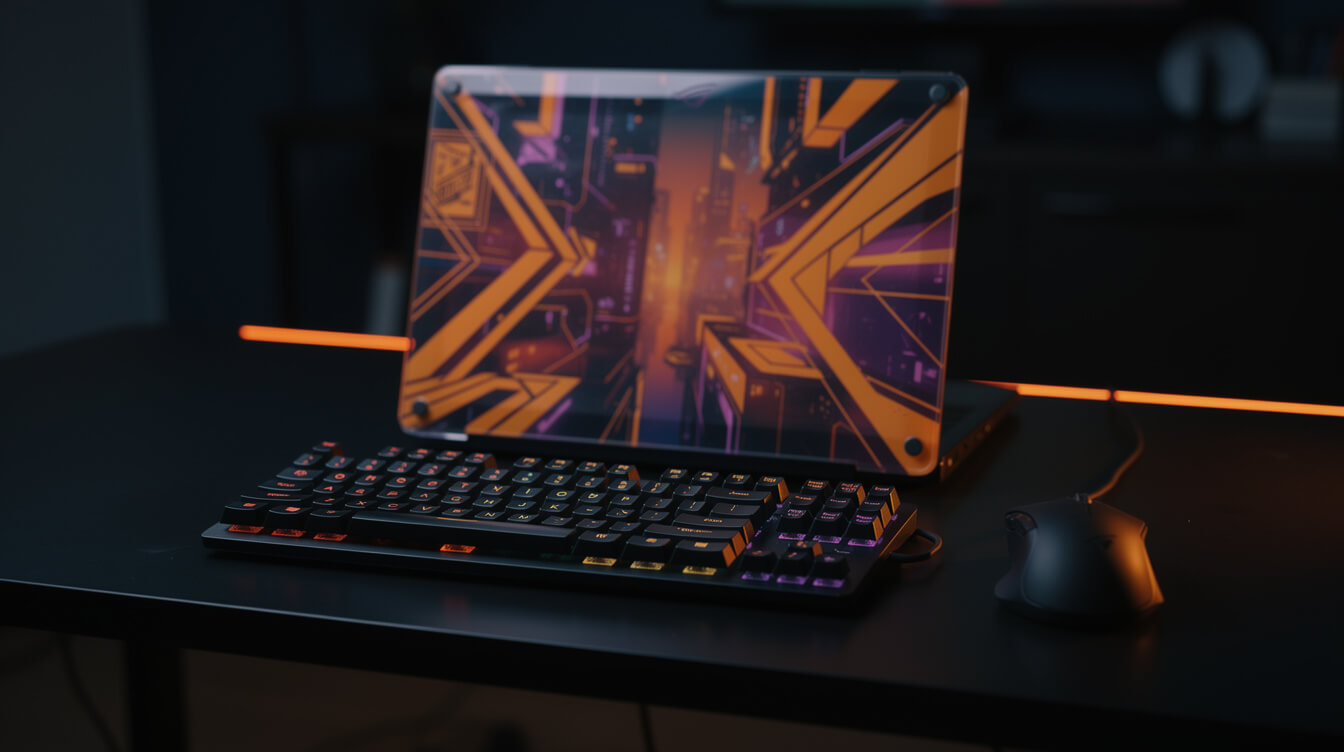
Custom laptop cases sell to a specific buyer profile: someone who cares enough about their desk aesthetic, their fandom, or their brand identity to spend $32–42 on a case that makes their laptop identifiable. These are the verticals that produce consistent sales in this category.
Gaming and desk setup aesthetics: Dark backgrounds, circuit board patterns, RGB-style geometric graphics, and gaming character art. This buyer is already spending money on peripherals. A custom laptop case fits naturally into the budget alongside a custom mouse pad or keyboard sleeve. Strong cross-sell opportunity within a single desk setup purchase.
Anime and gaming fan art: Original interpretations of gaming aesthetics, anime-adjacent art styles, and fan designs that attract buyers through visual identity rather than licensed IP. This niche drives strong TikTok and Instagram discovery because the product photographs well against a desk setup backdrop. Full-coverage sublimation on a hard shell shows art details that a phone case cannot.
Pet portraits on tech: Custom pet portrait laptop cases occupy a gift niche with consistent evergreen demand. The buyer is purchasing for someone else, for a birthday or holiday gift. AOV skews higher. Reorder rate is low, one laptop generates one case sale, but referral rate from gift recipients who photograph the case is above average.
Remote work and WFH aesthetic: Clean, minimalist designs, botanical prints, neutral color palettes. This buyer follows interior design accounts and treats their desk setup as an extension of their personal brand. MacBook sizes are the primary SKU for this audience. Content strategy: photograph the case in styled desk setups, not on a plain background.
Brand merch for tech teams: Small startups, agencies, and developer teams ordering custom laptop cases with company branding. Orders of 5–20 units at $40–50 each. B2B-adjacent with predictable repeat orders when team headcount grows. This buyer does not browse Etsy. They find you through Google or referral. A professional-looking product page with model-specific sizing options is the conversion signal they are looking for.
K-pop and fandom: Fan art designed around specific aesthetics, color palettes, and visual identities from music and entertainment. This buyer has a high willingness to pay for niche customization and shares purchases on social platforms. Original art that captures a fandom’s aesthetic without reproducing protected IP is the viable path.
WooCommerce vs Shopify for a custom laptop case store
Building a laptop case store is a multi-SKU operation. You will list the same design across six or eight laptop models. You will manage variant structures for size and case type. You will track shipping weight differences between a 13″ case and a 15″ case. None of this is complicated. All of it is easier on WooCommerce than on Shopify.
WooCommerce’s variable product type handles all six model SKUs under a single product listing with a model attribute dropdown. No app needed. The customer selects their laptop model from a dropdown and adds the correct case to their cart. This is standard WooCommerce behavior, available on the free core plugin.
Shopify’s base product structure handles simple variants well. Multi-dimensional variants for a tech accessory catalog, especially one covering both Mac and Windows models with different form factors, often pushes stores toward paid apps for product options or variant metafields. That overhead compounds with the 1% override.
Custom laptop cases are not the highest-volume POD product. Search volume sits at 1,000 per month. That is not 18,000/month like custom tote bags. But the buyer intent is strong, the SERP is entirely uncontested for POD sellers, and the AOV is two to three times a t-shirt sale. A research-first POD operation targets exactly that combination.
The laptop case is also a natural anchor product for a tech accessories vertical. Add custom mouse pads, AirPod cases, and keyboard sleeves to the same store, and the average order value climbs without adding fulfillment complexity. Each product ships in the same small parcel format. Each design adapts across the accessory range with minimal redesign work.
Start with MacBook sizes, prove one or two designs, then build the full accessory catalog once the economics are confirmed.
Action steps for the first 30 days
Here is a practical sequence for starting a laptop case product line on WooCommerce:
- Pick two designs to test. One gaming or anime aesthetic, one minimalist or WFH design. These cover the two largest buyer segments with minimal overlap.
- List MacBook sizes first. MacBook Air 13″ and MacBook Pro 14″ cover the highest-search-volume laptop models among design-conscious buyers. Add Windows sizes in week two.
- Set up a desk setup bundle. Pair each laptop case with a custom mouse pad from the same design series. This increases AOV without adding fulfillment complexity.
- Photograph on a desk, not a plain background. The buyer for this product self-identifies with their workspace. Context shots of the case on a styled desk outperform studio product photos for conversion in this niche.
- Price at $35 for 13″ and $42 for 15″. These hit the sweet spot of defensible margin without the buyer resistance that appears above $45.
Implement AI. 30x your throughput. Get a 30-min call with the founder.
Drop your details and book a free 30-minute discovery call. Personalized advice on your POD stack, your margin, and where AI fits. No pitch, no fluff.