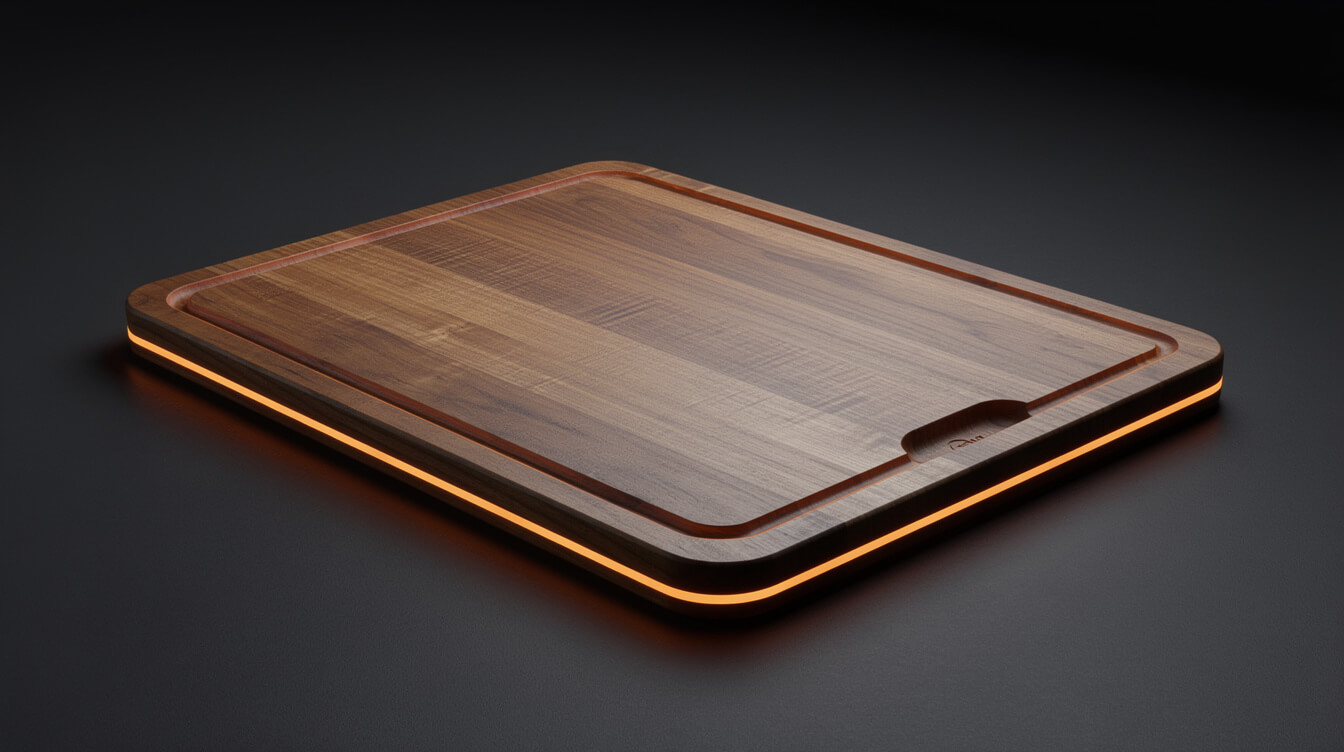
Custom cutting boards for POD sellers: which providers carry them, what the unit cost looks like, and the kitchen niche math
A custom cutting board is one of those products where the SERP tells you almost nothing useful if you are a print-on-demand seller. Search the keyword and you get Forest Decor charging $94 for a laser-engraved walnut slab, CuttingBoard.com offering hand-finished maple at $120+, and Hardenbrook Hardwoods shipping artisan boards at $175. None of it explains whether you can sell a custom cutting board through your WooCommerce store without holding inventory, who the POD providers are, or what the unit economics actually look like.
This guide answers those questions directly. You will learn which POD providers carry cutting boards, how the sublimation vs laser engraving distinction shapes your catalog options, what the unit cost math looks like at 1, 10, and 50 units, and how the kitchen niche performs as a POD vertical. All numbers are specific. No vague claims.
What “custom cutting board” actually means for print-on-demand sellers
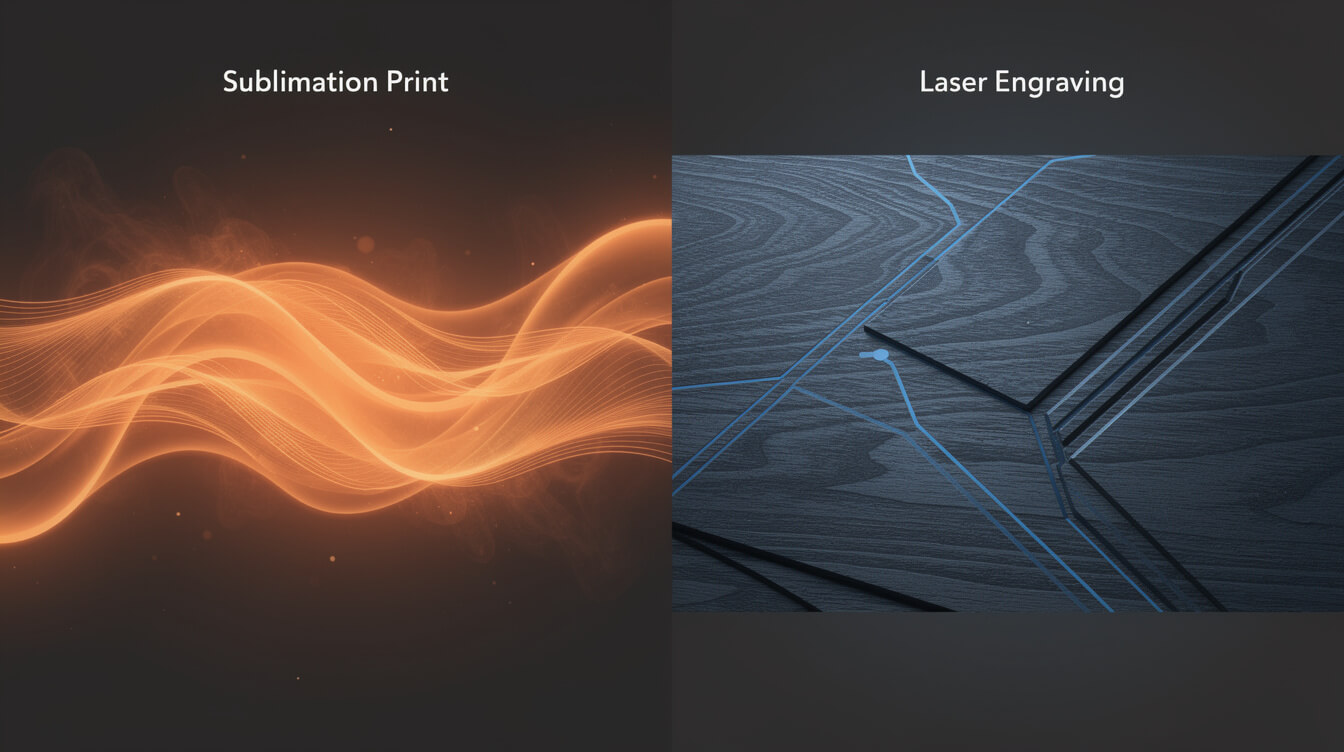
The phrase “custom cutting board” covers two completely different product categories, and the distinction determines whether POD is viable for your store at all.
The first category is laser-engraved hardwood. This is what dominates the search results. Artisan studios burn designs into walnut, maple, teak, or bamboo using a CNC laser. The result is a permanent, tactile engraving with no ink, no sublimation dye, and no polyester. These boards retail at $40 to $175 depending on size, wood species, and design complexity. They require either in-house laser equipment or a manufacturer with minimum order quantities. You cannot produce them on demand via Printful or Printify.
The second category is sublimation-printed hardboard or composite cutting boards. These use dye-sublimation printing on a flat, polyester-coated composite surface. The design is vibrant and photo-quality. The boards are dishwasher-safe and food-grade. They retail at $28 to $55 depending on size. This is the category that POD providers actually carry, and it is a genuinely different product from the artisan hardwood version.
Understanding this split matters because your customers are searching “custom cutting board” with different intents. Some want personalized gifts and do not care whether it is walnut or hardboard. A well-executed sublimation board with the right design, photographed properly, competes in that gift market without costing $120 per unit in raw materials.
The POD angle is: zero inventory, no laser equipment, no minimum order. You list the product, take the order, and the provider fulfills it. Your margin depends on the spread between provider cost and your retail price.
Which POD providers carry custom cutting boards
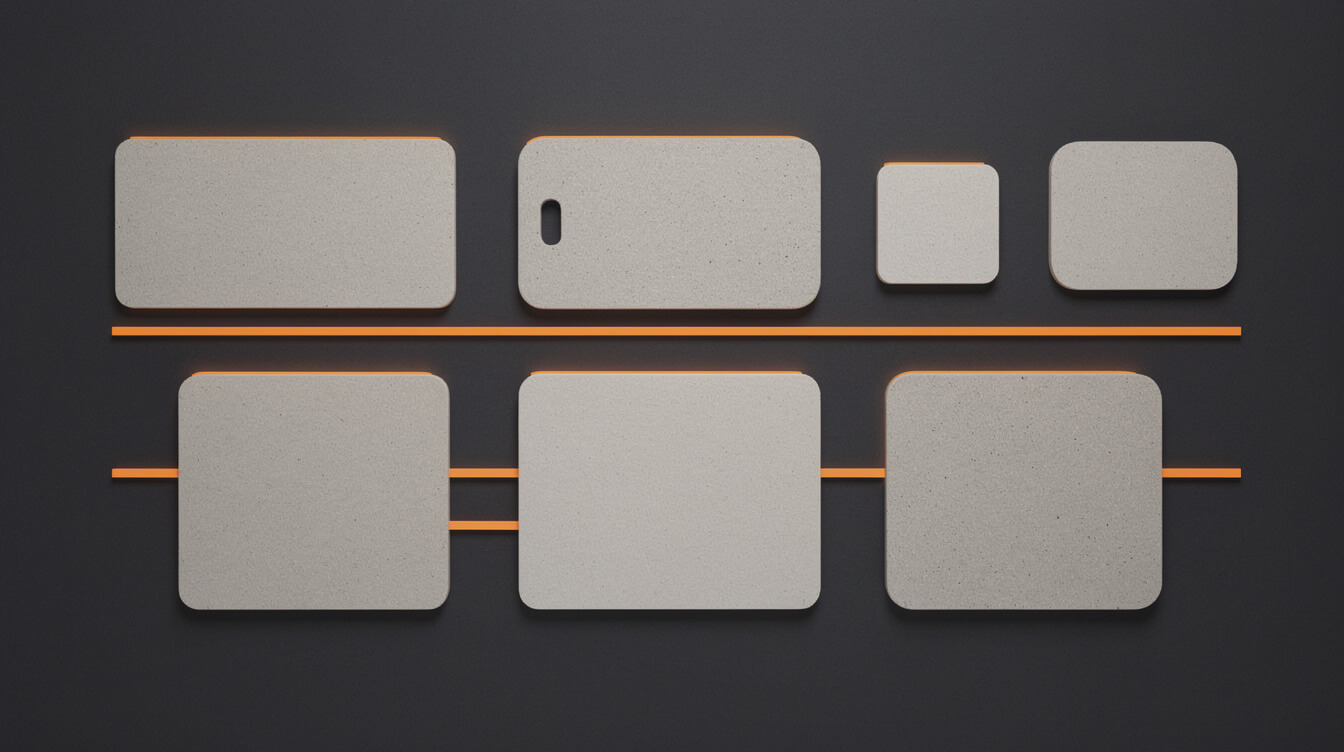
Printful carries sublimation-printed cutting boards. The current catalog includes a round hardboard cutting board (approx. 11.4 inches diameter) with dye-sublimation printing on a food-safe, polyester-coated surface. The print area covers the full face of the board. Files should be submitted at 300 DPI, JPEG or PNG with a transparent background for precise bleed handling. The board ships from Printful’s EU and US facilities depending on the customer’s location, which affects fulfillment time.
Printify has several supplier options through its partner network. The selection varies by print provider. Suppliers like AOP+ and DTG2Go carry hardboard cutting board options with different size formats (square vs round) and different minimum print quality requirements. The trade-off with Printify’s model is that you choose the supplier per product, so quality and shipping speed differ depending on which partner you select. Check each supplier’s sample policy before committing to a catalog listing, because the coating quality varies.
Gooten carries cutting boards as part of its home and kitchen catalog. Gooten is a solid secondary option if you are already using them for other products and want to consolidate fulfillment. Their per-unit pricing is competitive, but their product selection in cutting boards is thinner than Printify’s network.
What none of them carry is traditional hardwood laser engraving. If a customer wants a walnut board with a burned-in monogram, you are outside POD territory. The artisan studios own that market segment. POD owns the sublimation/composite tier, and that is a legitimate market in its own right, particularly for gifting.
Unit cost math at 1, 10, and 50 units
Here is the honest math. Sublimation hardboard cutting boards from POD providers cost approximately $15 to $22 per unit at 1-unit volume, depending on provider and size. Printful’s round board lands around $18 to $20 with base production cost. Printify suppliers range from $14 to $22 depending on size and partner.
At retail, the competitive window for a sublimation cutting board sits at $32 to $55. Below $32 you are competing on price with mass-market commodity boards. Above $55 you are pushing into artisan hardwood territory where customers start asking about wood species. The $35 to $48 range is the most defensible for a well-designed POD board with a strong niche angle.
The gross margin math at those numbers:
- Provider cost $18, retail $42: gross margin $24, roughly 57%. After Shopify or WooCommerce platform costs, payment processing, and any ad spend, net margin shrinks further.
- Provider cost $20, retail $48: gross margin $28, roughly 58%. Slightly better because the same platform overhead hits a larger base.
- Provider cost $15, retail $35: gross margin $20, roughly 57%. This is the entry-level price point. It works, but it leaves less cushion for paid traffic or discounts.
These margins are comparable to what you see in the custom drinkware category. The math is not spectacular, but it is consistent. Kitchen gift products tend to have strong conversion rates when positioned correctly, which reduces the need for discounting.
At 10 units, POD providers do not offer volume pricing. That is the trade-off for no minimum order. You pay per-unit cost at every quantity. Artisan hardwood manufacturers typically require 25 to 50 unit minimums for laser engraving runs, but their per-unit cost drops to $18 to $35 at scale. So at 50+ units, a manufacturer-direct laser-engraved hardwood board can undercut your sublimation POD cost while delivering a premium product.
The POD model wins at 1 to 10 units because there is no capital outlay, no inventory risk, and no minimum commitment. For a seller testing the kitchen niche with a new design, POD is the rational starting point. If a particular design proves volume, the economics of switching to manufacturer-direct for that SKU become worth evaluating.
Compared to the artisan studio segment: Forest Decor at $94 to $175 is not your competition. They target the premium gift market. Your $38 sublimation board targets the volume personalized-gift market, and the two rarely compete for the same customer.
The Shopify 1% reality at a $35-55 average order value

Smash print-on-demand. Join the engine room.
One short email a week. Real numbers, real teardowns, the unfiltered economics behind every move.

Here is where the platform math matters. Shopify charges a 1% transaction fee on every order processed through third-party payment gateways (Stripe, PayPal) unless you use Shopify Payments. On a $42 cutting board order, that is $0.42 per transaction in platform fees, on top of Stripe’s processing fee of roughly $1.52 (2.9% + $0.30). Your total payment overhead per $42 order is close to $2.00 before any app fees.
That number compounds across volume. At $5,000 monthly revenue in cutting board sales:
- Shopify 1% fee: $50/month
- Stripe processing (~3.6% effective): $180/month
- Shopify base plan ($39/month at basic tier): $39/month
- Total platform overhead: $269/month on $5,000 revenue, or 5.4%
At $10,000 monthly revenue:
- Shopify 1% fee: $100/month
- Stripe processing: $360/month
- Shopify base plan: $39/month
- Total: $499/month on $10,000, or roughly 5%
WooCommerce has no platform transaction fee. Payment processing costs are the same (Stripe rates do not change based on your e-commerce platform), but you eliminate the Shopify 1% entirely. On $10,000 monthly revenue, that is $100 back in your pocket every month, or $1,200/year, without changing anything else about the business.
For a low-AOV product like a $42 cutting board, the Shopify 1% hurts proportionally more than it does on a $120 product. The fee is the same percentage, but the base is smaller, so there is less margin to absorb it. If you are selling cutting boards at volume, you feel this.
MEGA automates the WooCommerce product setup for POD sellers, from catalog creation and Printful integration to SEO-optimized listings, so moving to WooCommerce does not mean managing complexity manually. Try MEGA to see the pipeline.
Kitchen and housewarming as a POD niche: demand, verticals, and seasonal peaks
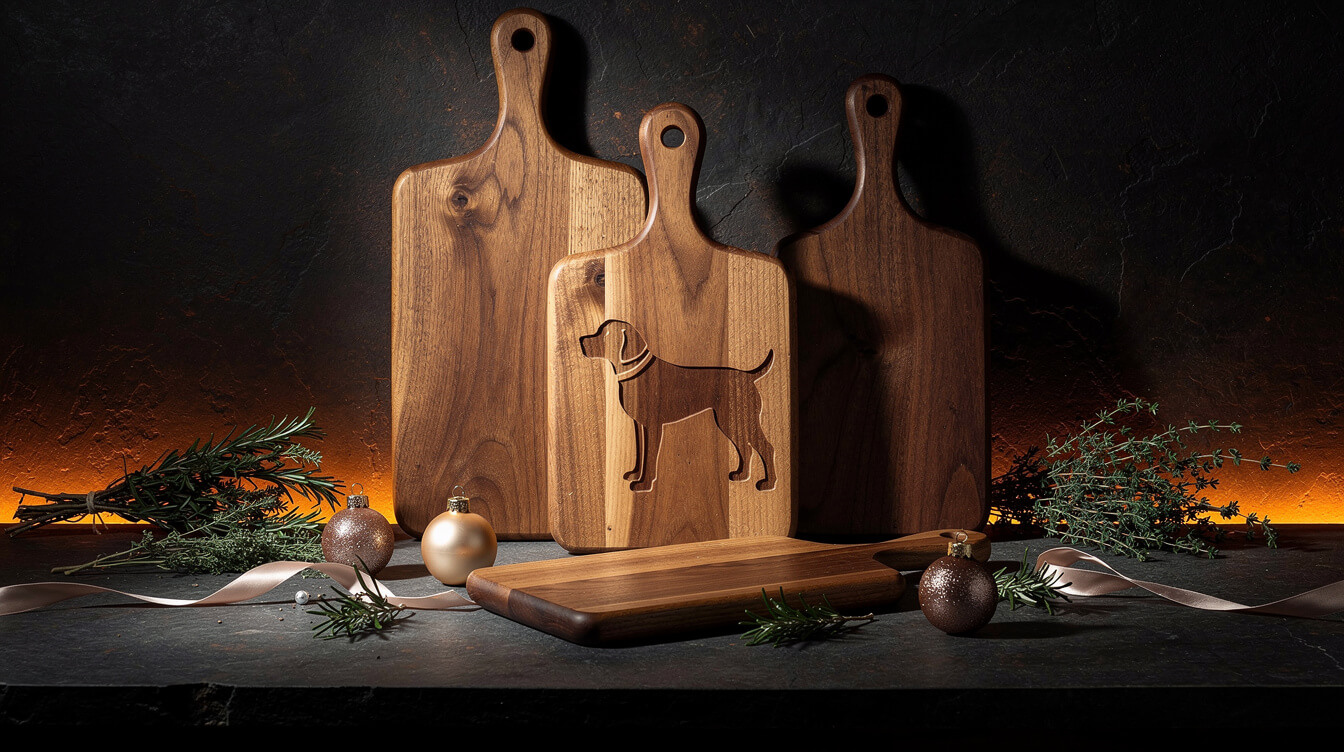
The kitchen gift niche has reliable demand patterns that make it a strong candidate for a POD store. These are not just seasonal spikes, they are predictable buying windows you can plan inventory-free production around.
Wedding season (March through August): Custom cutting boards are a top-tier wedding and bridal shower gift. A personalized board with the couple’s name and wedding date is a high-intent, high-conversion product for this audience. The average wedding gift spend is $75 to $150, so a $42 POD board undercuts the average by a significant margin while still looking premium with the right design.
Holidays (October through December): The Q4 kitchen gift window is large. Cutting boards perform well as housewarming gifts, hostess gifts, and Christmas presents. Custom ornaments and blankets follow similar seasonal patterns, as you can see in the custom ornament analysis for POD sellers. Kitchen products are in the same seasonal arc.
Housewarming (year-round, with peaks in spring and fall): Housewarming purchases cluster around major real estate closing seasons. Real estate agents also use custom cutting boards as closing gifts, which creates a B2B opportunity for stores with a kitchen-gift positioning.
Niche verticals worth testing:
- Pet portrait cutting boards (dog or cat face on a board is a proven POD seller across many product categories)
- Family recipe boards (grandma’s recipe handwritten-style design, a reliable gifting hit)
- State and region-themed boards (locals buy hyper-local designs; the Google traffic is thinner but conversion is higher)
- Sports fan boards (team colors, mascot imagery, “game day” positioning)
- Restaurant and hospitality branding (commercial kitchens sometimes order custom boards for marketing photos)
The key to succeeding in the kitchen gift niche is specificity. A generic cutting board with a neutral pattern does not convert. A cutting board designed for golden retriever owners, or one that features a family’s last name in a style that reads as hand-lettered, converts because it feels personal. The design is the product in this category. POD lets you test many designs at zero inventory risk, which is a structural advantage over gift shops that need to commit to stock.
For comparison, the custom photo blanket niche follows a similar seasonal arc and gifting logic. The photo blanket POD guide covers how to position high-personalization home products and how to price for the gift buyer, which applies directly to cutting boards.
WooCommerce vs Shopify for a kitchen merch store
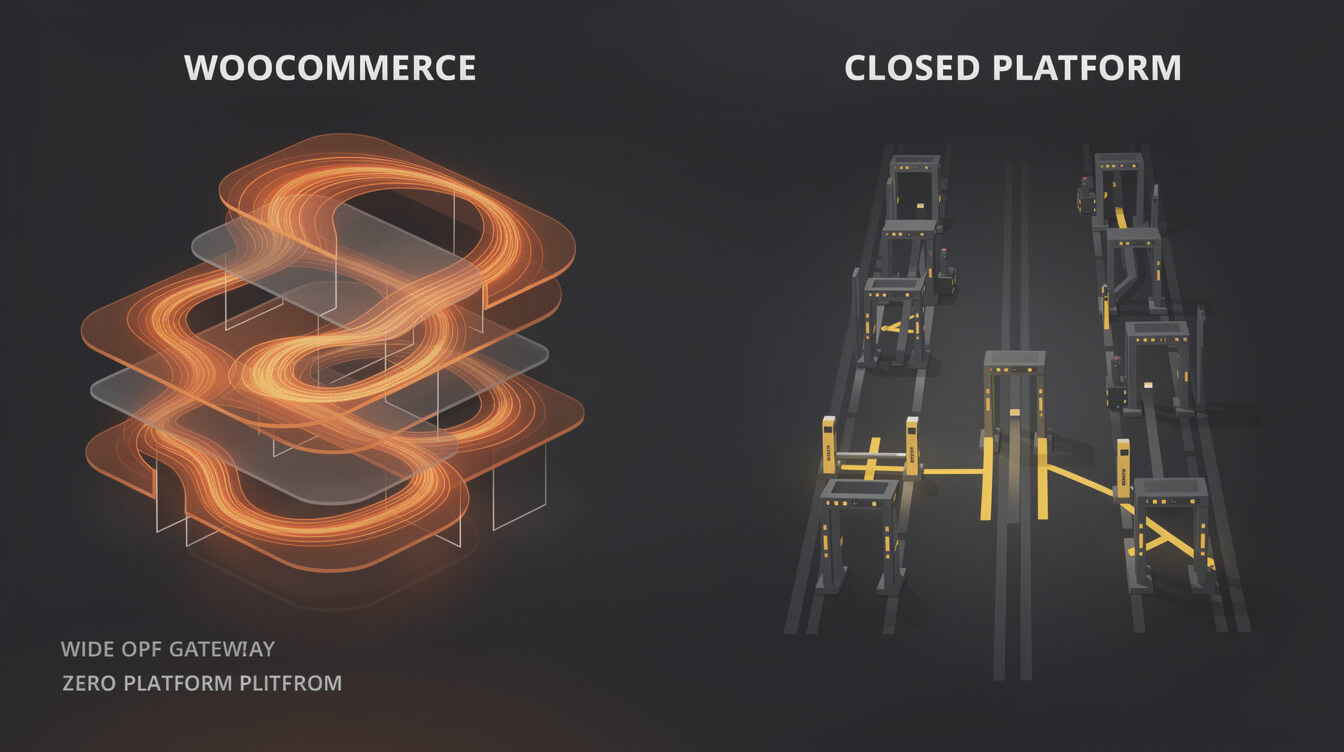
The fee math makes WooCommerce the better platform for a kitchen-focused POD store, particularly if you are selling multiple low-to-mid AOV products (cutting boards, mugs, ornaments, blankets) and relying on volume rather than a small number of premium orders.
The full comparison is detailed in the WooCommerce vs Shopify analysis for POD sellers, but the relevant numbers for a kitchen store:
At $5,000 monthly revenue across kitchen gift products averaging $40 AOV:
- Shopify Basic + Shopify Payments: no 1% override fee, but $39/month plan plus 2.9%+$0.30 per transaction. App costs add $50 to $150/month for SEO, email, and upsells.
- Shopify Basic + Stripe: the 1% override applies. Total monthly platform overhead including plan, apps, and the override: roughly $300 to $350.
- WooCommerce + Stripe: no platform override. WooCommerce is free. Hosting runs $20 to $40/month on a managed WordPress stack. Total monthly overhead: $200 to $250, depending on which apps you use.
The difference is $50 to $100/month at $5,000 revenue. At $10,000 monthly revenue, it is $100 to $200/month. Over a year, that is $1,200 to $2,400 that stays in the business.
WooCommerce also gives you full ownership of the customer relationship, the email list, and the checkout data. Shopify controls those assets on your behalf and can change terms. For a business operating at the kitchen gifting niche, where repeat purchasers (weddings, housewarmings, holidays) are a real customer segment, owning the email list matters.
If you are running a print-on-demand business across multiple product categories, the POD for business operators guide covers how to structure a WooCommerce store for multi-category catalog management at scale.
What to check before adding cutting boards to your POD catalog
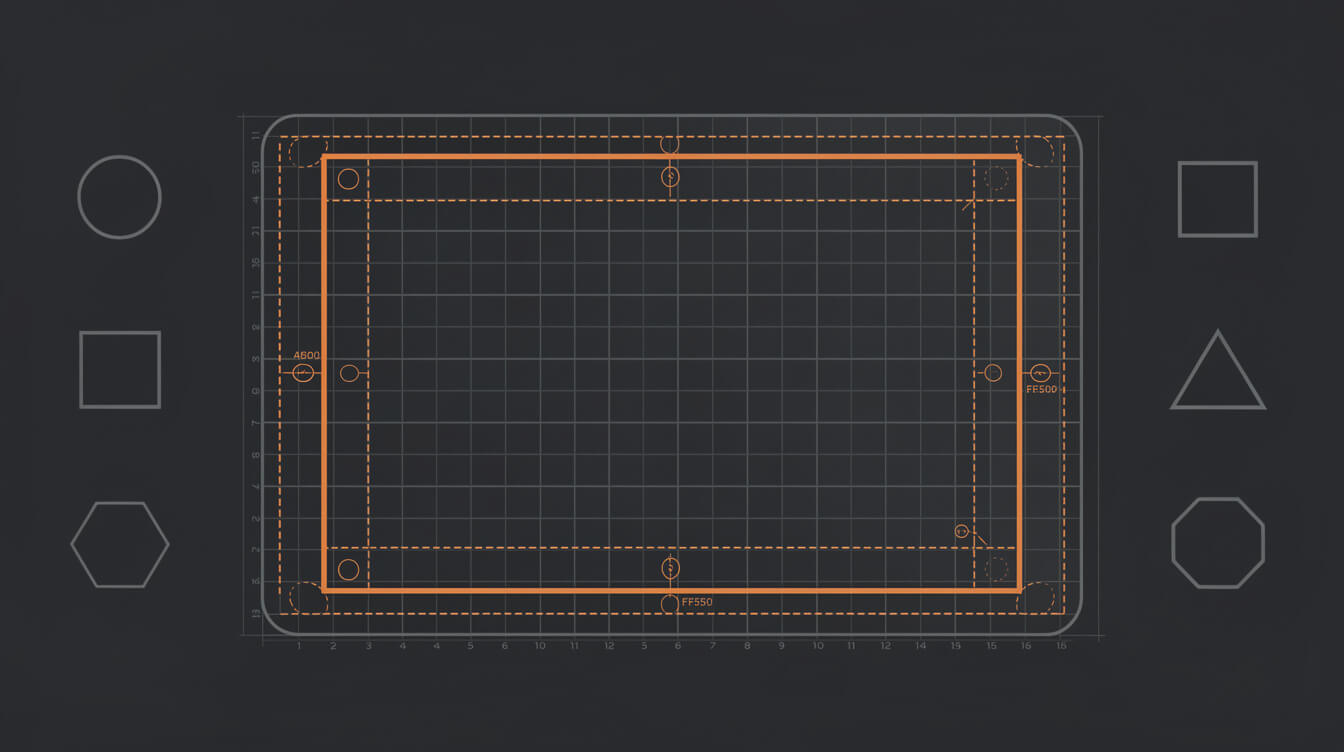
Before you list a custom cutting board in your WooCommerce store, there are a few specifics to verify with your chosen provider. Skipping these creates fulfillment problems downstream.
File format and print size. Sublimation cutting boards require files submitted at 300 DPI. The print area dimensions vary by provider and board size. Printful’s round board has a specific print template; do not assume the print area fills the entire board face. Download the provider’s template, design within the safe zone, and proof the bleed before listing.
Coating and food safety. All sublimation cutting boards from reputable POD providers use food-safe, BPA-free coatings. Verify this with the provider before listing if you plan to market the board as a functional kitchen tool rather than a decorative piece. For purely decorative cutting board designs, food safety is less critical, but most buyers assume any cutting board is food-safe by default.
Dishwasher compatibility. Most sublimation hardboard cutting boards are hand-wash recommended. The dye-sublimation coating can degrade in a dishwasher over time. This is not a defect, it is a material property. Include a care instruction card or note in your product description so buyers understand how to maintain the board. Failing to disclose this creates returns and bad reviews.
Shipping weight and cost. A hardboard cutting board is heavier than most soft-goods POD products (mugs, blankets, apparel). Verify the dimensional weight and shipping cost for your primary markets. International shipping on a heavier board can push total landed cost above what buyers expect for a $42 product. Set your retail pricing with fulfilled shipping costs in mind, not just domestic.
MOQ and sample orders. POD providers do not have minimum order quantities, but you should order a sample before listing. The sublimation print quality on a cutting board surface is different from apparel or paper. Seeing and touching the product before your customers do lets you catch coating issues, color accuracy problems, or design scaling errors before they reach a paying customer.
The drinkware niche involves similar material and coating considerations. The custom drinkware POD guide covers sublimation on non-fabric surfaces in detail, and many of the same pre-launch checks apply to cutting boards.
Selling into the same housewarming and kitchen-gift buyer with wall decor? Our custom wood sign guide covers Printify’s printed birch signs, a $23.50 landed cost, and the personalization trade-off on WooCommerce.
The case for cutting boards in a POD catalog
Custom cutting boards fit the POD model cleanly in the sublimation composite tier. The artisan hardwood studios are not your competition. They serve a different buyer at three times your price point. Your buyer wants a thoughtful, personalized kitchen gift at a reasonable price, fulfilled in a week, with no commitment on your end beyond a good design and a well-written product listing.
The kitchen gift niche has year-round demand with three identifiable peaks: wedding season (spring and summer), housewarming (spring and fall), and the Q4 holiday window. The Shopify 1% fee bites harder at the $35 to $55 AOV range than at higher price points, which is an argument for running this category on WooCommerce from the start.
The unit math works at current Printful and Printify pricing if you retail between $38 and $48 and position the product correctly. If you do not have a compelling design angle, a commodity sublimation board at $38 is hard to differentiate on Amazon. The margin comes from specificity: a board designed for golden retriever owners, a regional recipe design, a wedding monogram with a typeface that looks custom even though it is not.
MEGA handles the research-to-product pipeline for POD stores. That means catalog creation, Printful integration, SEO-optimized listings, and design generation, without the 6-hour Canva workflow. If you are building a kitchen-gift POD store and want to move faster than manual listing, try MEGA.

Implement AI. 30x your throughput. Get a 30-min call with the founder.
Drop your details and book a free 30-minute discovery call. Personalized advice on your POD stack, your margin, and where AI fits. No pitch, no fluff.