Custom drawstring bags for POD stores: all-over-print on polyester, unit cost math, and the gym bag niche
The moment a POD seller types “custom drawstring bag” into a supplier search, they hit the same wall: page after page of bulk promotional product vendors quoting $1.15 per bag at 144-unit minimums. If you want to sell one custom drawstring bag at a time, with artwork covering the entire surface, the promo supply chain is the wrong place to look. The print-on-demand path is completely different, and no one has written the economics of it clearly. This guide covers every decision a POD seller needs to make: which providers carry all-over-print drawstring bags at no minimum order, how sublimation differs from screen print, what the landed cost and margin actually look like, and which niches make a $22 product worth building a store around.
Custom drawstring bags: the gap between bulk promo vendors and print-on-demand
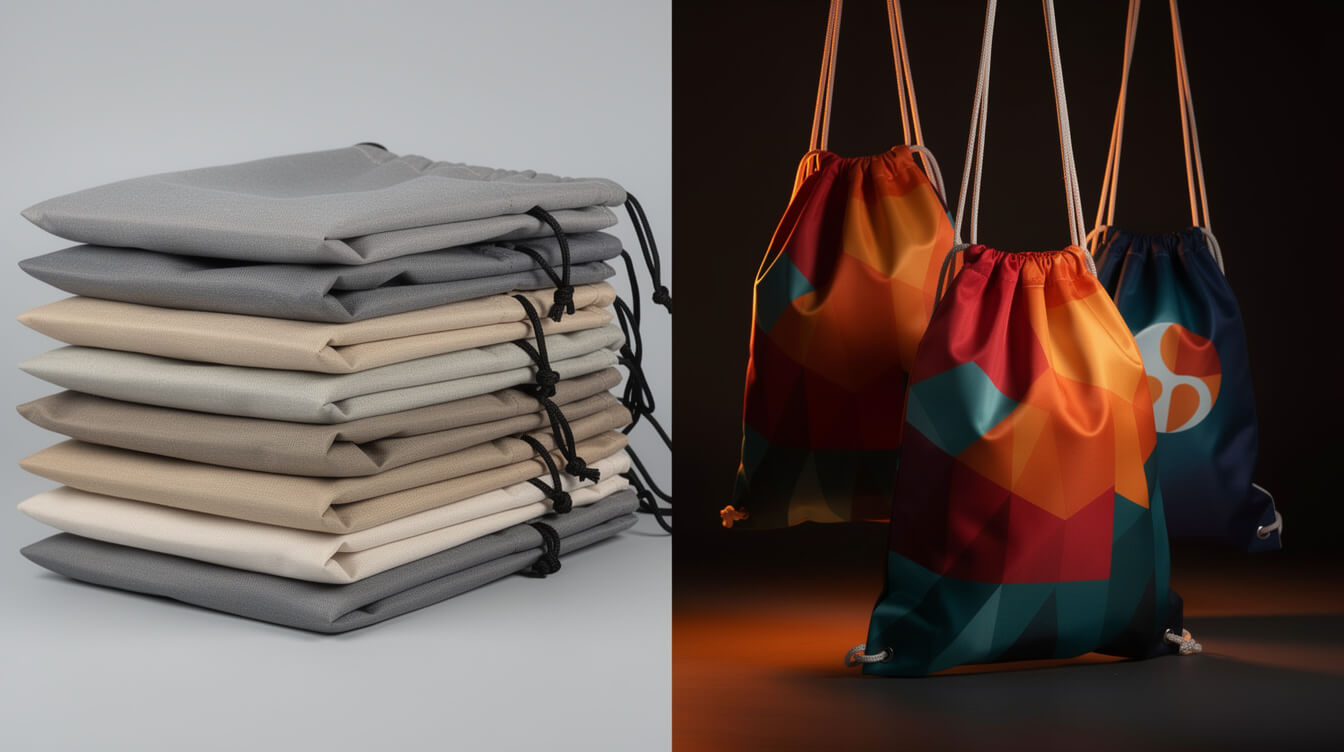
The companies dominating the “custom drawstring bag” search results: Bag Masters, Discount Mugs, 4imprint, VistaPrint. All of them operate the same model. A school orders 300 bags for a spirit fundraiser. A gym orders 500 bags for a new-member welcome kit. The vendor prints a small logo in one color on the front panel and ships pallets. This is the B2B promotional product market, and it has nothing to do with POD dropshipping.
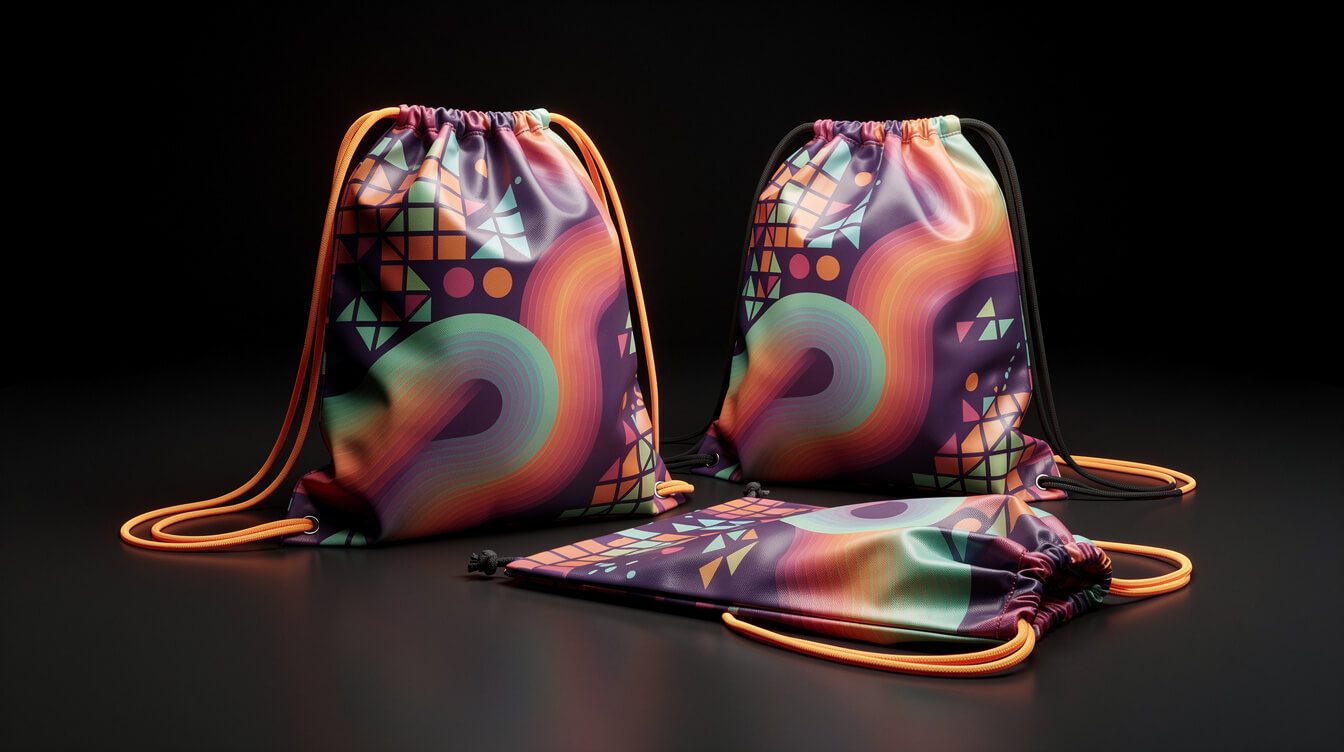
POD sellers are in a different business. They sell one bag at a time, on demand, directly to an end consumer, with artwork that covers the entire surface of the bag, not a 3-inch logo. The product itself looks nothing like a promo bag. The supply chain works completely differently. The margin math is entirely its own.
The conflation exists because both markets use the same keyword. This creates an opportunity: every POD seller who searches for “custom drawstring bag” and lands on a bulk promo vendor’s website has an unmet need. There is no comprehensive editorial guide for the POD seller path. That is the gap this article fills.
Which POD providers carry AOP drawstring bags at no minimum order
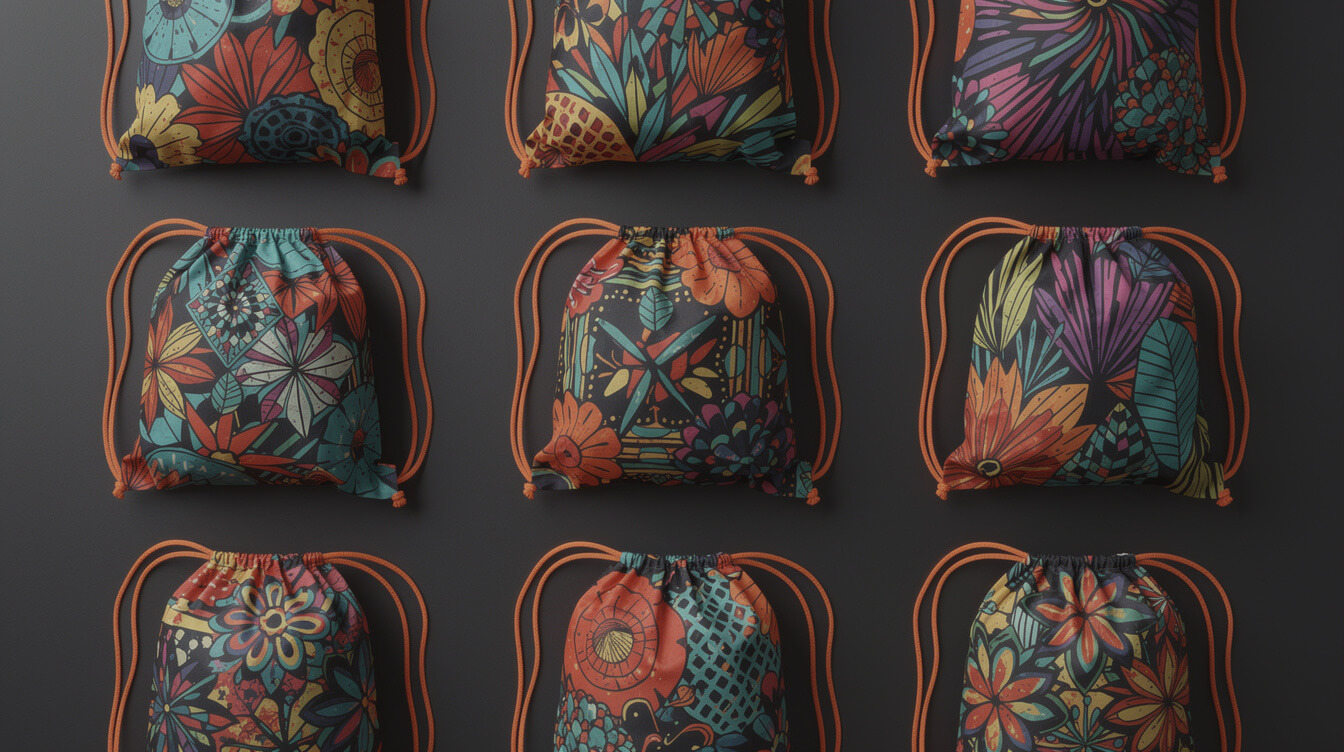
Printful carries sublimated all-over-print drawstring bags made from 100% polyester. The bag prints full-panel on both the front and back. No minimum order quantity. Orders route automatically from your store to Printful and ship directly to the customer. There is no inventory to hold.
Printify’s network also carries AOP drawstring bags through vendors including Subliminator and AOP+. Availability varies by region, and the product catalog changes. Always verify current stock and pricing in the Printify product creator before building a listing. North American and European sellers may have different vendor options.
SPOD (Spreadshirt POD) carries drawstring bags with a 48-hour production guarantee on their US-based catalog. If same-week turnaround is a selling point for your store, SPOD is worth evaluating alongside Printful and Printify.
Gooten and Gelato both skew toward apparel and flat-surface products; their drawstring bag coverage is thinner. Check their current catalogs directly if you want multi-supplier redundancy.
The practical starting point for most sellers is Printful for verified no-MOQ AOP production, with Printify as a secondary option once you have confirmed your top designs. Two suppliers also gives you pricing leverage as volume grows.
When comparing providers, check production time alongside base cost. Printful’s production SLA for AOP bags is typically 2-5 business days, plus shipping. SPOD’s 48-hour guarantee is useful if your audience is event-driven and time-sensitive. Printify production times vary by vendor. Look at the vendor’s production location relative to your primary customer base. A US-based vendor ships faster to US customers than a European-based vendor at the same base price.
Sample your designs before launching a product at scale. The AOP sublimation process on polyester is consistent, but factors like the specific shade of polyester, the weave density, and the exact heat press profile each vendor uses can affect how your color palette renders. Colors that are deep navy on your design file may shift slightly toward black on the physical bag depending on the vendor’s production environment. Order one sample per vendor per primary design colorway before committing to a supplier for that product.
AOP sublimation versus screen print: what the method means for your artwork
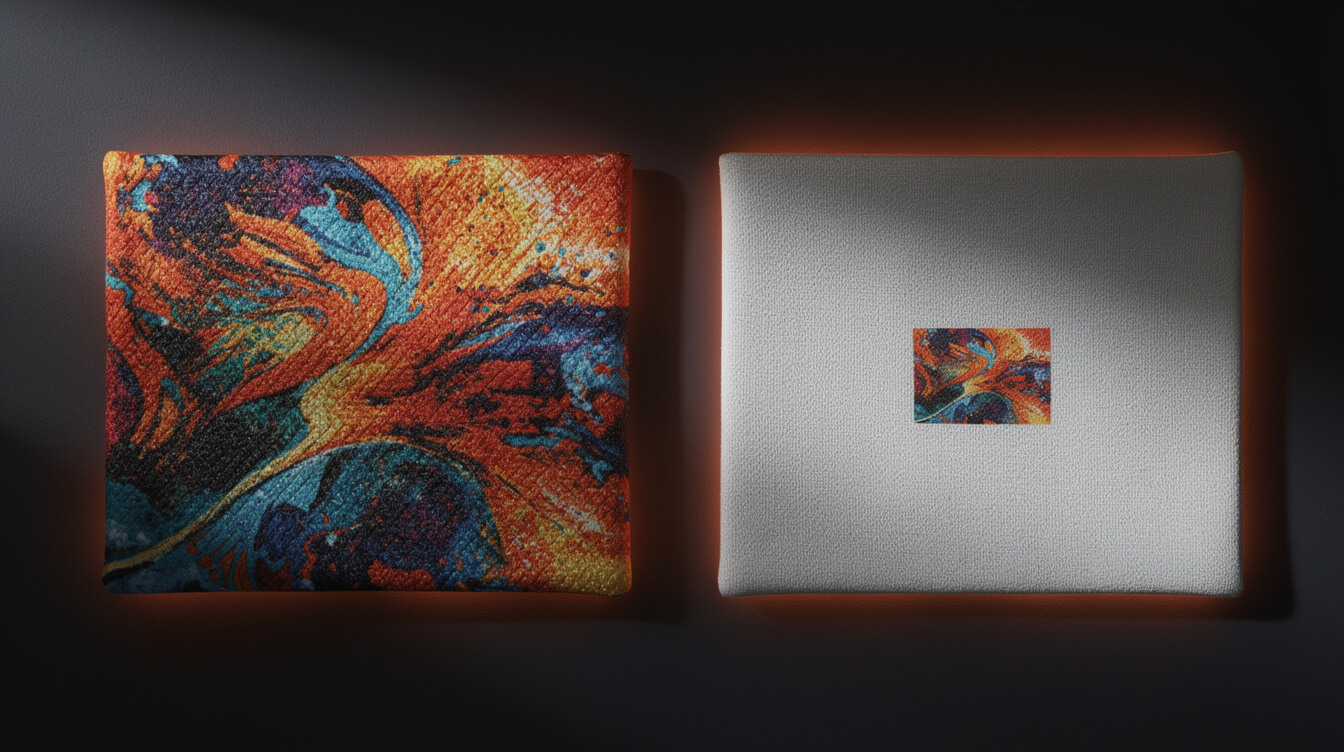
Sublimation is a dye process, not an ink process. The dye converts from solid to gas under heat (around 375-400°F) and bonds directly to the polyester polymer at a molecular level. The result is color that is part of the fabric, not sitting on top of it. There is no crack, no peel, no raised surface. Sublimation can cover the entire bag surface edge to edge, which is what “all-over print” means.
The constraint is substrate: sublimation requires 80% polyester or higher. Cotton drawstring bags cannot be sublimated. If you attempt sublimation on a cotton bag, the dye has no polymer chains to bond to and the result will be washed-out and non-durable. This is not a workaround problem; it is a chemistry problem.
Cotton drawstring bags can be decorated with screen print or heat transfer vinyl (HTV), but both methods require setup costs and MOQ minimums in screen print’s case. For POD at no MOQ, polyester sublimation is the only viable path to vibrant, full-surface coverage.
Screen print places a flat ink layer through a mesh stencil. It is limited to 4-8 colors in most POD contexts, cannot do gradients, and places artwork in a fixed zone rather than edge to edge. For a logo-only application at scale, screen print is efficient and economical. For a single-order AOP design with gradients and full-panel coverage, sublimation is the correct method.
Design implication: because you are designing for the full polyester surface, gradients, photography-derived art, and pattern-repeat prints all work. The 18″ x 14″ standard drawstring bag surface rewards bold artwork. Avoid fine typography below 12pt. It will not read cleanly at that scale even if the dye bonds correctly.
Custom drawstring bag unit cost math: landed cost, retail pricing, and margin reality
Smash print-on-demand. Join the engine room.
One short email a week. Real numbers, real teardowns, the unfiltered economics behind every move.

Base cost at Printful for an AOP drawstring bag runs $10-14 per unit depending on the design complexity and current provider pricing. Shipping adds $4-5 for domestic US. That puts your landed cost, which is the number that actually matters: $14-19 per unit.
At a standard retail price of $22-30, gross margin comes in at 32-42%. Per-unit gross profit ranges from $7 to $12, depending on where you price and which vendor you use.
That margin percentage is lower than a t-shirt or a mug. The dollar margin per order is also lower than a framed print or a premium tumbler. Drawstring bags are not a high-margin solo product. Where they become interesting is volume and bundling.
A 3-pack bundle (three bags in different colorways or with complementary designs) lands at $60-75 retail. The landed cost for three units is $42-57. Gross dollar profit on the bundle: $18-30. That is nearly three times the gross dollar margin of a single-unit sale at the same percentage, because fixed shipping costs get amortized. Bundle pricing also elevates the average order value, which matters when your per-order fee structure includes a percentage override (more on this in the Shopify section).
At 100 single-unit orders per month: $700-1,200 in gross profit before fulfillment overhead. At 100 bundle orders per month: $1,800-3,000 in gross profit. The bundle math is not subtle.
For context against other POD products: a custom mug at $20 AOV sits at a similar gross margin percentage, but the dollar gross per unit is $6-9. A custom framed print at $65 AOV generates $20-28 gross per unit. The drawstring bag sits closer to the mug economically. The correct comparison is not “is this a high-margin product.” It is “what is the realistic monthly gross from a store built around this product at target volume.” At 200 orders per month at $22 AOV, you are looking at $1,400-2,400 in monthly gross before operational costs. That is a viable supplemental store or an anchor product in a volume-first niche strategy.
MEGA automates the full pipeline from design generation through product listing. It builds your drawstring bag product pages, generates AOP artwork to spec, sizes and crops images correctly, and pushes listings to both Printful and WooCommerce in under seven minutes per product. See how MEGA handles the research-to-product pipeline if you are building a drawstring bag store across multiple niches.
The gym bag niche: who buys a $25 drawstring bag and how to reach them
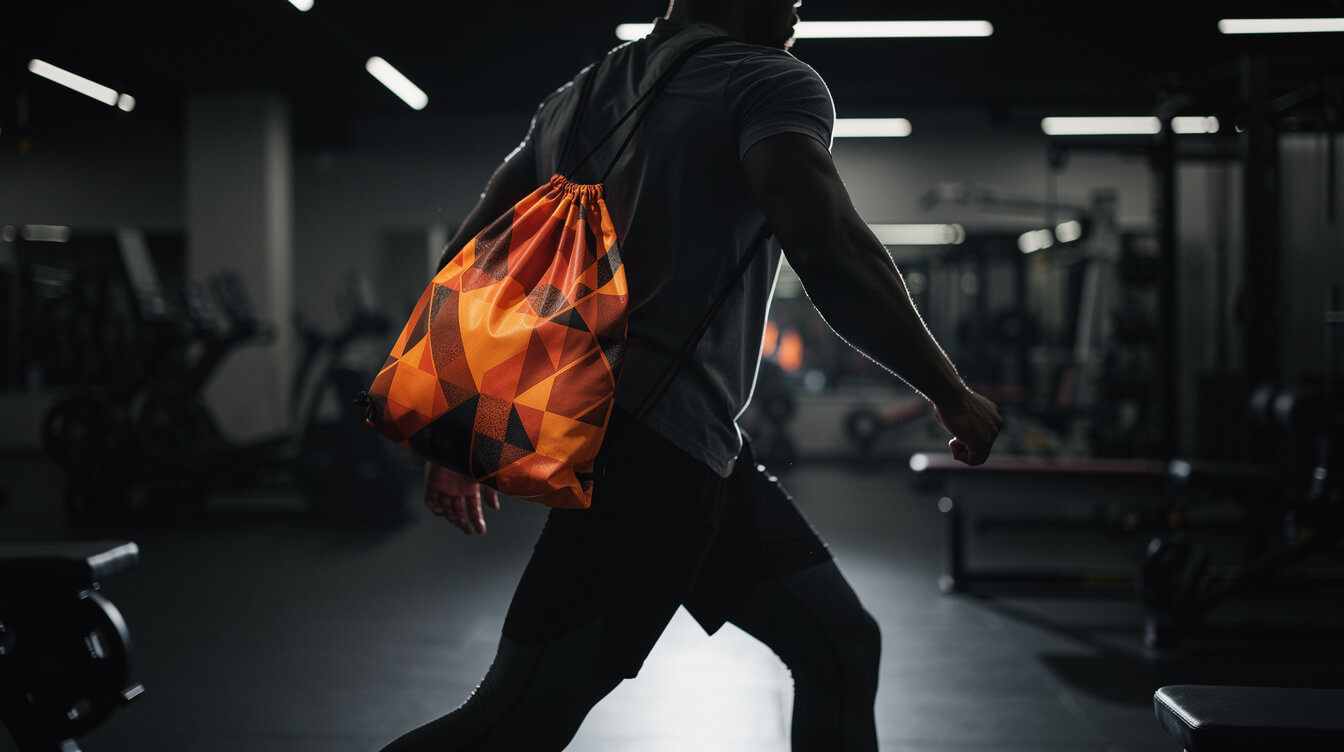
The drawstring bag is, functionally, the gym bag of choice for a significant segment of the fitness market. It is lightweight, packs flat, holds shoes and a change of clothes, and is easier to carry than a duffel. For a buyer already spending $150-300 on gym gear per quarter, $25 for a custom bag that matches their gym aesthetic is a trivial decision.
Gym and fitness buyers are the strongest niche for drawstring bags for three reasons. First, they are already in an identity-driven purchasing mode: they buy gear that signals something about who they are (a specific gym, a fitness program, a training philosophy). Second, the product has genuine functional utility in their routine. Third, they share gear in social contexts. A bag visible at the gym generates organic impressions.
To reach this segment: build around specific gym cultures rather than generic “fitness.” A weightlifting gym has a different aesthetic than a CrossFit box, which has a different aesthetic than a yoga studio. Specific visual language converts better than generic “workout vibes.” AOP drawstring bags are well-suited to bold, graphic, even aggressive design styles. The full surface invites it.
Music festival and event merch is the second-strongest niche. Festivals have large merchandise budgets and captive audiences. A drawstring bag is a functional merchandise item. Attendees need a bag for the day. The unit economics are similar to gym bags, with the addition of seasonal event concentration. If your store serves event organizers or regional music communities, drawstring bags pair naturally with custom sportswear and custom bandanas for a complete event merch package.
School sports teams, anime and gaming fandom art stores, and outdoor or camping lifestyle brands all convert well on this product. The common thread is a community with a shared visual language that benefits from full-surface AOP coverage.
Pet portrait stores are also viable. A custom drawstring bag featuring a buyer’s dog breed, particularly a breed with a dedicated owner community like French Bulldogs, Golden Retrievers, or Corgis, converts on the same impulse-gift dynamic as custom dog bandanas.
Shopify 1% on a $22 product: why low AOV makes the fee math worse

The Shopify 1% platform override fee is levied as a percentage of revenue, not a flat rate. That means it scales with your sales volume. For high-AOV products like framed prints or premium drinkware, the override is a smaller percentage of gross profit. For a $22 drawstring bag, it is disproportionately destructive.
Here is the math. At $22 AOV and 200 orders per month: $44 in monthly override = $528 per year. That is 3.5-7% of your gross profit depending on which end of the margin range you sit. Compare that to a $65 custom canvas print store running the same 200 orders: $130/month override = $1,560/year, but the gross profit pool is 2-3 times larger, so the override is a smaller percentage of profit.
Low-AOV products on Shopify require the override to be recovered somewhere. The bundle strategy described above, moving from single bags at $22 to 3-pack sets at $60-75, partly addresses this, because the percentage stays fixed but the absolute fee scales up more slowly than your margin improvement.
Add the Shopify plan fee ($39-105/month depending on tier) and the cost of a personalization app if you want name or team name customization ($19-49/month). Total platform overhead on a standard Shopify plan at 200 drawstring bag orders per month: $88-168/month = $1,056-2,016/year.
WooCommerce hosting on a managed plan runs $15-40/month. No override fee. No per-transaction percentage. At 200 orders per month, the annual platform cost is $180-480. The fee differential at 200 orders/month: $576-1,536/year in favor of WooCommerce. At 500 orders/month, that differential grows to $1,440-3,840/year.
The percentage-based override is the core issue. For sellers building volume on a $22-28 product, it compounds in a way that does not compound on a $65-80 product. This is not a hypothetical. It is arithmetic.
WooCommerce for drawstring bag stores: name personalization without a paid app
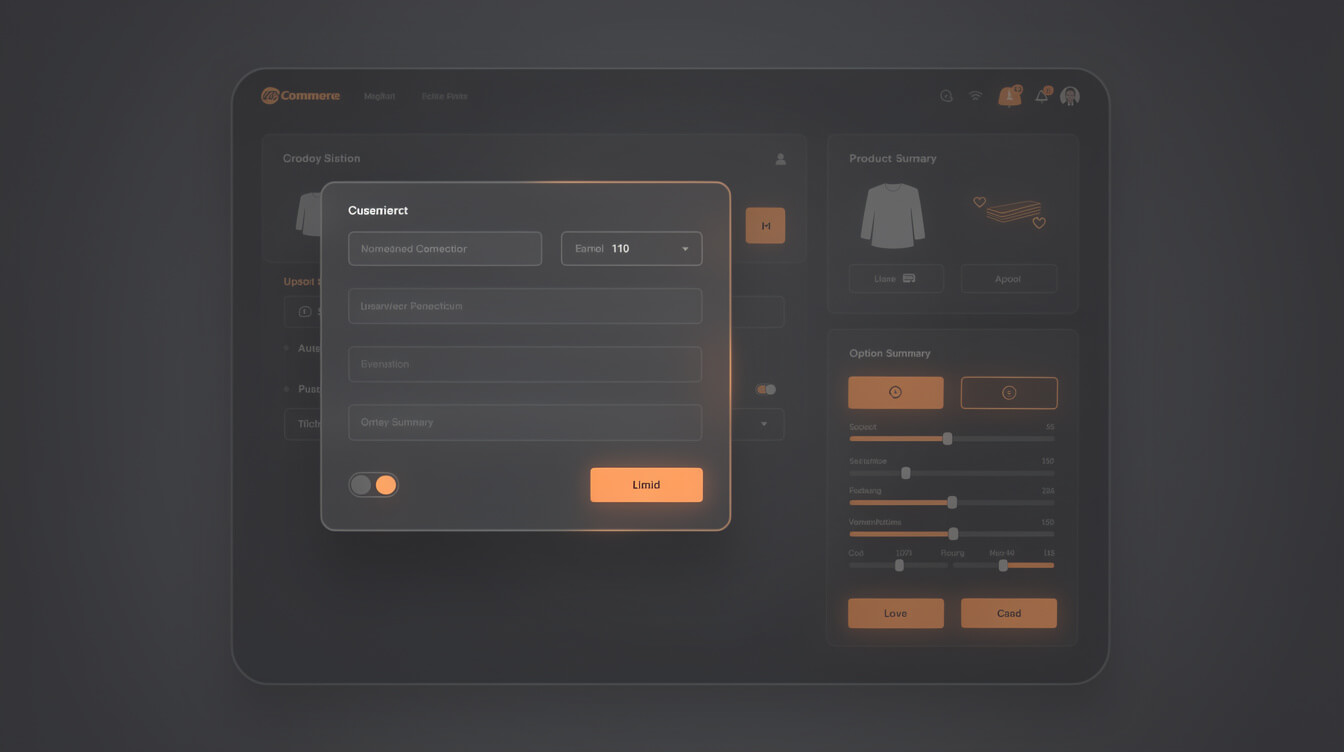
Personalization is a meaningful upsell for drawstring bags in certain niches. A gym bag with a customer’s name or a sports team’s name on it commands a $5-10 premium over a stock design. School spirit stores routinely sell personalized drawstring bags at $28-35 with a name field, versus $20-22 for an identical non-personalized bag.
On Shopify, adding a text input field to a product page requires a paid app. The standard app range is $19-49/month. That is $228-588/year for a feature that WooCommerce builds natively.
In WooCommerce, you add a custom text field to a product using the built-in product add-ons functionality or a free plugin (WooCommerce Product Add-Ons has a free tier for basic text fields). The customer sees the input field on the product page, types their name or team name, and the input appears on the order for your fulfillment workflow. No third-party app required, no monthly fee.
For sellers whose primary niche is school teams, sports leagues, or any context where team name or number personalization is part of the product, this is a direct cost line. Running 12 months of a $29/month Shopify personalization app while also paying the $528/year override on a $22 AOV product totals $876/year in platform costs before the base Shopify plan. That is $876/year that disappears from margin with zero customer-facing benefit.
The WooCommerce versus Shopify fee comparison for POD sellers goes deeper on platform economics at multiple revenue milestones. For a drawstring bag store specifically, the low AOV amplifies the Shopify fee differential more than almost any other product category.
WooCommerce also handles variant management natively. If you sell bags in multiple color combinations or size variants, the native variable products feature handles unlimited attribute combinations at no additional cost.
Drawstring bags as a gateway product for gym, outdoor, and fandom POD stores
A custom drawstring bag is rarely the sole product in a successful POD store. But it is one of the better products to add to an existing store because the barrier to entry is low and the crossover with adjacent products is high. It is a catalog piece that rounds out a product line for buyers who already trust the store’s aesthetic. A gym-brand store that sells AOP shorts, tank tops, and socks can add a drawstring bag and convert existing customers, because the buyer already wants the bag if the art is right.
The economics support it as a secondary product even where the per-unit margin looks modest. A customer who buys a $22 drawstring bag alongside a $35 t-shirt is a $57 order. A customer who buys the bag as a standalone is a $22 order. The bag’s job is partly to lift average order value through product combination, not to anchor the entire store’s margin math.
For new sellers: drawstring bags are a reasonable entry product for gym, fandom, or outdoor niches because the AOP format rewards digital art directly. There is no specialized physical skill required. AI-generated geometric and abstract art renders well on the full polyester surface. A store can have 10-20 design variants live in a matter of days with no upfront inventory investment.
The keyword opportunity is real: 2,400 monthly searches with a difficulty score of 0, and the organic SERP is occupied entirely by bulk promo vendors who do not speak to the POD seller at all. A seller-economics article on this keyword faces no direct editorial competition. The search intent is there; the content is not.
Build the drawstring bag lineup alongside custom sportswear products to capture the gym and team market more completely. Price single units at $22-28, bundles at $60-75, and watch the bundle take-rate. Most gym buyers will buy a set once they see the three-colorway layout.
Implement AI. 30x your throughput. Get a 30-min call with the founder.
Drop your details and book a free 30-minute discovery call. Personalized advice on your POD stack, your margin, and where AI fits. No pitch, no fluff.