Custom sweat wristbands for POD sellers: the terry cloth reality, supplier paths, and the sports fan merch angle
Custom sweat wristbands occupy a genuine blind spot in the print-on-demand world. Run the search yourself and you land on B2B embroidery vendors targeting sports coaches and event organizers with 50-unit minimums and custom thread color tables. There is no editorial layer for the POD seller who wants to understand whether custom sweat wristbands fit a no-MOQ store, which suppliers can actually produce them, and what the unit economics look like before committing to a niche.
This guide covers all of it. You will learn why custom sweat wristbands and silicone event wristbands are completely different products with different supply chains, which major POD platforms carry them (the answer is more complicated than you expect), which supplier-direct paths work at 12 to 100 units, how decoration methods work on terry cloth, what you keep per unit at different order volumes, and why the Shopify 1% override fee hits harder on a low-AOV product like this than on almost any other POD category. The sports fan merch angle is real and underexploited. The repeat-order case for WooCommerce is worth understanding before you build your first listing.
Sweat wristband vs silicone wristband: why these are two completely different products (and two different supply chains)
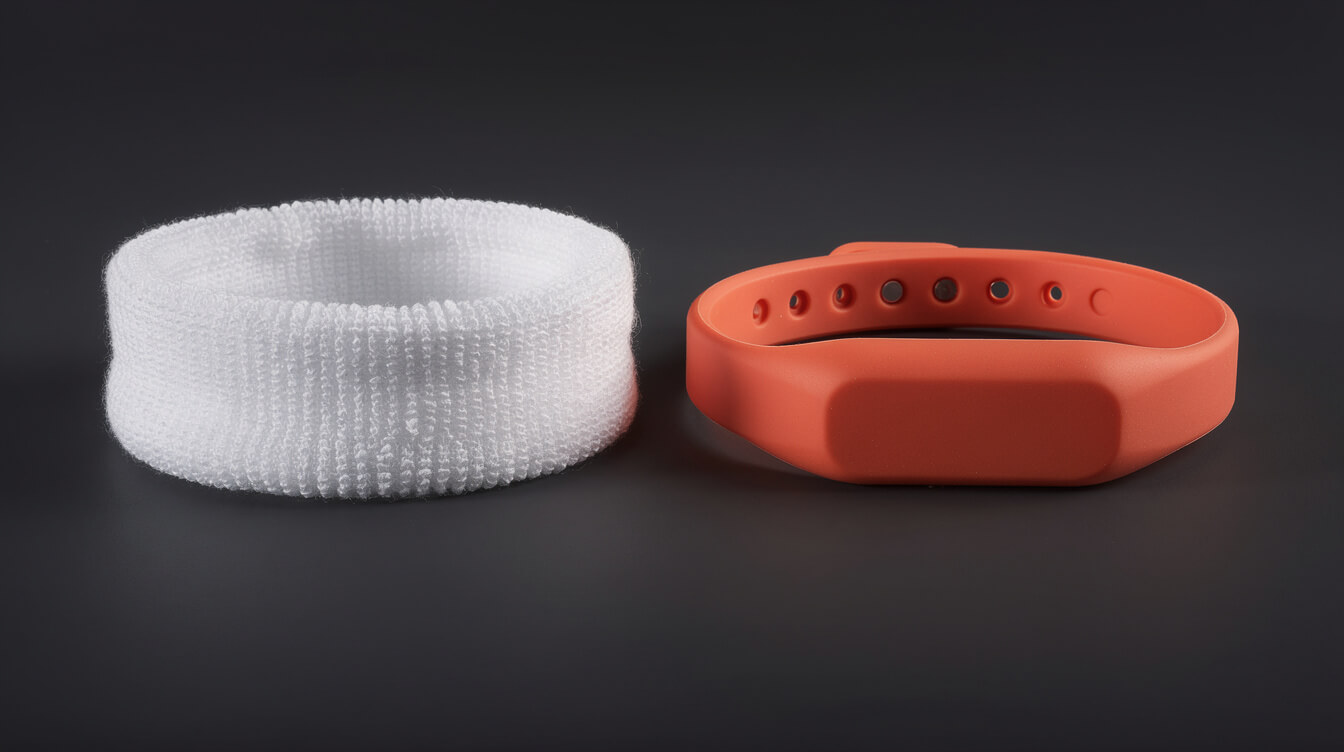
The first thing to settle is what a custom sweat wristband actually is, because the search results conflate two products that share the word “wristband” but serve entirely different buyers and are made by entirely different supply chains.
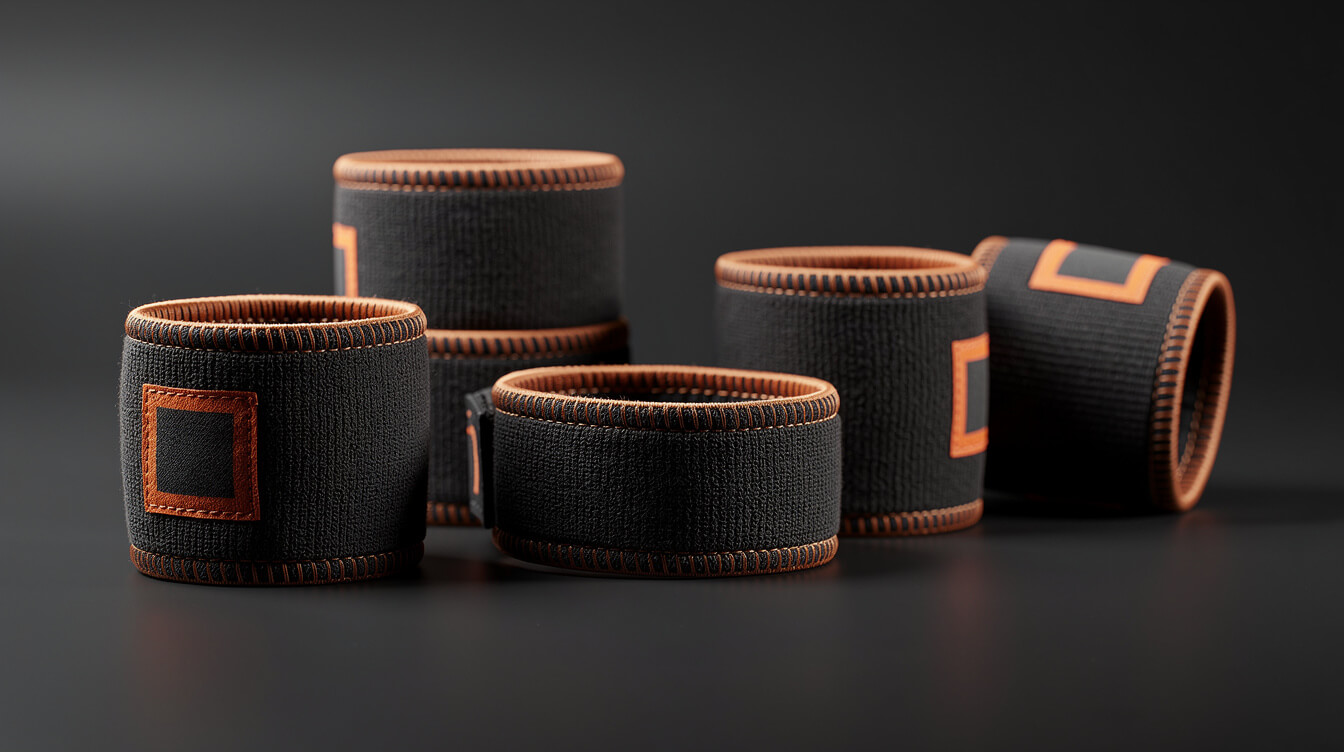
A sweat wristband is the classic terry cloth cotton cuff worn by athletes on the wrist to absorb perspiration during physical activity. Think tennis players at Wimbledon, basketball players in the fourth quarter, CrossFit athletes mid-workout. The material is looped terry cloth, the same fabric used in towels. It is thick, absorbent, and durable. Custom versions are typically decorated with embroidery, screen print, or heat transfer, not sublimation. Cotton does not sublimate.
A silicone wristband is the rubber debossed bracelet popularized by the Livestrong movement. These are cause-awareness or event accessories, not athletic performance products. They are made from poured silicone with debossed or color-filled text. They cost $0.25 to $1.50 each at bulk and are sold at charity events, school fundraisers, and political campaigns.
These are different products with different buyers, different decoration methods, different supplier networks, and different retail price expectations. A buyer searching for a custom sweat wristband is almost certainly looking for the terry cloth athletic version, not a rubber bracelet. Making the distinction early in your product listings and in your marketing copy prevents the wrong buyers from landing and bouncing.
From a POD perspective, the silicone version is out of scope entirely. No major POD platform carries silicone wristbands because the production process requires injection molds and does not fit the no-MOQ on-demand model. The terry cloth sweat wristband is the product this guide covers, and it presents a genuinely interesting challenge: traditional POD fulfillment does not handle it cleanly, which is exactly why the opportunity exists.
Can Printful or Printify make custom sweat wristbands? The catalog reality
Short answer: not in the traditional terry cloth sense. Here is the longer version.
Printful does not carry terry cloth sweat wristbands in its standard product catalog. Printful’s accessory range includes polyester-based items like custom beanies, hats, bags, and phone cases, all of which support sublimation or DTG printing. Terry cloth cotton cannot be sublimated because sublimation requires a polyester substrate to bond dye at the molecular level during heat transfer. Without polyester fibers, the dye does not adhere permanently. Printful’s embroidery capabilities are focused on structured items like hats and polo shirts, not small terry cloth accessories.
Printify’s network is broader. Printify aggregates production from dozens of third-party vendors, and its catalog shifts over time. Some Printify network vendors offer custom performance wristbands in polyester or polyester-cotton blends that support sublimation printing. These are not identical to classic terry cloth sweatbands, but they are functional athletic wrist accessories. If you want to list through Printify, check the catalog directly by searching “wristband” or “sweatband” in the product creator. Availability varies by vendor and region. Do not assume the catalog is the same as it was six months ago.
Gooten and SPOD do not carry sweat wristbands in their standard catalogs as of 2026. Other platforms like Prodigi focus on flat print products and do not manufacture textile accessories of this type.
The honest conclusion: if you want to sell custom terry cloth sweat wristbands through a standard POD integration, you are working with a thin set of options via Printify, and you should verify current availability before building your store around this product. If Printify’s catalog does not have what you need, the path shifts to supplier-direct white-label ordering, which the next section covers.
For sellers building a broader custom sportswear POD store, sweat wristbands work well as a low-AOV upsell item bundled with jerseys, shorts, or performance tees. The strategy section later in this guide covers the bundle angle in detail.
Supplier-direct paths: WristbandCreation, Suddora wholesale, and embroidery shops at 12-50+ units
When standard POD platforms cannot deliver the product, the supplier-direct path becomes the viable route. This is not unusual in POD. Custom pennant flags, enamel pins, and embroidered patches all face the same dynamic: traditional POD infrastructure was built for flat print products, and specialty items require a different procurement approach. The trade-off is that you move from true no-MOQ to low-MOQ (typically 12 to 50 units minimum), which means holding some inventory for products you have already confirmed demand for.
WristbandCreation is one of the better-known custom wristband producers. They specialize in terry cloth and polyester wristbands with embroidery or screen print decoration. Their pricing is quantity-tiered, with meaningful per-unit cost reductions at 12, 50, and 100 units. Standard production times run 7 to 10 business days, with rush options available. Minimum orders are typically in the 12 to 25 unit range depending on decoration complexity. They also produce silicone and fabric wristbands, so confirm you are ordering the terry cloth athletic version before you pay a deposit.
Suddora is the premium brand in the sweat wristband category, known for quality terry cloth construction used by competitive athletes. They offer a wholesale program for gyms, sporting goods retailers, and team outfitters. Wholesale minimum orders start around 24 to 36 units. Suddora white-label options exist for bulk purchasers, though custom branding requires their wholesale partnership approval. For a POD seller building an independent brand rather than reselling Suddora product, WristbandCreation or a local embroidery shop will be a more flexible partner.
Local and regional embroidery shops are an underused supplier option for POD sellers who want low-MOQ custom wristbands. Most commercial embroidery operations will run custom terry cloth wristbands at 12 to 24 unit minimums with 5 to 7 day turnaround. The advantage is flexibility: you can often negotiate smaller batches, get samples before committing, and build a local supply relationship that scales with demand. The disadvantage is higher per-unit cost at small quantities, and you are responsible for warehousing and packing orders yourself.
Alibaba and global sourcing offers the lowest per-unit cost, often $0.50 to $1.50 each at 100-unit MOQ, but requires 30 to 60 day lead times for custom production, quality control diligence, and import logistics. This path makes sense if you have proven demand and are scaling an existing bestseller, not for testing whether the niche works at all.
Decoration methods on terry cloth: embroidery, screen print, and heat transfer (and why sublimation fails on cotton)

Smash print-on-demand. Join the engine room.
One short email a week. Real numbers, real teardowns, the unfiltered economics behind every move.
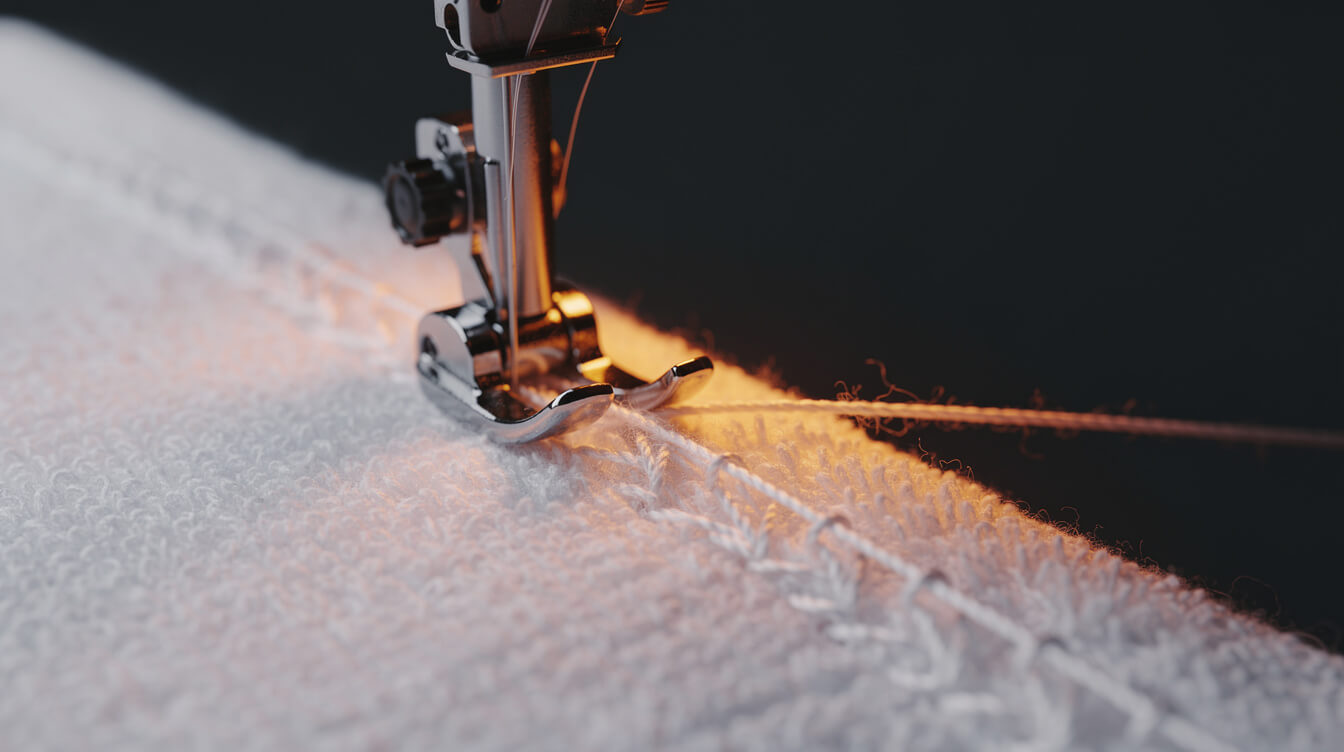
Understanding decoration methods matters because it determines which suppliers you can work with, what your design constraints are, and what the finished product looks and feels like. Terry cloth cotton supports three practical decoration methods for custom sweat wristbands.
Embroidery is the premium option and the most durable. A design is stitched directly into the terry cloth using multi-colored thread on a commercial embroidery machine. The result is dimensional, tactile, and washable without degradation. Embroidery handles simple logos, icons, and block lettering well. It struggles with fine details, gradients, and photographic imagery. Design constraints: maximum 12 thread colors, minimum 1-inch physical size for readable detail, and no gradients or halftone effects. Embroidered wristbands have a quality feel that justifies a higher retail price point.
Screen print is the standard option for bold designs at medium volumes. Ink is pressed through a mesh screen onto the terry cloth surface. The print sits on top of the fabric rather than bonding with it, which means it can crack or fade over time with heavy washing. Screen printing works well for designs with 1 to 3 flat colors. It is significantly less expensive than embroidery per unit at volumes of 50 or more. It does not work well with fine text, gradients, or photographic detail.
Heat transfer vinyl (HTV) is the third option and the most accessible for small-batch custom production. A design is cut from specialty vinyl and pressed onto the terry cloth at high temperature and pressure. HTV allows full-color designs including gradients, but the vinyl layer on terry cloth does not always bond as durably as it does on flat fabrics. Wash durability is lower than embroidery. HTV is most appropriate for samples, very small batches, or designs that need full color at quantities too small for screen print setups.
Why sublimation does not work on cotton: Sublimation dye bonds with polyester fibers at the molecular level during heat transfer. Cotton has no polyester structure, so the dye does not bond permanently. The result on cotton is a faded, washed-out image that deteriorates with the first wash. Sublimation on cotton is not a viable decoration method. The only way to get sublimation-quality print on a wristband is to use a polyester or polyester-blend substrate, which moves you away from the classic terry cloth product toward a performance athletic accessory with different buyer appeal.
Unit cost math: what custom sweat wristbands cost at 1, 12, 50, and 100 units
Here is where the economics get honest. Custom sweat wristbands are a low-AOV product, and that matters for margin planning. The unit cost structure depends heavily on order quantity and decoration method.
At 1 unit (sample or one-off): Embroidery setup fees dominate. Expect $20 to $40 for digitizing your artwork plus $8 to $15 per unit for production. Total landed cost for a single sample: $35 to $60. Retail at this quantity makes no economic sense. This is the sample-and-validate cost, not the ongoing production cost.
At 12 units (small test batch): Setup fees amortize across the run. Embroidery runs approximately $6 to $9 per wristband at this quantity, including the digitizing fee spread across the batch. Shipping adds $1.50 to $3 per unit. Landed cost: $7.50 to $12 per wristband. Retail pricing at $18 to $24 puts gross margin at 30 to 58 percent. Dollar margin per unit: $6 to $12.
At 50 units: Unit cost drops meaningfully. Embroidery at $3 to $5 per unit plus shipping at $0.80 to $1.50 each. Landed cost: $3.80 to $6.50 per wristband. Retail at $18 puts gross margin at 60 to 79 percent. This is where the unit economics start making genuine sense for a POD seller who has already confirmed demand through a small batch.
At 100 units: Per-unit cost reaches its floor through most custom embroidery shops. Embroidery at $2 to $3.50 per unit, shipping at $0.60 to $1 each. Landed cost: $2.60 to $4.50. Retail at $18 to $22 puts gross margin at 73 to 87 percent. At 100 units, custom sweat wristbands become a high-margin product. The constraint is inventory management and upfront capital.
Tournament bundle math: Three wristbands (two wrist cuffs plus one headband) at 50-unit batch pricing, landed at $5.50 to $7 per piece, equals $16.50 to $21 per bundle. Retail at $38 to $48 for a tournament set. Gross margin: 54 to 66 percent. Dollar margin per bundle: $17 to $27. Bundle pricing substantially improves the economics on a low-AOV individual item.
The key insight: the supplier-direct path only works economically if you have confirmed demand before ordering. A 12-unit minimum is low enough to test the product. A 50-unit minimum requires more confidence. Build demand through pre-orders or by bundling with existing bestsellers before committing to a 50-plus unit run.
Running a POD pipeline manually at this scale takes serious time per product. MEGA automates the research and listing creation side of the workflow entirely, letting you focus on supplier relationships and inventory decisions rather than Canva sessions and SERP research.

Research-to-listing in under 7 minutes
MEGA automates the full POD research and listing pipeline end to end. Feed a niche, get a complete product listing for WooCommerce and Printful in under 7 minutes. No 6-hour Canva sessions.
Shopify’s 1% override fee on an $8-18 AOV: the most proportionally painful fee in POD

The Shopify 1% platform override fee applies to all Shopify stores using a third-party payment processor instead of Shopify Payments. For sellers outside the US, Canada, UK, and a handful of other supported markets, Shopify Payments is not available, which means the 1% fee is unavoidable. Even for sellers inside those markets, many choose external processors for payment method flexibility or multi-currency support.
At a $65 product like a custom framed print, the 1% fee is $0.65 per order. Painful, but manageable against a gross margin of $20 to $30. At a $15 custom sweat wristband, the 1% fee is $0.15 per order. That sounds smaller in absolute terms, but it represents a larger percentage of your gross margin on a low-AOV item where you keep $4 to $8 per unit.
Run the annual math: at $15 average order value with 200 orders per month, that is $3,000 per month in revenue, $36,000 per year. Shopify’s 1% override on that revenue: $360 per year. Add Shopify’s monthly subscription at $79 on the Basic plan, which is another $948 per year. Total platform overhead on a $36,000 revenue store: approximately $1,308 per year, just for being on Shopify.
At $12 average order value (the lower end of wristband pricing), 200 orders per month puts you at $28,800 in annual revenue. Shopify 1% = $288 per year. Plus subscription: $948. Total: $1,236 per year. On a $28,800 revenue store, that is 4.3 percent of gross revenue going to platform fees before you have paid for any marketing or creative work.
WooCommerce eliminates the override fee entirely. You pay for hosting ($25 to $40 per month, or $300 to $480 per year) and standard payment processor fees, typically 2.9 percent plus $0.30 per transaction, the same rates as Stripe on any platform. The 1% platform override does not exist because WooCommerce is software you own and operate, not a platform you rent. On a $28,800 annual revenue store, the WooCommerce path saves $288 per year on the override fee alone. That savings scales proportionally as volume grows.
For a deeper breakdown of the platform economics on POD stores at different revenue levels, the full WooCommerce vs Shopify POD comparison covers the fee tables from $1,000 to $25,000 per month in revenue.
Sports fan merch angle: gym brands, school teams, fitness studios, and tournament bundles
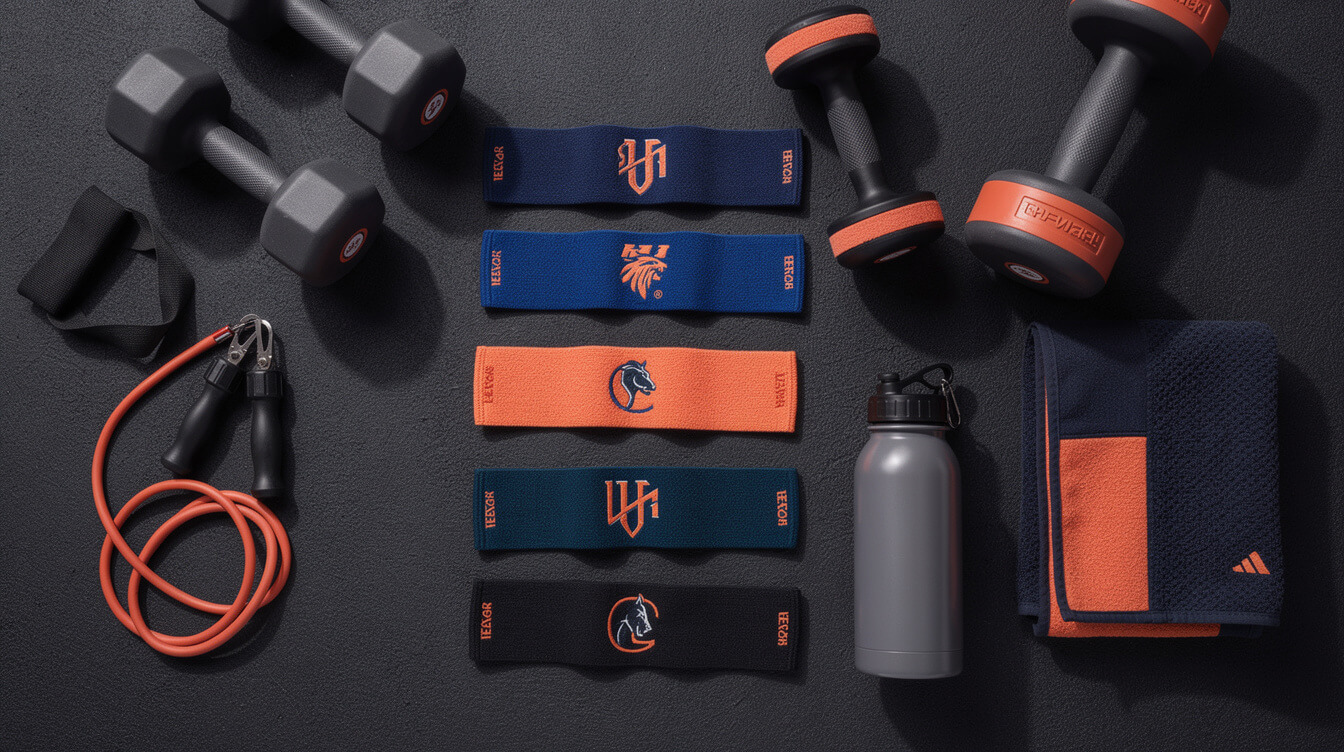
The most underdeveloped angle in the custom sweat wristband market is sports community merch. Every B2B supplier in this space focuses on sports teams as institutional buyers. None of them focuses on sports communities as ongoing merchandise customers who want branded accessories for their gym brand, their fitness studio, their local league, or their tournament swag bundle.
Gym and fitness studio brands represent a high-repeat-purchase segment. Independent gyms, CrossFit affiliates, yoga studios, and boutique fitness studios often want branded accessories for community identity. A sweat wristband with the gym logo is the type of item members wear during every workout, making it a visible and functional brand touchpoint. Gym owners with 50 to 200 active members will reorder seasonally as membership turns over and new members want to join the community aesthetic. This is a B2B2C angle: you are selling to the gym owner, who distributes to their members.
School and youth athletic teams are the classic sweat wristband buyer. Custom wristbands for high school basketball, soccer, and volleyball teams are ordered seasonally by coaches or parent booster clubs. Typical order sizes: 15 to 30 units per team. Typical reorder cadence: annually, sometimes twice per year for spring and fall seasons. Building relationships with 10 to 20 team accounts creates a recurring revenue base from buyers who already know they need the product.
Music and cultural events use sweat wristbands as festival merchandise, particularly at outdoor events where physical activity and heat are part of the experience. Music festivals, outdoor sports tournaments, and cultural heritage events all represent relevant custom wristband buyers. These are typically one-time orders at higher quantities (50 to 200 units) with lower repeat rates, but the per-order revenue is strong and often bundled with other event merchandise.
Tournament bundles are the highest-margin configuration in this niche. For a wrestling, tennis, or martial arts tournament, a bundle of two custom wrist cuffs and a matching headband creates a cohesive set that justifies a $38 to $55 retail price. The custom sweat wristband becomes part of a kit rather than a standalone product, which improves average order value and differentiates the listing from Amazon. For the broader sports fan merch ecosystem, wristbands bundle naturally with custom jerseys, socks, and bags to build a complete team accessories store.
Running clubs and endurance communities are a growing segment. Half-marathon training groups, triathlon clubs, and running communities produce custom gear for their annual race season. Custom sweat wristbands in club colors are practical merchandise that members actually use during training, which means organic visibility at every run.
WooCommerce for repeat orders: team and league accounts that reorder every season
The strongest argument for building your custom sweat wristband store on WooCommerce is not the 1% fee savings. It is the repeat-order infrastructure that WooCommerce enables natively for team and league accounts.
When a school athletic program or gym brand orders custom wristbands through your WooCommerce store, they become a customer you own. Their order history is in your system. Their email address is in your CRM. Their repeat order, when it comes 12 months later, is a direct reorder on your site with no additional acquisition cost. On Shopify, the buyer relationship technically belongs to Shopify’s platform. On WooCommerce, the relationship belongs to you.
WooCommerce’s native order management handles team account ordering cleanly. A high school athletic director placing an annual order for 25 wristbands can save their design preferences, their shipping address, and their payment method without any additional configuration. WooCommerce’s built-in customer accounts handle all of this natively. On Shopify, equivalent functionality typically requires a third-party subscription management or wholesale app at $15 to $49 per month.
WooCommerce also supports personalization fields natively. A text input field for team name, season year, or player number can be added to the product page without a paid plugin. On Shopify, the equivalent personalization field requires a product customizer app at $19 to $49 per month. For a product where team name or player number is the core differentiator, native personalization is a meaningful workflow advantage.
The repeat-order math compounds over time. A gym brand with 80 active members reorders 30 wristbands each January for new members. A youth soccer league reorders 60 wristbands each September for the fall season. A martial arts tournament orders 100 wristbands each April. These are not one-time buyers. They are recurring revenue sources. Each repeat order on WooCommerce costs you nothing in platform override fees. Each repeat order on Shopify generates another 1% charge.
If you are building a specialty sports merch store around custom athletic accessories, the owned WooCommerce model scales more economically than any marketplace or rented platform. You build the customer relationship once, and it returns revenue every season without additional acquisition spend.
Implement AI. 30x your throughput. Get a 30-min call with the founder.
Drop your details and book a free 30-minute discovery call. Personalized advice on your POD stack, your margin, and where AI fits. No pitch, no fluff.