Custom coasters for POD sellers: which providers support them, material options, and the unit cost math
The search results for custom coaster are almost entirely consumer print shops and B2B promotional vendors. None of them are written for POD sellers. If you run a WooCommerce store and want to add custom coasters to your catalog, the research stops exactly where your real questions start. This guide covers all of it: which providers actually carry coasters at no minimum order quantity, how different materials affect the print method, what the unit cost math looks like at realistic retail prices, and why the 4-pack bundle is the most underused lever in the category.
What POD sellers miss about the coaster category
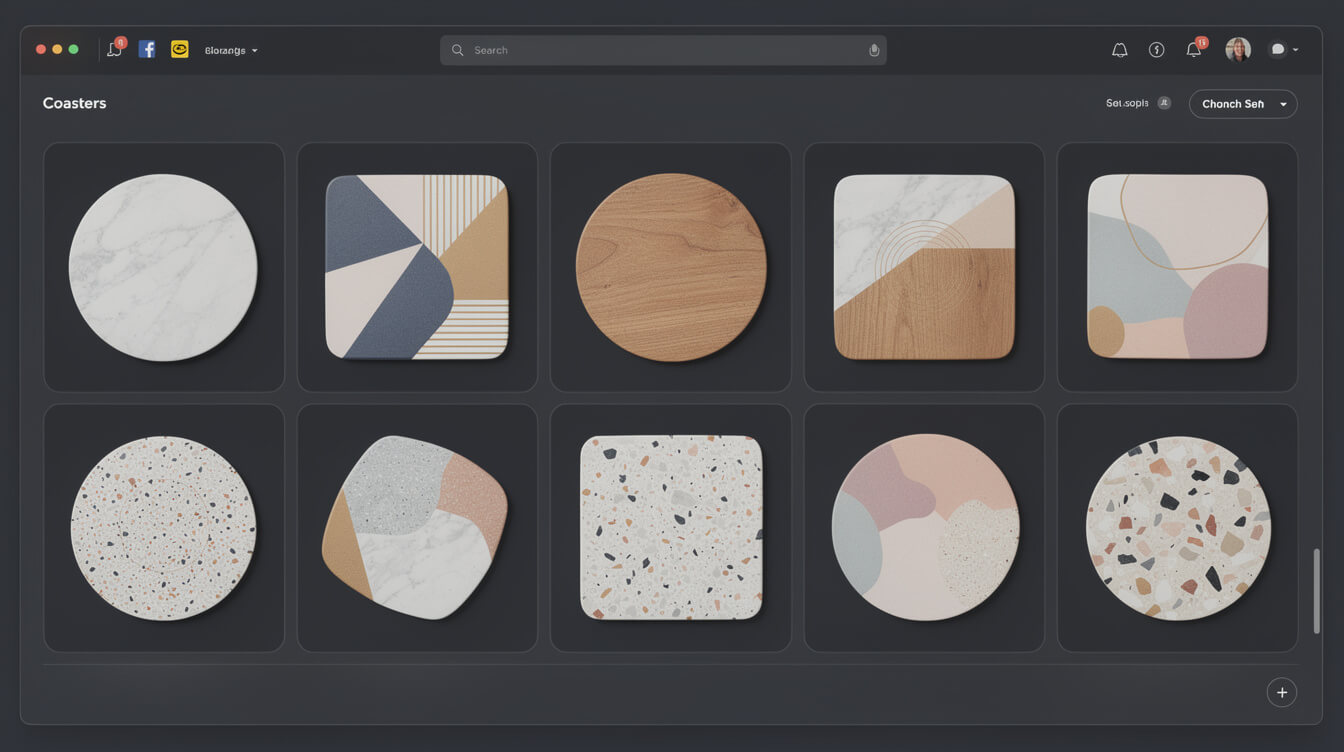
Coasters look like a simple product. A flat surface, a design, a sublimation press. In practice the category is more nuanced than it appears, and most POD sellers either skip it entirely or add it to their catalog without understanding why conversions stay low.
The core problem is the unit price ceiling. A single custom coaster retails for $12-18. That leaves thin absolute gross margin after base cost and shipping. The sellers who make coasters profitable are the ones who solve the average order value (AOV) problem before they publish the first listing.
There is also a materials question that consumer print shops never address. When you search “custom coaster” as a buyer, you are looking at a finished product. When you search as a POD seller, you need to know whether a specific material can be sublimated, what the base cost looks like at different volumes, and whether your preferred fulfillment provider even carries it in their catalog.
The SERP for this keyword is 100% consumer-facing. CustomCoastersNow, Walmart Photo, and B2B promo vendors like SmartPackUSA dominate the first page. None of them are helping you build a coaster product line. That editorial gap is also a product gap. Sellers who understand the print method, price the bundle correctly, and target the right niche have an uncontested lane.
Which Printful and Printify products support custom coasters (and which don’t)
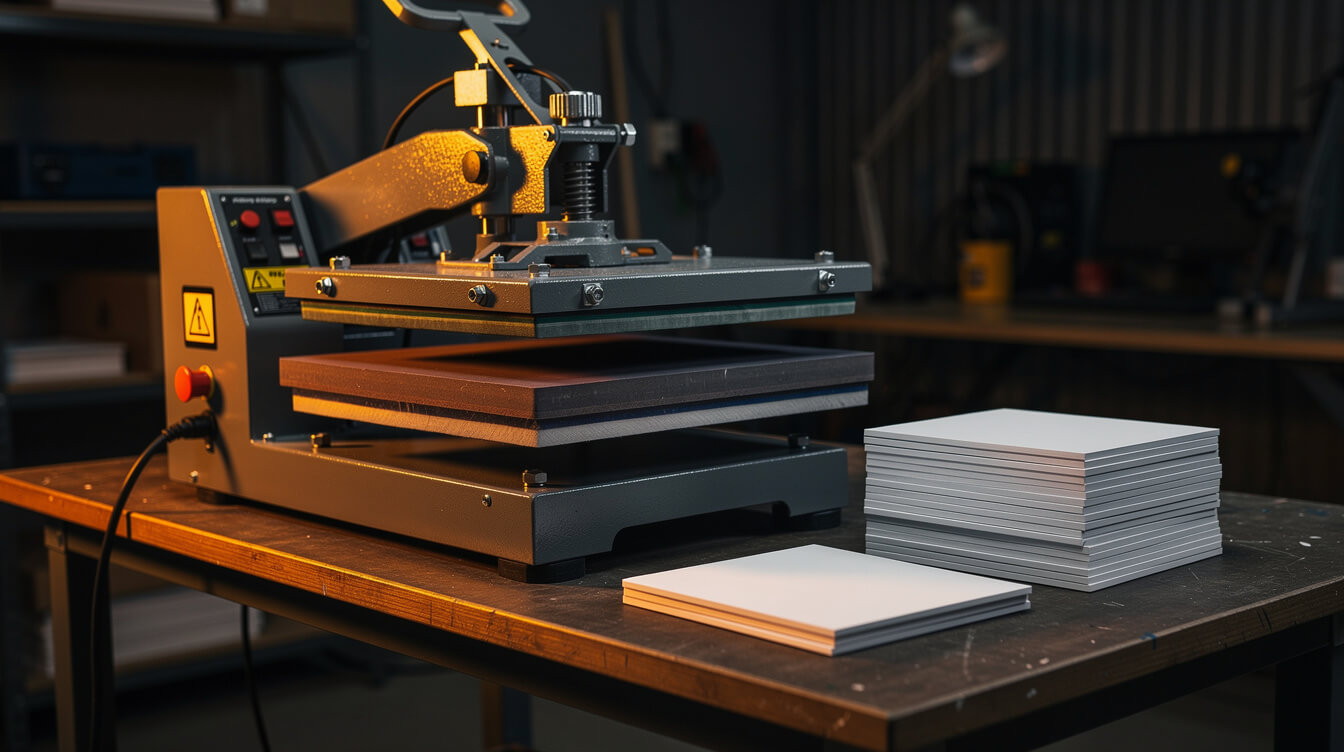
Printful carries hardboard sublimation coasters as a standard catalog product. They are available at no minimum order quantity. A single coaster can be produced and shipped directly to your customer without you touching inventory. This is the cleanest POD path for the category.
Printify’s network also carries coasters, but availability varies by vendor. Some vendors in the Printify marketplace carry hardboard coasters, and a smaller number carry ceramic options. You need to check the product creator directly and filter by your target shipping region, because coverage is not uniform across geographies.
Printful does not currently carry ceramic coasters or cork coasters in its standard catalog. If those materials are important to your product mix, you are routing through Printify’s network or a white-label supplier that often requires a minimum order quantity.
SPOD and Gooten both carry hardboard coasters. Printful’s pricing and production consistency give it a slight edge for new stores that prioritize predictability over material variety.
What does not exist in standard POD catalogs: stone coasters (sandstone, slate, marble), acrylic coasters, and most premium handcrafted formats. These require custom vendor relationships and batch orders, which introduces inventory risk that is incompatible with the no-MOQ model. For most POD sellers building a coaster catalog, hardboard sublimation is the starting point and often the permanent answer.
If you are also building out a broader drinkware and accessories line, our guide to custom drinkware for POD sellers covers the full sublimation product ecosystem, including tumblers, mugs, and insulated bottles that pair naturally with a coaster offering.
Hardboard, ceramic, cork: how material changes the print method
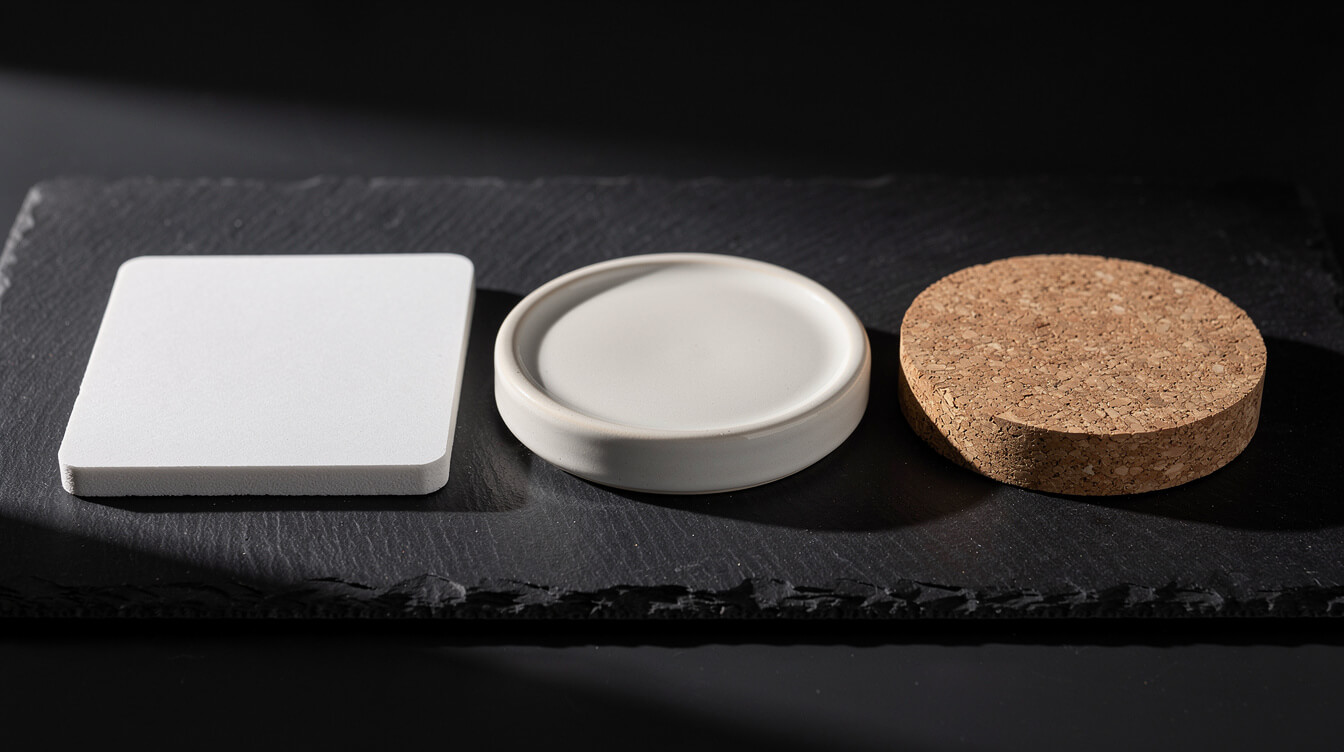
The material determines everything about the print process, color quality, and how the finished product holds up over time.
Hardboard coasters
Hardboard coasters are made from MDF (medium-density fiberboard) with a white polyester coating applied to the print surface. The coating is what makes sublimation possible. Dye-sublimation works by using heat and pressure to open the molecular structure of the polyester layer and bond dye into it permanently. Once the press releases and the coaster cools, the dye is locked inside the coating at a molecular level. It does not sit on top of the surface. It does not crack, peel, or fade with normal use.
Colors on sublimated hardboard are vivid and photographic in quality. This is the format Printful carries, and it is the right starting point for the vast majority of POD sellers.
Ceramic coasters
Ceramic coasters also work with sublimation, but the process is slightly different. The ceramic base is fired and glazed, and then a polymer-coated layer is applied to the top print surface. The sublimation press bonds dye into the polymer layer rather than into the ceramic itself. The result is a harder, heavier, more premium-feeling coaster that retails for $3-5 more than comparable hardboard at the same size. Fewer POD vendors carry ceramic, and those that do often have minimums in the 6-12 unit range.
Cork coasters
Cork coasters cannot be sublimated. Cork is a natural plant material. Dye-sublimation requires a polyester fiber structure to bond into, and cork has none. Cork coasters are printed using screen printing (limited color palette, flat design), UV inkjet printing (full color but surface-level adhesion), or they are left unprinted. In a POD context, cork is the most inaccessible material through standard providers and the hardest to produce at no MOQ.
The practical decision: start with hardboard sublimation. It is accessible via Printful, it produces the highest image quality, and it requires no minimum order. Ceramic is worth adding if you have proven demand in a premium gift niche. Cork is best left to batch vendors with minimums.
Unit cost math: custom coaster economics at 1, 10, and 50 units
Smash print-on-demand. Join the engine room.
One short email a week. Real numbers, real teardowns, the unfiltered economics behind every move.
Understanding where your margin comes from and where it disappears requires running the numbers at realistic volumes.
Single hardboard coaster via Printful
- Base cost: $5.50-7.00
- Shipping (US domestic): $3.50-4.50
- Landed cost: $9.00-11.50
- Retail price: $14-18
- Gross margin: $3-9 per unit = 21-50% gross
At the low end of the pricing range ($14 retail), the coaster earns about $3 in gross margin. That is thin by almost any metric. The higher your retail price goes within the acceptable range, the better the margin looks, but the ceiling on a single coaster is hard to push past $18 in most markets.
4-pack bundle
- Base cost: $22-28 (4 × $5.50-7.00)
- Shipping (US domestic): $5.50-7.00 (heavier, same box footprint)
- Landed cost: $27.50-35
- Retail price: $42-55
- Gross margin: $7-28 per set = 20-51% gross
The bundle math is more interesting. At $48 retail for a 4-pack, a Printful base of $24 plus $6 shipping gives you $18 in gross margin. That is 37.5% gross on a $48 transaction versus roughly 30% gross on a $15 transaction. More dollars, better percentage.
Batch order at 50 units from a manufacturer
- Unit cost: $1.25-2.00 from a wholesale hardboard supplier
- Setup: minimal for hardboard sublimation blanks
- 50-unit investment: $62.50-100
- Retail per unit: $14-18
- Revenue on full sell-through: $700-900
- Gross margin: $600-800 on 50 units
The batch route has dramatically better per-unit economics, but you are carrying inventory. For a niche you have not tested, that is a risk. The POD no-MOQ advantage is specifically valuable during the product validation phase, when you are not certain a design or niche will convert.
The same sublimation cost dynamics apply across other hard-surface POD products. Our breakdown of custom mug printing economics covers the same landed cost framework for Printful’s 11 oz mug, which pairs naturally with a coaster in any drinkware-adjacent gift catalog.
The 4-pack strategy: how to double AOV without creating new designs

This is the single most underused lever in the coaster category, and it requires zero additional design work.
A 4-pack of matching coasters uses the same design file as a single coaster. You are not developing new artwork. You are not building a new product line. You are grouping four identical items and pricing the set in a way that reflects the buyer’s actual purchasing intent.
The reality: buyers who want custom coasters rarely want one coaster. They want a set for a coffee table, a gift set for a housewarming, or a batch for a wedding reception. A buyer landing on your single-coaster listing and wanting four will add the item to the cart four times. That creates four separate checkout decisions. Each decision point introduces friction. Each one can end in abandonment.
A 4-pack listing converts that into one decision. Buy the set, pay the set price, done.
The pricing architecture
Your single-coaster retail is $15. Your 4-pack should be $48-52, not $60. Buyers expect a small bundle discount, and the discount needs to feel meaningful. At $48 for four coasters, they are paying $12 per coaster versus $15 each. That $3 per coaster discount feels substantial. Your gross margin on the set ($18-20) is still 37-41% gross.
Run three listings at once:
- Single coaster: $14-16 (entry point, discovery SKU)
- Set of 4: $48-52 (best value, highest conversion volume)
- Set of 8: $85-95 (wedding table sets, large group orders)
The 8-pack is the wedding favor gateway. Couples ordering coasters for their reception need anywhere from 8 to 25+ sets. A single WooCommerce transaction at $85-340+ replaces dozens of individual sales.
WooCommerce handles this natively with product variants. You set up coaster quantity as a variant (1, 4, 8, custom), price each tier separately, and the pricing logic is built into the product page with no paid app required. MEGA builds out this full variant architecture automatically, generating the product title, description, SEO fields, and pricing tiers from a single product brief — try MEGA to see how the listing pipeline works end to end.
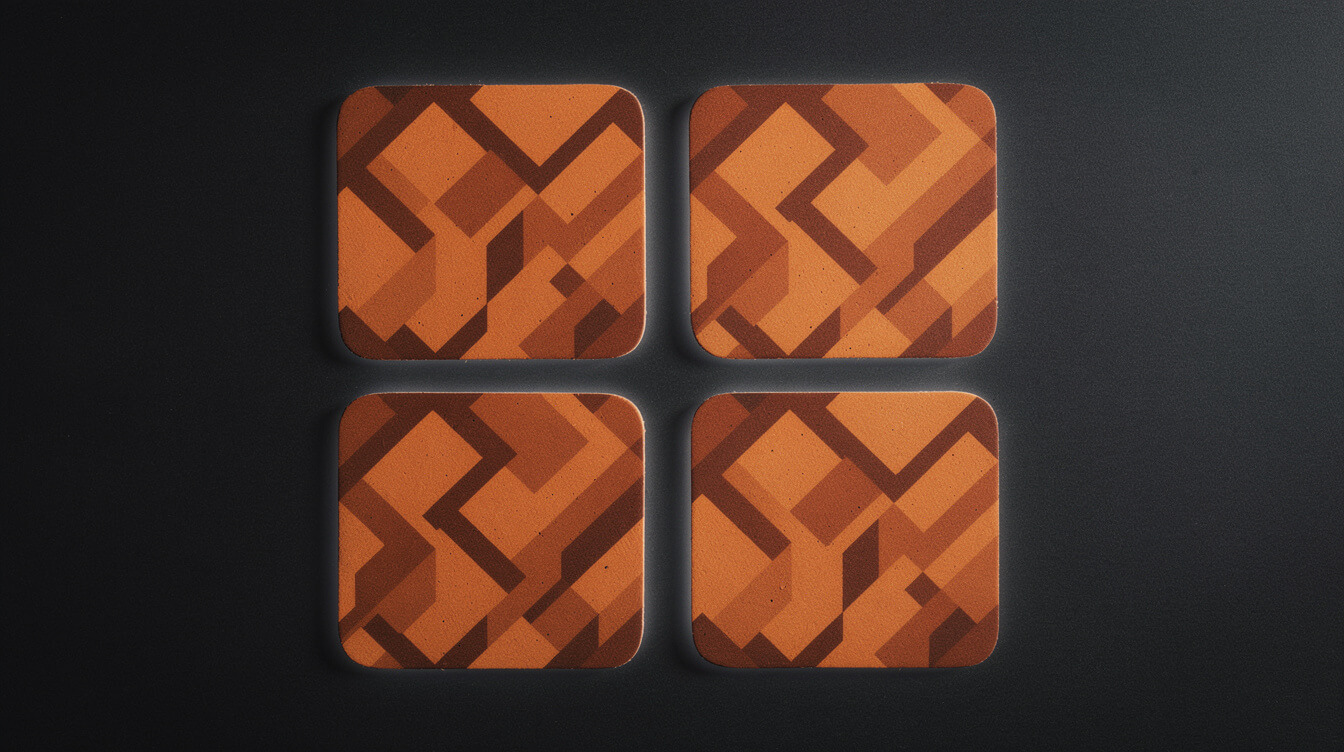
Build a full custom coaster catalog in under 7 minutes
MEGA generates product listings end-to-end: title, description, SEO fields, variant structure, and images, all from a single niche prompt. No Canva session. No manual data entry.
The wedding favor niche: volume, timing, and margin at $40-55 per set
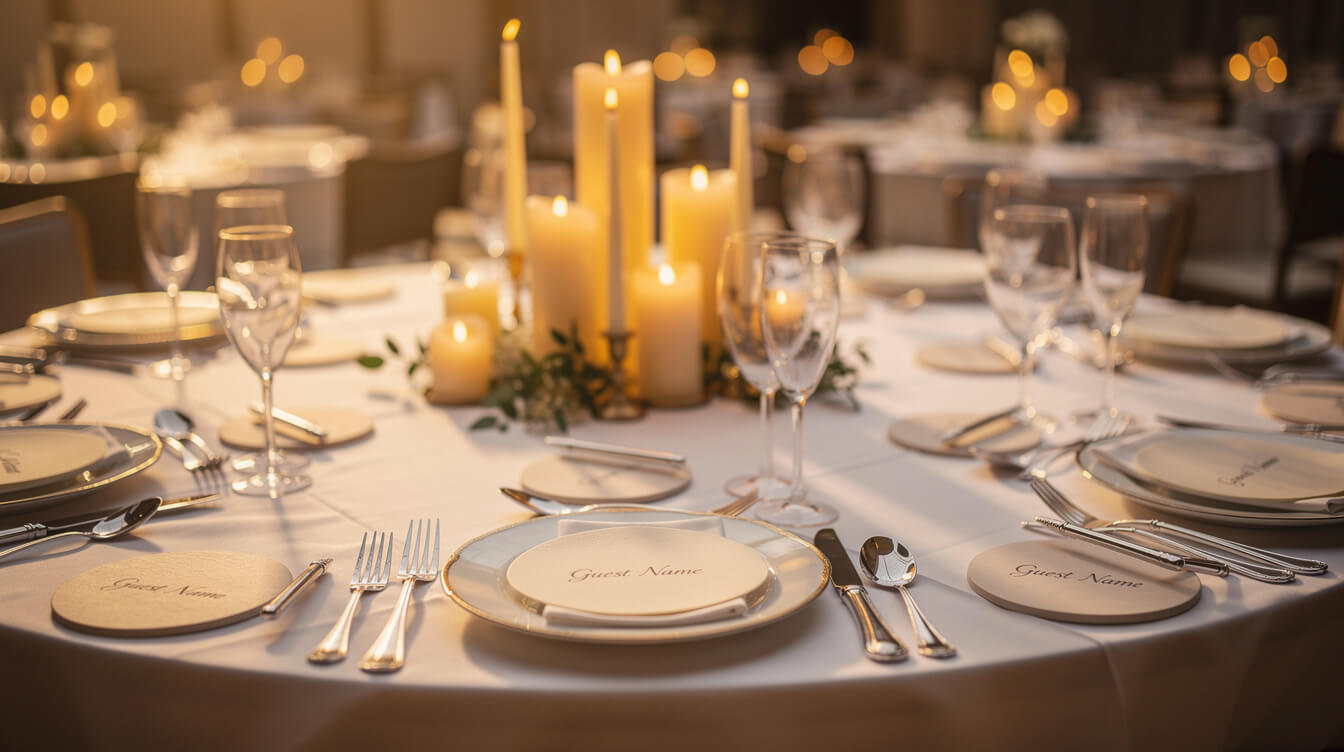
The wedding favor market is the strongest niche vertical in the coaster category. It has consistent year-round demand, high purchase intent, and a buying pattern that pushes order values well above the single-coaster floor.
A couple planning a reception wants personalized coasters as a favor for their guests. Standard practice is one coaster per guest seat. For a 100-person wedding, that is 100 coasters, or 25 sets of 4. At $48 per set, that is a $1,200 transaction from one customer.
The more common scenario: a couple ordering 8-12 sets (32-48 coasters) for the head tables, gift bags, and close family. That range produces $384-576 per transaction. Still a very strong single-order value for a product with no inventory risk.
Demand timing
Wedding demand peaks follow the planning calendar, not the wedding date. The search and ordering phase for spring weddings runs September through December. The planning phase for summer weddings runs January through April. Your coaster listings need to be indexed and converting before the search volume hits. Getting listings live in late August positions them for the September-November wedding planning surge.
The personalization setup
Personalization is the core value driver in this niche. A coaster that includes the couple’s names and wedding date is not a commodity item. The buyer searched specifically for it. Etsy competition is real here, but Etsy charges 6.5% transaction fees plus listing fees on every sale. A WooCommerce store with the same product keeps that margin.
The WooCommerce personalization setup for wedding coasters:
- Product Add-On: text field for bride and groom names
- Product Add-On: text field for wedding date
- Optional dropdown for shape (round, square, hexagonal)
No paid app is required. WooCommerce Product Add-Ons handles text field personalization natively. This is one of the meaningful structural advantages over Shopify, where name and date personalization typically requires a $19-49/month third-party app. That app fee applies to every personalized product in your store, not just coasters. Across a full POD catalog, it compounds fast.
Beyond weddings, the adjacent niches worth testing: engagement party favors and bridal shower sets (shorter planning window, same 4-pack and 8-pack patterns), housewarming gifts (year-round, city or state art theme), sports bar and man cave decor (team loyalty purchases, not occasion-driven), and Airbnb host gifts (B2B-adjacent, repeat buyer potential for hosts with multiple properties).
Our detailed breakdown of custom cutting board economics covers the same wedding and housewarming gift buyer segment, and many coaster sellers find that the two products share enough audience overlap to justify building them as a coordinated bundle.
Shopify 1% on $15-50 low AOV: the math that makes WooCommerce obvious
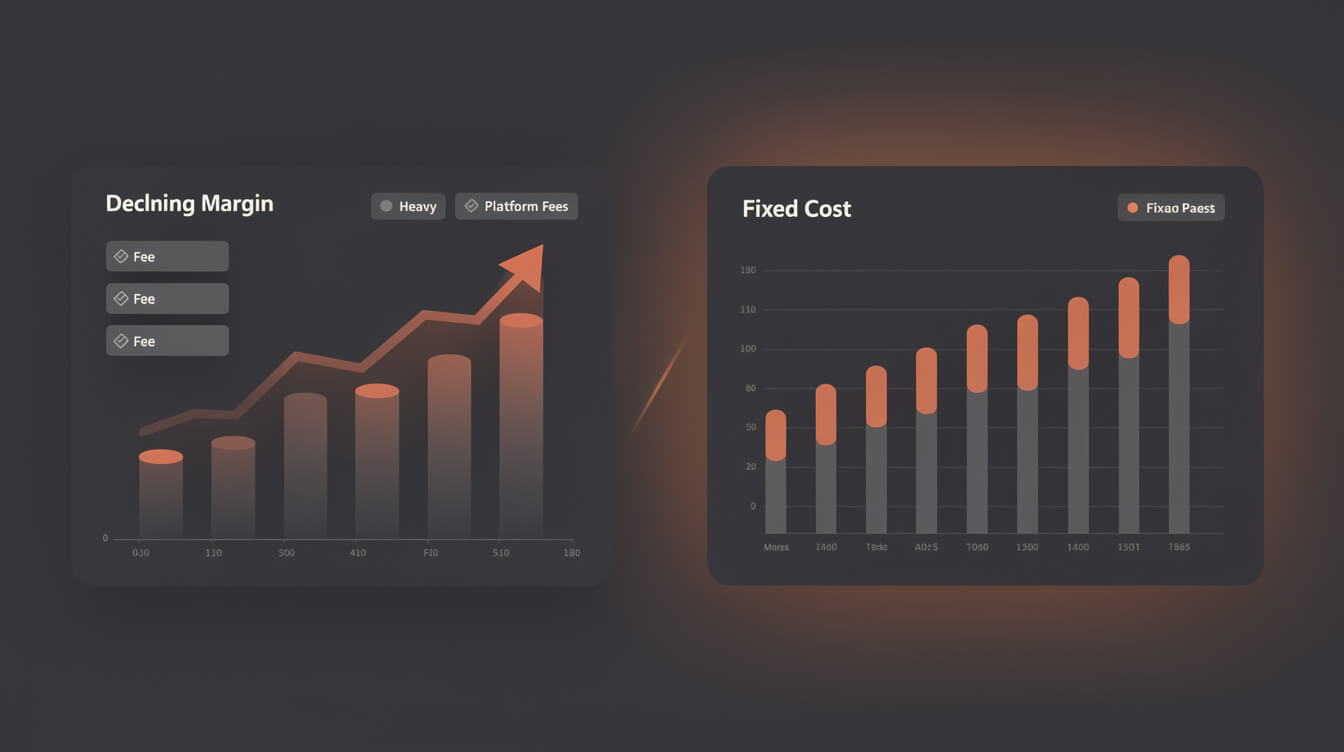
The Shopify platform override fee is 1% of gross revenue for stores not using Shopify Payments. On a $55 hoodie, that is $0.55. Tolerable. On a $15 custom coaster, that is $0.15. That sounds negligible until you run the monthly numbers.
Single-coaster scenario
A coaster store doing 200 orders per month at a $15 AOV generates $3,000 in monthly revenue. Shopify’s 1% override on that is $30/month, or $360/year. That is pure platform tax on one of your thinner-margin products.
4-pack scenario
At 200 orders per month averaging $48 (4-pack pricing), the store is doing $9,600/month. Shopify’s 1% is $96/month, or $1,152/year. WooCommerce’s platform cut on the same revenue: $0.
Total overhead comparison
Add everything up for a coaster store on Shopify:
- Shopify plan: $29-79/month
- Platform override (1%): $30-96/month at these volumes
- Personalization app (text fields): $19-49/month
- Total: $78-224/month = $936-2,688/year
The same store on WooCommerce:
- Hosting: $15-30/month
- WooCommerce Product Add-Ons: one-time fee or free tier
- Platform override: $0
- Total: $15-30/month = $180-360/year
The gap: $756-2,328 in kept margin annually, depending on Shopify plan and store volume. That is real money on a product category with thin per-unit margins. For a store selling $15 coasters, recovering $756-2,328 per year in platform overhead is the difference between a profitable catalog and a breakeven one.
This dynamic is not unique to coasters. It applies to any low-to-mid AOV product where the 1% override is a meaningful percentage of your gross margin. Coasters are just one of the clearer examples because the margin per unit is thin enough that the fee structure shows up plainly in the math. For the full breakdown across multiple POD product types, see our guide on WooCommerce vs Shopify for print-on-demand sellers.
Final thoughts on building a coaster catalog that actually converts
Custom coasters are a category with genuine untapped potential for POD sellers. The SERP is entirely consumer-facing. No editorial competitor is helping POD sellers understand which providers to use, how to structure the bundle pricing, or how to target the wedding favor demand curve. That is your lane.
The fundamentals are straightforward. Start with hardboard sublimation through Printful or a Printify network vendor. Build the 4-pack listing before you build the single-unit listing. Price the bundle at $48-52. Add personalization fields for name and date using WooCommerce Product Add-Ons. List before August ends for maximum Q4 wedding planning coverage.
The math on coasters only works cleanly on a platform where you are not paying a percentage of every transaction. WooCommerce’s fixed overhead model fits this product category precisely because the per-unit margin is thin enough that every percentage point matters.
If you want to see how a full coaster product catalog gets built end-to-end, from niche selection to listing generation to SEO, that is exactly what the MEGA pipeline automates. One niche prompt, complete product output, under seven minutes.
Implement AI. 30x your throughput. Get a 30-min call with the founder.
Drop your details and book a free 30-minute discovery call. Personalized advice on your POD stack, your margin, and where AI fits. No pitch, no fluff.