Custom hats with patches for POD sellers: embroidery vs leather vs PVC explained, and the headwear niche math
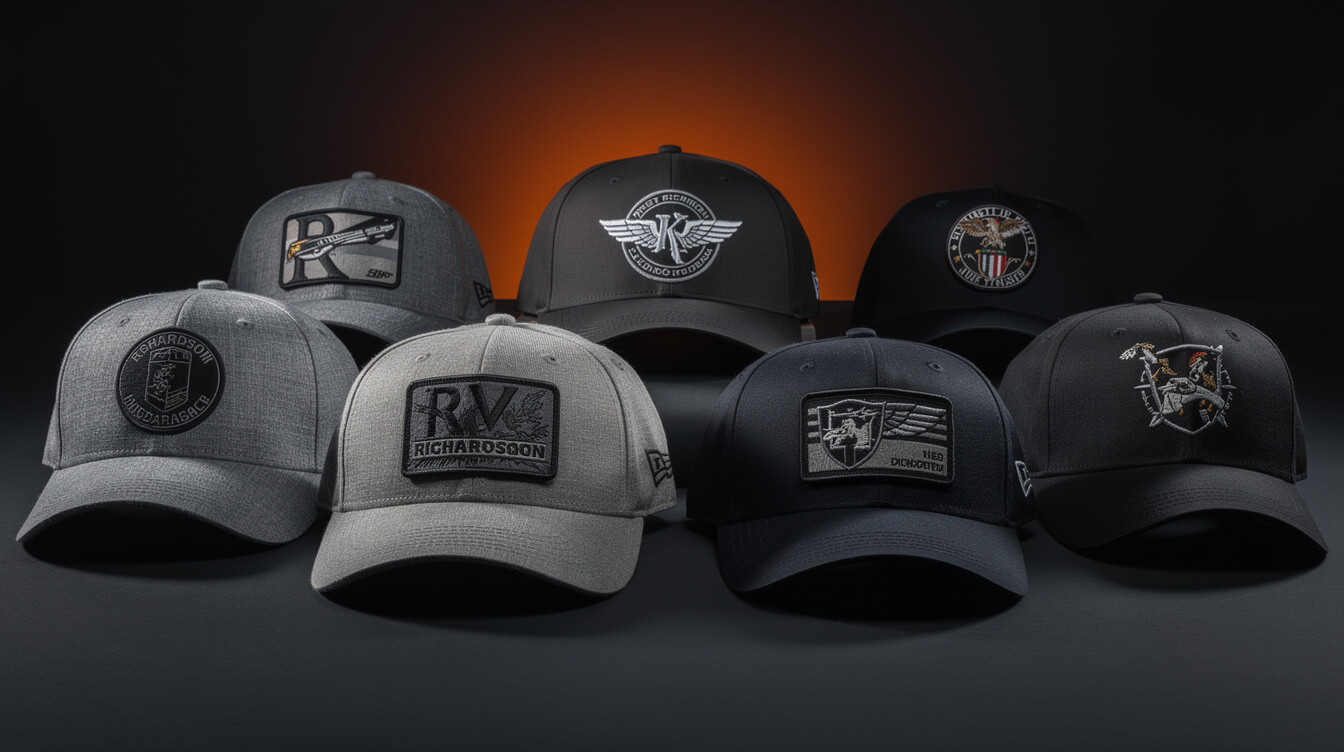
Custom hats with patches sit in one of the more confusing corners of print-on-demand. Search the term and you find bulk hat manufacturers quoting minimums, premium lifestyle brands selling $80 Richardson leather patch caps, and POD platforms listing embroidered hats under a completely different search path. The result: most sellers either skip the category entirely or land in a supply chain they did not intend. This guide cuts through that. You will learn exactly what each patch type requires, which custom hats with patches styles Printful and Printify support today with no minimum order, when a bulk supplier becomes necessary, and what the unit economics look like at every tier.
What “custom hats with patches” actually means: four patch styles and what makes each different
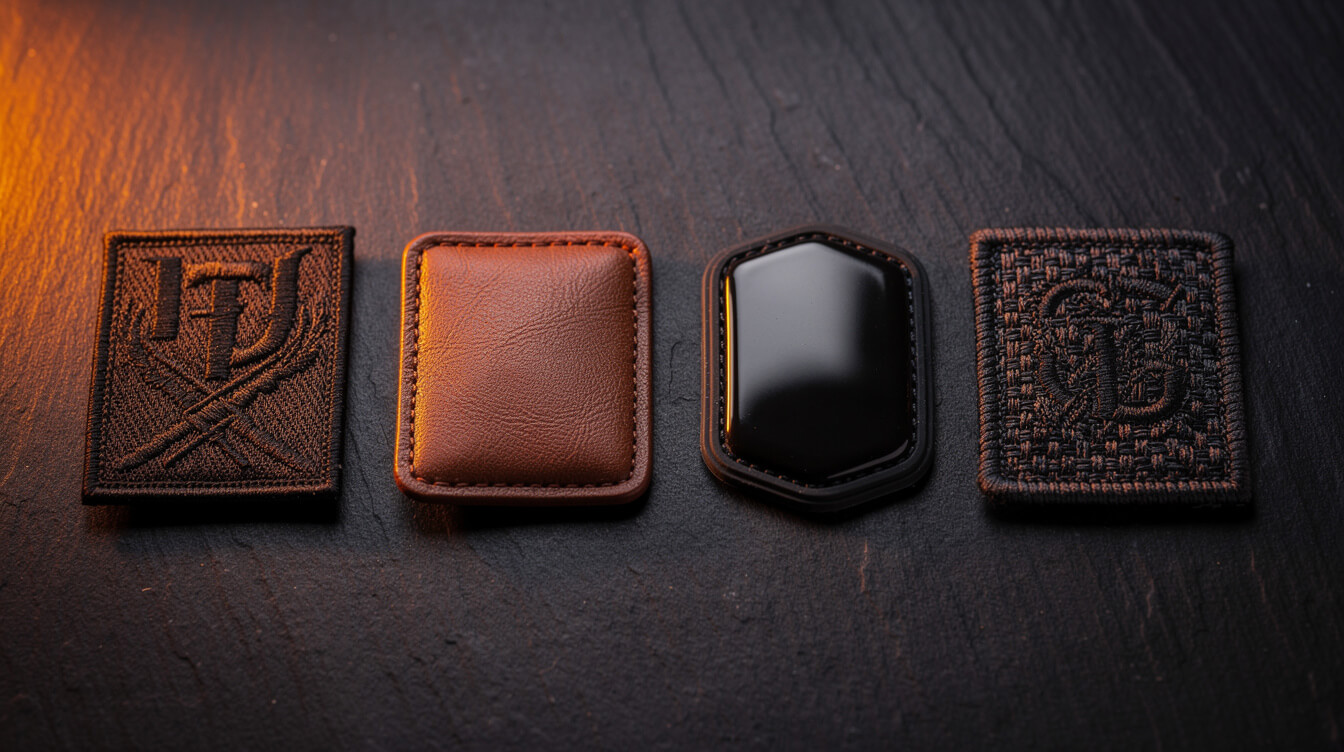
The phrase covers four distinct manufacturing paths. Each produces a different aesthetic, has different costs, and requires a different supply chain. Understanding the difference before you build a listing saves you from mispriced inventory and disappointed customers.
Embroidered patches are the most common form in POD. Thread is stitched directly onto a fabric backing, producing a raised texture. On a structured hat, Printful and Printify vendors apply embroidery directly to the hat fabric. The stitched logo looks like a patch because it sits raised above the base cloth. No separate patch is sewn on. This is an important distinction: when a POD seller lists an embroidered patch hat, the embroidery is the patch. The raised stitch profile gives the same visual as a sewn-on cloth badge without the separate component.
Leather patches are a completely different material. A die-cut piece of genuine or synthetic leather is debossed, laser-engraved, or heat-stamped, then sewn or heat-fused to the front panel of the hat. The result is a warm, natural, premium look that performs especially well in outdoor, brewery, and country/western niches. Leather patches cannot be applied in the standard no-MOQ POD workflow. They require a supplier who procures the leather stock, applies the branding, and attaches it to the hat — a process that makes economic sense at 12 units minimum.
PVC rubber patches are injection-molded from soft silicone or PVC compound. They can achieve 3D raised elements up to 0.75 inches, hold fine detail and multiple colors without thread limitations, and tolerate outdoor use without fading. They carry the same supply-chain constraint as leather: a mold is created per design, and minimum orders of 12-25 units are standard before that cost is amortized.
Woven patches use a shuttle loom to produce a thin, tightly woven design with fine detail — essentially a miniature textile. They require digitization for the loom pattern and carry similar minimums to leather and PVC. Less common in POD-adjacent channels than embroidered or leather styles.
The practical takeaway: if you want zero minimum orders, embroidered hats via Printful or Printify are your path. If you want the leather or PVC aesthetic specifically, you are looking at a supplier relationship and a minimum-order investment. Neither is wrong — they serve different stages of the same business.
Which patch hat styles Printful and Printify can fulfill with no minimum order
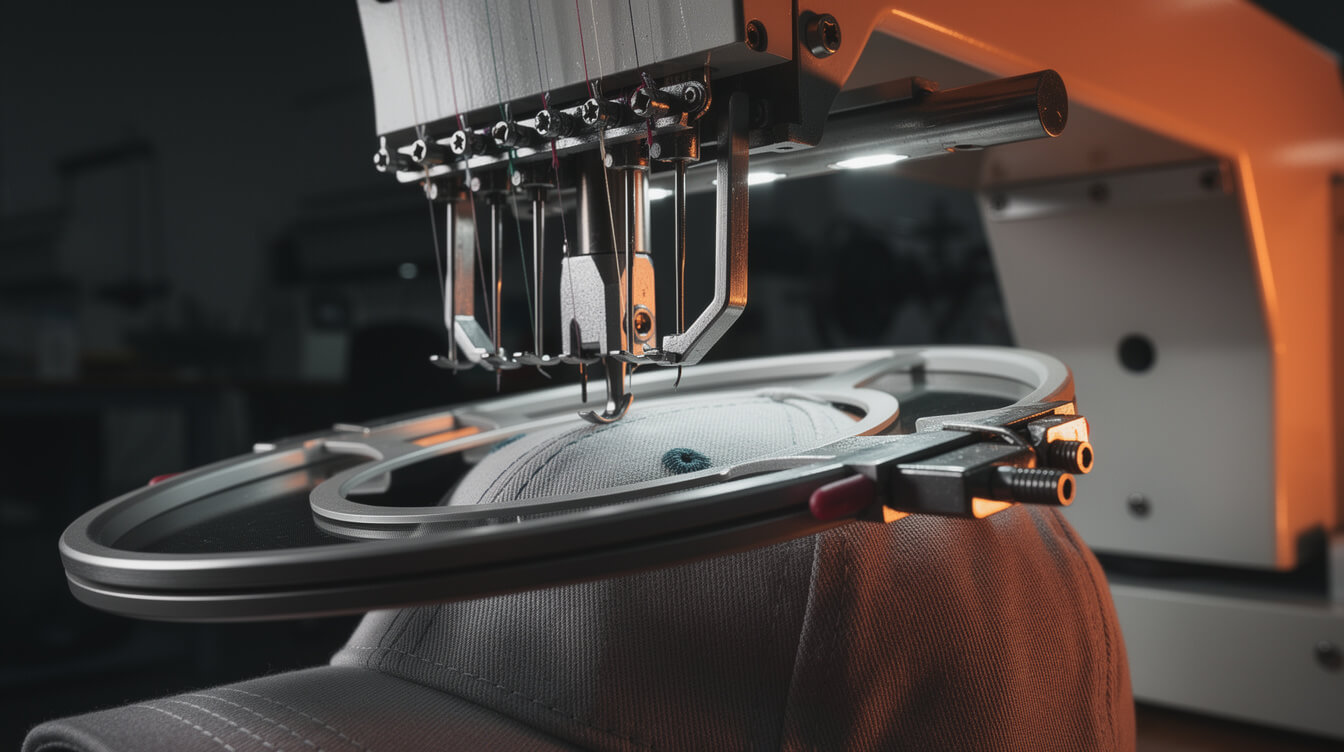
Printful carries embroidered structured hats through their in-house embroidery facilities. Their product lineup includes the Richardson 112 trucker cap, flat bill snapback styles, and several unstructured dad caps. All use direct embroidery: your design is digitized and stitched to the hat at fulfillment. No MOQ. One unit ships as fast as 2-5 business days.
Key production constraints on the Printful embroidery path:
- Thread color limit: 15 colors maximum per design. This is sufficient for logos and brand marks. It rules out photorealistic designs or gradients, which require more color values than thread palettes can hold.
- Minimum lettering size: Legible lettering requires at least 0.25 inches in height. Fine script below that threshold will merge at stitch level. Most sellers use bold sans-serif or block lettering for hat embroidery.
- Design placement: Front panel (the primary logo position), left/right side, back panel, and under-visor placement are all available. Front panel is the default for the patch-style look.
- Design complexity: Highly detailed artwork loses definition in thread. Clean, bold designs with strong outlines translate best. This is not a limitation unique to Printful — it applies to all embroidery production.
Printify gives you access to a partner network rather than in-house production. As of mid-2026, several Printify vendors carry embroidered structured hats including Richardson-style truckers, cotton twill snapbacks, and 5-panel hats. The exact lineup varies by vendor and region. Always verify in the Printify product creator before building listings, since vendor availability changes quarter to quarter. Thread color limits and size constraints are similar to Printful but vary by vendor.
For sellers comparing structured embroidered hats to AOP headwear, the key distinction is substrate and aesthetic. AOP bucket hats use all-over sublimation on polyester, producing full-panel photorealistic prints on unstructured caps. Embroidered structured hats produce the patch/logo look on a firm-front cap. They serve different design types and different buyer profiles.
The bottom line: if your design fits within thread limits, Printful embroidery delivers a patch-aesthetic hat at no minimum order. That is the fastest path to testing this market with zero capital at risk.
Leather patch and PVC patch hats: when you need a bulk supplier and what that costs
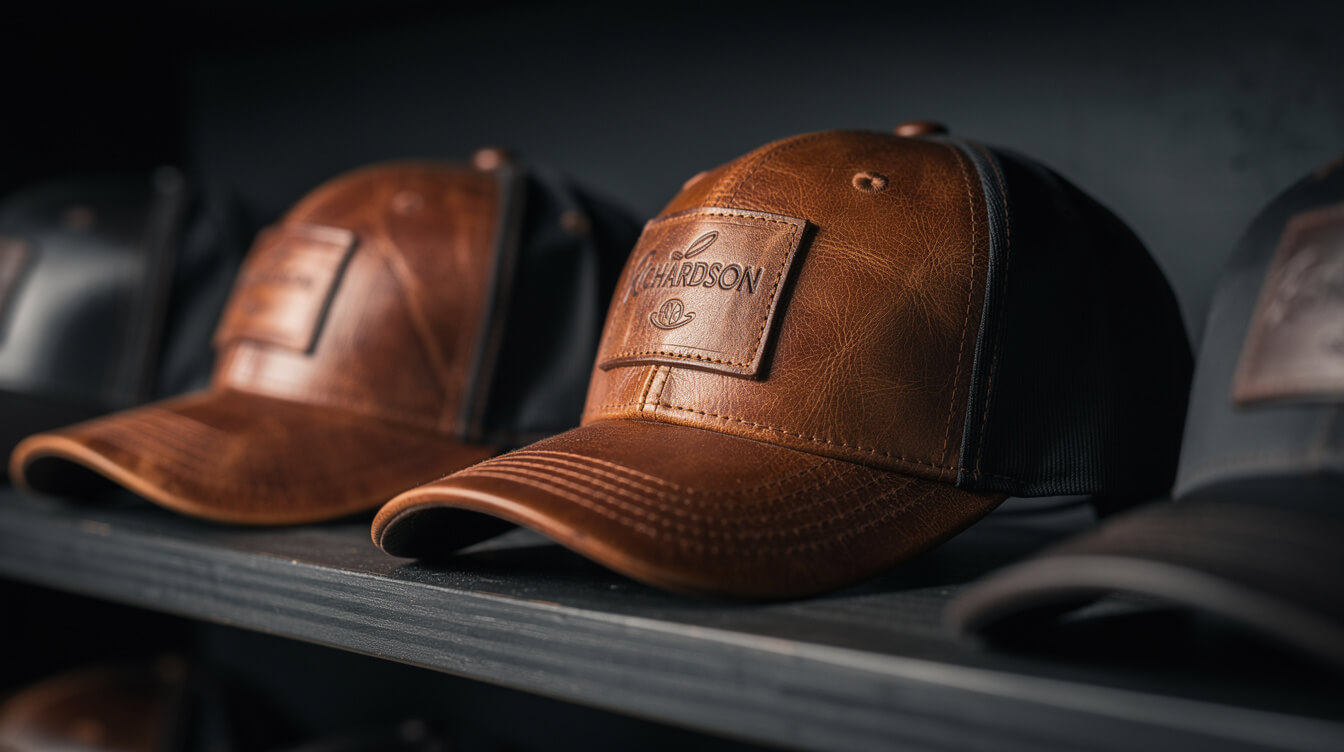
Sellers who want the leather patch aesthetic need a supplier who handles both the hat and the patch. There are two ways to structure this supply chain.
Hat manufacturer with leather patch service: Companies like Richardson Brands and import-focused wholesalers offer leather patch programs where you provide a vector design and they apply a debossed or laser-etched leather patch to a structured hat. Minimum orders typically run 12-24 units. Turnaround is 2-3 weeks for leather patch application plus domestic shipping.
Blank hat and patch supplier separately: Buy blank Richardson 112s or similar from a wholesale distributor and order custom leather patches from a patch manufacturer. You assemble them yourself via iron-on backing, snap-button attachment, or heat press — or pay a local embroidery shop $1.50-3.00 per hat for sew-on application. More flexible for small batches but requires coordinating two suppliers and either hands-on assembly or a local service vendor.
Cost structure for the leather patch path:
- 12-unit MOQ: $22-30 production cost + $4-6 domestic shipping = $26-36 landed. Retail $42-55 = 24-41% gross margin. Inventory carry: $264-360 at cost.
- 25-unit MOQ: $17-24 production cost + $4-5 shipping = $21-29 landed. Retail $42-55 = 31-47% gross margin. Inventory carry: $425-600.
- PVC rubber patch path: Costs run slightly higher than leather at comparable minimums ($24-34/unit production) due to mold setup and soft-rubber compound. Retail tolerance is similar at $44-58 in the streetwear and outdoor niches.
The leather and PVC paths make sense at the right stage. Starting before you have 12 confirmed buyers creates inventory risk on a product that does not sell on velocity alone. The smart sequence: validate demand with embroidered POD hats, build 12 or more repeat buyers on a specific design, then upgrade that SKU to leather patch. The inventory run becomes a presale with a built-in customer base instead of a speculative inventory bet.
For sellers scaling into broader custom sportswear product lines, the leather patch hat sits naturally at the premium tier alongside sublimated jerseys and screen-printed gear — different fulfillment paths, unified store experience.
Unit cost math: embroidered hat at 1 unit vs leather patch hat at 12+ units
Smash print-on-demand. Join the engine room.
One short email a week. Real numbers, real teardowns, the unfiltered economics behind every move.
Here is the math that most POD guides skip. Two paths, same product category, very different economics at different volume levels.
Embroidered hat via Printful (no minimum order)
- Base cost (Richardson 112, front panel embroidery): $15.50-18.00
- Domestic shipping: $4.00-5.00
- Total landed cost: $19.50-23.00
- Retail price: $34.00-42.00
- Gross margin: 40-50% ($13.00-21.00 per unit)
- At 200 orders/month: $6,800-8,400 revenue, $2,600-4,200 gross margin
- Capital required to start: $0
Leather patch hat via bulk supplier (25-unit minimum)
- Production cost: $17-24 per unit
- Domestic shipping to end buyer: $4.00-6.00
- Total landed cost: $21-30
- Retail price: $42.00-55.00
- Gross margin: 31-47% ($13-25 per unit)
- At 200 orders/month: $8,400-11,000 revenue, $2,600-5,000 gross margin
- Capital to start: $425-600 for first 25-unit run (pre-ordered before production)
The gross margin ranges overlap. The leather path has a higher gross margin ceiling and a higher retail price tolerance, but it requires upfront capital and carries inventory risk. The embroidered path has zero capital requirement and zero unsold inventory risk.
At 200 orders/month, the leather path generates more gross revenue and comparable gross margin. At 1-20 orders/month, the embroidered POD path is the only one that makes economic sense — you never carry dead stock or fund inventory before demand is confirmed.
For sellers running automated product creation, MEGA’s product pipeline handles listings, SEO metadata, mockups, and variant setup for the embroidered hat path from a single niche prompt. The on-demand fulfillment route scales cleanly in an automated workflow because each unit is produced at purchase — no inventory decisions, no capital forecasting required.
The decision framework: validate demand with embroidered hats, use the first 12-20 buyers to pre-sell a leather patch run. Both product tiers live on the same WooCommerce store. Your leather hat listing replaces the embroidered version when inventory is confirmed. The product URL stays the same. The margin improvement lands cleanly with no storefront disruption.

Automate your patch hat listings. End-to-end in under 7 minutes.
MEGA generates product listings, mockups, SEO titles, and meta descriptions from a single niche prompt. The entire embroidered hat pipeline — from idea to live WooCommerce listing — runs automatically.
Seven niche verticals that convert for custom patch hat stores
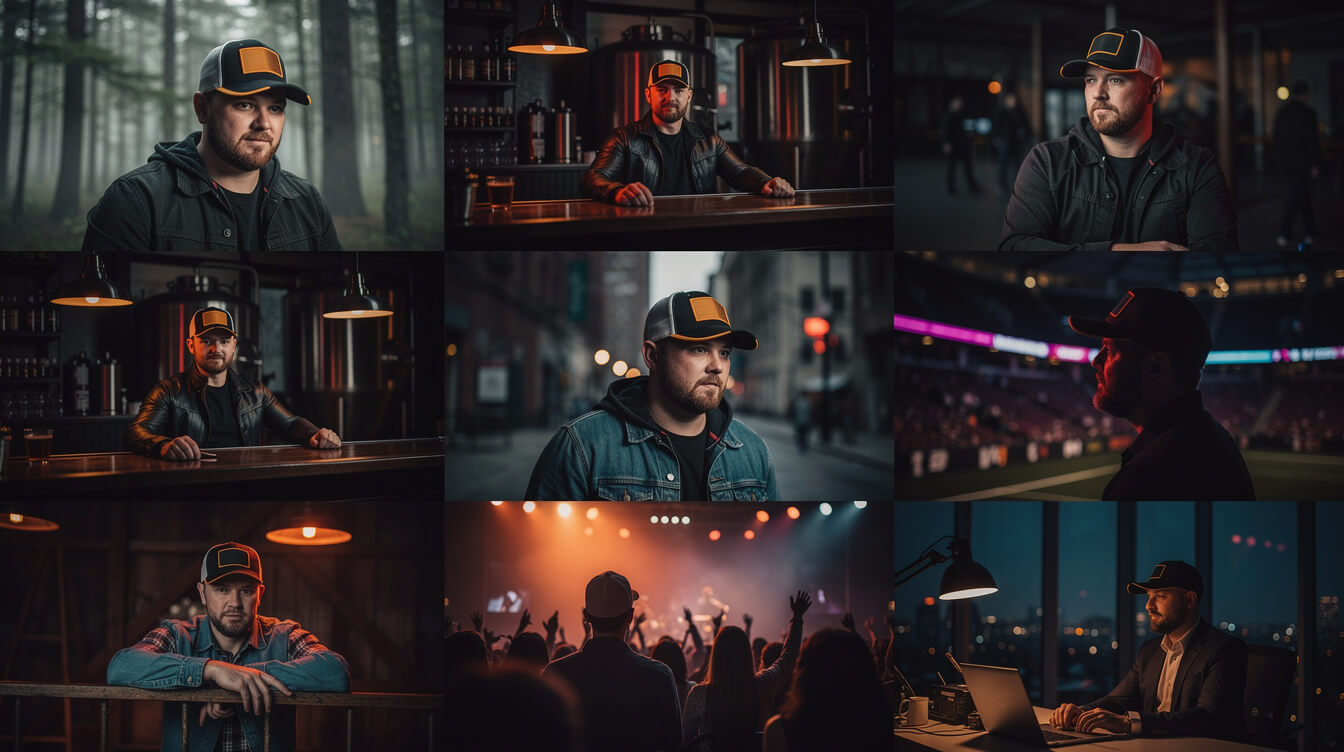
Patch hats are not a generic accessory play. They perform in specific subcultures where structured caps and emblem identity are load-bearing parts of the visual language. Here are the seven verticals with the clearest buyer profiles and the strongest repeat-purchase signals.
1. Outdoor and hunting
Richardson 112 truckers are essentially the house cap of outdoor culture. Buyers in this segment default to structured front panels and mesh backs. Embroidered or leather patches with regional wildlife, topographic designs, or state identity perform well. Seasonal volume spikes in September through October ahead of hunting season. Repeat buyers are reliable — outdoor identity buyers replace worn hats on 12-18 month cycles, and they buy multiple versions for different activities.
2. Craft brewery and taproom
Breweries are quiet B2B-adjacent buyers. A local taproom sells their merch at the bar, reorders quarterly, and does not need a large catalog. A single brewery account at 20-50 hats per quarter at $42-55 retail = $840-2,750 per quarter. Leather patch hats are the premium tier their audience will pay for. Embroidered hats work well for smaller taprooms testing merch for the first time. The key is the repeat reorder — a brewery that buys once almost always comes back.
3. Country and western
This segment runs high on leather patch aesthetics and tolerates retail prices in the $45-60 range without friction. Ranch names, rodeo imagery, and state designs sell consistently. Nashville-adjacent and rural-market sellers report year-round demand with a strong Q4 gift window. Leather patch hats are the dominant format; embroidered hats work for lower price-point entry products in the same store.
4. Streetwear
PVC rubber patches and high-contrast embroidery suit the streetwear aesthetic. Drop culture applies: limited runs announced in advance build anticipation and justify premium retail. The buyer is younger, more likely to discover you on TikTok or Instagram than through Google, and responds to identity-driven design more than utility claims. Small runs of 12-25 PVC patch hats per colorway fit the drop model naturally.
5. Sports fan
Non-licensed regional sports fan designs — state identity, city nicknames, local team archetypes without actual trademarked logos — occupy a lane that official licensing channels do not cover. Sellers in this segment focus on original artwork that captures fan identity without reproducing protected marks. Custom baseball jerseys for POD sellers covers the apparel side of this niche in detail; embroidered patch hats are the natural companion product in a sports fan store.
6. Music artist merch
Touring artists and independent musicians use structured embroidered hats as catalog items between albums. Tour cycles create predictable demand windows. Order quantities are often modest per run — 25-100 units — but they repeat on 12-18 month cycles. A single artist account at 50 hats per release cycle generates reliable recurring revenue without complex inventory management.
7. Corporate brand kits
HR teams, agency accounts, and small-to-medium business operators buy custom patch hats for employee onboarding kits, client gifts, and team events. Orders of 5-25 units at $38-52 retail. Payment is usually corporate card. Churn is low: when the hat looks professional and ships on time, the buyer returns for the next hire batch. WooCommerce handles bulk pricing and custom order notes natively, making it straightforward to accommodate repeat corporate orders.
Setting up your custom hats with patches store on WooCommerce: variants, SKU management, and repeat B2B buyers
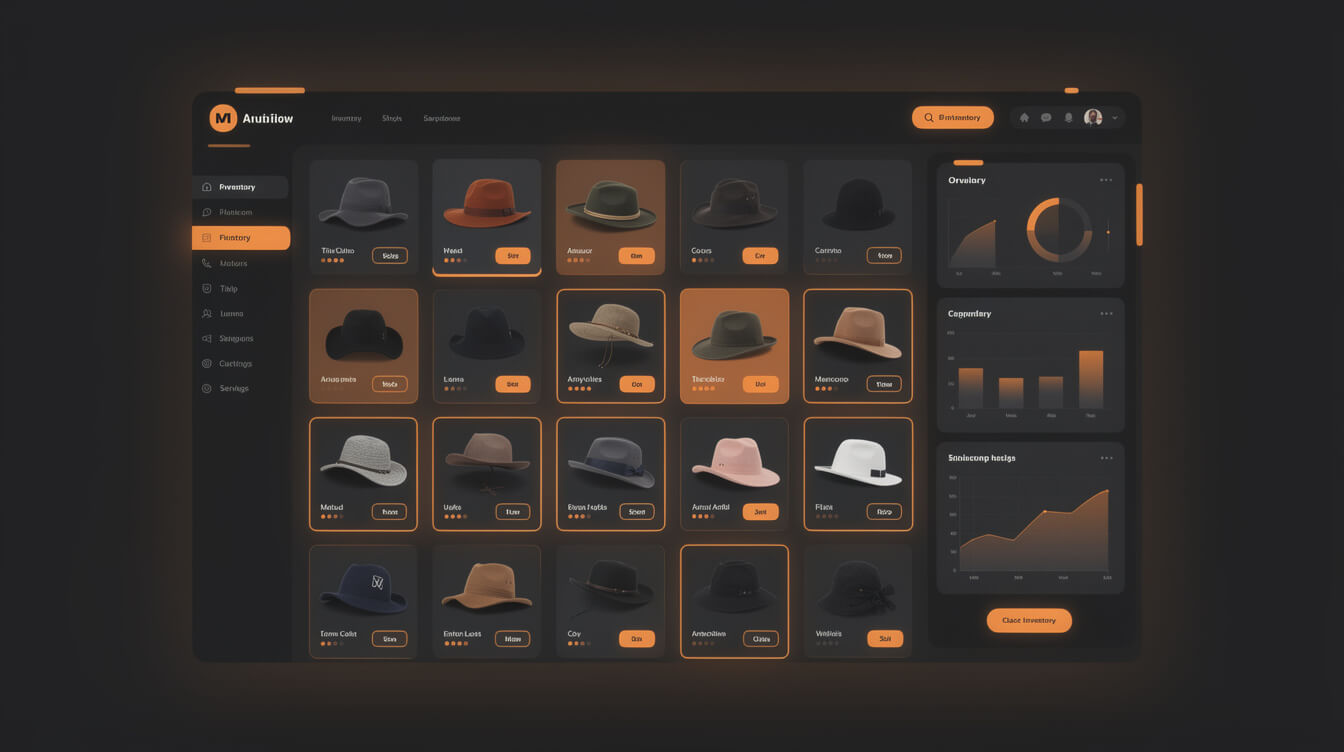
WooCommerce’s variable product type handles hat SKU management without any additional plugins. Size (S/M, L/XL in most hat lines) and color (black, navy, khaki, camo — depending on provider availability) become product attributes. Each combination is a SKU. Stock management, price overrides per variant, and thumbnail color swatches all live in the native product editor at no added cost.
For personalized hats — a name embroidered on the back panel, a custom motto, a year or city text — WooCommerce handles the customer input via the native product options. Add a text input field in the product data. The buyer fills it in at checkout. Printful and Printify both read custom line-item notes and apply the personalization at fulfillment. No app purchase required. This is a built-in WooCommerce workflow that Shopify charges $19-49/month to replicate with a dedicated personalization app.
Owning your B2B repeat buyers
The brewery accounts, sports leagues, and corporate HR buyers described in the niche section above are B2B-adjacent repeat buyers. On WooCommerce, when one of these accounts places an order, they create an account in your store. You own that buyer relationship — their email address, order history, and reorder cadence. You can email them directly when new colorways drop, when Q4 inventory is confirmed, or when you offer a bulk pricing promotion for orders over 20 units.
On Shopify, that buyer’s purchase data lives in Shopify’s infrastructure. The platform relationship has a layer between you and your customer data. Your store’s ability to communicate with that buyer is mediated by Shopify’s ecosystem and export tools.
For a store that derives meaningful revenue from repeat B2B-adjacent accounts, the owned-data model of WooCommerce is a practical operational advantage. The brewery that buys 20 hats a quarter should be in your CRM and reachable the day you launch a new design — without any platform intermediary in that relationship.
The full breakdown of how the WooCommerce vs Shopify comparison plays out across a full POD store — including platform fees, app costs, and customer data ownership — is worth reading if you are choosing a platform for a headwear business that includes B2B-adjacent buyers.
The Printful WooCommerce plugin automates fulfillment sync end-to-end. New orders push to Printful automatically, production status updates sync back to your store, and tracking information lands in the buyer’s WooCommerce order confirmation without manual processing. Setup runs under an hour for a standard Printful plus WooCommerce configuration.
Conclusion: choosing your custom hats with patches path
The custom hats with patches market is larger and less contested in editorial search than almost any comparable POD accessory category. The SERP is 100% B2B bulk manufacturers. There is no resource written for individual POD sellers explaining the decision framework between embroidered, leather, and PVC patch paths. That gap is real, and it represents commercial-intent search traffic that is going unanswered.
The decision tree is straightforward. Start with Printful or Printify embroidered hats: zero capital, no inventory risk, genuine patch aesthetic in every niche that accepts thread embroidery. Build your buyer list and prove the design. When you have 12 or more confirmed buyers for a specific design, upgrade that SKU to a leather or PVC patch hat via a bulk supplier — the first run is pre-sold before you order it.
Run both paths on WooCommerce. Own your customer data. Avoid the Shopify override that extracts $912-1,152/year at 200 hat orders/month before you count the plan cost or personalization apps. The unit economics favor the seller who controls their platform costs and their buyer relationships.
The supply chain is documented above. The economics are on your side. The search lane is open. The first product is the only thing standing between you and a live patch hat listing.
Implement AI. 30x your throughput. Get a 30-min call with the founder.
Drop your details and book a free 30-minute discovery call. Personalized advice on your POD stack, your margin, and where AI fits. No pitch, no fluff.