Custom sweatshirt printing for POD stores: unit costs, print method trade-offs, and the WooCommerce vs Shopify math
Custom sweatshirt printing sits at the intersection of two things POD sellers want: higher average order value and a product category that search engines have left almost entirely to bulk vendors. The average crewneck sells for $40–50. A premium hoodie goes for $55–70. Both ship fulfilled by Printful, Printify, or Gooten with zero inventory. This guide covers the unit cost math on both, the print method trade-offs specific to fleece fabrics, a provider comparison, and the WooCommerce vs Shopify fee calculation at sweatshirt AOV. The numbers matter more than the marketing copy on any fulfillment platform’s homepage.
If you already sell t-shirts through a POD store, adding custom sweatshirt printing to your catalog is a logical next step. The fulfillment workflow is identical. The margin math is different, and better.
Why custom sweatshirt printing is worth adding to your POD store right now
The SERP for “custom sweatshirt printing” is almost entirely B2C product pages. Underground Printing, Vistaprint, and CustomInk dominate with pages designed for a buyer ordering 24–100 pieces for a company event. There is almost no content written for a POD seller building a storefront that sells to individual customers with no minimums.
That gap is the opportunity. Buyers searching “custom sweatshirt printing” are often looking for a single item, or a small run, or a way to build a brand. The bulk vendor pages do not serve them well. A POD store that speaks directly to those buyers with clear pricing and no-minimum fulfillment has a structural advantage the search results are not yet capturing.
The economics also favor sweatshirts over t-shirts for established POD sellers. A standard unisex t-shirt sells for $22–30. A crewneck sweatshirt sells for $40–50. A zip hoodie goes for $60–75. The higher price point means more gross margin dollars per order even if the percentage margin is similar. At $45 sell price with a $20 COGS, you net roughly $17–18 after payment processing. At $22 for a t-shirt with a $12 COGS, the net is closer to $8–9. Same fulfillment overhead. More per-order revenue.
The seasonal argument is also real. Sweatshirt searches peak from October through January, driven by cold weather and gifting intent. A store that has a sweatshirt line running by September captures that traffic. A store that waits until November is chasing a wave that is already halfway through.
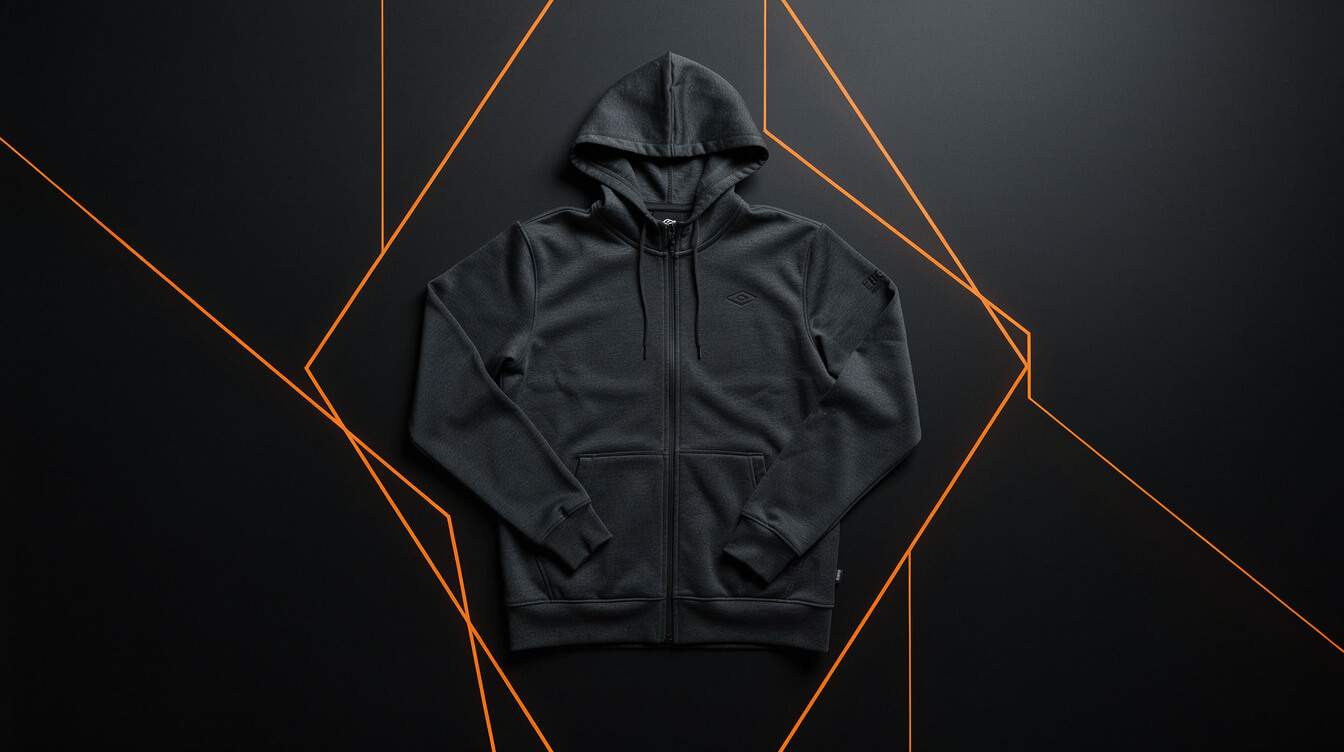
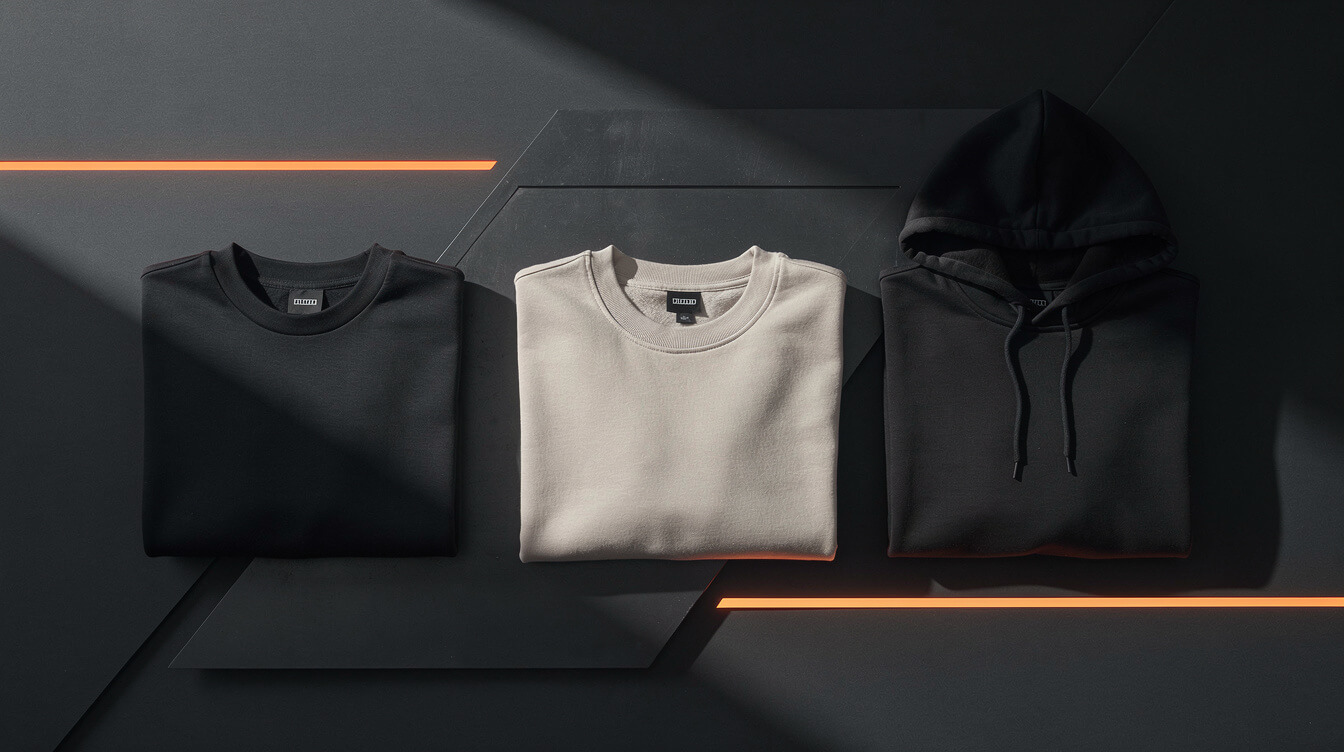
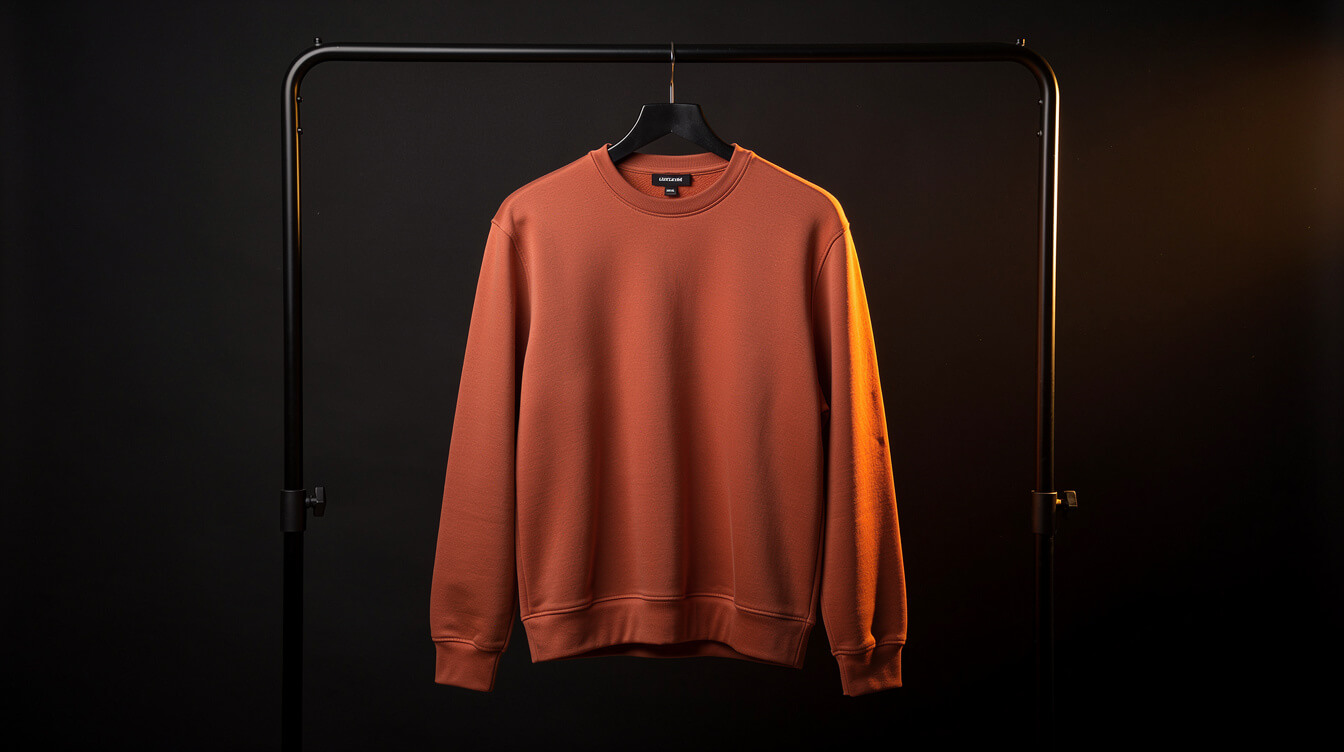
One more structural point: sweatshirts photograph well. A well-executed mockup of a custom crewneck on a dark background reads as premium. That matters for Instagram and TikTok, where mockup quality affects click-through rates directly.
Fulfillment provider comparison: Printful vs Printify vs Gooten for sweatshirts

The three major POD providers handle sweatshirts differently. Here is the breakdown by base cost, catalog breadth, and quality notes.
Printful offers a mid-size sweatshirt catalog that includes the Unisex Basic Sweatshirt (around $19.95 base at a $45 sell price), the Premium Eco Hoodie (~$28.95), and several Bella+Canvas and Champion styles at higher price points. Printful’s fulfillment is consistent, the DTG print quality on their fleece is reliable, and their embroidery placement is tight. The tradeoff is that Printful is the most expensive provider in this category. At $19.95 COGS for the base crewneck plus $5.99 standard shipping, your landed COGS on a $45 order is $25.94. That leaves $19.06 gross margin before platform fees.
Printify has a larger catalog because it aggregates across multiple print providers. The Gildan 18000 Heavy Blend (available via several Printify print partners) runs approximately $14.50–15.50 depending on the partner and your plan. At $15.50 COGS plus $5.99 shipping, your landed COGS on the same $45 sale is $21.49. Gross margin is $23.51 before fees. Printify Premium ($29/mo) drops prices further. The tradeoff: quality consistency varies by print partner. You need to test your preferred partner before scaling a sweatshirt line.
Gooten sits between the two on price, typically $17–18 for a standard crewneck sweatshirt. Gooten’s WooCommerce integration is strong, which makes it a reasonable choice if you want direct API control over orders. Catalog breadth for sweatshirts is narrower than Printify, but the quality on their core SKUs is consistent.
Summary: if margin is the priority and you can tolerate the QA overhead of testing a Printify partner, Printify on the Gildan 18000 wins on COGS. If you want consistency and a simpler setup, Printful is the safer choice and still delivers a reasonable margin at sweatshirt AOV. Gooten is a defensible middle-ground option for WooCommerce-native setups.
For more on Printful’s product catalog and how to evaluate which items are worth selling, see our guide to Printful products.
Print method trade-offs on fleece: DTG, DTF, embroidery, and screen printing
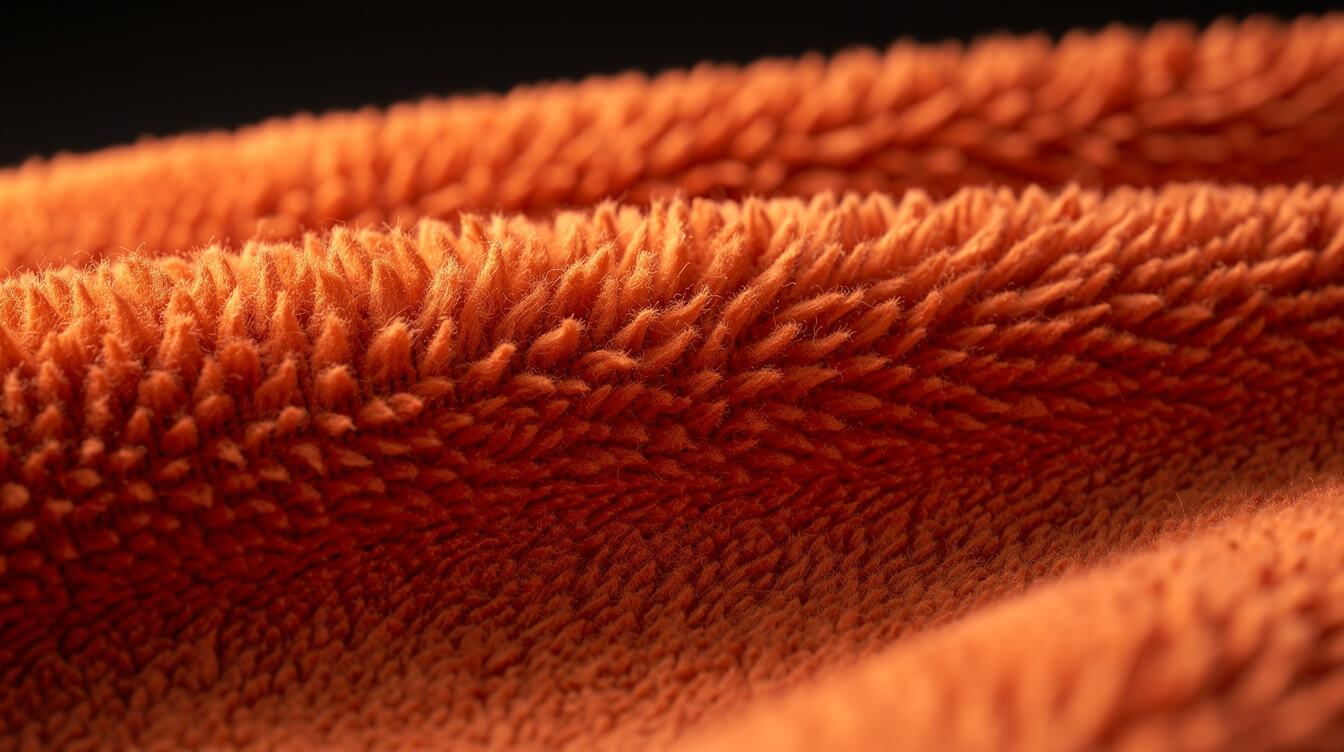
The fabric matters here in a way it does not for t-shirts. DTG, DTF, and embroidery each behave differently on fleece, and the differences affect both quality and your product positioning.
DTG on fleece works, but the ink adhesion is weaker than on 100% cotton. Fleece is typically a cotton-polyester blend (usually 50/50 or 80/20). The polyester content resists DTG ink in ways that pure cotton does not. Prints can look slightly less vibrant, and wash durability can be lower compared to a DTG print on a ringspun cotton tee. Pretreatment helps, and modern DTG machines handle blends better than older equipment, but you are working against the substrate. For simple graphic designs and brand logos, DTG on fleece is fine. For photo-realistic or highly detailed artwork, it is a step down from what you would get on a cotton shirt.
DTF (direct-to-film) transfers perform better on fleece than DTG because the film transfer is applied on top of the fabric rather than absorbed into it. The adhesion is more reliable on blends. DTF is increasingly available through Printify’s print partner network and some Gooten partners. If you plan to run complex designs on sweatshirts, DTF is worth specifying when you set up your print partner in Printify.
Embroidery is often the best choice for sweatshirt branding. A chest-left embroidered logo on a Gildan crewneck reads as premium in a way that DTG does not, particularly for corporate and team merchandise orders. Printful has a strong embroidery offering for sweatshirts, with digitization fees typically running $2.95 for standard designs. The downside: embroidery is best for simple logos and text, not complex multi-color graphics. Large fill areas on fleece also have a puckering risk if the digitization is not done carefully.
Screen printing is not available for individual POD sweatshirt orders. Minimum order quantities at screen printers start at 12–24 pieces. If a customer wants 50 matching crewnecks for a company event, screen printing is worth quoting because the per-unit cost drops sharply at volume. But for a no-minimum POD storefront serving individual buyers, screen printing is not in the fulfillment chain. For a deeper look at when screen printing makes sense versus POD, see our custom t-shirt screen printing vs print on demand breakdown.
The practical guidance: use embroidery for brand logos and simple mark placements on sweatshirts, DTF where available for complex graphic designs on blends, and DTG for designs where the substrate quality is acceptable. Do not assume DTG results on a sweatshirt will match what you got on your cotton tee lineup.
Unit economics: real margin math on a $45 crewneck and a $55 hoodie

Smash print-on-demand. Join the engine room.
One short email a week. Real numbers, real teardowns, the unfiltered economics behind every move.
Here is the full unit cost math on both SKUs, using Printful as the baseline (most consistent data) and showing the WooCommerce calculation. The Shopify math follows in the next section.
$45 crewneck on Printful (Unisex Basic Sweatshirt):
- Base cost: $19.95
- Standard shipping: $5.99
- Landed COGS: $25.94
- Sell price: $45.00
- Gross margin: $19.06 (42.4%)
- Payment processing (Stripe, 2.9% + $0.30): $1.61
- Net per order (WooCommerce): $17.45
$55 hoodie on Printful (Premium Eco Hoodie):
- Base cost: $28.95
- Standard shipping: $5.99
- Landed COGS: $34.94
- Sell price: $55.00
- Gross margin: $20.06 (36.5%)
- Payment processing (Stripe, 2.9% + $0.30): $1.90
- Net per order (WooCommerce): $18.16
Compare this to a typical t-shirt on the same setup. A Bella+Canvas 3001 at $11.25 base, $3.99 shipping, sold at $28.00: gross margin $12.76, after Stripe fees net roughly $10.43. The sweatshirt delivers $7–8 more net per order for no additional operational complexity.
The Printify Gildan 18000 scenario improves the crewneck math further. At $15.50 base plus $5.99 shipping, landed COGS is $21.49. At a $45 sell price, gross margin is $23.51 (52.2%). After Stripe fees, net is $21.57 per order. That is 24% better than the Printful equivalent.
These numbers assume zero advertising spend. If you run paid acquisition, add that cost per order and your net drops accordingly. But for organic search traffic, the economics above represent your floor. Custom hoodie printing covers the hoodie-specific margin math in more detail for sellers who want to go deeper on that SKU category.
How the no-minimum promise works in POD sweatshirt fulfillment
The “no minimums” value proposition of print on demand is particularly powerful for sweatshirts because the competing options all have minimums. Screen printers typically require 12–24 units. Wholesale sweatshirt suppliers want orders of 50+. Branded merchandise companies have setup fees that make single-unit orders uneconomical.
A POD store with Printful or Printify fulfilling the backend can list a custom sweatshirt at $45 with no minimum order requirement and fulfill every order profitably at that price point. The infrastructure cost is zero up front: no inventory, no warehouse, no bulk purchase commitment. The risk is also zero: if a design does not sell, you have not bought 24 pieces sitting in a garage.
The no-minimum promise does have limits. Lead time is longer than a local screen printer for bulk orders. If a corporate buyer wants 50 matching crewnecks in two days, POD cannot serve that. But for a storefront built on organic search traffic and individual buyers, the no-minimum structure is a feature, not a constraint.
The model also scales non-linearly. A t-shirt store with 50 designs and a sweatshirt line with 50 matching designs doubles the catalog surface area without doubling operational overhead. MEGA automates this multiplication: the same research-to-product pipeline that created the t-shirt line can generate sweatshirt variants, including design adaptation for the different print area and aspect ratio on a crewneck chest vs. a t-shirt. One session, full sweatshirt catalog.
One practical note on sizing: sweatshirts have more complex sizing considerations than t-shirts. Running unisex sizing tables and including detailed fit guidance in product descriptions reduces return requests. Most POD providers publish detailed sizing charts. Copy them into your product descriptions at listing time.
WooCommerce vs Shopify: fee math at sweatshirt AOV
This is where the platform choice has a measurable dollar impact. At $45 sweatshirt AOV, the Shopify Basic 1% transaction override costs real money per order compared to WooCommerce.
Shopify Basic on a $45 crewneck sale:
- Transaction fee (1% override + 2.9% gateway): 3.9% of $45 = $1.755
- Plus $0.30 per transaction: total $2.055
- Net after fees on $19.06 gross margin: $17.01
WooCommerce + Stripe on the same $45 sale:
- Stripe only (2.9% + $0.30): $1.61
- Net after fees on $19.06 gross margin: $17.45
The difference is $0.44 per order. That sounds small. At 100 sweatshirt orders a month, it is $44. At 500 orders a month, it is $220. At 1,000 orders a month, it is $440 that left your account for Shopify’s 1% override on top of whatever you were already paying for gateway processing. That $440 is recurring, monthly, and serves no function other than Shopify’s revenue.
On a $55 hoodie:
- Shopify Basic: 3.9% of $55 + $0.30 = $2.445
- WooCommerce + Stripe: 2.9% of $55 + $0.30 = $1.895
- Difference: $0.55 per order
The higher the AOV, the more the Shopify 1% override costs. At t-shirt AOV of $25, the override costs $0.25 per order. At sweatshirt AOV of $55, it costs $0.55. A mixed store selling both products bleeds proportionally more on the higher-value items.
Shopify Advanced ($299/month) eliminates the 1% override, but you need to be selling enough volume to justify that monthly fee. For a store moving 200 sweatshirt orders a month at $55 AOV, the override costs $110/month. Shopify Advanced eliminates that $110 but costs $299. You need 272 monthly orders at $55 AOV before Advanced pays for itself against Basic just on the override alone, ignoring the cost of the plan itself vs WooCommerce.
WooCommerce on a $35/month hosting plan with a Stripe payment gateway runs the math differently: the hosting cost is fixed, the override does not exist, and the margin per order is structurally better from order one. For the specific Shopify fee breakdown, see our Shopify transaction fees for POD sellers breakdown.
Build a full sweatshirt product line in one session
MEGA handles research, design generation, mockups, titles, SEO, and listing creation for your entire sweatshirt catalog. One pipeline run, ready to sell.
Automating a sweatshirt product line with MEGA
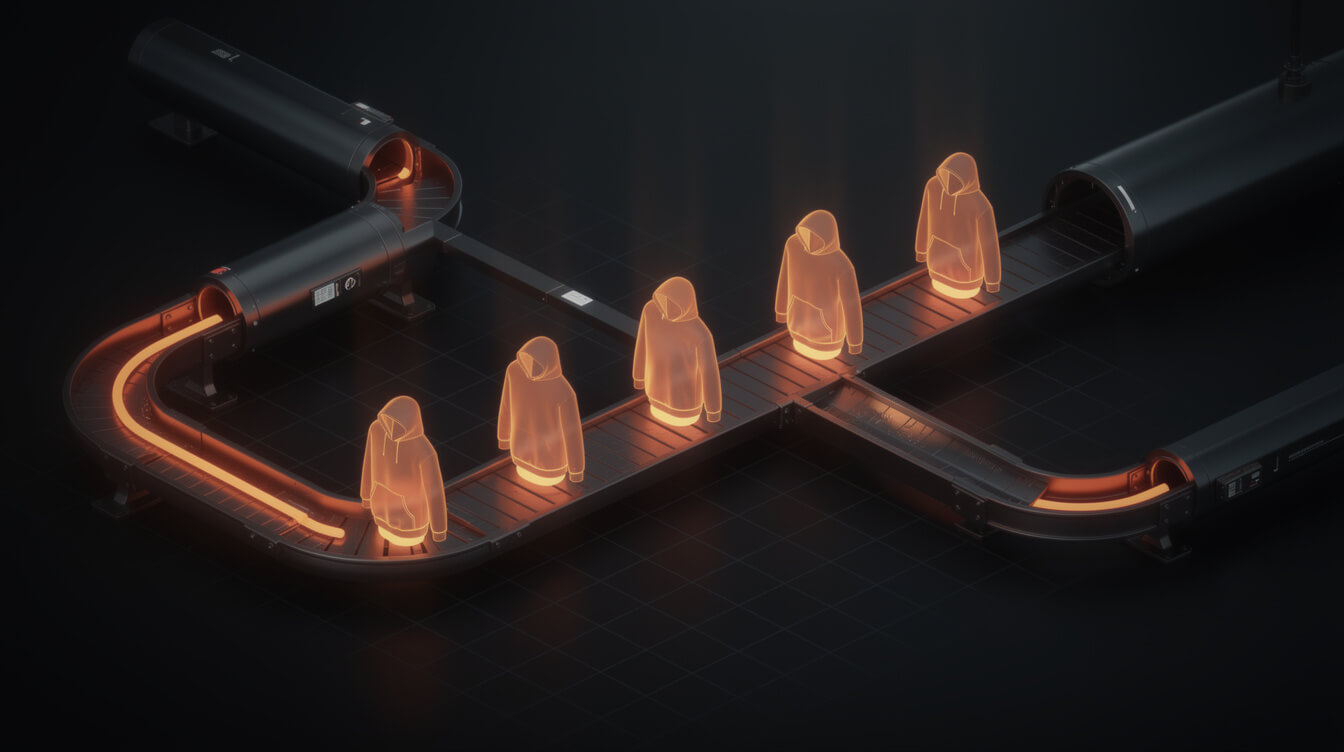
Building a sweatshirt line manually looks like this: pick a niche, research designs that might sell, commission or create artwork for each design, resize and adapt each design for the sweatshirt print area, set up each product in Printful or Printify, create WooCommerce listings with titles and descriptions and SEO tags, generate mockups, write copy for each product. For a 20-design line, that is a full week of work. At 50 designs, it is a project.
The MEGA pipeline compresses that workflow. Research, image generation, sizing, mockup creation, title and description writing, and WooCommerce listing creation all run through the same engine. A 20-design sweatshirt line that would take a week manually takes an afternoon. A 50-design line takes a day. The pipeline is the same one that generates any POD product category; sweatshirts are one input parameter.
The part that matters most is the research step. Most POD sellers build sweatshirt lines by designing what they like or copying what they have seen work elsewhere. The MEGA research layer starts with niche demand data: what search terms are growing, what buyer intent clusters are underserved, where the SERP gap exists between what people are searching and what product pages currently exist. That research layer is what separates a catalog that captures organic traffic from one that competes purely on paid advertising.
For POD sellers who are running the manual Canva workflow today, the question is not whether to add sweatshirts. It is whether to build the sweatshirt line one design at a time over the next several months, or to build it in a single automated session and move on to the next catalog expansion. The throughput difference is approximately 30x. Custom hoodie embroidery for POD stores covers the embroidery-specific setup for sellers who want premium positioning on their sweatshirt line.
One implementation note: when you set up sweatshirt listings, separate your crewneck and hoodie SKUs into distinct product pages rather than combining them as variants. Search engines index product pages individually, and a buyer searching “custom crewneck sweatshirt” is a different buyer intent than “custom zip hoodie.” Separate pages capture more search surface area and allow you to optimize titles and descriptions independently.
A second implementation note: use dark mockup backgrounds for sweatshirt images where your design allows it. Dark apparel on a dark background with a centered light design is a visual pattern that performs consistently on social. It also fits the aesthetic of the POD niches that convert best on Instagram and TikTok, including streetwear, fitness, and intentional lifestyle brands. The DTG vs DTF decision intersects here: if your mockup shows a premium print, buyers assume the real product matches. Make sure your provider choice matches what the mockup implies. See our DTG vs DTF breakdown for the full print method comparison.
Frequently asked questions about custom sweatshirt printing for POD sellers
What is the minimum order for custom sweatshirt printing through POD?
There is no minimum. POD fulfillment platforms like Printful and Printify fulfill single-unit orders at the same base cost as bulk orders. The per-unit cost does not decrease at volume the way screen printing does, but there is no upfront commitment or minimum purchase requirement.
Which POD provider has the best sweatshirt quality?
Printful has the most consistent quality across its sweatshirt catalog because it uses in-house fulfillment centers with controlled production standards. Printify’s quality varies by print partner. The Gildan 18000 on a well-rated Printify partner is comparable to Printful on the basics, but you need to order test samples before committing a design to production. Gooten is reliable for its core SKUs.
Is DTG or embroidery better for custom sweatshirt printing?
It depends on the design. Embroidery reads as more premium and has better durability on fleece. DTG is better for complex, multi-color graphic designs. DTF is a middle option that handles fleece substrate better than DTG. Most brand logos do well as embroidery. Photographic or illustrated designs need DTG or DTF.
How much does custom sweatshirt printing cost on Printful?
The Unisex Basic Sweatshirt (a Gildan-style crewneck) runs approximately $19.95 base. A premium hoodie runs $28–34 depending on the style. Shipping adds $5.99 standard. For a $45 sell price on the crewneck, your gross margin is approximately 42% before payment processing fees.
Does Shopify cost more than WooCommerce for sweatshirt sales?
Shopify Basic adds a 1% transaction override on top of your payment gateway fee. At a $45 sweatshirt AOV, that costs approximately $0.44 more per order than a WooCommerce + Stripe setup. At 500 monthly orders, that is $220/month. WooCommerce does not have a platform transaction fee; you pay only the gateway rate.
Can I sell sweatshirts alongside t-shirts in the same POD store?
Yes. Most POD sellers add sweatshirts as a natural catalog extension to their t-shirt lines. The fulfillment workflow is identical. The margin math is better because the AOV is higher. The main consideration is that sweatshirts have more sizing complexity and seasonal demand patterns that t-shirts do not.
Implement AI. 30x your throughput. Get a 30-min call with the founder.
Drop your details and book a free 30-minute discovery call. Personalized advice on your POD stack, your margin, and where AI fits. No pitch, no fluff.