Custom hats no minimum for POD sellers: embroidery vs AOP, which providers ship single units, and the hat niche math
The phrase custom hats no minimum appears across dozens of hat vendor websites, but it rarely means what print-on-demand sellers need it to mean. B2B embroidery companies use the phrase to signal that you can place a single corporate order, receive the hats, and distribute them yourself. POD sellers need something categorically different: a supplier that ships one hat directly to one customer, on demand, every time, without you holding any inventory. This guide breaks down which providers offer genuine custom hats no minimum POD fulfillment, what hat styles are available, how to choose between embroidery and all-over print, and whether the unit cost math works at the $32-45 retail price point where structured hats naturally sell.
What custom hats no minimum actually means: B2B order versus POD dropship
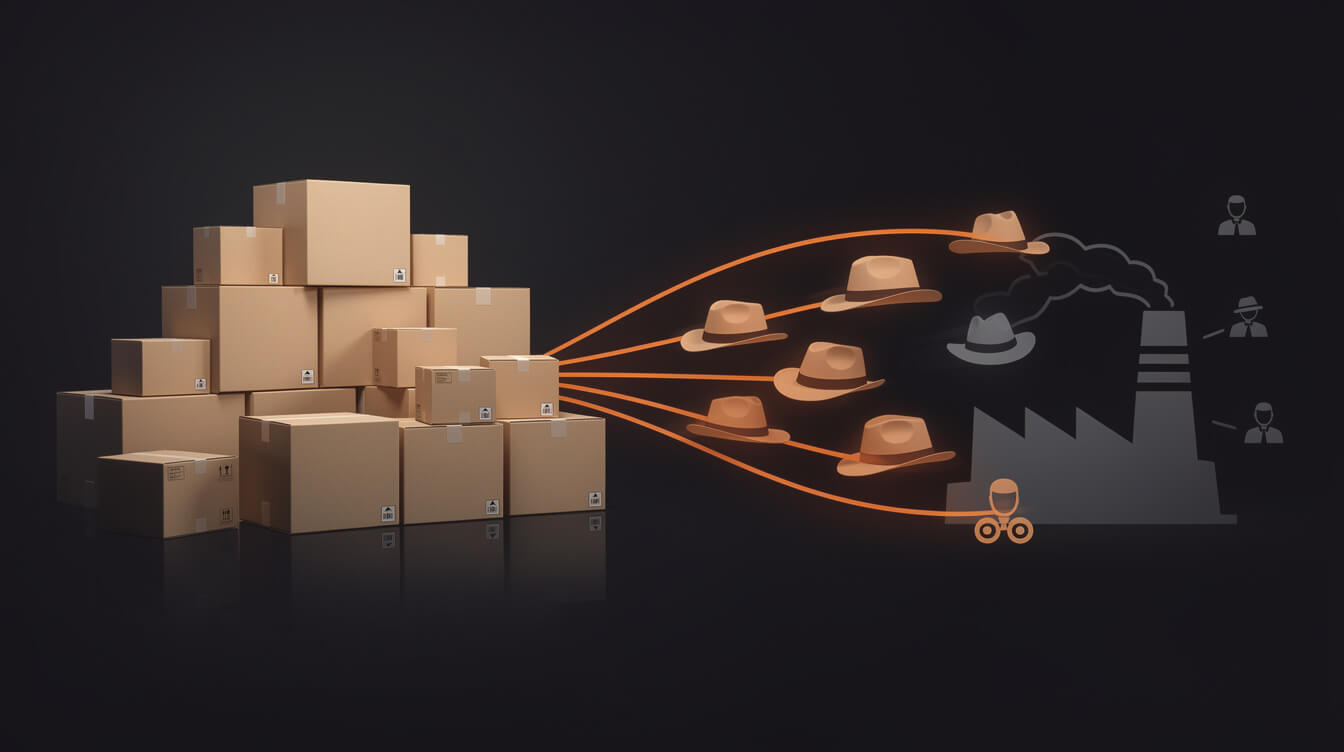
When LogoUp, MakeMyCap, or ZappedHeadwear say “no minimum order,” they mean you can order one hat from their facility. The hat ships to you. You store it. You sell it yourself. That is a B2B transaction with a low minimum order quantity, not print-on-demand.
Print-on-demand no minimum works differently. A customer places an order through your WooCommerce store. Printful receives the order automatically via its WooCommerce plugin. Printful embroiders the hat and ships it directly to that customer. You never handle the product, place a purchase order, or carry inventory risk.
The entire SERP for “custom hats no minimum” is populated by B2B embroidery vendors targeting corporate buyers. Sellers searching for the POD model are finding the wrong answer because no editorial source has explained the distinction clearly.
Printful and several vendors in the Printify network offer the POD model. The catalog is narrower than what a dedicated embroidery house carries, but the products are real, production is reliable, and the minimum order quantity is zero, permanently.
A secondary confusion worth naming: some vendors say “no minimum” for embroidery setup but charge a one-time digitization fee per design. Printful includes digitization in the base product price. This is a meaningful operational difference when you are testing multiple designs across different hat styles, because you are not paying a $20-40 setup fee per design before knowing whether it sells.
Which hat styles Printful and Printify carry with genuine no minimum fulfillment
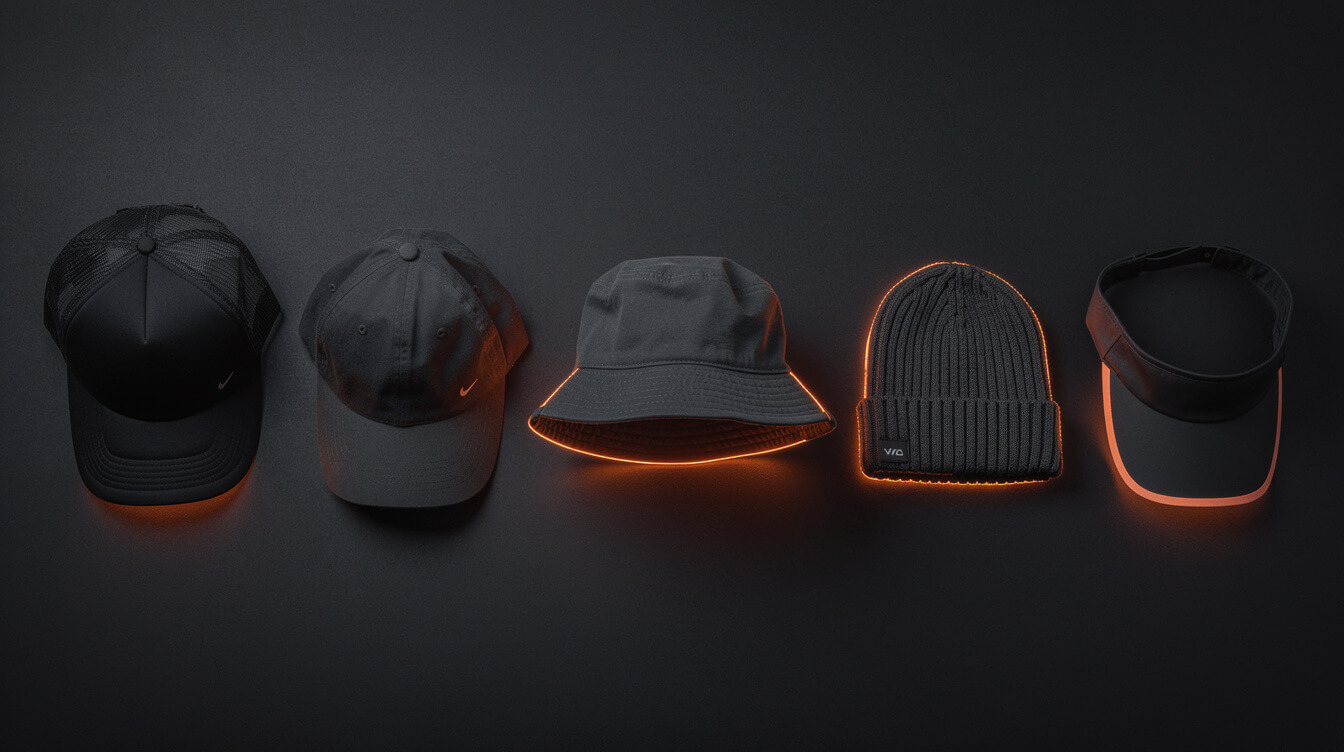
Printful’s hat catalog (as of 2026) includes five distinct styles with no minimum order quantity.
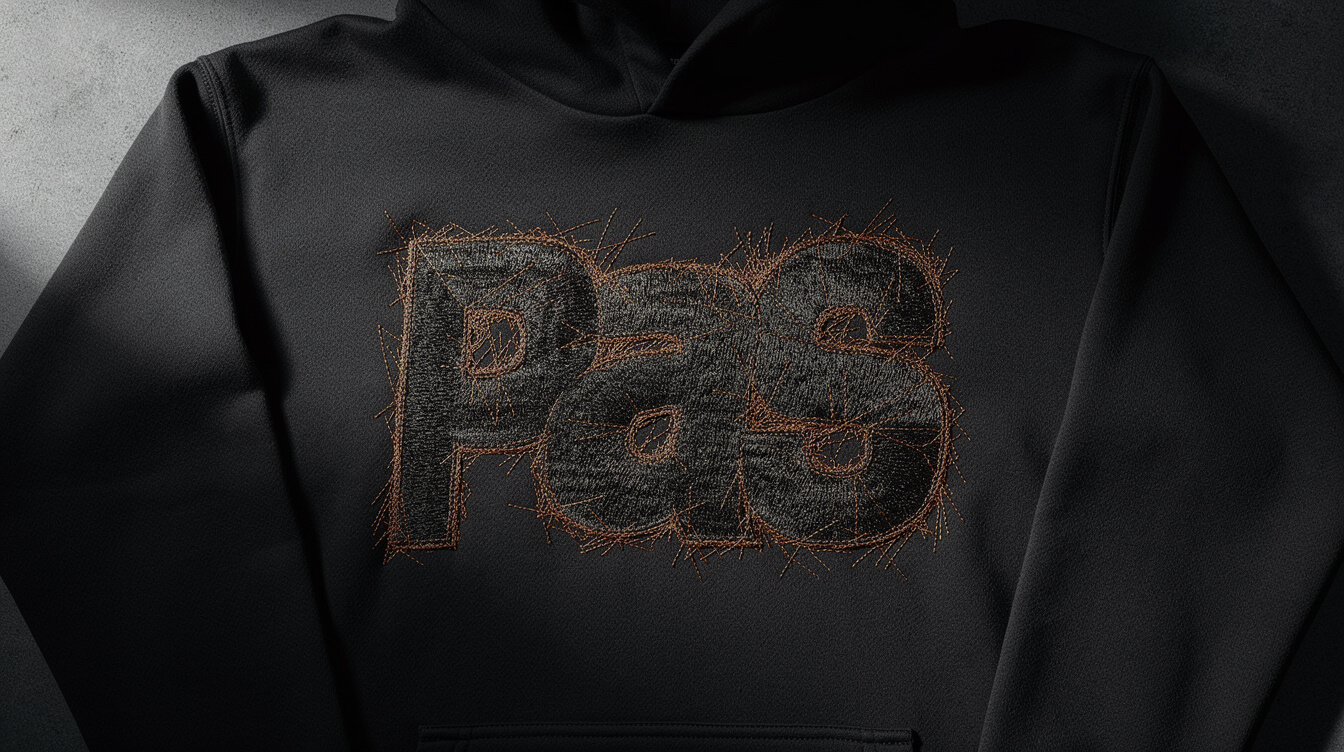
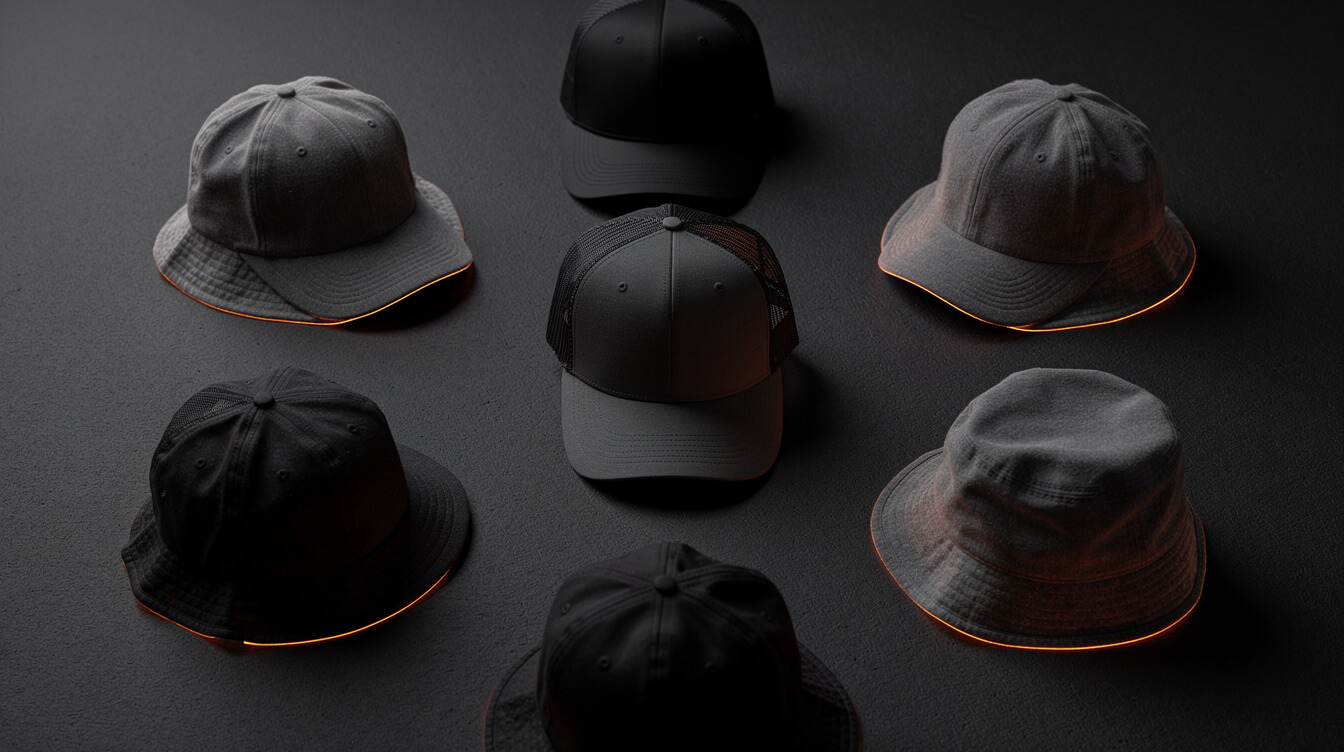
Richardson 112 trucker hat. Structured front panel, mesh back, adjustable snapback closure. This is the crossover hat format that sits comfortably across streetwear, outdoor, and craft brewery markets. Standard embroidery placement is front center. Optional placements include front left, back center, and side panels depending on the design. Maximum stitch count tiers apply at additional cost above the base rate.
Unstructured dad cap. Soft cotton front panel with no buckram backing, low profile. The silhouette is less formal than the Richardson 112. It suits flatter, text-based embroidery and a more casual brand aesthetic.
AOP bucket hat. All-over-print sublimation on a polyester fabric construction. Full-panel design coverage is possible. This is a categorically different product from the embroidered hats above, serving a different buyer with a different design workflow.
Beanie. Embroidered patch placement or front center stitch. Relevant for outdoor, streetwear, and cold-weather seasonal stores.
Visor. Structured front panel, open crown. A niche product with relevance in running, tennis, and golf-adjacent markets.
Printify’s vendor network adds variety through partners including OTTO Caps and Flexfit-licensed manufacturers, but availability varies by vendor and region. Always verify current SKU availability in Printify’s product creator before building listings, because network vendors update their catalogs independently of Printful’s release schedule.
A note on the Richardson 112: it has genuine brand recognition in outdoor and streetwear markets. Customers who recognize the base hat associate it with a quality tier before the embroidery is even considered. That recognition transfers to a custom POD listing in a way that a generic structured trucker hat does not, because the hat’s own reputation is part of the product.
Embroidery vs AOP: choosing the right hat for your design
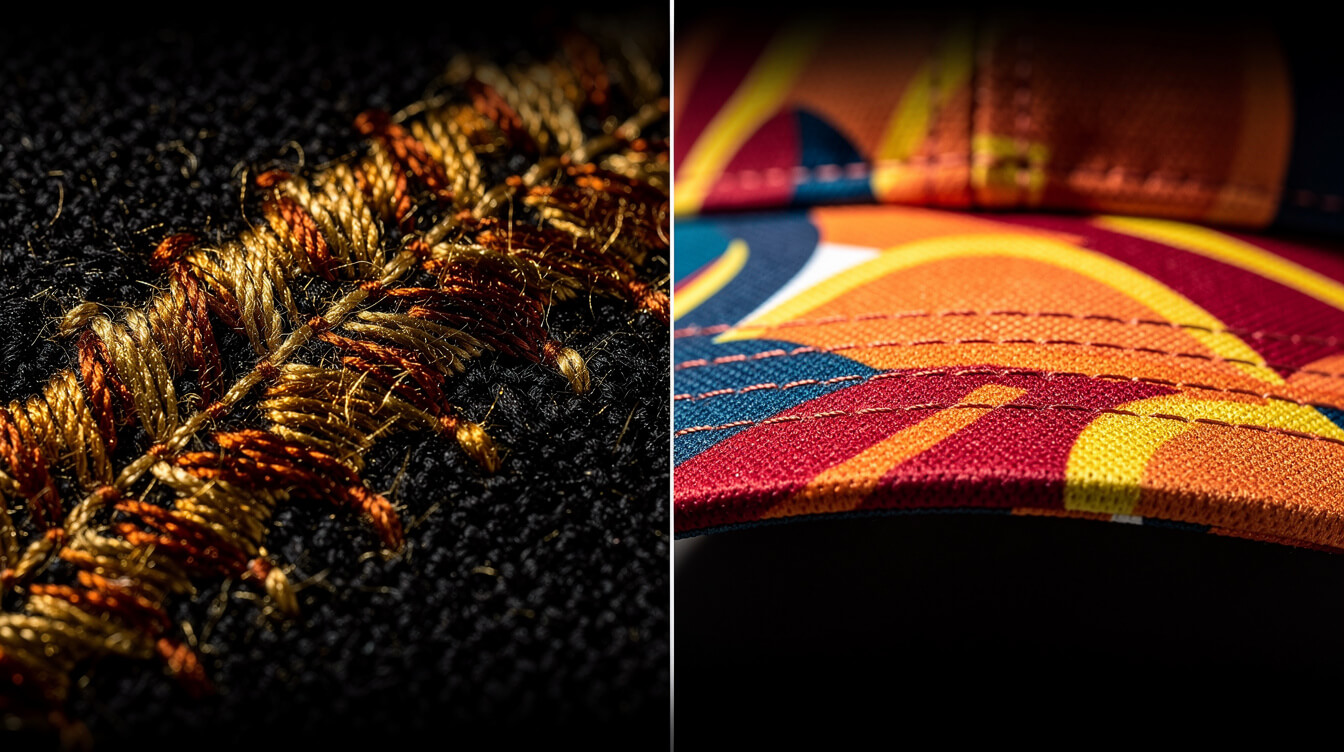
Embroidery and all-over print are two fundamentally different decoration methods. Matching the method to the design is the first decision every POD hat seller has to make correctly, because choosing the wrong method produces poor results even with a strong design.
Embroidery suits:
- Flat vector artwork with distinct line boundaries and solid color fills
- Text-based logos: brand names, initials, and wordmarks
- Designs with five or fewer distinct colors
- Classic and premium aesthetics where the texture of textile craft contributes to the product’s perceived value
AOP sublimation suits:
- Photographic artwork, gradient fills, and complex multi-color designs
- Full-panel coverage across the entire hat surface
- Designs where a graphic print aesthetic fits the brand: anime art, bold patterns, street art
Stitch count tiers drive cost on embroidery. Printful prices embroidery by stitch count: a standard tier covers approximately 10,000 stitches at the base rate. Higher stitch counts add incremental cost. A simple two-color text logo runs 3,000-5,000 stitches. A complex illustration with fine detail can reach 15,000-20,000 stitches, adding $3-6 to the base product cost per unit.
A practical rule: if your artwork requires more than six distinct flat color fills, contains gradients, anti-aliasing, or any photograph element, digitize a simplified vector version for embroidery or route the design to an AOP bucket hat instead. Trying to embroider a complex gradient illustration produces muddy results at the stitch density limits of a hat’s front panel.
The embroidered Richardson 112 and the AOP bucket hat are not competing products. They serve different customers with different expectations. Embroidered hats attract outdoor, brewery, and streetwear buyers who equate structured embroidery with quality. AOP bucket hats attract anime, festival, and fashion buyers who want graphic impact across the full hat surface. A catalog that includes both expands the addressable hat market without requiring a single additional supplier relationship.
One more constraint for embroidery: minimum 0.3mm metal line width in the converted stitch path, and designs at 1-1.5 inch physical size need to stay simple. Fine detail that looks sharp in a vector file disappears at small embroidery scales because individual stitches are physically wider than a pixel on screen.
Unit cost math: Richardson 112 embroidered and AOP bucket hat
Smash print-on-demand. Join the engine room.
One short email a week. Real numbers, real teardowns, the unfiltered economics behind every move.

Richardson 112 embroidered hat, standard stitch count (under 10,000 stitches):
- Base cost at Printful: approximately $14-18 depending on hat color and embroidery placement options
- Shipping domestic US, standard: $4.50-5.50
- Landed cost: $18.50-23.50
- Retail at $32: gross margin 27-42%
- Retail at $38: gross margin 38-51%
- Retail at $45: gross margin 48-58%
AOP bucket hat:
- Base cost at Printful: approximately $14-18
- Shipping: $4.50-5.50
- Landed cost: $18.50-23.50
- Retail at $28: gross margin 16-34%
- Retail at $34: gross margin 31-45%
- Retail at $38: gross margin 38-51%
Hat margins are consistently higher than t-shirt margins as a percentage. A Bella+Canvas 3001 tee at $14-18 base lands at $18-23 and sells for $24-32, delivering 20-34% gross margin at the lower end. The Richardson 112 at $38-45 retail clears 38-58% gross because the retail price is anchored to real-world hat market expectations. New Era fitteds retail at $35-45 at stadium stores. Richardson 112s sell for $28-40 at outdoor retailers. Buyers are conditioned to pay for structured hats at these price points before they see your design.
High stitch count add-ons compress the margin. If your embroidery design runs 15,000+ stitches, add $3-6 to the base cost. Gross drops to the 32-44% range at $38 retail, which is still viable. At $45 retail, even the premium stitch tier delivers north of 45% gross margin.
Embroidery thread color management: Printful allows up to 15 thread colors in standard embroidery. Designs with more than six distinct colors in a single patch area sometimes incur a setup surcharge. Keeping logos to three to five thread colors avoids this and also produces cleaner embroidered results at hat-scale dimensions where thread density limits how much color differentiation is legible.
The dollar margin per hat sale typically exceeds the dollar margin per tee sale at equivalent order volumes. A seller doing 100 hat orders per month at $38 AOV and 45% gross generates $1,710 gross profit per month on hats alone. The same 100 orders at $28 tee AOV and 30% gross generates $840. Hat margin in dollar terms is more than twice the tee margin at the same unit volume.
Hat niche verticals that work for POD sellers

Outdoor, trail, and hunting. The Richardson 112 is already the default hat format for this audience. Terrain silhouettes, mountain range outlines, regional wildlife, and elevation profile graphics (simplified for embroidery) all perform in this niche. AOV runs $38-45. Repeat buyers are high because outdoor enthusiasts replace hats seasonally and collect by activity or location.
Craft brewery and bar branded merchandise. Breweries increasingly sell branded merchandise at the taproom. Single-unit POD is not the primary channel for bulk taproom inventory orders, but a POD hat listing lets a small brewery or bar validate which designs their regulars want before committing to a 100-unit embroidery run. This also opens a direct-to-consumer online sales channel alongside taproom stock.
Streetwear brand launches. The Richardson 112 is embedded in streetwear culture. A new streetwear brand testing demand before committing to bulk production can list embroidered hats alongside tees through Printful, validate which colorways and designs sell, and then negotiate batch pricing with a manufacturer once proof of demand exists. MEGA automates the research-to-listing step for any streetwear niche, cutting setup time from hours of manual catalog work to under seven minutes per product.
Music artist and band merchandise. Artists with any fanbase want tour hats. POD embroidered hats serve this need at zero upfront investment, in the product format that fans associate with premium band merchandise from larger-scale tours.
Sports fan and team spirit. Custom team hats for leagues, clubs, and school teams are a consistent seasonal vertical. Soccer leagues, youth baseball, and adult recreational sports organizations all want matching hats. POD serves groups of 6-20 where bulk minimums of 24+ units price out conventional embroidery vendors.
Custom pet portrait embroidery. Simplified flat-vector pet silhouettes (breed outline, no photographic detail) translate well to embroidery. Full-color pet photographs do not. For photo-quality pet portrait hats, route to the AOP bucket hat format where sublimation handles full-color imagery natively. This connects to the pet niche documented in the custom dog bandana guide: the pet audience is a proven repeat buyer across every product category.
Hat niche selection follows the same research-first model that applies to any POD product. The niche determines conversion rate more than the production setup does. A Richardson 112 targeting trail runners in a specific region converts at a meaningfully different rate than a generic “outdoor” listing with no audience specificity.
The Shopify 1% fee on hat revenue: what you actually give up

Shopify’s 1% platform override charges a fee on every transaction at 1% of gross merchandise value. On a $36 hat sale, the fee is $0.36. On 200 hat orders per month, that is $72 per month and $864 per year, in a fee that is entirely distinct from payment processing, shipping, and production costs.
Fee at 200 orders per month:
- $32 AOV hat: $64/month = $768/year
- $38 AOV hat: $76/month = $912/year
- $45 AOV hat: $90/month = $1,080/year
Fee at 500 orders per month:
- $32 AOV hat: $160/month = $1,920/year
- $38 AOV hat: $190/month = $2,280/year
- $45 AOV hat: $225/month = $2,700/year
Hats have a higher AOV than mugs ($18 typical retail) or stickers ($8-12), which means the Shopify override scales with a product category that generates meaningful revenue. A store doing $9,000 per month in hat GMV sends $90 per month to Shopify as a platform levy on top of all other costs. At $22,500 in monthly hat GMV, that is $225 per month, or $2,700 per year, in fees that provide no incremental value to the seller.
Compare this to WooCommerce. Hosting costs $15-30 per month with managed providers. That cost is fixed regardless of order volume. A WooCommerce hat store selling 500 orders per month at $38 AOV pays the same $15-30 per month in hosting as when it was selling 10 orders per month. Shopify’s cost scales with revenue. WooCommerce’s does not.
For a more detailed breakdown of the fee structure across different revenue levels, the WooCommerce vs Shopify comparison for POD sellers covers the math at $1k, $5k, $10k, and $25k monthly revenue. The hat-specific numbers here show the pattern; the full comparison shows how the crossover point appears earlier than most sellers expect.
WooCommerce hat setup: managing variants without a Shopify app
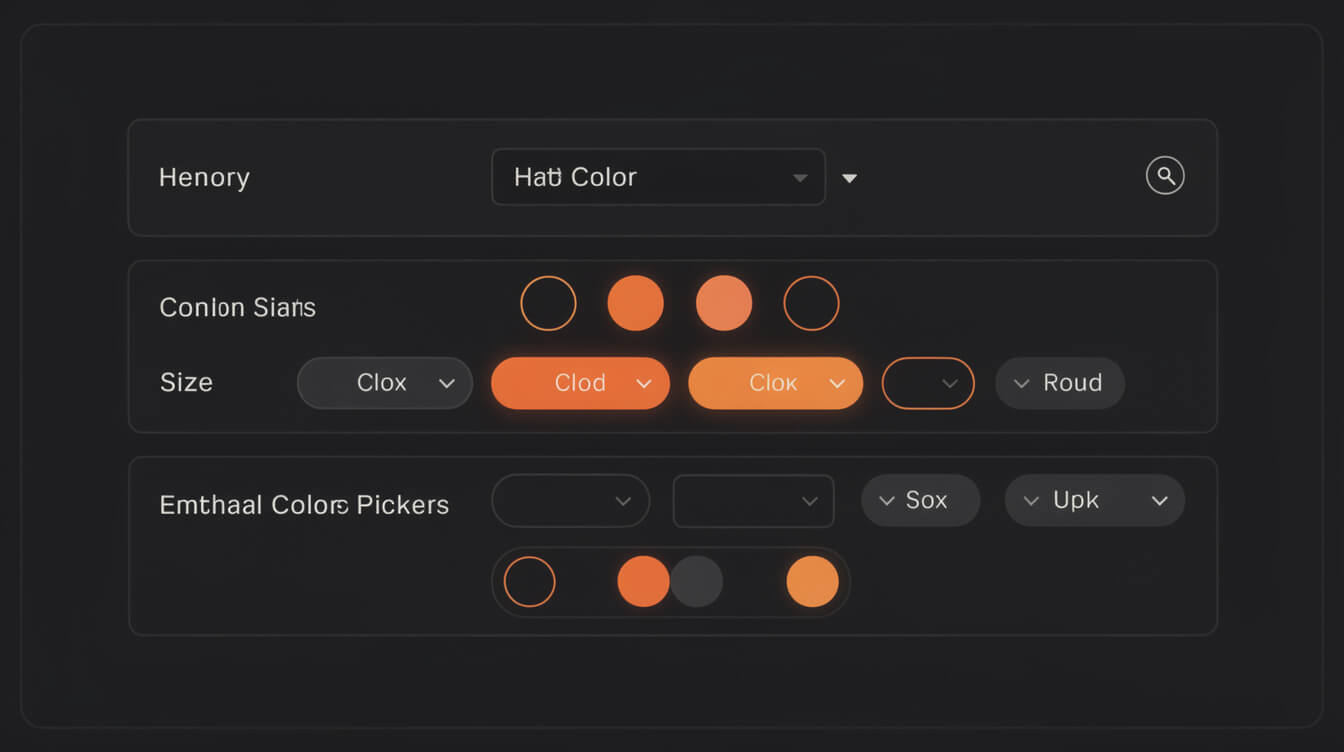
Hat variants are more complex than tee variants. A single Richardson 112 listing can carry: hat color (12-20 options across Printful’s colorway offerings), embroidery thread color (1-15 options), size (S/M and L/XL for fitted styles), and a custom name or monogram text input field for personalized orders.
On Shopify, managing more than three option types or adding a custom text input field requires a product options app. These apps typically run $15-29 per month. Shopify’s native variant system is capped at three option types and 100 SKU combinations per product.
WooCommerce handles this natively. Variable Products (built into WooCommerce core) support unlimited attribute types. Custom text inputs come from WooCommerce Product Add-Ons, which is included with most managed WooCommerce hosting plans or available from the plugin repository. No additional monthly subscription is required for the configuration a hat listing needs.
A practical WooCommerce hat listing setup:
- Attribute 1 (variation): Hat style, Richardson 112 / Bucket Hat / Beanie, creating separate product variations in the Printful plugin mapping
- Attribute 2 (variation): Color, mirroring Printful’s available hat colorways for the selected SKU
- Custom field (add-on, optional): Thread color, dropdown list matching Printful’s thread color palette
- Custom field (add-on, optional): Custom name or initials, text input with character limit, applied to a specified embroidery placement
Printful’s WooCommerce plugin maps WooCommerce product variations to Printful SKUs automatically. When a customer selects Richardson 112, Navy, White thread, Printful receives a correctly mapped fulfillment request. The custom text input for a personalized name is passed to Printful’s personalization field and appears in the embroidery production file without manual intervention on your end.
One hat-specific detail: Printful’s embroidery SKU requires a design file uploaded at the time of product creation, not at order time. The embroidery digitization runs when you create the product in Printful’s product creator. Customers do not upload artwork at checkout. Your store sells the pre-digitized design, and Printful reproduces it for each order. This is different from sublimation products where some sellers offer customer-uploaded photo prints.
For POD sellers adding hats alongside a broader apparel catalog, the custom sportswear guide covers sublimation on performance fabric with a similar variant-management approach, and the custom baseball jersey post applies the same unit cost framework to team sports specifically.
Research any hat niche and list in under 7 minutes
MEGA is the research-to-product pipeline for POD sellers. Identify your niche, generate designs, and create complete WooCommerce listings automatically. No Canva workflow. No manual catalog work. 30x the throughput.
Getting started: the custom hats no minimum launch path
The cleanest entry into POD hats is the embroidery-first approach. Start with a single Richardson 112 listing, use a simplified flat-vector logo or text design under 10,000 stitches, price at $35-40, and test three to four colorways. The margin is workable, the hat format has broad market recognition, and Printful’s Richardson 112 fulfillment is well-established in its production pipeline.
Layer in the AOP bucket hat as a second listing for design ideas that exceed embroidery’s practical limits. Run both in parallel, track which generates more orders and which attracts repeat buyers, and allocate more design effort to the higher-converting format over time.
The niche selection step determines whether a hat store works more than the production setup does. A Richardson 112 targeting trail runners in a specific region converts at a meaningfully different rate than a generic “outdoor” hat listing with no audience specificity. Research before listing is not optional in the hat niche because the market is crowded at the generic level and nearly empty at the specific niche level.
MEGA handles the research-to-listing step for either approach: niche identification, design brief, Printful product setup, WooCommerce listing creation, and SEO optimization. This site uses that pipeline directly. Custom hats no minimum is one of dozens of product categories where the research problem is harder than the production problem, and where automation returns the most time and margin to the seller.
Implement AI. 30x your throughput. Get a 30-min call with the founder.
Drop your details and book a free 30-minute discovery call. Personalized advice on your POD stack, your margin, and where AI fits. No pitch, no fluff.