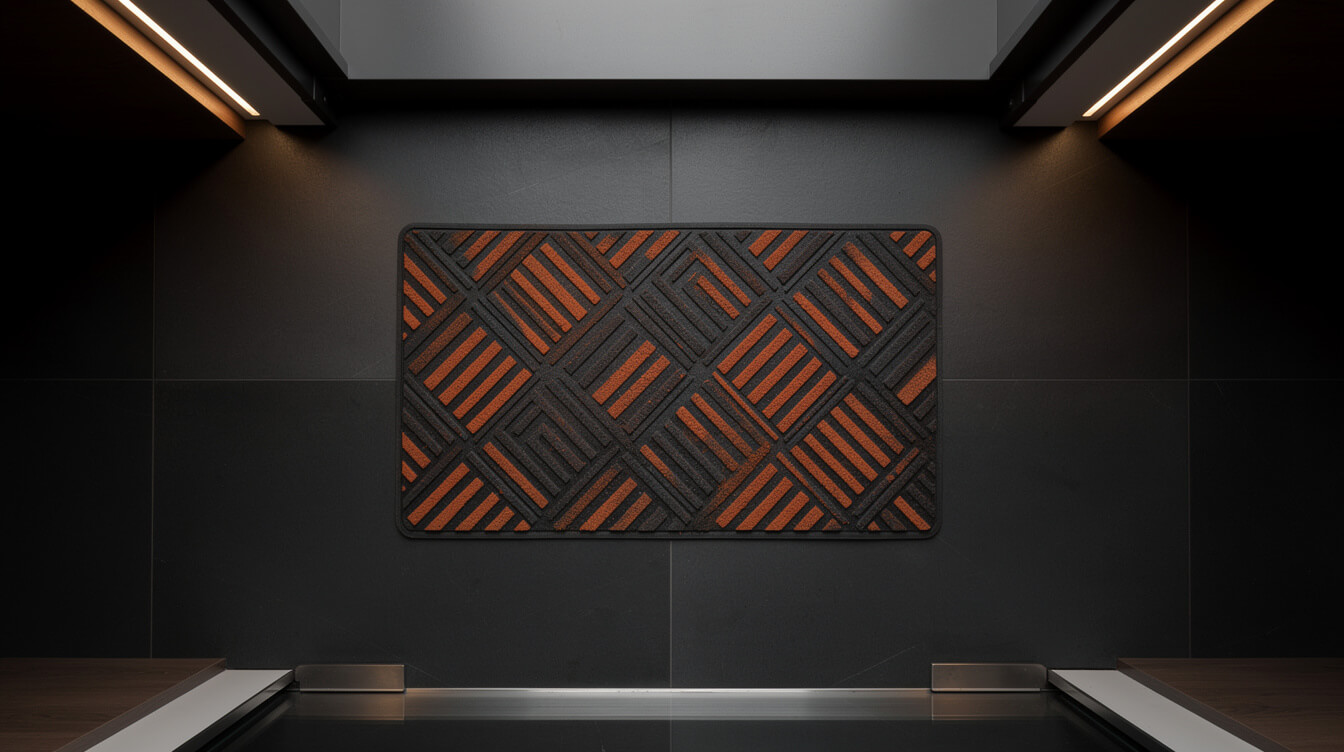
Custom doormats for POD stores: which providers carry them, sublimation on rubber explained, and the home decor margin math
Custom doormats are one of the most overlooked products in print-on-demand. While most POD sellers chase T-shirts, mugs, and hoodies, a $35–55 sublimated rubber doormat sits at the front door of a niche with almost no editorial competition and a consumer market that buys on emotion. Real estate agents order them as closing gifts. Pet owners order them because their golden retriever’s face belongs on the welcome mat. Airbnb hosts order them for seasonal resets. The custom doormat buyer is not browsing — they have a specific occasion in mind, and they will pay a fair price for the right product.
This post covers everything a POD seller needs to know about custom doormats: which providers carry them, how sublimation works on a rubber-backed surface, what the unit cost math looks like at 1 versus 50 orders, and why the Shopify fee structure makes this product more expensive to sell on Shopify than on WooCommerce.
Which POD providers carry doormats: Printful, Printify, and what is in their catalogs
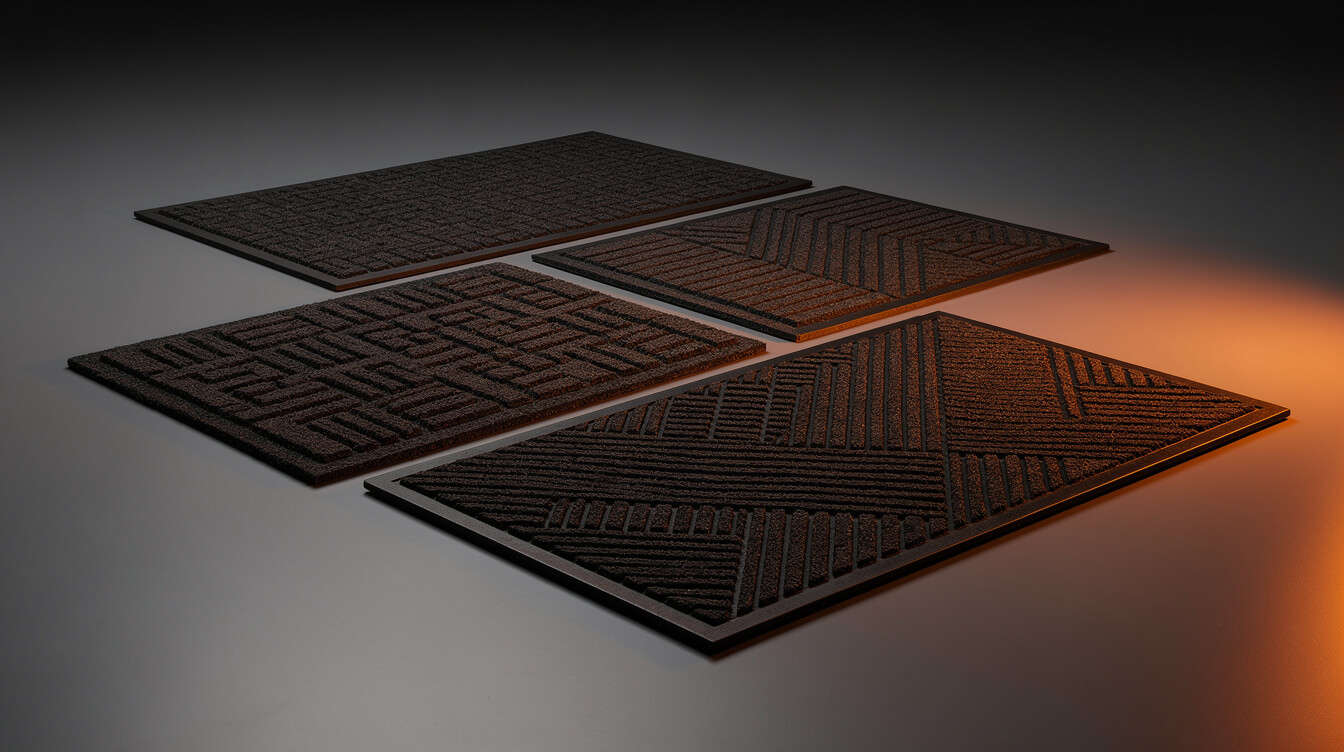
Printful carries sublimated rubber-backed doormats as a standard catalog product. The base product is an 18″x30″ mat with a rubber bottom layer and a polyester fabric face — the fabric face is what accepts the sublimation dye. This is not a premium niche item hiding in a corner of the catalog. It is a live, orderable product with no minimum order quantity, the same as a T-shirt or mug.
Printify’s network approach means availability depends on which vendor you connect to. Several vendors in the Printify marketplace carry sublimated doormats in the 18″x30″ format. The key is filtering by product type when browsing Printify’s product creator — search “doormat” to surface available vendors ranked by cost, shipping speed, and location. Not every Printify vendor ships to every country, so confirm coverage for your primary market before building your listing.
SPOD (Spreadshirt’s fulfillment arm) and Gooten also carry doormat products. For sellers who already use SPOD for its 48-hour production guarantee on other products, adding doormats to the same store with the same fulfillment partner reduces operational complexity. Gooten is worth checking if you need a vendor with a specific US regional warehouse for faster domestic delivery.
What you will not find at Printful or Printify is a traditional coir doormat — the natural fiber mat most people picture when they think of a classic front door mat. Coir fiber cannot be sublimated. The dye requires a polyester substrate. Rubber-backed polyester fabric is the POD-compatible format, and it produces a mat that is washable, colorfast, and durable for indoor use. For outdoor use, it holds up in covered entryways but fades faster in full UV exposure than a commercial coir mat. Set buyer expectations on the product page accordingly.
How sublimation works on rubber-backed doormats and why the prints last longer than on T-shirts

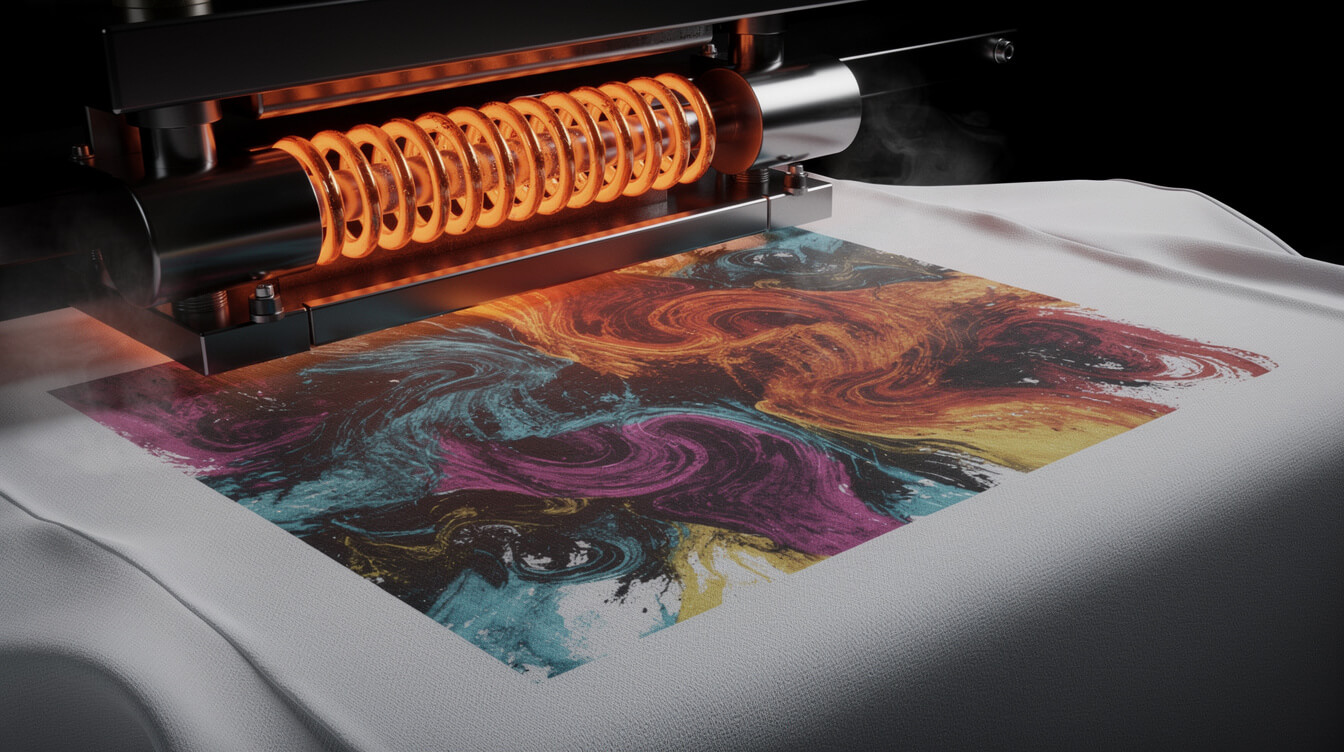
Sublimation on a rubber-backed doormat uses the same core process as sublimation on a polyester T-shirt: a heat press converts solid dye into gas, and the gas bonds directly into the polyester fibers at the molecular level. The print does not sit on top of the surface — it becomes part of the fiber. This is why sublimation prints do not crack or peel under normal use. There is no ink film to separate from the substrate.
Where doormats differ from apparel is in the substrate thickness and the heat press setup required. A 1.5–2 cm thick rubber-backed mat needs a heat press with sufficient platen clearance and even pressure distribution across a non-uniform surface. Printful’s production facility handles this equipment requirement internally. For sellers who are curious about the process, it is worth knowing that this is one reason not every print-on-demand provider offers doormats — the press setup is more involved than a flat garment press.
The durability advantage over apparel comes from foot traffic physics. A T-shirt is flexed, stretched, and laundered hundreds of times. A doormat sits flat, is stepped on (not stretched), and is cleaned by shaking or a garden hose rinse, not a washing machine spin cycle. The combination of molecular bonding and low-flex use means a sublimated doormat face print holds color for years of indoor use and at least one to two seasons of covered outdoor use before visible fading begins. This durability makes custom doormats a better gifting product than sellers expect — buyers can order for a specific occasion and the product outlasts the occasion by years.
One hard constraint: sublimation requires a white or light-color base. The fabric face of the mat must be white for dye sublimation to produce accurate, vibrant colors. If a vendor offers doormats with a colored base fabric, that is either a different print method (screen print or DTG on fabric) or a different product entirely. Check the base color when confirming your vendor in Printify or reviewing the Printful spec sheet.
Doormat sizing, print area specs, weight, and material to know before designing
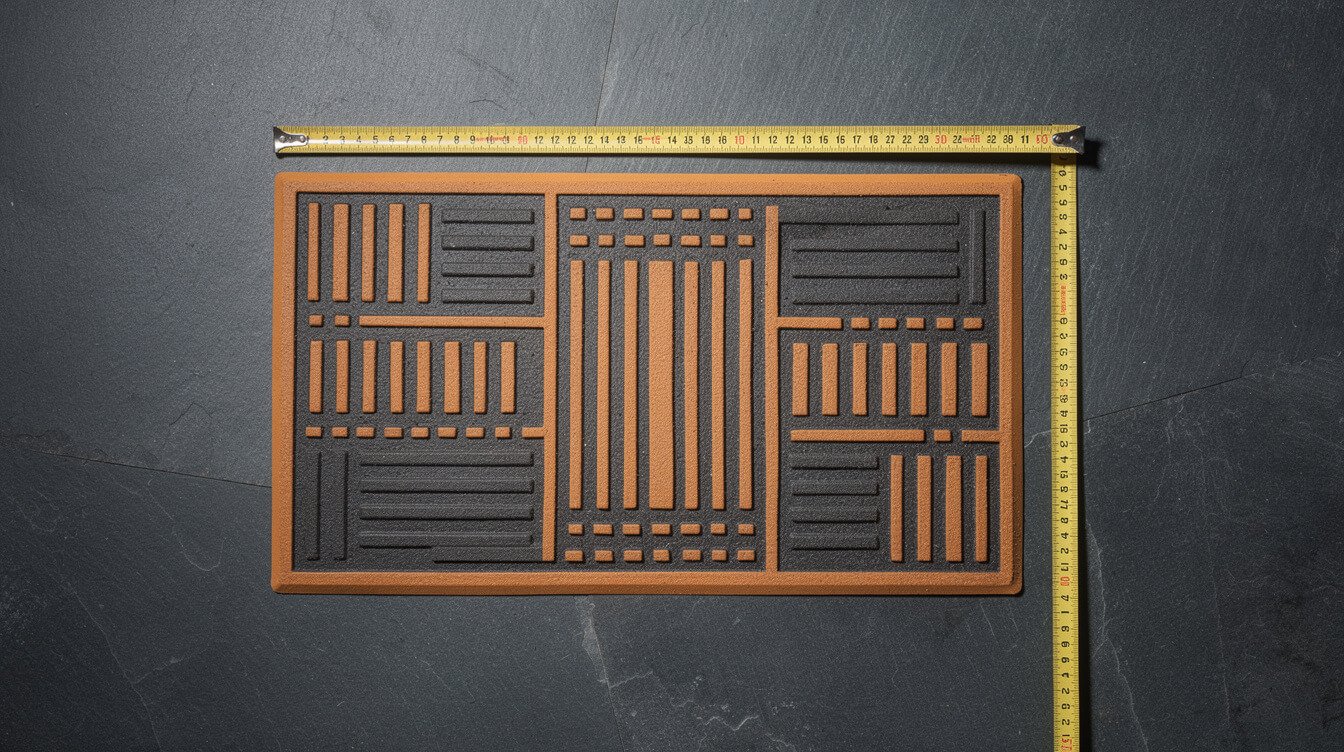
The standard size for sublimated POD doormats is 18″x30″ (approximately 46×76 cm). This is the default front door doormat size in North American homes — most buyers know this format without thinking about dimensions. Printful’s doormat is this size. Most Printify vendors also default to this format, though some offer a smaller 16″x24″ or a larger 20″x32″. Always confirm the active size with your vendor before building the design template.
Print area for an 18″x30″ mat is typically edge-to-edge, meaning the full surface is printable. Unlike a garment with seams and collar areas, a flat mat has no structural barriers to the print area. The practical constraint is bleed: design files should extend the design at least 0.25 inches beyond the trim line on all edges to prevent white borders appearing if the mat is cut slightly off-center during production. Most vendors provide a downloadable design template — always use the official template, not a custom canvas at approximate dimensions.
Weight matters for shipping cost calculations. A sublimated rubber doormat typically weighs 1.5–2.5 lbs (700–1,100 grams) depending on mat thickness. At this weight, domestic US shipping via USPS Priority Mail Cubic or FedEx Ground runs $6–9 per unit, depending on zone and dimensional weight. International shipping to Europe adds $15–25 per unit. These shipping costs need to be factored into your retail price or absorbed as a selling incentive — free shipping on a $40 mat with $8 shipping built into the price is a standard approach in home decor POD.
The mat material is typically a polyester fabric face (95–100% polyester for sublimation compatibility) bonded to a natural rubber or PVC base that provides grip and prevents sliding on smooth floors. The rubber base is the functional component — it keeps the mat in place on hardwood or tile. Check the vendor spec sheet for base material. Natural rubber has better grip than PVC on most surfaces and is preferred for premium positioning.
Unit cost math: what a custom doormat costs at 1, 10, and 50 units through Printful and direct manufacturers

Smash print-on-demand. Join the engine room.
One short email a week. Real numbers, real teardowns, the unfiltered economics behind every move.
At 1 unit through Printful, the base product cost for an 18″x30″ doormat runs approximately $11–14. Add domestic US shipping of $7–9 and you have a landed cost of $18–23 per unit. At a retail price of $38–45, that produces a gross margin of $15–22 per order, or roughly 40–49%. This margin is comparable to a mid-range hoodie and better than most phone case or sticker products.
At 10 units per month, nothing changes on a per-unit basis — Printful’s pricing does not tier by volume. The same $11–14 base cost applies whether you sell 1 mat or 100 mats per month. This is the core economic feature of POD: zero inventory risk, no upfront capital outlay, no minimum order. Every sale is a fresh order from Printful’s production floor.
The comparison point that sharpens this picture is direct manufacturer pricing. A custom mat manufacturer in China (via Alibaba or a dedicated custom mat supplier) can produce coir or rubber-backed mats with custom print at $3–6 per unit at 50-unit minimums, or $2–3 per unit at 200-unit minimums. The unit economics look better on paper, but the total cost picture includes: $300–600 in upfront inventory before a single sale, shipping freight from China ($80–150 for a 50-unit shipment), customs duties (5–10% for rubber goods depending on HTS code), domestic fulfillment storage and pick-pack fees ($2–4 per order at a 3PL), and the risk that your first design hypothesis is wrong and you are left with 40 unsold mats in a warehouse.
POD through Printful eliminates every one of those costs and risks at the expense of a higher per-unit cost. For a seller testing a new niche or a new design, $14 per unit with zero minimum is not expensive — it is a customer-acquisition experiment with no inventory downside. For a seller who has validated a specific design and can project 200+ units per quarter, direct manufacturing at $4/unit with a 3PL becomes worth the operational complexity. Both paths are legitimate. The decision depends on how confident you are in your specific design’s demand.
MEGA automates the research-to-listing pipeline that makes the Printful path faster — from niche identification to product listing in under seven minutes, so you can test more design hypotheses per week without manual Canva workflows. Try MEGA if the bottleneck in your POD operation is how long it takes to go from idea to live listing.
Shopify’s 1% override fee at $35–55 AOV: the home decor math that favors WooCommerce

Shopify charges a 1% platform override fee on every sale made through Shopify Payments, in addition to the standard Shopify subscription and any app fees. At a $40 doormat sale, that 1% is $0.40 per order. At 200 doormat orders per month, that is $80 per month — $960 per year — for nothing except the privilege of using Shopify’s payment processing. This fee is on top of the Shopify Basic subscription ($39/month), the Shopify Payments processing fee (2.9% + $0.30), and any apps you need for POD integration, product customization, or shipping.
A WooCommerce store running on its own hosting has no platform override fee. The payment processor fee (Stripe at 2.9% + $0.30, or PayPal at similar rates) applies, but there is no Shopify-style 1% levy on top. At $40 AOV, the difference per order is $0.40. Across 200 orders per month, that is $80 per month — money that stays in the store owner’s margin on WooCommerce and goes to Shopify on Shopify.
At 500 orders per month at $40 AOV, the Shopify override fee alone costs $200 per month, or $2,400 per year. WooCommerce hosting for a store at that scale runs $30–60 per month. The 12-month savings from switching to WooCommerce at that volume is $1,800–2,200 — which is real margin that a POD seller can reinvest in design production or advertising.
Home decor products like doormats sit in a mid-ticket range ($35–55) that makes this math particularly clear. The 1% override is a fixed percentage of revenue, so it scales with every sale. There is no volume discount. Shopify does not offer a plan that removes the fee for home decor sellers doing moderate volume. The fee exists on every plan including Shopify Advanced ($399/month) — it only reduces to 0.5% on that tier, which helps larger merchants but does little for a seller doing $5,000–15,000/month in home decor POD.
For a detailed breakdown of the full fee comparison across platforms, the post on WooCommerce vs Shopify for print-on-demand sellers covers the numbers side by side with specific store revenue scenarios.
Niche verticals that buy custom doormats: real estate, pet owners, Airbnb hosts, weddings, and seasonal drops
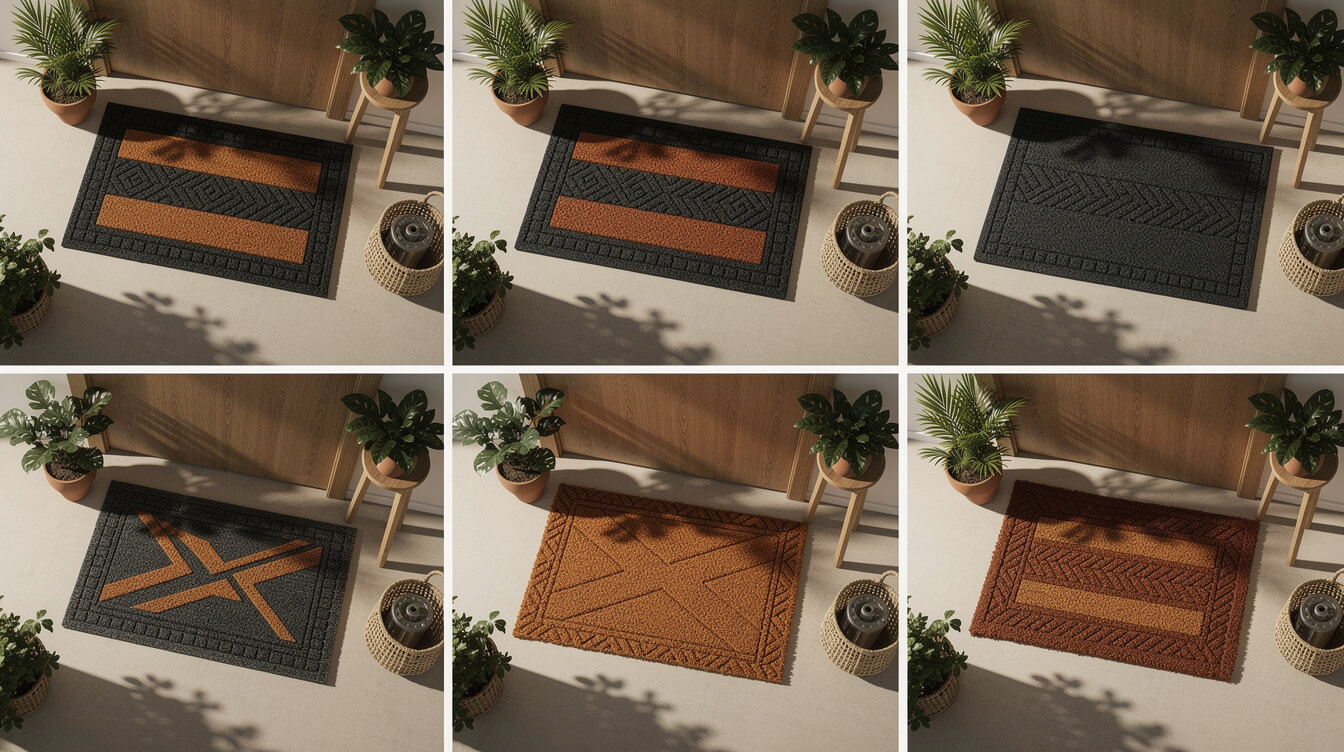
Real estate closing gifts are the highest-value niche in the custom doormat market. Real estate agents buy personalized doormats to give to homebuyers at closing — typically printed with the family name and the closing date or year. The buyer (the agent) pays $38–55 for a product that costs them $18–23, and the buyer has a professional reason to buy this specific product for this specific client. The emotional resonance is high: “Welcome home, Smith family, since 2026.” Volume at the agent level is low per transaction (1–2 mats per closing), but agents close 20–40 deals per year and many have relationships with other agents. A real estate-focused doormat listing with good SEO captures this buyer segment consistently.
Pet mom and dog dad brands are a natural fit for doormat personalization. Breed-specific welcome mats sell on the same emotional logic as breed-specific apparel. The pet niche buys on identity, not utility. A doormat that announces the household’s dog breed is a niche product with a specific, searchable buyer who knows exactly what they want. Pair the listing with the broader pet portrait strategy covered in the custom pet portrait POD guide to understand the buyer psychology that transfers to home decor.
Airbnb hosts and short-term rental operators are an underused niche for POD home decor. A host with a property named “The Blue Door Cottage” wants a doormat that says “Welcome to The Blue Door Cottage.” This is a B2B-adjacent buyer — one host may own 2–5 properties and want a different mat for each. Listings targeting Airbnb host keywords (“custom welcome mat for vacation rental,” “Airbnb host gift doormat”) capture a buyer with a clear purchase intent and no existing dominant competitor for POD-native product listings.
Wedding welcome mats serve the ceremony venue and first-home categories simultaneously. “Welcome to the [Surname] Home, Est. 2026” is a standard request. Wedding demand peaks in spring and early summer, but gift registry and engagement-present purchasing extends the season into fall. This buyer often places an order 4–8 weeks before a wedding date, which means the listing needs to be live and indexed well before peak demand. For Q4 holiday drops, “Season’s Greetings from the [Surname] Family” and holiday-themed designs (winter cabin, festive porch) move in October through December.
Seasonal designs are a volume play: a fall harvest doormat, a winter snowflake design, a spring floral. These are not personalized but still differentiated from mass-market retail because POD sellers can update or retire designs rapidly. A seasonal doormat collection of 8–10 designs with keyword-optimized titles captures buyers who search for “fall doormat” or “Christmas welcome mat” without the seasonal inventory commitment that a traditional retailer needs.
Designing for a doormat: landscape layout, contrast for outdoor light, and what works at foot level
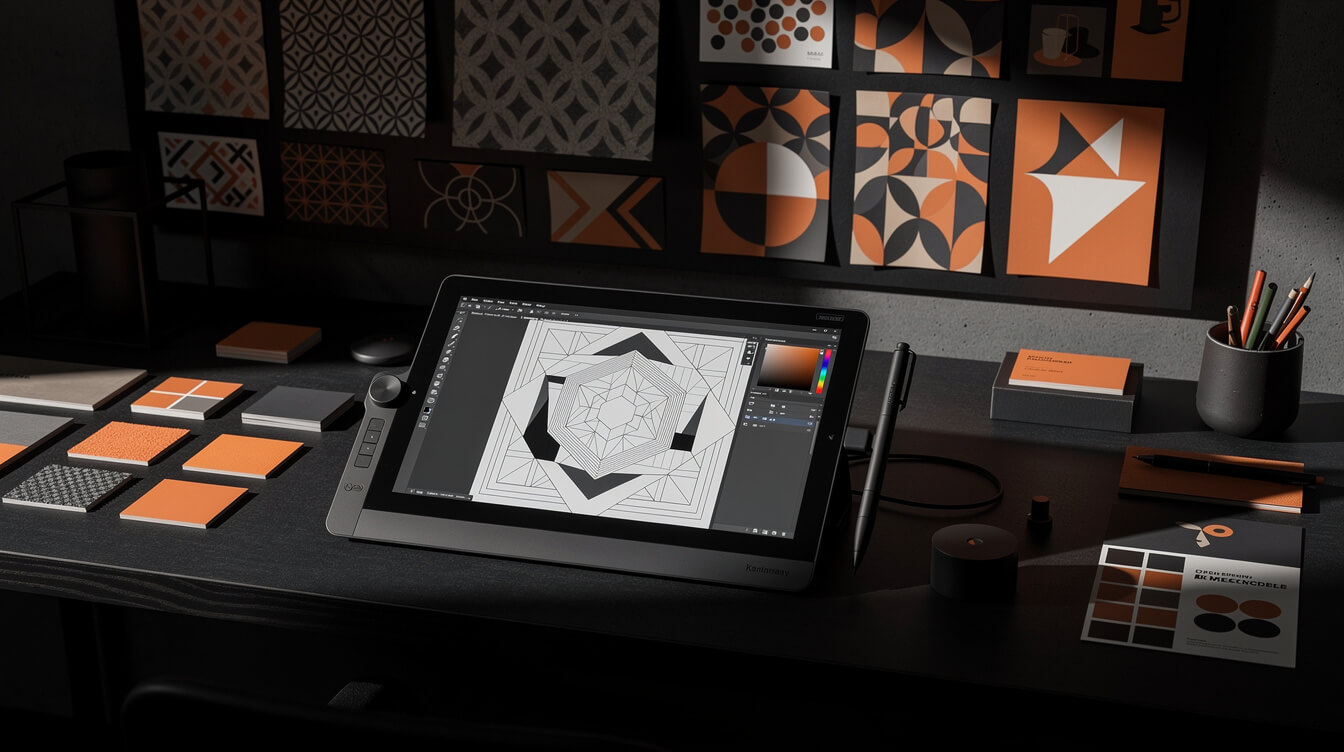
An 18″x30″ mat is a landscape format — wider than it is tall. This is the opposite of most apparel and many wall decor products. Designs that work well on a portrait-format phone case or a square pillow often need significant rework to translate to this landscape rectangle. The golden rule for doormat design is to work with the format’s natural orientation: horizontal bands of imagery or bold compositional elements, not vertical stacking.
Text legibility at foot level is a different design constraint than legibility on a screen or a framed print. A mat viewed from standing height is viewed at a steep downward angle, which compresses the vertical dimension of what the eye reads. Text that looks large in your design tool can appear small and difficult to read at floor level, particularly if the mat is placed in dim indoor lighting or in outdoor shade. Design guidelines for doormats recommend using bold, high-contrast typography with generous letter spacing. Thin scripts and condensed sans-serifs that look elegant on a product mockup become muddy when viewed from above at an angle.
Contrast is the second critical design variable. A mat that looks crisp on a white design canvas can disappear visually against a light-colored floor or a sun-bleached concrete step. Design for the worst-case contrast scenario: dark background with light imagery, or high-saturation color blocking that remains legible across different floor colors. Black-and-white designs or designs with a dark solid background perform consistently across floor types and lighting conditions.
For AI-generated design elements (patterns, illustrative backgrounds, breed silhouettes), the MEGA pipeline produces high-resolution assets that can be composited with any design layer before uploading the final file to Printful or Printify. The design file requirement for doormats is typically a high-resolution PNG or TIFF at 150 DPI at the full print dimensions (18″x30″ = 2,700 x 4,500 pixels at 150 DPI). This is a larger file than most apparel design files — account for the upload size in your design workflow.
The overlap between home decor design principles and wall art design principles is significant. If you already have a catalog of designs optimized for custom canvas prints or custom pillows, many of those design assets can be adapted to the doormat format with cropping and layout adjustments. This cross-product design reuse is one of the efficiency advantages of building a POD catalog around a coherent design aesthetic rather than one-off designs per product.
The custom doormat opportunity: a low-competition home decor product with the unit economics that work
Custom doormats check every box that makes a product worth adding to a POD catalog: the SERP is entirely consumer-facing with no editorial competition for POD sellers, the unit economics produce 40–49% gross margin at accessible retail prices, the buyer profile is emotionally motivated and occasion-driven, and the fulfillment path through Printful requires no inventory commitment.
The real estate closing gift niche alone justifies a dedicated set of listings. Add seasonal drops and pet breed verticals and you have a doormat catalog that covers multiple buyer segments with minimal design overlap. The product format rewards sellers who understand landscape design and contrast — not an advanced skill, but one that separates a polished listing from an amateurish one.
On WooCommerce, the margin is what Printful and your pricing strategy produce. On Shopify, the margin is that minus the 1% platform override that scales with every successful sale. At $40 AOV and meaningful volume, that difference compounds into real money over a 12-month period. The platform question is not academic — it is a line on the P&L that compounds with every unit sold.

Implement AI. 30x your throughput. Get a 30-min call with the founder.
Drop your details and book a free 30-minute discovery call. Personalized advice on your POD stack, your margin, and where AI fits. No pitch, no fluff.