
Custom wall clocks for POD sellers: which providers carry them, what the unit cost looks like, and the home decor niche math
Custom wall clock is a search term with 880 monthly searches and a results page full of consumer product sites. CanvasChamp, Contrado, Walmart Photo, and Amazon all sell finished products to buyers. None of them answer the question POD sellers actually have: can I fulfill custom wall clocks through Printful or Printify, and is the margin worth it? This guide answers both. Printful carries a 10-inch round aluminum sublimation clock at no minimum order quantity. Printify network vendors carry them too. Gross margin sits at 40 to 50 percent. Q4 is the strongest demand window. Here is everything you need to add a custom wall clock to your store.
Can you sell custom wall clocks through Printful or Printify?

Yes. Printful carries a 10-inch round wall clock with an aluminum face, silent-sweep quartz movement, and high-gloss finish. The SKU is fulfilled on demand: one order, one clock, no minimum quantity required. That matters for a POD business where inventory risk is the thing you are specifically trying to eliminate.
Printify opens up additional vendor options through its print network. Sizes and vendor availability vary, so check the product creator directly before building listings. Some Printify vendors carry both 10-inch and 12-inch round formats, which gives you a higher price point option.
Gooten and SPOD also carry sublimated wall clocks in their catalogs. If your fulfillment strategy involves multiple print partners for redundancy or regional shipping speed, both are worth adding to your rotation.
The short answer: custom wall clocks are a mainstream POD product in 2026, available through the major platforms you already use. The fulfillment infrastructure is there. The question becomes whether the economics justify a listing slot, and which niches have the buyer intent to convert.
How sublimation printing works on wall clocks

Sublimation on a wall clock works differently than sublimation on a t-shirt. The substrate matters. Wall clocks use an aluminum face coated with a polyester-infused layer, which is what allows dye-sublimation to bond at the molecular level.
Here is what happens in production. Your artwork file gets printed onto transfer paper using sublimation inks. That paper gets pressed against the clock face under heat, typically 375 to 400 degrees Fahrenheit, for 60 to 90 seconds. The heat converts the solid sublimation ink into gas. The gas permeates the polyester coating and bonds permanently into the aluminum face. When it cools, the dye is embedded in the material itself, not sitting on top of it.
What this means for your product: the print does not crack, peel, or fade through normal handling. It is scratch-resistant and UV-stable. A clock that hangs on a wall for five years in direct sunlight will hold its color in a way that a standard ink print would not.
The constraint is the white base requirement. Sublimation dye is transparent, so it needs a white substrate to show accurate color. All sublimation wall clocks start with a white aluminum face. If your design calls for a black or dark background, that needs to be built into the artwork file itself. The printer cannot print white on white. Your dark colors come from the darker dye values in your design, set against the white aluminum base.
Design specs to keep in mind: the standard 10-inch round face requires artwork at minimum 150 DPI at print size. A 10-inch face at 150 DPI is 1,500 by 1,500 pixels minimum. Work at 300 DPI if your design includes fine details or photographic content.
One practical consideration: the clock face is round, but your artwork file is typically submitted as a square. The print platform crops to the circular face. Keep your key design elements in the center 80 percent of the frame to avoid crop-edge cuts. If your design fills the full bleed square, run a test mockup before listing to confirm nothing critical sits at the edges of the circle.
The silent-sweep quartz movement is a meaningful product detail to mention in your listing copy. Standard clock movements tick audibly, which is a purchasing objection for buyers putting a clock in a bedroom or home office. Silent-sweep means the second hand moves in a continuous sweep rather than a stepped tick. For anyone who has lived with a ticking clock on a wall, this matters.
Which POD providers carry custom wall clocks in 2026
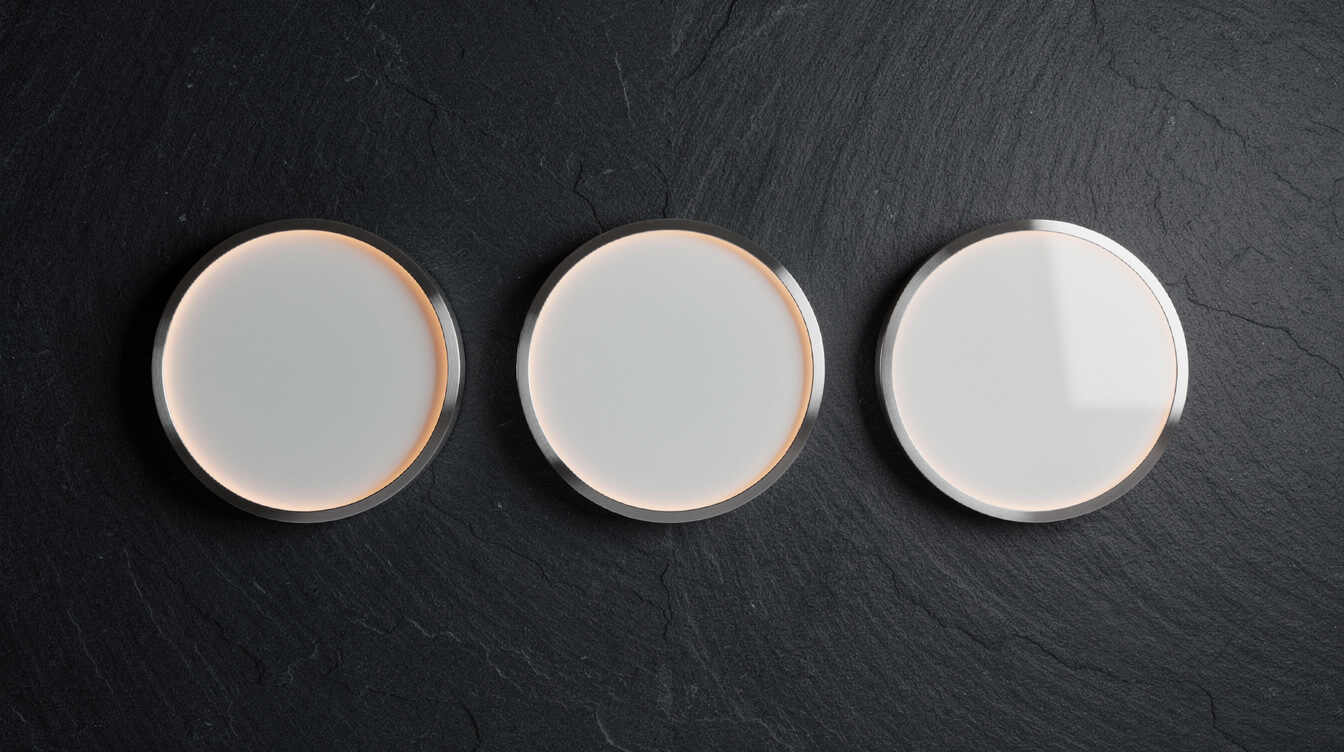
Here is what each major platform offers as of mid-2026. Verify availability in each platform’s product creator before building listings, since catalog additions and removals happen without announcement.
Printful carries a 10-inch round aluminum sublimation clock. Base cost runs approximately $12 to $14. Silent-sweep quartz movement included. High-gloss aluminum face. Fulfillment from Printful’s US, EU, and Mexico facilities means domestic shipping times in the 3 to 5 day range for US customers. Printful’s integration with WooCommerce is native and well-maintained, which matters for store operators who want to keep their tech stack simple.
Printify opens access to multiple clock vendors through its network. Vendor options shift by availability, but 10-inch and 12-inch round formats have both appeared in the catalog. Base costs range from $10 to $16 depending on vendor and size. If you want to offer a 12-inch premium option at a higher retail price, Printify’s network is where you will find it. Always run a test order before listing publicly, since vendor quality varies more than it does on Printful’s direct production model.
Gooten carries sublimated wall clocks and is worth adding as a backup fulfillment option if your primary vendor goes out of stock. Gooten’s catalog is more conservative than Printify’s, but their production quality and customer service history is generally solid.
SPOD carries custom wall clocks with 48-hour production fulfillment. If same-week shipping is a selling point in your store, SPOD’s speed advantage is worth the slightly higher per-unit cost relative to Printful’s standard lead times.
For most WooCommerce store operators, Printful is the default choice. The integration is direct, the quality floor is consistent, and the no-MOQ model holds across all product types in their catalog. Use Printify as a secondary source for sizes and formats Printful does not carry.
Unit cost math: what you pay, what you charge, what you keep

Smash print-on-demand. Join the engine room.
One short email a week. Real numbers, real teardowns, the unfiltered economics behind every move.

This is the number that determines whether a custom wall clock earns a listing slot. Here is the math at the standard 10-inch Printful price point.
Base cost: $12 to $14. Domestic shipping: $4 to $6. Total landed cost: $16 to $20 per unit. That is what leaves your business on every order.
Retail pricing: $32 to $42 is where the market sits for a 10-inch sublimated clock. Premium positioning for a specific niche angle, such as a pet portrait gift, anniversary gift, or office humor, can push retail to $45 or $48. At those prices, gross margin runs 40 to 52 percent.
To put that in dollar terms: a $38 retail clock at $18 landed cost leaves $20 gross per unit. 100 orders a month is $2,000 gross. That is before platform fees, payment processing, and any ad spend, but those costs are the same regardless of product type. The clock itself is profitable at a single order.
Compare that to a custom mug, which lands at $8 to $11 and retails at $18 to $22. Gross per mug: $7 to $11. The clock generates roughly twice the gross dollar per transaction at similar unit volume.
The 12-inch clock at a Printify vendor adds $4 to $6 to the base cost but supports retail pricing of $48 to $55. Gross at the 12-inch premium price point runs 45 to 55 percent. If your audience skews toward premium gifting, the larger format is worth the added fulfillment complexity.
One margin improvement worth testing: bundle pricing. A custom wall clock paired with a matching 8×8 canvas print (available via Printful) becomes a “wall art set” with a $55 to $65 AOV. The incremental fulfillment cost is the canvas print alone. The combined gross dollar per order at $60 AOV and 45 percent margin is $27, versus $20 on the clock alone. At 100 orders per month that is a $700 monthly gross improvement from the same traffic volume.
MEGA handles the research-to-listing pipeline that turns product economics like this into live store SKUs, from niche selection through mockup generation and WooCommerce listing creation, without the 135-minute manual Canva workflow that most POD sellers are still running.
Who buys custom wall clocks: 3 buyer profiles that convert

Not every product has a clear buyer profile. Custom wall clocks do. The three profiles below account for the majority of conversion on this product.
The gift buyer. A custom wall clock is a category-A gift product. It is functional, permanent, and personal. Anniversary gifts, housewarming gifts, and retirement gifts all map naturally to this product. The anniversary buyer is particularly valuable: price sensitivity is near zero on a 25th anniversary gift, and the product ships in a box that looks premium even at a $38 retail price. Housewarming buyers are decision-fast. They know the occasion, they have a budget, and they want something that arrives before the party.
The office and WFH decorator. Remote work normalized home office decoration as a category. A wall clock in a dedicated workspace is both functional and aesthetic. Office humor and motivational designs perform well in this segment, as does minimalist art-forward design. The buyer in this profile is shopping for their own space, which means they are evaluating the design quality directly and will pay more for something that looks intentional.
The pet portrait gift buyer. Pet portrait merchandise is a durable gift economy. The custom wall clock fits it well because it is a permanent display product. A buyer who commissions a custom dog portrait canvas print will consider a matching clock. The breed-specific angle works here: a “border collie owner” gift is a shareable social product, and that social signal drives organic discovery in ways that generic home decor does not.
These three profiles share one trait: they are buying for a specific occasion or identity, not browsing casually. That buyer intent is why this product converts at a higher rate than its volume numbers suggest.
Niche verticals with the highest conversion potential
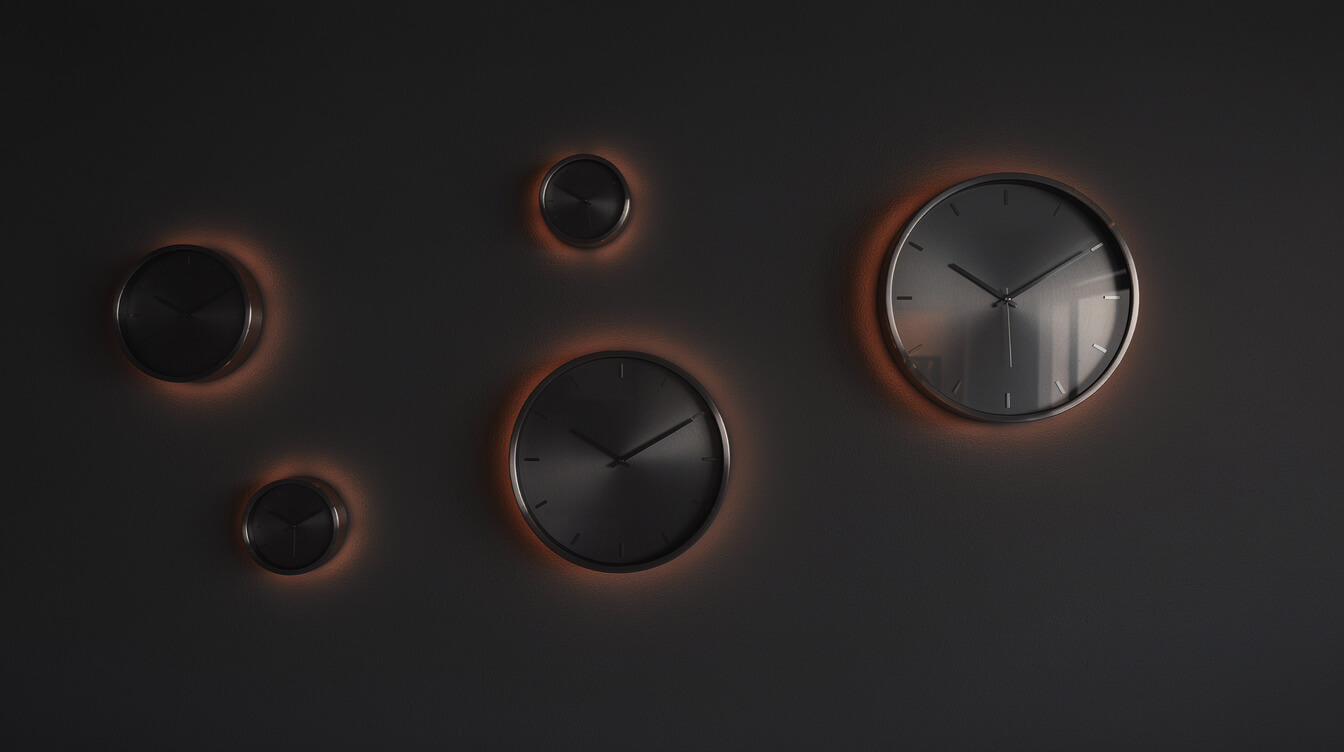
The clock SERP is currently uncontested from a POD editorial perspective. Every result is a consumer brand selling finished products. That means the POD seller who builds listings in the right niches is competing against decorative clock brands on Etsy and Amazon, not against other print-on-demand guides. Here are the verticals worth prioritizing.
Pet portrait wall clocks. This is the highest-volume niche in custom home decor merchandise. Breed communities on social platforms share pet-specific products widely. A border collie wall clock or golden retriever anniversary clock gets shared in breed-specific Facebook groups, which drives organic discovery without ad spend. The design brief is simple: a clean art portrait of the breed, ideally in a style that looks commissioned rather than clipart.
Office humor and motivational design. This category performs year-round because the WFH setup is a permanent fixture for a significant portion of the workforce. Countdown-style designs, productivity humor, and motivational quotes as abstract shapes (without readable text on the artwork itself) test well in this niche. The design approach should be pattern-based rather than text-forward, since the core concept stands on visual impact.
Wedding and anniversary gifts. Custom wall clocks with photographic-quality imagery (abstract patterns, watercolor-style backgrounds, or minimal geometric designs) slot cleanly into the wedding gift market. The anniversary gift buyer searches by year: first anniversary, 25th anniversary, 50th anniversary. Matching your listing titles and descriptions to these anniversary milestones captures intent searches that generic clock brands miss.
Sports fan art. Fan art designs using original artwork (not licensed IP) perform well on home decor products because the buyer wants to display their identity. A design that evokes a team’s color palette without using any licensed logos or imagery stays in the clear while still capturing fan intent. Custom canvas prints and custom poster stores cover similar ground. Wall clocks add a functional dimension that flat art products do not have.
Holiday seasonal drops. The Q4 window (October through December) drives a significant share of annual home decor gift revenue. Wall clocks are a Q4 product. List before October 1 to allow Google’s indexing cycle time before peak search volume hits. A custom cutting board or similar kitchen-adjacent product pairs well for gift set bundling if your store already carries it.
From niche research to live WooCommerce listing in under 7 minutes
MEGA handles the full pipeline: research, image generation, sizing, mockups, and listing creation. No Canva, no manual uploads, no 135-minute workflow per product.
The Shopify 1% override on home decor AOV: what it actually costs

Shopify’s 1% platform override is a fixed percentage charge on top of payment processing. It applies at every revenue level, every month, regardless of your plan tier. For a product like a custom wall clock, the math is straightforward.
At a $38 average order value with 200 orders per month, the override costs $76 per month, or $912 per year. That is $912 that does not appear on your income statement as a line item most sellers track, because it shows up embedded in payment processing totals. At 500 orders per month, the same AOV generates $2,280 per year in platform override fees alone.
WooCommerce has no platform override. The fixed overhead is hosting and plugin licenses: $180 to $360 per year depending on your stack. That number does not change whether you process 50 orders or 5,000 orders. At 200 orders per month and $38 AOV, WooCommerce costs $180 to $360 annually versus $912 on Shopify. The difference widens with volume.
For a home decor product at $38 to $45 AOV, WooCommerce’s native product add-ons handle photo uploads and personalization inputs without a third-party app. On Shopify, personalization apps run $19 to $49 per month. Add that to the platform override and the annual gap between platforms becomes material.
The WooCommerce vs Shopify breakdown for POD sellers covers the full fee comparison across revenue tiers, including the compound effect at $10,000 per month and above. If you are still on Shopify and selling physical home decor merchandise, that comparison is worth running through your own numbers.
Conclusion: custom wall clocks and the Q4 window
Custom wall clocks are a durable home decor product with strong Q4 demand, clear buyer intent, and a SERP that is entirely uncontested from a POD seller perspective. Printful fulfills them at no MOQ. Gross margin runs 40 to 50 percent at standard retail. The three strongest niches (pet portrait gifts, anniversary gifts, and office decor) have buyers who search with intent and pay without heavy price negotiation.
The action list is short. Pull the Printful 10-inch clock SKU into your WooCommerce product catalog. Create listings for at least two of the three buyer profiles above. Title your listings around gift search terms (anniversary wall clock gift, pet portrait clock, personalized housewarming clock) rather than generic product terms. Get listings live before October 1 to capture Q4 indexing time.
The POD seller who lists this product in September is competing against Etsy shops and Amazon listings in October. The one who lists it in November is competing against delivery cutoff anxiety. September is the right window.
If you already sell canvas prints or posters, the custom wall clock is a natural cross-sell. The buyer who purchased a custom pet portrait canvas is a pre-qualified wall clock prospect. A post-purchase email sequence that introduces the clock three weeks after the canvas ships costs nothing to run and captures a second transaction from a customer you already paid to acquire.

Implement AI. 30x your throughput. Get a 30-min call with the founder.
Drop your details and book a free 30-minute discovery call. Personalized advice on your POD stack, your margin, and where AI fits. No pitch, no fluff.