Custom beanies for POD sellers: embroidery options, unit cost math, and the seasonal demand window
Custom beanies sit in a strange position in the POD catalog. The search volume is real — 6,600 searches a month in the US alone — and the buyer intent is transactional. But the SERP is cluttered with B2B vendors quoting bulk minimums and Printful product pages that show you how to add a design without telling you whether you should. This post runs the actual numbers: which providers carry custom beanies, what embroidery digitization costs, what the unit margin looks like at realistic retail prices, and when to launch if you want to catch the seasonal spike.
If you are already selling POD apparel and want to add custom beanies to your store, this is the math you need before you list your first product.
Which POD providers carry custom beanies (and what’s in their catalog)?
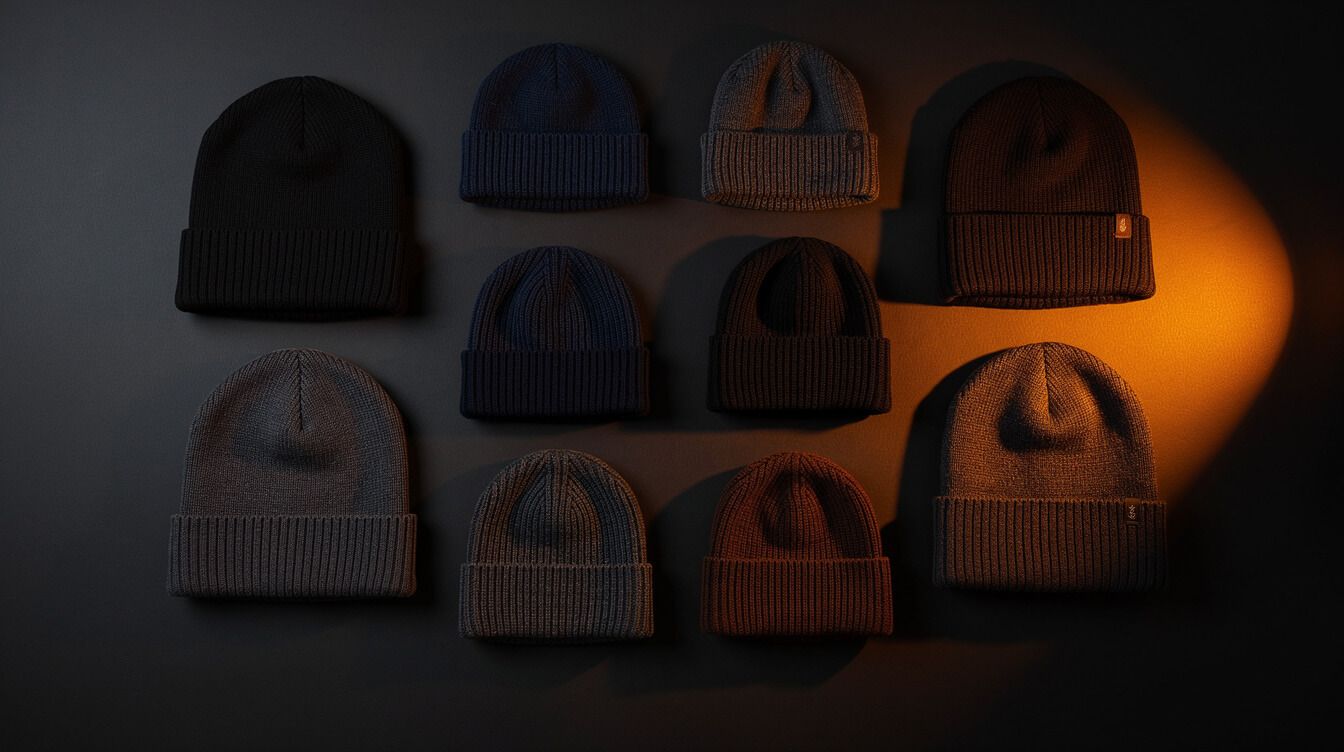
Not every POD platform handles headwear the same way. The product catalog differences matter more than most sellers realize, because the beanie style determines your print method, which determines your unit cost and your design constraints.
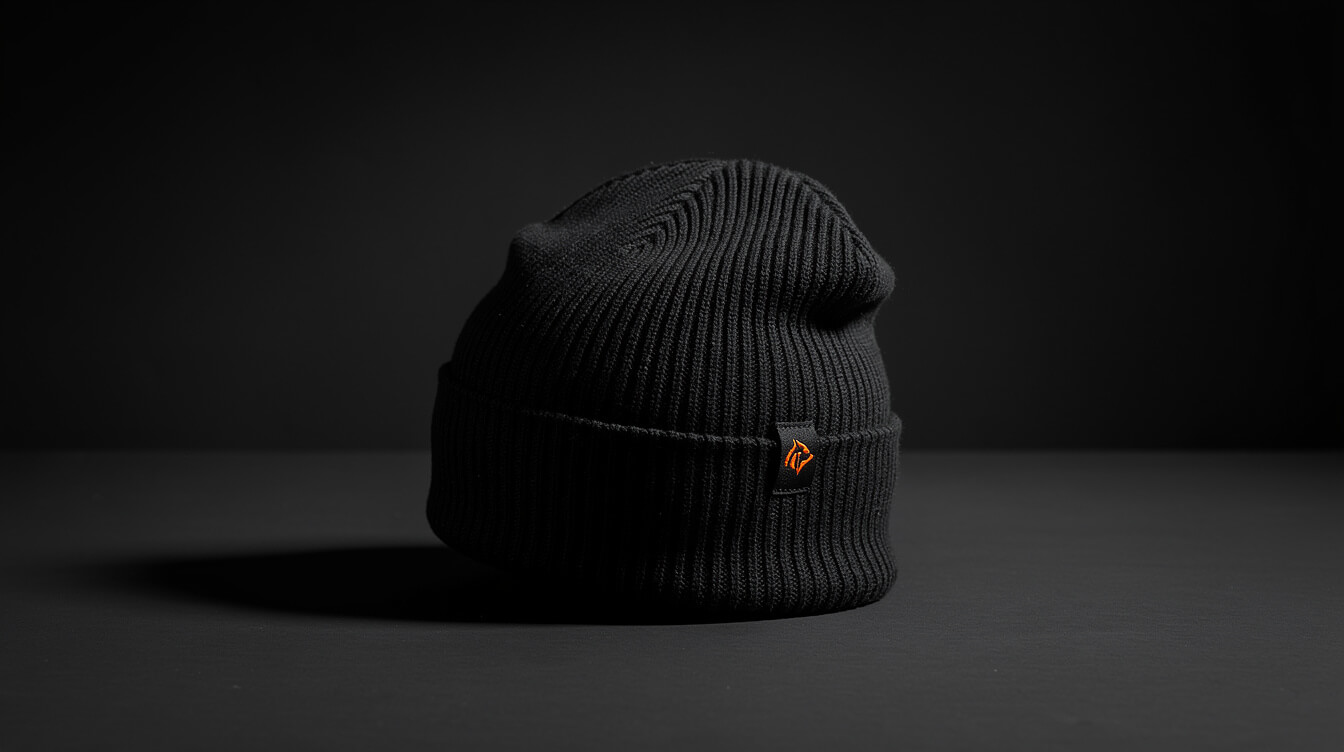
Printful carries several beanie styles, and most of them support embroidery rather than print. The Classic Beanie and the Ribbed Beanie are the workhorse SKUs. Both use embroidery as the decoration method, which means your design goes through a digitization process before it can be stitched. Printful does not offer all-over print on beanies. The embroidery area is limited: typically a small front panel or side placement. If your brand requires large bold graphics, embroidery on a beanie is not the right fit.
Printify connects you to a broader set of print providers, and the selection varies by provider. Some Printify partners carry all-over print beanies using a knit-in or sublimation method, though availability is inconsistent and product quality can vary across providers. If you want reliable, consistent embroidered beanies through Printify, expect to audit your supplier carefully.
SPOD (Spreadshirt Print on Demand) carries beanies and supports a digital transfer print method on some styles. The quality differs noticeably from knit or embroidered beanies, which matters if your audience is paying $28 or more for a hat.
For sellers building a serious beanie product line, Printful’s embroidered beanies represent the most consistent quality at no-minimum order. The catalog constraint (no AOP) is real, but it also means your design decisions are simpler: a clean logo or wordmark, properly digitized, stitched on a quality knit beanie.
One note on knit-in designs: some bulk vendors offer knitted-in patterns where the design is part of the fabric weave. This is not available through standard POD platforms. If your brand aesthetic requires a fully knit design (like a Fair Isle or Nordic pattern), you are looking at a minimum order, not drop-shipping.
Embroidery on beanies: digitization fees, stitch limits, and what designs actually work
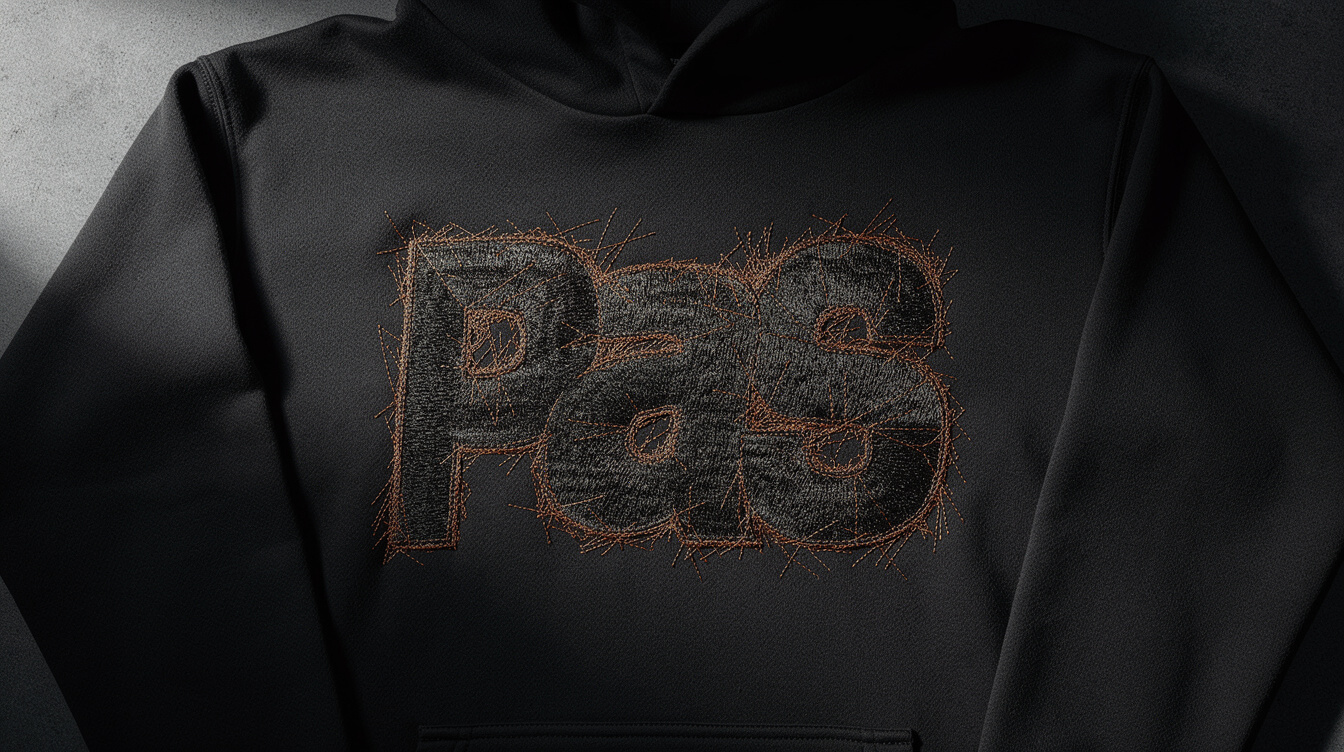
Embroidery has a different production logic than DTG printing. Before Printful can stitch your logo onto a beanie, they need an embroidery file — a digitized version of your design that tells the machine exactly how to move the needle. That digitization process costs money and is not reversible.
Digitization fees at Printful range from $15 to $50 per design, depending on complexity and stitch count. A simple wordmark or geometric logo sits at the lower end. A detailed illustration with fine lines or shading will push toward $50 or higher. Printful charges this fee once per design, not per order. Once your file is digitized, every subsequent order uses the same file at no additional charge.
The practical implication: if you are selling in low volume, that one-time fee hits your margin hard on early orders. On a beanie retailing for $30, a $25 digitization fee spread across your first 10 orders adds $2.50 per unit. By order 100, it is $0.25 per unit and effectively invisible.
Stitch limits matter for design complexity. Printful caps embroidery at a standard stitch count, and designs that exceed it require simplified artwork. Designs with gradients, photographic detail, or very fine text do not translate well to embroidery regardless of stitch count. The best-performing beanie embroidery is bold, simple, and high-contrast: clean brand logos, strong wordmarks, simple icons.
3D puff embroidery is an option on some Printful beanie styles. It adds visual dimension by raising the stitching off the fabric surface. It also costs more and has stricter design constraints — no fine details, no thin strokes. Used correctly, it makes a logo pop on a winter hat in a way that flat embroidery cannot.
For sellers coming from the custom embroidered hat no minimum route (baseball caps and structured hats), beanies follow the same digitization logic. The main difference is surface: a knit beanie stretches in ways a structured cap panel does not, so designs that sit flat on a cap may distort slightly on a beanie. Test with a sample order before listing at scale.
Unit cost math: what a custom beanie costs to fulfill through Printful and Printify

These numbers are representative and based on published Printful pricing as of mid-2026. Actual costs shift with base product updates, so verify current pricing before building your retail price around them.
Printful Classic Beanie — embroidery:
- Base product cost: approximately $15.95 per unit
- Embroidery setup (one-time): $15 to $25 for a simple logo
- Shipping (US, standard): approximately $5 to $7
- Total fulfillment cost per order (after digitization is amortized): approximately $21 to $23
Retail price targets and margin:
- Retail at $28: margin approximately $5 to $7 before platform fees
- Retail at $32: margin approximately $9 to $11 before platform fees
- Retail at $38: margin approximately $15 to $17 before platform fees
At a $28 retail price, you are working with thin margin. At $32 to $38, the margin becomes workable, especially if you are selling on a platform that does not take a cut of every transaction.
Printify pricing varies by provider. Some Printify-connected suppliers offer slightly lower base costs than Printful, but shipping rates, consistency, and embroidery quality are less predictable. For a high-ticket seasonal item like a beanie where one bad product review can damage your store’s reputation, the quality consistency argument for Printful is real.
At 10 units ordered (by different customers, as drop-shipped), your unit economics are the same as at 1 unit — that is the POD model. There is no volume discount. This is the core tension between POD beanies and bulk ordering, and we address it directly in the next section.
Break-even math: POD beanies vs ordering in bulk from a specialist vendor

Smash print-on-demand. Join the engine room.
One short email a week. Real numbers, real teardowns, the unfiltered economics behind every move.
If you are serious about beanies as a product line, you will eventually ask whether it makes sense to order in bulk. The math deserves a direct answer.
Bulk order benchmark — 50 units from a specialist vendor:
- Threadlogic or LogoSoftwear pricing: approximately $13 to $17 per unit at 50 units with embroidery included
- Minimum order: typically 25 to 50 units
- Lead time: 10 to 20 business days
- Inventory risk: 50 beanies you own, must store, and must sell
POD (Printful, no minimum):
- Base cost: approximately $15.95 per unit
- No minimum, no inventory, no lead time beyond production (typically 3 to 5 business days)
- Unit cost is higher than bulk, but there is zero inventory risk
The break-even question is not really about unit cost. It is about confidence. If you are certain you will sell 50 beanies in a single season, bulk ordering makes economic sense. If you are testing a new niche, launching a design, or unsure about demand, POD is the rational choice because the downside is zero unsold inventory, not a loss on 30 beanies you could not move before March.
The best approach for most POD sellers is to validate with POD first. Run the product through Printful with no minimum. If it sells, consider moving to bulk for your bestselling colorways and designs once you have data. This is the same inventory logic that applies to custom zip-up hoodies and other seasonal cold-weather apparel — prove demand before committing capital.
MEGA automates the research and product pipeline that makes it faster to identify which niche-beanie combinations are worth testing. mega.management runs the research-to-listing process so you can spin up test products without the manual overhead of a 6-hour Canva workflow and manual product setup.
How Shopify’s platform fee hits harder at beanie price points

Shopify charges a 1% platform override fee on gross sales when you use a third-party payment processor. At high AOVs, this fee is annoying but manageable. At the $25 to $35 AOV that beanies typically command, it bites into margin disproportionately.
The math at $30 retail:
- Shopify 1% fee: $0.30 per unit
- Shopify payment processing fee (Basic plan, card): approximately $0.72 to $0.90
- Combined platform and payment: approximately $1.00 to $1.20 per unit
On a $30 beanie with a $9 gross margin, Shopify fees eat $1.00 to $1.20. That is 11 to 13% of your gross margin gone before you spend a dollar on marketing, shipping variations, or returns.
WooCommerce eliminates the 1% platform override entirely. You pay Stripe or PayPal’s processing fees (similar to Shopify’s payment processing rate), but there is no additional platform tax on each transaction. Over a season of beanie sales, the difference compounds.
At $10,000 in beanie revenue, the Shopify 1% fee alone is $100. At $50,000 in seasonal revenue across your entire POD catalog, it is $500. The custom polo shirt math shows a similar pattern at higher AOVs — the fee structure compounds across every low-to-mid-ticket product in your store.
If you are running a multi-product POD store with a beanie line as one of several SKUs, the platform fee decision affects every product simultaneously. WooCommerce’s zero-override model is particularly advantageous for stores with many low-AOV seasonal items.
The seasonal demand window: when to launch your beanie product line

Custom beanies are not a year-round seller for most niches. Search volume peaks sharply in the fall and winter, typically tracking with the approach of cold weather in the Northern Hemisphere. The demand curve matters because it affects when you should launch, when to run paid traffic, and when to expect organic search performance.
Search volume pattern (approximate US data):
- January to July: baseline demand (lower volume, consistent)
- August: volume begins increasing as back-to-school and early fall planning starts
- September to October: significant ramp-up as consumers anticipate winter
- November to December: peak demand, coincides with holiday gifting season
- Post-January: rapid decline back to baseline
The August to September window is when POD sellers should be listing their beanie products, not October. By October, the organic competition is at its highest and paid traffic CPCs are rising. By August, you have time for your product listings to index, gather initial reviews, and build momentum before the peak buying period.
This timing applies to editorial content too. A blog post about custom beanies published in August or September can rank and receive organic traffic through the October to December peak. Publishing in November means you are competing at the top of the demand curve with a brand-new URL that has no authority yet.
Compare this seasonal pattern to a product like custom embroidered sweatshirts, which follow a similar demand arc. Both are cold-weather apparel with a September through December peak. If you are building a winter apparel category, launch beanies and sweatshirts together in August and let them support each other as internal link anchors.
The best niche verticals for custom beanie POD stores

Beanies sell on brand and occasion. The most profitable beanie niches share a common trait: the buyer has an identity they want to express, and the beanie is the vehicle. Generic custom beanie stores with no niche focus tend to underperform because they compete on price against every other generic option.
Ski resort and outdoor brand merch: Ski resorts, mountain towns, and outdoor recreation brands have an audience that actively wears beanies as part of their lifestyle. A branded beanie with a mountain logo sells in ski lodges, outdoor markets, and to the online community around any outdoor recreation niche. These buyers expect to pay $35 or more, which improves your margin at the POD price point.
Sports team and fan gear: Local sports leagues, youth teams, and fan communities are a reliable beanie buyer segment. A little league team, a semi-pro soccer club, or a niche sport like disc golf or pickleball — all have fans who want branded cold-weather gear. The purchase is often gift-driven (parents, fans, team admins) and seasonal, meaning it clusters around fall season launches and holiday gifting.
Streetwear and urban brands: Beanies are a streetwear staple. A clean embroidered logo on a quality ribbed beanie can anchor a streetwear POD brand. The buyer in this niche is brand-aware and willing to pay premium prices for aesthetic alignment. Keep designs minimal and bold — that is what performs in this market.
Holiday corporate gifting: Companies purchasing branded beanies for holiday employee gifts represent a B2B angle that most POD sellers overlook. At 10 to 30 units (still POD-compatible if you batch orders or use a vendor with a low minimum), the ticket size goes up and the buyer is less price-sensitive than a consumer retail buyer.
Pet portrait and novelty gifting: Custom beanies with pet photos or quirky illustrations are a gift-driven search category. They sell well in the holiday window and to buyers who want something specific and personal. The design challenge is making pet artwork work as embroidery (it usually does not translate well), so this vertical works better with providers offering knit-in or print options rather than pure embroidery.
Frequently asked questions about custom beanies for POD sellers
Can I do all-over print on beanies through POD?
Printful does not support all-over print on beanies as of mid-2026. Their beanie catalog uses embroidery as the primary decoration method, which limits the design to a specific placement area. Some Printify-connected providers offer all-over print or sublimation on beanies, but availability is inconsistent across providers. If all-over print is a core requirement for your brand, verify with your specific Printify supplier before listing the product.
What’s the minimum order for custom beanies through Printful?
There is no minimum order. Printful is a print-on-demand platform: you list the product, and Printful fulfills each order individually as customers purchase. The one-time digitization fee still applies when you first set up an embroidery design, but there is no requirement to order a minimum quantity of beanies upfront.
How long does it take to fulfill a custom beanie order through Printful?
Printful’s production time for embroidered beanies is typically 3 to 5 business days. Shipping time depends on the customer’s location and the shipping method selected. For US customers with standard shipping, total delivery time is usually 7 to 10 business days from order placement. These timelines can extend during peak holiday periods (November to December), so factor in lead time if you are marketing beanies as holiday gifts.
Can I sell custom beanies on Etsy using Printful for fulfillment?
Yes. Printful integrates with Etsy and many other sales channels. You list the beanie on your Etsy shop, Printful fulfills the order automatically when a customer purchases. The same unit economics apply regardless of which channel you sell through. However, Etsy charges its own listing fees and transaction fees (6.5% of the transaction), which layer on top of the Printful fulfillment cost. Run your margin math including Etsy fees before setting a retail price.
Is the digitization fee charged every time I add a new color variant?
No. The digitization fee is per design, not per color or product variant. Once your design is digitized, you can apply it to any number of colorways or beanie styles at no additional digitization cost. If you update or significantly change the design, the modified version requires a new digitization file and a new fee.
Custom beanies in a POD portfolio: the right decision framework
Custom beanies are a legitimate addition to a POD store, with one important condition: you need to pick your niche before you list. A generic beanie with no angle is competing against every other generic beanie and losing. A mountain resort beanie, a streetwear logo beanie, or a sports team fan hat has a defined buyer with clear intent.
The unit economics work at $32 and above. Below that, the Shopify platform fee and Printful base cost compress margin to a point where the product is barely worth carrying. Price with conviction, pick a niche, and time your launch for August or September to let the SEO and product listing build momentum before the October to December peak.
WooCommerce’s zero-override fee structure is not a minor detail at the beanie price point. At $30 retail, the Shopify 1% difference is $0.30 per unit. Across a beanie season with meaningful volume, that compounds into real margin. Combined with the embroidery digitization fee that you pay once and amortize across hundreds of orders, the POD beanie math works — if you set up the economics correctly from the start.
Implement AI. 30x your throughput. Get a 30-min call with the founder.
Drop your details and book a free 30-minute discovery call. Personalized advice on your POD stack, your margin, and where AI fits. No pitch, no fluff.