Gooten print on demand: 525 products, WooCommerce integration, and whether the math beats Printful
If you have spent any time comparing print-on-demand suppliers, you have probably come across Printful, Printify, and Gooten listed in the same breath. But Gooten gets less editorial attention than its catalog deserves. Most comparison articles treat it as a second-tier option and move on. None of them run the margin math. None of them cover the WooCommerce angle. This post fixes both.
Here is what you actually need to know about gooten print on demand in 2026: what it offers, how its pricing stacks up against Printful on a product-by-product basis, and whether its WooCommerce integration is production-ready for sellers who want to own their store infrastructure.
What Gooten actually is (and why most POD sellers have not heard of it)

Gooten launched in 2013 as a business-to-business print-on-demand API platform. Its original design was not for individual sellers on Shopify or Etsy. It was built for brands, enterprises, and developers who needed a scalable, multi-supplier fulfillment backbone.
That B2B origin explains two things: first, why its product catalog is unusually deep at 525+ SKUs, and second, why it lacks the consumer-facing marketing polish that Printful and Printify have invested in. Gooten has never tried to be the friendly entry-level option. It is a fulfillment infrastructure play.
By 2026, Gooten has opened its platform to individual POD sellers through standard Shopify and WooCommerce integrations. But its architecture still reflects its enterprise roots. The API is solid, the multi-supplier routing logic is more sophisticated than most sellers ever use, and the documentation is written for developers, not dropshippers.
For most POD sellers who find Gooten, the discovery path is frustration: Printful does not carry a product they want, or Printify’s pricing on a specific item is worse than expected. They start searching for alternatives and find Gooten buried in comparison posts that were last updated in 2020. This is the current state of the editorial coverage, and it is a gap worth addressing.
Gooten is not a Printful replacement for most sellers. It is a complementary supplier with specific strengths. Understanding those strengths is the actual value here.
The Gooten catalog: 525 products vs the Printful lineup
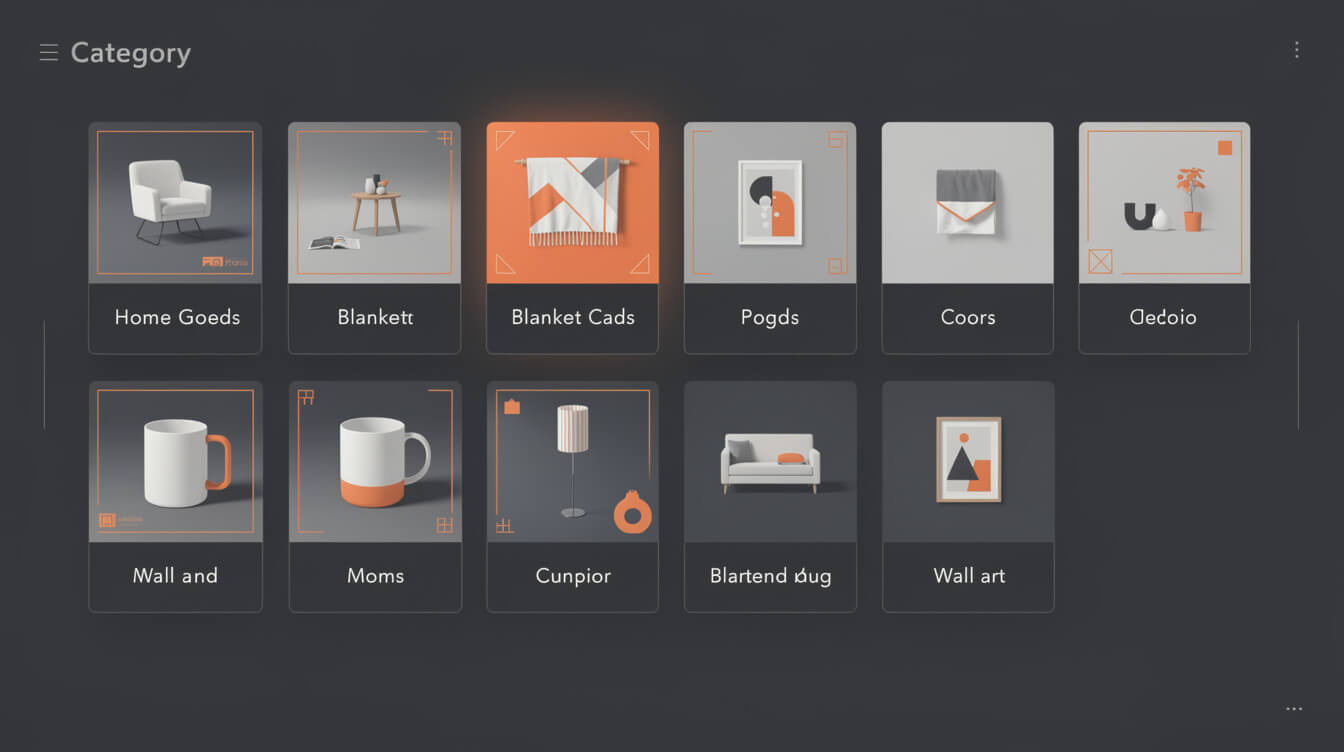
Printful’s current catalog sits around 330 products. Gooten’s is listed at 525+. On raw numbers, Gooten wins the catalog comparison. But raw product count is a misleading metric if the categories do not match what you actually sell.
Here is where the catalogs diverge in meaningful ways:
Gooten’s differentiators:
- Home and living products: Gooten’s blanket, pillow, and wall art options are notably broader than Printful’s
- Pet products: Gooten carries a range of pet accessories that Printful has limited coverage on
- Photo products: ornaments, puzzles, and photo books that Printful does not list at all
- Specialty prints: Gooten sources from multiple regional print providers, which allows SKUs that a single-supplier network like Printful cannot economically justify
Where Printful stays ahead:
- Apparel depth and quality consistency: Printful’s in-house apparel production has tighter quality control than Gooten’s multi-supplier routing
- Embroidery: Printful’s embroidery offering is more mature and better documented
- Premium brand partnerships: Printful’s catalog includes brand-name blanks (Champion, Next Level, Bella+Canvas) with known quality expectations
- Samples program: Printful’s discounted sampling is easier for sellers to use at launch
The practical takeaway: if your store is clothing-heavy, Printful’s catalog is a better fit. If your store leans toward home decor, gifts, and novelty items, Gooten’s 525-product depth starts to look meaningful.
For a broader look at what print-on-demand products actually earn, see print on demand products: which categories have the best margins in 2026.
Gooten pricing and margins: a product-by-product comparison to Printful

This is the section most comparison articles skip. Let us run actual numbers.
All prices below are base cost (what you pay the supplier). Your retail price determines your margin. Shopify sellers need to subtract the 1% platform override fee from every sale on top of transaction fees. WooCommerce sellers pay a flat monthly stack instead.
Unisex t-shirt (comparable base model):
- Gooten: approximately $9.00-$11.00 depending on color and size surcharges
- Printful: approximately $12.95-$15.95 (Bella+Canvas 3001)
- Delta: Gooten can come in lower on blank-brand tees, but quality variance is higher
Fleece blanket (50×60 inches):
- Gooten: approximately $20.00-$23.00
- Printful: approximately $28.00-$32.00
- Delta: Gooten wins by 20-30% on blankets, a category where it has stronger supplier relationships
Canvas print (11×14 inches):
- Gooten: approximately $15.00-$18.00
- Printful: approximately $18.00-$22.00
- Delta: Gooten competitive, within 10-15%
Mug (11oz ceramic):
- Gooten: approximately $6.50-$8.00
- Printful: approximately $8.95-$10.95
- Delta: Gooten wins, similar quality tier
Pattern: Gooten’s base costs are generally 10-25% lower than Printful across comparable products. The margin advantage is real. The quality consistency trade-off is also real, particularly for apparel where Gooten’s multi-supplier routing means your order might ship from different providers in different months.
For POD sellers running on Shopify, do not forget the platform overhead. Shopify’s 1% platform override fee applies on top of payment processing. On a store doing $10,000/month in revenue, that is $100/month just in platform fees before your payment processor takes another 2.9% plus 30 cents per transaction. At $10k/month, you are paying roughly $390/month in Shopify overhead alone. WooCommerce’s flat monthly cost (hosting plus plugins) typically lands at $50-80/month total at that scale.
Gooten’s lower base costs combined with WooCommerce’s flat fee model create a meaningful margin stack for sellers who do the math. For the full WooCommerce cost breakdown, see WooCommerce pricing for POD stores: what you actually pay in 2026.
Gooten WooCommerce integration: does it connect, and how does it compare to the Printful plugin?

Smash print-on-demand. Join the engine room.
One short email a week. Real numbers, real teardowns, the unfiltered economics behind every move.
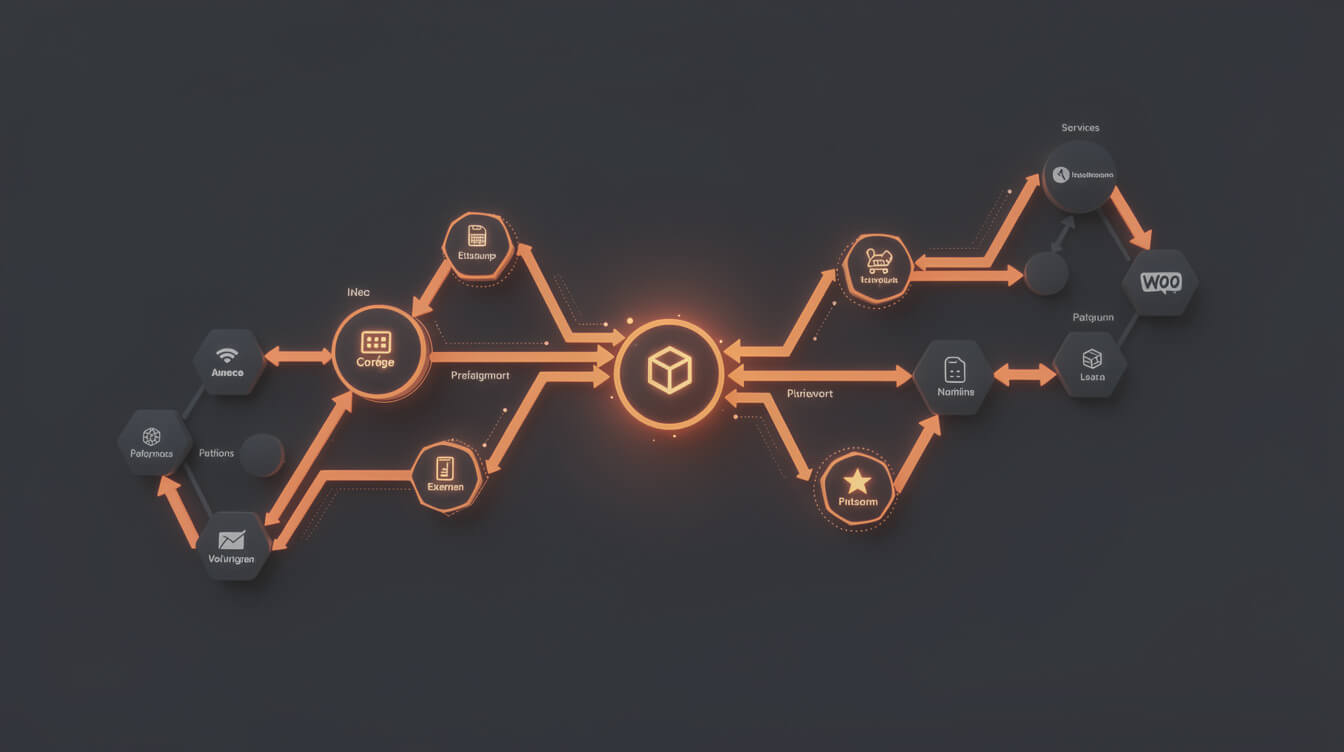
This is the question most WooCommerce sellers cannot get a straight answer to. The short answer: yes, Gooten connects to WooCommerce. The longer answer: it is not as plug-and-play as the Printful WooCommerce plugin.
How the Gooten WooCommerce connection works:
Gooten’s primary WooCommerce integration comes through its API. For sellers without development resources, there is also a Gooten app available through third-party connector tools, and some integration is available through Zapier and similar workflow tools. The native WooCommerce plugin experience is less polished than Printful’s dedicated plugin, which has years of active development and a WooCommerce team behind it.
What Printful’s WooCommerce plugin does well:
- Direct product sync with automated mockup generation
- Real-time inventory status updates
- Order routing happens automatically on WooCommerce checkout
- Printful’s plugin is maintained by Printful’s own development team
What Gooten’s WooCommerce path requires:
- API setup or third-party connector configuration
- Manual product creation is more likely than Printful’s sync model
- Order routing still works, but the setup investment is higher
- Better suited for sellers who have development comfort or a developer on retainer
The honest assessment: if you are a solo POD seller without development resources, Printful’s WooCommerce plugin is the lower-friction path. If you have API access skills or a developer, Gooten’s API is well-documented and the integration is production-ready.
For sellers evaluating their WooCommerce plugin stack more broadly, WooCommerce dropshipping plugins: what POD sellers are actually looking for covers the landscape beyond just Printful and Gooten.
MEGA automates the product listing and order routing pipeline on WooCommerce entirely, which removes the manual integration overhead that makes Gooten’s setup feel heavy. See how MEGA handles the pipeline.
Gooten vs Printful: who it is actually for (and when to use both)

The framing of Gooten vs Printful as a binary choice misses the point. Most established POD stores use multiple suppliers. The question is which supplier fits which product category in your specific catalog.
Gooten is the better choice when:
- Your catalog includes home decor, blankets, pillows, or wall art where Gooten has deeper coverage and lower base costs
- Margin per unit matters more than brand-name blanks: Gooten’s lower base costs directly improve your profit per order
- You have a product need that Printful does not cover (puzzle, ornament, photo book, specific pet product)
- You or your team are comfortable with API integration or have a developer resource
Printful is the better choice when:
- Apparel is your core product line and quality consistency is non-negotiable
- You are early-stage and need the lowest-friction setup possible
- You rely on Printful’s embroidery capability
- You want the most mature WooCommerce plugin in the POD space
Use both when:
- Your catalog spans clothing plus home goods: route apparel through Printful, home decor through Gooten
- A specific product category is significantly cheaper at Gooten and you want to protect margin on those SKUs
- You need a backup supplier for fulfillment redundancy
The multi-supplier approach is not complicated in practice. It does require that your WooCommerce setup (or your automation pipeline) routes orders to the right supplier based on product type. MEGA handles this routing automatically as part of the product pipeline.
For a full review of Printful’s positioning and what it does well, see Printful products: which ones are worth selling and which are not.

Automate your WooCommerce POD pipeline end to end
MEGA handles product creation, supplier routing, mockups, listings, and SEO for your WooCommerce store in under 7 minutes per product. Multi-supplier support built in.
The multi-supplier strategy: using Gooten for products Printful does not do well

Running two suppliers sounds complicated. In practice, the decision tree is simple: map your product catalog to the supplier with the better margin or better coverage for each category. Then automate the routing.
Here is a practical mapping framework based on Gooten’s catalog strengths in 2026:
Route to Gooten:
- Blankets and throws: 20-30% base cost savings vs Printful, comparable print quality
- Puzzles: Gooten carries these, Printful does not
- Ornaments and seasonal items: Gooten’s holiday catalog is broader
- Pet products: bowls, bandanas, and accessories that Printful does not stock
- Photo books and calendars: specialty categories where Gooten has supplier depth
Route to Printful:
- T-shirts, hoodies, sweatshirts: Printful’s apparel quality and brand-name blank selection justify the premium
- Embroidered products: Printful’s embroidery is more consistent at scale
- Posters and standard wall art: comparable quality, Printful’s integration is easier
- Bags and accessories: Printful’s catalog here is more mature
The financial case for the split: a store doing $5,000/month across a mixed catalog could realistically save $300-500/month in base costs by routing home decor and specialty items through Gooten instead of Printful. Over a year, that is $3,600-6,000 in recovered margin without changing retail prices or acquiring new customers.
That said, the multi-supplier approach only pays off if you can manage the operational overhead. Manual order routing to two suppliers doubles the administrative work. Automation is what makes this strategy practical at scale, which is exactly what a pipeline like MEGA is built for.
For the broader context on print-on-demand site models and how platform ownership affects margin, see the 3 types of print-on-demand sites: which model fits your revenue stage.
Bottom line: is Gooten worth adding to your POD stack?

Gooten is worth evaluating for any POD seller who has moved past the setup phase and is now optimizing margin. If you are still getting your first Printful store off the ground, Gooten is not the priority. If you are running an established store and leaving 15-25% margin on blankets, home goods, and specialty items, Gooten becomes a meaningful lever.
Here is the honest scorecard:
Gooten’s genuine strengths:
- Broader catalog depth at 525+ products, meaningful for sellers with niche home goods or specialty item needs
- 10-25% lower base costs on comparable products, with the clearest advantage in blankets, mugs, and canvas prints
- API-first architecture suits automation-forward operations
- Multi-supplier routing built into the platform natively
Gooten’s genuine limitations:
- WooCommerce integration requires more setup effort than Printful’s dedicated plugin
- Quality consistency is harder to guarantee when orders route through different regional suppliers
- Less consumer-facing marketing support: no built-in mockup generator on par with Printful’s
- Customer support is geared toward B2B clients, not individual POD sellers
The decision framework:
- If you sell primarily apparel: stay with Printful as your primary supplier
- If you sell home goods, gifts, or specialty items: audit your current base costs against Gooten’s catalog and run the margin math
- If your store is WooCommerce-native and you have API comfort: Gooten’s integration is viable and the cost savings are real
- If you are on Shopify: remember to factor the 1% platform override fee into every margin calculation. Gooten’s lower base costs help, but the platform overhead is always there
The bottom line: Gooten is not a Printful killer. It is a specialized tool for sellers who have done the margin math and found specific gaps in their current supplier’s catalog or pricing. For those sellers, adding Gooten as a secondary supplier is a rational, numbers-first decision.
Running multiple suppliers manually is where the operational drag starts to add up. Automating the product creation, routing, and listing pipeline is what turns a multi-supplier strategy from a spreadsheet exercise into a scalable operation. MEGA handles that pipeline end to end.
Frequently asked questions about gooten print on demand
Is Gooten free to use?
Gooten does not charge a monthly subscription fee for its standard integration. You pay only the base cost of each product plus shipping. This makes its cost structure similar to Printful’s model, though Gooten’s base prices are generally lower on comparable items.
Does Gooten integrate with WooCommerce?
Yes, Gooten connects to WooCommerce primarily through its API. The integration requires more setup than Printful’s dedicated WooCommerce plugin. For sellers with development resources or automation tools, it is production-ready.
How does Gooten’s print quality compare to Printful?
For apparel, Printful’s quality consistency is more reliable because it operates its own fulfillment centers. Gooten’s multi-supplier model introduces more variability. For home goods, canvas prints, and mugs, Gooten’s quality is competitive.
Can I use Gooten and Printful at the same time?
Yes, and for many POD sellers this is the optimal setup. Route apparel through Printful for quality consistency, and route home goods or specialty items through Gooten for the margin advantage.
What products does Gooten offer that Printful does not?
Gooten’s catalog includes puzzles, photo books, calendars, ornaments, and certain pet accessories that Printful does not carry. Its home decor range is also broader than Printful’s current lineup.
Is gooten print on demand good for beginners?
Gooten’s API-first setup makes it a better fit for sellers who have already launched and want to optimize margin. For beginners, Printful’s easier integration and clearer documentation make it the lower-friction starting point.

Implement AI. 30x your throughput. Get a 30-min call with the founder.
Drop your details and book a free 30-minute discovery call. Personalized advice on your POD stack, your margin, and where AI fits. No pitch, no fluff.