Sublimation printing t shirts: how AOP works, which providers support it, and the unit cost math for POD sellers
Sublimation printing t shirts produce something you cannot get from a standard DTG press or a screen printer: full, edge-to-edge color that lives inside the fabric rather than sitting on top of it. For POD sellers, that distinction matters because it changes which products you can offer, what your unit economics look like, and which buyer niches are actually reachable. This guide covers all of it — the process, the providers, the file requirements, the cost math, and the platform fee reality that affects every AOP sale you make.
What sublimation printing actually does to a t-shirt (and why polyester matters)
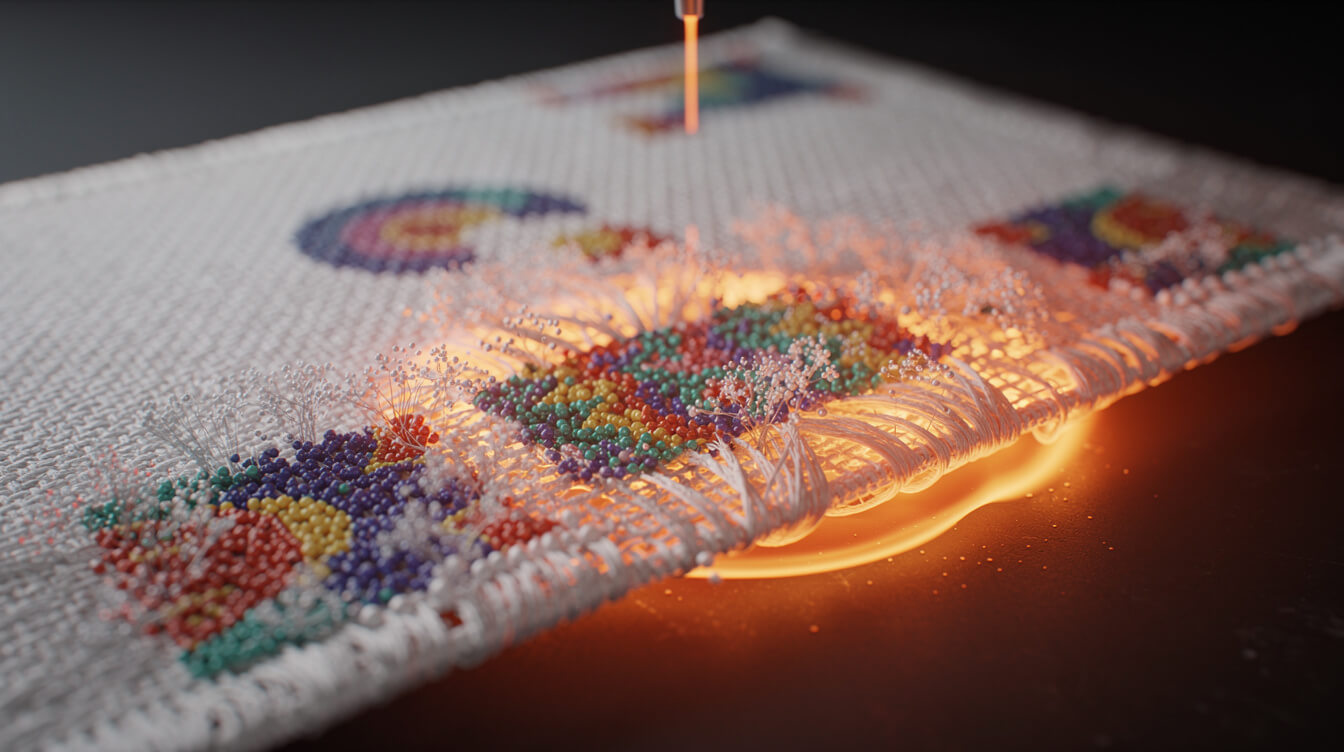
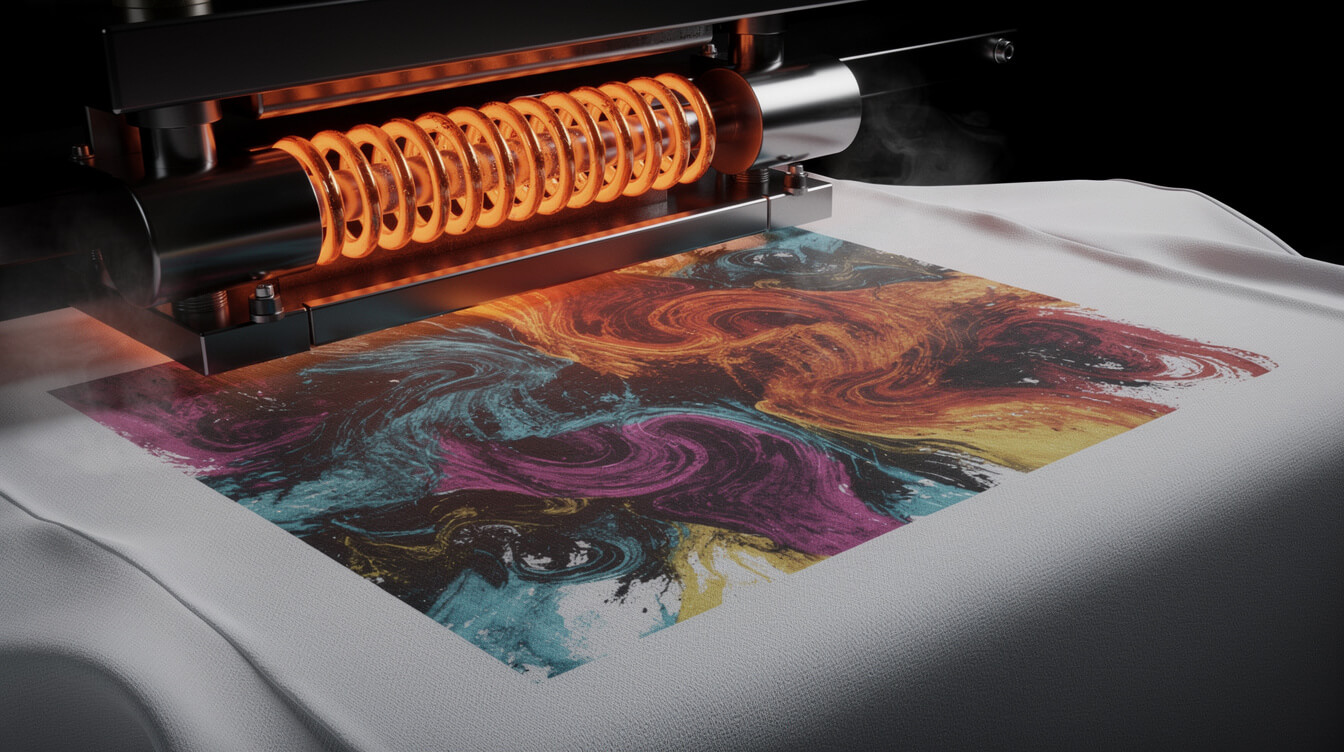
Dye sublimation converts solid dye into a gas under heat, typically between 375°F and 400°F, and that gas bonds permanently with polyester fibers at the molecular level. The result is a print that cannot crack, peel, or wash out because the dye has become part of the fiber itself.
The polyester requirement is not optional. Cotton fibers do not have the same molecular structure to accept sublimation dye. On a 100% cotton shirt, the dye has nowhere to go and you get a faded, blotchy result. This is why virtually every AOP sublimation product in the Printful and Printify catalogs specifies 100% polyester or a high-polyester blend, usually 92%+ polyester.
The trade-off is tactile. Polyester feels different from a premium cotton t-shirt. Buyers in athletic, performance, and festival niches expect it and often prefer it. Buyers in the lifestyle or streetwear segment may have stronger opinions. Knowing your customer decides whether sublimation is the right print method before you build the product.
One more consequence worth knowing: sublimation does not show well on dark fabrics. The dye is transparent, so it relies on the white or light-colored base to reflect its colors. A black polyester shirt will block the dye entirely and produce a dark, unreadable print. Every AOP sublimation product in the major POD catalogs uses a white or very light base for this reason.
Sublimation vs DTG: the cost and quality tradeoff every POD seller should understand
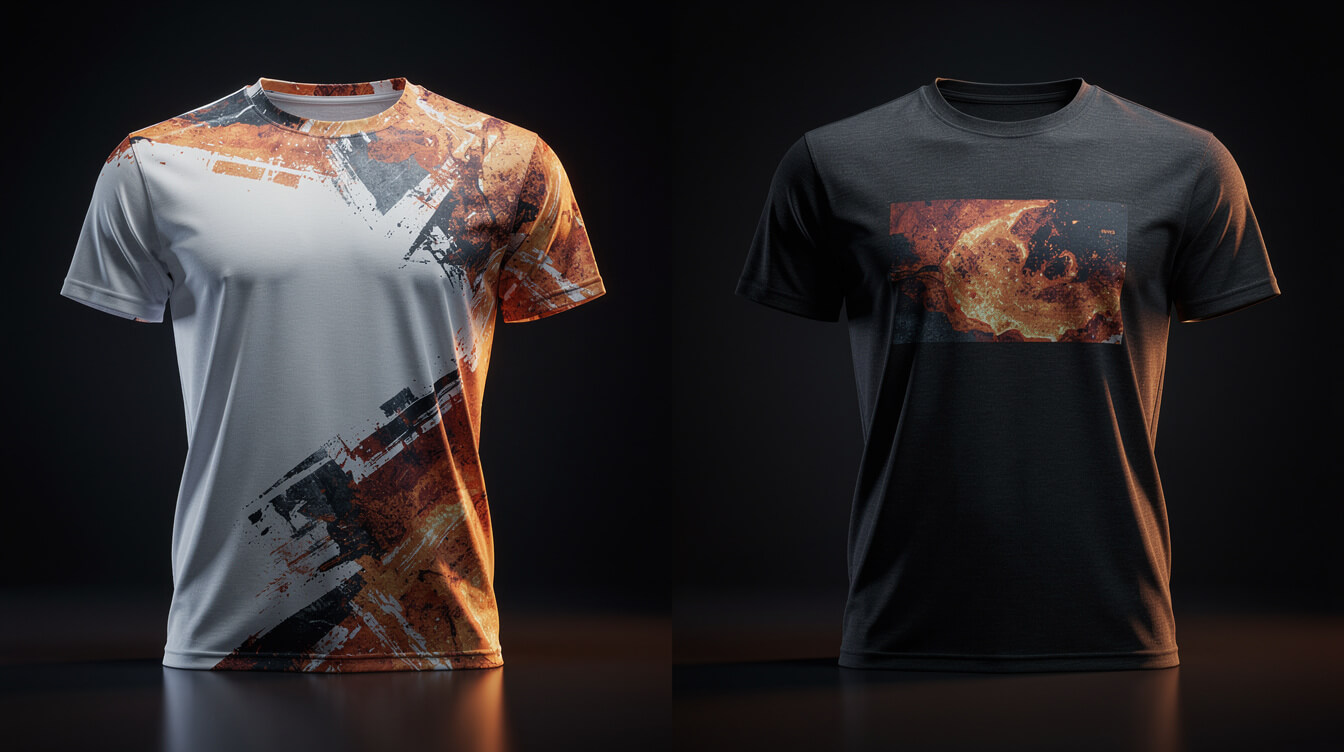
DTG (direct-to-garment) printing applies ink directly onto the surface of a garment using a modified inkjet printer. It works well on cotton, produces photorealistic detail on chest prints, and requires no minimum order. Sublimation does all of that and more on polyester, but the two methods serve different use cases.
Coverage. DTG typically covers a defined print area, usually the chest front, the back, or a sleeve. Sublimation covers the entire garment, every seam, every panel, every surface. All-over-print (AOP) products are only possible with sublimation.
Print quality on polyester. DTG ink sits on top of polyester fibers and tends to fade faster with washing. Sublimation dye fused into polyester is essentially permanent and colorfastness remains strong after 50+ washes in independent tests.
Color vibrancy. Sublimation produces exceptionally saturated, vivid colors on white polyester. DTG on cotton can match that vibrancy, but only with a pretreatment step and a white base layer on darker fabrics, which adds time and cost.
Fabric flexibility. DTG works on cotton and cotton blends. Sublimation requires polyester or polyester-dominant blends. Neither method is universally superior — they serve different product categories. As a general rule, if the product is full-coverage AOP on polyester, sublimation is the right method. If the product is a chest print on a premium cotton tee, DTG is the right method.
For POD sellers who want to compare print methods across product types, our guide to screen printing and embroidery covers how those options fit into the broader POD economics picture.
Which Printful and Printify products use sublimation (the AOP catalog)
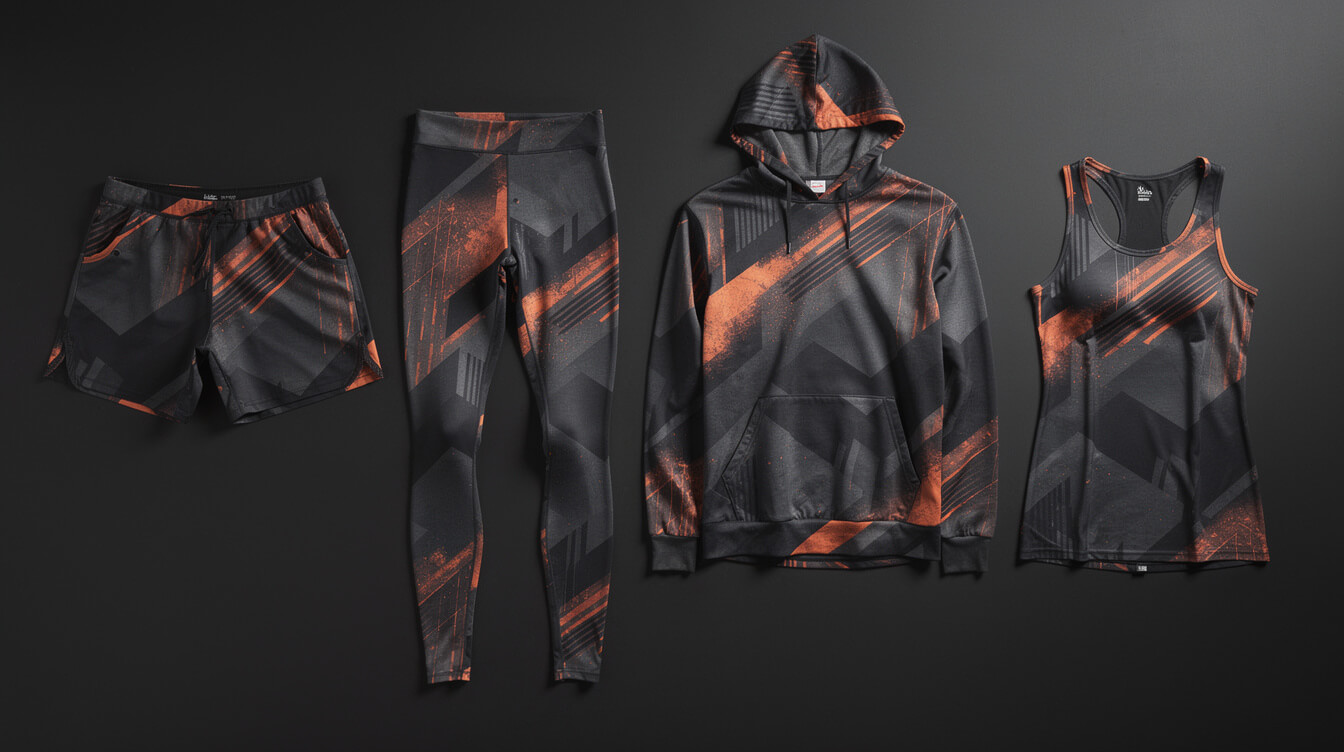
Both Printful and Printify offer AOP sublimation products, but the catalogs are not identical. Here is what is available as of mid-2026.
Printful AOP sublimation lineup:
- AOP Cut and Sew t-shirts (crew neck, v-neck)
- AOP leggings (full print, multiple lengths)
- AOP shorts and joggers
- AOP hoodies (pullover and zip-up)
- AOP long-sleeve shirts
- AOP sports bras and bikinis
- AOP neck gaiters and face coverings
- AOP backpacks and bags
Printify AOP sublimation lineup:
- AOP t-shirts (through multiple print partners, pricing varies by partner)
- AOP leggings and yoga pants
- AOP hoodies and sweatshirts
- AOP shorts and athletic wear
- AOP socks (sublimation on polyester knit)
- AOP swimwear (one-piece and two-piece)
- AOP accessories (fanny packs, phone cases)
Printify’s print partner network means that AOP pricing and production times vary depending on which partner fulfills the order. Printful has more consistent pricing but a smaller product range in some categories. Neither is universally cheaper — run the math for your specific product before committing to a provider.
One distinction worth noting: Printful’s AOP products use a cut-and-sew construction, meaning the fabric is printed flat and then cut and sewn into the garment. This allows full-bleed printing with no white panels at the seams. Printify’s AOP partners vary — some cut-and-sew, some use pre-cut panels. Check the product spec sheet for each partner before launching.
File setup for sublimation: why your design needs to cover 100% of the fabric

Smash print-on-demand. Join the engine room.
One short email a week. Real numbers, real teardowns, the unfiltered economics behind every move.
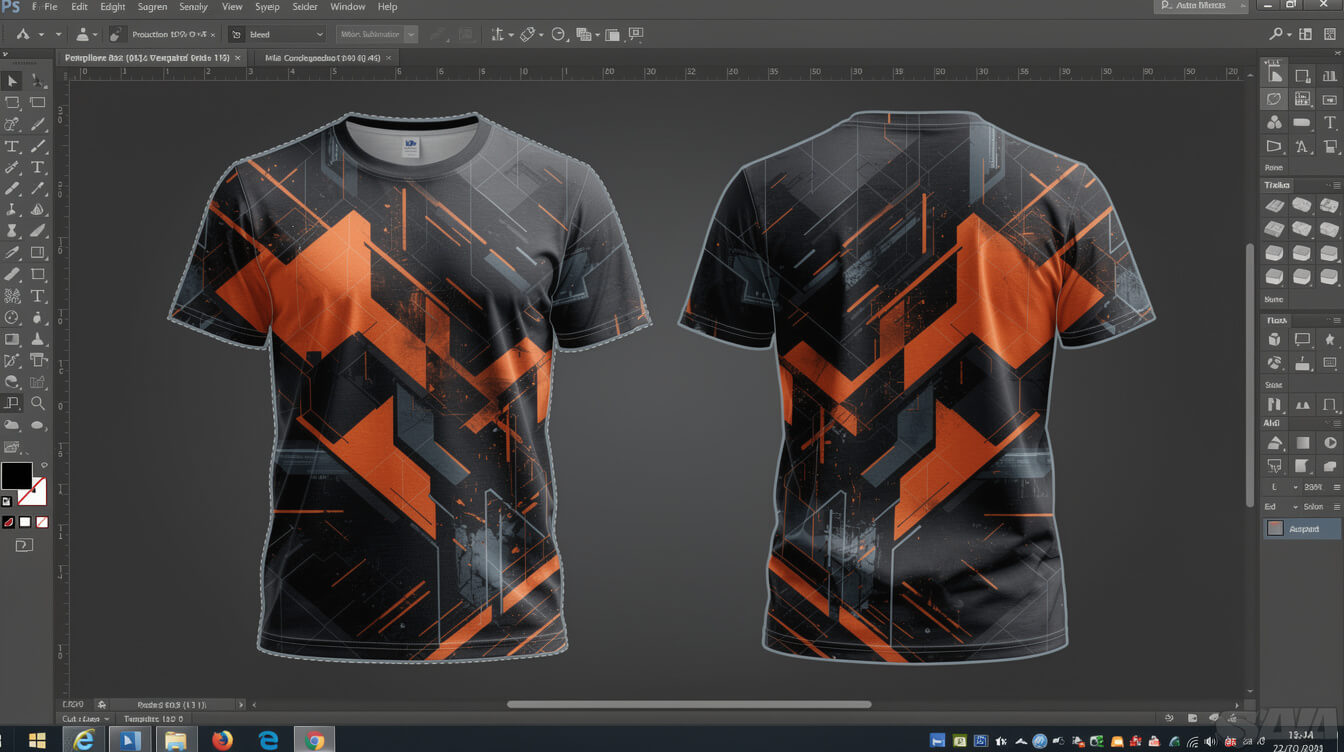
AOP sublimation design files are fundamentally different from a standard chest-print DTG file. With DTG, you design for a defined rectangle (the printable area on the chest or back). With AOP sublimation, your design must cover the entire flat pattern of the garment — front, back, sleeves, collar — and bleed past the cut lines on all edges.
Resolution requirements. AOP sublimation demands high-resolution files, typically 150–300 DPI at print size. The garment template for a standard AOP t-shirt is usually 36″ x 54″ at 150 DPI, which means a source file around 5,400 x 8,100 pixels. Design at low resolution and you get visible pixelation across the entire garment surface.
Color mode. Use RGB color mode for sublimation files, not CMYK. Sublimation printers are calibrated for RGB and CMYK conversion at print time loses color accuracy. What you see on screen in RGB is much closer to what comes out of a sublimation press than a CMYK conversion would be.
Seam placement. The garment template shows where seams fall. Important graphic elements — faces, focal points, text (if any) — should be positioned away from seam lines. The template is your map for this. Printful and Printify both provide downloadable templates for each AOP product in their mockup generators.
Bleed lines. Design at least 0.5″ (preferably 1″) past the cut lines on all edges. The fabric is cut after printing, so anything exactly at the edge risks getting trimmed. A full bleed ensures clean edge-to-edge coverage with no white borders showing at the seams.
For POD sellers building high volumes of AOP designs, MEGA automates the design-to-product step by generating on-brand AOP files sized and structured for sublimation — cutting the design prep time from hours to minutes.
Unit cost math: sublimation AOP vs DTG vs screen print at 1, 10, and 50 units
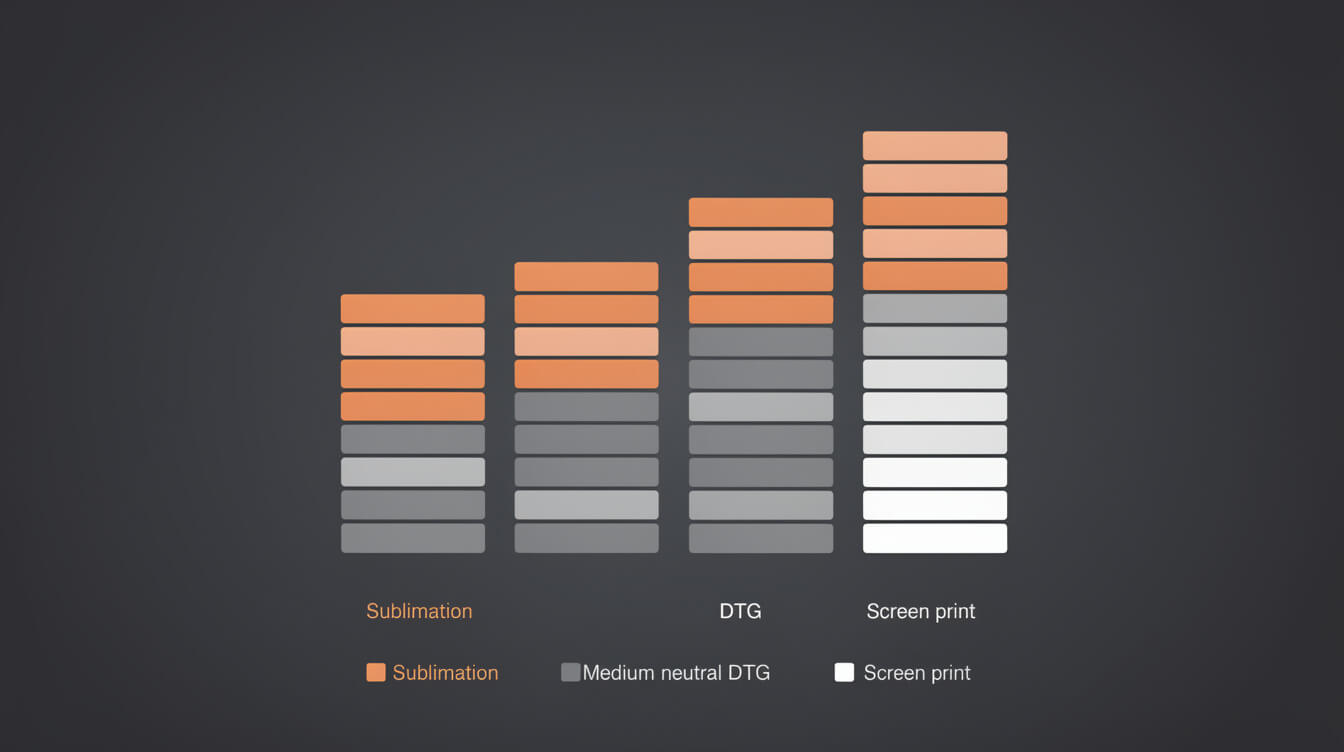
The economics of sublimation AOP look different from DTG or screen print because the product category is inherently higher-priced. Here is a representative cost breakdown using Printful pricing as a baseline (mid-2026 figures).
AOP sublimation t-shirt (Printful cut-and-sew):
- 1 unit: ~$29–$34 base cost (depending on style and size)
- 10 units: same per-unit cost — no bulk discount in POD
- 50 units: same per-unit cost — no volume break until you move to bulk wholesale
DTG chest-print t-shirt (Printful Gildan 64000 base):
- 1 unit: ~$14–$18 base cost (front and back print)
- 10 units: same per-unit cost
- 50 units: same per-unit cost
Screen print (specialist vendor, off-POD):
- 1 unit: not practical — setup fees of $50–$200+ per color make single units uneconomical
- 10 units: ~$12–$18/unit including setup (2-color design)
- 50 units: ~$7–$12/unit including setup (2-color design, breakeven territory)
The key insight: AOP sublimation has a higher base cost than DTG but commands a significantly higher retail price. A DTG chest-print tee retails at $28–$38 in most POD stores. An AOP sublimation tee retails at $45–$75 because the product is visually distinct and the market expects a premium.
That higher AOV (average order value) changes the Shopify fee math in a way that matters — which we cover in the next section.
For sellers exploring embroidered alternatives, our breakdown of custom polo shirt unit costs shows how embroidery economics compare at similar AOVs.
When sublimation wins for your POD store (niche verticals that buy AOP)
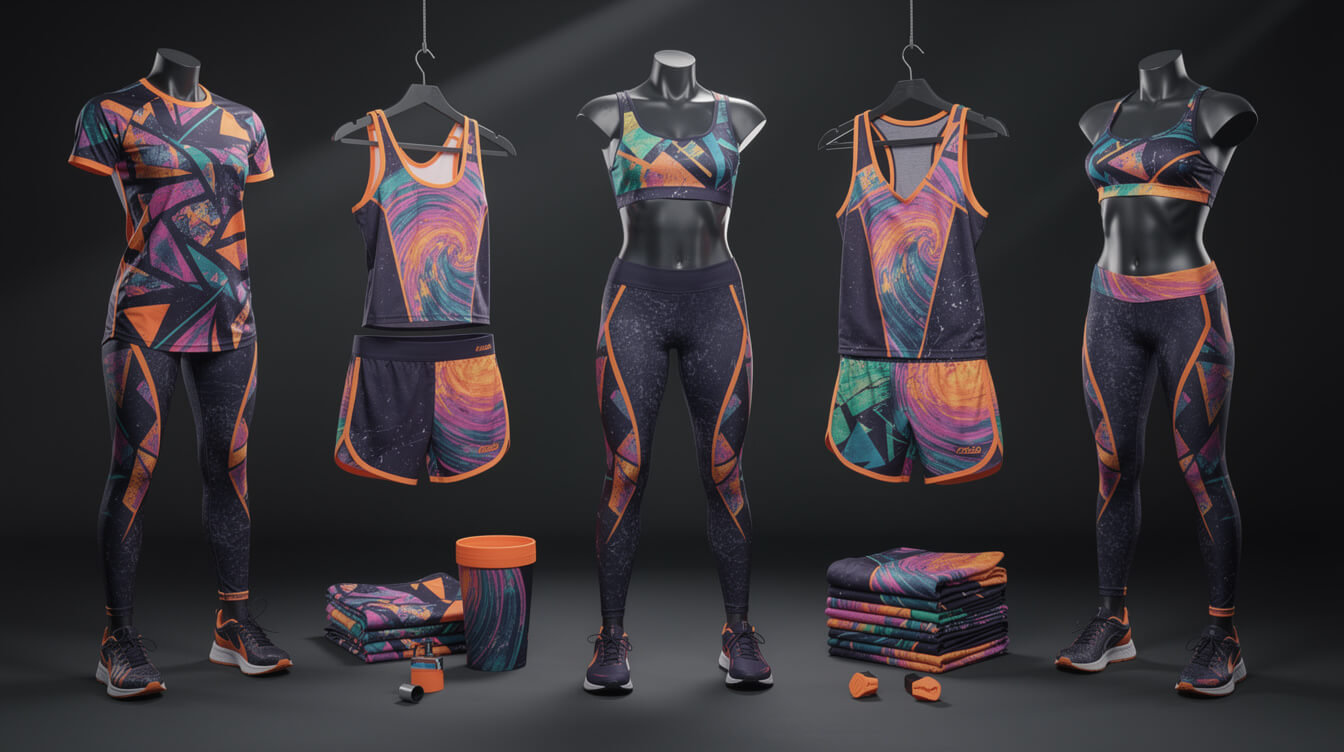
All-over-print sublimation is not the right method for every product or every niche. But for specific buyer segments, it is the only method that delivers what the customer actually wants. Here are the verticals where AOP sublimation consistently wins.
Athletic and performance wear. Gym-goers, runners, cyclists, and sports team buyers expect polyester athletic garments. Full-coverage sublimation designs — geometric patterns, gradient colorways, abstract prints — are the standard in this category. Margins are strong because buyers understand premium pricing for performance apparel.
Festival and rave wear. This is arguably the highest-value AOP niche for independent POD sellers. Festival buyers specifically seek out loud, full-coverage prints that DTG cannot produce. They pay $60–$100 for one-of-a-kind pieces. AOP sublimation is the only print method that satisfies this demand at a POD no-minimum model.
Yoga and activewear brands. AOP leggings with branded patterns are a staple of the DTC activewear space. The same sublimation method that big brands use for their leggings is available to a POD seller on Printful or Printify for zero upfront inventory cost. This is one of the few places where an independent POD seller has access to essentially the same production method as established activewear brands.
Pet and animal niche. “Dog mom” all-over-print shirts, breed-specific AOP leggings, pet portrait-inspired patterns — this audience buys them reliably and shares them widely on social. High repeat purchase rate. AOP makes the design feel premium rather than a basic chest graphic.
Pop culture and fandom. Anime, gaming, and niche fandoms are strong AOP buyers. The design style expected in these communities (intricate, full-coverage pattern work) is exactly what sublimation produces. Note the licensing risk: original art is fine, licensed IP is not, and the same rules apply here as with any POD fandom product.
Streetwear and limited drops. The “limited edition AOP drop” model — releasing one or two SKUs per week with unique full-coverage designs — fits AOP sublimation well. The design distinctiveness that AOP provides supports scarcity marketing and encourages faster purchasing decisions.
For sellers also exploring outerwear categories, our analysis of custom jacket options for POD stores covers when AOP outerwear makes sense versus panel-print alternatives.
The Shopify 1% tax on full-sublimation products and why WooCommerce changes the math

Shopify charges a 1% platform override on third-party POD fulfillment orders on most plans (Basic and Shopify tiers). On a standard DTG chest-print tee at $32 retail, that 1% is $0.32 per order — small enough that many sellers ignore it. On an AOP sublimation hoodie at $75 retail, that same 1% is $0.75 per order. It still sounds small, but scaled to 200 orders per month, it is $150 in platform tax that goes nowhere except Shopify’s revenue line.
At 500 AOP orders per month, that is $375/month — over $4,500/year — in platform fees added on top of the Printful or Printify fulfillment cost. And this assumes a flat $75 AOV. Festival and performance sellers with $100+ AOP items pay proportionally more.
WooCommerce charges no transaction override fee at all. The platform fee on a WooCommerce store connected to Printful or Printify is zero. The same 500-order AOP seller on WooCommerce keeps that $375/month. Over a year, that covers meaningful additional ad spend, inventory testing, or product expansion.
The hosting cost of WooCommerce — typically $20–$50/month for a properly configured managed WordPress host — is a fixed cost that does not scale with your order volume. As your AOP business grows, the WooCommerce cost stays flat while the Shopify fee grows proportionally with every order you add.
This is not a knock on Shopify’s UI or its broader ecosystem. For sellers who need quick store setup and are comfortable with the transaction cost, Shopify works. But for AOP-heavy POD stores where the average order value is $50–$100 and volume is growing, the math compounds in WooCommerce’s favor faster than most sellers expect.
For sellers interested in running the specific numbers for their store setup, our guide to custom zip up hoodie unit economics shows how platform fee math plays out on a high-AOV apparel product in practice.
Generate AOP designs ready for sublimation in under 7 minutes
MEGA produces full-coverage AOP design files sized and structured for sublimation printing — no manual Canva sessions, no template hunting. Research to product-ready file in one pipeline run.
Frequently asked questions about sublimation printing t shirts
Can you do sublimation printing on a black t-shirt?
No. Sublimation dye is transparent, so the base fabric color shows through the print. Black and dark-colored garments produce unreadable results. All sublimation AOP products require a white or very light base fabric.
Is sublimation printing washfast?
Yes. Because the dye bonds molecularly with the polyester fiber rather than sitting on top, sublimation prints retain color through 50+ wash cycles without significant fading. This is one area where sublimation outperforms DTG on polyester.
Do I need a minimum order for AOP sublimation through Printful or Printify?
No. Both providers fulfill single-unit AOP orders with no minimum. This is the core advantage of POD sublimation over a traditional cut-and-sew sublimation vendor, which would typically require 25–50 units minimum.
What is the lead time for AOP sublimation orders?
Printful typically quotes 2–7 business days for AOP cut-and-sew production, followed by shipping. Printify lead times vary by print partner but are generally 3–7 business days for production. During peak seasons (October through December), add buffer time.
Can I use a design I made in Canva for AOP sublimation?
Technically yes, but Canva designs are typically low resolution and designed for screen display, not large-format garment printing. An AOP template at 150 DPI is 5,400 x 8,100 pixels. A Canva export at standard resolution will show pixelation when scaled to that size. Use a vector-compatible tool or generate designs at the correct native resolution from the start.
Conclusion: sublimation printing t shirts is a POD category, not just a print method
Sublimation printing t shirts is the entry point to a distinct product category — all-over-print, performance fabric, full-coverage design — that cannot be replicated by DTG, screen print, or embroidery. The buyers in athletic wear, festival fashion, activewear, and pet niches are looking for exactly what sublimation produces. Understanding the polyester requirement, the file setup, the unit economics, and the platform fee implications gives you a complete picture of whether AOP sublimation fits your current POD stack or where it fits as you expand.
The no-minimum POD model on Printful and Printify means you can test AOP sublimation products with zero inventory risk. One SKU, one order, real data on whether the niche converts. That is the practical starting point for most sellers — not a full AOP catalog, just one product launched at the right retail price with the right design for the right buyer.
Implement AI. 30x your throughput. Get a 30-min call with the founder.
Drop your details and book a free 30-minute discovery call. Personalized advice on your POD stack, your margin, and where AI fits. No pitch, no fluff.