Custom temporary tattoos for POD sellers: which providers support them, the print method explained, and the unit cost math
Custom temporary tattoos sit in an odd blind spot for print-on-demand sellers. The keyword gets 22,200 searches a month. The difficulty score is 23 — manageable for a newer domain. And yet almost every result in the SERP is a consumer product page, not a resource for POD sellers trying to understand whether this product category is worth adding to their store. This post answers the questions those sellers actually have: which providers carry custom temporary tattoos, how the print method works, what the unit cost math looks like, and which niches drive repeat orders.
If you have been building your POD store on Printful or Printify, the first thing you need to know is that custom temporary tattoos are not in the standard catalog for either platform. That changes the sourcing conversation entirely — but it does not mean you cannot sell them profitably. It means you need a different supply chain than the one you are already using for t-shirts and mugs.
Do Printful or Printify carry custom temporary tattoos?
The honest answer is no — and understanding why helps you source correctly. Printful’s catalog is built around direct-to-garment printing, all-over-print sublimation, and embroidery. Those are the three production methods Printful has invested in at scale. Temporary tattoos require a completely different process: CMYK inkjet printing onto food-grade transfer paper, followed by a protective coating application. Printful does not have that equipment in its fulfillment centers.
Printify operates as an aggregator of production partners rather than running its own facilities. That gives it more catalog flexibility. As of mid-2026, Printify’s partner network does include select vendors who offer temporary tattoo production, but availability varies by region and is not consistent across all Printify plans. You will need to check the product creator directly for current availability in your target fulfillment location.
The broader point: custom temporary tattoos belong to a category of POD-adjacent products that includes lanyards, car magnets, silicone wristbands, and enamel pins. These products exist in the same “promotional items” supply chain, not the apparel supply chain. Sourcing them requires either finding a white-label dropship partner who ships individual retail orders, or working directly with a manufacturer at minimum order quantities. Both paths are viable. This post maps both of them.
How temporary tattoos are actually printed
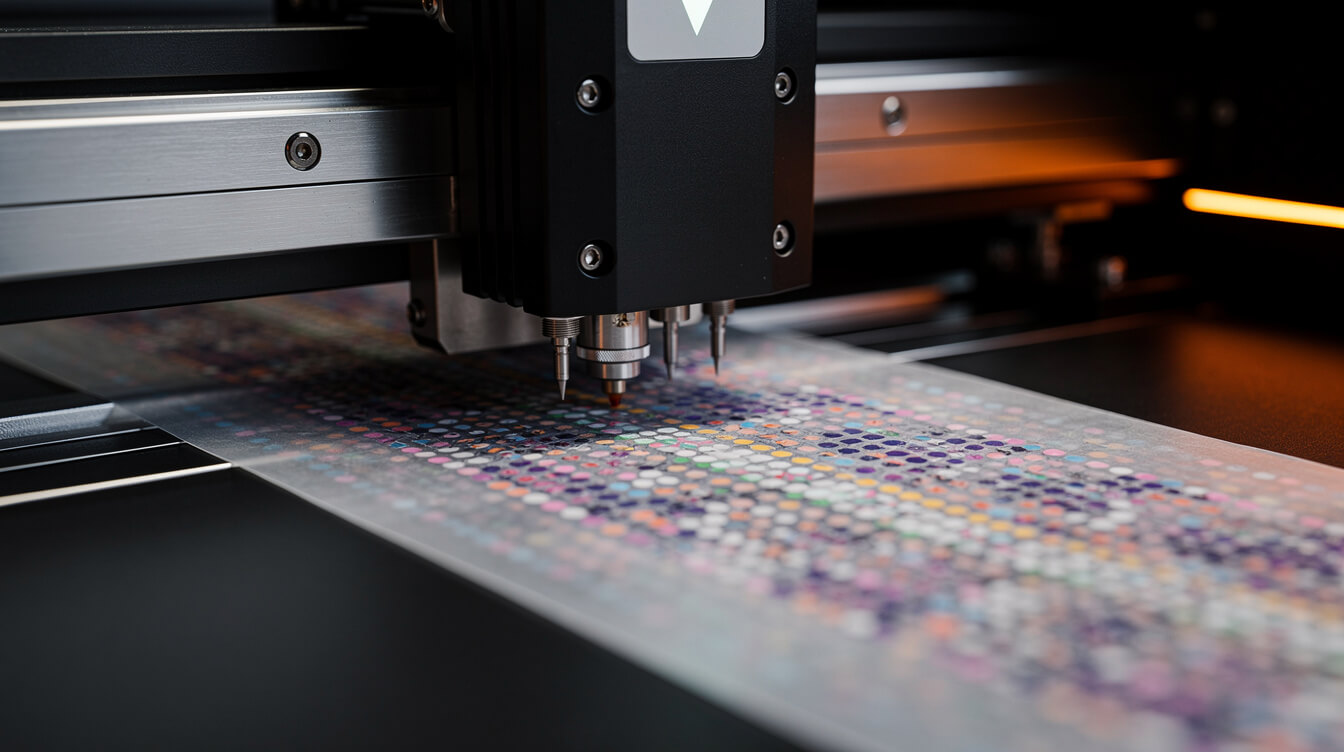
The print method for temporary tattoos is CMYK inkjet onto transfer paper, not DTG, not sublimation, and not screen print. This distinction matters because it determines which suppliers can make them and what your design requirements are.
In DTG printing, water-based ink is deposited directly onto fabric fibers. In sublimation, dye is heat-transferred into polyester at a molecular level. Neither of those methods applies to temporary tattoos. Instead, a tattoo is printed on a paper backing using standard CMYK inkjet — the same technology as a desktop inkjet printer, scaled up for production. A protective lacquer layer is applied over the ink. The result is a water-slide decal: the user wets the backing paper, presses the design onto skin, slides the paper off, and the design adheres temporarily through the lacquer.
What this means for your designs: CMYK inkjet handles full-color artwork, gradients, and photographic detail well. Vector artwork converts cleanly. Photo-realistic designs work. The main limitation is that the process produces a visible rectangular border around the design unless the design is die-cut to shape, which some vendors offer as an upgrade. Minimum resolution is typically 300 DPI at print size. Unlike sublimation, you are not constrained to polyester substrates or light base colors. The design prints on white transfer paper, so both dark and light design elements reproduce accurately.
For POD sellers coming from an apparel background, the most important takeaway is this: your Printful-ready design files (300 DPI PNG, transparent background) will work for temporary tattoos without modification. The supply chain changes, but the design workflow does not.
White-label reseller options for custom temporary tattoo sellers
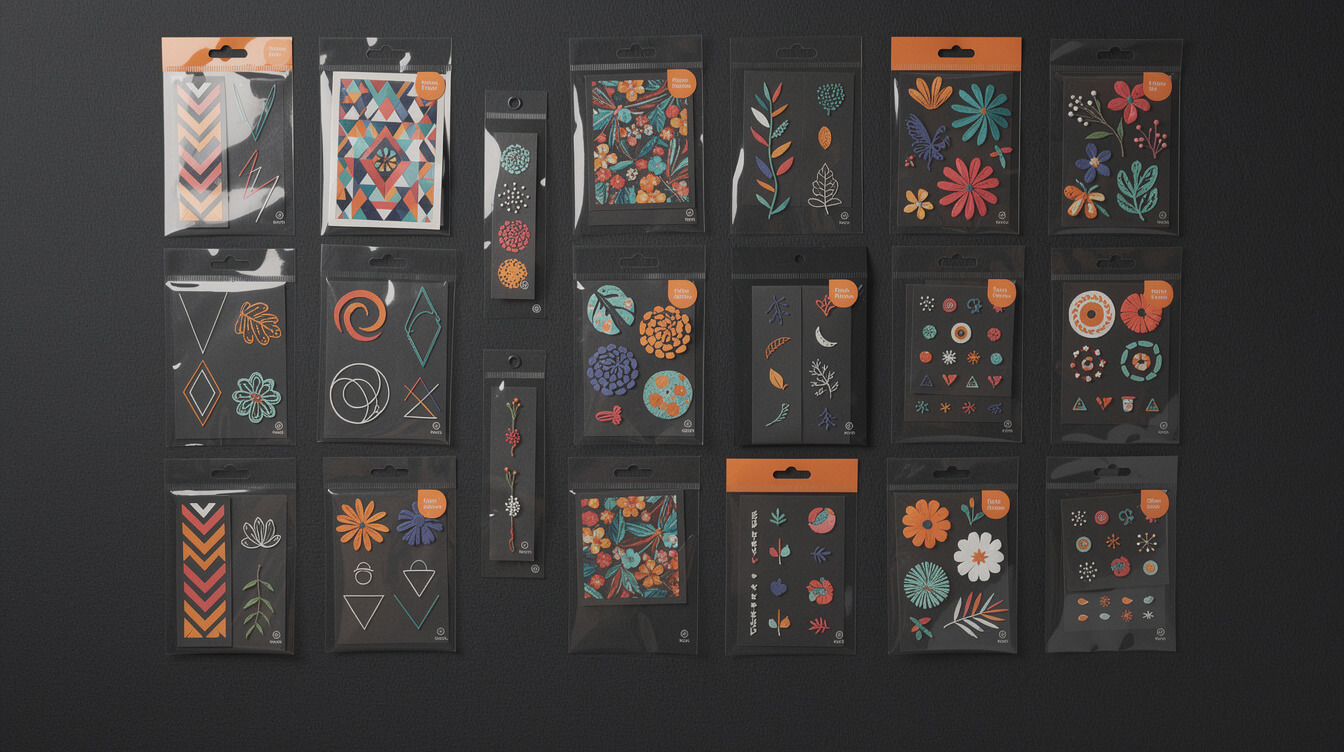
Several vendors operate reseller-friendly programs that let you sell custom temporary tattoos at retail without holding inventory. Here are the four with the most established no-minimum or low-minimum programs.
StickerYou is the most feature-complete option for POD-style single-order fulfillment. They offer a white-label dropship program specifically designed for e-commerce sellers. Orders ship to your customer with your branding. Minimum order is one sheet. They print on both standard rectangular sheets and custom die-cut shapes. Their pricing for dropship orders runs roughly $3.50-5.00 per A4 sheet depending on quantity. Their production turnaround is typically 3-5 business days plus shipping.
StickerMule offers custom temporary tattoos in their standard product catalog. Unlike StickerYou, StickerMule is not set up for dropship: orders ship to you, not directly to your customer. That means you either stock the product and ship from your own location, or you use a different fulfillment approach. StickerMule’s pricing is excellent at volume — around $1.85 per sheet at 25 units — making them a strong option for sellers who know their demand volume in advance, such as event-specific drops.
Inkbox operates in a different product category: semi-permanent tattoos using plant-based ink that last 1-2 weeks. This is a distinct product from standard 1-3 day temporary tattoos. Inkbox has a creator program for custom designs, but their manufacturing process and product positioning differ from a standard transfer-paper temporary tattoo. For event merch (bachelorette packs, birthday party favors), standard temporary tattoos typically convert better.
24hourwristbands carries custom temporary tattoos alongside their wristband products. They offer both rectangular sheet formats and die-cut custom shapes. White-label dropship is available for registered resellers. Their pricing is competitive with StickerYou at $2-4 per sheet for low quantities. Their minimum order is 25 sheets for most configurations, which makes them better suited to sellers who can forecast event volume than to true no-minimum operations.
The practical recommendation: StickerYou for true no-minimum retail dropship, StickerMule or 24hourwristbands for event-volume runs where you can forecast quantity in advance.
Unit cost math: bulk vs white-label vs branded retail

Smash print-on-demand. Join the engine room.
One short email a week. Real numbers, real teardowns, the unfiltered economics behind every move.

The unit economics for temporary tattoos span a wide range depending on your sourcing model. Understanding all three tiers helps you decide which approach fits your store’s volume and margin requirements.
Bulk manufacturing direct ($0.15-0.50/sheet at 500+ units): Manufacturers in verified wholesale networks produce temporary tattoos at $0.15-0.50 per sheet at 500-unit minimums, with setup fees of $20-50 for artwork processing. This is the price tier B2B promo vendors quote. At $0.23 per sheet and a $15 retail price for a 5-sheet pack, the gross margin is very high. The constraint is the 500-unit minimum: you need to know your designs will sell before committing. This model works for established stores with proven demand and event sellers who have a confirmed order volume.
White-label dropship ($1.50-5.00/sheet at 1-25 units): StickerYou and similar vendors charge $3.50-5.00 per A4 sheet at 1-unit quantity. A pack of 3 sheets (a typical retail bundle) costs you $10.50-15.00 to produce. At a retail price of $18-22 for a 3-sheet pack, gross margin runs 18-32%. That is thinner than apparel margins but comparable to other low-AOV novelty accessories. The advantage is no inventory risk and true no-minimum operation. This is the right entry model for testing the category.
Branded retail pricing benchmark ($15-28 retail): B2C brands targeting the event and fan merch market sell individual sheet packs at $12-22. Multi-sheet packs (3-6 designs) retail at $18-25. Event-specific bachelorette party packs with 8-12 sheets sell at $28-35. These price points represent what the market currently pays. The gap between white-label dropship production cost and market retail price is your gross margin opportunity.
MEGA’s automation pipeline handles artwork generation at scale. If you are running a seasonal temporary tattoo drop with 10-20 design variants across multiple niches, generating that artwork manually takes hours. MEGA automates the design generation step, producing print-ready files from a concept description, without the Canva workflow overhead. For sellers who want to test volume across niche clusters quickly, that throughput difference is significant.
Who buys custom temporary tattoos: top niche profiles

The demand for custom temporary tattoos has shifted dramatically since the early 2020s. What was briefly a public-health product has become a fan merch, event, and lifestyle product. Five distinct buyer profiles drive the bulk of current demand, each with different purchase triggers and repeat-order behavior.
Bachelorette party buyers: This is the highest-converting niche for temporary tattoos in 2026. Groups attending bachelorette events want matching accessories, and temporary tattoos check every box: inexpensive per-person, visually memorable in photos, no commitment required. A pack with 10-15 matching designs sells at $22-35 and converts at a higher rate than most novelty products. The buyer is typically the maid of honor, purchasing 2-4 weeks before the event. Wedding season (April-September) drives peak demand, but bachelorette parties happen year-round.
Kids’ birthday party buyers: Parents planning birthday parties for children aged 4-12 are a strong repeat-purchase segment. Themed packs (dinosaurs, unicorns, superheroes) for a 15-child party sell at $18-25. Parents who find a reliable source return for every birthday party in their circle. This is a repeat-buyer niche with low price sensitivity — a $22 party favor pack for 12 kids is a solved problem, not a comparison-shopped purchase.
Fan merch buyers: Independent music artists, sports fan communities, and content creator audiences buy temporary tattoos as low-cost merch that delivers high perceived value. A temporary tattoo of an artist’s logo or a team mascot design sells for the same price as a sticker but photographs better. For artists doing small-run merchandise drops, temporary tattoos at $1.50-3.00 white-label cost and $12-18 retail represent a strong margin-to-brand-visibility ratio.
Brand activation buyers: Corporate marketing teams, startup launch events, and local businesses running promotional campaigns buy custom temporary tattoos as giveaway items. A local gym might order branded tattoos for a grand opening. A startup might give away logo tattoos at a conference. These buyers typically need 100-500 units for a specific event and are best served by StickerMule or 24hourwristbands at volume pricing.
Cosplay and convention buyers: The cosplay community uses temporary tattoos for character-accurate body markings: scar designs, insignias, and decorative elements that are impractical to draw on skin at a convention. Buyer profile: detail-oriented, willing to pay $15-28 for high-accuracy designs, and active in communities where product recommendations spread quickly. Anime, gaming, and fantasy fandoms all have active cosplay subcultures with this demand pattern.
Generate temporary tattoo artwork in under 7 minutes
MEGA’s AI pipeline generates print-ready designs at scale. Describe your niche concept and get production files without the Canva workflow. Built for POD sellers, not designers.
Shopify 1% fee math at $15-25 AOV: what it actually costs

Low-AOV products like temporary tattoos expose Shopify’s 1% transaction fee override in a way that high-AOV products obscure. On a $55 hoodie, that 1% fee is $0.55. On a $20 temporary tattoo pack with a $7.50 gross profit, the same 1% fee is $0.20, which is 2.7% of your gross margin, not 1% of revenue. The percentage sounds small until you run the monthly math.
At 100 orders per month at $20 AOV, Shopify’s 1% override takes $20 per month. Add the Shopify Advanced plan at $399 per month and standard payment processing, and the monthly platform cost for a store focused on temporary tattoos and similar low-AOV items runs $420-450 before app fees. WooCommerce hosting and plugin costs run $20-30 per month for an equivalent store setup.
At 300 orders per month, a realistic volume for a seasonal event-merch store during peak bachelorette and party season, the Shopify 1% override alone costs $60 per month on temporary tattoos. Combined with the plan fee differential, the monthly gap between Shopify and WooCommerce on a store of this type runs $200-250 per month, or $2,400-3,000 per year.
That is not an abstraction. At a $7.50 gross profit per order, $2,400 in annual platform fee savings is equivalent to 320 additional orders — a 33% increase in effective volume with zero marketing spend. For a store building in a thin-margin category, fee elimination is one of the highest-ROI moves available.
The full comparison is worth reading if you are deciding where to build your POD store. The WooCommerce vs Shopify breakdown for POD sellers covers hosting, plugin costs, and fee math across multiple product categories. For low-AOV products like temporary tattoos, sticker sheets, and keychains, the case for WooCommerce is clearest.
Inventory vs dropship: when stocking makes sense for event sellers

Most POD sellers default to dropship because it eliminates inventory risk. For temporary tattoos, that default is correct when testing the category or serving a broad audience of unknown size. But there is a point — a specific order volume and niche combination — where stocking makes more sense.
Start with dropship: If you are adding temporary tattoos to a store that currently sells apparel or accessories, you have no way to forecast demand in this new category. Dropship lets you test multiple designs at retail price without committing to minimum quantities. StickerYou at $4-5 per sheet gives you a live test with real customers. After 30-60 days, you have data on which designs sell and at what velocity. You use that data to decide whether a volume run makes sense.
Move to stocking at consistent volume: Event-focused sellers with a confirmed audience — a music artist with an engaged fan base, a bachelorette party planning service with recurring clients, or a cosplay store with a repeat buyer base — can forecast demand with more confidence. At 50+ sheets per design per month, StickerMule at $1.85 per sheet for 25-unit runs saves $100-130 per month versus StickerYou dropship pricing. At 100 sheets per design, the savings justify a small storage commitment. The rule of thumb: if you are consistently moving 50+ units of a single design per month, explore direct-manufacturing sourcing.
The hybrid model: Successful sellers in this category often run dropship for new designs in testing and stock proven bestsellers. WooCommerce handles this cleanly — you can link the same product to dropship fulfillment during the test phase and switch to in-house fulfillment once a design proves out, without changing the product listing or URL. This is the same sourcing logic that applies to custom patches with no minimum and custom sticker sheets: POD-adjacent products where the white-label dropship path requires knowing the right vendor set.
The case for adding custom temporary tattoos to your POD store
Custom temporary tattoos are not a replacement for your core apparel or accessory line. They are an add-on that works best when adjacent to what you already sell. A bachelorette-themed POD store that sells custom sashes and buttons has a natural audience for temporary tattoos. A cosplay-adjacent store that sells custom patches and accessories has buyers who understand the product. A kids’ party supplies store that sells custom paper goods has parents who already know the purchase decision.
The sourcing path is clear once you know it: StickerYou or 24hourwristbands for white-label dropship, StickerMule or direct manufacturing for volume runs. The design format is 300 DPI PNG, identical to your existing apparel artwork. Retail price range is $15-28 for multi-sheet packs. Primary niches are bachelorette parties, kids’ birthdays, fan merch, and cosplay.
The fee math makes a clear case for WooCommerce if you are building in this product category at any meaningful volume. The difference between Shopify’s platform overhead and WooCommerce’s near-zero fixed cost compounds monthly. At low AOV, that compounding is proportionally more damaging than it is for high-ticket categories.
The market gap is real. Tens of thousands of monthly searchers are asking which providers support custom temporary tattoos, and the existing SERP sends them to consumer shopping pages. An authoritative editorial resource in that gap has room to rank and convert. The product category is profitable enough to justify building around it — particularly in the bachelorette, fan merch, and cosplay niches where repeat purchasing behavior is strong.
Implement AI. 30x your throughput. Get a 30-min call with the founder.
Drop your details and book a free 30-minute discovery call. Personalized advice on your POD stack, your margin, and where AI fits. No pitch, no fluff.