Custom enamel pins for POD stores: which providers support them, sourcing alternatives, and the unit cost math at $10-15 retail
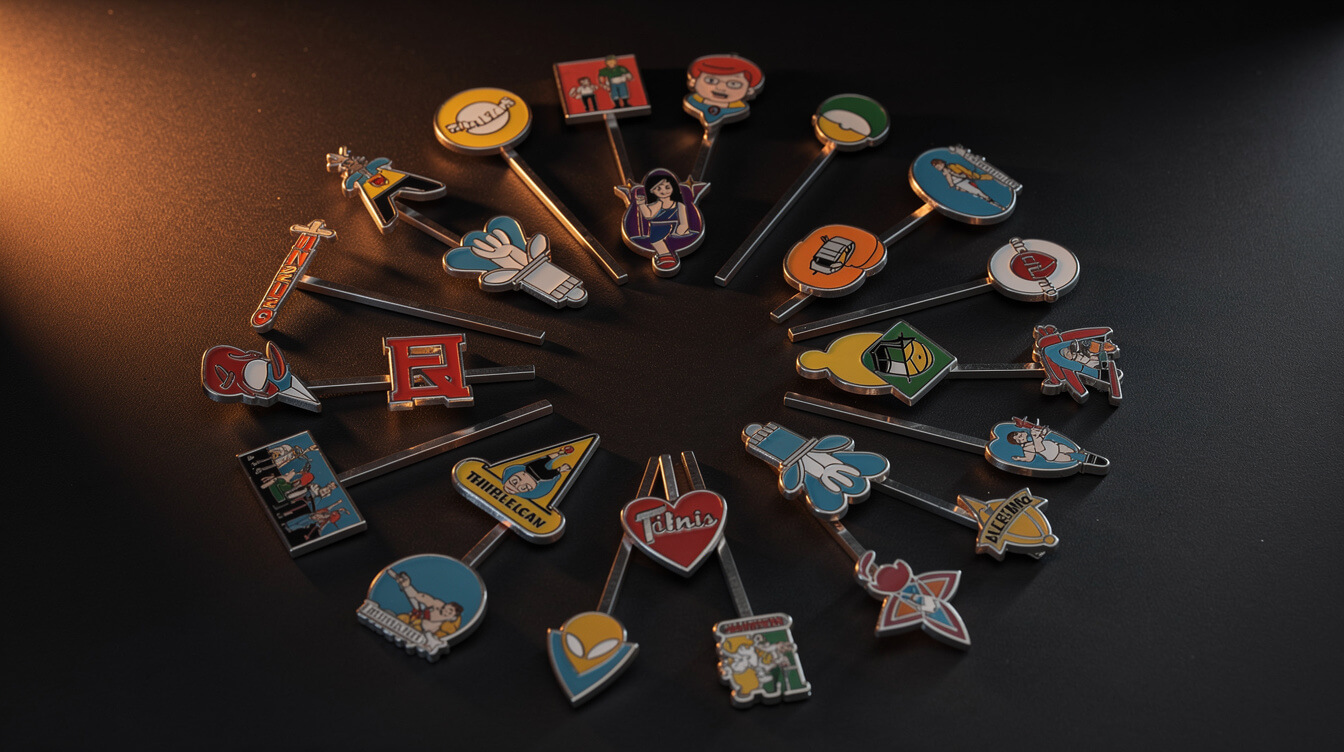
If you sell print-on-demand merchandise and your customers keep asking for custom enamel pins, you already know the problem: the two biggest POD platforms do not carry them. Printful’s catalog goes deep on apparel, wall art, and accessories. Printify’s vendor network covers a wide range of products. Neither one has a clue-what-to-do answer when a customer asks for a custom enamel pin with their band logo, their anime fan art, or their club badge.
This guide is the honest breakdown for POD sellers. Custom enamel pins sit at a frustrating intersection between traditional manufacturing and modern dropshipping, and the search results are full of factory-direct B2B vendors that tell you nothing about running a real online store. Here you will find out exactly why the major platforms skip enamel pins, what your three actual sourcing paths are, what the unit cost math looks like at real order volumes, and when the economics make sense on WooCommerce versus Shopify.
Why Printful and Printify don’t carry traditional enamel pins (and what that means for your store)
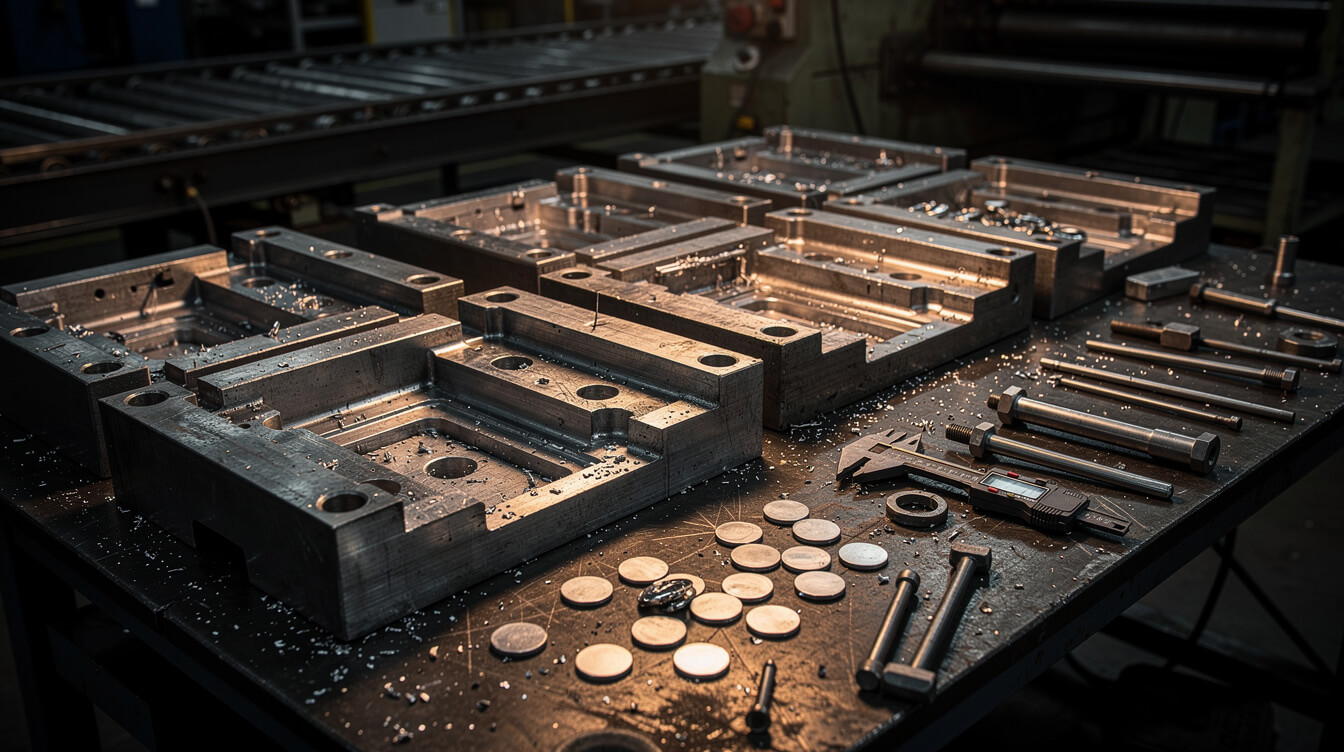
Traditional enamel pins require a manufacturing process that POD platforms are not built for. The production chain looks like this: a steel or zinc alloy die is cut from your artwork, then metal is poured or stamped into that die to create a blank, then liquid enamel is filled into each recessed area by hand or machine, then the pin is fired in a kiln at high temperature to cure the enamel, then it is polished, plated (in gold, silver, nickel, or black metal), and quality checked.
That process requires tooling costs. Every new design needs a custom die, which runs anywhere from $50 to $200 depending on the manufacturer and complexity. It also requires batch production: the die-cutting and filling process only makes economic sense at 50 units or more. You cannot run a single unit through an enamel pin factory the way you run a single t-shirt through a DTG printer.
Printful and Printify operate on a zero-tooling, no-minimum, single-unit-viable model. That is their entire value proposition. Enamel pin manufacturing breaks every one of those rules. The die cost alone makes single-unit fulfillment impossible, and the kiln-firing step requires batch scheduling that does not fit into an on-demand fulfillment workflow.
This is not a gap that either platform is ignoring. It is a structural incompatibility between the manufacturing method and the POD model. Printify’s network of vendors does include some soft enamel badge and brooch options through select suppliers, but those listings are inconsistent, minimum-order requirements vary, and the product quality is not the same as what dedicated enamel pin manufacturers produce.
What this means for your store: if a customer wants a true hard enamel or soft enamel pin, you are not going to fulfill that order through Printful or Printify’s standard on-demand flow. You have three paths forward, and each comes with different economics and operational demands.
Your three options as a POD seller: acrylic pins, button pins, or manufacturer-direct
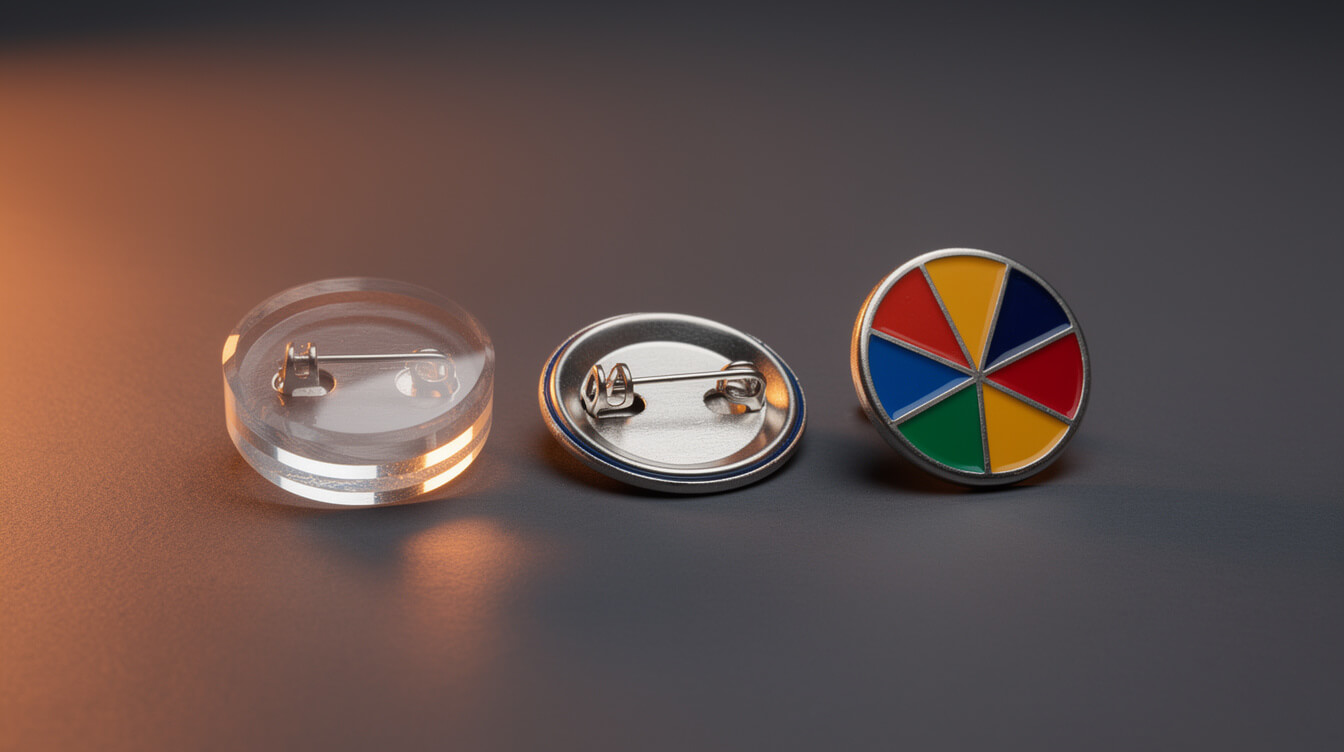
Once you accept that traditional enamel pins do not fit the standard POD pipeline, you can make a clearer decision about which direction works for your store. The three viable paths are acrylic pins, button pins, and manufacturer-direct inventory.
Option 1: Acrylic pins via POD vendors
Acrylic pins (also called clear acrylic charms or acrylic badge pins) are printed on transparent or white acrylic sheet using UV inkjet technology, then cut to shape. The process is entirely digital: upload a PNG with a transparent background, the vendor cuts to your shape, and the result is a sharp, colorful pin with a butterfly clasp or safety pin backing.
Printify’s vendor network includes some acrylic pin and acrylic charm suppliers. The key advantage is that acrylic pins are genuinely on-demand: no die, no tooling cost, single-unit viable. The tradeoff is that acrylic does not have the premium feel of metal enamel. For fandom, indie art, and character-driven designs that prioritize color vibrancy over prestige material, acrylic pins work well and keep the no-MOQ model intact.
Option 2: Button pins (pinback buttons)
Button pins are the classic circular badges with a steel back and a pinback clasp. Printful does carry pinback buttons in standard sizes. The print method is inkjet on paper with a mylar overlay, then locked into a steel shell. Production is on-demand, there is no tooling, and single-unit fulfillment is possible.
The limitation is the aesthetic ceiling. Buttons look like buttons. They are appropriate for political campaigns, community organizations, and novelty items, but they do not satisfy the collector market or the fan merch buyer who wants something they can display on a jacket lapel or a pin board with pride. If your audience wants hard enamel quality, button pins will not convert.
Option 3: Manufacturer-direct with held inventory
The third path is to work directly with a manufacturer like GS-JJ, WizardPins, or EnamelPins.com, place a bulk order (typically 50-200 units minimum), hold physical inventory, and fulfill orders yourself or through a third-party logistics provider. This is the path that gives you actual hard enamel and soft enamel pins at standard market quality.
It breaks the zero-inventory model that most POD sellers are optimizing for, but it unlocks the product category entirely. The economics of held inventory change significantly at volume, and for sellers with proven demand in a specific niche, it is often the right call. Much the way custom patches sellers sometimes graduate from no-minimum dropship to small-batch inventory once a design takes off, the same progression applies to pins.
The unit cost reality: GS-JJ, WizardPins, and EnamelPins.com compared at 1, 50, and 200 units
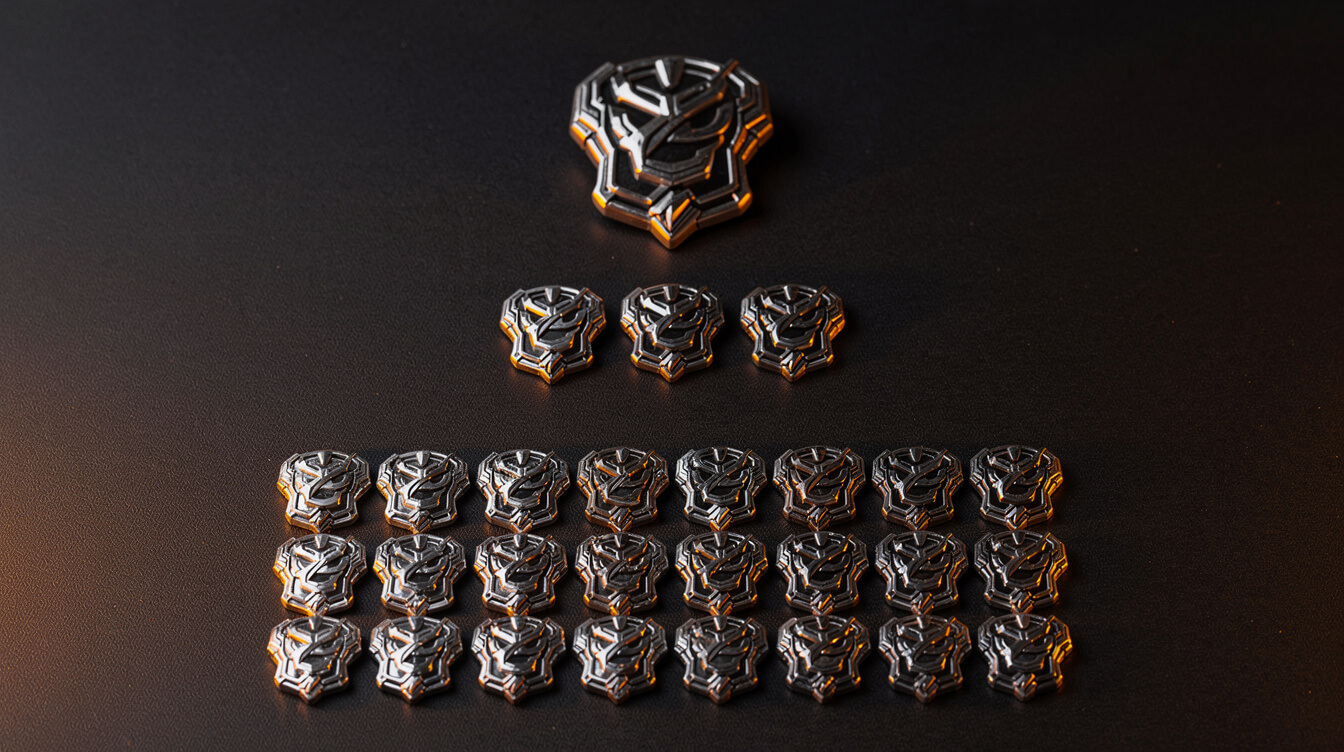
The unit economics of enamel pins are more nuanced than most POD product categories because the die tooling cost is amortized over the batch size. Here is how the math actually looks across three major manufacturers.
GS-JJ (China-based, fast turnaround)
GS-JJ is one of the largest enamel pin factories serving the North American indie seller market. For a standard 1.5-inch soft enamel pin with 4-6 colors and gold plating, their pricing at common order quantities looks approximately like this: at 50 units, you are paying around $2.50-3.50 per pin plus a die fee of $50-80 that is a one-time cost. At 100 units, the per-unit cost drops to $1.80-2.50. At 200 units, it reaches $1.20-1.80. Production time is typically 10-15 business days with shipping from China, though rush options exist.
WizardPins (US-based vendor)
WizardPins markets itself as a premium manufacturer with faster domestic communication and high-quality output. At 50 units, expect $3.50-5.00 per pin including a comparable die fee. At 100 units, approximately $2.50-3.50. At 200 units, $1.80-2.50. Their production time is typically 12-18 business days with shipping. Hard enamel options tend to run $0.50-1.00 more per unit than soft enamel across all quantity tiers.
EnamelPins.com
EnamelPins.com sits in a similar range to WizardPins. At 50 units, you are looking at $3.00-4.50 per pin. At 100 units, $2.00-3.00. At 200 units, $1.50-2.50. Their site has a quote calculator that gives real-time pricing based on size, color count, plating choice, and quantity, which makes comparison shopping straightforward.
The landed cost at retail
Work through the actual unit economics for your store. At 100 units from GS-JJ with a $60 die fee and $2.20 per pin, your total investment is $280 landed. Retail price for a 1.5-inch enamel pin in most niches runs $10-15. At $12 retail and $2.50 average unit cost (including amortized die fee), your gross margin per pin is $9.50, or about 79%. That is strong, but only if you sell through the batch. At 50% sell-through (50 units sold), your effective gross margin per unit sold drops to $4.50, or 37.5%, because you carried the cost of the unsold units.
This is the inventory risk calculation that POD sellers are trying to avoid. Compared to acrylic keychain options that fulfill at $8-12 base with zero MOQ, held pin inventory requires demand certainty before you commit.
Shopify’s 1% override fee at $10-15 AOV: when low-ticket products hurt more

Smash print-on-demand. Join the engine room.
One short email a week. Real numbers, real teardowns, the unfiltered economics behind every move.
Shopify’s platform fee structure becomes proportionally more damaging as your average order value drops. On a $12 enamel pin, the 1% platform override fee (applied on top of payment processing fees on the Basic and Shopify plans when not using Shopify Payments exclusively) costs $0.12 per order. That sounds trivial until you map it to your margin.
At a $9.50 gross margin on a $12 pin (calculated from the 100-unit manufacturing scenario above), that $0.12 represents 1.3% of your gross profit. At 200 orders per month, Shopify’s override fee costs $24. That is not the end of the world on its own. But the override fee is not the only line item.
The Shopify plan that most growing POD stores graduate to costs $79/month. Add the override fee at 200 orders: $24. Add two or three apps for inventory management, email capture, and upsell features: $60-90/month. Your total platform overhead at 200 orders and $12 AOV is $163-193/month. Against $1,900 in revenue (200 x $9.50 gross margin), that is 8.6-10.2% of gross profit going to the platform before you touch fulfillment, shipping, or customer service costs.
Now run the same scenario on WooCommerce with a $15-30/month hosting cost and a one-time theme purchase. Your platform overhead at 200 orders is $15-30/month, plus payment processing (which you control: Stripe at 2.9% + $0.30, no platform override). The overhead gap over 12 months at this volume is $1,680-2,000 in kept margin.
For a product with a $12 average order value, this gap is proportionally larger than it is for a $55 hoodie or a $38 canvas print. Low-ticket accessories like enamel pins are where Shopify’s fee structure does its most visible damage. Every dollar of platform overhead takes a larger percentage of the per-order gross when the order is small.
Sellers running accessories-focused POD stores with multiple low-AOV products face this calculation across their entire catalog. The cumulative fee drag adds up faster than sellers expect.
WooCommerce for enamel pin stores: inventory plugins and the margin math that changes at volume
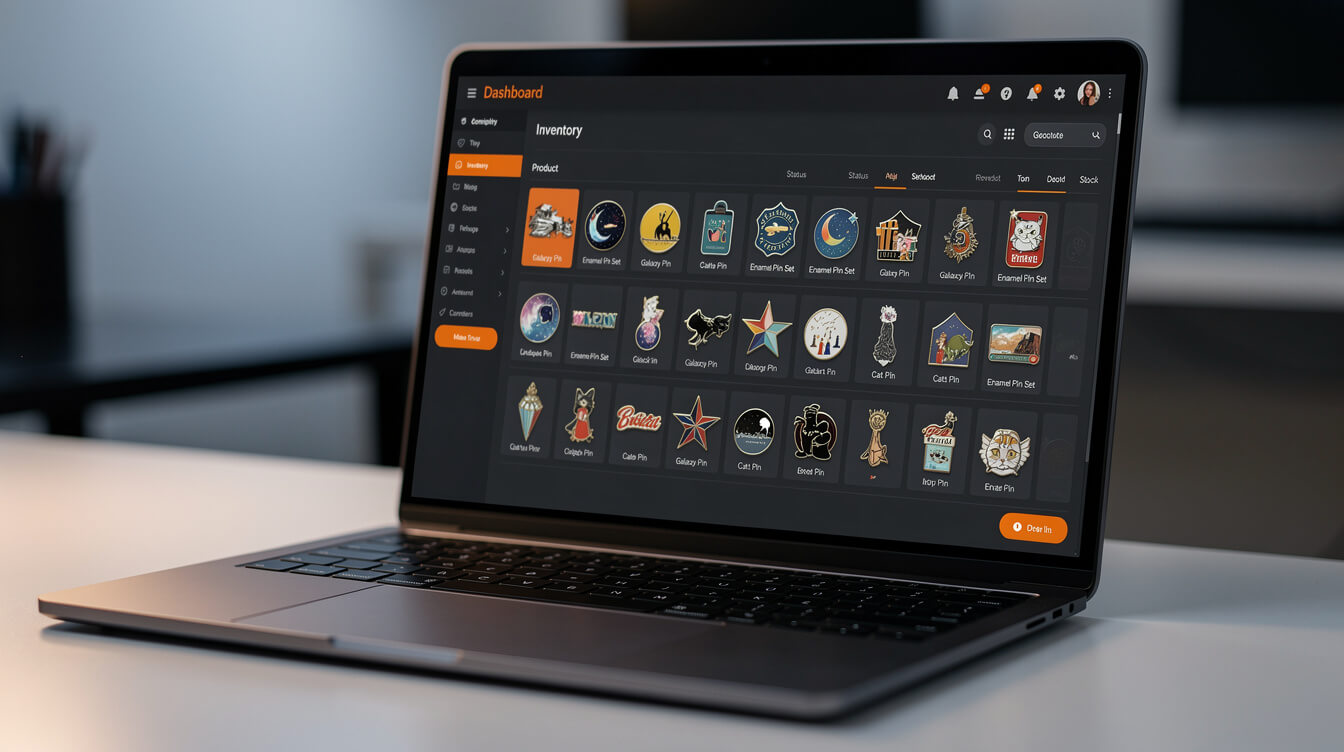
WooCommerce is the natural home for a pin store that is moving toward held inventory, and not just because of the fee structure. The plugin ecosystem handles the operational complexity that comes with physical inventory in a way that Shopify’s app market charges you a recurring monthly fee to replicate.
MEGA automates the product listing and SEO pipeline so that when you do graduate from acrylic dropship to hard enamel inventory, your listings are already optimized and ready. You handle the manufacturing lead time and the physical stock. MEGA handles the catalog infrastructure at mega.management.
For WooCommerce-specific inventory management, the plugin you want for pin stores is either WooCommerce’s built-in stock management (adequate for simple SKUs: one design, one size, limited variants) or a dedicated inventory plugin like ATUM Inventory Management (free tier covers most indie sellers) if you are managing multiple designs across multiple batch orders with backorder windows.
Managing variants in WooCommerce
Enamel pins in your WooCommerce store typically have two or three variants: size (1-inch, 1.5-inch, 2-inch), plating (gold, silver, black nickel), and sometimes backing type (rubber clutch, butterfly clutch, locking). WooCommerce handles product variations natively without an app fee. Each variant can have its own stock count, price, and SKU, which is essential when you have 50 units of the 1.5-inch gold version and 30 units of the 1-inch silver version.
Backorders and pre-orders
When you run limited edition pin drops (a common sales mechanic in the fandom and indie art community), WooCommerce allows you to enable backorders on a per-product basis. You take orders before the batch arrives from the manufacturer, collect payment, and fulfill when stock lands. Shopify does allow backorders, but the UX and controls are less granular without a third-party app. On WooCommerce, it is a checkbox setting per product, no app required.
The margin math at volume
Here is what the economics look like at a point where held inventory becomes clearly the right call. At 300 units per design, 2 designs, with GS-JJ pricing: approximately $1.50/unit for soft enamel at that volume, $900 total cost, $60 in die fees. Total investment: $960. Retail at $12/unit, full sell-through: $7,200 gross revenue. Gross margin: $6,240, or 86.7%. Your WooCommerce overhead: $30/month hosting plus payment processing at 2.9% + $0.30/order. At 600 total orders: $174 in processing fees + $30 hosting = $204. Net margin at full sell-through: $6,036, or 83.8%. Compare that to Shopify’s overhead at the same volume: easily $350-500 in combined platform, app, and override fees, leaving $5,740-5,890 net.
The difference is $145-296 per pin cycle. That is significant when you are running 4-6 pin drops per year as a dedicated pin seller.
Niche verticals that buy pins: fandom and anime, indie bands, sports teams, organizational, wedding favors
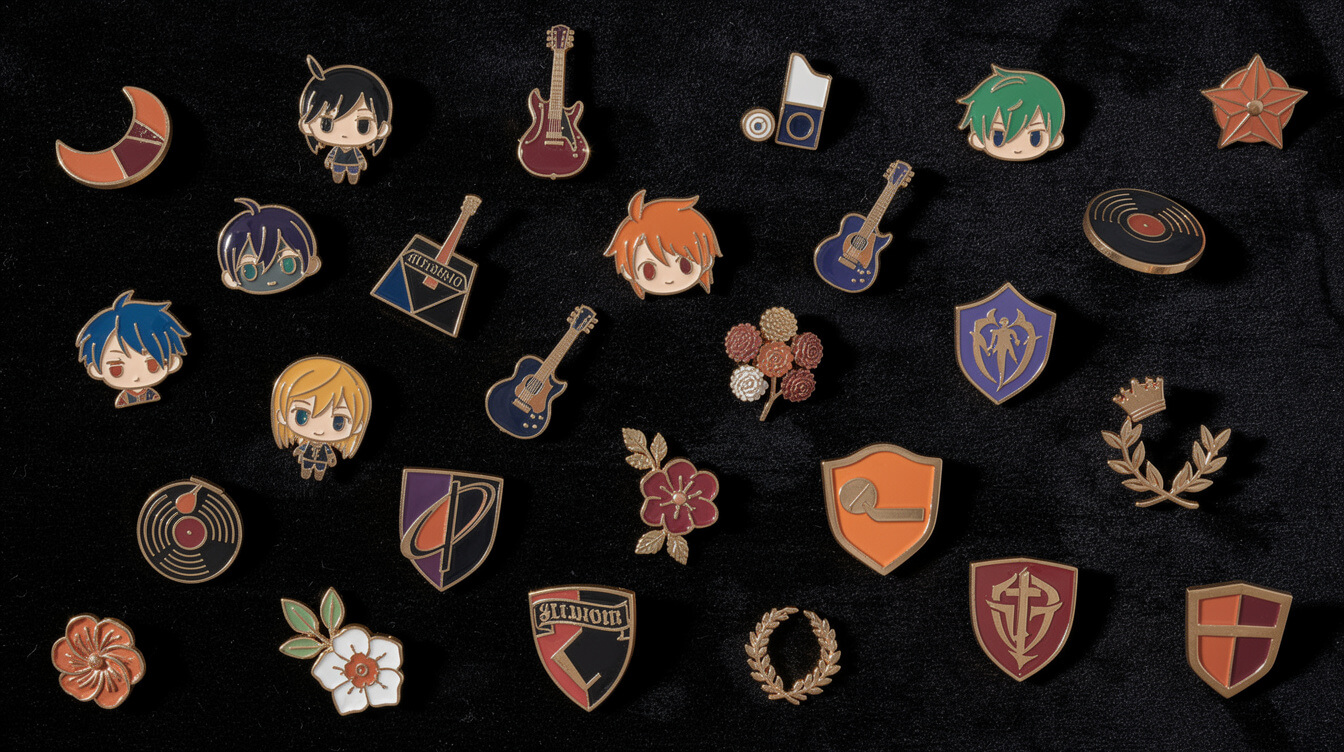
The enamel pin market is not one market. It is several distinct communities with different purchasing behaviors, different price sensitivities, and different design preferences. Understanding which niche you are serving shapes every decision from product design to sourcing path to pricing.
Fandom and anime
The fandom and anime pin market is the largest and most competitive segment. Collectors in this community actively seek character art, fan designs for niche shows and games, and limited edition runs. The collector behavior is a structural advantage for pin sellers: buyers collect sets, they buy duplicates to trade, and they return for new drops. The key constraint is IP: you cannot sell licensed characters. Original fan art that interprets a fandom without reproducing copyrighted characters is the legal path, and skilled artists in this space have built followings around exactly that distinction.
Indie bands and music artists
Merch tables at shows are still a primary revenue driver for independent musicians. Enamel pins fit the merch table model perfectly: they are low-ticket, they sell on impulse, and they travel in jacket pockets. A band-specific pin at $12-15 is an easy addition to a t-shirt purchase. The manufacturing decision for bands is straightforward: held inventory for tour runs, with quantities matching expected show attendance.
Sports teams and youth leagues
Organizational pins for sports teams, especially youth leagues and tournament events, represent a reliable B2B-adjacent opportunity. Tournament medals have been a staple for decades; enamel pins are a modern, lower-cost alternative. A youth soccer league ordering 100-200 pins for a tournament has a concrete budget and a specific deadline. Manufacturer-direct sourcing is the only path that works here, and the B2B framing shifts the conversation from retail impulse to organizational procurement.
School clubs and organizations
Honor societies, student clubs, fraternities, and sororities all have a tradition of member pins. Digital channels have made it easier to find manufacturers directly, but many of these organizations prefer to work through a known vendor relationship. If you build a reputation as a reliable custom pin source for organizational clients, referrals tend to compound.
Wedding favors
The wedding favor segment has a specific demand window and a price ceiling that works well for enamel pins. A couple ordering 100-150 personalized pins as wedding favors at $8-10/unit represents a reliable MOQ order. The design is typically specific to the couple (initials, wedding date, an inside joke or symbol), which means zero re-use potential from your side, but also a client who has already committed to the concept before the conversation starts.
Designing enamel pins that sell: color count, line weight, and what soft vs hard enamel means for your artwork
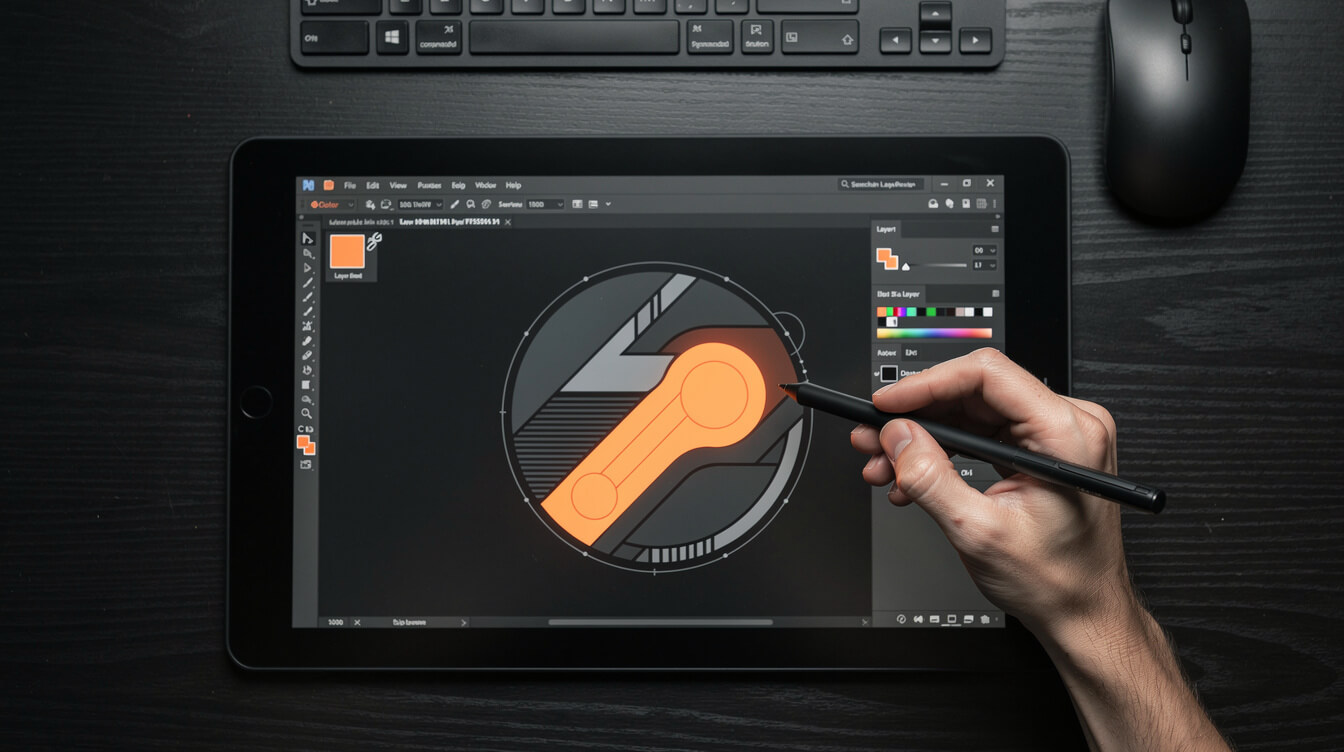
Good pin design is not the same as good illustration or good t-shirt design. The physical constraints of the manufacturing process dictate specific rules that, once understood, actually make design decisions easier.
Color count matters to your cost
Each distinct color in a soft enamel pin requires a separate fill of liquid enamel. Most manufacturers price pins up to 5-6 colors at a base rate, then add a per-color fee above that. A pin with 8 distinct colors can cost 20-35% more than the same design with 5 colors at the same order quantity. The practical design rule: use your brand palette deliberately. An anime-style character with gradient shading needs to be simplified into flat color zones, because gradients do not translate to enamel fill. They render as color-count explosions that raise your unit cost and reduce the crispness of the final product.
Line weight and metal coverage
The metal framework between enamel fill areas (called the metal line or cloisonne border) must be thick enough to survive the manufacturing process. Most manufacturers require a minimum metal line width of 0.3mm, with 0.5mm recommended for safety. Designs with very fine lines, small details, or negative space that creates isolated enamel islands tend to produce quality issues: lines bend during polishing, small fill areas pool enamel unevenly, and isolated details can break during production.
The practical rule for new pin designers: simplify your artwork before sending it to the manufacturer. If you are working from an illustration created for print or screen, run a test by zooming out to the physical size of the pin (1-1.5 inches at actual size on screen at 72dpi). At that scale, if you cannot distinguish individual design elements clearly, neither can the manufacturer’s technicians, and the pin will not hold the detail you designed in.
Soft enamel vs hard enamel: the right choice for your product
Soft enamel is the more common manufacturing option. The enamel fill sits slightly below the metal lines, creating a textured, recessed surface. The metal ridges are tangible and give the pin a tactile quality that collectors often describe as “classic.” It is the less expensive option per unit and is appropriate for most fandom, band, and organizational pin applications.
Hard enamel (also called cloisonne) involves a different process: the enamel is applied in layers and polished flat until the metal and enamel are level. The result is a smooth, glass-like surface with no texture variation. Hard enamel feels more premium, wears better over time (the recessed enamel in soft enamel pins can chip, whereas hard enamel’s flush surface is more durable), and commands a higher retail price. If your target customer is a serious collector in the fandom or art community, the hard enamel premium is worth paying, and your retail price can reflect it. If you are selling organizational pins for a youth sports league, soft enamel at a lower price point serves the buyer better.
For sellers whose audience cares about accessories quality, the same logic that drives buyers toward premium sticker paper drives pin buyers toward hard enamel: they are buying something they intend to keep and display, and the material quality is part of the value proposition.
Conclusion
Custom enamel pins are not a product you can add to a Printful or Printify store and walk away from. The manufacturing process requires a decision: do you offer acrylic or button pins via POD with no MOQ and a different aesthetic, or do you commit to held inventory with a manufacturer like GS-JJ, WizardPins, or EnamelPins.com?
The answer depends on your niche and your demand certainty. Fandom sellers with an established audience often justify the 50-100 unit minimum because they can pre-sell a drop before manufacturing. New sellers without proven demand are better off starting with acrylic pins via Printify’s vendor network to validate the market before committing to inventory.
Either way, the platform economics point clearly in one direction. At $10-15 retail on a low-AOV product, Shopify’s fee structure erodes margin faster than it does on higher-ticket items. WooCommerce’s fixed overhead and zero platform override fee make the math considerably cleaner, especially at the volume levels where held enamel pin inventory starts making sense.
If you want to build a product catalog that includes pins alongside your other POD items and automate the listing infrastructure so you spend your time on design and demand-generation instead of product setup, that is exactly what the MEGA pipeline is built for.
Implement AI. 30x your throughput. Get a 30-min call with the founder.
Drop your details and book a free 30-minute discovery call. Personalized advice on your POD stack, your margin, and where AI fits. No pitch, no fluff.