Custom packaging boxes for POD stores: what Printful and Printify actually support, what it costs, and when it makes sense
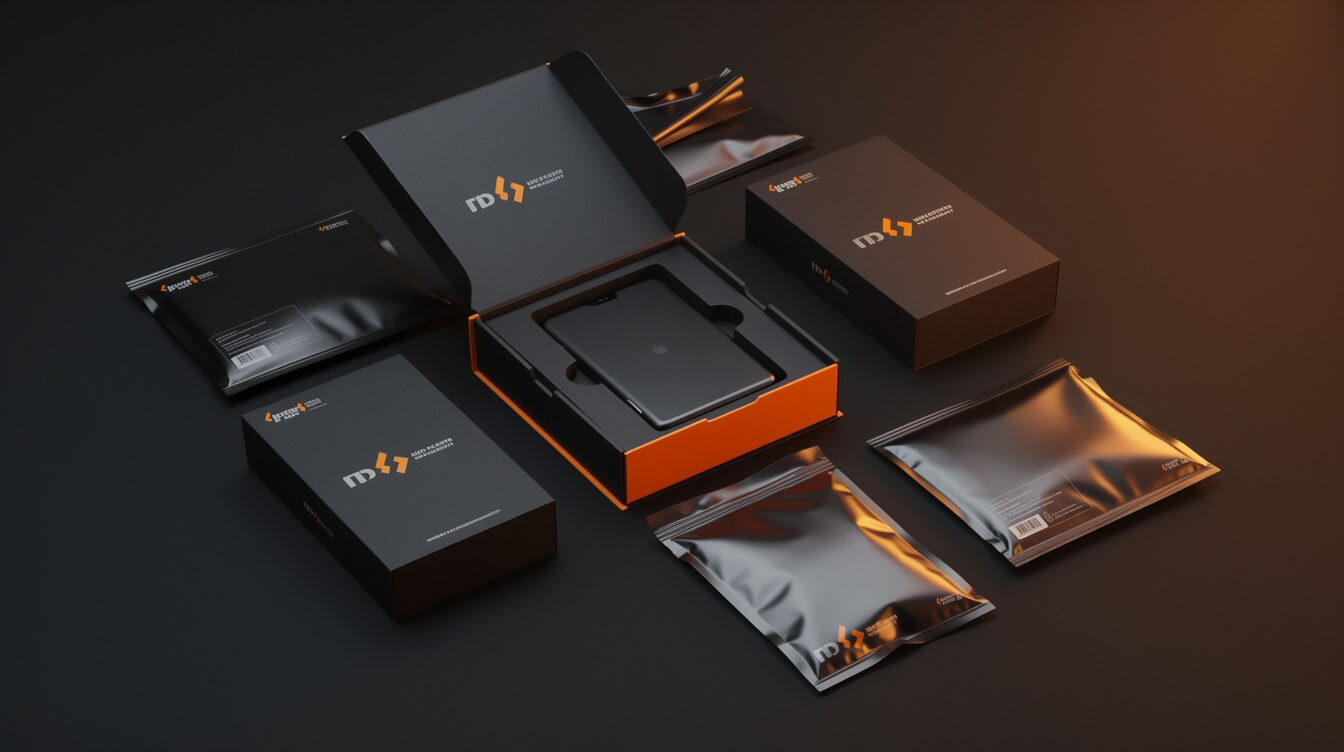
Custom packaging boxes are one of the first things POD sellers want and one of the last things the platform reality delivers. You imagine your brand’s logo on a clean matte box. What actually ships from Printful is a brown cardboard box with a Printful stamp on it. This guide explains exactly what is and is not possible with Printful and Printify packaging in 2026, what it actually costs, and the step-by-step path from unbranded box to full custom packaging as your volume grows.
If you are asking “can I get my POD orders shipped in a custom branded box,” the honest answer is: not out of the box, but there are real workarounds worth knowing. Start with insert cards. Upgrade to poly mailers. Graduate to custom boxes when the numbers support it.
Why POD sellers can’t just buy custom boxes from Packola and call it a day
Every Google result for “custom packaging boxes” returns B2B manufacturers: Packola, Packlane, Arka, VistaPrint, PaperMart. These companies sell TO brands that hold inventory and ship from their own warehouse. None of that applies to POD dropshipping.
When a customer orders from your WooCommerce store, Printful or Printify fulfils the order directly from their facility and ships it to your customer. You never touch the package. That means you cannot pre-stage your custom Packola boxes at Printful’s warehouse without a specific warehouse arrangement program, which is not the default onboarding path.
There is also a substrate mismatch. Printful’s custom packaging program covers specific items: poly mailers, tissue paper, sticker seals, and insert cards. Full rigid custom boxes with branded exterior printing are a separate program requiring application and minimum print runs. You cannot log into Printful and order custom packaging the way you set up a product listing.
This is not a flaw unique to Printful. It is how POD economics work. The fulfillment partner handles the physical production. Your leverage over the unboxing experience is limited to what the fulfillment partner has decided to offer as a program, plus what you can ship into their warehouse system yourself.
Printify’s situation is more fragmented. Printify is a marketplace of third-party vendors. Each vendor controls their own packaging. Most ship in plain white or brown poly mailers. There is no Printify-wide custom packaging program. Some Printify vendors offer inserts if you contact them directly, but this varies by vendor and region and is not self-serve.
Understanding this constraint sets you up to choose a realistic strategy instead of chasing something that requires six-figure volume to unlock.
What Printful’s custom packaging add-on actually covers
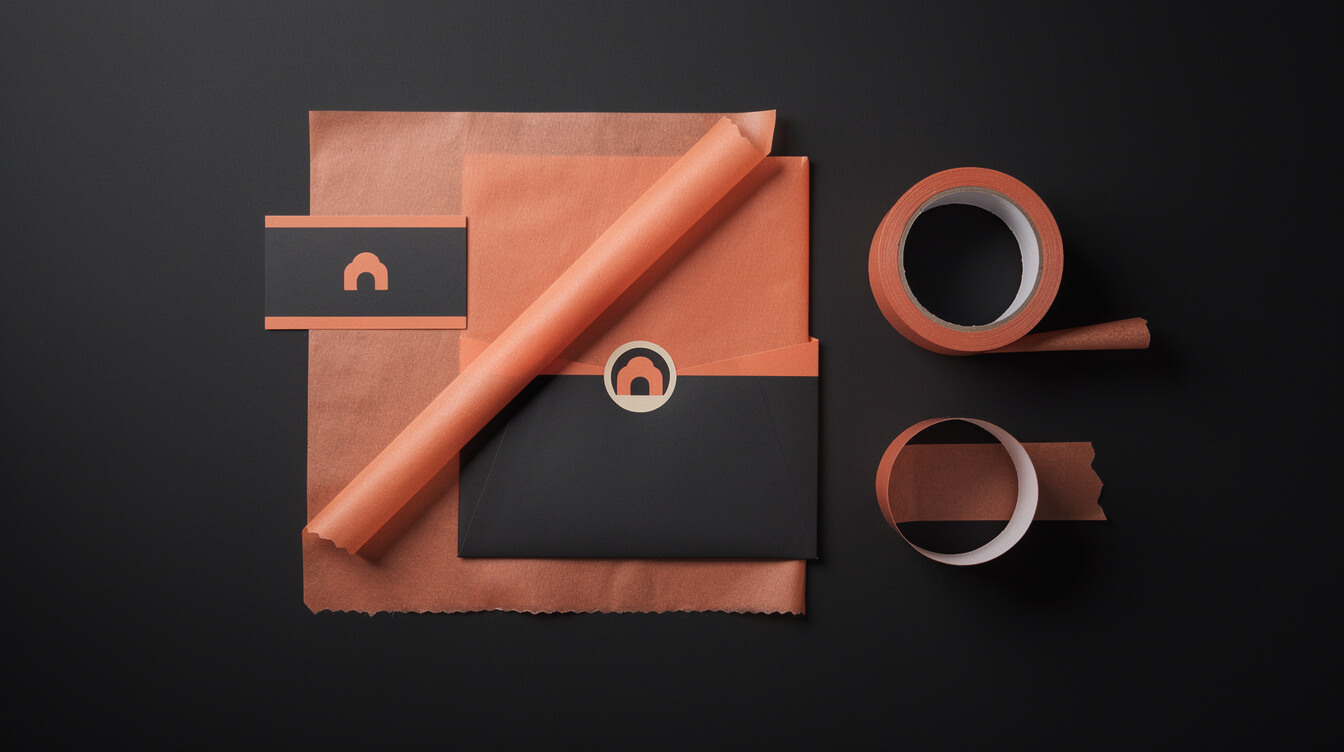
Printful offers a custom packaging program for established brands. Here is what the program covers and what it requires.
Insert cards: This is the most accessible option. You design a card up to 4×6 inches. Printful prints and ships one insert card inside every qualifying order. Cost: approximately $0.90 per card, billed per order. No minimum order quantity to start — you activate it in your Printful account dashboard. This is the single most impactful branded touchpoint available to POD sellers without a warehouse arrangement.
Sticker seals: Small branded sticker applied to the outside of the poly mailer or tissue paper wrap. Cost is around $0.25-0.50 per order. Low visual impact but adds a professional finish to the external packaging before the customer opens anything.
Tissue paper: Printful wraps some products in tissue paper before boxing. You can supply branded tissue paper through their warehouse program, but this requires you to ship printed tissue paper to Printful’s warehouse in bulk, and it requires a minimum quantity. This is not self-serve — you need to contact Printful’s enterprise team. Expect to need at least 500-1,000 sheets at a time to make this viable.
Custom poly mailers: Similar to tissue paper — you can ship branded poly mailers to the Printful warehouse, and they will use them to fulfil your orders. Again, this requires a warehouse arrangement, not a dashboard toggle. Suitable once you are at 100+ orders per month and have confirmed volume consistency.
Full custom boxes: Printful does not currently offer self-serve custom branded exterior boxes for standard fulfilment. Custom rigid boxes with your branding on the outside require a direct enterprise arrangement and are priced at a level that only makes sense at very high volumes (typically 500+ orders per month to justify setup costs).
For most POD sellers under 200 orders per month, the practical Printful packaging toolkit is: insert card ($0.90/order) and sticker seal ($0.25-0.50/order). Everything else is a warehouse program that requires volume commitment before it is viable.
The insert card strategy: a $0.90-1.50 brand touchpoint that ships with every order
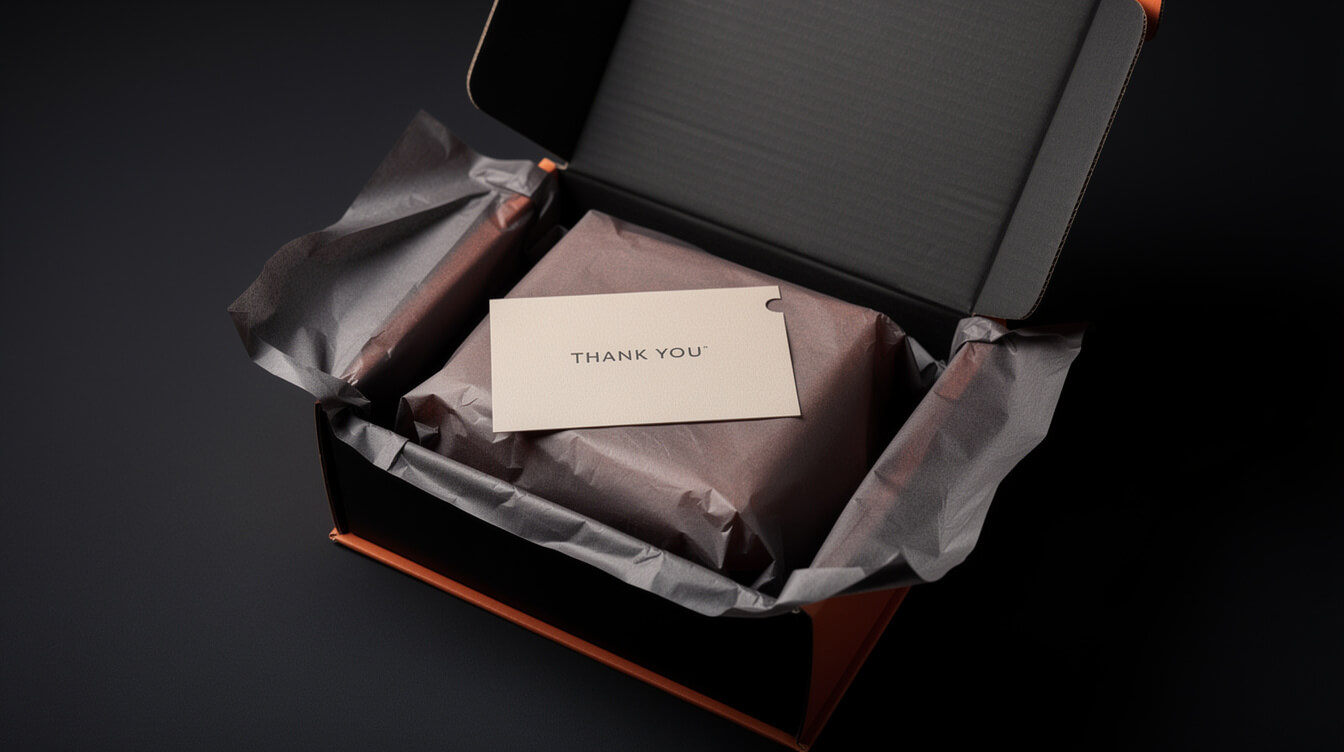
The insert card is the highest-value custom packaging tool available to POD sellers at any order volume. For $0.90 per order, you get a branded card inside every package that Printful ships on your behalf. At scale, that cost compresses your margin. At low volume, it is the most cost-effective way to own the unboxing moment.
What goes on an insert card? The most effective versions do one of three things: drive a repeat purchase, build social proof, or capture the customer relationship.
A repeat-purchase insert might show two or three related products from your store with a short personal note. A social proof insert asks customers to post a photo and tag your store. A relationship-capture insert gives the customer a reason to visit your website directly and join your email list — which moves them off the platform and into a channel you own. This last type is particularly valuable on WooCommerce stores, where you can capture the email at checkout or post-purchase without a third-party app.
Insert card cost math at three order volumes:
- 25 orders per month: $22.50/month in insert card costs. Brand value: 25 customers now know your store name and URL.
- 50 orders per month: $45/month. At $30 average order value, your insert cost is 3% of revenue per card — worth it if even 2-3% of recipients reorder within 90 days.
- 200 orders per month: $180/month. Now the ROI math gets interesting. If inserts drive a 5% reorder rate on a $30 AOV, that is 10 repeat orders worth $300 — a $120 margin contribution at 40% gross margin, against $180 in insert costs. Break-even point is roughly 200 orders per month assuming a 4.2% reorder rate.
The insert card also pairs well with custom sticker sheets as a freebie. A 4-pack sticker sheet included as a bonus with orders of $40+ is a low-cost upsell trigger that costs you $2-4 in COGS and adds perceived value to every order above that threshold.
Custom poly mailers and poly bags: the lowest-cost branded packaging option for POD

Smash print-on-demand. Join the engine room.
One short email a week. Real numbers, real teardowns, the unfiltered economics behind every move.
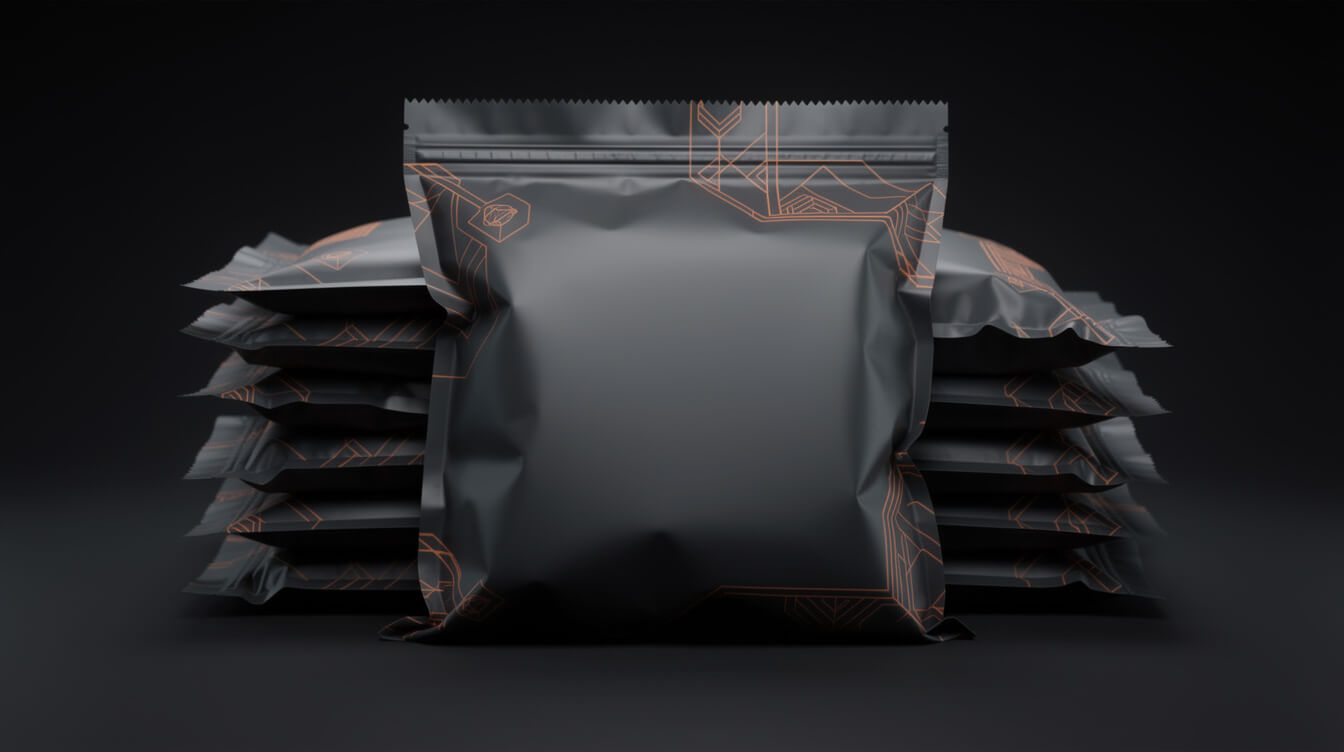
For sellers who want branded packaging visible before the customer opens anything, poly mailers are the most accessible option. The external mailer is the first physical touch of your brand, and for soft goods like apparel and accessories, most orders ship inside a poly mailer rather than a box anyway.
There are two paths to branded poly mailers for POD orders:
Path 1: Printful warehouse arrangement. You design and print poly mailers via a supplier (StickerMule, PrintingForLess, Uline custom print), ship them in bulk to Printful’s warehouse, and Printful uses them to fulfil your orders. Minimum quantity is typically 500-1,000 mailers per production run. Printful charges a warehouse fee for storing your materials. This is viable at 200+ orders per month where the warehouse fee and minimum production run cost are absorbed by volume.
Path 2: Self-fulfilment hybrid. Some POD sellers handle packaging themselves by having Printful ship to their address (using a US or local forwarding address), repackaging the items in their own branded mailers, and re-shipping to customers. This adds 2-5 business days and meaningful labour cost but gives full packaging control. It only makes economic sense for very high-ticket items ($75+) where the brand premium justifies the effort and cost.
For most sellers under 200 orders per month, neither path is cost-effective as a primary strategy. The insert card ($0.90) delivers more brand impact per dollar than branded external packaging at low volume, because the unboxing experience inside the package is where customers form brand memory.
Custom poly mailers become worth pursuing when you cross 100-150 orders per month, can commit to a 500-unit production run, and have stable enough order volume that warehouse materials do not expire or sit unsold. At that point, the per-order cost of a custom mailer drops to $0.40-0.80, which is in the same range as an insert card with meaningfully better external brand visibility.
Unit cost math: custom packaging ROI at 25, 50, and 100 monthly orders

Before adding any branded packaging, run the math for your actual order volume. Here is the per-order cost of each packaging option at three volume tiers.
At 25 orders per month:
- Insert card: $0.90/order = $22.50/month total
- Sticker seal: $0.35/order = $8.75/month total
- Combined: $1.25/order = $31.25/month total
- Custom poly mailer (warehouse program): Not viable — minimum production run exceeds monthly usage by 20x+
At 50 orders per month:
- Insert card: $0.90/order = $45/month total
- Sticker seal: $0.35/order = $17.50/month total
- Combined: $1.25/order = $62.50/month total
- At $28 AOV, combined packaging adds 4.5% to COGS — viable if brand differentiation increases conversion or repeat purchase rate
At 100-150 orders per month:
- Insert card: $0.90/order = $90-135/month total
- Sticker seal: $0.35/order = $35-52.50/month total
- Custom poly mailer (500-unit production run, $0.60/mailer amortized): $60-90/month
- Combined insert + seal + poly mailer: $1.85/order = $185-277/month total
- At $35 AOV and 42% gross margin, your gross profit is $14.70/order. $1.85 in packaging = 12.6% of gross profit per order. This is where packaging strategy starts to affect unit economics meaningfully and where the math needs close monitoring.
The critical number is your gross margin per order, not your revenue. If you are selling custom drinkware at $38 AOV with 45% gross margin ($17.10 gross per order), you can absorb $1.85 in packaging and still clear $15.25 — a 40% gross margin on the packaged order. If you are selling low-AOV sticker sheets at $10 AOV with 55% gross margin ($5.50 gross per order), $1.85 in packaging consumes 33% of your gross profit, which is unsustainable.

Generate your next 47 products in one afternoon
MEGA handles image generation, sizing, mockups, titles, SEO, and full product listings on both Printful and WooCommerce. Research to live product in under seven minutes.
How Shopify 1% and packaging costs compound at low AOV
Here is the packaging-platform math that most POD education content ignores.
Shopify’s 1% transaction fee on third-party payment processors applies to every order. At low AOV products — stickers, face masks, inserts, accessories — this fee has an outsized impact that compounds with any packaging add-on.
At $25 AOV and 200 orders per month:
- Shopify 1% override: $50/month = $600/year
- Insert cards at $0.90: $180/month = $2,160/year
- Combined: $230/month = $2,760/year in fees that produce nothing for the customer
At $25 AOV with 40% gross margin, your gross profit is $10/order, or $2,000/month before packaging and platform fees. After Shopify 1% ($50) and insert cards ($180), you are left with $1,770/month — an effective gross margin of 35.4% instead of 40%. A 4.6 percentage point compression entirely from fees and packaging.
On WooCommerce, the same store pays:
- Transaction fee: $0 (WooCommerce + Stripe charges only Stripe’s standard 2.9% + $0.30, which is a payment processing cost, not an additional platform override)
- Insert cards at $0.90: $180/month = $2,160/year
- Hosting: $15-40/month = $180-480/year
- Combined annual cost: $2,340-2,640/year vs Shopify’s $3,360 (with Basic plan at $468/year + $600 override + $2,160 inserts + $132 in miscellaneous app fees)
WooCommerce saves the packaging budget from being partially eaten by platform fees. At 200 orders per month, WooCommerce saves $720/year on the override fee alone — that is 400 free insert cards. The packaging cost becomes more sustainable when the platform is not taxing every transaction on top of it.
You can build a full WooCommerce store with the packaging pipeline described in this article for under $360/year in hosting. For a comparison of what Shopify actually costs at scale, see WooCommerce vs Shopify for print-on-demand sellers: the real numbers.
The long game: when to graduate from inserts to full custom boxes
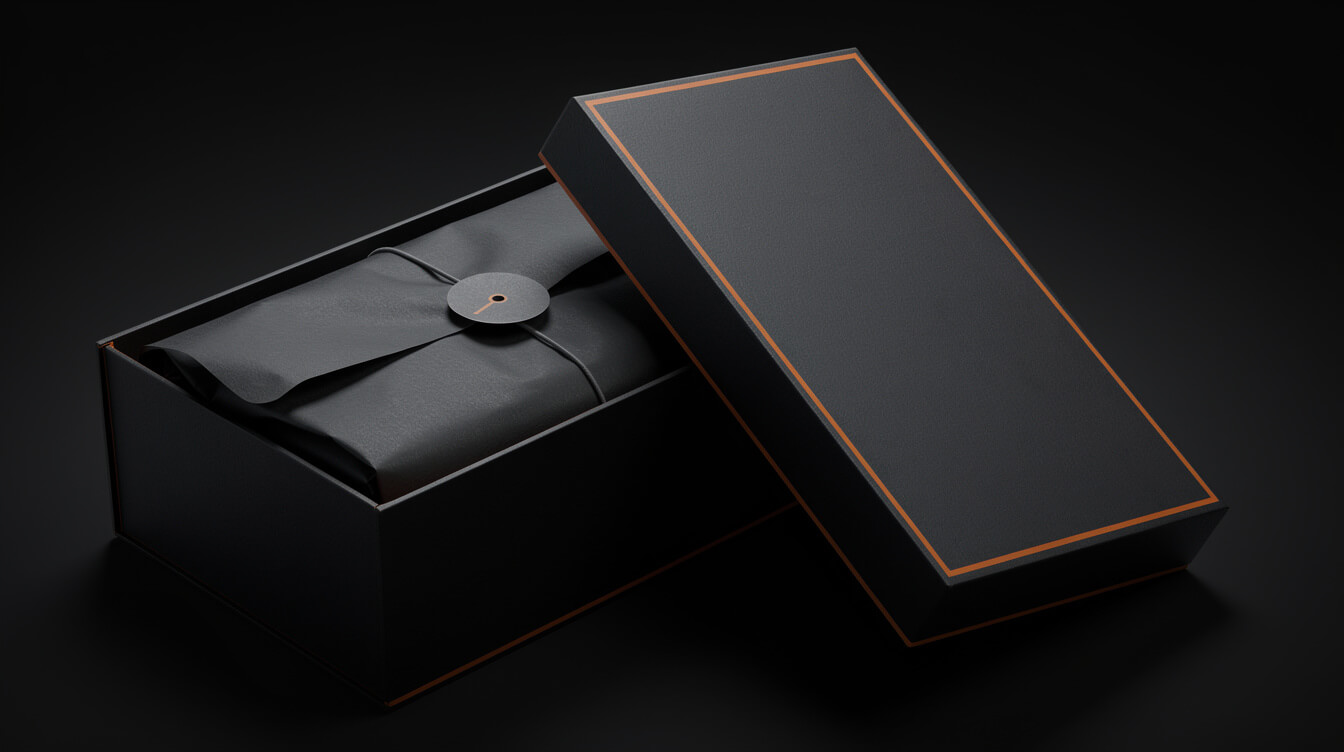
The insert card is the right starting point. The poly mailer is the right intermediate step. Custom rigid boxes are the right end-state for certain product categories and volume levels. Here is the decision framework for each graduation.
Start with insert cards when: You are under 100 orders per month and want any branded packaging at all. Cost: $0.90/order. No minimum, no warehouse arrangement. Activates in the Printful dashboard.
Add sticker seals when: You want external brand visibility at minimal cost. Cost: $0.25-0.50/order. Works on the outside of standard Printful mailers. No warehouse arrangement needed.
Graduate to branded poly mailers when: You are consistently at 100-150+ orders per month and can commit to a 500-unit production run without worrying about unsold inventory. Your AOV supports absorbing $0.60-0.80 in mailer cost without meaningfully compressing margins. You have confirmed that repeat purchase rate or brand awareness metrics justify the spend.
Invest in full custom boxes when: You are at 300+ orders per month. Your product category is fragile, premium, or gift-oriented enough that rigid box presentation drives a meaningful conversion or review-rate lift. You have a consistent SKU mix that will use the same box size at scale. And you have run the ROI math: at 500 orders per month with a $55 AOV and $1.50-3.00/order in custom box cost (at high volume), the brand equity return needs to outperform what that $750-1,500/month would deliver in ads or content.
One category where custom boxes make economic sense earlier than most: gift-oriented packaging products. If your store specialises in premium personalised gifts — anniversary items, baby shower sets, graduation keepsakes — the unboxing experience is part of the product value proposition. Buyers paying $55-85 for a personalised framed print or leather journal expect packaging that matches the price point. For these stores, investing in custom rigid boxes at 150-200 orders per month may be justified even if the strict unit economics do not yet fully pencil out, because the brand perception drives the repeat purchase and referral rate that the economics do not fully capture.
For standard apparel and accessories, the poly mailer plus insert card path will serve you well until you are at 400+ orders per month. Spend the custom packaging budget on product quality and SEO instead.
Frequently asked questions about custom packaging for POD stores
Can I use my own custom boxes with Printful? Not without a warehouse arrangement. Printful ships from their facility in standard packaging unless you set up a branded insert or supply your own materials to their warehouse. The warehouse program requires enterprise-level contact and minimum material quantities.
Does Printify offer custom packaging? Printify has no platform-wide packaging program. Individual vendors may offer limited insert options — check directly with your vendor. Printify’s product creator does not include packaging as a configurable option.
What is the cheapest way to brand my POD orders? The Printful insert card at $0.90/order. No MOQ, self-serve, activates in your dashboard. For orders shipping from Printify vendors, you can include a PDF insert design in your order notes or store settings on some vendors — check with your specific vendor.
Does branded packaging improve conversion rates? There is limited POD-specific data, but general ecommerce research consistently shows that packaging quality correlates with repeat purchase rate and review quality. The ROI is more pronounced in gift-category products (recipients see the packaging) than in utility products (buyers see it once and bin it).
What is the minimum order volume to justify custom poly mailers? 100-150 orders per month is the practical minimum, assuming a 500-unit minimum production run and a $0.60-0.80 per-mailer amortized cost. Below that, the insert card delivers better per-dollar brand impact.
The bottom line on custom packaging boxes for POD stores
Custom packaging boxes as sold by B2B packaging manufacturers are not directly compatible with POD dropshipping unless you build a warehouse arrangement. That is the constraint to accept before developing your packaging strategy.
The practical path for most POD sellers: activate Printful insert cards at $0.90/order from day one. Add a sticker seal when you have a consistent brand identity worth putting on the outside of packages. Graduate to branded poly mailers when you hit 100-150 orders per month and can absorb the production run minimum. Evaluate custom rigid boxes at 300+ orders per month for premium or gift-category products where unboxing experience drives purchasing decisions.
Keep platform costs in the model. Shopify’s 1% override and app fees eat into the packaging budget at low AOV. WooCommerce eliminates the override entirely, which means packaging spend goes toward brand equity instead of feeding platform fees. At 200 orders per month, that difference is worth $600/year — roughly 667 insert cards, or just over three months of the entire insert card program cost.
MEGA automates the product listing, SEO metadata, and image generation that power the store behind your packaging strategy. The pipeline that generates a custom packaging boxes article in under seven minutes is the same pipeline that builds the listings those boxes ship from. Try MEGA to see the end-to-end automation in action.

Implement AI. 30x your throughput. Get a 30-min call with the founder.
Drop your details and book a free 30-minute discovery call. Personalized advice on your POD stack, your margin, and where AI fits. No pitch, no fluff.