Custom patches for POD stores: what Printful and Printify offer, the unit cost math, and when a patch vendor wins
Custom patches are one of the most-requested product lines POD sellers get asked about. Embroidered patches for jackets, iron-on patches for tote bags, PVC patches for tactical gear — customers want them, and a quick look at search data confirms it. But when you actually go looking for a way to offer custom patches through Printful or Printify, the answer is more complicated than most guides let on.
This post does the honest audit. It covers what Printful and Printify actually offer for custom patches, what the unit cost math looks like at small quantities, which vendors genuinely serve no-minimum orders, and when building your patch business on WooCommerce beats attaching it to a Shopify plan.
What custom patches are and why POD sellers want them
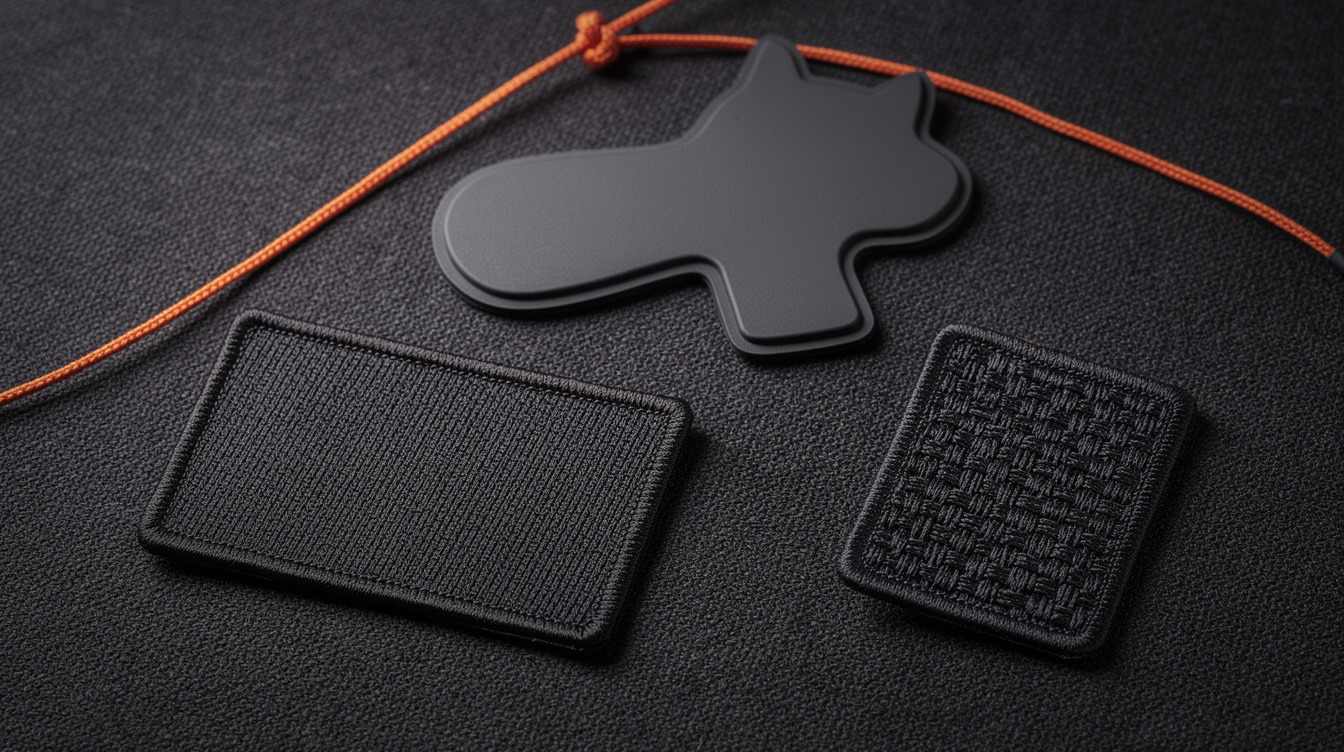
Before getting into sourcing, it helps to know which patch types are actually in play. The term “custom patches” covers several distinct products, and they each have different production requirements, vendors, and use cases.
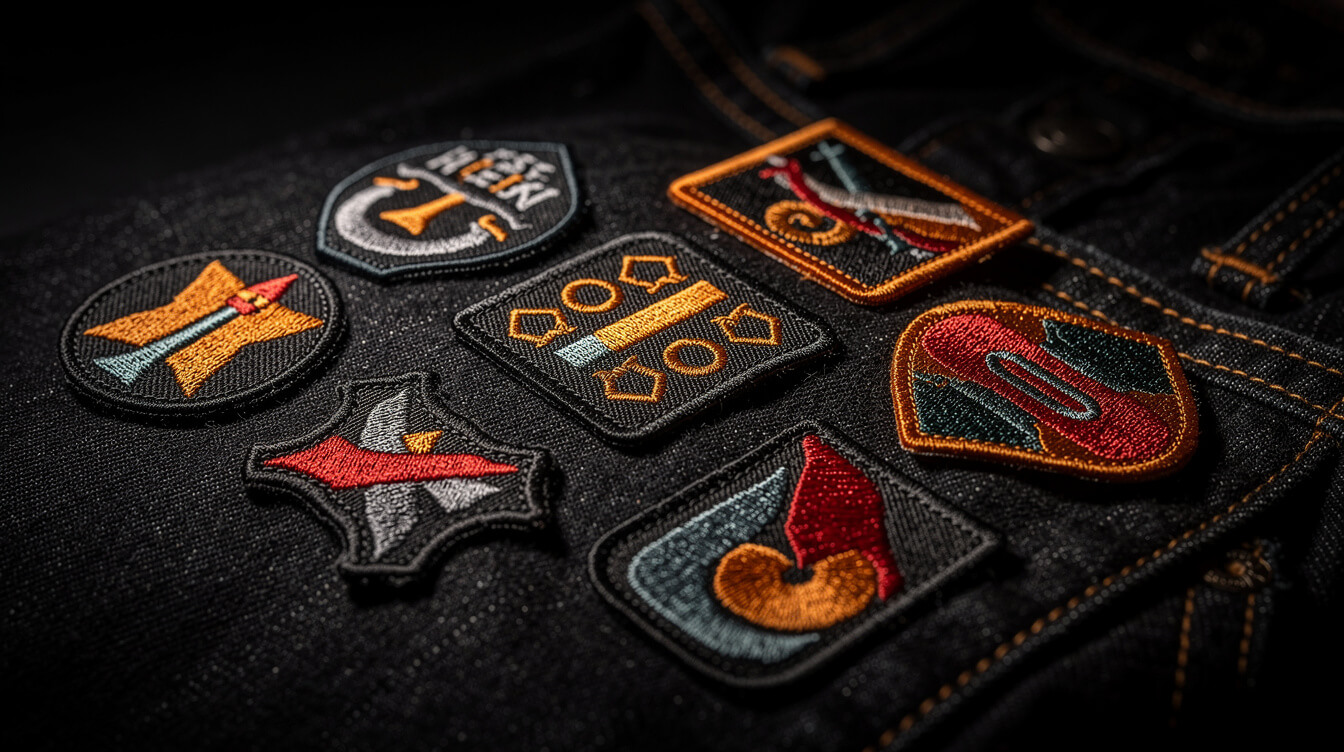
Embroidered patches are the classic. Thread stitched onto a twill or felt backing, with a heat-seal or iron-on adhesive on the reverse. These are what you see on denim jackets, military uniforms, and branded workwear. Embroidery requires digitizing your design — converting artwork into a stitch file — which adds a setup cost of $10-25 per design, one-time.
Woven patches use a finer thread count than embroidery and can reproduce more detail. Text under 6-point size reads cleanly on a woven patch. The production process is similar to embroidery, with comparable setup requirements and pricing.
Iron-on transfers are not technically patches — they are heat-transfer prints applied directly to fabric by the customer. No raised texture, no backing. Vendors can produce these in 1-piece runs because it is a print process, not a stitch process. They ship flat and weigh almost nothing.
PVC patches are molded rubber or silicone. Popular with outdoor brands, tactical brands, and hat makers. They require a mold, which means minimum orders of 25-100 units depending on the vendor. One-piece PVC patches are not economically viable.
Sublimated patches use dye-sublimation printing onto a fabric blank. Full-color capability, no digitizing required, and most vendors can do single-piece runs. The trade-off is texture — sublimated patches look like a print, not an embroidery.
The reason POD sellers want patches is straightforward. A 3-inch embroidered patch retails for $12-20. It fits in a padded envelope. Shipping costs under $1. The customer is buying a collectible, not a commodity — which means less price sensitivity and more repeat purchases. Patch collectors buy in sets. A hoodie buyer does not.
Patches also layer well with other POD products. A customer buying a custom hoodie is already primed for a matching patch. Upselling a patch on the same order adds $10-15 at near-zero incremental shipping cost.
What Printful and Printify actually offer for custom patches
Here is where most guides let you down. They mention “custom patches” in the headline, then quietly describe embroidered apparel or hat logos — not standalone patches as a product. Let us be direct about what each platform actually does.
Printful
Printful does not offer standalone custom patches as a product in their catalog. They do offer embroidered logos on apparel — left-chest embroidery on polo shirts, embroidered text on beanies, embroidered graphics on hats. But these are embellishments applied to a Printful blank garment. You cannot order “send me 10 custom patches” through Printful.
If you want to sell a custom patch as its own SKU, Printful cannot fulfill that order. Full stop.
Printify
Printify operates a marketplace model, so the answer is more nuanced. Some vendors within the Printify Print Provider network do list patch products. But as of 2026, no major Printify provider offers true no-minimum custom patches for standalone sale. The vendors that list patch products typically require 10, 25, or 50 units minimum.
The Printify catalog is dynamic, and new vendors do join. But if you are building a patch business today on the assumption that Printify can fulfill single-patch orders on demand, verify the current catalog before you list anything.
What both platforms do well (adjacent to patches)
Both Printful and Printify excel at embroidered apparel. If your product is a hoodie with an embroidered patch-style design applied at the factory — not a loose patch the customer peels off and sticks somewhere — that is fully in their catalog. The embroidery is applied to your garment during production, and the product ships as one item.
This matters for positioning. If your brand sells “hoodie with patch-style embroidered branding,” Printful handles it. If your brand sells “custom patches customers can apply to anything they own,” you need a different supplier. Keep those two value propositions separate when building your catalog.
The unit cost math: ordering from a patch specialist vs POD-style sourcing
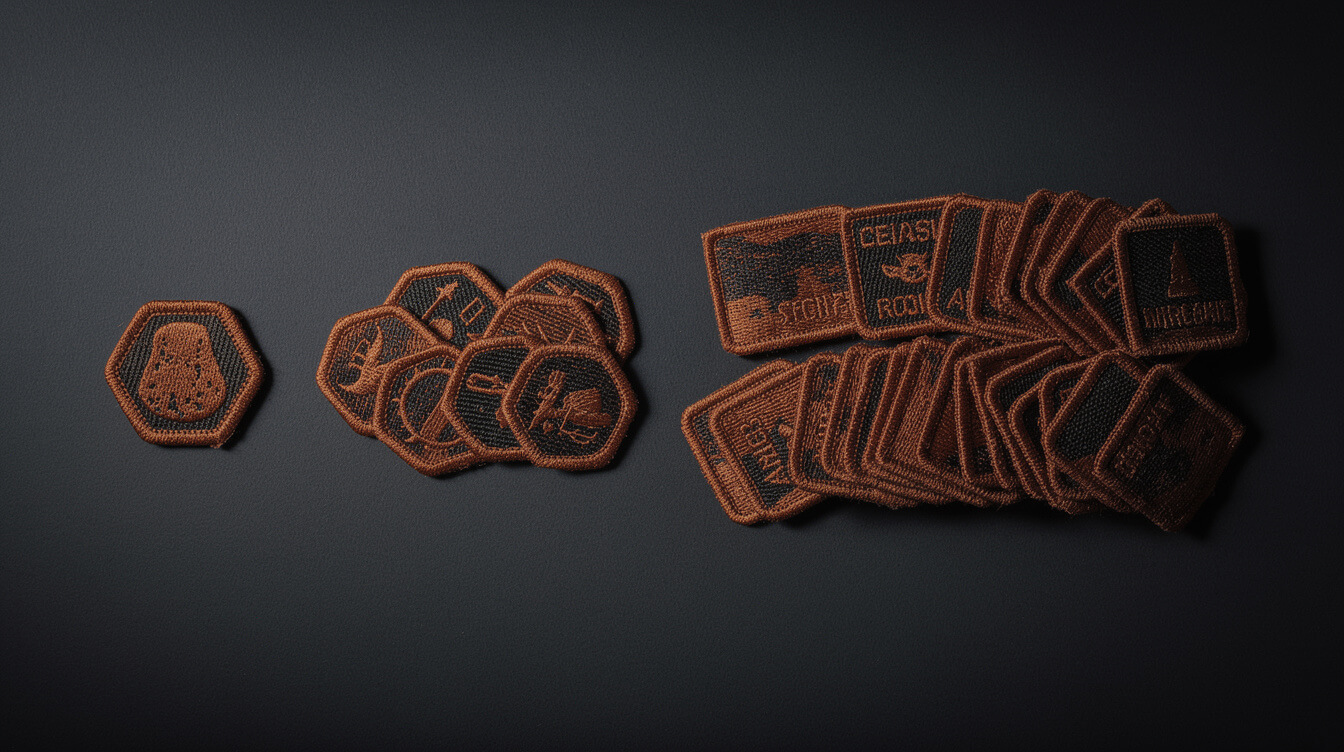
Let us run the numbers on a 3-inch embroidered patch with a medium-complexity logo. This is the most common request POD sellers get.
Ordering 10 patches from a specialist vendor
Setup or digitizing fee: $0-15 (many vendors include this at 10+ units).
Unit cost at 10: $4-6 per patch.
Shipping to you: $8-15 for the batch.
Total cost for 10 patches: $55-85.
Cost per unit landed: $5.50-8.50.
Ordering from a POD-style vendor (single-piece or low-minimum)
For sublimated or iron-on patch types that support 1-piece runs:
Unit cost: $3-7 per patch depending on size and vendor.
Shipping to customer: $3-6.
Total landed cost at 1 unit: $6-13 per patch.
No setup fee in most cases.
Selling 10 patches from pre-bought inventory
If you buy 10 embroidered patches at $5.50 each and sell them at $18 retail:
Revenue from 10 orders: $180.
Patch cost: $55.
Shipping to customers (10x $4 in padded envelopes): $40.
Gross profit: $85.
Gross margin: 47%.
Selling 10 patches via drop-ship POD (sublimated)
Vendor cost per order: $6 (unit) + $4 (shipping) = $10.
Revenue per order at $18 retail: $18.
Gross profit per order: $8.
For 10 orders: $80.
Gross margin: 44%.
The margins are close. The difference is inventory risk. With pre-bought embroidered patches, you are holding $55 in stock. With sublimated drop-ship, your cash outlay per order is $0 upfront. If the design does not sell, you lose nothing on the sublimated model versus $55 on the batch model.
This is the real trade-off: better margin and higher perceived product quality (embroidery vs sublimation) versus zero inventory risk and zero upfront cost. Neither is wrong. The choice depends on how confident you are in the design’s demand.
No-minimum custom patch options for POD sellers

Smash print-on-demand. Join the engine room.
One short email a week. Real numbers, real teardowns, the unfiltered economics behind every move.
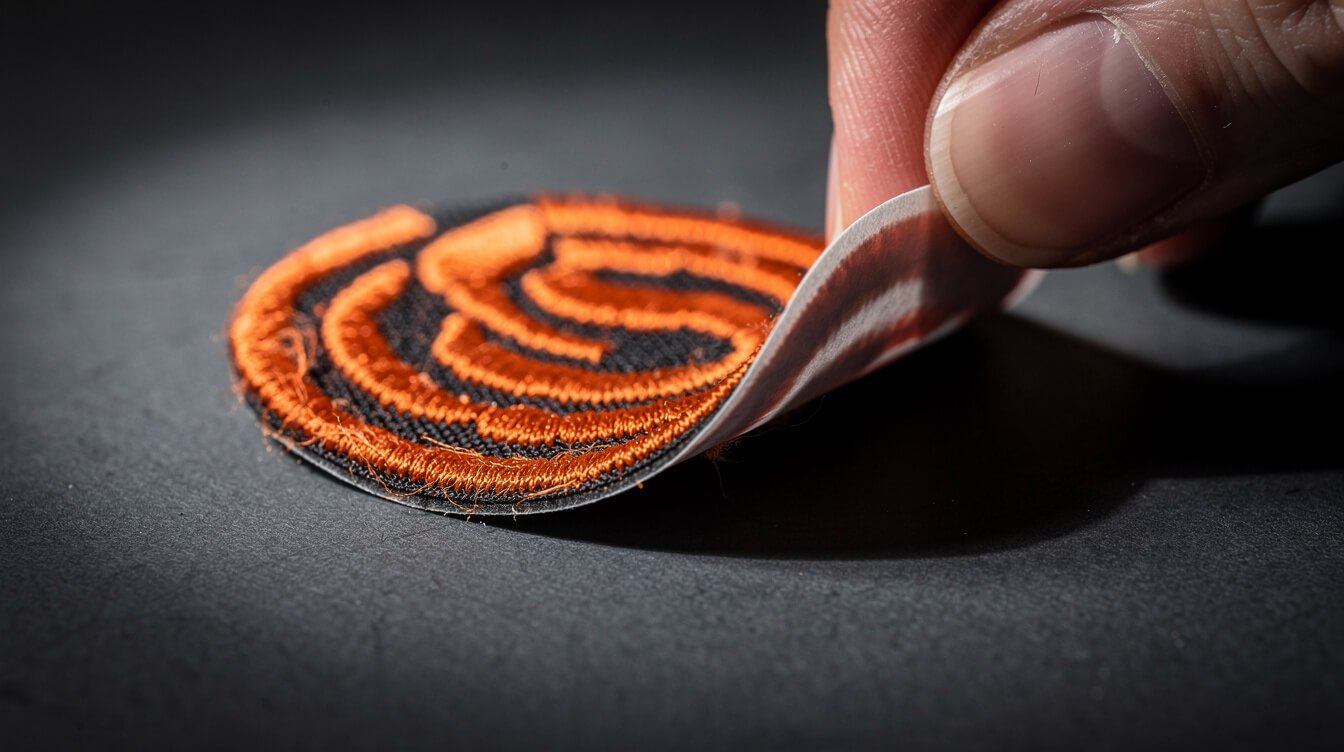
The “no minimum” claim in the patch world is often misleading. What vendors mean varies by patch type.
Sublimated patches: genuinely no-minimum
Because sublimated patches are a print process — similar to DTG for apparel — most vendors can do 1-piece runs economically. Vendors like StickerYou and similar print-on-demand services offer sublimated patches (sometimes called “fabric stickers” or “fabric patches”) with no minimum order quantity.
These are fully custom-shaped, full-color, and ship within 3-5 business days. The trade-off versus embroidery: they look printed, not stitched. Buyers who want texture and dimension will notice the difference.
Iron-on transfers: 1-piece is standard
Iron-on transfer patches (heat-transfer vinyl applied to a fabric backing) are also a print process. Many vendors offer these at 1-piece minimums. The customer receives a patch that they iron onto fabric at home. Production cost is $2-4 per piece at 1 unit.
These complement a custom iron-on transfers product line naturally, and they appeal to the DIY segment of the POD market.
Embroidered patches: “no minimum” means you absorb setup costs
When embroidered patch vendors advertise “no minimum,” they typically mean no minimum quantity — but they still charge a digitizing or setup fee of $10-25 per design. That fee applies to every unique design, regardless of quantity ordered.
At 1 unit with a $15 setup fee and $6 unit cost, you are at $21 per patch before shipping. If your retail price is $18, you lose money on the first unit of every new design. The economics only work if you order enough units to spread the setup fee.
The math on a $15 setup fee:
At 1 unit: setup cost = $15 of a $21 total (71% overhead).
At 5 units: setup cost = $15 of a $45 total (33% overhead).
At 10 units: setup cost = $15 of a $75 total (20% overhead).
At 25 units: setup cost = $15 of a $140 total (11% overhead).
The break-even on setup fees is around 8-10 units for most designs. Below that, sublimated patches are more economical for one-off or low-volume designs.
Listing patch products in WooCommerce
If you use a vendor that ships direct to your customer (drop-ship), the WooCommerce product setup is standard: title, description, price, product images (mockups). Set the product to “Simple product” if one size, or “Variable product” with a Size attribute if you offer 2-inch and 3-inch variants.
For vendors that ship to you first (you hold inventory), WooCommerce’s stock management handles quantity tracking. Set “Manage stock” on the product and enter your current inventory count. MEGA accelerates this step — you can generate the listing, mockup images, and SEO metadata for a new patch product in minutes and push it directly to your WooCommerce store. Try MEGA.
The Shopify fee math on custom patch sales

Custom patches have a typical AOV of $15-25. That is lower than most apparel. At this price point, the Shopify fee overhead matters more than it does on a $45 hoodie.
Here is the breakdown on a $20 patch order.
Shopify Basic ($39/month)
If you use a third-party payment processor (not Shopify Payments), Shopify charges a 2% transaction fee. On a $20 patch: $0.40 directly to Shopify.
Plus your payment processor fee (Stripe at 2.9% + $0.30): $0.88.
Total payment overhead: $1.28 per $20 order.
If you use Shopify Payments, the 2% transaction fee is waived, but Shopify Payments charges 2.9% + $0.30 on Basic: $0.88 per $20 order.
WooCommerce + Stripe
WooCommerce has no platform transaction fee. You pay only your payment processor.
Stripe: 2.9% + $0.30 = $0.88 per $20 order.
Platform fee: $0.
The difference per order is $0.40 (the Shopify transaction override) if you use a third-party processor. That sounds small. But at 100 patch orders per month on Shopify Basic with a third-party processor:
Shopify transaction fee: 100 x $0.40 = $40.
Monthly Shopify plan: $39.
Total Shopify overhead beyond payment processing: $79/month.
WooCommerce hosting on a VPS runs $10-30/month with no per-transaction overhead. The break-even where WooCommerce’s fixed cost beats Shopify’s variable overhead depends on your volume, but at 100+ patch orders per month, WooCommerce typically wins. At lower volumes, Shopify’s included hosting and setup simplicity may offset the fee math.
For a fuller breakdown, see the Shopify transaction fee analysis for POD sellers and the WooCommerce pricing breakdown for 2026.
Automate your patch listings in minutes
MEGA generates product listings, mockup images, titles, and SEO metadata for new patch products and pushes them directly to your WooCommerce store. Research to live listing in under 7 minutes.
When to use a bulk patch vendor vs a POD fulfillment partner

This is the question most patch guides avoid because it has an honest answer that is not “use our preferred vendor.” Here is the real decision framework.
Use a bulk patch vendor when:
- You have a fixed design that will not change — a brand logo, a team patch, a recurring seasonal design.
- You can confidently sell 25 or more units of that design before it goes stale.
- You want embroidered quality (raised texture, professional finish) that sublimation cannot match.
- You are running a limited drop model — take preorders, order in bulk, ship from stock.
At 50 units, embroidered patch costs drop to $2-3 per patch. Sell at $18 retail and you have $14-15 gross margin per patch. That is among the best margin rates in POD.
Use a POD-style fulfillment partner when:
- Every order is fully custom — customer uploads their own design.
- You are testing a design’s demand before committing to a batch order.
- Your volume is under 15 patches of any single design per month.
- You want zero inventory risk and zero upfront cost.
- You are selling sublimated or iron-on patches where the quality difference from embroidery is acceptable for your audience.
The break-even calculation
Scenario: you have a new embroidered patch design. Bulk setup cost is $15. Bulk unit cost at 10 is $5 per patch. POD-style drop-ship cost is $7 per patch (no setup fee).
At 1 unit: bulk costs $20 ($15 setup + $5 unit). POD costs $7. POD wins by $13.
At 5 units: bulk costs $40 ($15 + $5×5 = $40). POD costs $35 ($7×5). POD wins by $5.
At 7 units: bulk costs $50 ($15 + $5×7). POD costs $49 ($7×7). Near parity.
At 8 units: bulk costs $55 ($15 + $5×8). POD costs $56 ($7×8). Bulk wins.
The break-even is approximately 7-8 units for this scenario. Below 7, POD-style sourcing wins on economics. At 8 or more, bulk ordering gives you better margin per unit — and you get superior embroidered quality.
Run this calculation with your actual vendor quotes. The exact break-even shifts based on setup fees and unit pricing, but the structure of the math is consistent.
How to add custom patches to your WooCommerce store
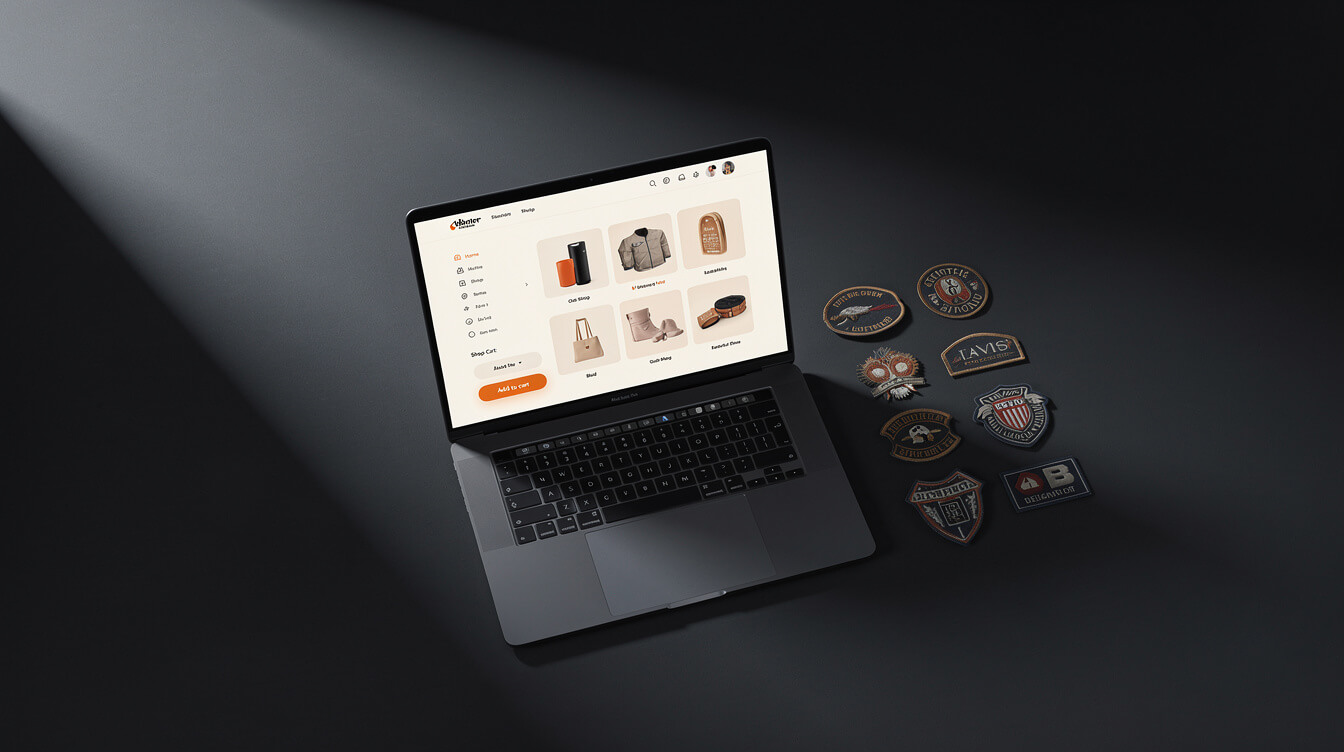
Setting up a patch product in WooCommerce is straightforward. The workflow varies depending on whether you are selling from inventory or using a drop-ship vendor.
Product type selection
For a patch in a single size: use a Simple product.
For patches in multiple sizes (2-inch, 3-inch, 4-inch): use a Variable product with Size as an attribute. Set individual prices per size if the cost varies.
If customers upload custom artwork, install an upload field plugin. Upload Fields for WooCommerce adds a file upload input to the product page. Set accepted file types to AI, PDF, SVG, and PNG. Specify minimum resolution (300 DPI for most patch vendors).
Product images and mockups
Your product images need to show the patch in context — not just a flat scan. A patch photographed on a denim jacket sleeve, or a lifestyle mockup showing the patch applied to a backpack, converts better than a plain background image. Use dark-themed, high-contrast imagery that fits your brand aesthetic.
Adding patches to your WooCommerce store also means thinking about how they fit into your broader product suite. Patches work as add-on products for custom sweatshirts and custom hoodies. Cross-link them in your product descriptions to increase average order value.
Fulfillment workflow: drop-ship
1. Customer places order on WooCommerce.
2. You receive an email notification with order details.
3. Submit the order to your patch vendor — most have an online portal or order form.
4. Vendor ships directly to your customer.
5. You mark the WooCommerce order as fulfilled and add the tracking number.
Fulfillment workflow: inventory-hold
1. Order 10-50 patches from your specialist vendor. Hold in stock.
2. Customer places order on WooCommerce. WooCommerce decrements your inventory count.
3. You package and ship from your own stock — padded envelope, $0.85-1.50 in packaging, standard postage.
4. Mark order fulfilled with tracking number.
Automation potential
Some patch vendors offer API access for order submission. Sticker Mule, for example, has a developer API. With a simple webhook on WooCommerce order creation, you can auto-submit new orders to the vendor without manual intervention. This is the kind of automation that makes the economics of low-AOV, high-volume patch selling viable.
Frequently asked questions about custom patches for POD sellers
Can Printful fulfill custom patches?
No. Printful offers embroidered apparel — logos on garments — but does not offer standalone custom patches as a product. If a customer orders a custom patch as its own item, Printful cannot ship it.
Does Printify have custom patches?
Some vendors within the Printify marketplace list patch products, but they typically require minimum orders of 10-50 units. There is no true no-minimum embroidered patch option in the Printify core catalog as of 2026. Check the Print Provider search in your Printify dashboard for the current state of the catalog.
What is the cheapest way to offer custom patches with no inventory?
Sublimated patches or iron-on transfer patches through a drop-ship vendor are the lowest-inventory-risk option. These print processes support 1-piece runs with no setup fees. Embroidered patches with true no-minimum sourcing are available from some vendors, but setup digitizing fees make single-piece orders expensive unless you are also absorbing that cost into a higher retail price.
How much should I charge for a custom patch?
A 3-inch embroidered patch typically retails for $12-20. Sublimated patches retail for $8-15. Price higher for PVC patches ($15-25) because the perceived value is higher and the customer base (outdoor, tactical, collector) is less price-sensitive. Do not undercut the market — patches are a specialty product, not a commodity.
Is WooCommerce better than Shopify for selling custom patches?
For patch sellers at consistent volume, WooCommerce’s zero platform transaction fee outperforms Shopify’s 2% override on non-Shopify-Payments processors. At lower volumes, the difference is smaller. The bigger advantage of WooCommerce is flexibility — you can integrate with any patch vendor’s API or portal without being constrained by Shopify’s app ecosystem. See the full WooCommerce pricing breakdown for the complete comparison.
Final thoughts on custom patches for your POD store
Custom patches are a legitimate, high-margin product line for WooCommerce sellers. They are not a plug-and-play Printful product — that distinction matters before you build a business around them. The sourcing requires more setup than apparel, but the economics at even modest volume are solid.
The honest framework: use sublimated or iron-on drop-ship patches while you test a design, and move to embroidered bulk orders once you can reliably sell 8-10 units of a design. Hold your patch business on WooCommerce where the platform fee is zero, and avoid the Shopify overhead that quietly eats margin on every low-AOV order.
Patches also build community. Collectors return. Repeat buyers are cheaper to acquire than new ones. A patch line is not just a product — it is a retention mechanism that your apparel catalog does not offer on its own.

Implement AI. 30x your throughput. Get a 30-min call with the founder.
Drop your details and book a free 30-minute discovery call. Personalized advice on your POD stack, your margin, and where AI fits. No pitch, no fluff.