Custom crop tops for POD sellers: which providers support them, DTG vs sublimation on stretchy fabric, and the streetwear niche math
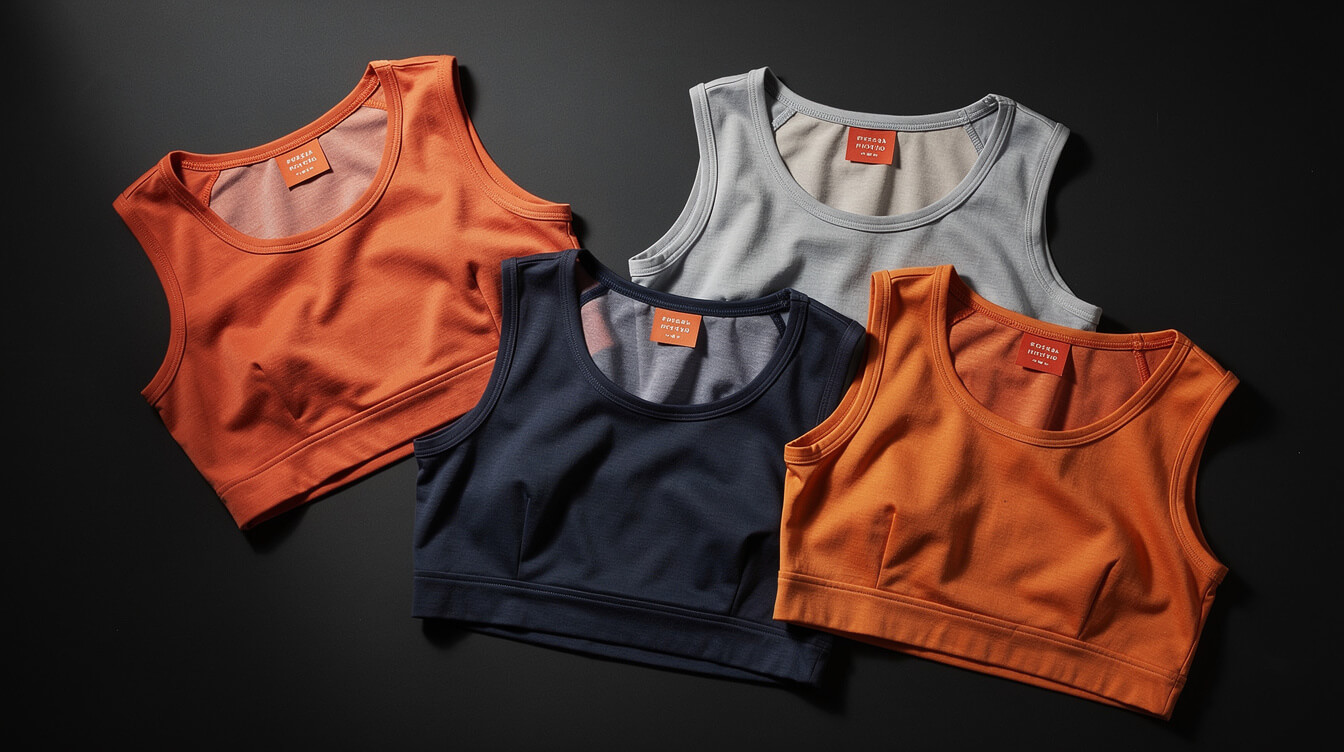
The custom crop top market is growing faster than most POD sellers realize. Streetwear, athleisure, and festival fashion are all driving demand for fitted, cropped styles that retail between $28 and $40. For print-on-demand operators, that price point creates a real opportunity. But adding custom crop tops to your store requires answers to two questions most providers skip over: who actually carries them, and which print method works on stretchy fabric. This post answers both, then runs the unit cost math so you know exactly what margin looks like at every volume tier.
The category is underserved from an editorial standpoint. Search for “custom crop top” and you will find B2B screen printers, wholesale vendors, and Amazon product pages. Zero content exists for POD sellers evaluating whether the category makes sense for their store. That is the gap this post fills.
Why crop tops are a growing POD opportunity: streetwear, athleisure, and festival
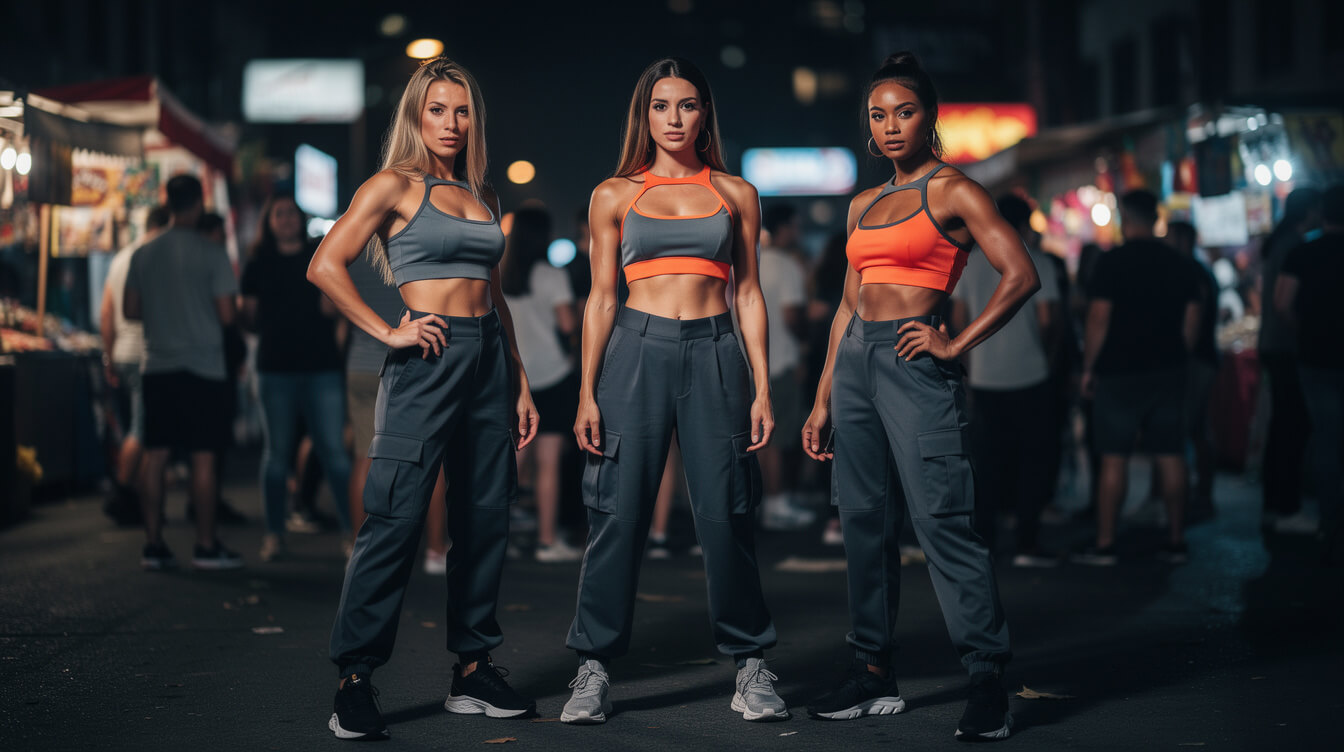
Three converging trends are pushing crop tops into mainstream POD territory. First, streetwear. The cropped silhouette is now standard in almost every independent streetwear brand you see on Instagram, from Los Angeles to Seoul. Second, athleisure. Fitted crop tops are the default training top for women who post workout content, and fitness influencers drive a significant share of POD discovery through social content. Third, festival and event merch. Event organizers, music collectives, and pop-up brands all want customized tops that work in heat, look editorial in photos, and are easy to wear over a bikini top or layered under an open shirt.
The POD angle here is favorable because crop tops are a personal-fit item. Buyers are not purchasing them for a team or a corporate giveaway. They are buying them for themselves or a small group, which means low-minimum fulfillment is exactly what they need. One buyer, one unit, shipped direct. That is print-on-demand’s natural territory.
The competitive SERP for “custom crop top” is almost entirely B2B. DTLA Print, screen printers with minimum orders, and Amazon consumer listings. Zero editorial content exists for POD sellers evaluating the category. That gap is real, and it is why this keyword converts at a higher rate than its 1,000 monthly search volume suggests. Buyers are actively looking for guidance, not just product pages.
One note on sizing before you add a SKU: crop tops sell in a narrower size range than standard tees. Most POD providers cap at XL or 2XL rather than offering 4XL or 5XL options. Understand your audience’s size distribution before building the listing. If you serve a size-inclusive customer base, verify your provider’s range first.
Which POD providers carry custom crop tops
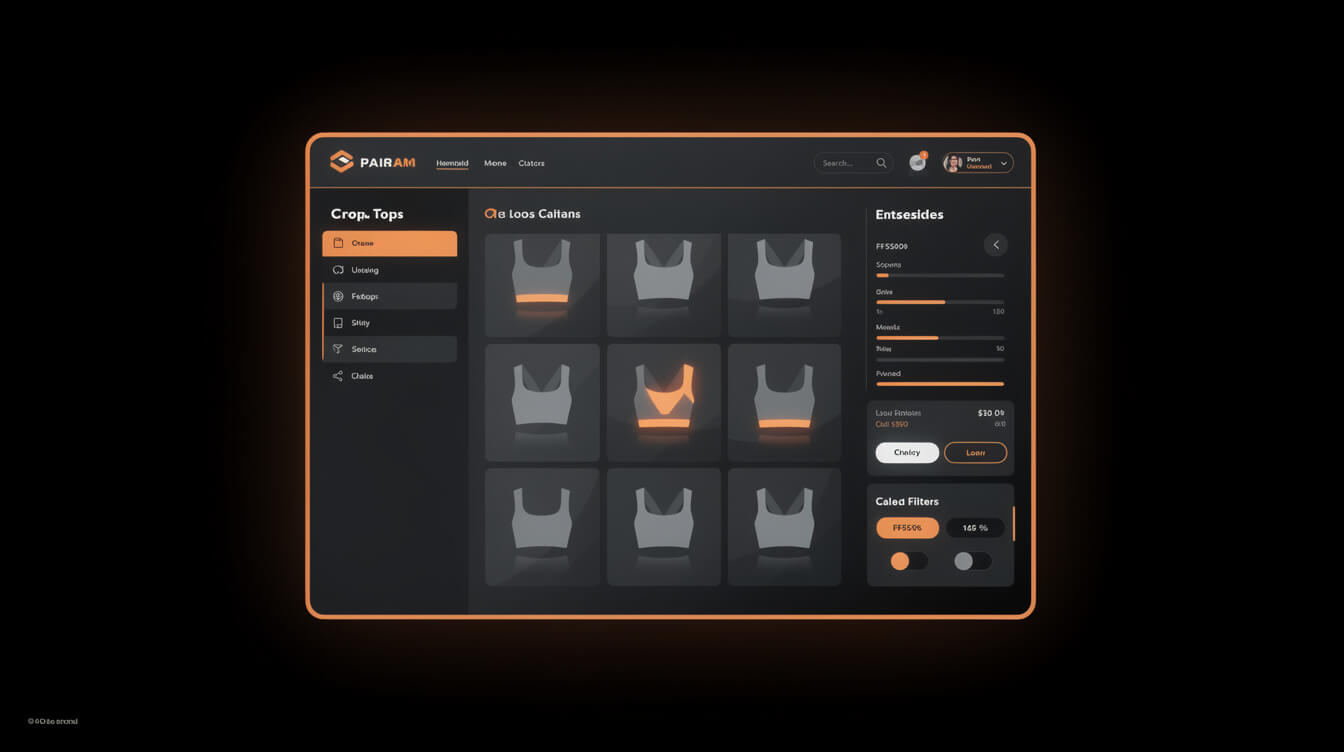
Not every major print-on-demand provider carries crop tops, and those that do vary significantly in style, print area, and fabric composition. Here is what the catalog looks like as of mid-2026.
Printful carries several crop top styles. Their most popular is the Bella + Canvas 6682 Crop Tank, a 100% cotton jersey crop top with a relaxed fit and a generous print area across the chest. They also carry a cropped pullover hoodie for colder-weather applications. The front print area on their crop tank is roughly 10 by 12 inches, which is standard for chest-focused designs. Back printing is available on most styles but at an added cost per unit. Printful also offers AOP (all-over-print) sublimation crop tops in polyester for brands that want full-wrap designs.
Printify carries crop tops through multiple print providers, which means the specific garment and print quality can vary depending on which provider fulfills the order. Printify’s catalog includes options from Monster Digital, The Dream Junction, and other major DTG houses. The print providers within Printify’s network use different base blanks, so a crop top ordered from a US-based provider may feel and fit differently from one fulfilled by their UK or EU partner. For a fashion-forward crop top where consistency matters to your brand, this variance is worth knowing in advance. Test an order before listing at volume.
The risk with Printify’s multi-provider model is consistency: if the same customer reorders six months later, the fulfillment provider may have changed and the garment may feel different. For a fashion-forward crop top, consistency matters more than average.
Gooten is another option for crop tops, with a catalog that leans toward standard cut-and-sew styles. Their fulfillment network is broader geographically, which can be useful for international orders.
Printful and Printify are the two most evaluated options for crop tops if you are prioritizing consistent quality and predictable fulfillment times. If you are in the all-over-print AOP camp, Printful’s AOP sublimation service covers crop tops in polyester fabric, which opens up full-wrap designs that go edge-to-edge across the front and back.
What to check before adding a crop top SKU to your store: fabric content (cotton-rich vs polyester changes your print method, covered below), available sizes and fit (crop tops often only go to 2XL), the print area dimensions in inches, whether back printing is supported, and the mockup template quality. Download the mockup from your provider and stress-test the design before going live.
Print methods for custom crop tops: DTG vs sublimation on cotton-spandex fabric
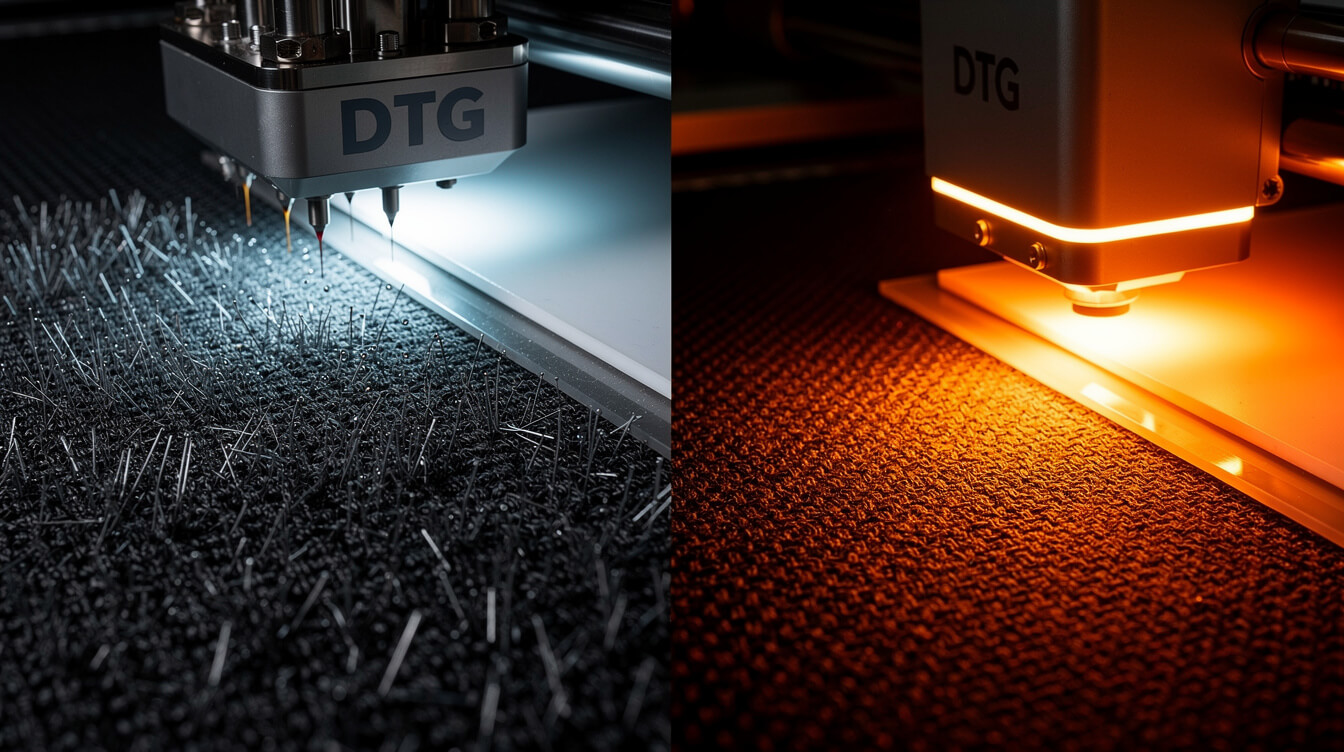
This is where most guides stop short. The fabric composition of a crop top changes the print method calculation in ways that matter at a unit-cost level.
DTG (direct-to-garment) works best on cotton-rich fabrics. The standard Bella + Canvas crop tank is 100% cotton or a cotton-modal blend, which makes it ideal for DTG. The ink bonds directly with the cotton fibers and produces a soft, wash-durable print. DTG is front-panel-focused: you get a defined rectangular print area, typically chest-centered. It does not wrap around seams, stretch marks, or curved hemlines. For a standard brand logo or graphic on a cotton crop top, DTG is the right method.
The limitation with DTG on stretchy fabric becomes apparent when the fabric has a significant spandex content. Spandex does not absorb DTG ink the same way cotton does. A 95% cotton / 5% spandex blend is usually fine. A 60% polyester / 40% spandex athletic top is not, because the ink sits on the surface rather than bonding with the fibers, leading to wash degradation much faster than the buyer expects. Always check the fabric content percentage before placing the first order.
Sublimation solves the polyester problem by using heat and pressure to drive dye into the polyester fibers rather than sitting on top of them. The result is permanent, wash-safe color that does not crack or fade. Sublimation also allows all-over-print (AOP): you can design the entire front, back, and sleeves as one continuous canvas rather than being constrained to a chest panel. For streetwear and festival brands where the design is the garment, AOP sublimation is worth the premium.
The trade-off: sublimation requires a fabric that is at least 80-85% polyester. It does not work well on dark-colored garments because the sublimation dye is semi-transparent and dark base fabric mutes the colors. For a white or pastel base polyester crop top, sublimation delivers vibrant results. For a black crop top with a bold logo, DTG on cotton is the better call.
Quick decision matrix:
- Cotton crop top, simple front graphic: DTG
- Polyester crop top, all-over print design: AOP sublimation
- Athletic/spandex top, performance wear: AOP sublimation (check provider catalog for poly-spandex options)
- Cotton blend, embroidered logo: embroidery on front panel (adds digitization fee, see our guide to screen printing and embroidery methods for the break-even math)
Unit cost math for custom crop tops: 1 unit, 10 units, 50 units

Smash print-on-demand. Join the engine room.
One short email a week. Real numbers, real teardowns, the unfiltered economics behind every move.
Here is what the numbers look like across three volume tiers. These are representative figures based on mid-2026 provider pricing and should be verified against your specific provider’s current rates before making sourcing decisions.
1 unit via POD (Printful/Printify): A standard DTG crop tank via Printful runs approximately $16-18 for the blank plus printing. Add the packaging insert and standard shipping to a US address and your total landed cost before your retail margin is roughly $22-25. You set the retail price. At $35 retail, you keep $10-13 per sale. That is a 28-37% gross margin at zero inventory risk.
10 units via POD: Per-unit cost stays roughly the same as single-unit POD. There is no bulk discount on POD fulfillment. Where you save is on time: automating the order routing means you are not doing anything manually. If you sell 10 units at $35, gross margin stays at $10-13 per unit, and your total gross on those 10 sales is $100-130 before your store overhead costs.
50 units via a B2B printer (DTLA Print, etc.): B2B screen printers like DTLA Print charge $6.21-$14.38 for blank wholesale crop tops, then add printing at a per-unit rate that drops with volume. At 50 units with a single front-print design, your total landed cost might be $12-16 per unit. That is cheaper per unit than POD, but it requires upfront capital, storage space, manual order fulfillment, and you are carrying inventory risk. If your 50-unit run does not sell, you hold the stock.
The POD model wins at zero and low volume because the unit economics are close enough and the operational overhead is zero. The B2B model wins when you have a proven design with consistent demand above 30-50 units per month, because the margin improvement at scale justifies the inventory risk. Most POD sellers should start POD, validate the design, then explore B2B printing only after demand is confirmed.
MEGA automates the research-to-product pipeline that lets you validate designs faster. Instead of spending six hours in Canva creating one crop top listing, the MEGA engine generates the full product stack end-to-end, from niche research to mockup to listing, so you can validate multiple designs in parallel without the Canva overhead.
The Shopify 1% fee at $28-40 crop top AOV

Crop tops have a tight average order value. At $28-40 per unit, they sit at the lower end of the apparel AOV spectrum. That makes platform fees proportionally more painful than they are for higher-ticket categories like custom polo shirts at $55-75.
Shopify’s 1% platform override fee applies to all sales processed through third-party payment gateways (anything other than Shopify Payments). On a $35 crop top sale, that is $0.35 per transaction. Alone, that sounds small. Run the math at scale.
At $3,000 per month in crop top revenue: $30/month in Shopify platform fees. At $5,000/month: $50/month. At $10,000/month: $100/month. At $10k/month, you are giving Shopify $1,200 per year in platform fees on top of your subscription fee, Shopify Payments processing rate, and app costs. For a low-AOV product like a crop top, that compounds over time.
The fee becomes more noticeable because crop tops are often part of a bundle or wardrobe-building purchase. If a customer buys two crop tops at $35 each, the order value is $70 but the per-item fee math still bites. Your gross margin on that $70 order includes $0.70 in Shopify platform fees before you count payment processing.
Compare this to a WooCommerce-based apparel store where the 1% platform override does not exist. WooCommerce charges nothing per transaction beyond standard payment processing (Stripe, PayPal, etc.). At $10k/month in crop top revenue, you keep the full $1,200 per year that Shopify would take. Over five years, that is $6,000 in avoided platform fees, which is real capital for product development, paid promotion, or additional inventory.
The WooCommerce setup requires more technical lift than Shopify, but for a POD apparel store that is scaling past $3-5k/month in revenue, the math makes the switch worth evaluating. The Printful WooCommerce plugin connects fulfillment to your store without a Shopify subscription in the loop.
Niche verticals that drive custom crop top sales
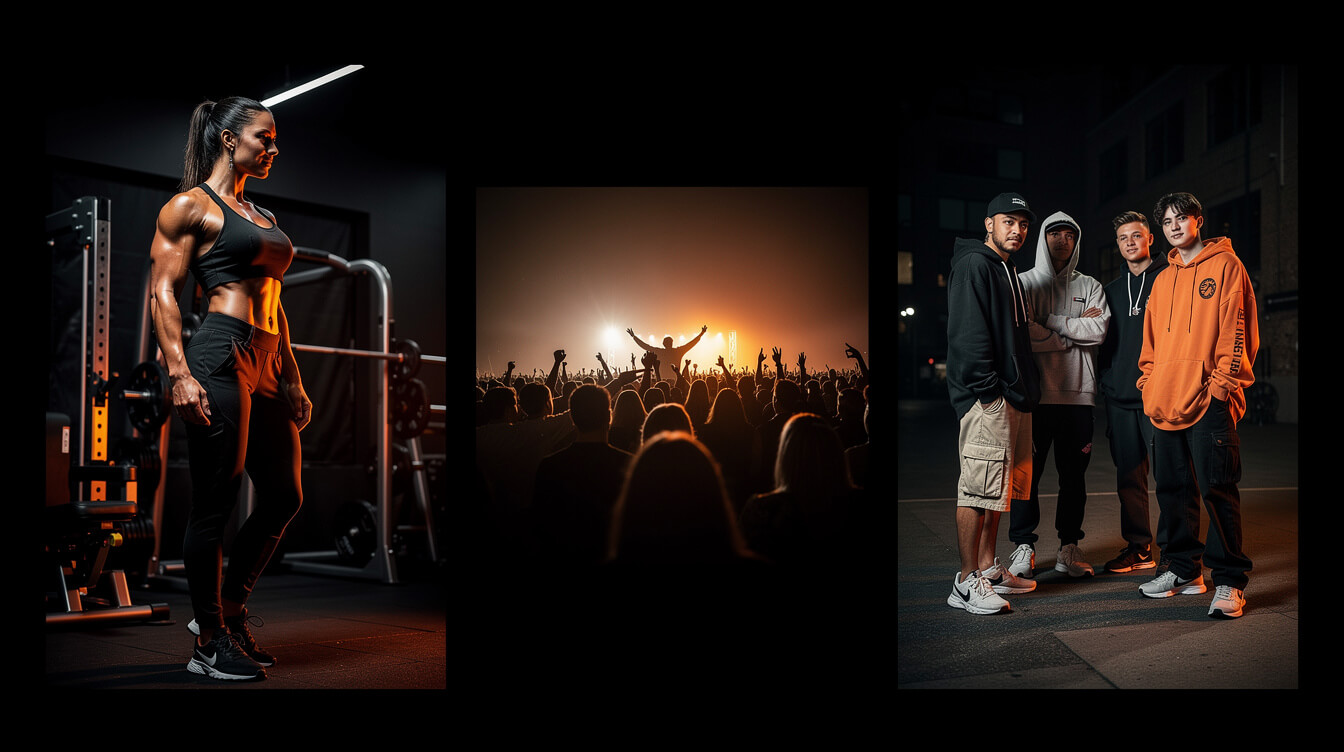
Not every niche performs equally for crop tops. These are the five that convert most reliably for POD operators.
Streetwear brands: Independent streetwear has built the crop top into its visual vocabulary. Short cropped hoodies, cropped tees with oversized graphics, and cut-off styles are all in active demand. Streetwear buyers are design-led, not price-led, which means a strong graphic at $38-42 will outsell a generic logo at $28. Invest in design quality here. The streetwear audience also values limited drops over permanently available SKUs. A seasonal drop of three or four designs creates more urgency than a catalog of 20 always-available options.
Fitness influencers and gym communities: This niche requires a poly-spandex or performance fabric base, which pushes you toward sublimation or a specialized AOP provider. Buyers in this space care about stretch, breathability, and wash durability. Printful’s AOP polyester crop options work here. Margins are tighter because performance fabric blanks cost more, but the repeat customer rate is high: gym-goers reorder when a style wears out or when a new colorway drops.
Festival and event merch: Music festivals, art fairs, and outdoor events all create short-window demand for custom crop tops. The design window is 6-8 weeks before the event, and demand drops steeply after. POD is ideal here because you carry no post-event inventory. Price to the event context: $35-45 is acceptable when the product is tied to a specific experience. Work with event organizers directly if you can, since they often need 20-50 units of a specific design on a short timeline.
Women-led brands and creators: Female-founded brands in the lifestyle and wellness space use crop tops as a signature merch item. These buyers care about fit accuracy, so size charts and detailed mockups matter more here than in other niches. Get the sizing copy right. Offer a clear measurement guide. A return due to sizing confusion costs more in customer service time than it saves in unit economics.
Seasonal drops: Summer is peak for crop tops, but structured seasonal drops (spring collection, summer drop, festival season) drive anticipation and urgency better than a permanently listed SKU. Consider running your crop top as a seasonal limited SKU rather than a year-round catalog item. Scarcity mechanics tend to work well for fashion-forward products. The same approach applied to custom zip-up hoodies shows how seasonal apparel drops build repeat buyers over time.
WooCommerce vs Shopify for fashion and apparel POD stores
Fashion and apparel POD stores have a specific set of requirements that make the platform decision more consequential than for generic POD categories.
First, product variation complexity. A single crop top SKU in three colors and six sizes is 18 variants. Add two print options (front-only DTG vs AOP sublimation) and you hit 36 variants. WooCommerce handles this through variable products with unlimited attribute combinations. Shopify handles it too, but variant limits per product (100 on most plans) can become a real constraint as you add colorways over time.
Second, customer data ownership. Fashion buyers are repeat customers when the product is right. On Shopify, your customer data lives inside Shopify’s platform. On WooCommerce, you own the database entirely. For a brand building a customer list of fashion buyers, that distinction matters for email segmentation, retargeting, and long-term CRM strategy. Your customer list is a business asset. On WooCommerce, it is yours outright.
Third, the fee structure at fashion price points. As covered above, the Shopify 1% override at $28-40 AOV is not catastrophic, but it is a real leak that accumulates over time. WooCommerce eliminates it entirely.
The practical recommendation: if you are new to POD, start on Shopify for the lower setup friction. If you are past $3k/month in apparel revenue and building a real brand, evaluate WooCommerce seriously. The Printful WooCommerce plugin provides the same fulfillment automation you get with Printful’s Shopify app. The platform fee savings are real at scale.
For a deeper look at how platform economics play out across different apparel categories, the custom embroidered sweatshirt guide covers the full platform cost stack for an embroidery-heavy apparel store, including how digitization fees change the break-even calculation on both platforms.
The crop top category rewards sellers who move fast. Trends in streetwear and athleisure cycle quickly, and a design that resonates in March may feel dated by September. The POD model is built for that velocity. Zero inventory, zero minimum order, and the ability to add or retire SKUs without financial risk is exactly what fashion-forward POD demands. Start with one or two designs, validate the click-through on your listings, and expand only when the data supports it.
Implement AI. 30x your throughput. Get a 30-min call with the founder.
Drop your details and book a free 30-minute discovery call. Personalized advice on your POD stack, your margin, and where AI fits. No pitch, no fluff.