Custom merchandise for your business: POD automation vs. ordering in bulk
Custom merchandise has a definition problem. Ask ten business owners what it means, and eight of them will describe the same workflow: pick a vendor, upload a design, order 100 units, wait three weeks, pay up front, hope the sizing is right. That is not the only model. It is just the one that shows up on the first page of Google because every vendor running paid ads wants you to think it is.
There is a second model. In the second model, your customers order custom merchandise directly from your store, your print partner ships each order individually, and you never touch inventory. Your upfront cost is zero. Your margin is lower per unit, but your risk is also zero. The two models solve different problems for different business types, and choosing the wrong one is expensive.
This guide explains both models with real unit economics, shows you when each one makes sense, and walks through how to launch the print-on-demand version on WooCommerce using Printful and the MEGA pipeline.
What “custom merchandise” actually means in 2026 (the two models most guides skip)
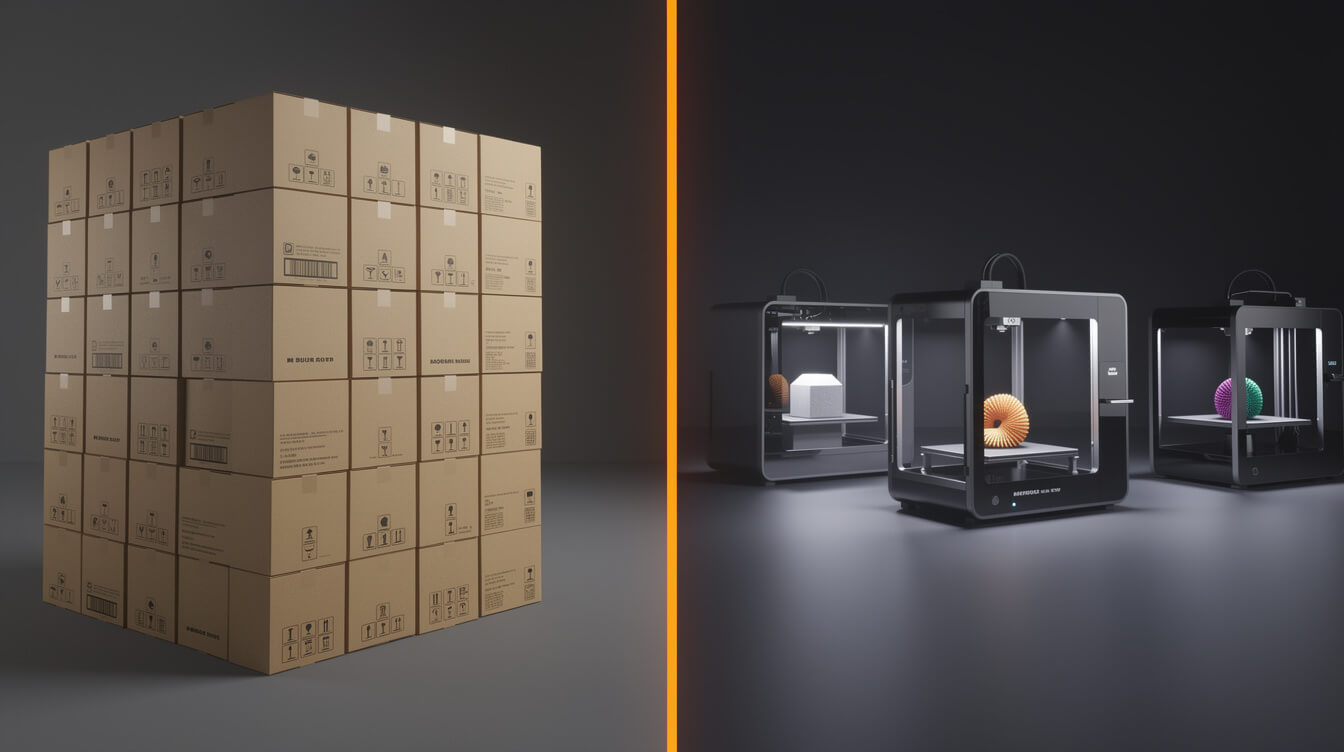
The phrase “custom merchandise” covers two fundamentally different business operations, and the guides you find from CustomInk, Vistaprint, and Lands End Business almost never mention both. They are in the business of selling you bulk orders. Their financial model depends on minimum quantities, so their content is written to lead you toward minimum quantities.
Here is how the two models actually work.
Model 1: Bulk ordering
You design a product. You order a minimum quantity — typically 24 to 500 units depending on the vendor and product type. You pay for everything up front. The vendor produces your items in a single production run, boxes them up, and ships them to you. You now own inventory. You sell through it or you do not.
This model is built for a specific scenario: a company ordering branded polo shirts for a team of 50 people, an event organizer ordering 300 tote bags for a conference, a non-profit ordering 150 hoodies for a fundraiser. Everyone knows what they need, the quantity is defined, and the purpose is not resale.
Model 2: Print on demand (POD)
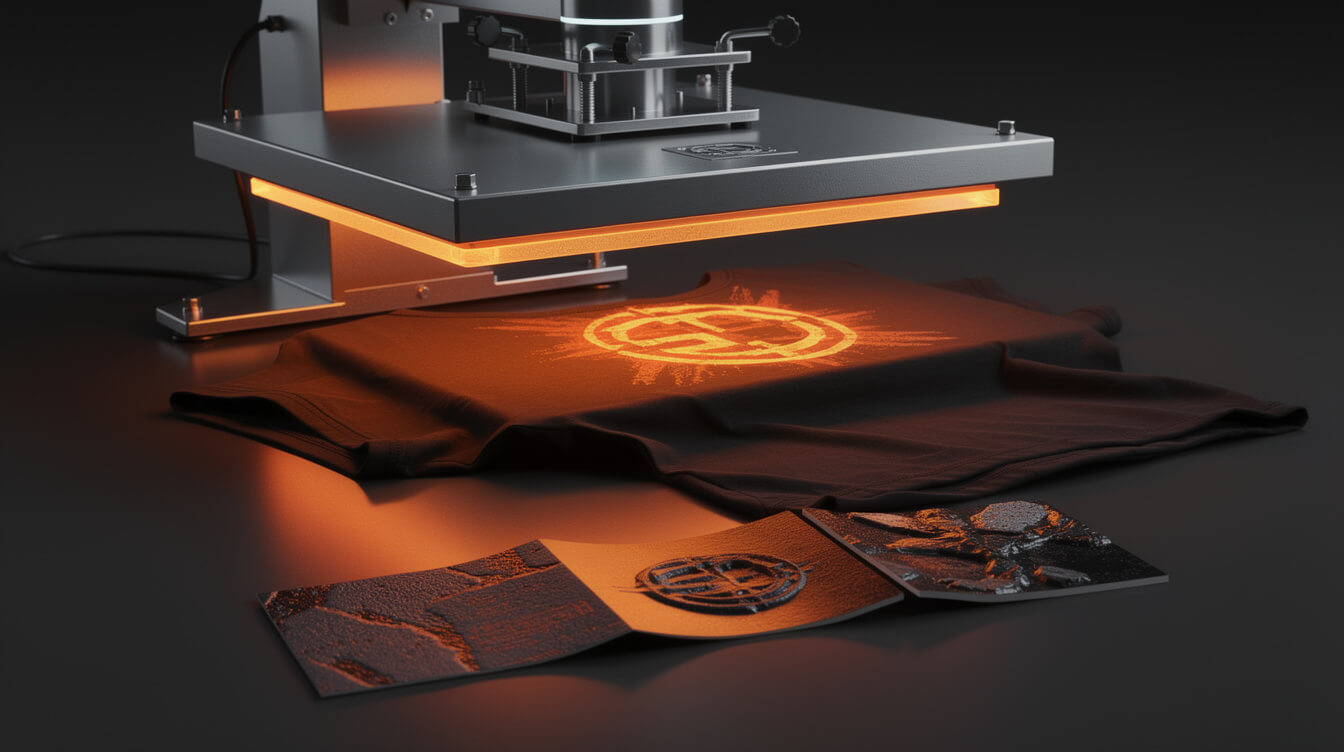
You create product listings in your online store. A customer visits your store and orders one item. Your print partner receives the order automatically, produces that single item, and ships it directly to your customer. You never see the physical product. You never hold inventory. You pay your print partner for each order after it is placed.
This model is built for a different scenario: building a merch revenue stream from an existing brand or business, launching a niche merchandise store, or automating product creation at scale. The economics are different. The risk profile is different. The operational complexity is different.
The problem is that most people searching for “custom merchandise” do not know which model they actually need. They end up on a CustomInk or Vistaprint page, order 100 units of something, and either warehouse inventory or leave it in a closet. If they had started with the POD model, they would have paid nothing up front and learned what their customers actually wanted to buy.
The bulk-order model: how CustomInk, Vistaprint, and Merchology work (and what it costs)
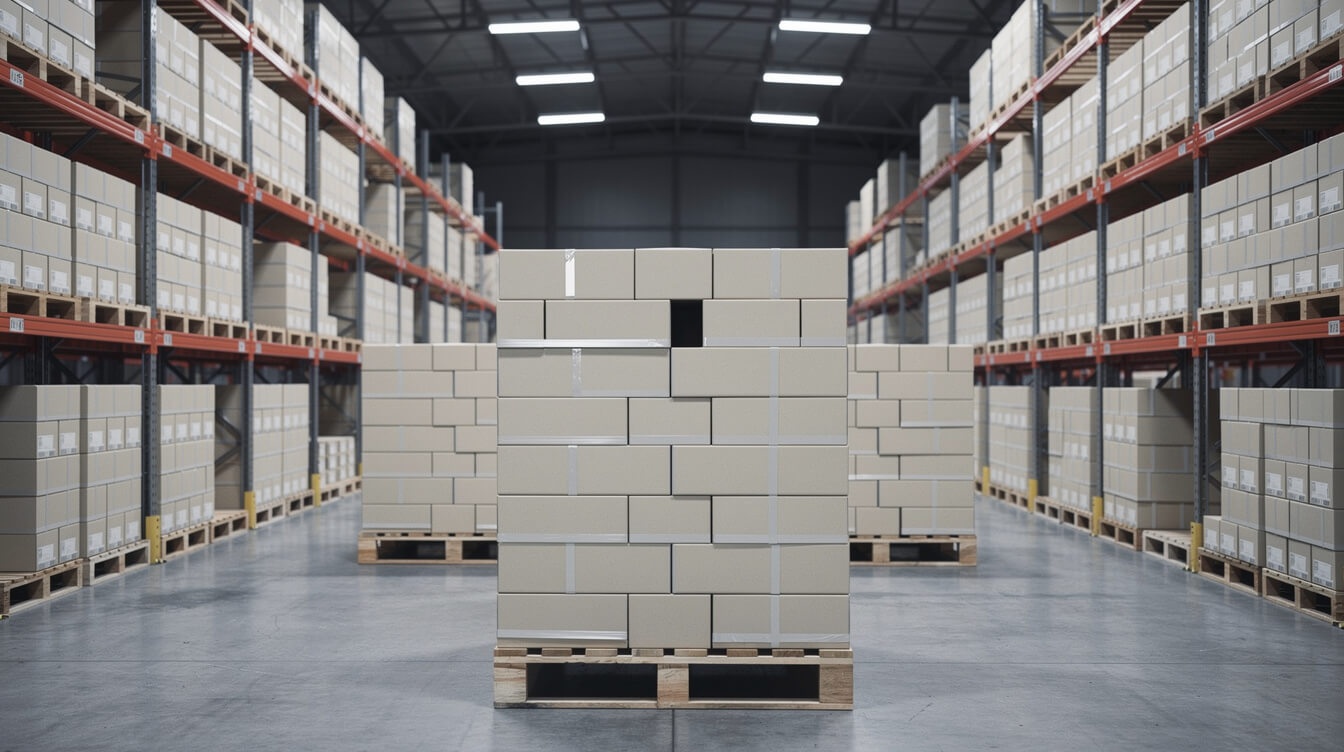
The major players in bulk custom merchandise are CustomInk, Vistaprint, Merchology, and Lands End Business. They all operate on the same economic model: you order in quantity, they produce in a single run, and the per-unit cost drops as your quantity goes up.
How the pricing works
A basic custom t-shirt from CustomInk at a quantity of 24 units runs roughly $12 to $18 per shirt depending on garment quality, number of print colors, and print location. At 100 units, that same shirt drops to $8 to $12. At 300 units, you can reach $6 to $8 per unit for a standard cotton tee with a one-color front print.
Vistaprint and Merchology work similarly but skew toward promotional products (bags, drinkware, pens) and corporate apparel (polos, quarter-zips, fleeces). Their minimums are often lower, but their garment quality ceiling is also lower.
What the bulk model costs beyond unit price
The unit price is the number vendors advertise. It is not the total cost.
- Setup fees: Most vendors charge a screen setup fee of $20 to $50 per color, per location. A two-color front and back print on a polo has four screens. That is up to $200 in setup before you produce a single shirt.
- Minimum order requirements: Running below minimum quantity typically means a surcharge of 20 to 40% per unit.
- Shipping: Bulk orders ship by the box. A 100-unit order of hoodies weighs 25 to 35 pounds. Freight from a fulfillment center in the US is $40 to $80.
- Storage: You now own 100 items. If you are not selling them immediately, they need somewhere to go.
- Cash flow: You pay in full before production begins. If your lead time is 10 to 15 business days, your capital is tied up for three weeks before you can sell a single unit.
None of this makes bulk ordering a bad model. For the right use case — known quantity, defined purpose, team or event — it is efficient and the per-unit cost is genuinely lower than POD at equivalent quality. The problem is using it when you should not.
The POD model: your customers order, your printer ships, you own the store
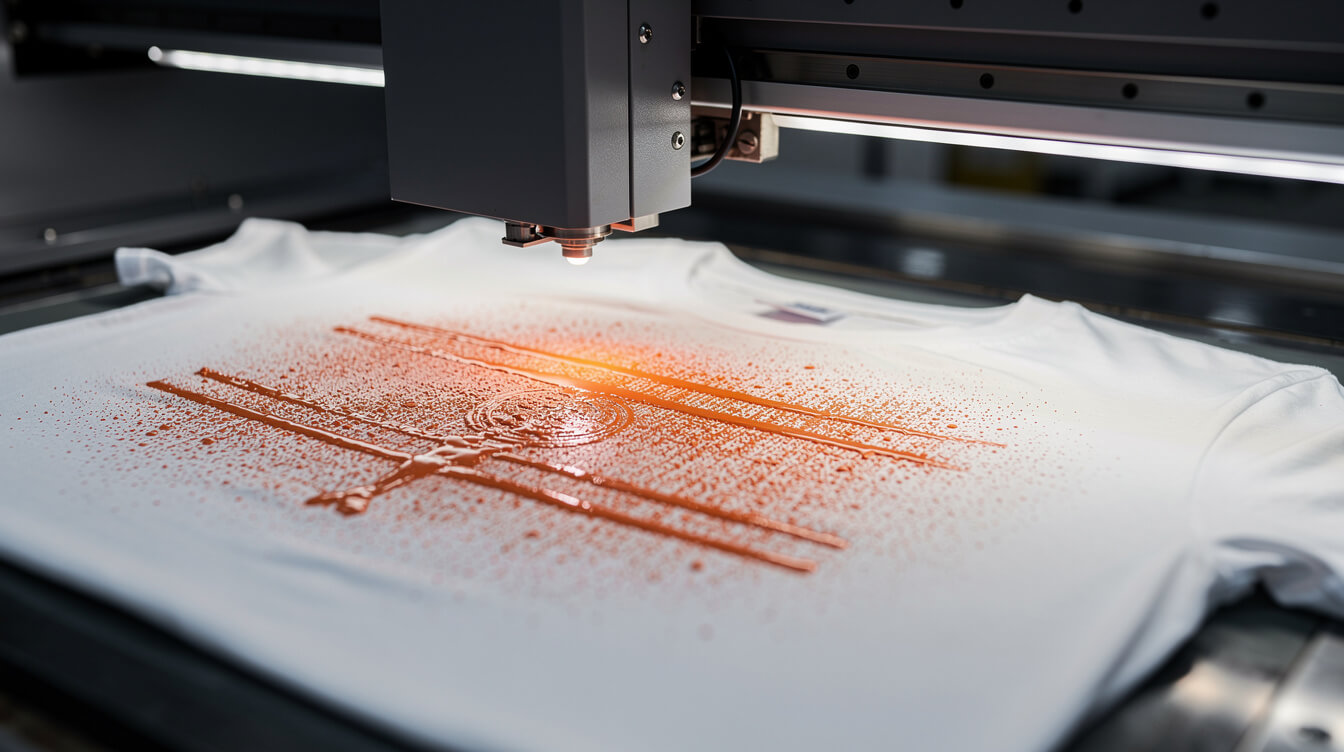
Print on demand inverts the risk structure of custom merchandise. Instead of buying inventory and hoping to sell it, you list products in your store and pay for production only after a sale happens.
The major POD fulfillment partners are Printful, Printify, and Gelato. Each connects to your e-commerce store via a plugin or API integration. When a customer places an order, the fulfillment partner receives it automatically, produces the item, and ships it with your branding.
How a POD order flows
The operational sequence looks like this: customer visits your store, selects a product, checks out, your store sends the order to Printful via webhook, Printful prints and ships, and the customer receives the item in 3 to 7 business days. You receive notification when the order ships. You never touch the product.
This is not theoretical. A well-run POD store on WooCommerce with Printful can handle 50 to 500 orders per day without any additional operational overhead on your side. The constraint is your marketing and product creation pipeline, not fulfillment capacity.
What you own with POD
The strategic advantage of the POD model is ownership. If you run your store on WooCommerce, you own the customer data, the storefront, and the brand. There is no platform intermediary taking a cut of your revenue. There is no Shopify 0.5% to 2% transaction fee stacking on every sale. There is no marketplace algorithm deciding whether your products surface to buyers.
Etsy, Redbubble, and Amazon Merch give you a marketplace but charge fees and own the customer relationship. POD on WooCommerce gives you a store you own, with the same production infrastructure, and zero platform override tax.
Unit economics side by side: bulk at $8/unit vs. POD at $14/unit (what the spreadsheet says)

Smash print-on-demand. Join the engine room.
One short email a week. Real numbers, real teardowns, the unfiltered economics behind every move.

Let us run the actual numbers for a standard unisex t-shirt. These are real-world costs, not marketing estimates.
Bulk order scenario: 100 units
- Garment + print (100 units, one-color front): $8.00/unit
- Screen setup (2 screens at $35 each): $70 total, $0.70/unit amortized
- Shipping inbound (bulk to your location): $60 total, $0.60/unit amortized
- True cost per unit: $9.30
- Sell price: $25.00
- Gross margin per unit: $15.70 (63%)
- Risk: 100 units of inventory, $930 capital deployed up front
POD scenario: WooCommerce + Printful, one unit at a time
- Printful base cost (Bella+Canvas 3001, one-color DTG front): $13.25 to $14.50 depending on size
- No setup fees, no minimum order
- Shipping to customer included in fulfillment cost
- True cost per unit: $14.00 average
- Sell price: $28.00 to $32.00 (POD stores command slight premium for shipping speed and customization)
- Gross margin per unit: $14.00 to $18.00 (50% to 56%)
- Risk: zero capital deployed. You collect payment before production begins.
What the spreadsheet actually shows
At first glance, bulk wins on margin. $15.70 per unit at bulk versus $14.00 to $18.00 at POD looks comparable, but the bulk scenario assumes you sell all 100 units. If you sell 60 units and the remaining 40 sit in a box, your effective margin on those 60 drops to $7.35 per unit on the $930 deployed. Your return on capital is 47%, not 63%.
POD has no sellout risk. Every sale generates the same margin. There is no inventory carrying cost and no capital tieup. For a new product or a new niche you are testing, the POD model’s lower per-unit margin is not a disadvantage. It is risk-adjusted return on capital that is almost always better than bulk ordering for untested products.
Where bulk ordering wins: you have proven demand, a known customer base, and you are ordering merchandise for internal use (team uniforms, event swag, client gifts) with no resale risk. In that scenario, the $8/unit versus $14/unit difference is real and worth capturing.
Which model wins for your business (the honest decision matrix)

The right model depends on what you are actually trying to accomplish. Here is the decision logic.
Choose bulk ordering if all of these are true
- You have a defined, known quantity with a specific purpose (team of 40, event of 200 attendees, client gift run of 75)
- The merchandise is for internal distribution, not resale
- You can absorb the capital cost up front without affecting operations
- The per-unit cost difference matters to your budget
- You do not need to test demand — you already know exactly what you need
Choose POD if any of these are true
- You are building a merchandise revenue stream alongside an existing business or brand
- You want to test product-market fit before committing inventory capital
- You want to offer ongoing product sales rather than one-time order fulfillment
- You plan to run more than one design or product SKU and need the flexibility to add or remove products without waste
- You do not want to manage inventory, storage, or fulfillment logistics
The gray area: hybrid stores
Some businesses run both. A beverage brand might use bulk ordering for staff uniforms and event merchandise while running a POD store on WooCommerce for fan merchandise that ships direct to customers. These are not competing operations. They serve different buyers with different purchasing patterns, and separating them prevents the operational confusion of trying to use bulk minimums for long-tail SKUs.
If you are reading this guide because you want to sell merchandise online to people who are not already on your team, the POD model is almost certainly the right starting point. Zero up-front capital, instant scalability, and no inventory risk means you can launch, test, and iterate without financial exposure.
The WooCommerce vs. Shopify comparison is relevant here: Shopify charges 0.5% to 2% of every transaction on top of your payment processor fees, plus $29 to $299 per month in platform fees. WooCommerce charges neither. For a POD store doing $5,000 per month in sales, Shopify’s transaction fee alone costs $25 to $100 every month that WooCommerce does not.
How to launch a custom merchandise store on WooCommerce with Printful: the MEGA pipeline
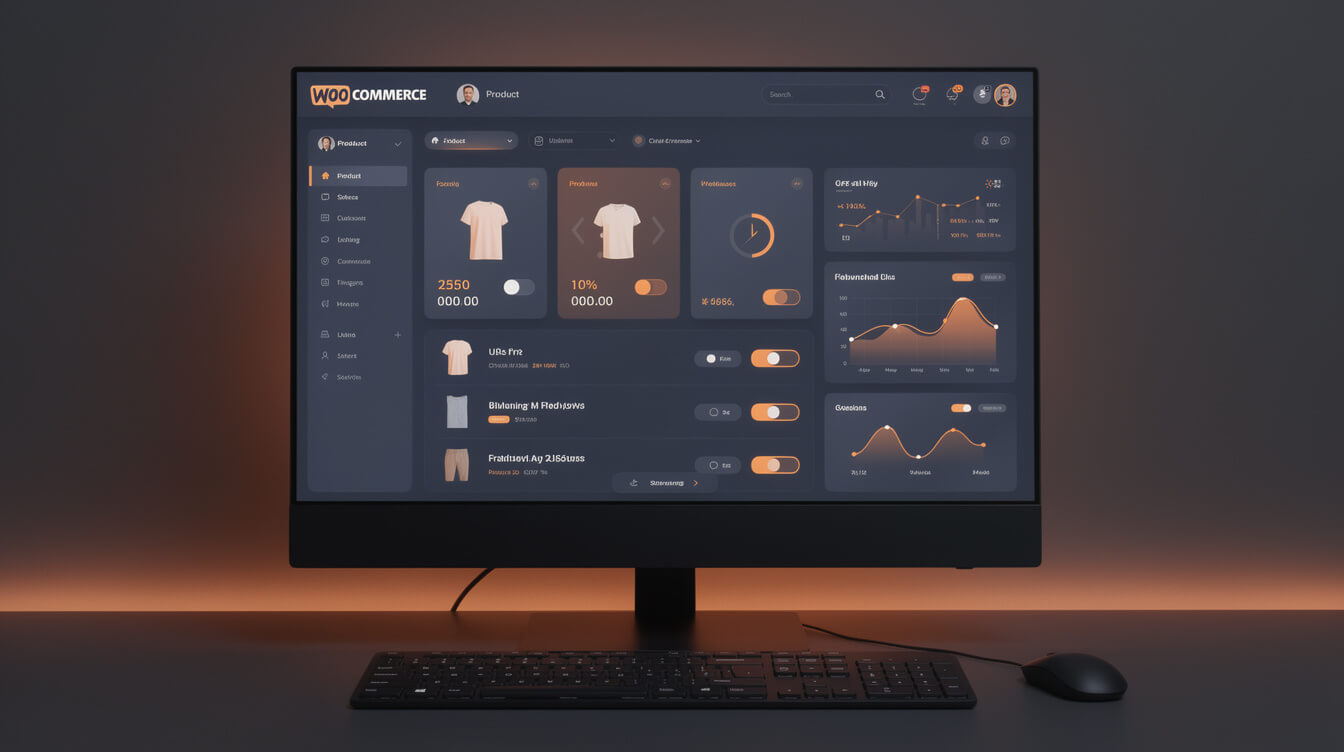
The operational question for POD sellers is not whether to use WooCommerce and Printful — that combination is well-established and the integration is reliable. The question is how to build products fast enough to scale.
Manual POD product creation takes 45 to 90 minutes per SKU. Research the niche, generate or source a design, mock it up, write a title, write a description, fill in SEO fields, configure variants, set pricing, and publish. A store with 50 products represents 37 to 75 hours of manual work. That is before you touch marketing.
The WooCommerce + Printful baseline
Here is the technical foundation for a POD store on WooCommerce:
- Hosting: A managed WordPress host. Kinsta, WP Engine, or SiteGround’s WooCommerce plan. Budget $30 to $50/month.
- WooCommerce: Free plugin. Install via WordPress dashboard.
- Printful plugin: Free from Printful. Connects your WooCommerce catalog to Printful’s product catalog and handles order routing automatically.
- Payment processing: Stripe or PayPal. Standard 2.9% + $0.30 per transaction. No additional platform fee from WooCommerce.
- Product listings: This is where the time goes.
The baseline setup is not technically difficult. It takes two to four hours to configure correctly. The constraint is product creation velocity — specifically, how fast you can go from a niche idea to a live, optimized product listing.
Where MEGA comes in
MEGA automates the research-to-product pipeline. You feed a niche idea — “vintage national park posters” or “dog breed coffee mugs” — and MEGA runs niche research, generates AI designs sized to Printful specs, writes SEO-optimized titles and descriptions, creates mockups, and publishes the product to both Printful and WooCommerce simultaneously. The whole sequence runs in under 7 minutes per product.
For a store owner who wants to build a 200-SKU catalog across 10 niches, MEGA replaces 150 to 300 hours of manual work with a pipeline that runs on a schedule. Try MEGA if you want to understand what automated product creation looks like in practice for a WooCommerce store.
Build a custom merchandise store 30x faster with MEGA
MEGA automates the full research-to-product pipeline for WooCommerce + Printful stores. Niche research, AI design generation, SEO titles, mockups, and product publishing in under 7 minutes per SKU.
AI-generated custom merch designs: from niche idea to live product listing in under 7 minutes
The design question is where most new POD store owners hit their first real wall. Custom merchandise requires custom designs. If you can not design, and you can not afford to outsource every SKU, your product creation velocity is capped at whatever you can produce manually or commission affordably.
AI image generation changes the economics of design for POD. Flux, Midjourney, and Stable Diffusion can produce print-quality artwork for custom merchandise at a cost of $0.04 to $0.08 per image. A 10-design niche bundle costs under a dollar in generation fees. The design quality, when prompted correctly, is good enough for DTG printing and mockup generation.
What AI design generation requires
The workflow is not just “type a prompt and get a design.” Effective AI design generation for POD requires:
- Niche research first: What are buyers in this niche actually purchasing? What phrases, visual styles, and color palettes convert? Generating designs without this is guesswork.
- Prompt engineering: POD designs need specific qualities — high contrast, transparent background compatibility, clean edges, no text (image models mangle typography). Your prompts need to specify all of these.
- Size and format compliance: Printful has specific requirements for print area dimensions, DPI, and file format. Designs need to be generated and cropped to spec before upload.
- Mockup generation: A flat design file is not a product listing. You need photorealistic mockups showing the design on the actual product for your WooCommerce listing.
Manual execution of this workflow — research, prompt engineering, image generation, format conversion, mockup creation, title and description writing, SEO optimization, and WooCommerce/Printful publishing — takes 45 to 90 minutes per product. At that rate, building a 50-product store takes 37 to 75 hours.
The MEGA approach to custom merch design
MEGA handles the entire sequence as an automated pipeline. The agent runs niche research using real search volume and competition data, generates AI designs to Printful spec using Flux 2 Pro, writes SEO-optimized product titles and descriptions matched to your target keyword, creates mockups, and publishes to both platforms simultaneously. One product every 7 minutes, running on a schedule, without manual intervention.
This post was written and published by the MEGA stack. The images you see here were generated by the same pipeline that creates product designs for POD stores. This is the product demonstrating itself.
You can read more about how the print on demand model works for existing businesses and review the Printify platform review to compare fulfillment options for your store.
Frequently asked questions about custom merchandise for business
What is the minimum order for custom merchandise?
In the bulk-order model, minimums typically run 24 to 72 units depending on the vendor and product type. In the print-on-demand model, there is no minimum. You can sell one unit and pay only for that one unit.
Is print on demand cheaper than bulk ordering?
Per unit, no. Bulk ordering delivers lower per-unit costs when you commit to quantity. Print on demand is more expensive per unit but requires zero upfront capital and zero inventory risk. For untested products and new stores, the risk-adjusted economics of POD are typically better.
Can I use custom merchandise for a small business with no design skills?
Yes. Print partners like Printful include free design tools and template libraries. AI generation tools have reduced the skill barrier further — you describe what you want and the model generates it. The remaining challenge is learning what your specific audience wants to buy, which requires niche research before you design anything.
What is the turnaround time for POD custom merchandise?
Printful’s standard production time is 2 to 5 business days for apparel, with shipping adding 3 to 5 business days for US customers. Total delivery time is typically 5 to 10 business days. Bulk orders from vendors like CustomInk run 10 to 15 business days plus shipping, though rush options are available at a premium.
Do I need a WooCommerce store to use Printful?
No. Printful integrates with Shopify, Etsy, Squarespace, BigCommerce, and other platforms. The WooCommerce integration is preferred for sellers who want to avoid platform fees and own their customer data. If you are already on Shopify and accept the platform cost, the Printful integration is identical from a fulfillment perspective.
Final thoughts on custom merchandise in 2026
The bulk-order model and the print-on-demand model are not competing answers to the same question. They solve different problems. Bulk ordering is efficient for known-quantity internal use. Print on demand is the right structure for building a merchandise revenue stream, testing new products, and scaling a store without inventory risk.
The mistake most guides make is presenting only one model, because the guides are written by vendors who sell the bulk-order model. If you found this guide, you already know there is a different way to approach custom merchandise. The remaining question is which model fits your specific situation and how fast you can build the product catalog to make it work.
If you are building a POD store on WooCommerce and want to understand what automated product creation looks like at scale, the MEGA pipeline is worth evaluating. Seven minutes from niche idea to live listing changes what is possible in a single afternoon.
Implement AI. 30x your throughput. Get a 30-min call with the founder.
Drop your details and book a free 30-minute discovery call. Personalized advice on your POD stack, your margin, and where AI fits. No pitch, no fluff.