Screen printing and embroidery near me: what POD sellers need to know about local shops, setup fees, and when online fulfillment wins
If you’ve searched “screen printing and embroidery near me,” you’ve probably landed on a page full of local shop listings: a Las Vegas embroidery studio, a Seattle screen printing house, a New York custom garment shop. Every result is a business looking for your order. None of them explain the economics of what you’re walking into, or whether a local shop is even the right choice for your situation. This post does both.
Screen printing and embroidery near me is a keyword that covers four very different types of buyers with four very different needs. The right answer for one buyer is wrong for another. Understanding which category you’re in, and how local shop pricing actually works, puts you in a position to make a decision based on numbers, not assumptions.
What the “screen printing near me” searcher actually wants
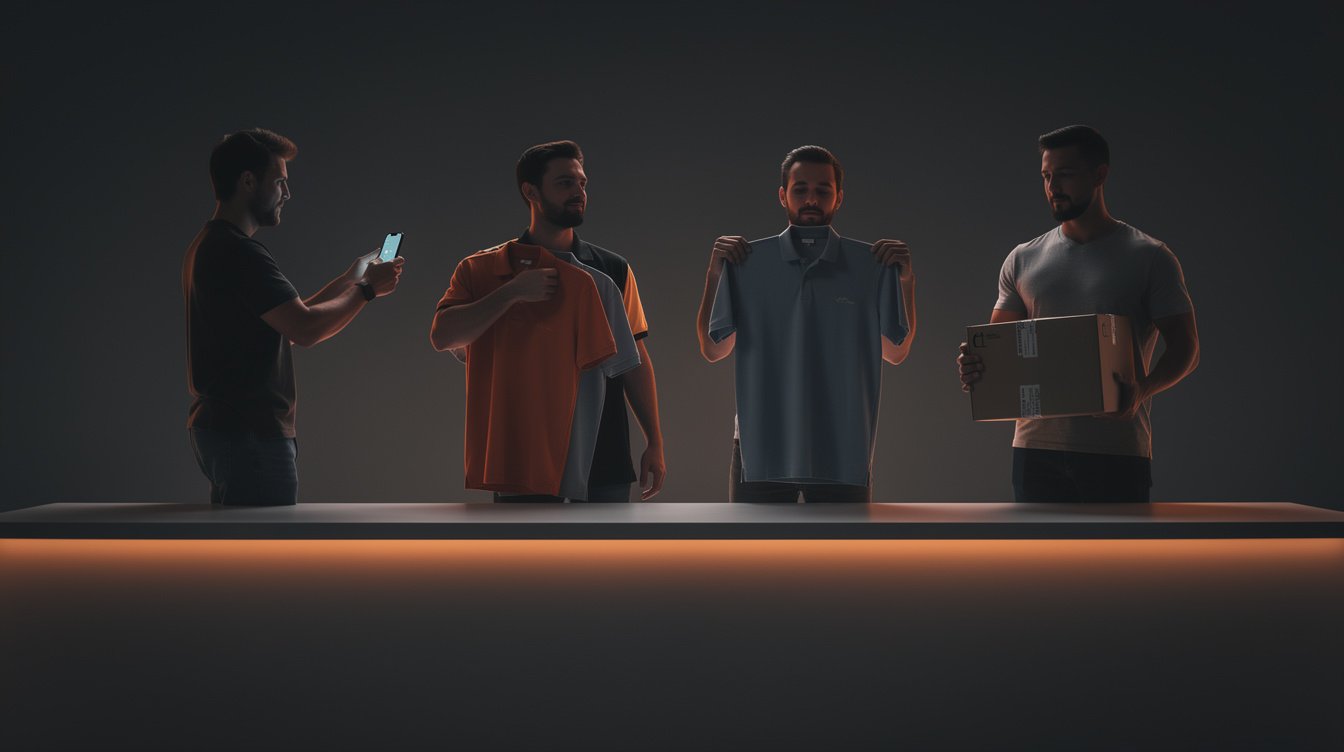
Behind the query “screen printing and embroidery near me” are four distinct buyer profiles. Local shops serve all four, but their pricing and process favors some over others.
The rush buyer. Someone needs 24 custom shirts by Friday morning for a team event, a trade show, or a charity run. Same-day or next-day turnaround is the only option. Local shops that stock blank garments and run continuous production can hit that deadline. No online fulfillment service comes close on turnaround when the deadline is 48 hours.
The bulk corporate buyer. A company ordering 200 embroidered polo shirts for a conference, or 500 screen-printed t-shirts for a company-wide event, has volume on their side. At 200+ units, per-unit costs drop sharply and setup fees get amortized into noise. Local shops often assign account managers to bulk buyers and offer pricing tiers that reward volume. This is where local frequently wins on cost.
The in-person sample buyer. Some buyers, particularly those with brand-sensitive products, want to hold the shirt before committing. They want to approve the pantone match in person, feel the ink hand on the fabric, or see how digitization translates on the actual embroidered piece. A local shop lets you do that. Online fulfillment does not.
The small-quantity buyer. Someone who wants 3 shirts, or 10 hats, or a dozen embroidered aprons. This is the most common search intent, and it’s also where local shops are most expensive. Setup fees, minimum order quantities, and per-unit pricing structures are designed for larger runs. Small-quantity buyers often pay setup fees that are larger than the cost of the garments themselves.
Knowing which buyer you are tells you whether “near me” is the right answer at all.
How local screen printing shops price their work
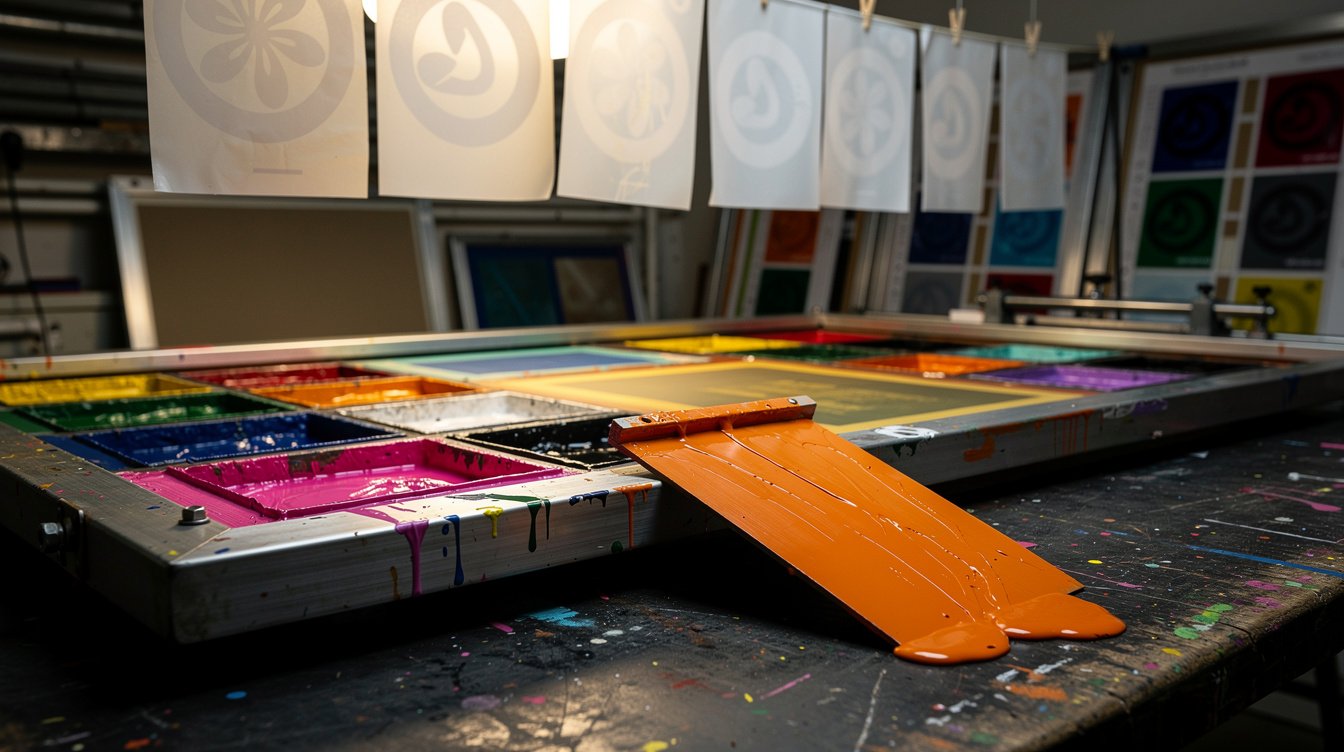
Screen printing uses physical screens, one per color, exposed with your design. That process has fixed costs that do not change regardless of how many shirts you order. Those fixed costs are the primary reason small orders are expensive at local shops.
Screen setup fees: Most local shops charge $15 to $100 per screen, per color. A two-color design on the front of a shirt requires two screens. A four-color design requires four. A shop charging $25 per screen on a four-color job adds $100 to your order before a single shirt is printed. Some shops bundle setup into a “digitization” or “origination” fee ranging from $50 to $150 flat, but the variable is still color count.
Minimum order quantities: Most local screen printing shops have MOQs of 12 to 24 units per design. Some drop to 6 units at a steep premium. A few boutique shops advertise no-minimum, but their per-unit pricing at small quantities often starts at $20 to $40 per shirt before any art or setup fees. The economics push toward larger orders.
Why the first order is the most expensive: The first time you work with a local shop, you pay setup fees, art separation fees, sometimes a screen-burning fee. On repeat orders using the same design and same screens, shops often waive or discount setup fees. The cost curve only improves if you’re a repeat customer ordering the same design. One-off or occasional orders never benefit from this amortization.
Color limitations: Local screen printing supports a finite number of colors per run (typically 6 to 8 on standard setups, more on specialty equipment). Photorealistic prints, gradients, and designs with dozens of colors require either specialty printing methods or a different fulfillment path entirely.
The bottom line: a small-quantity screen print order at a local shop will cost $8 to $25 per shirt for the garment, plus $3 to $15 per shirt in amortized setup and art fees. At 10 shirts, you’re looking at $100 to $400 before you factor in the garment cost, depending on shop and design complexity.
Embroidery at a local shop: digitization fees, stitch count pricing, and minimum viable orders
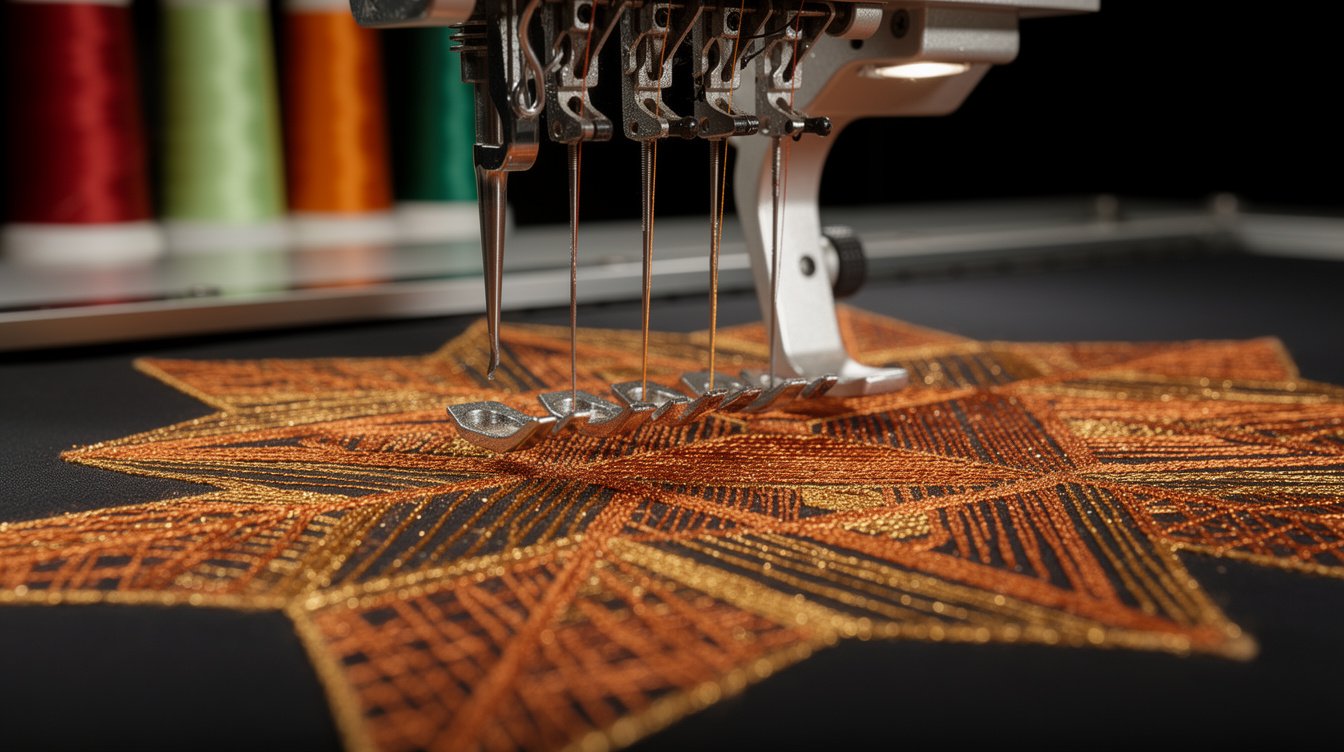
Embroidery has different economics than screen printing. There are no screens, no ink, and no color-count limitations in the same sense, but there’s a different upfront cost: digitization.
Digitization fees: Before a local shop can embroider your design, it needs to convert your artwork into a stitch file format that their embroidery machines read. This process, called digitization, is done by a specialist who maps every thread path, color change, and fill pattern in your design. Digitization fees at local shops typically range from $10 to $100 for a simple logo, and can exceed $150 for complex multi-color designs. It’s a one-time fee for that design file. If you reorder the same design at the same shop, you don’t pay it again.
Stitch count pricing: Once your file is digitized, embroidery is priced by stitch count. A simple 5,000-stitch left-chest logo on a polo shirt costs less per unit than a full-back, 25,000-stitch design. Most local shops quote a base price per piece that covers up to a certain stitch count (often 8,000 to 10,000 stitches), then add a per-1,000-stitch surcharge beyond that. A typical small logo embroidery at a local shop runs $4 to $12 per garment above the blank cost.
Minimum viable order for embroidery: Embroidery setups are faster than screen printing because you’re not burning screens. Some local shops do true no-minimum embroidery, though the per-unit cost is high. A single embroidered hat with a custom logo at a local shop might run $15 to $35 for the embroidery alone, plus the blank hat. At 12 hats, the per-unit cost drops. At 50 hats, the economics shift further. The local shop advantage in embroidery shows up more clearly at 24+ units than at 1 to 10 units.
If you’re sourcing custom hat embroidery near me for a small run, compare the digitization fee plus per-unit cost against online POD pricing before committing to a local shop. The digitization fee is sunk once paid, but at low quantities, it can double your effective cost per unit.
When local wins: same-day rush, large quantities, on-site proofing, and corporate accounts
Smash print-on-demand. Join the engine room.
One short email a week. Real numbers, real teardowns, the unfiltered economics behind every move.
Local shops have real advantages. Being honest about when they apply is more useful than pretending online fulfillment solves every problem.
Rush turnaround. If your deadline is 24 to 72 hours, and the shirts need to be in someone’s hands physically, a local shop is your only option. No print-on-demand fulfillment service has this capability. Printful and Printify typically ship in 3 to 7 business days, not counting transit time. If you need shirts for Friday’s event and it’s Wednesday, call a local shop.
Large quantities at low per-unit cost. At 100+ units of a single design, local screen printing costs drop substantially. A shop printing 200 shirts at $4.50 per shirt (plus blanks) is hard to compete with on per-unit cost, even when you factor in setup fees. POD platforms maintain consistent pricing per unit regardless of volume. The break-even point, where local printing becomes cheaper than POD, typically falls between 30 and 80 units depending on design complexity and blank quality.
Tactile proofing. If your brand has exacting color standards, or if you’re matching a corporate identity guide, a physical proof from a local shop lets you verify color accuracy before a large run. You can see the actual Pantone match, feel the ink on the fabric, and approve the embroidery texture. Online POD services send samples only on request, and sample turnaround adds days.
Established corporate accounts. Long-term corporate clients who order the same logo quarterly benefit from local shop relationships: stored digitization files, established color profiles, and account managers who know their specs. The first few orders are expensive. Ongoing orders become efficient. If you’re a corporate buyer with predictable volume and a stable design, a local shop account often pays for itself after 3 to 4 order cycles.
When POD wins: under 10 units, nationwide customers, and the Shopify 1% fee math
Print-on-demand fulfillment through platforms like Printful and Printify flips the economics at small quantities and distributed customer bases. Here’s where the math breaks in your favor.
No setup fees, no minimums. Printful charges no screen setup fees, no digitization fees, no minimum quantities. Every order is priced at a flat per-unit rate regardless of whether you’re ordering 1 or 100. One custom embroidered hat on Printful costs the same per unit as 10 hats. The economics are linear, not stepped. That’s the structural difference. For custom embroidered patches near me searches, this distinction matters most at quantities under 25.
Nationwide fulfillment, zero logistics management. When your customer base is distributed across the country, or the world, a local shop requires you to receive inventory, pack orders, and ship individually. POD fulfills directly from their production facility to your customer. No warehouse. No packing tape. No shipping accounts. Your margin on a custom t-shirt sold to someone in Dallas is the same whether they’re 2 miles or 2,000 miles from your office.
No upfront capital. A POD model requires zero inventory investment. Local shop orders require payment upfront for minimum quantities. If you’re testing whether a design sells, ordering 24 shirts from a local shop to validate demand costs $200 to $600 before you’ve made a single sale. A POD storefront lets you list the product and take orders before a single item is produced. The financial risk profile is categorically different.
The Shopify 1% fee problem. If you’re running your POD store on Shopify and not using Shopify Payments, you pay a 1% platform override on every transaction on top of credit card processing fees. On a $35 custom t-shirt, that’s $0.35 per sale. At $10,000 in monthly revenue, Shopify collects $100 just in platform override fees, before your payment processor takes their cut. That’s $1,200 per year in pure margin erosion. WooCommerce on your own domain doesn’t charge this fee. MEGA’s stack is built on WooCommerce precisely to eliminate this overhead at scale. If you’re comparing local shop economics versus POD, also compare your storefront platform cost. The platform fee is often invisible until your volume grows.
For sellers considering a custom t-shirt printing near me approach versus POD automation, the key break-even variable is order quantity per design per month. Under 30 units per design per month, POD wins on economics. Over 50 units per month of the same design, a local relationship starts competing.
The break-even math: local shop vs Printful at 1, 10, 50, and 100 units
These are representative numbers, not exact quotes. Local shop pricing varies by region, shop, and design complexity. Use these as benchmarks for your own comparison.
Custom t-shirt (1 color front, standard blank):
- Printful: ~$15.25/unit all-in (blank + printing). No setup fee. No minimum.
- Local shop at 1 unit: $20–$35/unit + $25–$50 screen setup = $45–$85 total.
- Local shop at 10 units: $8–$14/unit + $25–$50 setup = $105–$190 total ($10.50–$19/unit).
- Local shop at 50 units: $5–$9/unit + $25–$50 setup = $275–$500 ($5.50–$10/unit).
- Local shop at 100 units: $3.50–$7/unit + setup = $375–$750 ($3.75–$7.50/unit).
Printful break-even versus local: roughly 40–60 units for a one-color shirt on a standard blank. Below that threshold, Printful wins on total cost. Above it, local wins on per-unit cost, but only if you’re holding and shipping inventory yourself.
Custom embroidered hat (left-chest logo, standard structured cap):
- Printful: ~$24.95/unit (blank cap + embroidery, includes digitization amortized).
- Local shop at 1 hat: $25–$45 embroidery + $10–$50 digitization = $35–$95 for one hat.
- Local shop at 12 hats: $12–$20/unit embroidery + $50 digitization = $194–$290 total ($16–$24/unit).
- Local shop at 50 hats: $7–$14/unit + $50 setup = $400–$750 ($8–$15/unit).
For embroidered hats, the break-even is typically 20–35 units once digitization is paid. But the digitization fee only disappears on repeat orders at the same shop. If you switch shops, you pay it again.
The hidden factor in all these comparisons: fulfillment cost. If you order from a local shop, you hold inventory and ship yourself. Add $3–$8 per unit for packing materials and your time. POD builds fulfillment into the per-unit cost. The true total-cost comparison is: local shop unit cost + local shop fulfillment cost versus POD unit cost (which includes fulfillment). That calculation narrows the local shop advantage further at quantities under 100.
For bulk custom t-shirt printing strategies, the math at 100+ units clearly favors local. For individual-order or mixed-design catalogs, POD wins on flexibility and cash flow.
How to capture near-me intent customers with a no-minimum POD storefront
Here’s a counterintuitive insight: most people searching “screen printing and embroidery near me” are not committed to local. They’re looking for the option that works. If your POD storefront shows up for that search, and offers better economics and faster net-to-customer fulfillment for small quantities, you can capture that intent.
Target local-intent keywords without being local. Blog content, product descriptions, and FAQ pages that address the “near me” query directly, and explain why no-minimum online fulfillment often beats local shops for small runs, attract commercial-intent searches. The person searching for screen printing near me and reading your comparison article is a warm lead for your no-minimum store.
Lead with no-minimum messaging. The primary friction at local shops is the minimum order quantity. A landing page or product listing that leads with “no minimum order, ships in 3–7 days” addresses the local shop’s main pain point directly. You’re not competing on geography. You’re competing on flexibility.
Offer samples at POD economics. One of the reasons buyers go local is to see a physical sample before committing to a large order. Your POD store can solve this by offering single-unit ordering at your standard POD price. The sample cost is higher per unit than bulk, but it’s not $50 + a setup fee. Framing your per-unit pricing as “order one to test it” removes the barrier that drives people to local shops for proofing.
Use the WooCommerce advantage. A WooCommerce-based POD store, integrated with Printful or Printify, eliminates Shopify’s platform override fee. For sellers who started their custom hoodie printing or custom sweatshirt printing business on Shopify, migrating to WooCommerce removes a recurring 1% margin tax at no meaningful technical cost. At $5,000 in monthly revenue, that’s $600 back per year. At $15,000, it’s $1,800. The platform choice is part of the economics, not separate from it.
MEGA automates the research-to-product pipeline that makes running a no-minimum POD store viable. Instead of manually building product listings, generating design assets, and writing SEO copy for each item, MEGA handles image generation, mockups, titles, meta descriptions, and full Printful and WooCommerce product creation end-to-end. The throughput difference is real: a manual Canva-to-Printful workflow takes 45 to 90 minutes per product. MEGA generates a complete product listing in under 7 minutes. Learn how MEGA works.
What to do next
If you’re a rush buyer with a 48-hour deadline, call a local shop. There’s no substitute for same-day production.
If you’re ordering 100+ units of the same design for a corporate event or team order, get a quote from three local shops and compare. At that volume, local pricing likely wins on cost per unit.
If you’re building a POD business, selling to a distributed customer base, or testing designs before committing to inventory, the math points to no-minimum online fulfillment. No setup fees, no minimums, no inventory risk. The 1% Shopify override fee is a consideration worth building into your platform decision from day one.
Most POD sellers searching “screen printing and embroidery near me” are in the small-quantity, distributed-customer category. For that profile, understanding local shop economics is useful context, but it usually reinforces the case for building a POD storefront rather than calling a screen printing house.
Build a no-minimum POD storefront that captures near-me intent without a local shop
MEGA generates complete Printful and WooCommerce product listings end-to-end in under 7 minutes. No Canva. No manual uploads. No Shopify override fee.
Implement AI. 30x your throughput. Get a 30-min call with the founder.
Drop your details and book a free 30-minute discovery call. Personalized advice on your POD stack, your margin, and where AI fits. No pitch, no fluff.