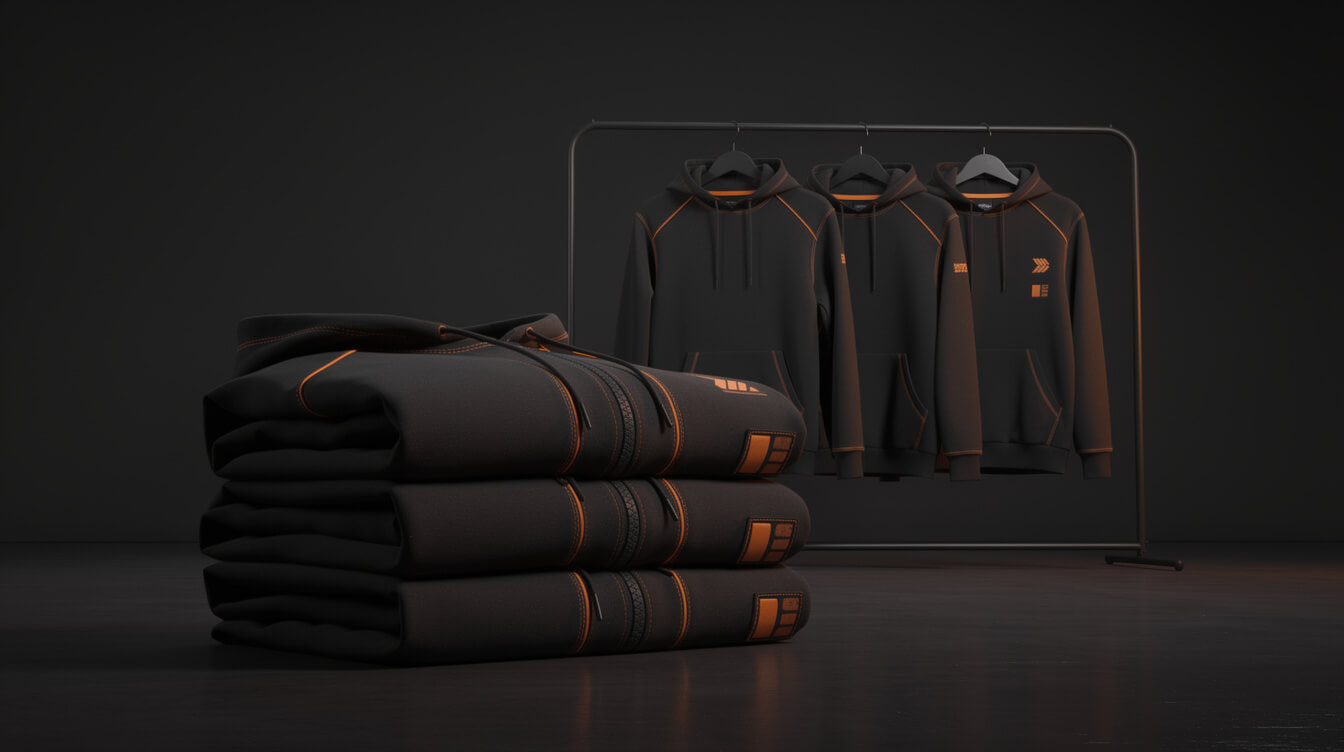
Custom hoodies for POD sellers: print method decision, provider comparison, and the Q4 hoodie margin math
The custom hoodie is the highest-AOV apparel item most POD sellers avoid. They list tees, mugs, and phone cases, then skip hoodies entirely because they assume the economics do not work or the print process is too complicated. That assumption costs real money, especially in Q4, when custom hoodie search volume spikes 40-60% and buyers are actively hunting for exactly what you sell.
This guide walks through the custom hoodie opportunity from the seller’s perspective: which print method to choose, which providers support no-MOQ hoodie fulfillment in 2026, what the unit cost math looks like at three retail price points, and why WooCommerce handles Q4 hoodie demand better than Shopify on both economics and variant management.
Why POD sellers sleep on custom hoodies and the Q4 window they keep missing
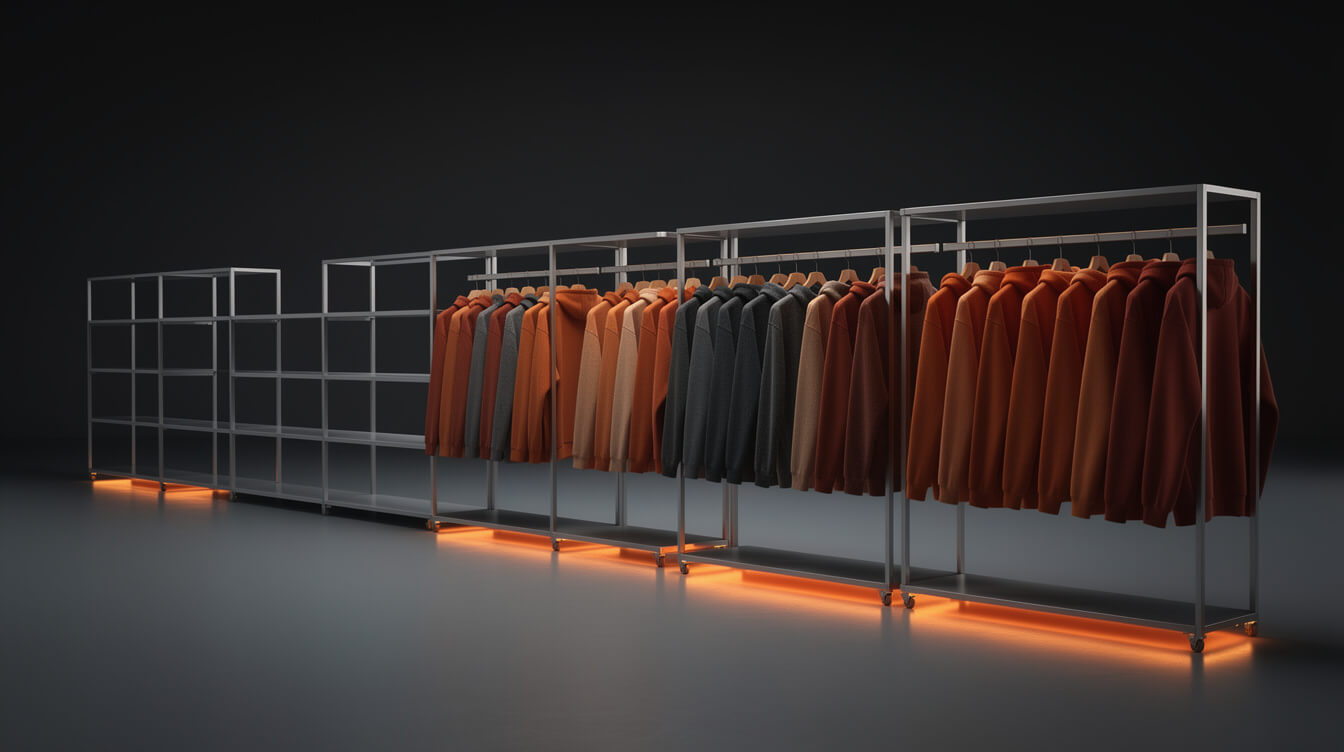
The data is unambiguous. Custom hoodie searches rise from 12,100 in July to 14,800 in August and reach 18,100 in September. By October they are in full Q4 surge. Sellers who publish their hoodie listings in September capture the Google indexing window before peak demand hits. Sellers who publish in November are competing for rankings they will not earn in time for the holiday buying cycle.
Most POD sellers miss this window for three reasons. First, they assume a hoodie requires higher upfront investment than a tee, which is not true at the no-MOQ tier. Second, they believe the print method is more complex to get right. Third, they have heard that hoodie margin is thin. That third belief is partially correct for DTG at low retail prices, but it is wrong for all-over print (AOP) and embroidered hoodies, both of which carry gross margins above 44%.
There is also a market gap worth noting. Every top-ranking result for “custom hoodie” in 2026 targets team buyers: Carhartt Business, UberPrints, BlueCotton, Printful product pages. None of them address the POD seller who wants to build a hoodie catalog for individual buyers. That editorial gap is your lane. If you have already built out a print-on-demand t-shirt pipeline, the hoodie adds two decisions: print method and size range.
Print method decision for custom hoodie sellers: DTG vs AOP sublimation vs embroidery
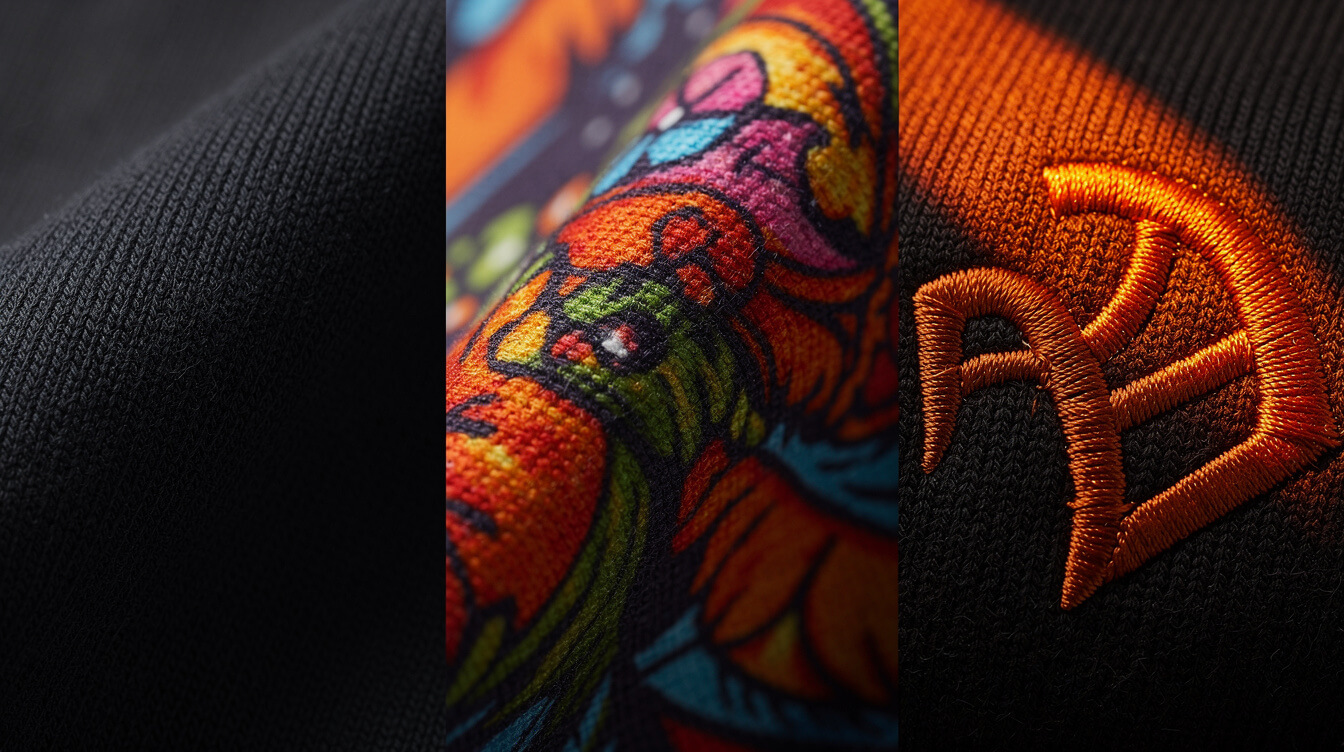
Three print methods apply to hoodies. Each has a different design constraint, substrate requirement, and margin profile. Picking the wrong method for your design either produces poor quality or requires a reformatted design before it can print correctly.
DTG (direct-to-garment)
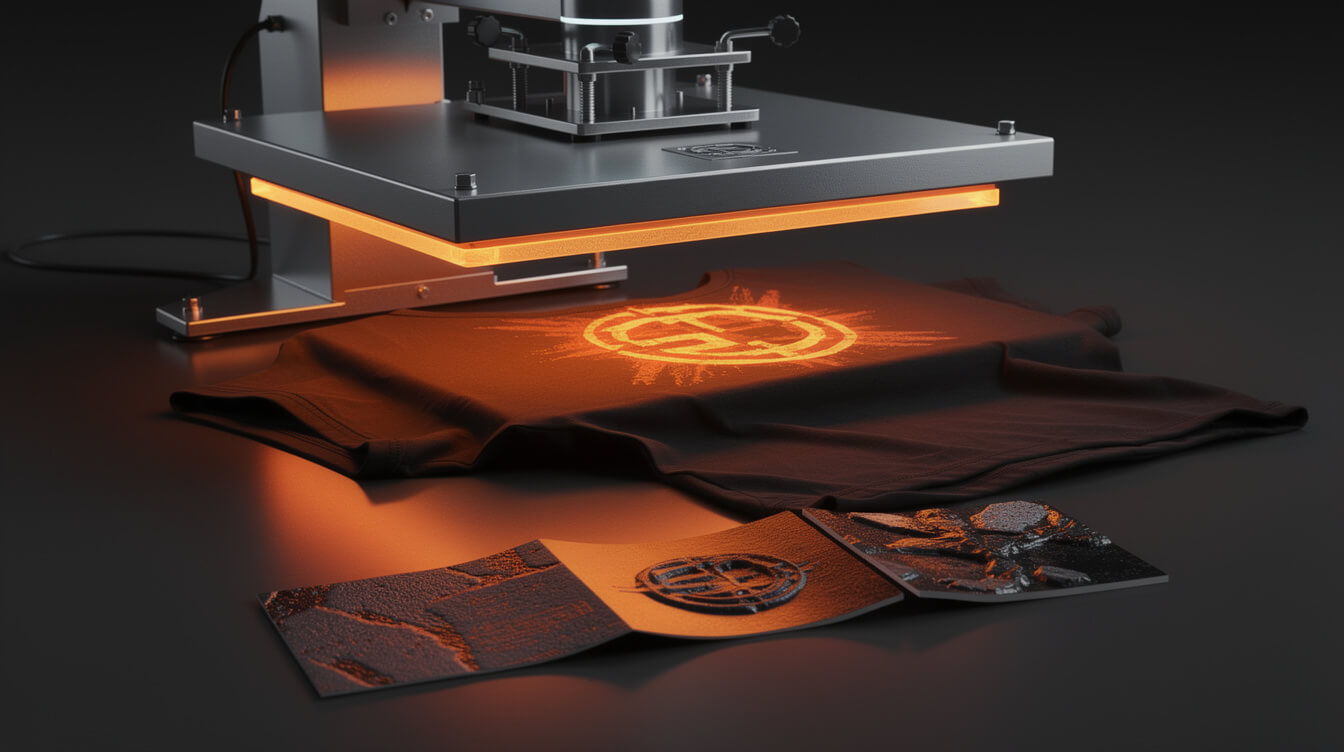
DTG prints directly onto the hoodie fabric with water-based inks. The result looks like a screen-printed design without a minimum order. The limitation: DTG works on cotton or high-cotton blends (50% or more cotton content). Polyester-heavy hoodies produce washed-out colors because the dye bonds less effectively to synthetic fiber. DTG also cannot print edge-to-edge because the print head needs a border to operate. You get a standard chest or back print panel with unprinted fabric borders. Base cost from Printful for a standard Gildan 18500 pullover: $18-22, depending on design color count and size.
AOP sublimation
All-over print sublimation covers the entire hoodie surface: front, back, sleeves, and hood panel with vibrant full-bleed graphics. The substrate requirement is strict. The process requires 100% polyester or very high polyester content because the dye bonds at the molecular level into polyester fiber under heat. Cotton cannot accept sublimation dye, so a standard Gildan fleece hoodie cannot be AOP-printed. AOP hoodies cost more at the base level, running $28-35 per unit at the no-MOQ tier, but they also retail higher. AOP is the right method for streetwear-inspired designs, graphic art concepts, and any creative direction that requires edge-to-edge visual impact across the full garment.
Embroidery
Embroidery stitches a logo or graphic onto the hoodie chest, left sleeve, or hood panel. It works on any hoodie fabric because the needle does not care about substrate. The design constraints are format-specific: maximum 15 thread colors, no photorealistic gradients, and a minimum 0.25-inch letterform for readability. A digitizing fee of $4-6 applies per design at most providers, charged once on the first order and not repeated on subsequent orders of the same design. The resulting product reads as premium. Embroidery has a tactile quality that printed designs cannot replicate, which supports higher retail pricing. Base cost: $20-28 plus the one-time digitizing setup.
The practical decision: if your design is a clean vector logo or text concept, embroidery or DTG both work and represent the simplest path to your first listing. If your design requires edge-to-edge coverage or bold allover patterning, AOP is the only correct answer. Attempting an AOP-native concept through DTG produces a bordered chest panel where buyers expected full coverage, and that mismatch destroys conversion.
Provider comparison in 2026: Printful vs Printify vs CustomCat vs Gooten for custom hoodie stores
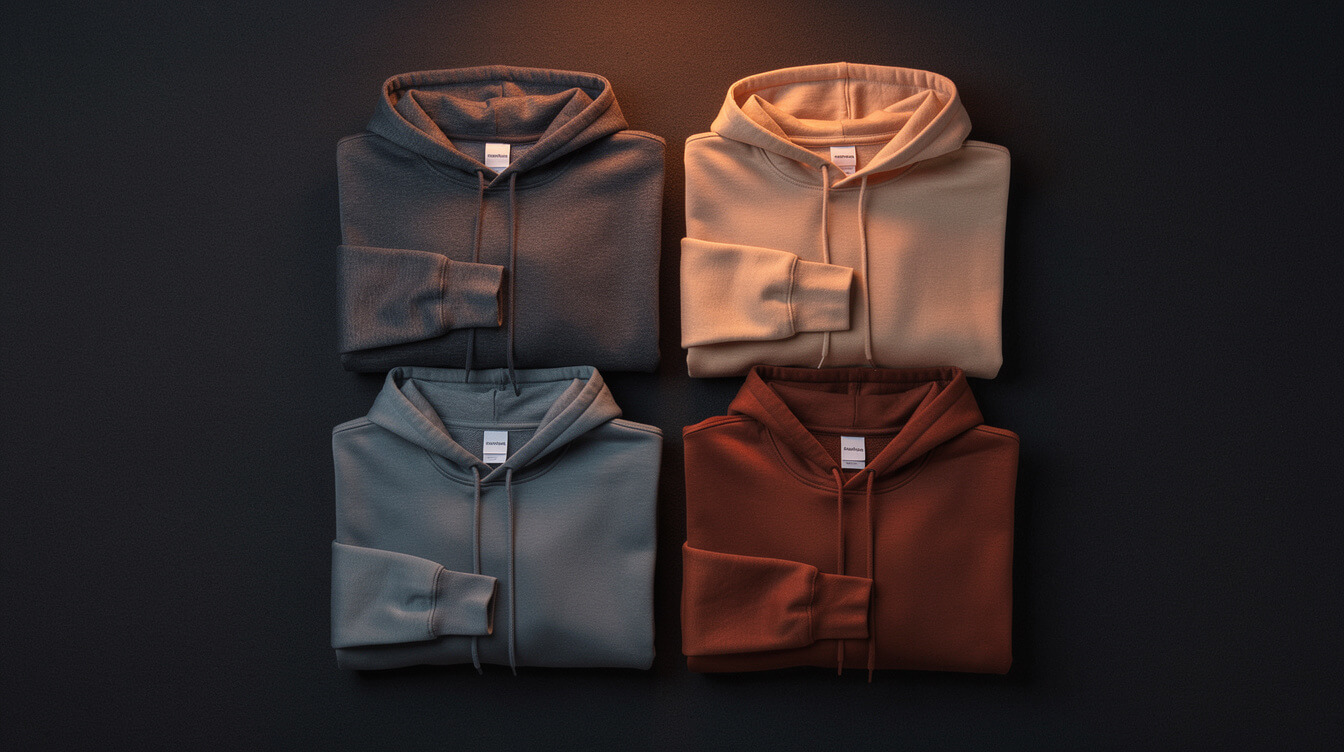
Four providers cover most of the no-MOQ custom hoodie space. Each has a different tradeoff between cost, quality consistency, and WooCommerce integration tooling.
Printful
Printful carries DTG and embroidery on pullover hoodies across several blanks: Gildan 18500, Comfort Colors 1566, and a small premium lineup. Their AOP hoodie selection is more limited in 2026, so verify the current catalog before building listings around AOP on Printful specifically. Printful integrates directly with WooCommerce via their plugin, handles branded inserts at no cost, and ships from US, EU, and Canada production hubs. For a full breakdown of the Printful hoodie product line and WooCommerce setup process, the Printful custom hoodies guide covers the specifics. Printful base cost for Gildan 18500 DTG: $18-22.
Printify
Printify operates a network model, meaning hoodie fulfillment routes to different vendors depending on buyer location, product availability, and your default provider settings. The network includes Belle+Canvas and Independent Trading Co. hoodies at $17-24 base, generally slightly lower than Printful on mid-range styles. The tradeoff is more variability in fulfillment partner quality across production runs. Printify’s catalog tends to have more AOP hoodie options than Printful’s standard lineup. Check the product creator for current availability before committing to an AOP design direction.
CustomCat
CustomCat prices aggressively: $14-18 base for DTG hoodies, which yields the highest gross margin at any given retail price. The tradeoff is a less polished integration experience and fewer premium blank options. For sellers building high-volume catalogs where margin per unit matters more than brand presentation, CustomCat is worth testing. Their WooCommerce integration is functional, though with fewer native features than Printful’s plugin.
Gooten
Gooten’s primary strength is international reach. If your customer base includes significant UK, EU, or Australian volume, Gooten’s production network often delivers faster and at lower effective shipping cost than routing from a US-only fulfillment center. For domestic US volume, Gooten is comparable to Printify but without the same catalog depth. Worth evaluating if international orders consistently exceed 20% of your hoodie revenue.
Unit cost math at 3 price points: DTG crewneck to AOP all-over custom hoodie

Smash print-on-demand. Join the engine room.
One short email a week. Real numbers, real teardowns, the unfiltered economics behind every move.
Here is where the numbers land at no-MOQ production for each print method tier.
DTG crewneck pullover: $42-50 retail
Base cost $18-22 plus $4-6 shipping equals $22-28 landed. At $45 retail, gross profit is $17-23, or 38-51% gross margin. At $50 retail, gross is $22-28, or 44-56%. These are workable numbers for an apparel item with no minimum order. The ceiling on retail price is set by what buyers expect to pay for a DTG hoodie. The print method is not immediately visible from product photos, so higher prices require stronger brand positioning or niche identity to justify the premium.
Premium DTG pullover: $55-65 retail
Move to a premium blank like Comfort Colors or an independent label and retail can push to $55-65 with the right brand story. Base cost $22-26 plus $5-6 shipping equals $27-32 landed. At $60 retail, gross is $28-33, or 47-55%. This range works well for stores with existing audience trust: music artist merch, local brand hoodies, niche community identity pieces where buyers already know the brand before they buy.
AOP all-over hoodie: $65-80 retail
Base cost $28-35 plus $6-8 shipping equals $34-43 landed. At $72 retail, gross is $29-38, or 40-53%. At $80 retail, gross is $37-46, or 46-57%. AOP hoodies can legitimately retail at $75-80 because the full-coverage print is visually distinctive. Buyers in the streetwear and graphic design spaces understand they are purchasing something qualitatively different from a standard hoodie, and price sensitivity at these tiers is lower than for basic DTG apparel.
The key takeaway: all three price tiers produce viable gross margins at no-MOQ production. The argument that hoodie economics do not work applies specifically to sellers who try to retail a $45 hoodie after sourcing from a high-cost provider at $28 base. Match the method and provider to the design concept and target retail price, and the math is sound.
MEGA automates the product listing pipeline for hoodie SKUs, from generating the AOP design through final WooCommerce listing with all size variants and pricing configured, in under seven minutes per product. If you are doing this manually in Canva and copying data between tabs, that workflow does not scale to a serious hoodie catalog. MEGA handles the pipeline end to end.

Generate 30x more hoodie listings this Q4
MEGA automates the full pipeline: design generation, sizing, mockups, WooCommerce listing. One pipeline, seven minutes per product.
Shopify 1% on custom hoodie revenue: the numbers at $1k, $5k, and $10k monthly sales

Shopify’s 1% platform override applies to every transaction processed through Shopify Payments. On a $50 hoodie, that is $0.50 per sale. It sounds manageable until you run it across a store doing real volume.
At $1,000 monthly hoodie revenue, roughly 20 sales at $50 each: the 1% adds $10/month or $120/year. On top of the $39/month Basic plan ($468/year) and a size variant app ($9-19/month, or $108-228/year), total platform overhead reaches $696-816/year.
At $5,000 monthly hoodie revenue, 100 sales at $50: the 1% becomes $50/month or $600/year. Add the plan and apps: $1,176-1,296/year in platform fees on a store doing $60,000 in annual gross hoodie revenue.
At $10,000 monthly hoodie revenue, 200 sales at $50: the 1% is $100/month or $1,200/year. Full Shopify overhead: $1,776-1,980/year. If you are running AOP hoodies at $75 retail and the same 200-order volume, the override alone reaches $1,800/year before any plan or app fees.
WooCommerce on a standard VPS or managed WordPress host runs $180-360/year in hosting costs with zero per-transaction platform fee. Size and color variants are native WooCommerce product attributes, so no app is required. The savings on a $5k/month hoodie store: $816-936/year. On a $10k/month store: $1,416-1,620/year. For the full breakdown of how these fees compound across product types, the Shopify vs WooCommerce economics comparison covers every revenue tier. If you are already on Shopify and evaluating the move, the Shopify alternative guide covers the migration path in detail.
WooCommerce for custom hoodie stores: Q4 variant management without $15-20/month apps
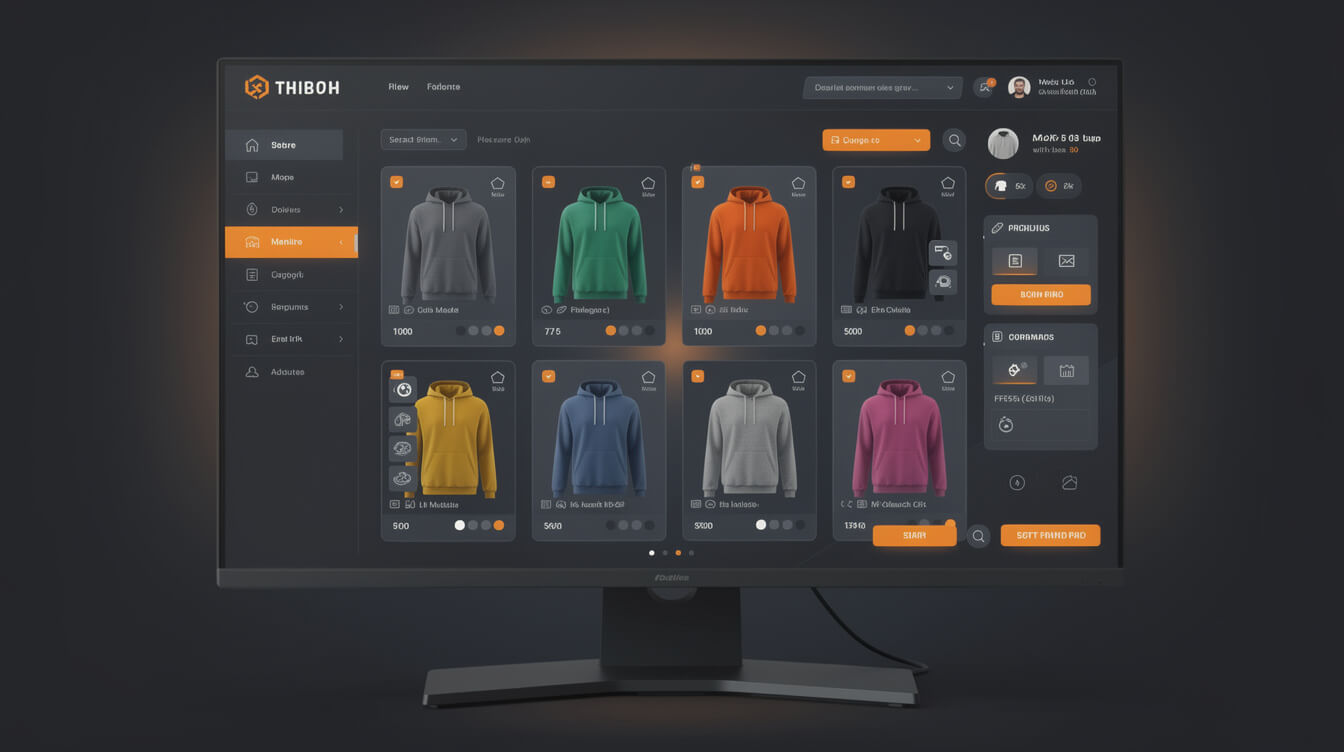
A hoodie product listing requires more variant handling than a mug or poster. A standard pullover hoodie runs S through 5XL, seven size options, times however many colorways you stock. That is 14 to 35 or more product variants per SKU, before accounting for different design versions.
On Shopify, native variant support caps at 100 combinations per product. For a hoodie with six colors and six sizes, that is 36 variants, technically within the cap. But configuring each combination manually, adding correct pricing by size (plus-size pricing often runs $2-4 higher), and displaying color swatches visually all require either theme customization or a paid app. The most common variant-management app on Shopify runs $9-19/month.
WooCommerce handles variable products with any number of attribute combinations natively. You define size and color as product attributes, mark them as variation attributes, and WooCommerce generates the variant matrix automatically. Color swatches and size selectors are included in most premium WooCommerce themes without additional plugin cost. No app. No monthly fee.
The Q4 logistics advantage is practical as well. When a hoodie style sells out at Printful or a Printify vendor hits capacity constraints in November, you need to swap fulfillment sources quickly without losing your listings. On WooCommerce, you update the product’s integration settings through the Printful plugin or Printify API connection without any platform constraint or approval process. On Shopify, you are working within whatever apps you have installed, each with their own support queues during Q4 peak.
One concrete action for Q4 preparation: publish your hoodie listings by the first week of October at the latest. Google needs 4-6 weeks of indexing and click-signal data before a new listing can compete on page one for buying-intent queries. September is your last comfortable window to hit that deadline without sacrificing Q4 ranking potential.
Top custom hoodie niches for 2026: where design-driven POD sellers win
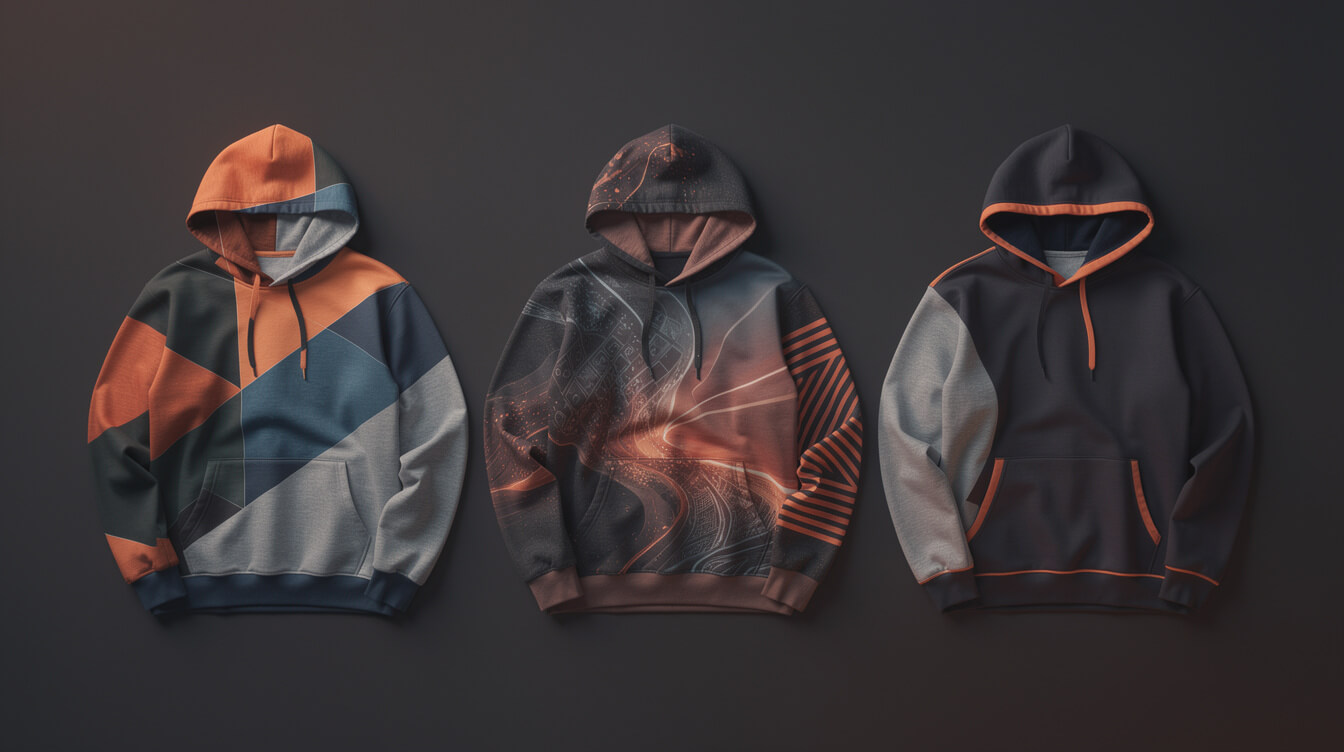
Custom hoodies work best in niches where identity is expressed through what you wear. That narrows to a manageable list of high-conversion segments where design-driven sellers win without needing licensed IP.
Music artist and band merch
Independent artists selling to their own audience represent the cleanest hoodie opportunity. The buyer already knows the artist. Trust exists before the transaction. Willingness to pay $55-65 for a hoodie that connects them to music they care about is genuine and consistent. A WooCommerce store linked directly from an artist’s social media or Linktree captures all the revenue with no platform intermediary taking a cut of every sale.
Local community and city pride
City and neighborhood designs perform at consistent volume year-round and spike in Q4 as gift items. The designs are simple: a city skyline silhouette, a neighborhood name, a regional cultural reference. No licensed IP required. These work well with DTG since the designs are typically single-color or limited-palette concepts that render cleanly on cotton. The buyer geography is local, which means lower shipping cost and faster delivery from US-based fulfillment.
Niche interest communities
The strongest-converting community hoodies target groups that self-identify visibly: hobby communities (mechanical keyboard enthusiasts, fountain pen collectors, amateur astronomers), professional communities (nurses, teachers, specific skilled trades), and lifestyle niches (van lifers, homesteaders, ultramarathon runners). Members of these groups wear their identity and prefer buying from someone within the community over buying from a mass-market brand that does not understand their reference points.
Streetwear-adjacent AOP designs
Full-coverage AOP hoodies with graphic art, abstract pattern, or illustrated concepts attract buyers who actively seek what large retailers do not carry. The design ceiling is higher because these buyers are design-literate and will reject generic concepts. But the margin ceiling is also higher, with $70-80 retail being normal in this segment. AI-assisted image generation changes the economics here: a design that previously required a commission or hours of Canva work can now be generated, refined, and uploaded in minutes. That shifts AOP hoodie production from a bottleneck into a pipeline.
Sports fan identity (original designs, no licensed IP)
Original sports fan designs that capture team colors, regional mascot concepts, or stadium culture without using licensed logos or trademarked names are a high-volume category that large operators leave underserved. A regional team’s color palette combined with an original graphic concept can sell at consistent volume, particularly in local markets. This requires care around trademark: no official logos and no exact team names. The design space within those constraints is large and mostly unclaimed by editorial-driven POD stores.
Conclusion
Custom hoodies are not a complicated addition to a POD catalog. They require one more decision than a tee (print method), and a bit more attention to variant management. The economics work across all three print methods when you match the method to the design concept and price accordingly.
The Q4 window is the most underweighted factor. Custom hoodie search volume is rising right now, in real time. Listings published in late September have the best chance of ranking for Q4 demand. Listings published in November arrive after the indexing window has passed. Today is September 22. The window is still open, and barely.
Pick your print method, set up your first hoodie listing on WooCommerce this week, and let the fulfillment provider handle production. The hard part is the design and the niche positioning. Both of those are within your control.
Implement AI. 30x your throughput. Get a 30-min call with the founder.
Drop your details and book a free 30-minute discovery call. Personalized advice on your POD stack, your margin, and where AI fits. No pitch, no fluff.