Custom iron-on t-shirt transfers vs DTG and DTF: what POD sellers need to know before choosing a print method
Most content about custom iron-on t-shirt transfers is written for hobbyists buying iron-on paper at a craft store. Sellers searching for this term want something different. They want to know whether adding iron-on transfer products to a POD store makes business sense, which providers actually support it, and whether the margin math holds up against DTG and DTF. This article answers those questions with real numbers. It also explains why the Shopify 1% fee makes low-margin transfer products particularly difficult for sellers who have not run the full unit-cost calculation.
The short version: iron-on transfers are a real product category with a real customer base, but they belong in a specific kind of store serving a specific kind of buyer. Most POD sellers who land on this keyword are not that store. This guide will help you figure out whether you are.
What are custom iron-on t-shirt transfers and how do they differ from DTG and DTF
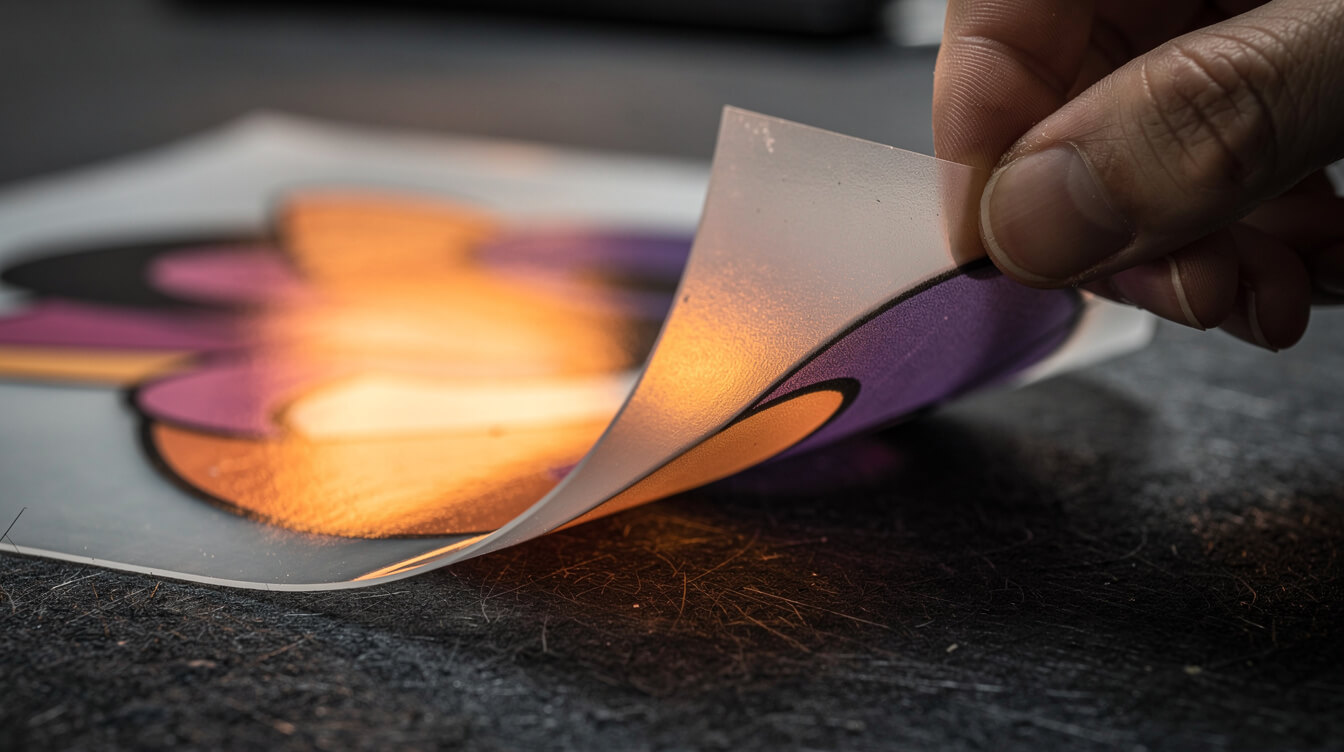
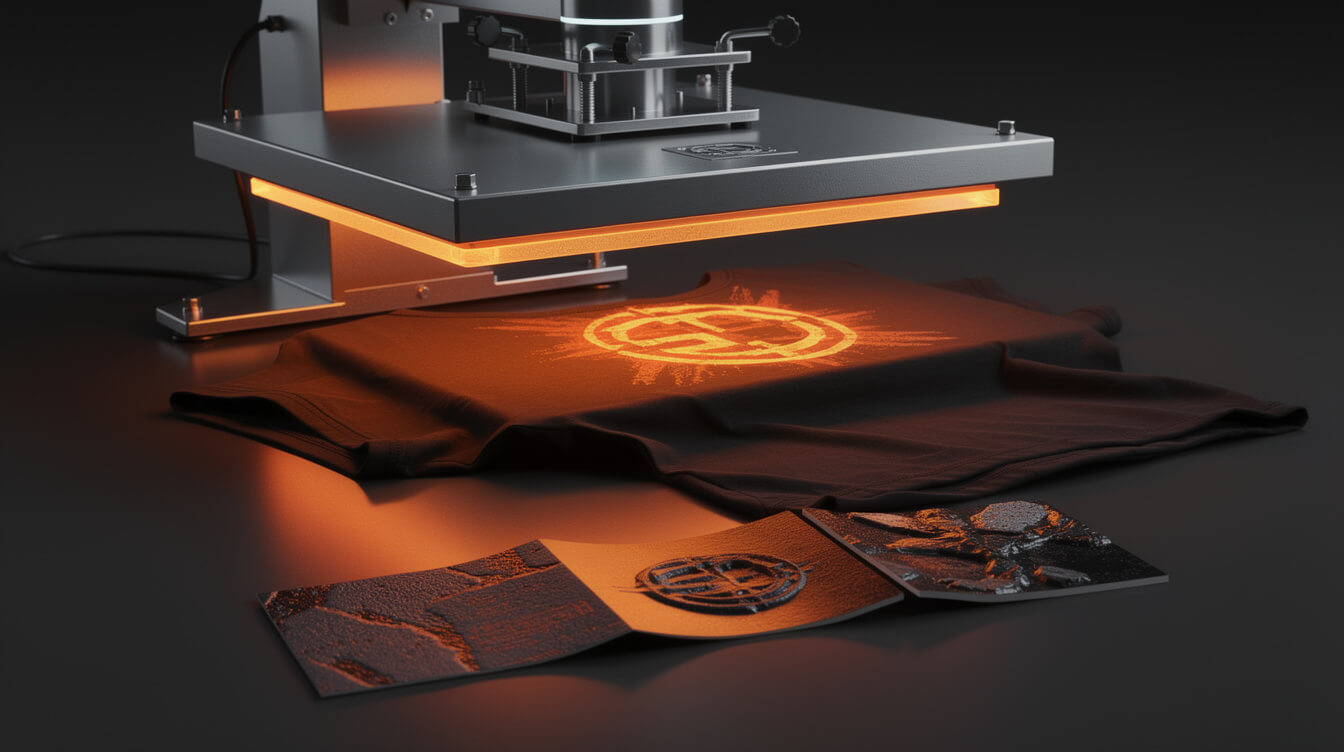
Iron-on transfers are printed designs on a carrier sheet that you apply to a garment using heat and pressure. The process works in two steps: print the design onto special transfer paper using an inkjet or laser printer, then press the transfer onto the fabric with a heat press machine.
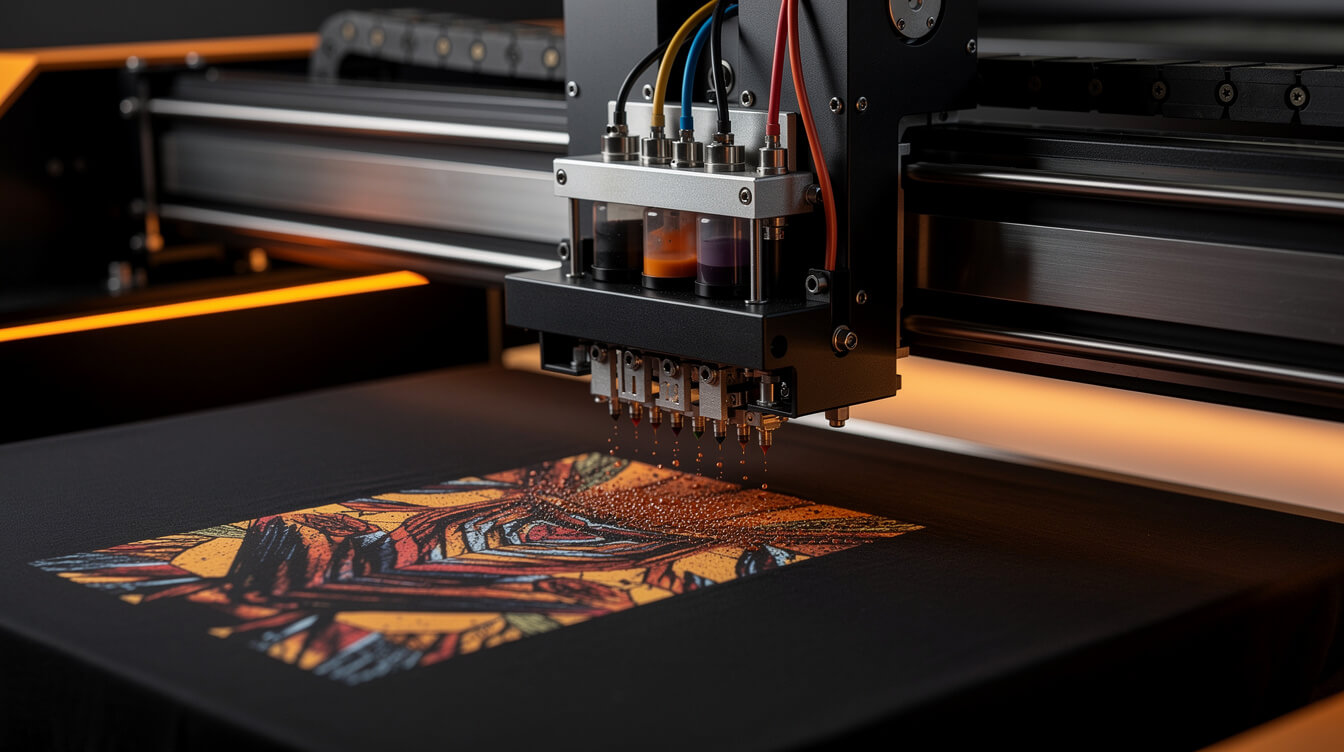
DTG, or direct-to-garment printing, sprays ink directly onto the fabric using a modified inkjet printer. The ink bonds with the fabric fibers through a pretreatment process, particularly on cotton. DTF, or direct-to-film, applies ink to a film sheet, coats it with adhesive powder, cures it, and then heat-transfers the cured film onto the fabric.
All three methods involve heat at some stage, which is the root of most confusion when sellers first compare them. The processes are fundamentally different in cost structure, durability, and use case.
The key distinction for any POD seller is this: you do not own the printer. Whether it is a heat press at a local transfer shop, a DTG machine at a fulfillment warehouse, or a DTF system at a print-on-demand partner, the print method is the supplier’s problem. Your problem is whether the output meets your quality standard and whether the margin works at your retail price.
Iron-on transfers are the oldest of the three methods. They have been used for decades for everything from sports uniform numbers to custom event merchandise. DTG became commercially viable for small-run POD around 2015. DTF arrived as a widespread option more recently and has grown quickly because it handles dark garments and polyester blends without the limitations of DTG.
Iron-on transfers vs DTG vs DTF: the technical differences every POD seller should understand
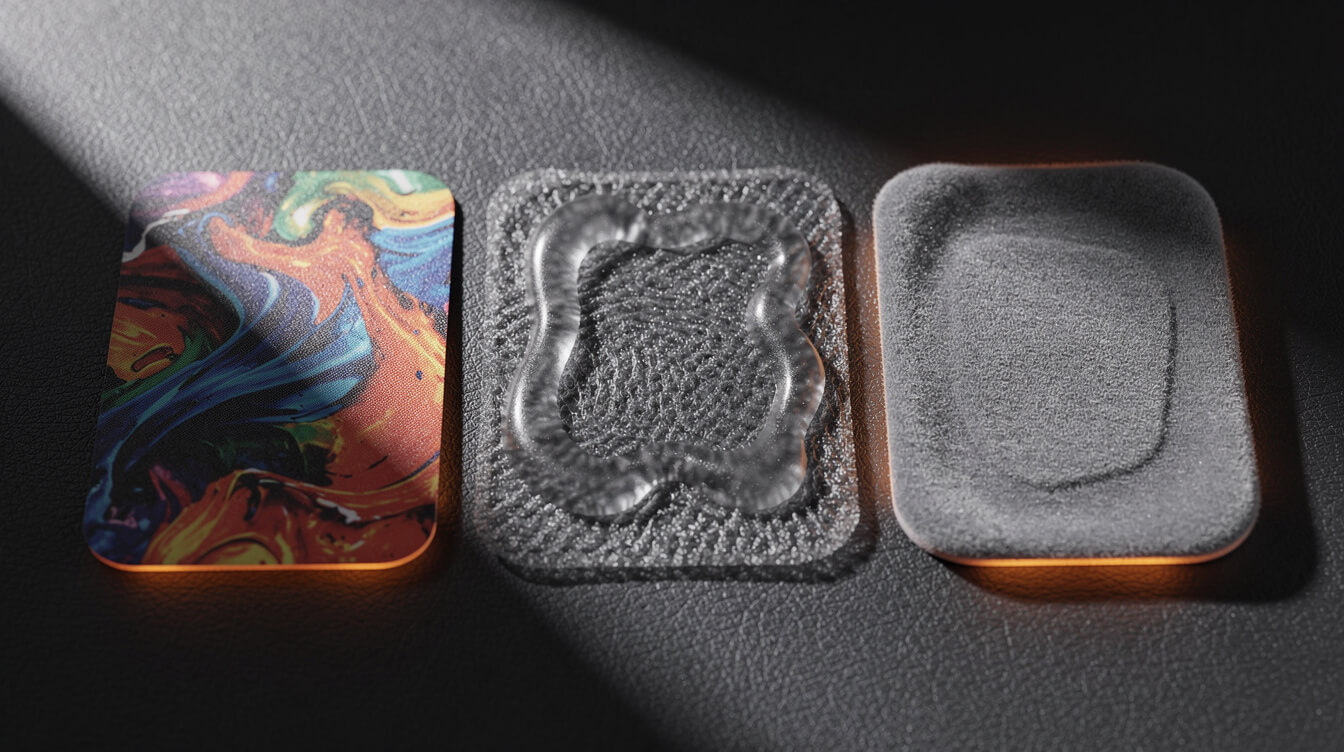
DTG works best on 100% cotton garments. The ink bonds with cotton fibers through a chemical pretreatment process. On polyester blends, DTG color vibrancy fades faster. On dark garments, DTG requires a white underbase layer that adds cost and can crack over repeated washing.
DTF has no substrate restriction. It bonds to cotton, polyester, nylon, and blends without modification. DTF produces vibrant colors on dark fabrics without the white underbase penalty that affects DTG on dark garments. The film layer sits on top of the fabric surface rather than soaking into it, which gives DTF a slightly different feel and a higher durability rating for most garment types.
Iron-on transfers have the widest substrate flexibility but the most significant durability limitations. Traditional heat-transfer vinyl and iron-on paper transfers typically last 30 to 50 wash cycles before visible degradation. Premium plastisol and sublimation transfers last longer, but they command higher unit costs that compress margin.
For POD sellers, the practical differences matter more than the technical specifications:
- DTG handles photographic artwork and gradients well. Thousands of colors print accurately without extra setup cost.
- DTF handles bold, colorful designs on dark garments better than DTG, with lower per-unit cost on small runs and fewer substrate restrictions.
- Iron-on transfers work well for simple designs on light-colored garments, particularly for craft-market buyers and custom event merchandise where the buyer applies the transfer themselves.
Understanding which print method your supplier uses is the first lever. Whether your supplier offers the method you want is the second. For a detailed side-by-side breakdown, our article on DTG vs DTF for print-on-demand sellers covers both methods in full.
Do Printful and Printify offer iron-on transfer products? The honest answer
The short answer is no, not as a standard product category.
Printful offers DTG, DTF, sublimation, embroidery, and cut-and-sew. They do not offer standalone iron-on transfer products or heat-transfer-vinyl merchandise as a fulfillment category. If you want a design applied via heat transfer, Printful’s DTF products are the closest equivalent and they manage the process on their end before shipping a finished garment to your customer.
Printify’s marketplace includes over 1,300 products across dozens of print partners. Some specialty suppliers on the Printify platform do offer transfer-adjacent products, but iron-on transfer sheets are not a standard catalog item. Printify’s primary print partners use DTG, sublimation, and cut-and-sew as their main fulfillment methods.
What this means for POD sellers: if you want to list custom iron-on t-shirt transfers as a product, you are looking at sourcing from a specialist transfer supplier rather than through Printful or Printify’s standard catalog. That changes the logistics model in a meaningful way.
A standard POD model means zero inventory risk and per-unit fulfillment. A transfer-product model typically means minimum order quantities, inventory exposure, or a hybrid fulfillment arrangement with a transfer-specific vendor. You are no longer operating a pure print-on-demand business in the conventional sense.
This distinction matters for how you structure your store, your cash flow, and your risk profile. For a complete picture of what Printful actually stocks and supports across every category, our Printful products guide covers the full catalog with margin notes on each category.
Margin math: iron-on transfer unit economics vs DTG on a $29.99 retail t-shirt

Smash print-on-demand. Join the engine room.
One short email a week. Real numbers, real teardowns, the unfiltered economics behind every move.
Run the numbers on a $29.99 retail t-shirt. This is a realistic mid-market price point for a POD store serving a specific niche, whether that is a motivational quote category, a sports team design category, or a custom event tee.
DTG on Printful (Gildan 64000 equivalent, light garment, one-color front design):
- Blank garment plus DTG print: approximately $9.50 to $11.00 depending on supplier and design complexity
- Domestic US shipping: $3.99 to $5.50
- Total fulfillment cost: $13.49 to $16.50
- Gross margin at $29.99 retail: $13.49 to $16.50, or roughly 45% to 55%
Iron-on transfer product (custom transfer sheet, customer applies it at home):
- Transfer sheet unit cost from a specialty supplier at a 50-unit MOQ: $2.00 to $4.00 per sheet
- Shipping to customer: $3.50 to $5.00 for a padded envelope
- Total cost: $5.50 to $9.00
- Realistic retail price for a transfer sheet: $12.99 to $19.99
- Gross margin: $7.99 to $11.99, or roughly 50% to 65%
On paper, iron-on transfer sheets show better margin percentage. But this comparison ignores four structural differences that matter in practice:
- You are selling a transfer sheet, not a finished garment. The retail price ceiling is lower. Customers who buy iron-on transfers expect to pay $12 to $20, not $30.
- Minimum order quantities at most transfer suppliers mean inventory exposure. A 50-unit MOQ on a niche design is a bet on that design’s demand before you have validated it.
- Return and failure rates are higher. If the transfer sheet fails to adhere or the customer applies it incorrectly, returns land with you.
- Shopify charges 1% on every transaction on top of payment processing. On a $14.99 transfer sheet sale, that is $0.15 off the bottom line. At 300 orders per month, that is $45 in platform tax in a category where every dollar of margin is earned.
For sellers on WooCommerce, there is no platform override fee. The margin comparison between iron-on and DTG is a straight cost-versus-retail calculation without a platform tax on every transaction. Our breakdown of Shopify transaction fees for POD sellers shows exactly how the 1% compounds across different product price points and order volumes.
When iron-on transfers belong in a POD store (and when they absolutely do not)
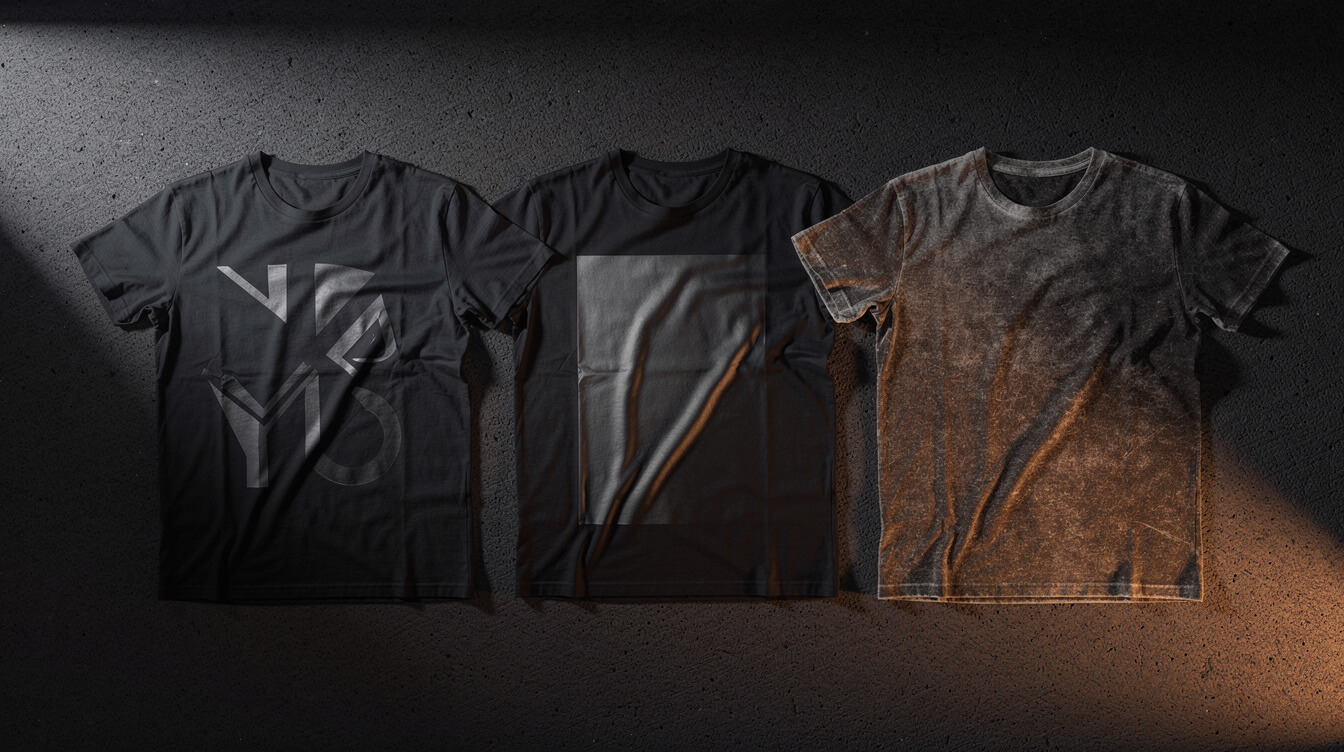
Iron-on transfers fit a narrow set of use cases. Here is when they belong in your store, and when they definitely do not.
They work when:
- Your customer base is crafters, sewers, or hobbyists who specifically want to apply designs themselves. This is a real market with real search demand. The DIY sewing and embroidery community buys heat-transfer vinyl, sublimation paper, and iron-on kits regularly.
- You are serving bulk event merchandise buyers where the client applies transfers on-site, such as team uniforms, school projects, or club events.
- You have a verified supplier with no inventory exposure, a fulfillment workflow that matches your store’s volume, and a margin that survives the retail price ceiling for transfer sheets in your niche.
They do not work when:
- Your customer wants a finished, wearable garment. Most people searching for custom t-shirts want to receive a printed shirt, not a transfer to apply at home. Mismatched product intent is the fastest path to returns, negative reviews, and customer service overhead.
- Your supplier requires a minimum order quantity on a niche design. A 50 to 100 unit MOQ is inventory exposure before you have validated demand.
- Your store is built for rapid product testing. The POD model allows you to list hundreds of designs across multiple niches with zero inventory risk. Adding a transfer product with an MOQ breaks that model for every design where it applies.
MEGA handles print-method product decisions as part of the niche research pipeline. When you run a niche through MEGA, it surfaces the product categories with verified fulfillment paths, margin that fits the niche’s retail price expectations, and no-minimum order options. You do not manually check whether each supplier supports your preferred print method for each substrate. The research-to-product pipeline handles it.
Automate your print-method product decisions
MEGA researches your niche, maps it against verified fulfillment options, runs the margin math, and generates complete product listings. Iron-on, DTG, DTF: the pipeline handles the decision. You handle the store.
Platform economics: why the Shopify 1% fee hits low-margin transfer products hardest
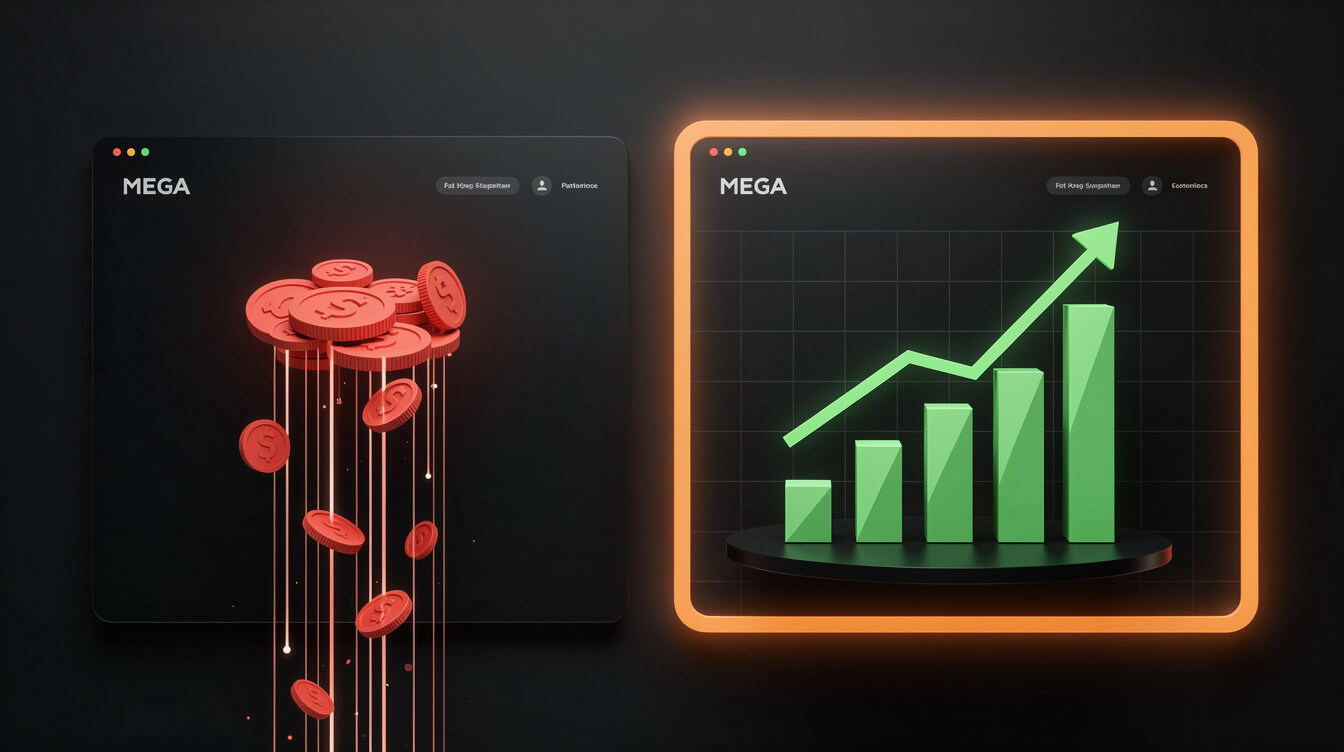
The Shopify 1% platform override fee is a flat tax on every order. It applies to Shopify stores that do not use Shopify Payments as their payment processor, and it applies on top of standard payment processing fees. On a $30 DTG t-shirt where gross margin is $14, the Shopify fee is $0.30. It reduces margin but does not break the model.
On a $14.99 iron-on transfer sheet where gross margin is $6, the Shopify fee is $0.15 and represents a 2.5% hit to margin rather than a 1% hit. Low-AOV products get taxed harder in percentage terms.
The compounding effect at volume is where this matters. At 200 transfer sheet orders per month at $14.99 average order value, Shopify’s 1% costs $30 in platform tax. That $30 represents five full margin units at $6 gross margin per order. It is the equivalent of losing five sales entirely.
At 500 orders per month at the same AOV, Shopify’s platform fee costs $75 per month in pure overhead with no corresponding revenue. Compare that to WooCommerce, which charges no platform override fee. The difference grows proportionally with volume, and it is compounded by the fact that iron-on transfer products have lower average order values than finished garments to begin with.
For sellers running screen printing comparisons at higher volumes, our custom t-shirt screen printing vs print on demand article covers the break-even math when volume reaches the point where screen printing starts to win on unit cost. The platform fee analysis applies there too.
Research first, then automate: how MEGA handles print-method product decisions
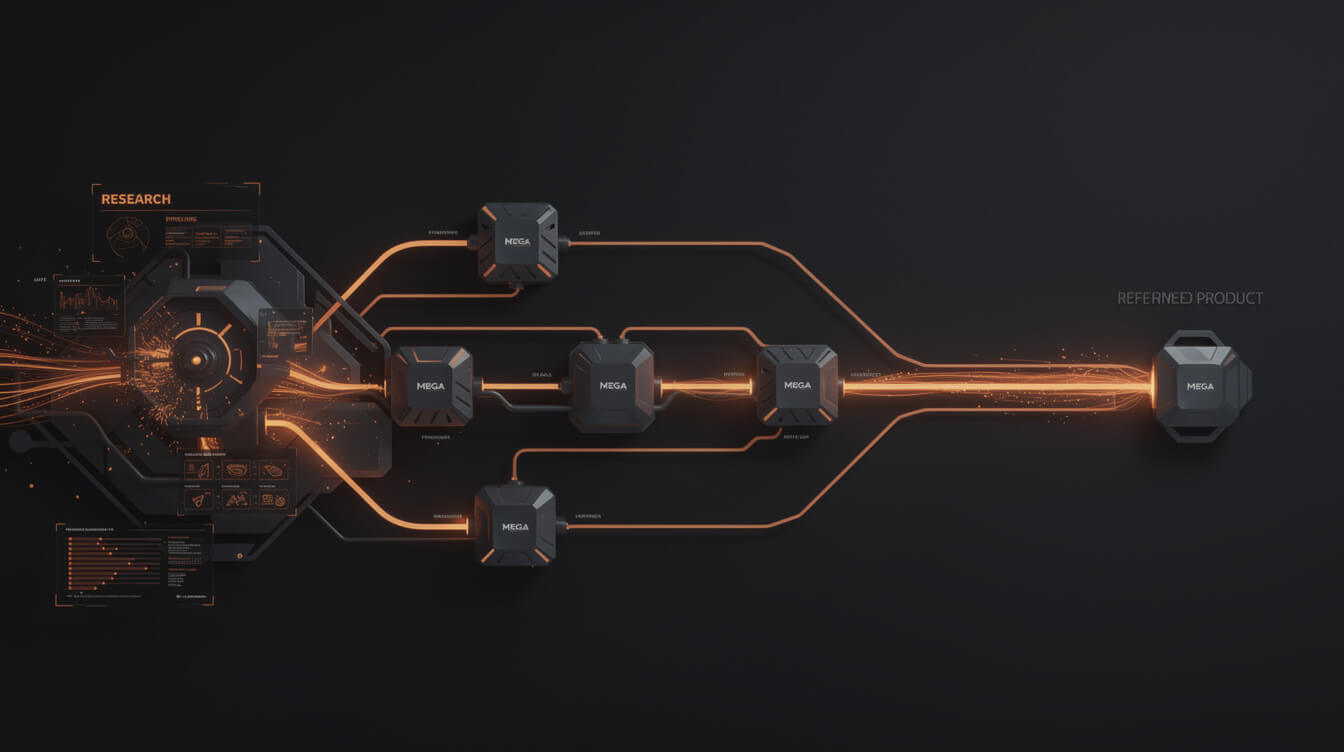
The iron-on transfer question is a research problem before it is a sourcing problem. Before you list a single product, you need answers to five questions:
- Does your target audience want a finished garment or a DIY transfer kit?
- Which print methods do available suppliers support for your garment type and substrate?
- What is the actual unit cost including shipping and any MOQ amortization?
- What is the realistic retail price ceiling for this product in your niche?
- After your platform fee or WooCommerce hosting cost, what is the net margin per unit?
Answering these five questions manually for one niche takes an afternoon. Running them across 47 products in three niches is a full work week. Most POD sellers do not do it. They list products based on gut feel, then discover the margin problem six months later when the store is not growing the way they expected.
MEGA compresses this research into minutes. The platform’s pipeline pulls niche data, maps it against verified fulfillment options across providers including Printful and Printify, runs the margin math including platform fee differences between Shopify and WooCommerce, and generates complete product listings. The iron-on transfer decision is one input in that calculation, not a separate manual step.
The comparison between DTG, DTF, and iron-on transfers is most useful as a product category filter. Iron-on transfers belong in a specific kind of store for a specific kind of buyer. DTG and DTF are the default for finished-garment POD stores that want no-inventory fulfillment and consistent print quality at scale. Getting that clarity before you build your catalog saves the kind of time that actually compounds.
For additional context on how different print methods affect product economics, our breakdown of DTG printing vs screen printing covers the economic case for both methods at different volume thresholds.
Frequently asked questions about custom iron-on t-shirt transfers for POD stores
Can Printful or Printify fulfill iron-on transfer sheet products?
Not as a standard catalog item. Both platforms support DTF and DTG for finished garments. Iron-on transfer sheets as a product that customers apply themselves are not part of either platform’s standard fulfillment catalog. You would need to source from a specialist transfer supplier.
What is the minimum order quantity at most iron-on transfer suppliers?
Most specialty transfer suppliers require a minimum of 25 to 100 units per design. Some digital cut-and-ship services allow single-unit orders, but they carry higher per-unit costs that compress the margin advantage that makes transfer products interesting in the first place.
Are iron-on transfers durable enough for customers to wash regularly?
Standard iron-on paper transfers typically last 30 to 50 wash cycles with proper care. DTF film transfers generally outperform traditional iron-on transfers in wash durability. If you are competing on print quality and longevity, DTF on finished garments is the stronger option for most POD product categories.
How does the Shopify 1% fee affect iron-on transfer product margins?
At low average order values typical for transfer sheet products ($12 to $20), Shopify’s 1% platform fee represents a proportionally larger margin hit than it does on higher-AOV finished garments. At 300 transfer sheet orders per month at $15 AOV, the platform fee costs $45 in pure overhead. WooCommerce has no equivalent fee.
What is the most common mistake POD sellers make with iron-on transfers?
Listing iron-on transfer products for an audience that wants finished garments. The product-to-intent mismatch generates returns, negative reviews, and customer service volume. Before adding any transfer product to your store, confirm through research that your audience includes DIY crafters or event merchandise buyers who specifically want to apply the design themselves.
Implement AI. 30x your throughput. Get a 30-min call with the founder.
Drop your details and book a free 30-minute discovery call. Personalized advice on your POD stack, your margin, and where AI fits. No pitch, no fluff.