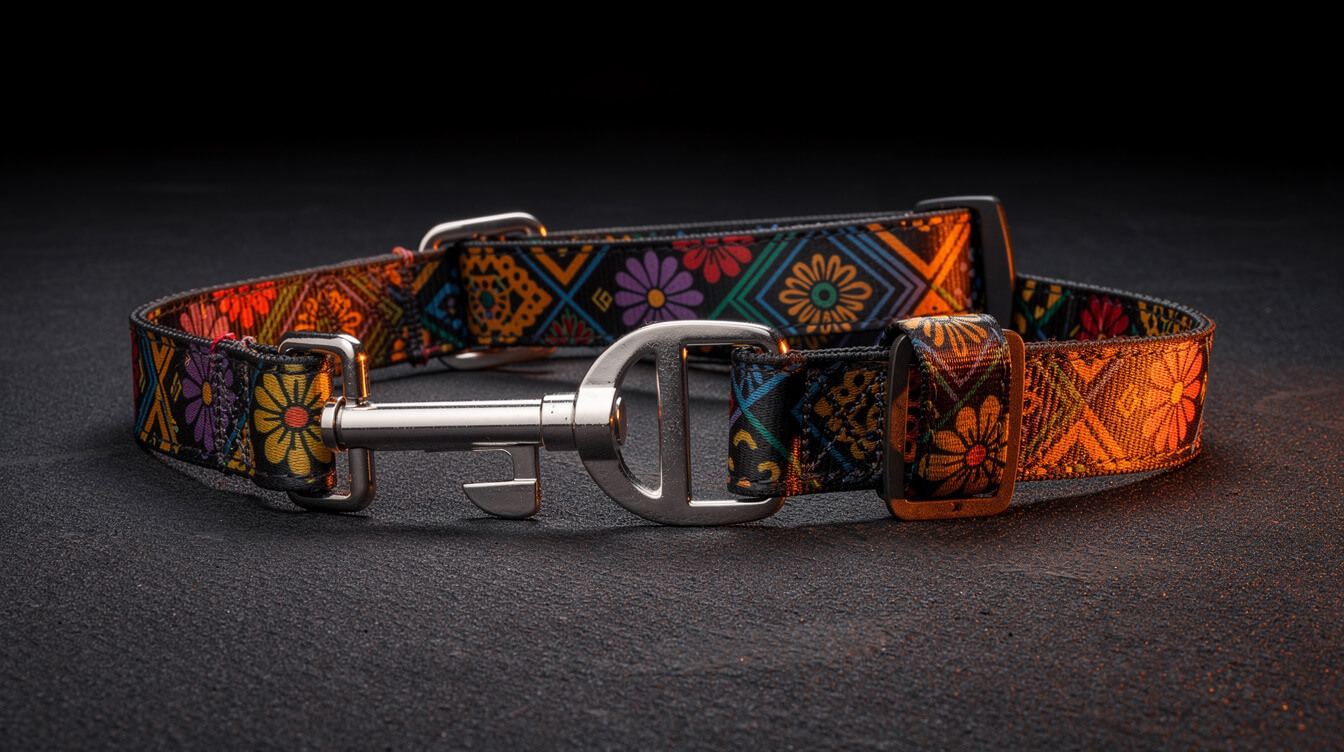
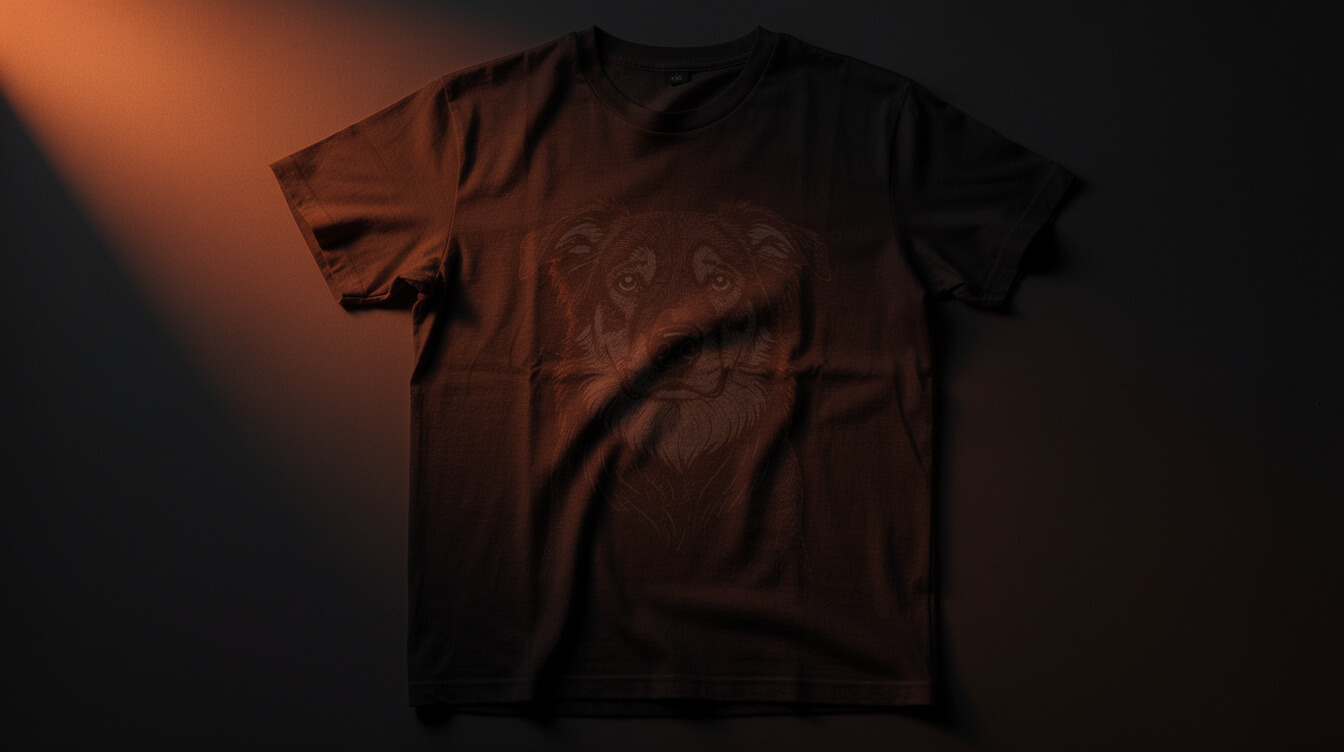
Custom dog shirts for POD sellers: the two products behind one keyword, and which path Printful actually supports
The phrase custom dog shirt looks like a single product keyword. It is not. Search it, and you will find two completely different products competing for the same ranking slot: a human t-shirt printed with a dog portrait, and a garment designed for dogs to wear. Both are real products. Both have real buyers. But they live in separate supply chains, serve different customer demographics, and require different approaches if you are building a print-on-demand store. Before you spend a day designing products and writing listings, you need to know which path your store is actually on.
This article breaks down both paths, gives you the exact unit cost math, names which providers support each one, and explains why the gift market makes the human dog-portrait tee the commercially stronger starting position for most POD sellers. By the end, you will have a clear framework for deciding which product to build first and what platform economics support your margin.
“Custom dog shirt”: the two completely different products this keyword is serving (and which one dominates search intent)
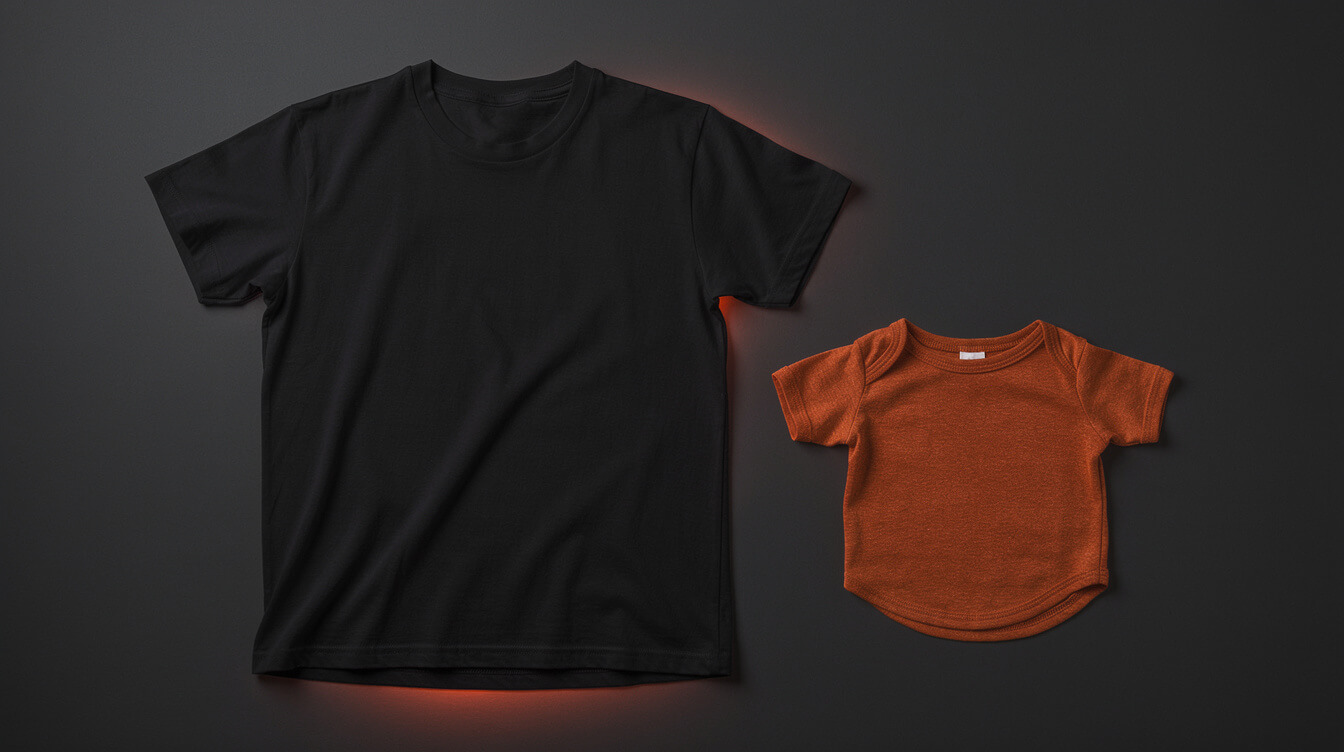
Run a SERP analysis on “custom dog shirt” and the top results fall into two camps. The first is brands selling human tees featuring a customer’s pet: CrownAndPaw with their vintage-style pet portrait shirts, Threadheads with a “put your dog on a tee” upload flow, and UberPrints positioning their DTG studio around pet-themed designs. The second camp is a narrower but genuine segment: pet apparel brands selling shirts and hoodies that dogs actually wear.
Search intent leans heavily toward path one. The volume behind “custom dog shirt” (roughly 5,400 searches per month) is driven by gift buyers searching for a way to put their Labrador or French bulldog on a premium cotton tee. The pet wearable intent is there, but it is a fraction of overall demand and produces lower AOV because pet apparel retail prices top out around $20–28, while a dog portrait tee with a good customer photo can command $32–45.
Why does this matter for a POD seller? Because Printful supports one path natively and has no catalog option for the other. Getting this wrong means building listings for a product your supplier cannot fulfill without a minimum order commitment, which defeats the purpose of a no-MOQ POD model.
Which intent should you target first?
Start with the human dog portrait tee. It has higher search volume, higher AOV, is fully supported by Printful’s DTG pipeline at zero MOQ, and the buyer profile (pet owner buying a gift or personal statement piece) is identical to the buyer profile that drives repeat purchases in custom apparel stores. The pet wearable path is a valid secondary expansion once you have proven your design style and audience, but it requires a different supply chain conversation entirely.
Dog portrait tees for humans: how Printful’s DTG pipeline handles this (no MOQ, any design)
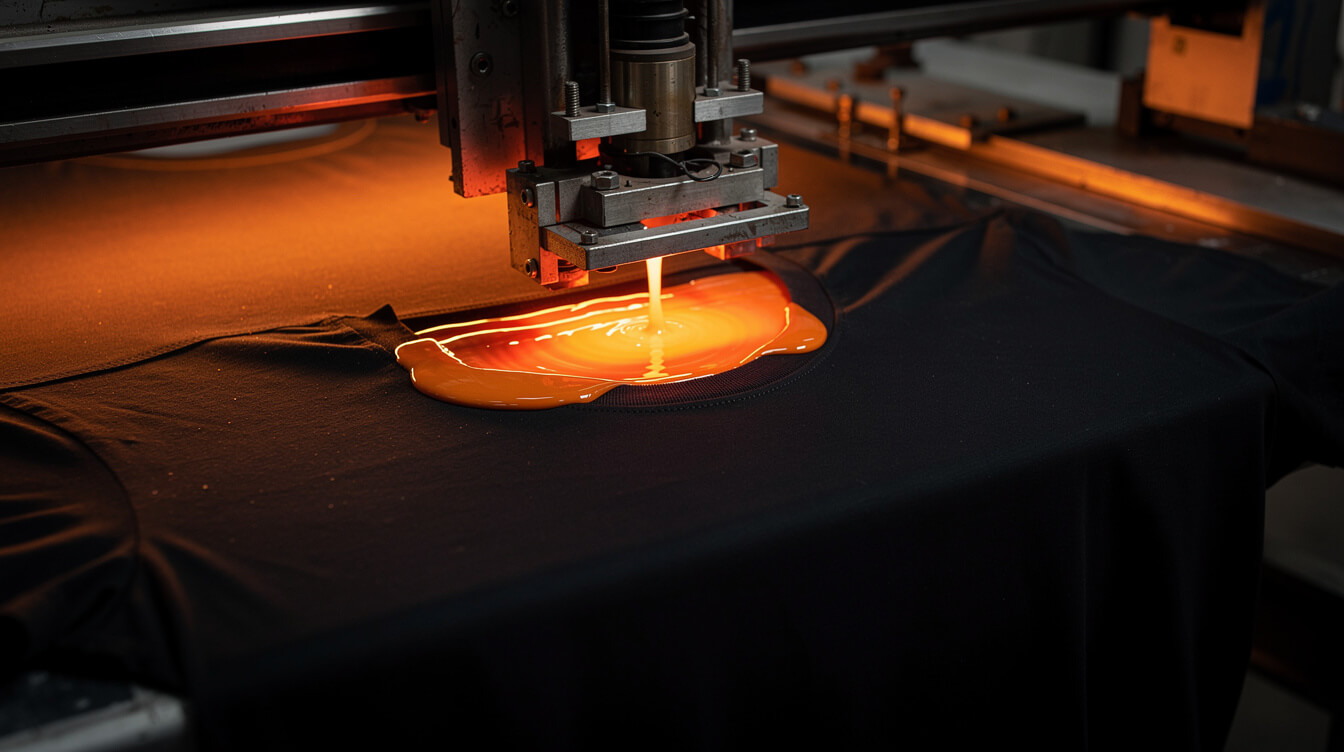
The dog portrait tee is a direct-to-garment product. A customer uploads a photo of their dog, you or a graphic designer process it into a transparent-background PNG with the dog isolated and treated for print quality, and Printful prints it on a Bella+Canvas 3001 or Gildan 64000 at zero minimum order quantity. Every order ships on demand. You carry no inventory.
The DTG process uses water-based pigment inks pressed into the cotton fibers at 320–350°F. For dark shirts (black, navy, charcoal), Printful adds a white base layer underneath the color print so the dog’s fur tones reproduce accurately instead of washing out. This adds roughly $2–4 to the base cost versus a light shirt print, but dark backgrounds make the dog portrait pop visually and justify a higher retail price point.
File requirements for dog portrait prints
The technical barrier to a quality dog portrait tee is the source photo. Printful’s DTG pipeline accepts standard JPEG and PNG files, but poor source images produce muddy, low-contrast prints that generate returns. The practical requirements are:
- Minimum 150 DPI at final print size (300 DPI preferred for detail preservation)
- Well-lit source photo (outdoor daylight or ring light eliminates the background noise that complicates isolation)
- Clear separation between the dog and the background (solid-color or out-of-focus backgrounds isolate cleanly)
- PNG with transparent background at final print dimensions before submission
Tools like Remove.bg handle basic background removal automatically. For breeds with complex fur edges (Pomeranians, golden retrievers, huskies), manual mask cleanup in Photoshop or Canva Pro produces better edge fidelity. Building a scalable POD t-shirt business requires a repeatable design process—dog portrait tees are not a one-click product, but the margin justifies the workflow investment.
Base garment options on Printful include the Bella+Canvas 3001 ($14–18 depending on size), Gildan 64000 ($12–15), and the Bella+Canvas 3001 CVC blend. The 3001 is the standard choice for premium positioning. Gildan works for lower price-point stores targeting volume over perception.
Shirts that dogs wear: what POD options actually exist for pet wearables
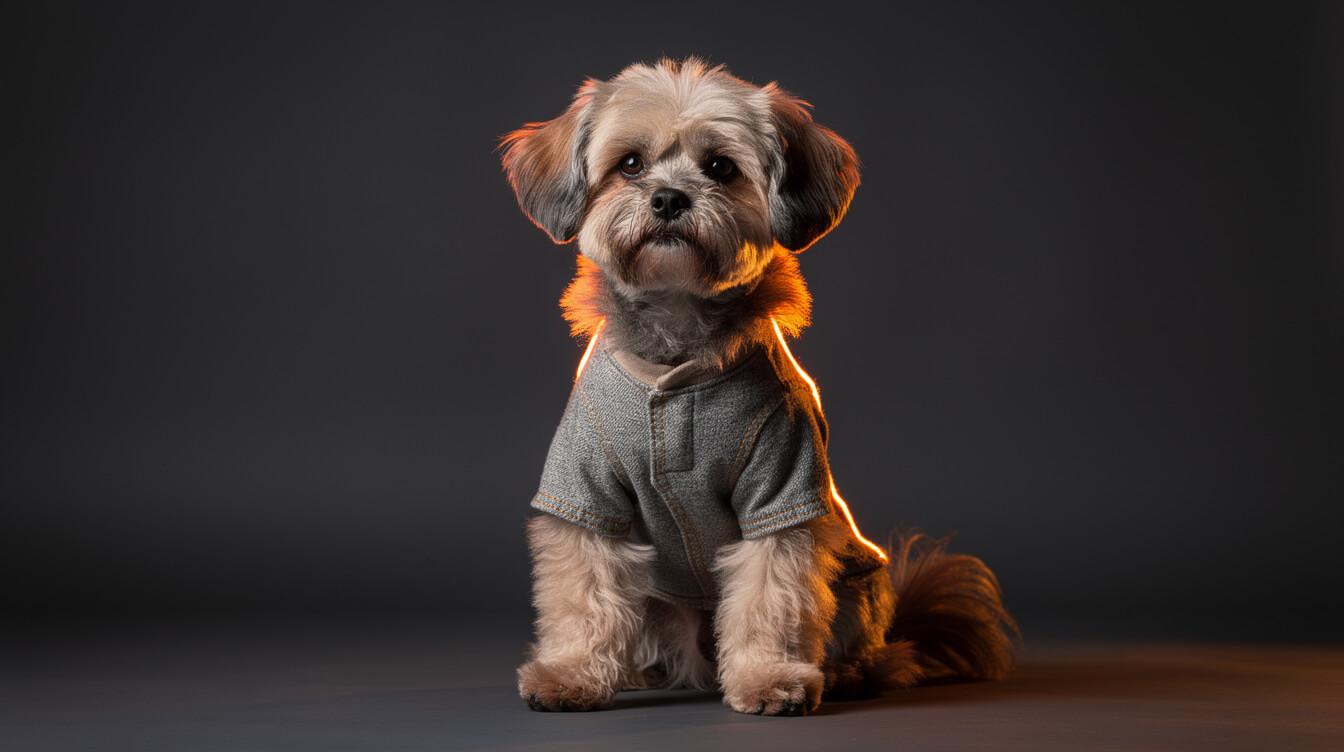
Pet apparel is a legitimate market. The American Pet Products Association estimates that pet owners spend more than $150 billion annually on their animals, and clothing is a growing category within that. But the POD fulfillment landscape for wearable dog garments is thin compared to standard human apparel.
Printful’s standard catalog does not carry dog shirts or pet hoodies as of mid-2026. Their product range covers human apparel, home goods, and accessories—but not pet wearables. This is a direct fulfillment gap you need to know before you build a Printful-native store around pet apparel.
Printify network options for pet wearables
Printify’s network has more catalog depth than Printful, and select vendors within the Printify marketplace do carry pet apparel items. Availability varies by vendor and region, and you should verify current options directly in Printify’s product creator before building any listings, as vendor catalogs change throughout the year.
Providers worth checking: Subliminator and AOP+ both carry all-over-print pet products including bandanas and some apparel items. Third-party dropshippers outside the main Printify/Printful platforms (such as Furvenzy and similar pet-focused POD services) carry dog shirts as a core SKU. Custom dog bandanas for POD sellers follow a similar supply chain pattern: limited native catalog options, better coverage through specialized pet-focused vendors.
Technical constraints on dog wearable production
Shirts that dogs wear face a design constraint that human tees do not: the fit and mobility requirements are non-standard. Dog sizing does not map to human XS–4XL sizing. You need a size chart specific to the product (typically neck girth, chest girth, and back length) and will need to build variant structures in WooCommerce or Shopify to reflect those measurements. Without accurate sizing guidance, returns spike.
Print method on pet shirts depends on substrate. Polyester-blend pet shirts support sublimation, which gives you edge-to-edge full color. Cotton-dominant fabrics need DTG, which requires the same prep workflow as human DTG prints. Nylon and performance fabrics are generally not compatible with either method at standard POD temperatures without specialty treatment.
Unit cost math: dog portrait DTG tee at $14–18 base vs pet wearable at $10–15 via Printify network

Smash print-on-demand. Join the engine room.
One short email a week. Real numbers, real teardowns, the unfiltered economics behind every move.
Understanding your cost structure before you set retail prices is the difference between a margin-positive store and a treadmill operation where volume does not translate into profit. Here is the unit cost math for both paths at realistic base costs.
Path 1: dog portrait DTG tee (human garment)
| Cost element | Light shirt print | Dark shirt print |
|---|---|---|
| Base garment (Bella+Canvas 3001, size M) | $14.00 | $14.00 |
| DTG print (front, large) | Included | +$2–4 (white base) |
| Shipping (standard US) | $4.50–6.00 | $4.50–6.00 |
| Total landed cost | $18.50–20.00 | $20.50–24.00 |
| Retail price target | $32–38 | $34–42 |
| Gross margin per order | 38–51% | 38–53% |
At a $35 retail average with a $21 landed cost, you keep $14 per shirt. At 100 orders per month, that is $1,400 in gross profit before platform fees and ad spend. The dark shirt premium ($2–4 in added print cost) typically supports a $4–6 retail markup without buyer resistance, because dark portrait tees photograph better and buyers associate the aesthetic with premium quality.
Path 2: dog wearable shirt (pet garment)
| Cost element | Standard sublimation dog shirt |
|---|---|
| Base product (Printify network vendor) | $10–15 |
| Shipping (standard US) | $5–8 |
| Total landed cost | $15–23 |
| Retail price target | $22–30 |
| Gross margin per order | 23–42% |
The pet wearable margin is thinner and the retail ceiling is lower. Pet owners have stronger price sensitivity on dog clothing than on gifts for themselves or for humans. At $28 retail and $19 landed cost, you keep $9 per unit—35% less gross dollar profit than the portrait tee at the same order volume. The math clearly favors path one as a starting position.
The gift economy driving dog portrait tee demand: who buys, when, and what they pay ($28–38 retail)
Dog portrait tees are gift products first. Understanding the gift buyer changes how you position your store, what you charge, and when you need listing depth in place for seasonal surges. The primary buyer is a dog owner purchasing as a gift for another dog owner—or buying as a meaningful self-gift that celebrates a pet. They are not comparison-shopping price. They are shopping for the emotional outcome: a high-quality print of a beloved dog on a premium tee.
Price sensitivity is lower than the category average. Buyers regularly pay $32–45 for a dog portrait tee from a brand that presents quality work. This is identical to the dynamics that custom sportswear POD stores see in team-identity apparel—the emotional connection to the subject drives willingness to pay above the commodity baseline.
The five demand windows for dog portrait tees
- Mother’s Day (early May). Dog moms. This is the single strongest demand spike of the year. Search volume for pet portrait gifts escalates through April and peaks the week before Mother’s Day. List before April 1 for organic indexing to build in time.
- Father’s Day (mid-June). Dog dads. Smaller volume than Mother’s Day, but the same buyer profile. Works best with lifestyle-oriented design framing.
- Christmas and holiday season (October–December). The largest gift window overall. Portrait tees in holiday-adjacent colorways outperform plain portrait tees from October to early December. List before September for indexing lead time.
- Dog birthdays (year-round). This is the repeat-purchase driver. Once a buyer receives a dog portrait tee, birthday gifting for the same dog (or friends’ dogs) generates reorders. A “dog birthday gift” landing page captures this intent year-round.
- Loss and memorial gifting. A niche segment but high value: buyers who have recently lost a dog purchase portrait tees as a memorial piece. These are full-price buyers with no comparison shopping behavior. Requires tasteful positioning.
Running a store that builds and optimizes listings for each of these windows is where the MEGA research-to-product pipeline creates compound leverage—instead of manually building five separate seasonal listings, the automation handles keyword research, design briefs, and listing copy for each demand window as a systematic output.
Shopify’s 1% override on dog portrait tee orders and the math at 100 orders/month

The Shopify platform override fee is a 1% charge applied to every transaction processed through a third-party payment processor (Stripe, PayPal, etc.) instead of Shopify Payments. At small volumes it looks like rounding error. At scale, it compounds into a meaningful recurring drag on margin—particularly for a product line where your gross margin per order is already defined by the base cost and retail price ceiling.
The math at 100 orders per month
At $35 AOV and 100 orders per month, Shopify’s 1% override costs you $35/month. Add the full cost stack:
| Cost item | Monthly | Annual |
|---|---|---|
| Shopify Basic plan | $39 | $468 |
| 1% transaction override ($35 AOV × 100 orders) | $35 | $420 |
| Photo personalization app (required for dog portrait uploads) | $19–49 | $228–588 |
| Total platform tax | $93–123 | $1,116–1,476 |
Compare that to a WooCommerce store at the same volume:
| Cost item | Monthly | Annual |
|---|---|---|
| WooCommerce hosting (managed WordPress) | $15–30 | $180–360 |
| Transaction override | $0 | $0 |
| Photo upload field (WooCommerce native, no app) | $0 | $0 |
| Total platform tax | $15–30 | $180–360 |
The delta at 100 orders/month is $936–1,116 per year in favor of WooCommerce. At 200 orders/month, it is $1,872–2,232. The override fee scales linearly with volume, meaning every order you add to Shopify widens the margin gap. The full WooCommerce vs. Shopify fee breakdown for POD sellers covers this across five revenue milestones with the complete cost stack comparison.
WooCommerce also handles the photo upload workflow natively. Dog portrait tees require customers to submit a photo at checkout. On WooCommerce, a custom product field (text field or file upload via Product Add-Ons or Advanced Custom Fields) adds this without a monthly app fee. On Shopify, you are paying $19–49 per month for a personalization or file upload app to add the same functionality.
Top niche verticals for dog shirt stores: breed-specific stores, dog mom brands, holiday drops, rescue org fundraisers, funny/novelty
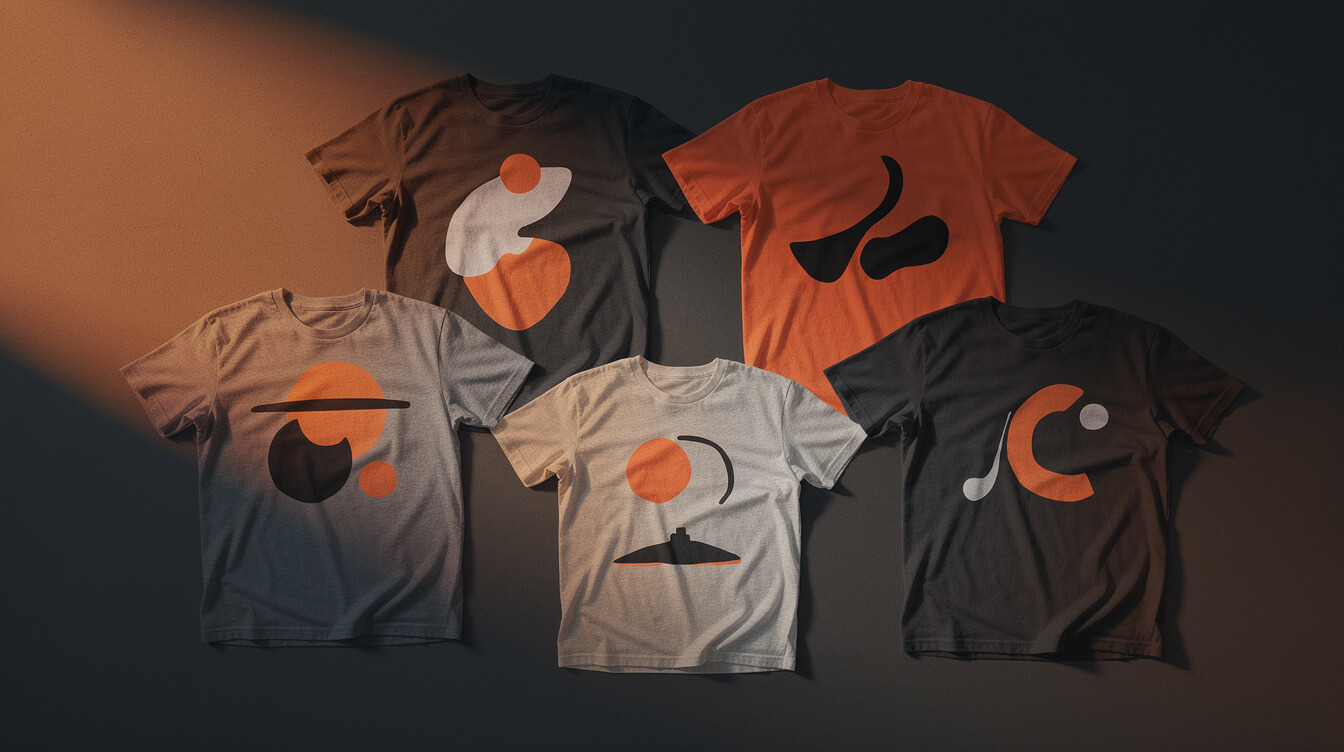
A general “custom dog shirts” store competes head-to-head with established brands on price and positioning. A niche-specific store wins by owning a sub-segment where the general stores do not go deep enough. Here are the five verticals with the clearest commercial signals in 2026.
1. Breed-specific stores
French bulldogs, golden retrievers, dachshunds, Australian shepherds—breed-specific buyers identify strongly with their dog’s breed and seek products that reflect that identity. A store positioned as “the French bulldog merch store” outconverts a general custom dog store with Frenchie buyers because the positioning signals domain authority. Golden retrievers carry the highest search volume in POD pet apparel. French bulldogs skew toward younger, urban, higher-discretionary-spend buyers. Breed-specific dog bandanas cross-list naturally with portrait tees in a breed store to lift AOV without additional traffic cost.
2. Dog mom and dog dad brands
The “dog mom” identity category is one of the strongest gift-buyer signals in pet apparel. Buyers who identify as dog moms purchase for themselves, purchase for other dog moms (Mother’s Day, birthdays), and are highly responsive to brand voice that frames dogs as family. Design language: warm typography, inclusive messaging, lifestyle photography over product-only imagery. AOV for dog mom brands is typically $28–38 for the tee alone, higher when bundled with accessories.
3. Seasonal holiday drops
Holiday-themed dog portrait tees (Christmas sweater framing, Halloween pumpkin with pet photo, Valentine heart frame) perform strongly in Q4 and around Valentine’s Day. These are limited-run drops rather than evergreen listings—the seasonal constraint creates urgency that general portrait tees lack. Start listing seasonal drops 8–10 weeks before the holiday for organic indexing to build.
4. Rescue org fundraisers
Local animal rescues and shelters have built-in communities of active donors and adopters who buy merchandise to support the organization. A custom dog shirt featuring the organization’s resident dogs or mascot creates a fundraising product with a pre-existing motivated buyer base. These are typically small-batch orders (25–100 units) at discounted pricing for the org. Margin is thinner, but community goodwill generates SEO and referral traffic that has compounding value for an owned-store model.
5. Funny/novelty dog shirts
A growing segment driven by social media sharing: tees with humorous dog-related graphics (dogs in business suits, dog meme formats, absurdist pet humor). These do not require a customer photo upload and can be offered as standard inventory with fixed designs. Lower production complexity, faster time-to-list, strong social sharing potential. The trade-off is that trend-driven novelty designs have shorter product lifecycles than evergreen portrait tees. A mixed catalog of evergreen portrait tees plus a rotating novelty section creates natural content for social and email marketing.
Conclusion: pick your path before building your store
The “custom dog shirt” keyword serves two separate buyers. Most of the search volume belongs to gift buyers looking for a human tee featuring their dog, and that path has a clear POD fulfillment chain through Printful’s DTG pipeline at no MOQ. The pet wearable path is valid but requires Printify network exploration, produces lower AOV, and has a narrower margin window.
For most POD sellers starting from zero, the dog portrait DTG tee is the better initial product. It has higher AOV, gift-market demand dynamics that support near-full-price purchasing, a proven no-MOQ supply chain, and five distinct seasonal demand windows to plan around. Build the pet wearable extension once your portrait tee operation is generating consistent monthly volume and you have validated your audience.
The platform choice matters as much as the product choice. At 100 orders per month and above, Shopify’s transaction override fee and mandatory personalization apps add $1,100–1,500 per year in platform cost relative to WooCommerce. For a product line where the gross margin per order is $12–17, that overhead is three to five days of gross profit handed to the platform every month.
Build on owned infrastructure. Pick the path that your supply chain actually supports. Sequence your product catalog from the highest-AOV, lowest-complexity starting point before expanding into adjacent segments.
Implement AI. 30x your throughput. Get a 30-min call with the founder.
Drop your details and book a free 30-minute discovery call. Personalized advice on your POD stack, your margin, and where AI fits. No pitch, no fluff.