Custom jackets for POD sellers: what providers actually support, unit cost math, and the margin reality
If you have been searching for how to sell a custom jacket through a print-on-demand platform, you have probably run into the same wall. The top search results are bulk-order suppliers, Carhartt Company Gear, Corporate Casuals, and commercial embroidery shops that want your corporate purchase order and a minimum of 24 units. None of them speak to the POD seller running a WooCommerce or Shopify store who wants to add a custom jacket to their catalog without holding inventory or signing a supply contract.
This guide is for that seller. It covers what Printful and Printify actually carry in the jacket category, what decoration methods are available, what the unit cost looks like at realistic AOVs of $65-120, and how the Shopify 1% platform override changes the margin picture at scale. If you are deciding whether jackets belong in your store, this is the math you need.
What custom jacket options POD platforms actually support
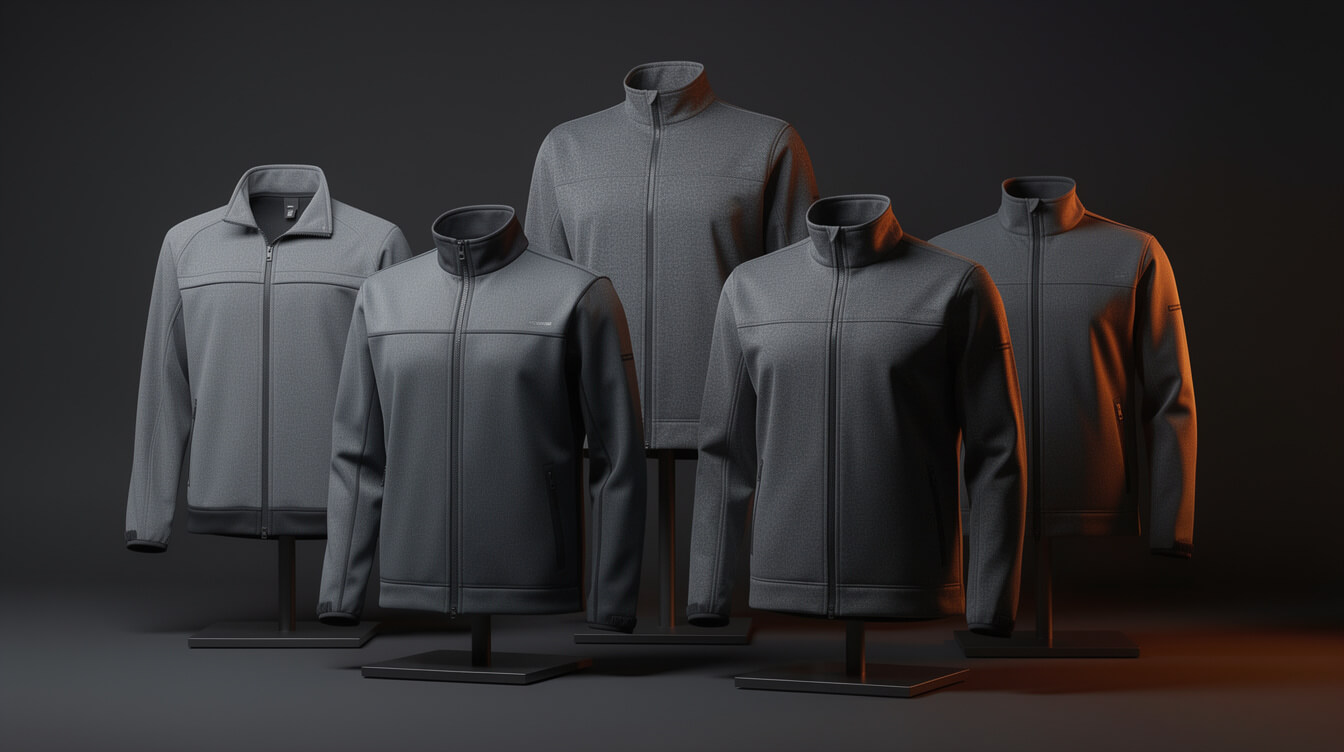
The honest answer is that POD jacket support is narrower than the bulk apparel world, but it is real, growing, and sufficient for most POD store use cases. The key is knowing which categories each platform covers well and which fall outside their current offering.
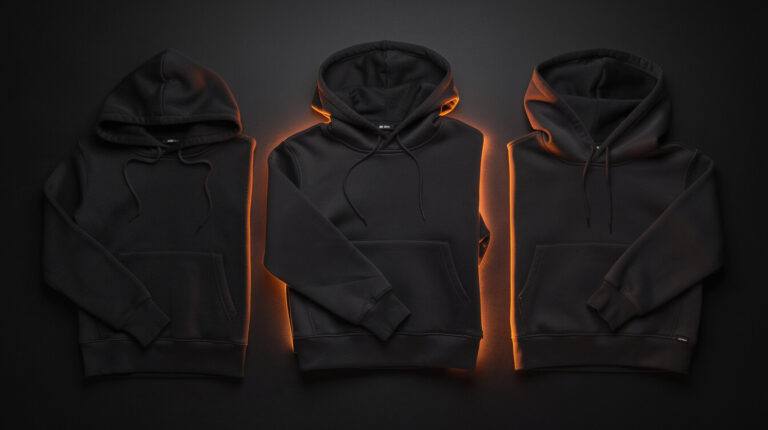
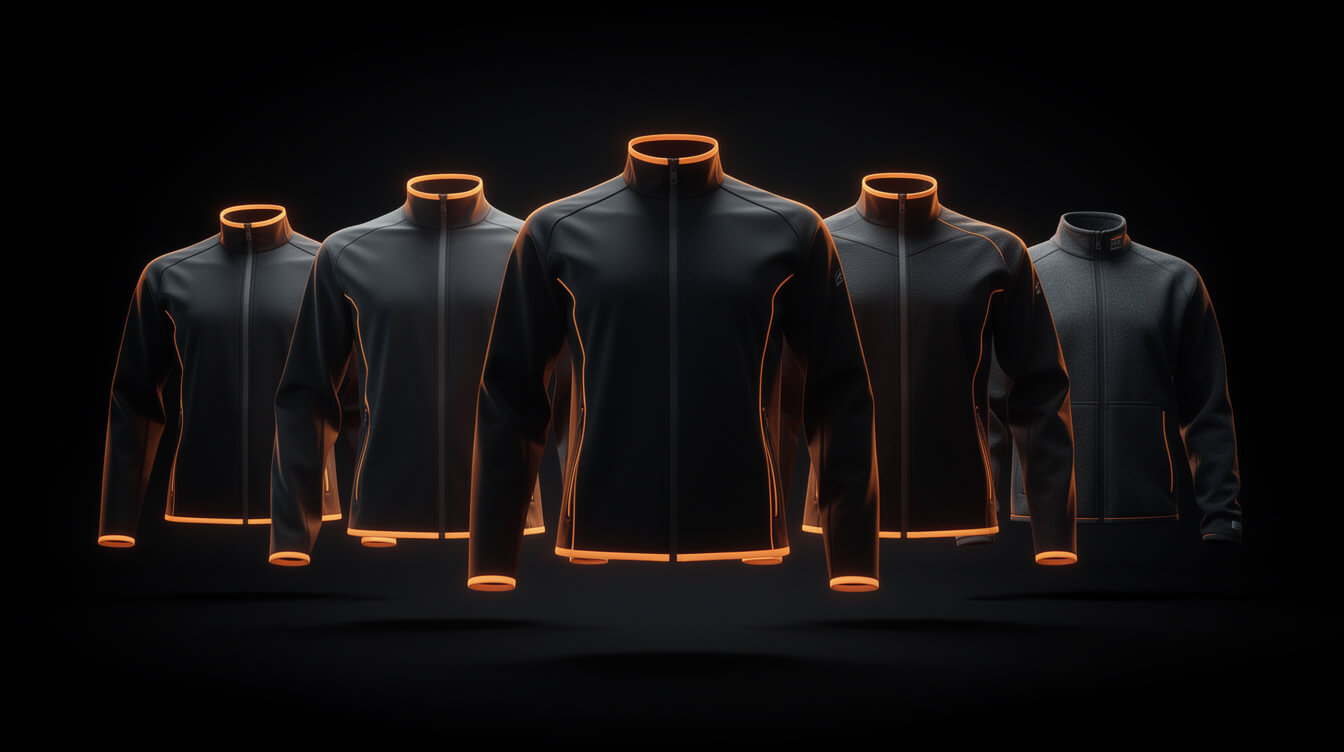
Printful carries several jacket options across their product catalog. Their most accessible entry point for outerwear is the all-over print (AOP) zip-up style, which functions as a jacket in colder climates and works across casual streetwear, sports, and outdoor niches. For traditional outerwear, Printful offers embroidered varsity jackets (through their in-house decoration facility), softshell jackets, and windbreakers on selected SKUs. Current jacket-adjacent products include the Bella+Canvas 7205 full-zip jacket, selected MA-1 bomber styles, and softshell options depending on your region and fulfillment center routing.
Printify gives you access to a broader range of print providers, which translates to wider jacket variety but more quality variance between suppliers. Through Printify’s provider network, you can source custom fleece jackets, softshell jackets, and embroidered varsity styles. The platform routes orders to providers like Monster Digital, Underground Shirts, and others in the jacket category. You select the provider, configure your decoration, set the retail price, and Printify handles fulfillment. The upside is provider optionality. The downside is that you cannot pre-inspect every batch, and quality can drift if you switch providers mid-catalog.
One important nuance: not every jacket style supports every decoration method. A sublimation-print all-over jacket needs a 100% polyester blank. An embroidered softshell works on different fabric constructions. A windbreaker with DTF decoration has specific heat-press temperature requirements. The platform you choose and the decoration method you select are linked decisions, not separate ones. We will cover those decoration trade-offs in detail in the next section.
For sellers who want embroidery specifically on their jacket line, the economics and provider options differ from the screen print and DTF path. We covered the embroidery-first route in detail in our custom embroidered jackets guide for POD stores, which compares Printful and Printify on digitization fees, stitch counts, and decoration location options for outerwear specifically.
Decoration methods for jackets: embroidery vs DTF vs screen print
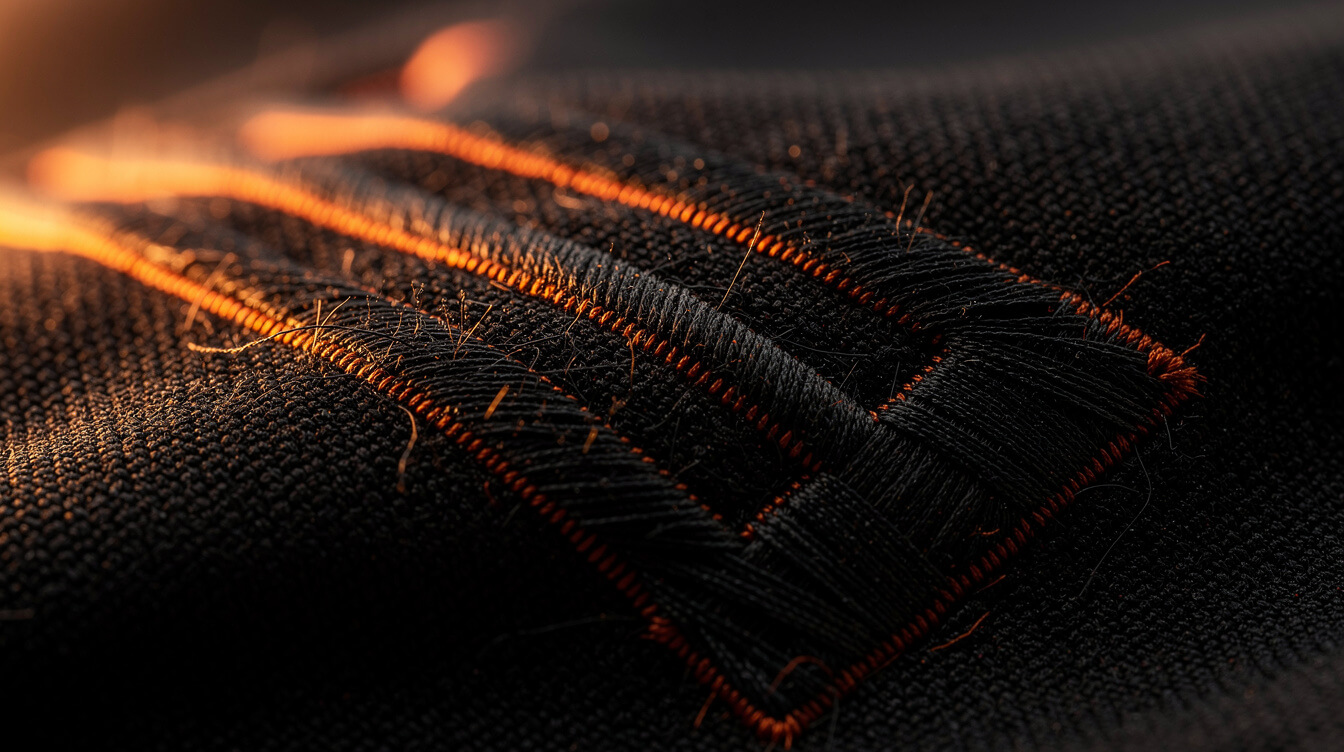
The decoration method you choose shapes the product’s perceived quality, the production cost, which blanks you can use, and how the finished product holds up through washing and outdoor use. For jackets, the three main paths through POD platforms are embroidery, DTF (direct-to-film) transfers, and screen printing. Each has a different application window.
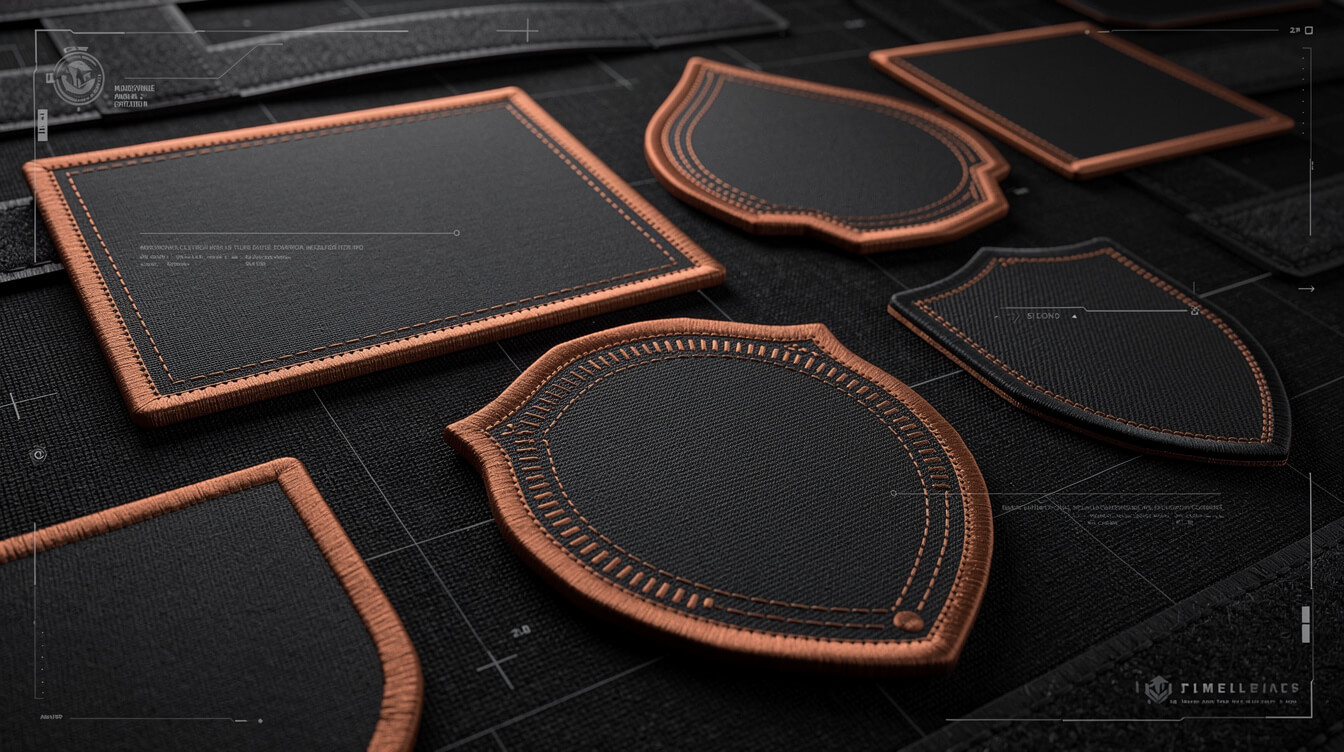
Embroidery reads as premium. A well-executed embroidered chest logo on a softshell or fleece jacket commands a higher retail price and carries the visual weight that corporate gifting, sports teams, and outdoor brand customers expect. The raised texture, thread density, and dimensional quality are visible cues that signal product quality before anyone reads the brand name. The downside is cost and design flexibility. Printful charges a digitization fee (typically $2.95-$4.95 per design, one-time) and then per-stitch production costs on top of the blank cost. A simple chest logo at 5,000 stitches adds roughly $5-9 to the unit cost. Complex designs with fine lines or photographic detail do not translate well to embroidery and cost more per stitch without improving the visual result.
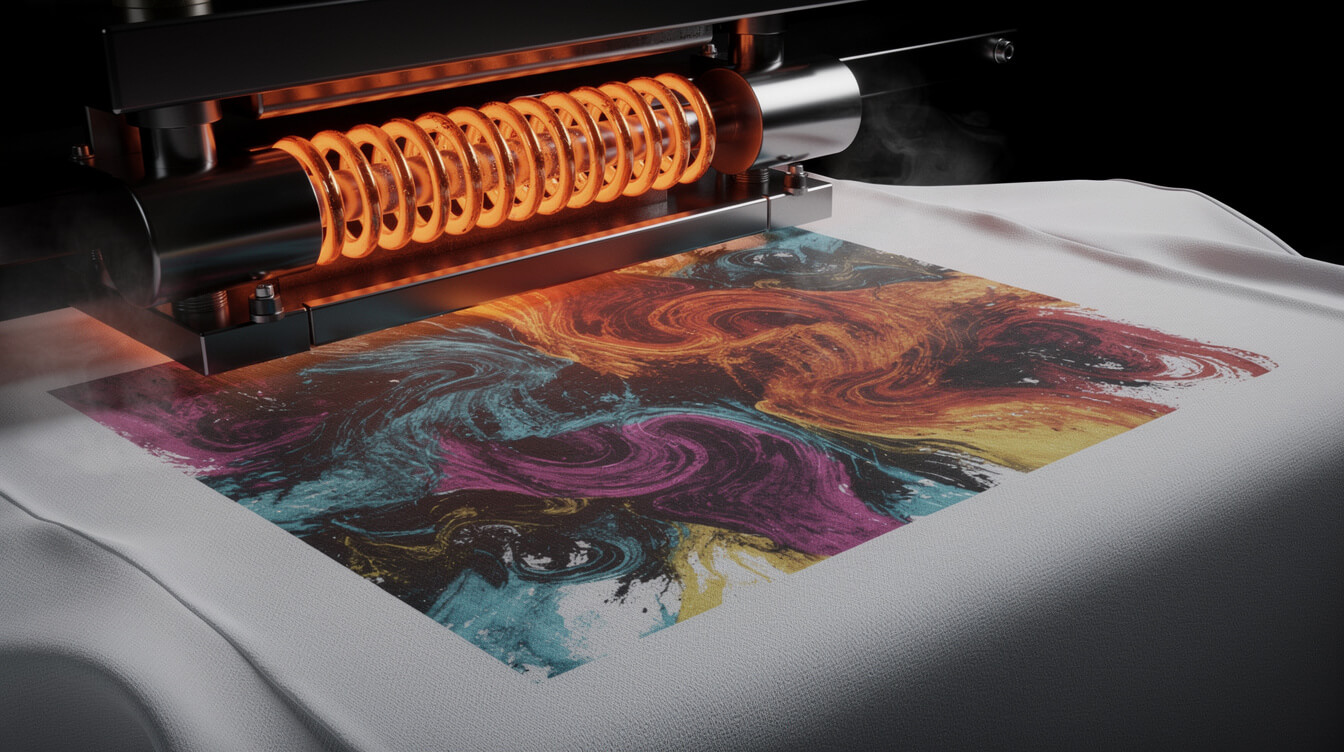
DTF (direct-to-film) transfers offer full-color, photographic-quality prints on most fabric types, including the nylon and polyester blends that jackets are often made from. The DTF process applies a pre-printed film that bonds to the garment under heat and pressure. No screen setup cost, no minimum stitch count, no fabric type restriction. On a softshell jacket or windbreaker, DTF handles gradients, fine detail, and multi-color designs that embroidery cannot replicate at a reasonable cost. The per-print production cost on a standard chest graphic typically falls in the $6-10 range through POD providers. Durability is competitive with embroidery for moderate washing cycles, though pure outerwear that gets heavy outdoor use tends to show DTF edge lifting before a well-applied embroidered logo would show wear.
Screen printing is less common on jackets through POD channels. The process works well on flat cotton/poly T-shirt blends but encounters problems on the textured fabrics, seams, and panel construction that jackets involve. Setup costs for screen printing (burning screens for each color, ink mixing) make single-unit POD economics challenging for most providers. Most POD platforms do not offer screen printing on jacket SKUs for this reason. If screen printing is important to your brand identity, you are looking at custom decoration minimums from a local shop or specialty decorator, not a single-unit POD fulfillment partner.
For most POD sellers, the practical choice comes down to embroidery for logos and text-based designs where perceived quality justifies a higher retail price, and DTF for full-coverage graphics or detailed artwork where complexity would push embroidery costs above the product’s pricing ceiling.
Unit cost math: what a custom jacket really costs your POD store
This is where POD sellers need hard numbers. The cost stack for a custom jacket through POD is higher than basics like t-shirts and mugs, but the AOV potential is also higher. Let me work through the actual cost for a representative product on Printful.
Take a softshell jacket with a chest embroidered logo at 5,000 stitches. At Printful pricing (mid-2026):
- Blank softshell jacket: $28-$36 depending on size and gender variant
- Embroidery production at 5,000 stitches: $5-$9 per piece
- Digitization fee: $2.95-$4.95 one-time per design (amortized across all orders, negligible above 10 units)
- Fulfillment and packing: included in Printful base pricing
- Shipping to a US customer: $7-$12 for a single jacket, depending on weight class and shipping zone
Total landed cost per unit (before your retail price): roughly $40-$57 including shipping to the end customer. That is the floor your retail price needs to clear.
On Printify, the cost varies by which provider you select. North American providers offering softshell jackets typically run $25-$32 for the blank, with embroidery or DTF production costs similar to Printful’s structure. Printify’s model gives you more options to compare providers on price, but you carry more quality-control responsibility since you cannot physically inspect incoming stock.
For a windbreaker or lightweight nylon jacket with DTF decoration instead of embroidery, the blank cost drops slightly to the $18-$26 range, but the DTF print cost adds $6-$10 back in. Total landed cost on a DTF-decorated windbreaker typically runs $32-$48 including shipping, somewhat lower than an embroidered softshell but in the same ballpark for pricing purposes.
The takeaway: a custom jacket through POD lands at a production and fulfillment cost of $38-$57 per unit before you earn anything. That sounds high compared to a $7 print-on-demand t-shirt, but it is workable at the price points jackets command at retail, which is where the next section matters.
Margin at $65-120 AOV and what the Shopify 1% fee extracts on every sale
Smash print-on-demand. Join the engine room.
One short email a week. Real numbers, real teardowns, the unfiltered economics behind every move.
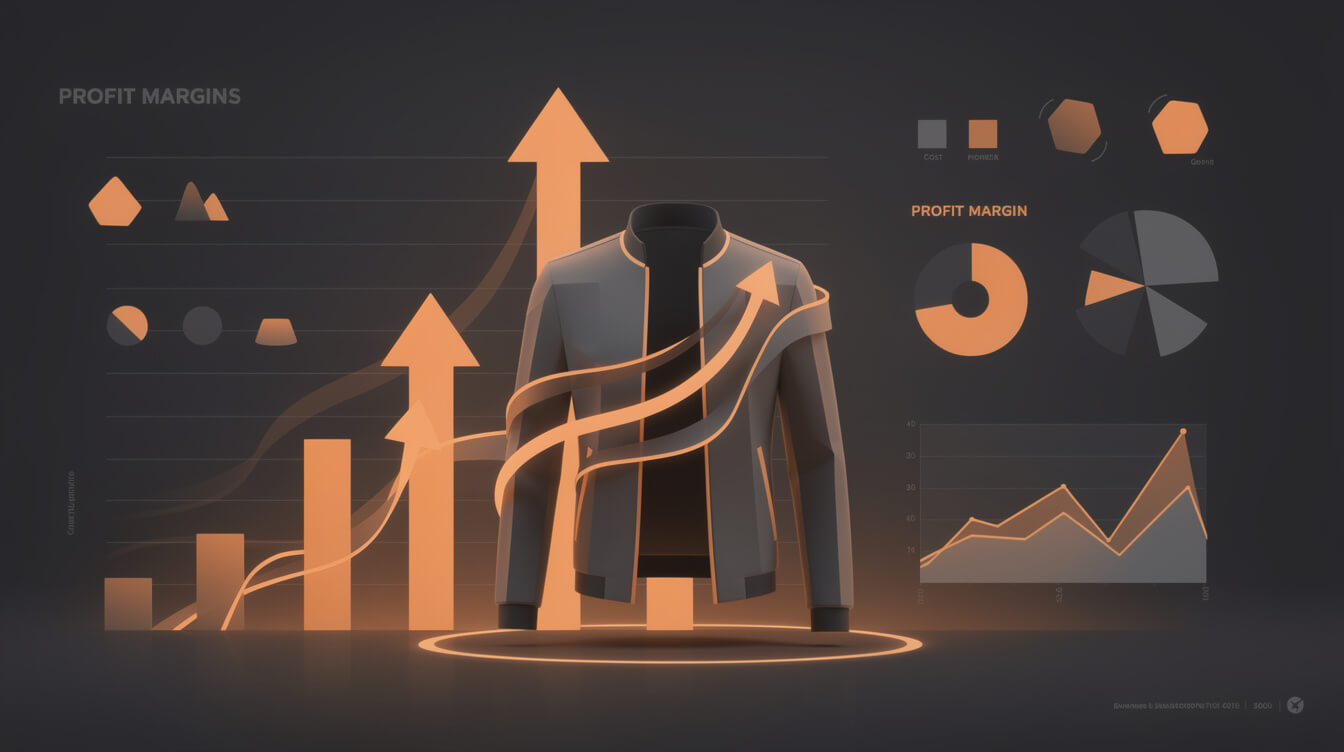
Let me run three scenarios across the likely pricing range for a custom jacket product line.
Scenario A: $75 retail, $45 landed cost. Gross margin: $30 (40%). Modest, but serviceable if fulfillment runs smoothly and returns are low.
Scenario B: $95 retail, $48 landed cost. Gross margin: $47 (49.5%). This is the sweet spot for embroidered softshell jackets in a branded niche. Customers expect to pay this for quality outerwear. The margin holds even after credit card processing fees.
Scenario C: $120 retail, $52 landed cost. Gross margin: $68 (56.7%). Achievable for premium outerwear in a specialized niche, corporate gifting, or team apparel where quality cues (embroidery, heavier blank) support the price.
Jackets are one of the few POD product categories where pricing above $85 is natural and expected. A branded softshell at $95 does not raise eyebrows if the product photography and brand positioning support it. That pricing power is why jackets attract POD sellers looking for higher per-unit returns than t-shirts or mugs can deliver.
Now, name the Shopify tax. If you sell $95 jackets on a Shopify store using a third-party payment gateway, which most POD sellers do because Shopify Payments is not available in all markets and many sellers prefer Stripe or PayPal, Shopify charges 1% on every transaction in addition to the payment processor fee. On a $95 sale, that is $0.95. On 100 jacket sales per month, that is $95 per month extracted by Shopify on top of your plan cost and processing fees. At 500 jacket units per month, you are losing $475 per month, or $5,700 per year, to the platform before a single other operating expense.
WooCommerce does not charge a platform transaction fee. Zero percent on every sale, regardless of which payment gateway you use. The per-unit impact of 0% versus 1% is most visible on higher-ticket products. On a $20 t-shirt, the 1% fee is $0.20, negligible. On a $95 jacket, it is nearly a dollar. Multiply that across a catalog and a year, and the math favors WooCommerce for sellers running a higher-AOV product line.
For a detailed look at how Shopify’s fee structure plays out across different POD product categories, the custom zip-up hoodie unit cost guide walks through the same calculation on a closely related outerwear product, and the comparison is instructive for building a full apparel catalog math model.
No-minimum POD vs traditional decorator minimums: why the math flips for small runs
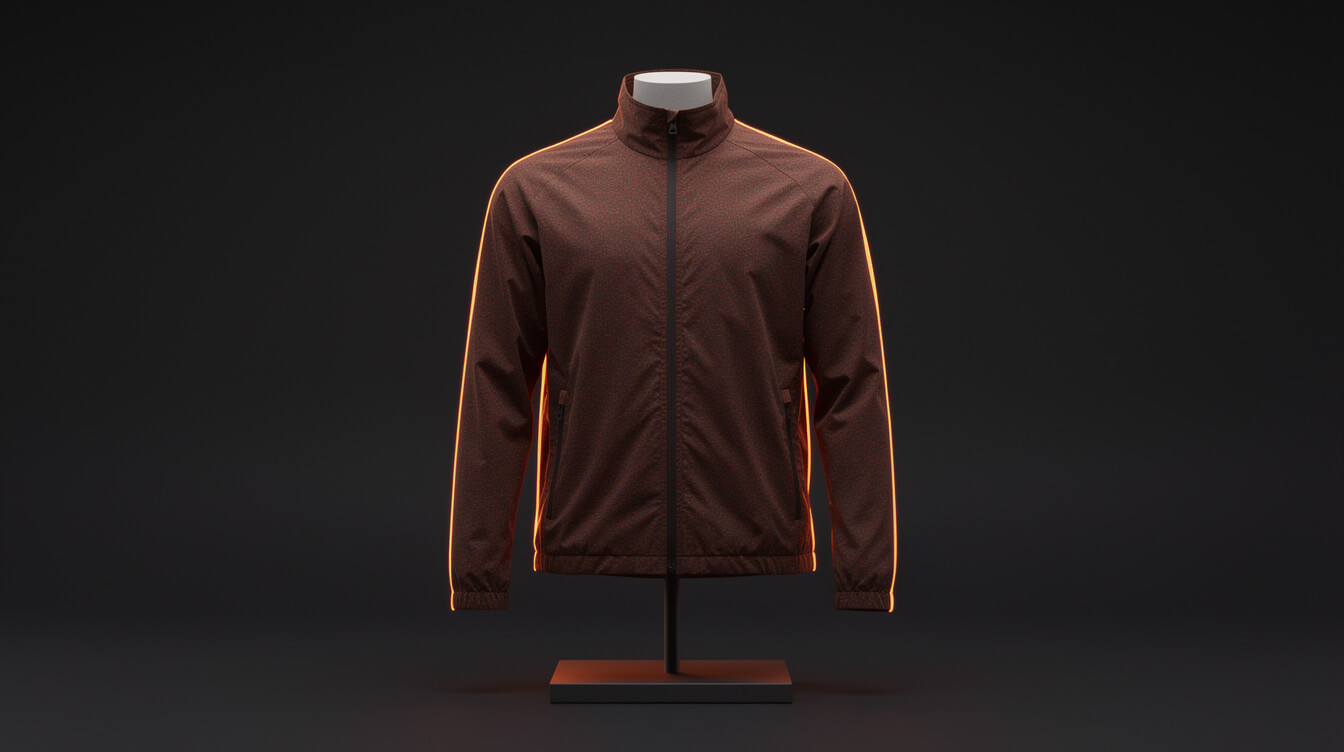
The traditional custom jacket path starts with minimums. A commercial embroidery shop typically takes jackets at a minimum order of 12 pieces, often 24, and sometimes 48 units per design per colorway. Screen print decorators for jacket panels often require 24-48 pieces per run. You need to pre-purchase the blank jackets, pay the embroidery or print setup, store the inventory, and sell through before your capital is freed up. If the design underperforms, you sit on unsold inventory at $50+ per piece.
POD eliminates that entire risk layer. With Printful or Printify, you list one jacket. You sell one jacket. You pay for one jacket to be decorated and shipped. There is no unsold inventory, no upfront capital tied to blanks, no storage or warehousing cost, and no liquidation problem if the design does not connect with your audience.
The trade-off is unit economics at volume. A bulk decorator running 100 embroidered jackets at once might charge $15-$20 per piece for the embroidery on a blank you supply at $22-$28, putting your all-in cost at $37-$48 per piece. POD at single-unit fulfillment costs $40-$57 including shipping, as outlined above. The per-unit cost gap narrows as you scale, and above roughly 50-100 units per design, bulk can undercut POD’s unit economics meaningfully.
But here is the calculation that matters for most POD sellers: you rarely know in advance which design will reach 100 units. A five-design jacket catalog might see one design sell 80 units, two designs sell 15 units each, and two designs sell zero. POD lets you test all five designs at retail price with zero inventory risk. The winner migrates to bulk production when demand is proven. The others cost you nothing except the design time and listing effort.
That is the structural advantage of no-minimum POD. Not that it is cheaper than bulk at volume (it is not), but that it converts inventory risk into iteration speed. For a custom jacket niche store building an audience before committing capital, that trade-off is worth more than the per-unit savings of a 24-piece minimum order.
This same logic applies across adjacent outerwear categories. If you are building out headwear alongside your jacket line, the custom embroidered hats no-minimum guide covers the equivalent provider comparison and unit cost math for branded caps and beanies.
Building a custom jacket product line: automation and the MEGA pipeline
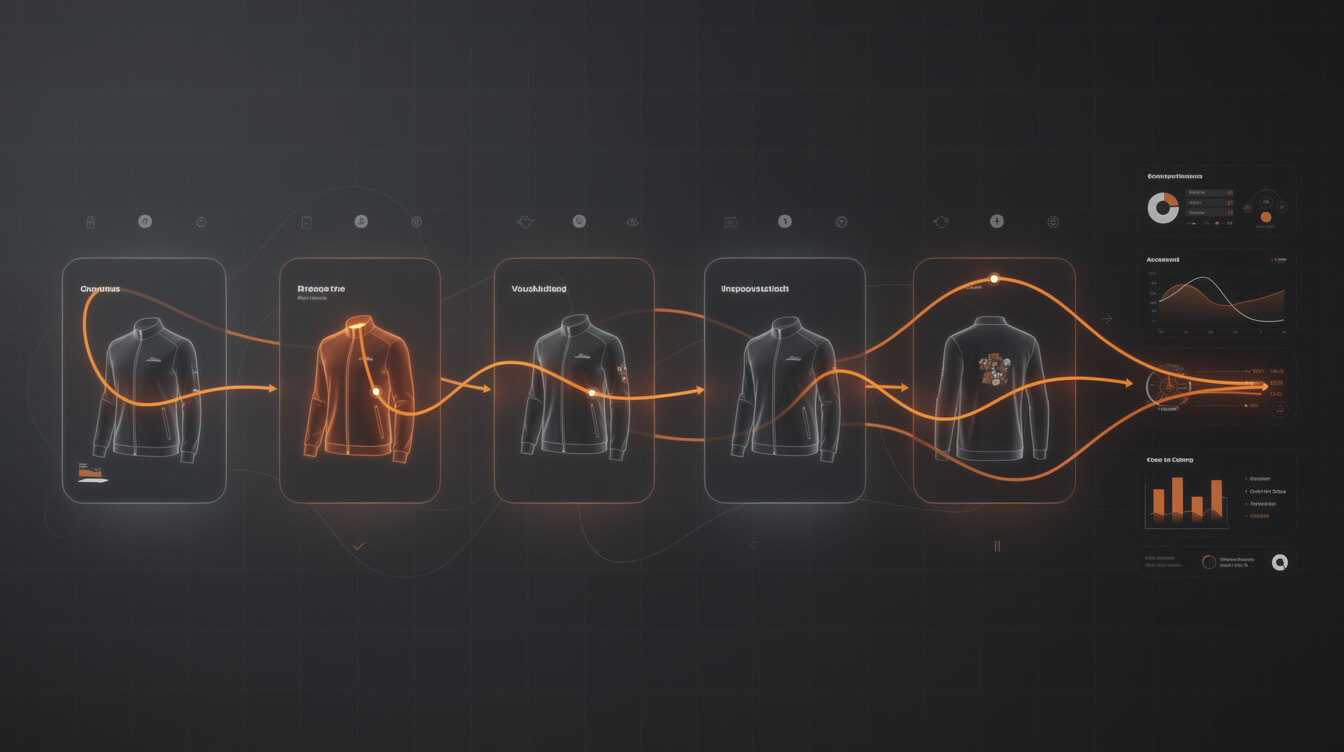
Adding one custom jacket to your store is an afternoon of work. Building a custom jacket product line with multiple styles, decoration options, SEO-optimized listings, and WooCommerce product configurations is where the manual workflow becomes a genuine throughput problem.
The typical manual process: source your blank specifications from Printful or Printify, create or commission your design files, upload the design to the platform, configure size variants and pricing, request or generate mockups, write a product title and description, set SEO metadata on each listing, and repeat for each style variation. For a five-jacket catalog with two decoration options each (embroidered chest logo and DTF back graphic), you are looking at 10 separate product listings, each requiring individual configuration and copy. That is several hours of work per product catalog pass and ongoing effort for each design refresh.
The MEGA pipeline handles this end-to-end. It starts with niche research (identifying which jacket categories have search demand and weak SERP competition), generates design concepts appropriate to the niche, creates product listings with titles and SEO descriptions, and pushes live to WooCommerce. MEGA automates the full research-to-listing pipeline for POD sellers, which means the bottleneck for a jacket catalog is no longer the listing work, it is the creative and positioning decisions, which are worth your time.
For sellers running a broader outerwear catalog, the polo shirt category pairs naturally with jackets as a corporate and team apparel play at different price points. If you are already working on that combination, the custom polo shirt guide for POD stores covers the decoration hierarchy and margin math for that product, which follows the same model as jackets but at a lower AOV and with different decoration preferences (embroidery first for polos as well).
The MEGA pipeline is built around WooCommerce because WooCommerce is where POD catalog economics make the most sense. No platform fee on every transaction, full control over your customer data, and no constraint on how many products you can list. For a jacket product line at $85-$120 retail, the difference between 0% and 1% platform overhead adds up fast. The automation layer and the platform decision reinforce each other.
Build your custom jacket catalog in under 7 minutes per product
MEGA automates the research-to-listing pipeline for POD sellers. Connect your WooCommerce store, feed a niche idea, and MEGA handles design, mockups, titles, SEO, and live product listings. No Canva sessions. No manual uploads.
Conclusion: is the custom jacket the right product for your POD store?
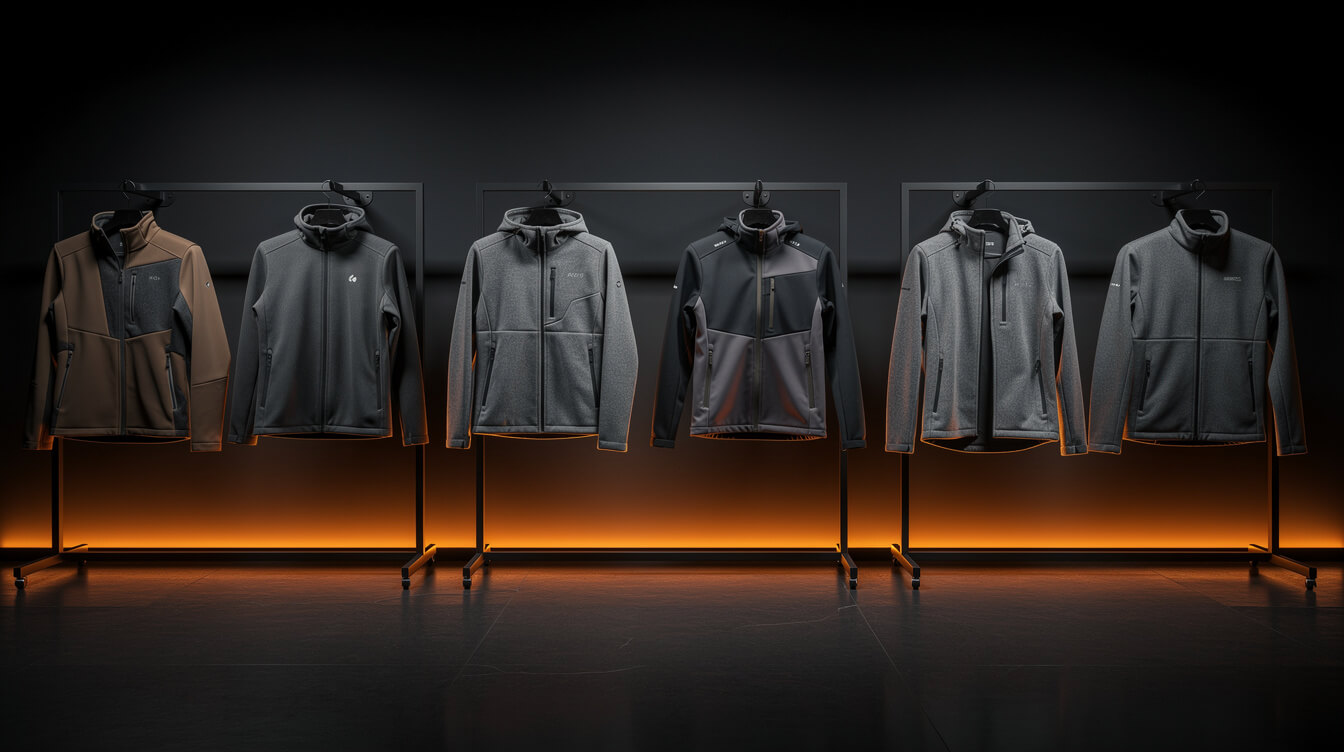
Custom jackets are one of the higher-margin product categories available through POD platforms, with the caveat that the production cost floor is also higher than basics. The math works when you price correctly in the $85-120 range, choose the right decoration method for your niche, and run on a platform that does not charge a 1% override on every sale.
If you are on WooCommerce, your margin stays intact regardless of which payment gateway you use. If you are on Shopify with a third-party gateway, budget the 1% platform override into your unit economics before you set retail prices. At a $95 jacket price point, that fee is not trivial at scale.
The decoration method is your biggest product positioning lever. Embroidery on a softshell or varsity jacket signals premium quality and justifies the higher retail price most jacket buyers expect. DTF on a windbreaker or lightweight shell gives you full-color graphic capability at a lower decoration cost, better suited to streetwear and graphic-driven brands. Choose based on your niche and the perceived value your customer is buying.
The no-minimum structure of POD fulfillment is the real strategic advantage over bulk ordering. You do not need to commit to 24 units of a design before knowing it will sell. List the full catalog, test at retail price, and scale the winners when demand is proven. The ones that do not move cost you nothing except the design and listing time.
For sellers building a full outerwear or branded apparel catalog, the custom jacket fits naturally alongside zip-up hoodies, polo shirts, and embroidered headwear as a high-AOV anchor product. The fundamentals, POD provider selection, decoration method, unit cost floor, and platform fee structure, are the same across all of these categories. Get the math right on one, and the rest follow the same model.
Implement AI. 30x your throughput. Get a 30-min call with the founder.
Drop your details and book a free 30-minute discovery call. Personalized advice on your POD stack, your margin, and where AI fits. No pitch, no fluff.