T-shirt printing press vs print on demand: the break-even math POD sellers need to see
If you are searching for a t-shirt printing press, the internet assumes you want to buy one. Amazon, HeatPressNation, screenprinting.com — every top result is a shopping guide or a product review. Almost none of them ask the question most POD sellers actually have: does owning a t-shirt printing press make sense for my business, or am I better off with print on demand fulfillment?
This post answers that question with actual numbers. We will walk through real equipment costs, true break-even math, hidden operational overhead, and the point at which owning your own press finally makes economic sense. Spoiler: it is much higher volume than most sellers assume, and most POD sellers never hit it.
What a t-shirt printing press actually costs
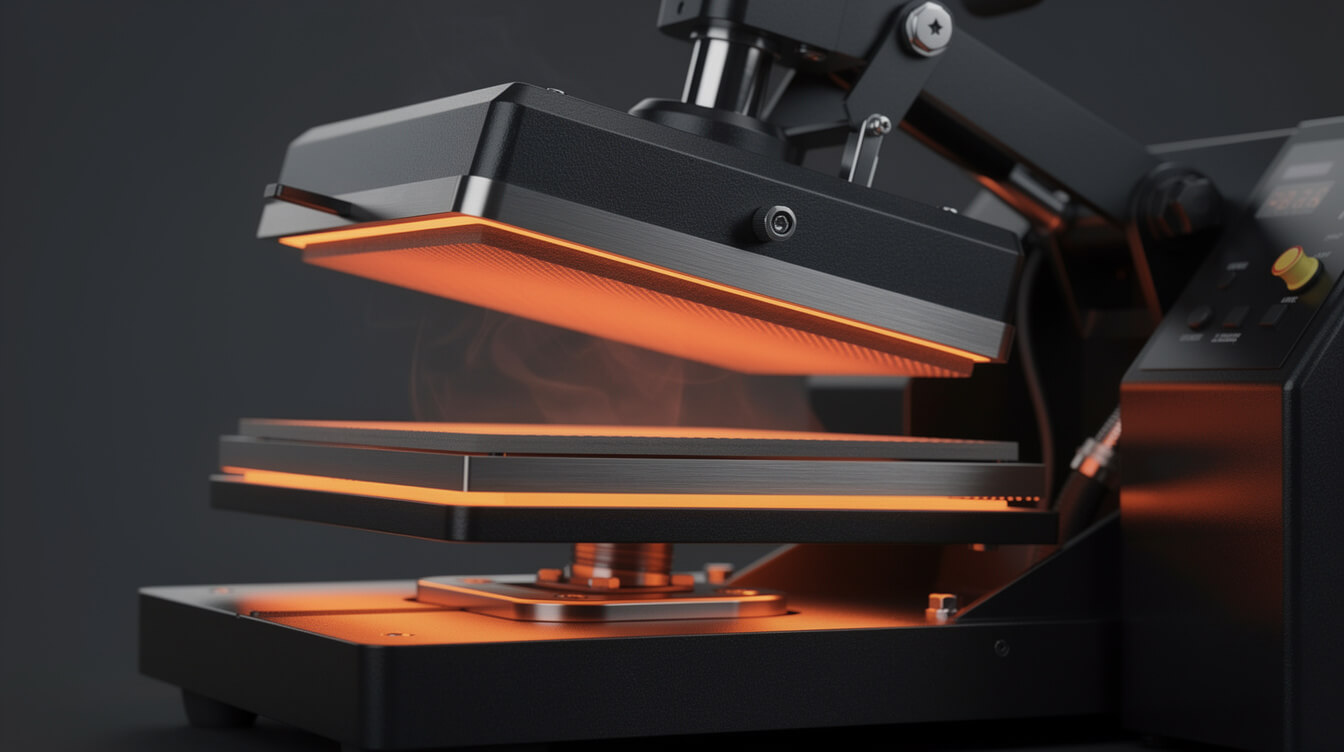
There are three main categories of t-shirt printing press, and the cost range is enormous.
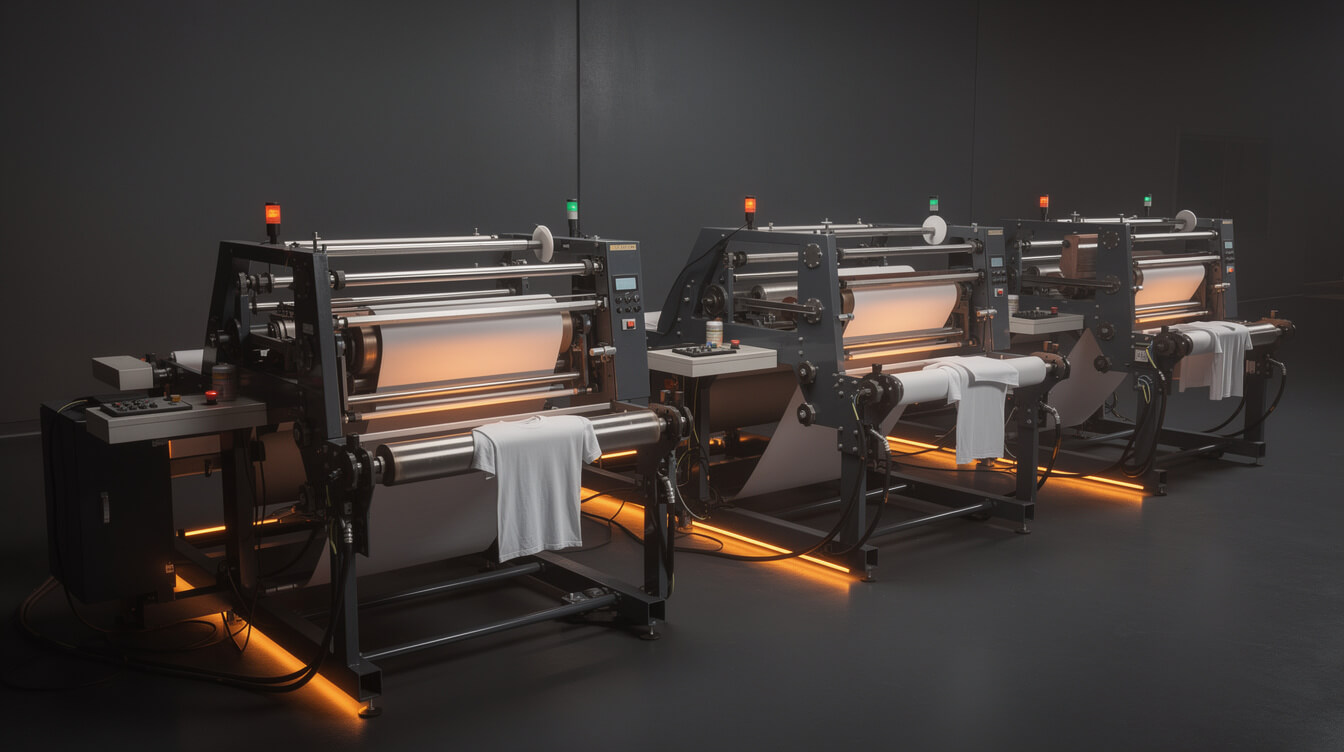
Heat press machines start around $500 for a basic 15×15 clamshell press. A professional swing-away heat press suitable for production runs costs $1,000 to $5,000. You pair these with heat transfer vinyl (HTV) or sublimation transfers for single-color and photo-realistic designs. Heat presses work well on polyester and light-colored cotton blends, but the design quality ceiling is limited compared to DTG printing.
Screen printing setups are a different category entirely. A basic manual screen printing press with exposure unit, inks, screens, and emulsion runs $3,000 to $8,000. A semi-automatic setup with more stations and a flash dryer starts at $10,000 to $15,000. Screen printing produces the highest-quality results on high-volume, single-design runs. It is the gold standard for band merch and uniform orders of 50 or more pieces. The unit economics only work at volume because screen setup cost is amortized across the print run.
Direct-to-garment (DTG) printers are the most comparable to what POD fulfillment services use. Entry-level DTG machines like the Epson F2100 cost $15,000 to $20,000. Professional units capable of production throughput start at $25,000 to $35,000 and above. DTG produces full-color photographic quality on demand, which is why Printful and Printify use it for their per-order fulfillment model. If you want to go deeper on the technology itself, our DTG vs. screen printing guide covers the print quality and cost differences in detail.
The sticker price is just the entry point. There is significantly more underneath it, which section three covers.
The break-even math: how many shirts before the press pays for itself
Break-even analysis for printing equipment requires honest assumptions. Here is a realistic model for each press type.
Heat press break-even
Equipment cost: $2,000 (mid-range swing-away press plus initial supplies). HTV material cost per shirt: $2.50. Selling price: $22 retail. Printful equivalent cost for a DTG t-shirt including the blank garment: approximately $14.00.
Your margin per shirt with the press: $22 minus $2.50 in HTV minus $5.00 for a blank shirt equals $14.50. Your margin per shirt via Printful: $22 minus $14.00 equals $8.00. Margin improvement per shirt: $6.50.
Break-even on $2,000 equipment: $2,000 divided by $6.50 equals 308 shirts. At 30 shirts per month, that is 10 months to break even. At 10 shirts per month, you are looking at 2.5 years.
DTG printer break-even
Equipment cost: $20,000 (entry-level DTG). DTG ink cost per shirt: $1.50 to $4.00 depending on design coverage. Blank shirt cost: $3.00 to $5.00. Selling price: $28 retail. Printful equivalent cost: approximately $14.00 to $18.00 depending on shirt and design complexity.
Your margin per shirt with owned DTG: $28 minus $3.50 in ink minus $4.00 for the blank equals $20.50. Your margin per shirt via Printful: $28 minus $16.00 equals $12.00. Margin improvement per shirt: $8.50.
Break-even on $20,000 equipment: $20,000 divided by $8.50 equals 2,353 shirts. At 100 shirts per month, break-even takes nearly 2 years. And this model excludes the hidden costs in section three, which push that number significantly higher.
What the sticker price does not include
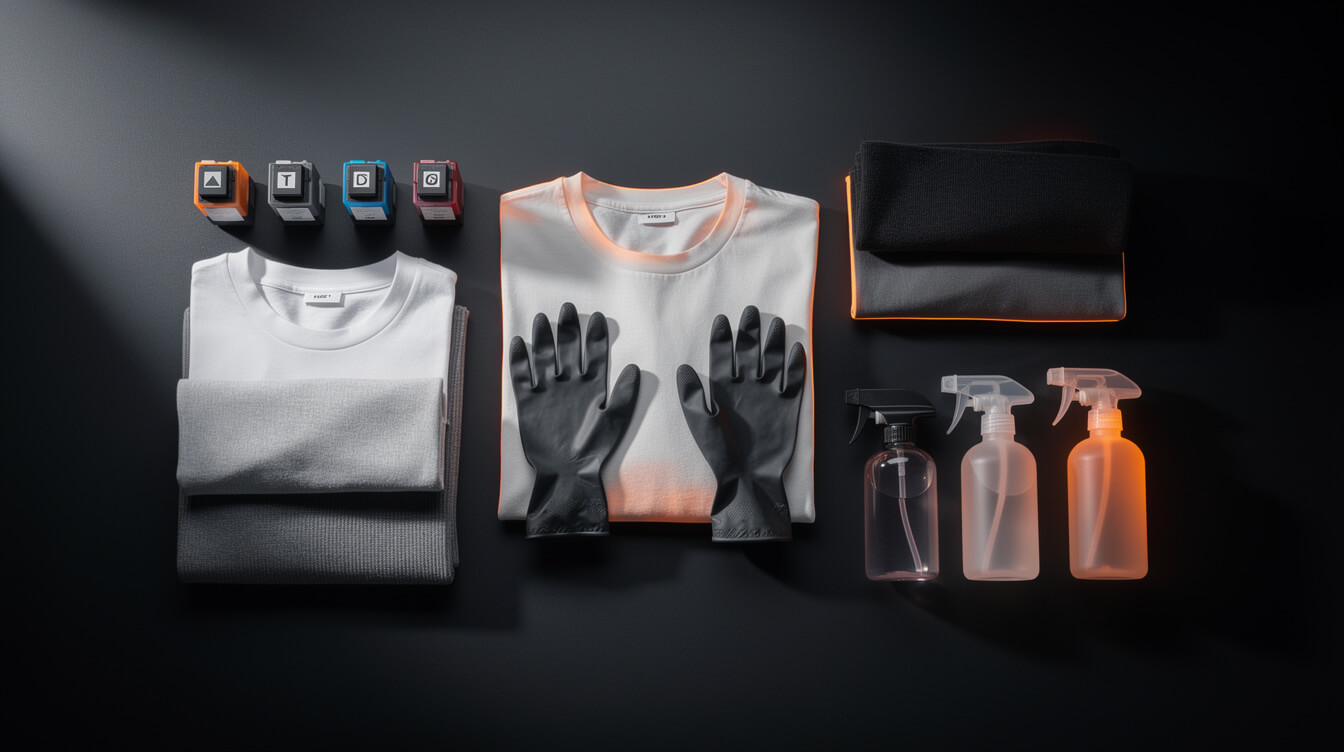
The sticker price is the acquisition cost. The real cost of ownership is much higher, and most equipment reviews skip these numbers entirely.
Consumables and supplies
DTG printers require white ink pretreatment on dark garments. Pretreatment solution runs $0.50 to $1.50 per shirt. Ink cartridges for a high-coverage design can cost $3.00 to $6.00 per print on a dark shirt. These costs are highly variable by design and scale up fast on detailed or high-coverage artwork.
Screen printing requires emulsion, ink, cleaning chemicals, and replacement screens. Budget $2,000 to $5,000 per year in consumables for a modest operation.
Space and utilities
A DTG printer takes up 5 to 10 square feet, requires temperature and humidity control, and needs a heat press curing station alongside it. Screen printing requires a dedicated room: screens, a washout sink, an exposure unit, a drying rack, and a gas dryer for cure. If you do not already have suitable commercial space, add $500 to $2,000 per month in rent to your cost model.
Maintenance and downtime
DTG printers have printheads that clog and fail. A printhead replacement on a commercial DTG can cost $1,500 to $4,000. Most DTG owners report at least one major maintenance incident per year. During downtime, you have no fulfillment capability and customer orders back up with no recourse.
Screen printing presses are more durable but require periodic replacement of screens ($15 to $50 each), ongoing maintenance of the flash dryer, and regular calibration to maintain registration accuracy.
Labor
Someone has to run the press. If that is you, what is your hourly rate worth? A mid-volume DTG operation printing 30 shirts per day requires 3 to 5 hours of press operation, pretreatment, curing, and quality inspection. At $50 per hour, that is $150 to $250 per day in operator time. These costs disappear completely when a POD fulfillment service handles the manufacturing.
Quality control and waste
DTG and screen printing both carry reject rates. Pretreatment streaks, printhead misalignments, ink bleeding, and curing errors all result in unsellable shirts. Budget 3 to 8 percent waste into your unit economics. On a $20,000 DTG operation printing 50 shirts per day, 5 percent waste is 2.5 shirts per day discarded. That is roughly $10 to $15 per day in wasted inventory, or $3,000 to $5,000 per year at this volume.
POD economics: what Printful and Printify actually charge per shirt
Smash print-on-demand. Join the engine room.
One short email a week. Real numbers, real teardowns, the unfiltered economics behind every move.
Understanding what Printful’s pricing model and Printify’s fulfillment network actually cost makes the comparison concrete.
Printful pricing (as of 2026)
A standard Gildan 64000 t-shirt with a front-only DTG print runs approximately $13.25 to $14.75, depending on size. A premium Bella+Canvas 3001 runs $15.50 to $17.00. These prices include the blank garment, printing, and handling. You pay per order. You hold zero inventory.
Printify pricing
Printify’s catalog prices vary by print provider. The Gildan 64000 equivalent runs $8.00 to $11.00 depending on which printer in their network fulfills the order. Premium print providers run $12.00 to $15.00. The tradeoff is less consistency compared to Printful’s single fulfillment network, which matters for quality-sensitive catalog products.
What POD pricing actually buys you
No equipment. No consumables. No maintenance contracts. No pretreatment supplies. No reject waste. No operator labor. No warehouse space. Orders ship directly to your customer from the fulfillment center. Returns and quality issues are handled by the fulfillment partner.
You are not just paying for ink and a blank shirt. You are paying for a complete outsourced manufacturing and logistics operation. That premium is often worth paying, especially when you compare it to the true all-in cost of operating your own press. If you are running a Shopify store, you are also paying the 1% Shopify platform override on top of every transaction, which further erodes the margin advantage of owning equipment. The full math is in our Shopify transaction fees breakdown.
MEGA automates the full POD pipeline, covering product research, image generation, listing creation, and fulfillment connection, so you are not manually managing orders or chasing platform fees. The engine handles the throughput while you focus on the niche. Try MEGA to see the full automation pipeline in action.
When owning a press actually makes sense
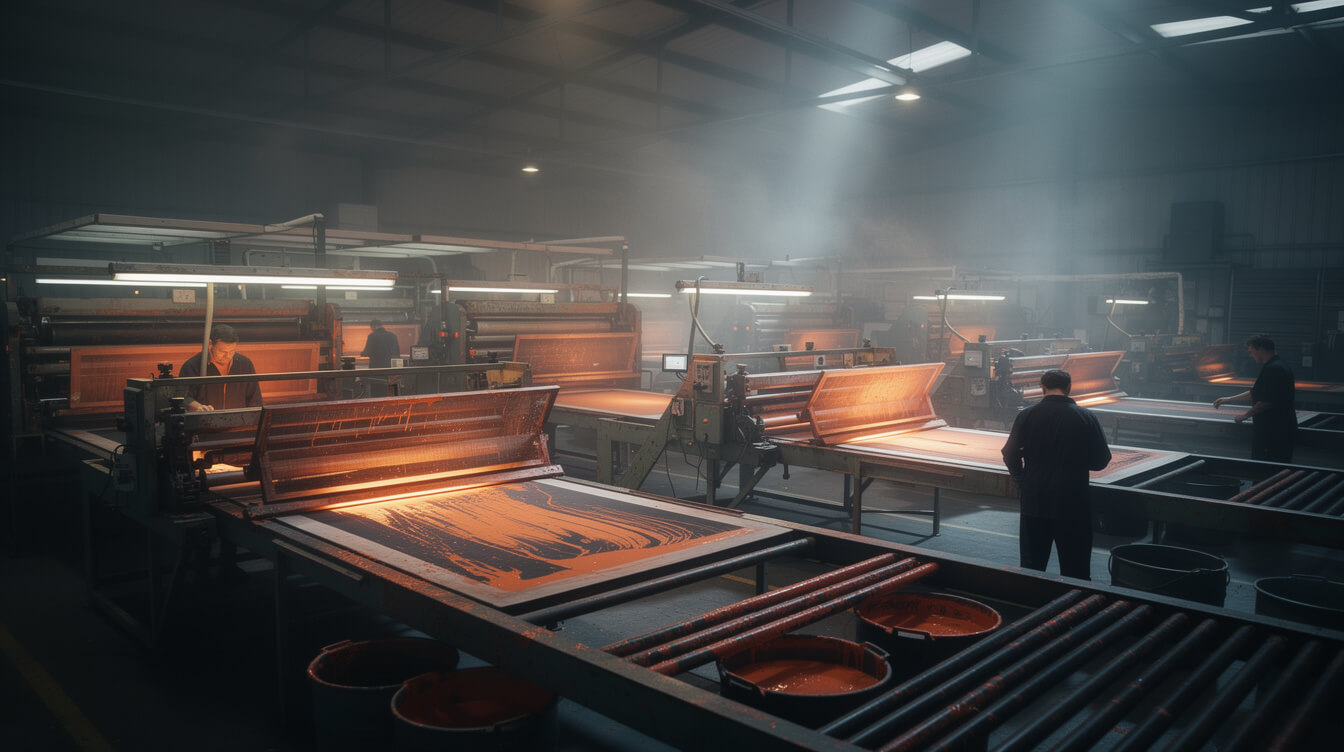
Buying a t-shirt printing press is the right move in a narrow set of circumstances. Here is a specific accounting of what those circumstances are.
High-volume, single-design runs
Screen printing unit economics improve dramatically at scale. If you are printing 200 or more shirts per run for a uniform order, a corporate event, or a licensed band merch drop, screen printing becomes the most cost-effective option. The setup cost is amortized across a large print run, and your per-shirt margin is strong.
At 500 shirts per design run at a screen printing cost of $2.50 per shirt all-in, versus Printful at $14.00 per shirt, you save $11.50 per shirt or $5,750 on that single run. This is real money at this volume. The question is whether you hit this volume consistently enough to justify the capital and operational investment.
Local, same-day fulfillment
If you sell merchandise at events such as concerts, markets, or conventions, having your own heat press allows you to create designs and print on demand on-site. The unit economics matter less in this context. The value is speed and flexibility that no remote fulfillment provider can match.
Specialty techniques POD cannot replicate
Discharge printing, water-based inks, oversized all-over prints, and certain specialty finishes are not available through standard POD providers. If these techniques are core to your brand identity, owning equipment may be the only path. This is a real and legitimate use case, though it describes a specialty production business more than a typical POD catalog seller.
What these scenarios have in common
They are all high-volume or specialty situations. They are not the typical POD seller running 5 to 50 orders per month across dozens of designs. For the majority of POD sellers, especially those running WooCommerce stores or Shopify-connected catalog products, the volume required to justify equipment ownership is rarely present.
30x your throughput without owning a press
MEGA automates the full POD pipeline from niche research to live product listings. Zero equipment, zero overhead, 47 products in an afternoon. Your WooCommerce store, your margins, your ownership.
The operational overhead of becoming your own printer

Owning a t-shirt printing press turns a product business into a manufacturing business. These are different things, and the difference matters more than most sellers anticipate before they buy.
Inventory risk
POD fulfillment means zero inventory. You list a product, and the blank shirt is not purchased until a customer orders it. When you own a press, you need to hold blank garment inventory to have anything to print on. That ties up capital, creates storage requirements, and introduces SKU complexity across sizes and colors. A WooCommerce store with 50 designs across 5 sizes and 3 colors represents 750 SKU-level inventory decisions if you are self-fulfilling.
Shipping and logistics
POD fulfillment providers ship directly to your customer from their warehouse. When you own a press, you receive orders, print them, pick and pack them, and ship them yourself. You need poly mailers, boxes, tape, a label printer, and a shipping account. Someone has to be physically present to process orders, or you build a queue and batch once a day, which creates fulfillment lag that affects the customer experience and your reviews.
Customer service for quality issues
When Printful ships a misprint, it is Printful’s problem. They resend at no cost. When you print and ship your own products and a customer receives a bad print, it is 100% your operational failure. You bear the cost of the replacement and the labor of handling the complaint. This scales badly as order volume grows. A 3% defect rate on 300 orders per month is 9 customer service cases per month that cost you time, money, and goodwill.
What happens when volume spikes
The great irony of owning your own press is that success creates problems. If you run a campaign and receive 300 orders in a week, you need to print 300 shirts yourself or you will fall behind. POD services scale automatically. Your print throughput is capped by your equipment capacity and your available hours. Tools like third-party POD automation apps can simplify parts of this workflow, but they cannot solve the core problem of having a physical press in the loop.
The third path: POD automation that scales without equipment or overhead
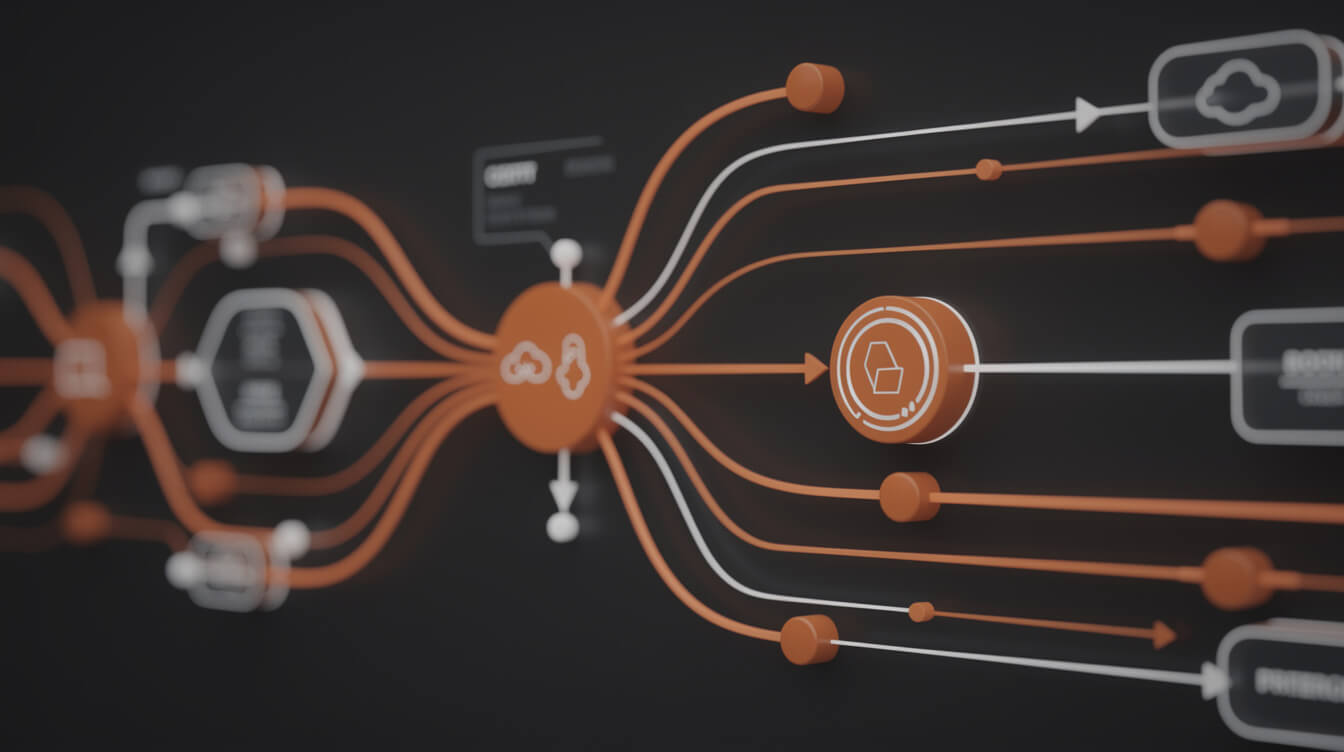
The frame most sellers operate in is binary: own a press or manually list products one at a time via Printful or Printify. There is a third path that most sellers underestimate.
Research-first, automation-driven POD
The leverage in POD selling is not in the printing. It is in identifying the right niches, generating designs at volume, and listing products efficiently. These are the steps where most sellers lose hours and where automation creates compound returns over time.
MEGA automates the full pipeline: niche research, AI image generation, product sizing, mockup creation, SEO-optimized titles, meta descriptions, and live listings on both Printful and your WooCommerce store. The throughput difference is not incremental. A manual POD seller running their own press might process 20 unique designs per month if they are disciplined. MEGA can generate and publish 47 products in an afternoon.
The real advantage of not owning the printer
No capital tied up in equipment. No maintenance contracts. No downtime during printhead failures. No operator hours spent at a press. No inventory holding costs. The per-shirt margin on Printful or Printify is lower than owned-press economics at true scale, but the total business economics, covering capital efficiency, time, operational complexity, and scalability, favor POD fulfillment for the vast majority of sellers at the volumes they actually run.
For sellers on WooCommerce, there is another dimension: you are not paying the 1% Shopify platform override or the $39 per month Shopify subscription just to stay online. The DTG vs. DTF comparison on this site covers print technology decisions in depth if you want to go further into which printing method fits your product catalog.
Frequently asked questions
What is the cheapest t-shirt printing press for a beginner? A basic clamshell heat press costs $500 to $800 and works for low-volume HTV designs. For on-demand printing comparable to Printful quality, you need a DTG printer starting at $15,000.
How many shirts per month do I need to justify a DTG printer? At typical retail margins, you need to sell 150 to 250 shirts per month consistently for 18 to 24 months to break even on a $20,000 DTG printer, excluding consumables, maintenance, and labor.
Can I compete with Printful quality using a home press? A heat press produces excellent results for vinyl and sublimation designs on appropriate fabrics. For photographic full-color prints on dark cotton, DTG is the only comparable option, and home-grade DTG equipment rarely matches commercial fulfillment center output.
Is print on demand more expensive than owning a press? Per-shirt, yes, once you have enough volume to break even. But the true all-in cost including equipment, consumables, labor, space, and maintenance makes POD fulfillment the better economic choice for most sellers under 500 shirts per month.
The break-even math tells the real story
A t-shirt printing press is a capital investment that makes sense in specific, high-volume, or specialty circumstances. For the majority of POD sellers running WooCommerce stores with diverse catalogs across multiple designs, the break-even math does not resolve in favor of equipment ownership at the volumes they realistically hit.
The hidden costs, including consumables, space, labor, maintenance, and waste, push the real break-even point significantly beyond the sticker price calculation. And the operational complexity of becoming your own manufacturer trades your most valuable resource, time and focus, for modest margin improvements that only materialize at scale.
POD fulfillment through Printful, Printify, or a similar service is not just a cost. It is a complete outsourced manufacturing and logistics operation that lets you stay focused on the higher-leverage work: finding the right niches, building the right designs, and growing the right catalog. The printer belongs in someone else’s warehouse.
Implement AI. 30x your throughput. Get a 30-min call with the founder.
Drop your details and book a free 30-minute discovery call. Personalized advice on your POD stack, your margin, and where AI fits. No pitch, no fluff.