Custom aprons for POD sellers: which providers support them, sublimation vs embroidery math, and why food-adjacent niches convert
Custom aprons are one of the most underestimated products in the print-on-demand catalog. Search volume sits at 9,900 per month, difficulty is zero, and the entire first page of Google is occupied by vendor product pages. Nobody has written the guide that POD sellers actually need. If you are trying to add custom apron printing to your store, this post maps out which providers carry them, how the print methods differ, what the unit economics look like, and which buyer audiences convert best on aprons.
The short answer: three major POD platforms carry aprons with no minimum order, the margins at $35 retail are solid, and the Shopify 1% platform override fee eats into those margins in a way WooCommerce avoids entirely. Here is everything you need to know before listing your first apron.
Custom aprons in the POD catalog: why this product category punches above its size
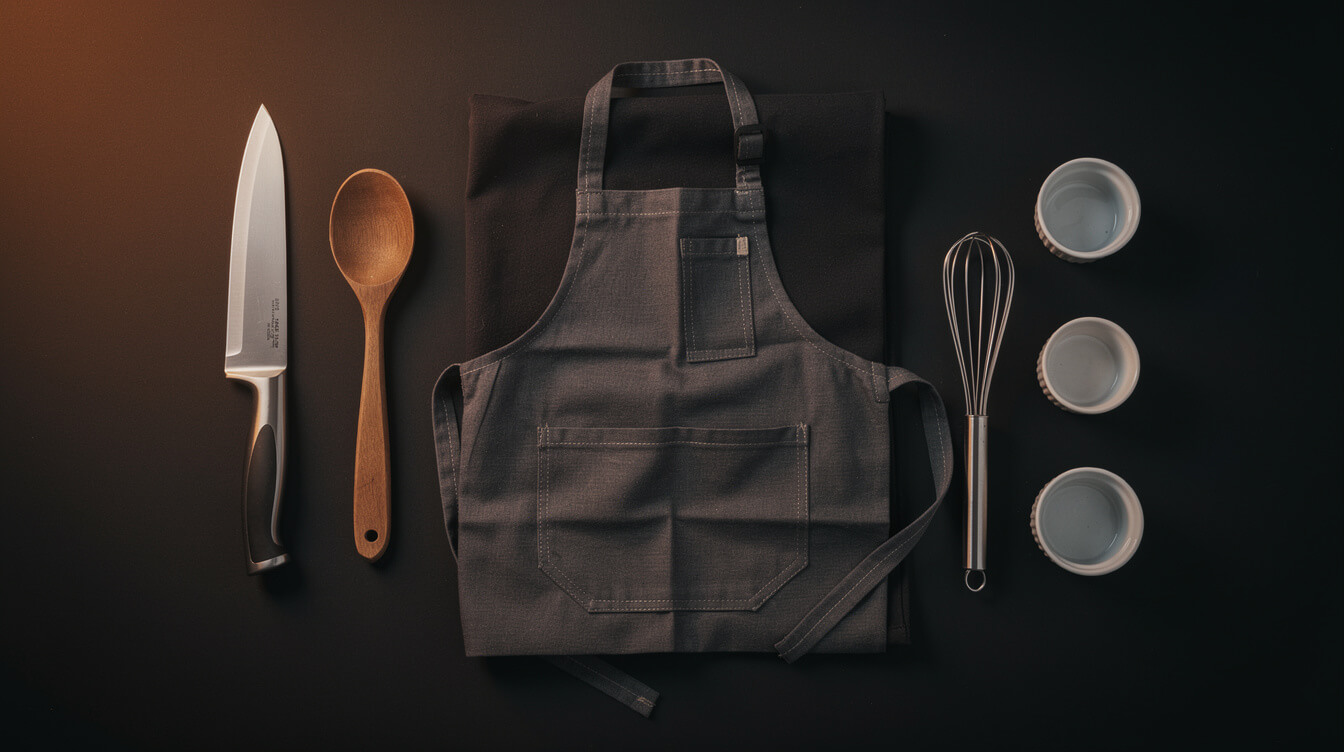
Aprons occupy an interesting position in the POD product catalog. They are not as high-volume as t-shirts or hoodies, but they occupy categories where buyers already have purchase intent: kitchen gifts, restaurant merchandise, BBQ accessories, and corporate staff uniforms. That transactional intent at the search level means the buyers landing on apron listings are closer to buying than the general t-shirt shopper.
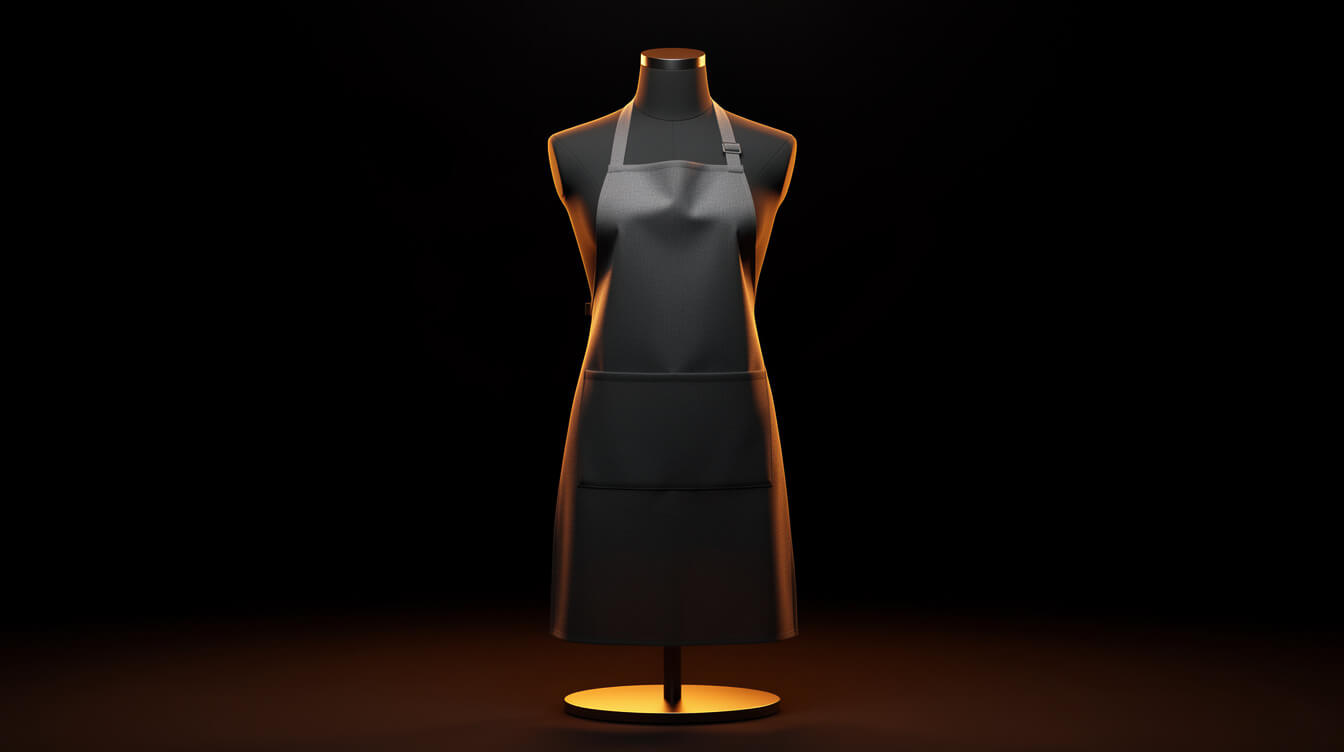
The print surface is generous. A standard full-length apron offers roughly 14 inches by 20 inches of printable area on the bib section, with some providers supporting all-over sublimation that covers the full front panel. That surface area makes aprons one of the better canvases for bold, detailed designs, a significant advantage over embroidered hats where the print area caps out at 3.5 by 2.5 inches.
Average order value lands between $28 and $45 retail depending on the product spec and your positioning. At the lower end you are selling a basic canvas or poly-blend kitchen apron. At the upper end you are selling a sublimation-printed full-panel apron targeting restaurants, corporate gifting, or premium food content creators. Both price points work. The higher end works especially well when you can bundle (apron plus matching oven mitts or tea towels), and the single-unit sale is already profitable enough to justify the listing.
One comparison worth noting: aprons compete more directly with craft stores and local embroidery shops than with Amazon. Many buyers searching for custom aprons are small business owners (restaurant owners, catering companies, cooking instructors) who currently source from local B2B vendors with 12-unit minimums. The no-minimum POD model is a direct answer to their problem and a real competitive advantage.
Which POD providers carry custom aprons: Printful vs Printify vs Gooten comparison
Three platforms in the POD ecosystem carry aprons worth considering: Printful, Printify, and Gooten. Here is how they compare across the dimensions that matter most to a seller.
Printful carries a full-panel sublimation apron (AOP) and a standard canvas apron. The sublimation apron is made from 100% polyester, which is required for the dye-sublimation printing process. The canvas apron is cotton-poly blend and supports direct-to-garment printing on the bib. Printful’s production quality is consistent and their fulfillment network is well-documented. Base cost for Printful’s apron is approximately $13-15 for the canvas option and $18-22 for the sublimation AOP.
Printify carries aprons through multiple print providers in their network, which means base costs vary. The most common option is a canvas apron at $9-13 base, produced by partners like Monster Digital or Artsadd. Quality control across Printify’s provider network is less uniform than Printful’s in-house facilities, but the lower base cost translates directly to better margins at the same retail price. Printify also offers a sublimation apron through select providers at $14-18 base.
Gooten carries aprons at competitive base pricing, often $10-14 for the standard canvas option. Gooten is less commonly discussed in POD seller communities but has solid domestic fulfillment and integrates with both Shopify and WooCommerce. For high-volume apron sellers, Gooten is worth testing alongside Printify.
The practical guidance for most sellers starting out: test Printful first if you prioritize consistency and want to learn the product before optimizing margin. Shift to Printify once you have validated demand and want to compress base costs. If you are building a restaurant or hospitality niche store at scale, Gooten is worth a dedicated test as a second provider.
One thing all three providers share: no minimum order quantities. You can sell one apron to one customer and the economics still work. That is the core POD value proposition, and it applies cleanly to aprons.
Print methods for custom aprons: sublimation vs DTF vs embroidery : costs and quality tradeoffs
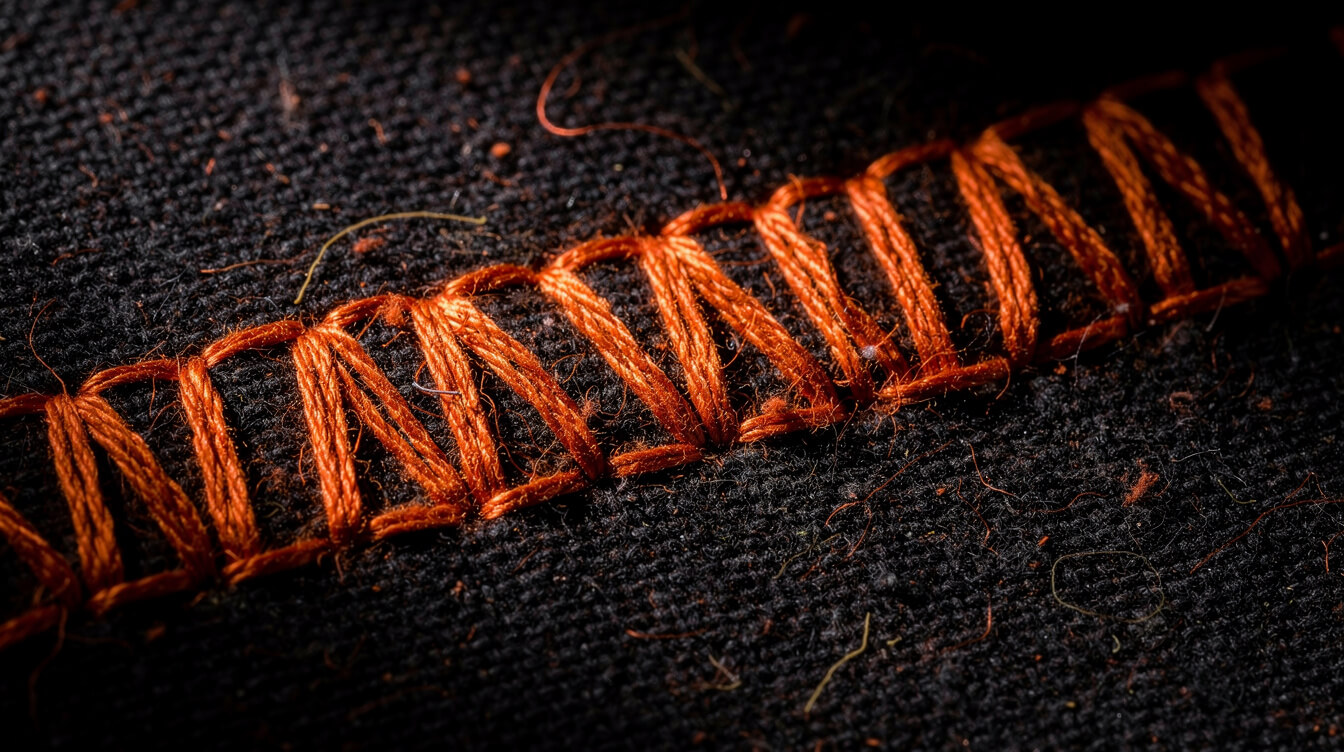
Three print methods are relevant for custom aprons in the POD context: dye sublimation (AOP), direct-to-film (DTF), and embroidery. Each has a distinct cost profile, quality output, and design constraint.
Dye sublimation (all-over print): This is the premium option for aprons. Sublimation bonds dye directly into polyester fabric at heat and pressure, producing vibrant full-panel designs with no texture on the surface and no cracking over time. It requires 100% polyester fabric. You cannot sublimate on cotton. For aprons, sublimation works best when you want an immersive, edge-to-edge visual: a bold cooking illustration, a full restaurant branding layout, or a photographic graphic that wraps around the bib and straps. Base cost is higher ($18-22 via Printful) but the retail ceiling is also higher. Buyers expect to pay $38-55 for a premium sublimation apron.
Direct-to-film (DTF): DTF is a newer print method that applies a printed film transfer to fabric using heat. Unlike sublimation, DTF works on cotton, polyester, and blends. It supports photographic designs with sharp edges but produces a slightly raised tactile surface. For aprons, DTF is a middle-ground option: better design flexibility than embroidery, lower base cost than full-panel sublimation, and compatible with canvas aprons. Not all Printify providers offer DTF for aprons yet, but availability is expanding.
Embroidery: Embroidery on aprons is common in the restaurant and corporate uniform market. It looks premium, holds up through commercial washing cycles, and signals a quality product. The tradeoff is that embroidery is limited to the bib patch area (typically 3-4 inches wide), requires digitization of your design at $15-50 one-time cost, and does not support photographic detail or color gradients. For text-based logos, restaurant names, and corporate wordmarks, embroidery is the right call. For illustrated designs or full-coverage graphics, go sublimation.
The method you choose shapes your niche positioning. Sublimation aprons target food content creators, novelty gift buyers, and design-forward restaurant merchandise. Embroidered aprons target restaurants, catering companies, and corporate uniform buyers who want durability and a professional look. Both are real buyer categories with real demand. If you want to cover both, list them as separate products with different positioning. Check out our guide to screen printing and embroidery for POD sellers for a deeper look at how the embroidery cost structure compares to local sourcing.
Unit cost math for custom aprons: 1 unit, 10 units, 50 units

Smash print-on-demand. Join the engine room.
One short email a week. Real numbers, real teardowns, the unfiltered economics behind every move.
Unit economics are where the POD model shows its real value against local sourcing. Here is the math at three order volumes.
At 1 unit (single customer order):
- Printful canvas apron (DTG): ~$14 base + $5.50 shipping = $19.50 delivered cost
- Printify canvas apron (DTG): ~$11 base + $4.50 shipping = $15.50 delivered cost
- Local embroidery shop (canvas apron + logo): typically $18-28 per unit, requires in-person pickup or added shipping, and most shops require 12-24 unit minimums
At 1 unit, POD wins on both price and convenience for the seller. No inventory, no minimums, no fulfillment logistics.
At 10 units (small batch, event or team order):
- Printful canvas apron: ~$14 x 10 = $140 production cost
- Printify canvas apron: ~$11 x 10 = $110 production cost
- Local embroidery shop (if they accept 10-unit order): $12-18 per unit at 10 units = $120-180, no longer cost-competitive, and you still need to hold inventory and organize fulfillment
At 10 units, POD holds a cost advantage and eliminates fulfillment friction entirely.
At 50 units (corporate order or niche store volume):
- Printful canvas apron: ~$14 x 50 = $700 production
- Printify canvas apron: ~$11 x 50 = $550 production
- Local vendor at 50 units: $8-12 per unit at volume = $400-600. At this volume a local vendor can match or beat POD on production cost, but you absorb inventory and fulfillment risk
The 50-unit scenario is where a seller needs to decide: are you running a print-on-demand model (zero inventory, automated fulfillment) or a wholesale-and-hold model (lower per-unit cost, inventory exposure). For most POD store operators, the automation and margin predictability of the POD model outweighs the per-unit savings at volume. If you want to explore when bulk sourcing makes sense, our breakdown of custom tote bags: bulk vs print on demand covers the break-even math in detail.
MEGA automates this entire sourcing and listing workflow , from design generation to Printful product creation, so the comparison above becomes a one-time decision you make at setup, not a recurring calculation.
Pricing and margin: custom apron AOV at $28-$45, where the profit sits
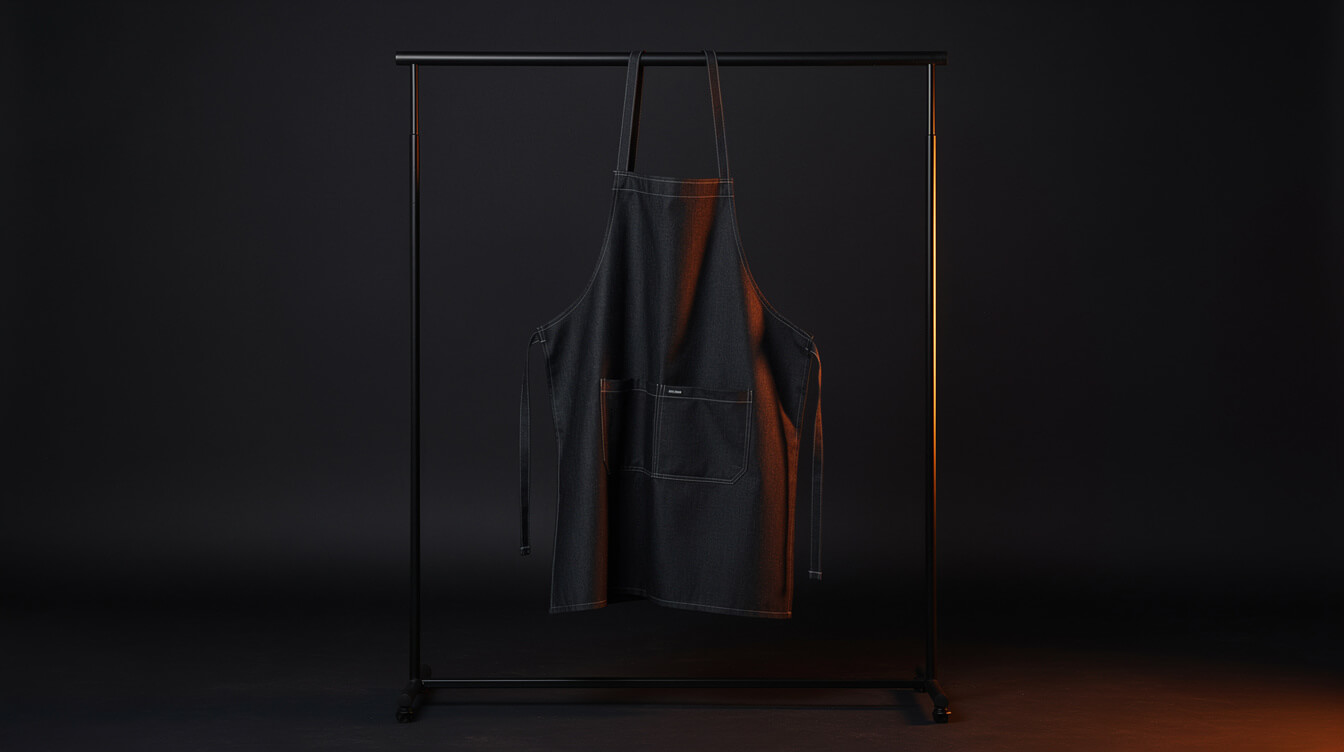
Pricing custom aprons comes down to product type and positioning. Here is a realistic margin model for the main scenarios.
Standard canvas apron at $32 retail (Printify):
- Base cost: $11
- Shipping to customer: $4.50
- Total fulfillment cost: $15.50
- Gross margin per sale: $16.50 (51.5%)
A 51% gross margin on a $32 product is strong for POD. You have room to run paid traffic, offer occasional discounts, and still exit each sale profitably.
Premium sublimation AOP apron at $44 retail (Printful):
- Base cost: $20
- Shipping to customer: $5.50
- Total fulfillment cost: $25.50
- Gross margin per sale: $18.50 (42%)
Lower margin percentage but higher absolute margin per unit. The sublimation apron at $44 generates $18.50 gross versus $16.50 for the canvas option at $32. Over 100 sales, that is $200 more gross profit from the premium product, assuming the same conversion rate.
Embroidered apron at $38 retail:
- Canvas apron blank: $11
- Embroidery surcharge (Printful): $5-8 depending on stitch count
- Shipping: $5.50
- Total fulfillment cost: $21.50-24.50
- Gross margin per sale: $13.50-16.50 (35-43%)
Embroidery tightens margins versus sublimation. The higher perceived value can support a higher retail price ($38-55 for restaurant branding), but it requires buyers who specifically want the embroidery look.
The key insight: aprons are a mid-AOV product where the margin math works cleanly at retail prices most buyers accept. The food gift market is accustomed to paying $35-50 for kitchen accessories, so you are not fighting price resistance the way you do on commodity t-shirts.
For a comparable analysis with another food-adjacent drinkware product, see our post on custom tumblers for POD stores, which covers a similar margin structure in the drinkware category.
Automate your apron listings. 30x your throughput.
MEGA generates apron designs, Printful product listings, SEO titles, and meta descriptions end-to-end. What takes Canva users six hours takes MEGA under seven minutes.
The Shopify 1% fee on a $35 apron AOV: why the kitchen niche math favors WooCommerce

If you are running a Shopify store and selling custom aprons at $35 average order value, Shopify’s platform override fee is costing you $0.35 per order before you account for payment processing. That sounds small until you scale it.
At 500 apron orders per month, the Shopify 1% override adds up to $175/month. At 1,000 orders, it is $350. At $5,000 monthly revenue from apron sales, that fee is $50 gone before you count any other platform costs.
The override fee applies on top of your Shopify monthly subscription and the standard Stripe/payment processing fees. It is Shopify’s mechanism for extracting margin from stores that use third-party payment processors, which most serious POD sellers use,, because Shopify Payments is not available in all markets and does not always offer the best rates.
WooCommerce eliminates this fee entirely. There is no platform override on WooCommerce. You pay hosting (typically $15-30/month for a well-configured server), the WooCommerce core plugin (free), and whatever plugins you need. No percentage taken from every transaction. At the $35 AOV apron price point, WooCommerce pays for itself in saved platform fees once you clear roughly 100-150 orders per month, and every order beyond that is pure margin recovery.
The math is straightforward. If you are selling aprons at volume , or combining aprons with other kitchen and gift accessories in a niche store, WooCommerce is the better economic platform. MEGA was built on WooCommerce precisely because the owned-store economics compound over time in a way hosted platforms like Shopify cannot match.
Best niche verticals for custom aprons: where the buyers already are
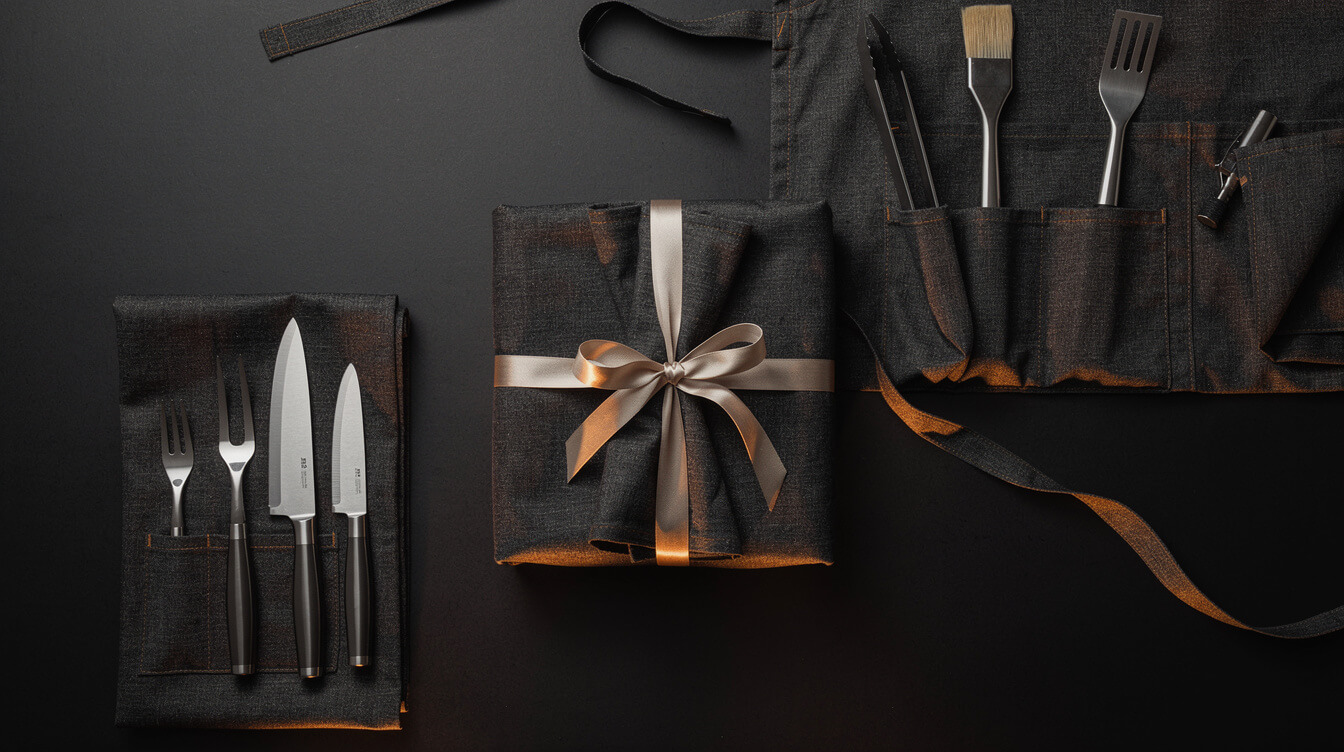
Custom aprons are a product where niche specificity converts better than generic designs. The buyers searching for custom aprons usually have a specific context in mind: a restaurant that wants branded staff uniforms, a BBQ enthusiast who wants a funny grill-master design, a cooking content creator who wants matching aprons for their audience. Here are the four niche verticals with the strongest demand signals.
Cooking content creators and food influencers: This is the highest-growth segment. Food creators on YouTube, TikTok, and Instagram with audiences of 10,000+ followers regularly launch merchandise drops. Branded aprons with their channel art, catchphrases, or aesthetic are natural products for this audience. The buyer is already a fan; the apron is a way to wear that identity in the kitchen. Designs for this vertical should be bold, recognizable at a distance, and photography-friendly for the creator’s own content. Sublimation is the right print method here. You need full-panel designs that photograph well.
BBQ and grilling gifts: The BBQ niche has two peak buying windows: Father’s Day (May-June) and the Q4 gift season (October-December). Custom aprons are among the top gift searches in this category. Designs range from humorous (“Grill Sergeant,” “Dad’s Smokin’ BBQ”) to illustrated pit scenes to personalized name and year prints. The buyer is typically purchasing as a gift, not for themselves, which means the price sensitivity is lower and the impulse to spend $35-45 is higher than on self-purchase products.
Restaurant and cafe branding: Independent restaurants, food trucks, coffee shops, and catering companies all need branded staff aprons. Many currently source from B2B embroidery vendors with 12-24 unit minimums, paying $18-30 per apron. A POD store that offers no-minimum custom aprons with 5-7 day turnaround directly addresses this pain point. Marketing to this vertical requires different language: “staff aprons,” “restaurant merchandise,” “cafe uniforms.” The conversion rate from this buyer is high because they have a defined operational need, not just a gift purchase impulse.
Wedding and event favors: Custom aprons appear as wedding party gifts (for the groomsmen cooking competition, bachelorette brunch events, rehearsal dinner giveaways) and as corporate event merchandise. This is a lower-volume but high-AOV niche. Buyers in this category often purchase 10-25 units at once for an event, which means a single order covers real revenue. Designs for this vertical trend toward personalized text (names, dates, roles) and minimalist aesthetics.
Stacking two or three of these verticals into a single food-and-kitchen niche store , with aprons as the hero product complemented by custom embroidered tote bags and other kitchen accessories. This builds a cohesive product catalog that justifies repeat traffic and cross-sells naturally.
Conclusion: custom aprons are a straightforward POD product when you know the math
Custom aprons are not a trendy product or a niche gamble. They sit in a stable category with real buyer intent, accessible unit economics, and virtually no editorial competition in the Google SERP. The first-mover advantage for a well-written, niche-specific apron store is real.
The key decisions: choose Printify for margin or Printful for consistency, use sublimation for design-forward products and embroidery for restaurant and corporate clients, price at $32-45 depending on spec, and build on WooCommerce if you want to keep the full margin rather than handing Shopify 1% on every sale.
MEGA automates the product creation side of this pipeline : design generation, Printful or Printify listing, SEO title, and product description, so you are not doing this manually for every SKU. The economics above apply whether you are listing your first apron or your fiftieth.
Implement AI. 30x your throughput. Get a 30-min call with the founder.
Drop your details and book a free 30-minute discovery call. Personalized advice on your POD stack, your margin, and where AI fits. No pitch, no fluff.