Custom framed prints for POD sellers: which providers offer them, what the unit cost looks like, and the wall art niche math
Most articles about custom framed prints are written for consumers who want to frame a wedding photo. That is not this article. This one is for POD sellers who want to add custom framed prints as a product to their store, list them on WooCommerce, and pocket real margin without touching a frame, mat board, or printer. The framed print category sits in an unusual spot: high perceived value, high average order value ($55-85 per unit), and a SERP full of B2C framing services that have completely ignored the POD seller audience. That is the gap.
Here is what you need to know: which providers carry custom framed prints with no minimum order quantity, what the unit economics look like at realistic retail prices, and whether the AI-generated art angle changes the math for sellers who do not have a photography portfolio.
What “custom framed print” means when you are a POD seller (not a consumer)
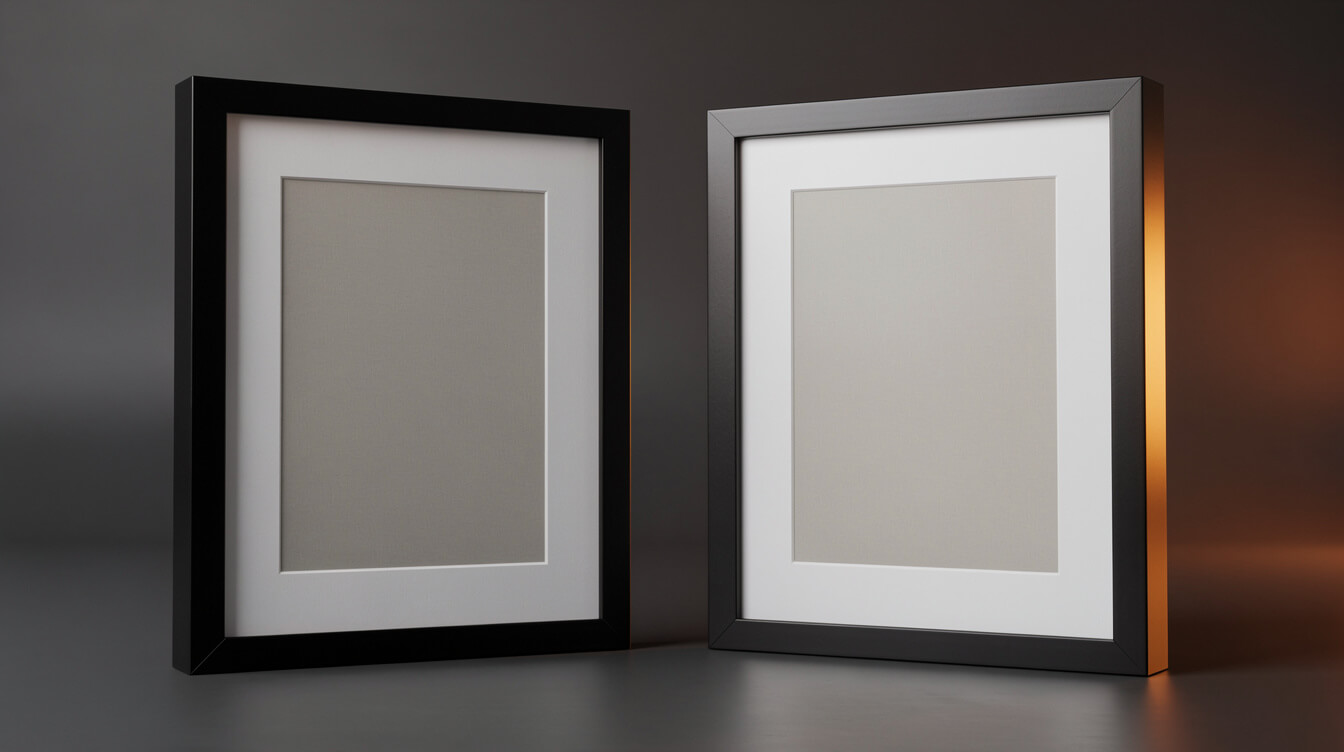
When a consumer searches for a custom framed print, they want to upload a photo and receive it back framed. When a POD seller lists a custom framed print, the product works differently. The frame, the mat, and the print are all part of what ships to the buyer. The seller does not handle any of it.
This distinction matters because it changes what you are actually building. You are not a framing service. You are a store that sells ready-to-hang wall art products in specific sizes, styles, and niches. The POD provider handles the production. You handle the listing, the niche targeting, and the margin.
A custom framed print is a distinct product category from three close relatives:
- A canvas print is stretched over a wooden internal frame and typically sold without an additional outer display frame.
- A poster is a flat print on paper, sold without mat or frame, at a lower price point.
- A custom framed print combines an inkjet print on photo paper or fine art stock, a white or off-white mat board, and a finished outer frame with a glass or acrylic front.
That combination is what justifies the $55-85 retail price point. The key differentiator is the hardware. Buyers expect framed prints to arrive as a completed, gallery-quality product, not as a print they take to a frame shop. That expectation sets the margin ceiling higher than almost any other flat wall art format in POD. It also means the production cost is higher than a canvas or poster, which is why choosing the right provider matters.
Which POD providers carry custom framed prints in 2026

Not every provider carries framed prints. Printful does not currently offer a true custom framed print in its standard catalog. Printful’s wall art lineup as of 2026 includes canvas prints, posters, and framed posters, which use a simple snap-frame around a poster, not a mat board and glass assembly. If you need a white mat and a finished wood or metal frame, Printful is not the right vendor for that product.
Printify’s provider network includes vendors that carry true framed prints with mat board and glass. The availability depends on your Printify plan and the fulfillment location. The best practice is to open the Printify product catalog directly and search “framed” to see what is currently available with your account. Stock and specs change, so verify before building out listings.
Other options worth evaluating:
- Prodigi: UK-based, with US and international fulfillment. Carries framed prints on fine art paper with mat board. No monthly fee. Strong quality reputation for art reproduction.
- Gooten: Available through WooCommerce integration. Carries some framed photo products. Selection is narrower than Printify’s network.
- Gelato: Strong international coverage, primarily focused on posters and canvas prints. Framed options are limited as of 2026.
- SPOD: Focused on apparel. Does not carry framed wall art as a core product category.
The practical takeaway: check Printify first. Its network gives you the widest selection. Prodigi is a strong second option for quality framed prints at reasonable base costs. Either way, confirm current product specs, pricing, and available print sizes before building listings, since POD catalogs update frequently.
How framed prints are made: the print method, mat board, and frame assembly
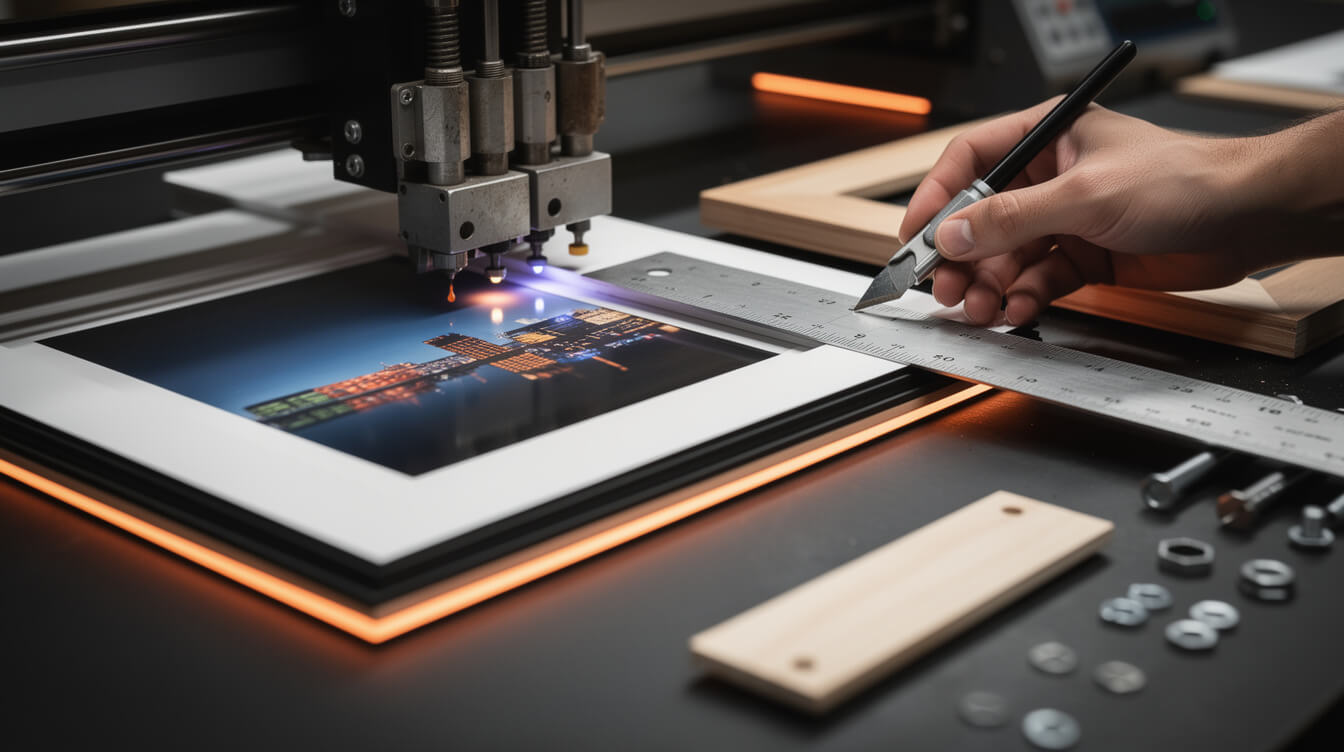
Understanding the production process helps you write better product descriptions and set buyer expectations correctly. Framed prints are not sublimation products. Sublimation requires polyester substrates. Framed prints use a different method.
Most framed prints in the POD ecosystem use inkjet printing on photo paper or fine art paper. The printer applies pigment inks to a coated paper stock. Pigment ink is preferred for archival quality because it resists fading over time, which is a detail worth mentioning in your listings, particularly in the gift and home decor segments.
After printing, the assembly sequence is:
- A mat board is cut to frame the image. The standard mat is white or off-white, creating a border between the print and the frame edge. Some providers offer black mat options for a gallery-modern look.
- The print and mat are assembled into the frame. Frames are typically wood (in natural, black, or white finishes) or aluminum for a more contemporary style.
- Glass or acrylic is placed over the front. Acrylic is lighter for shipping and shatterproof, which reduces damage-in-transit risk. Glass offers higher optical clarity.
- The finished product is packaged for safe shipping, typically with corner protectors and a rigid backing board.
The product arrives ready to hang. Most come with basic hanging hardware included. Common standard sizes: 8×10″, 11×14″, 12×16″, 16×20″, 18×24″. Larger formats increase base cost and shipping weight significantly.
Design specs: you submit an image file (JPEG or PNG) at the correct resolution for the print size. At 150 DPI minimum, a 16×20″ print requires an image that is at least 2,400 x 3,000 pixels. AI-generated artwork can easily hit this specification, which matters for the section below.
Custom framed print unit cost math: $20-40 base to $55-85 retail

Smash print-on-demand. Join the engine room.
One short email a week. Real numbers, real teardowns, the unfiltered economics behind every move.

The economics of custom framed prints differ from most POD products. Higher base costs require higher retail prices, but that is achievable because buyers expect to pay more for a framed, ready-to-hang product.
Here is a realistic breakdown by size, using typical Printify-network and Prodigi pricing:
8×10″ framed print:
Base cost: $18-24 (print, mat, frame, assembly). Shipping: $6-9. Total landed cost: $24-33. Retail price: $45-55. Gross margin: 30-40%.
11×14″ framed print:
Base cost: $24-32. Shipping: $8-12. Total landed cost: $32-44. Retail price: $55-70. Gross margin: 30-42%.
16×20″ framed print:
Base cost: $32-42. Shipping: $10-14. Total landed cost: $42-56. Retail price: $70-95. Gross margin: 33-44%.
Gross margin percentage at these price points is slightly thinner than some POD categories. Mugs run 45-55% gross margin. But the dollar margin per unit is higher. A 35% margin on a $65 framed print is $22.75 per sale. A 50% margin on a $14 mug is $7. When you are building toward a monthly revenue target, absolute dollar margin matters more than percentage margin.
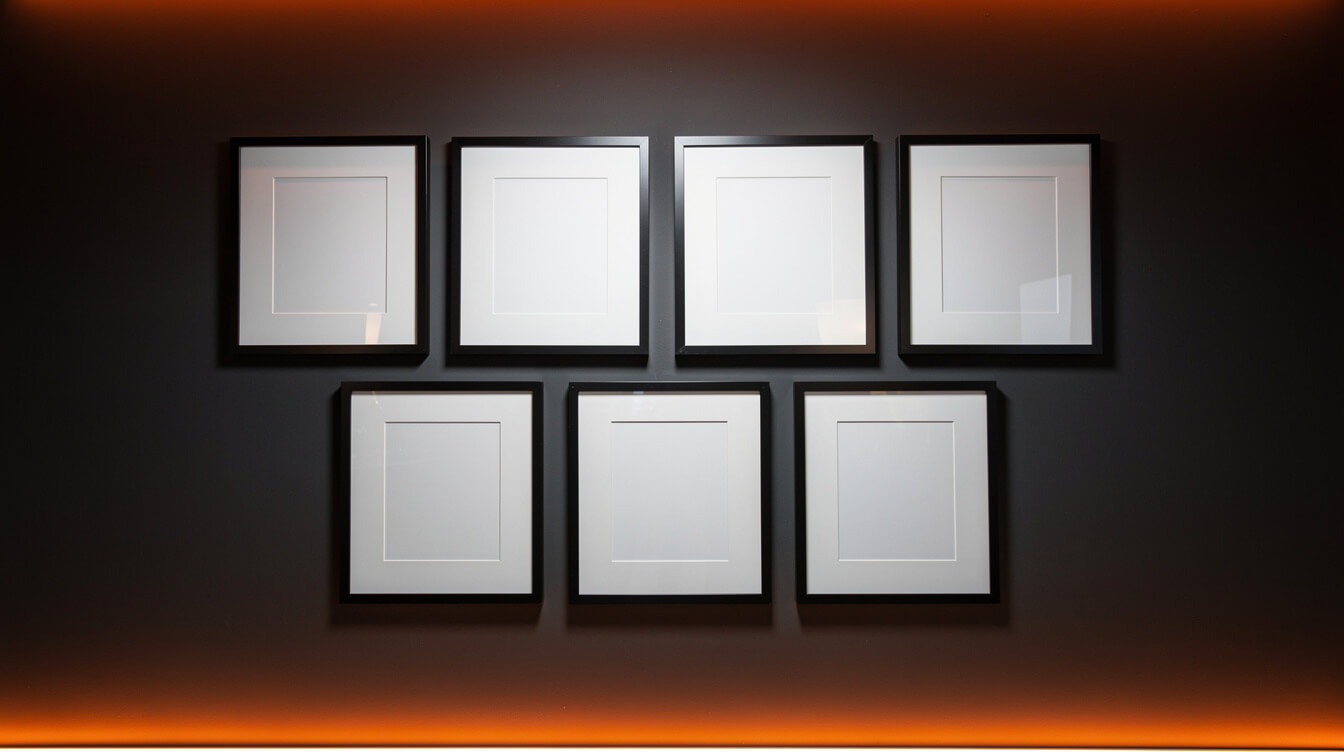
Bundle strategy shifts the economics further. A gallery wall set of three coordinated prints (8×10″, 11×14″, 16×20″) pushes average order value above $130. At $130 AOV and 35% margin, you keep $45.50 per transaction, roughly six times the mug equivalent.
Seasonal demand: Q4 (October through December) is the strongest window for framed prints, driven by holiday gift purchasing. Wall art also has a secondary peak in the January-March home renovation window. Listing and indexing your products before September gives you the best Q4 SEO positioning.
The AI-generated art opportunity: custom framed prints without a photography portfolio
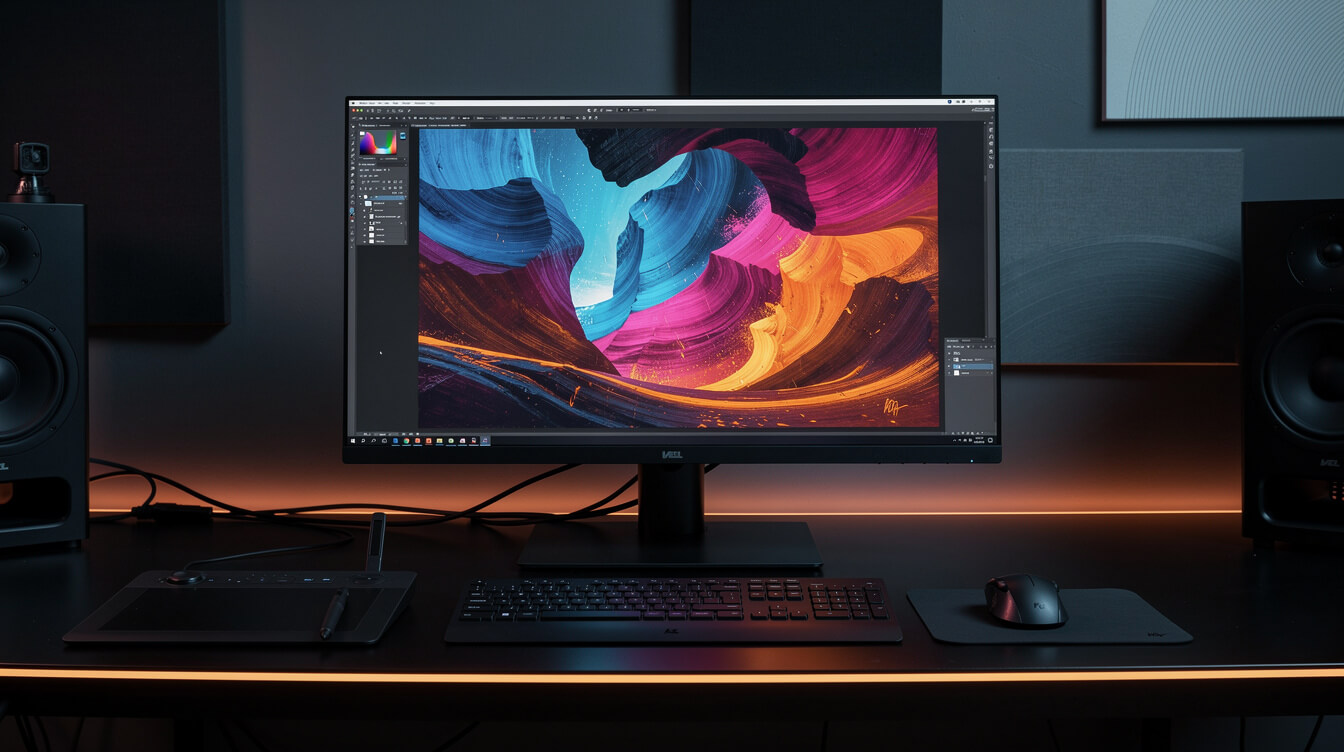
Traditional framed print stores sold prints of photographs: landscapes, city skylines, travel scenes. The assumption was that the seller had a photography portfolio. The AI art wave changed that constraint entirely.
You can now generate high-resolution artwork in virtually any style using AI image generation, produce a correctly sized output file, and list it as a framed print product. The buyer receives a finished, professionally framed piece of artwork. The production quality is identical regardless of whether the source image came from a DSLR camera or an AI pipeline.
What this means practically:
- You can target specific niches, such as Japanese watercolor landscapes or minimalist geometric art, without commissioning a photographer or illustrator.
- You can build entire collections in a single session. Twenty coordinated botanical prints for a farmhouse decor niche, for example, takes hours with the right AI pipeline rather than months of photography work.
- AI-generated art works particularly well in niches where the subject is conceptual rather than photorealistic: abstract art, motivational artwork, celestial maps, minimalist line drawings, and illustration-style pet portraits.
MEGA automates this step entirely. The platform generates the image, handles file sizing for specific print dimensions, and produces the product listing with SEO-optimized title and description in a single pipeline run. For sellers who want to launch a framed print collection without building every listing by hand, the MEGA POD automation tool is built for exactly this workflow.
One practical note: verify that your AI-generated output resolution meets the provider’s minimum DPI requirement before submitting. Upscaling a low-resolution output produces visible artifacts when printed at 16×20″ or larger. Always confirm the pixel dimensions match the print size specifications.
Niche verticals where custom framed prints convert: what buyers are actually searching for
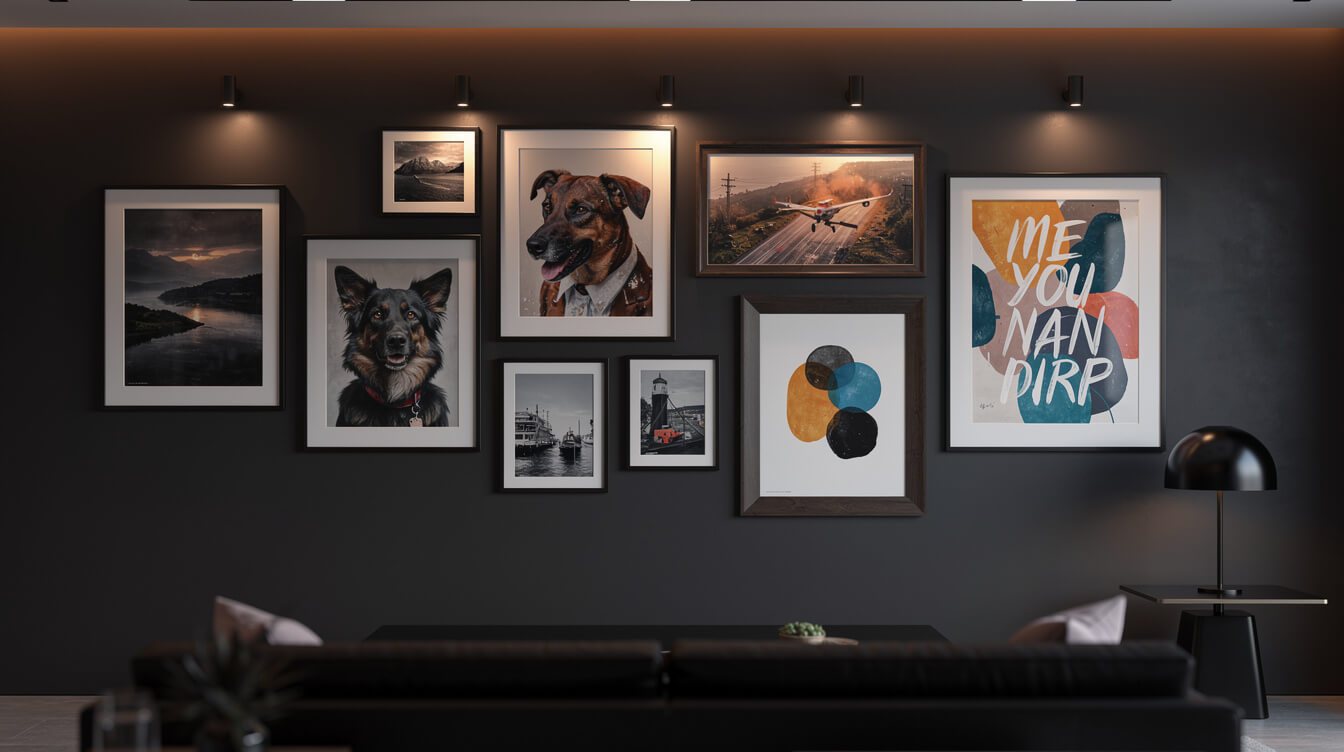
The custom framed print market segments by buyer intent. Knowing which niches convert at higher rates helps you build a focused product catalog rather than a generic art store.
Pet portraits: Strong, consistent demand. Buyers want an illustration-style portrait of their dog or cat, framed and ready to hang. This is a gift-heavy category with repeat buyers. The average order value skews higher because buyers treat it as a premium purchase, not a commodity product.
Travel landscapes: Buyers from specific cities, national parks, or destinations often search for the framed version specifically because it is going on a wall immediately, not into storage. A “Colorado mountain framed print” buyer is a different buyer from a “Colorado mountain poster” buyer, and typically willing to pay more.
Fine art reproduction in specific styles: Watercolor florals, botanical illustration, Japanese woodblock aesthetic, impressionist landscape. Buyers searching these styles are often decorating a room with a cohesive theme and want multiple coordinated pieces. Gallery sets are natural here.
Motivational and identity-specific artwork: This category is crowded in the generic sense, but niche-specific motivational art (specific sports, specific professions, specific values communities) still converts well. Specificity is the differentiator. “Nurse appreciation framed print” outperforms generic motivational wall art because it speaks to a specific identity.
Personalized family prints: Coordinate maps (the location where a couple met), wedding date artwork, family name prints with members’ names or birth years. Personalization requires a mechanism for customers to submit custom text or data. WooCommerce handles this natively with text fields and file upload fields in the product editor, at no additional plugin cost.
The common thread: emotional purchase intent. Buyers are not buying wall art because they need to cover a wall. They are buying because the artwork means something to them. That emotional driver is what sustains the $55-85 price point. For a broader comparison of wall art products across formats, see: custom wall art for POD sellers: metal, acrylic, framed, and poster options compared.
Shopify 1% override on custom framed print sales versus WooCommerce: the fee math at scale

The platform fee question matters more in wall art than in most POD categories because of the higher average order value. The Shopify 1% platform override applies to every order processed through Shopify using a third-party payment processor, in addition to standard transaction fees. That 1% is a tax on revenue growth, not a fixed cost.
At custom framed print price points, the math compounds:
At $65 average order value, 50 orders per month:
Shopify 1% override: $32.50/month. Annualized: $390/year.
At $75 average order value, 100 orders per month:
Shopify 1% override: $75/month. Annualized: $900/year.
At $85 average order value, 200 orders per month:
Shopify 1% override: $170/month. Annualized: $2,040/year.
These numbers apply before app fees. Personalization apps that let customers enter text or upload reference photos for custom framed prints typically run $19-49 per month on Shopify. WooCommerce native custom fields and file upload inputs are built into the product editor at no additional cost.
The owned-store math: WooCommerce does not charge a percentage of revenue. Your hosting and plugin costs are fixed. A seller doing $5,000 per month in framed print revenue pays the same fixed infrastructure cost as one doing $50,000 per month. The Shopify override scales with every sale you make. For a detailed breakdown of the full fee comparison: WooCommerce versus Shopify for POD sellers: the full fee math.
Is the custom framed print niche worth building on POD in 2026?

Yes, with the right setup.
Framed prints are not the easiest POD category to launch. The base costs are higher than apparel or mugs. Shipping costs are nontrivial. Damage-in-transit rates are higher than flat products because of the glass and frame structure. Most quality providers use reinforced packaging, but returns happen. You need a clear returns policy and realistic expectations about the occasional damaged shipment.
What makes the niche worth building despite those friction points:
The margin per unit in dollar terms is competitive with any POD category. A seller doing 100 framed print orders per month at $65 average order value and 35% gross margin keeps $2,275 per month before marketing costs. The same volume in mugs at $14 AOV and 50% margin keeps $700 per month. The framed print seller earns 3x more on identical order volume.
The SERP opportunity is real. The entire top 10 for “custom framed print” and related keywords is consumer photo framing services. None of those results speak to POD sellers, offer provider guidance, or explain the unit economics. That is an uncontested lane for an authoritative, seller-focused resource to rank.
The AI art angle removes the traditional barrier. Sellers without a photography portfolio can build entire product catalogs using AI image generation. That changes the economics of entry without changing the retail price.
For related product categories with similar dynamics, see: custom canvas prints for POD sellers and custom posters for POD stores.
The Q4 window is open. Publishing and indexing framed print listings in September gives you the best positioning for the October-December gift buying peak. The sellers who show up in search before the peak capture the demand. The ones who list in November compete against it.
Implement AI. 30x your throughput. Get a 30-min call with the founder.
Drop your details and book a free 30-minute discovery call. Personalized advice on your POD stack, your margin, and where AI fits. No pitch, no fluff.