Custom vinyl banners for POD sellers: which providers carry them, large-format printing explained, and the event niche math
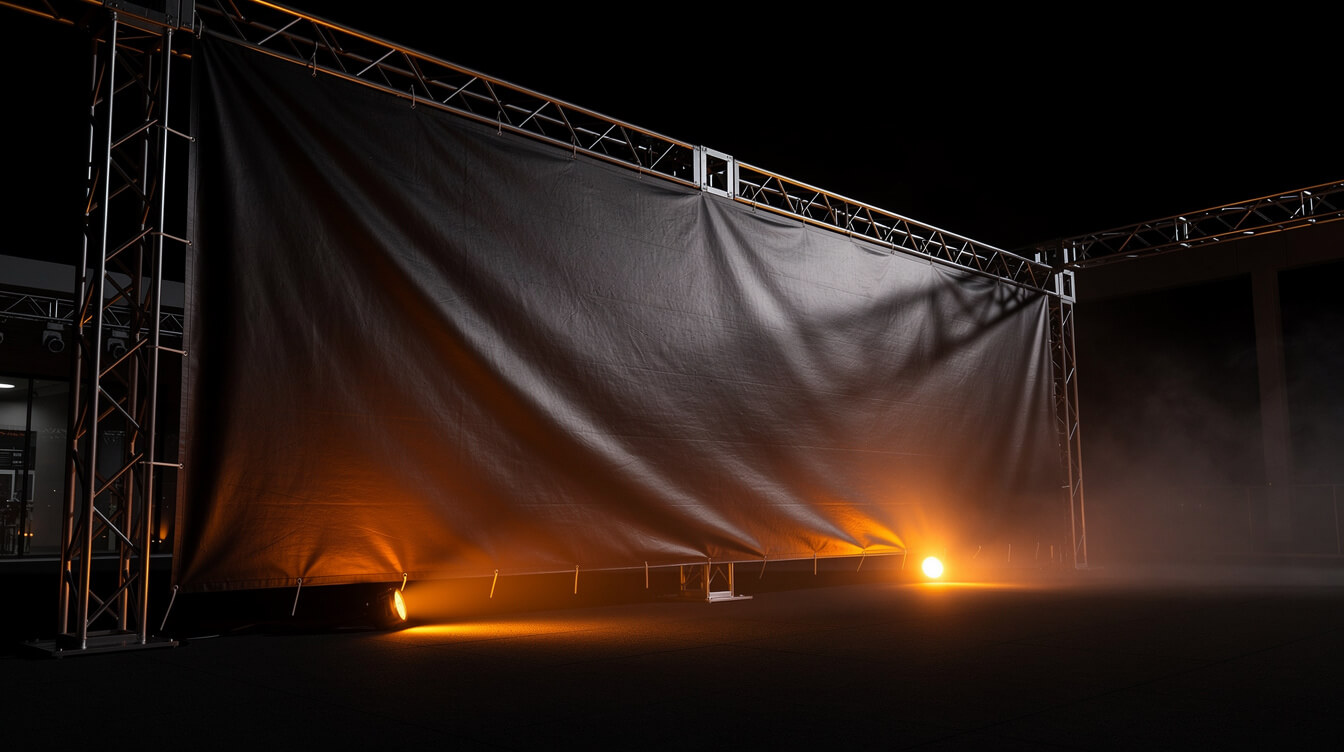
Custom vinyl banners are one of the most-searched print products in the event and small-business space, with 5,400 monthly searches and a keyword difficulty of zero. That sounds like a clear opportunity for POD sellers. Before you build a product listing, though, you need to know what the search results will not tell you: the standard POD platforms that power most online stores do not carry vinyl banners in their default catalogs. This article explains exactly where custom vinyl banners sit in the POD ecosystem, which sourcing paths actually work, and what the economics look like before you commit an afternoon to product setup.
Why the top search results for custom vinyl banners don’t help POD sellers
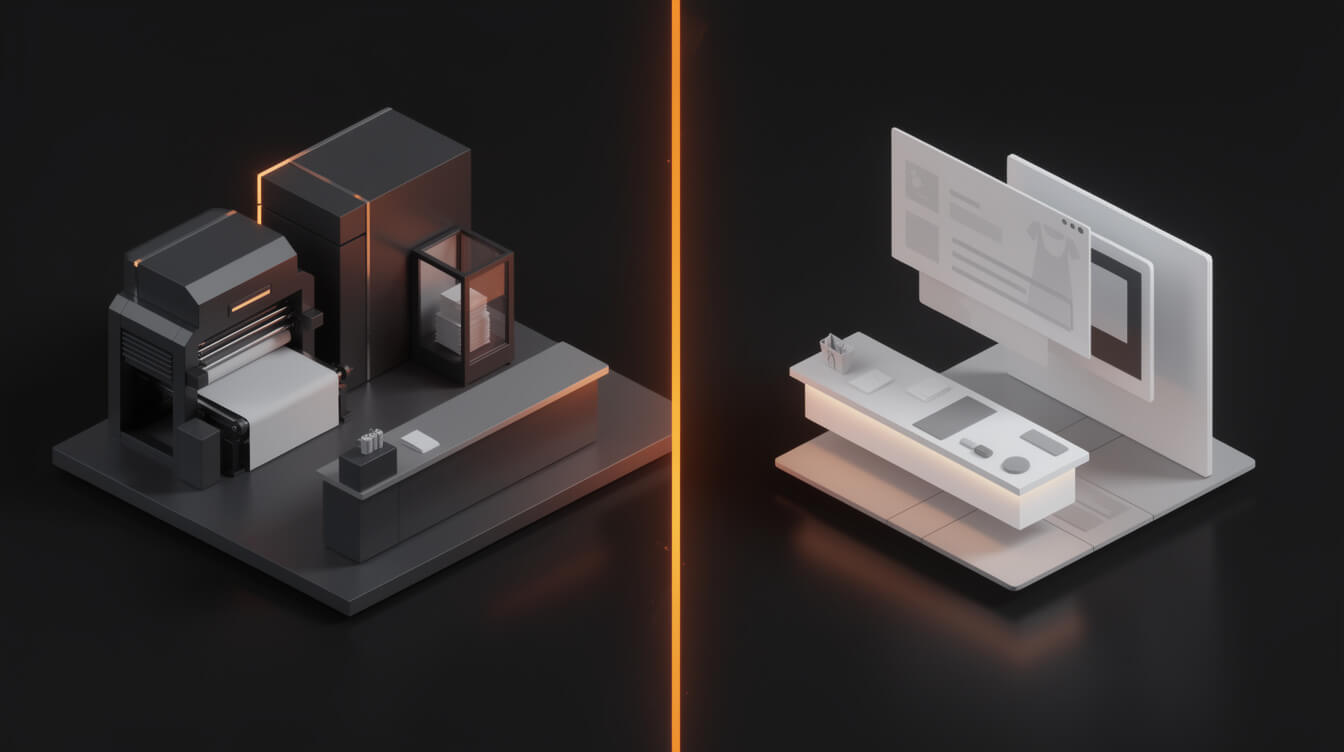
Search “custom vinyl banners” in Google and you will see the same five companies on page one every time: eSigns, BannerBuzz, VistaPrint, 48HourPrint, and a handful of regional large-format shops. Every single one of them is selling to the end buyer. Their product pages are optimized for the business owner who needs 10 banners for a grand opening, not for the POD seller who wants to build a recurring banner business.
None of those pages explain how a reseller sets up a no-inventory banner operation. None of them compare vendor economics from the seller side. None of them name which platforms support dropshipping large-format vinyl at no minimum order quantity. The SERP is 100% transactional, aimed at buyers, not builders.
That gap is exactly why this keyword is worth targeting. Any POD seller who writes an honest, numbers-first article about the banner reseller path owns the entire editorial lane by default. The buyer-facing sites will always outrank you for the commercial transaction, but they will never publish the analysis your audience actually needs.
The key question your buyers are asking is not “where do I order 10 banners?” It is “can I add vinyl banners to my store without holding inventory, and what does the math look like?” That question has no good answer anywhere on the internet right now.
Are custom vinyl banners available through Printful or Printify?
Let’s be direct about Printful first, because it is where most POD sellers start. Printful does not carry vinyl banners. Their product catalog is built around DTG apparel, sublimation on hard goods, and embroidery on headwear and accessories. Vinyl banner production requires UV inkjet or solvent inkjet printing on PVC flex, which is a completely different machinery category from anything in Printful’s fulfillment centers. This is not a gap Printful is expected to fill, because their operational model is oriented around soft goods and repeat-design products, not large-format rigid media.
Printify has a different structure. Their platform is a marketplace of third-party print partners rather than a single owned fulfillment network. That means their catalog varies by vendor, and catalog availability changes as new vendors join or leave the network. As of mid-2026, searching the Printify product catalog for “banner” or “vinyl” returns some large-format options from select vendors, but availability is inconsistent across regions. Before building a banner listing on Printify, open their product creator and search directly. Do not assume catalog availability based on what you read elsewhere, because vendor relationships shift.
The honest version of this guidance: Printify is the more likely path of the two major platforms, but you need to verify in the product creator before investing time in product setup. The custom flag niche runs into the same verification requirement, and the custom flag for POD sellers guide explains how to evaluate large-format vendors in the Printify network before committing to a listing.
How vinyl banner printing actually works (and the design specs that matter)
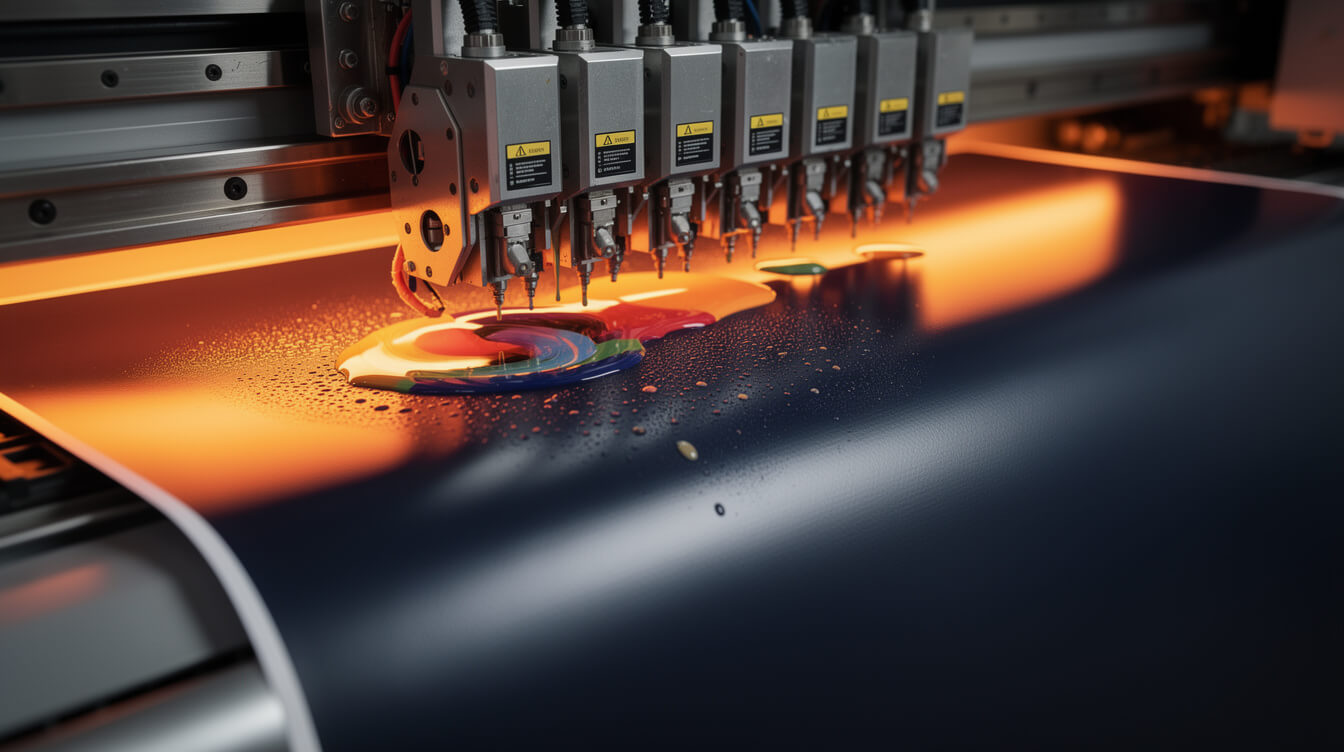
Understanding the print method matters for both your product descriptions and customer support conversations. Custom vinyl banners are produced using UV inkjet or solvent inkjet printing on PVC flex material. PVC flex is the industry term for the polyvinyl chloride substrate that makes up the banner body. It comes in two main weights:
- 13 oz PVC flex is the standard weight for indoor use, trade shows, and short-duration outdoor events. It is the most common substrate for event banners and what most vendors default to.
- 18 oz PVC flex is heavier, with a higher thread-count weave, and is rated for extended outdoor exposure. It holds up in wind and rain without tearing at the hems. This is the spec for construction site banners, long-term storefront signage, and anything expected to last more than a few months outdoors.
The inkjet process lays pigment-based or UV-curable ink directly onto the surface. UV-curable inks bond under UV light exposure during printing, giving excellent outdoor durability and vibrant color density. Solvent inks penetrate the vinyl surface slightly, giving good outdoor durability but requiring ventilated environments during production.
Finishing options that buyers expect
The base print is just the start. Finishing options significantly affect how the banner is used and how long it lasts. Hemming reinforces edges sewn or welded around the perimeter to prevent fraying and tearing. Grommets are metal rings punched into the corners and sometimes along the edges, used to hang the banner with rope, bungee cords, or cable ties. Pole pockets are sewn sleeves along the top or bottom hem that allow a pole or rod to be inserted for display stands or fence mounting.
Finishing adds $0 to $5 per banner at wholesale, depending on the vendor. Build finishing into your default SKU. Buyers who receive an unfinished banner without grommets will be frustrated when they go to hang it.
File specification basics
Resolution: 100 to 150 DPI at print size is the standard for large-format vinyl. A 2×4 ft banner at 100 DPI requires a 2,400 x 4,800 pixel file. Color mode: CMYK for accurate color reproduction on UV/solvent inkjet printers. Bleed: most vendors require 0.5 to 1 inch of bleed on all sides to account for hemming and grommet placement. Always download the vendor template for the specific size you are listing. Keep critical design elements at least 1 inch from the edge on all sides, because grommet hardware placed at corners and along the top hem can obscure content too close to the edge.
POD-adjacent sourcing paths for custom vinyl banner resellers

Smash print-on-demand. Join the engine room.
One short email a week. Real numbers, real teardowns, the unfiltered economics behind every move.

Because vinyl banners fall outside the standard Printful and Printify apparel catalog, POD sellers who want to carry them have three workable paths. Each has different MOQ, margin, and operational complexity.
Path 1: White-label large-format services
Several online large-format print vendors operate what functions as a white-label dropship model. The customer places an order on your store, you upload the file and shipping address to the vendor, and they ship directly in plain packaging. No inventory, no minimum order. Vendors in this category include StickerMule (banner sizes up to 4×8 ft), GotPrint, PSPrint, and similar national large-format shops. Pricing at single-unit quantity is $15 to $30 depending on size, with turnaround typically 3 to 5 business days plus shipping.
The limitation here is manual order routing. Unless you build a custom integration, every banner sale requires you to log into the vendor portal and manually place the order. At low volume (fewer than 20 orders per month) this is manageable. At higher volume it becomes a bottleneck that needs either a VA or a tech solution.
Path 2: Printify partner network vendors
If you find a banner product that ships to your target market in the Printify product creator, this is the cleanest path because order routing is fully automated. The order comes in through WooCommerce, Printify handles fulfillment, and you never touch the file manually. Verify the vendor’s turnaround time and quality rating before building listings around them. A vendor with a 4.2-star rating on Printify is a liability, not an asset.
MEGA’s research-to-product pipeline handles product setup automatically once you have identified a viable vendor, including image generation, SEO metadata, and listing publication. The MEGA engine reduces what takes most sellers 90 to 135 minutes per listing to under 7 minutes end-to-end.
Path 3: Wholesale local print accounts
The third path is building a relationship with a local or regional large-format shop that offers wholesale accounts. You take customer orders, prepare print-ready files to the vendor’s spec, and route orders in batches. This path has the highest margin potential at meaningful volume (25+ orders per month), but requires print-file production skills and relationship management. Not the right starting point for most POD sellers, but the most profitable structure at scale.
Custom vinyl banner unit cost math: what you keep at each size and volume tier
Banner economics are size-driven more than almost any other POD category. A 2×4 ft banner and a 4×8 ft banner use the same process and often the same vendor, but the production cost doubles and the retail price can triple. That asymmetry creates significant opportunity on larger sizes.
Single-unit white-label path
- 2×4 ft: $12 to $18 base + $8 to $12 shipping = $20 to $30 landed. Retail $40 to $50 = 25 to 50% gross margin.
- 3×6 ft: $18 to $28 base + $9 to $14 shipping = $27 to $42 landed. Retail $55 to $70 = 30 to 52% gross margin.
- 4×8 ft: $28 to $42 base + $12 to $18 shipping = $40 to $60 landed. Retail $90 to $120 = 35 to 56% gross margin.
5-unit batch orders
At 5 units, most vendors step down the per-unit cost by 15 to 25%. A 3×6 ft banner drops to $13 to $22 per unit landed, and at $60 retail the gross margin moves to 42 to 63%. The AOV for a 5-banner bundle order (for example, a business ordering banners for 5 locations) would be $300, putting gross dollar margin at $126 to $189 per order. That is a meaningful transaction for a POD store. The custom poster for POD stores article covers similar large-format print economics and AOV bundling strategy.
25-unit batch via wholesale
At 25 units via a wholesale account with a local large-format shop, production cost drops to $6 to $10 per unit on a 3×6 ft banner. At $60 retail, gross margin approaches 65 to 78%. This is the economics of a real banner business, not a POD side product. It requires capital for the initial batch or pre-sold orders before production, but the margin justifies the structure for sellers who build volume.
For most POD sellers starting out, the single-unit white-label path or Printify vendor path is the right entry point. The numbers are workable at retail, and the operational simplicity of not touching inventory preserves the POD model that makes the business scalable. The POD product catalog overview explains how to structure product listings for different MOQ levels within a single store.
Generate your first POD product in under 7 minutes
MEGA automates the full research-to-product pipeline: niche selection, image generation, SEO metadata, and live listing on WooCommerce and Printful. No Canva. No 6-hour manual workflows.
The 5 custom vinyl banner buyer niches worth building for
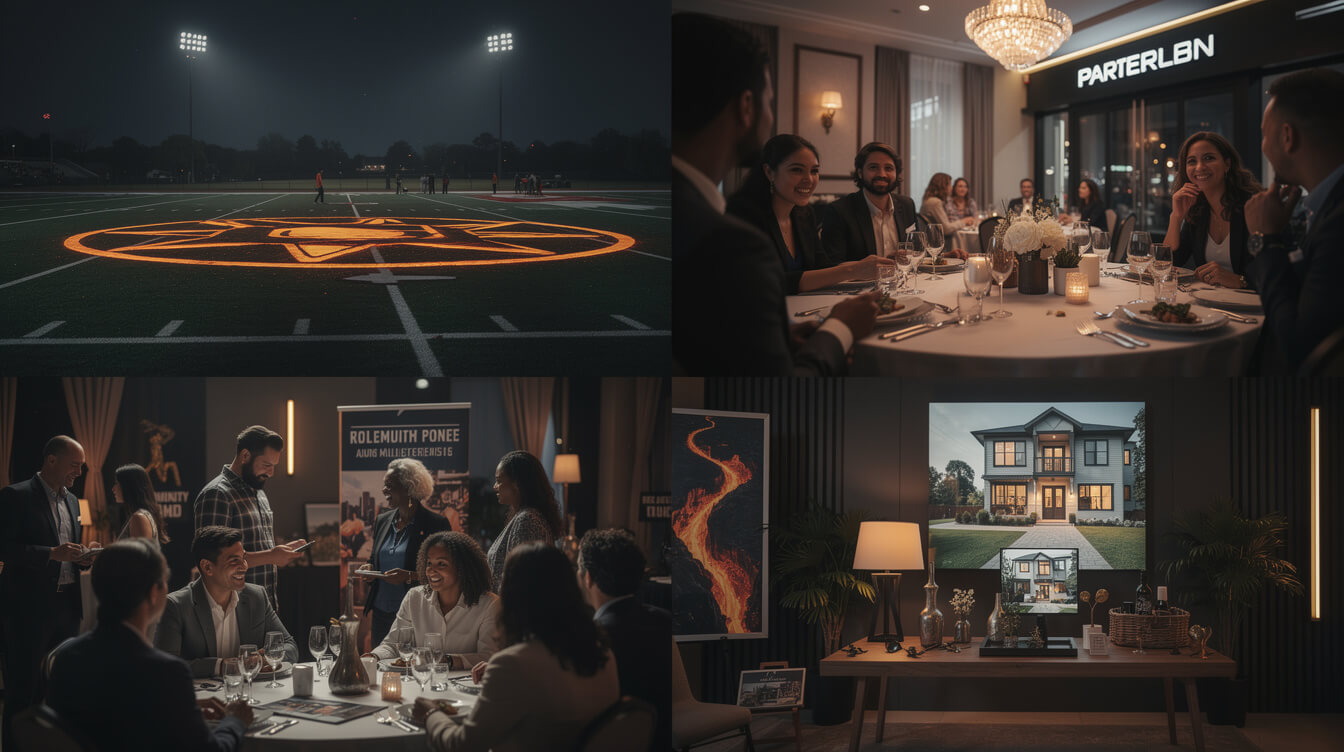
Vinyl banners are purchased across a wide range of buyer types, but not all niches are equal in terms of repeat purchase rate, price tolerance, and order complexity. These five have the best combination of searchable demand, reasonable price sensitivity, and manageable fulfillment requirements for a POD-adjacent banner operation.
1. Small business grand openings and promotions
This is the largest and most evergreen niche. Every new coffee shop, barbershop, nail salon, and retail store needs at least two banners: one for the opening and one for ongoing promotions. The buyer is a business owner who has a deadline, a specific size requirement, and is not particularly price-sensitive on a $60 to $80 item. Repeat purchase rate is moderate (2 to 4 orders per year per business), and referral potential is high because local business owners talk to each other.
2. Events, weddings, and parties
Wedding welcome banners, event step-and-repeat backdrops (even simple solid-color versions), and birthday milestone displays all fall here. The buyer is typically a planner or the event host themselves. Price sensitivity is low, deadline pressure is high, and personalization is the entire value proposition. Offering rush turnaround at a 20 to 30% premium captures significant incremental revenue.
3. Youth sports leagues and school organizations
Little League banners, high school spirit banners, and school fundraiser banners are repeat annual purchases. The buyer is a booster club parent or a school administrator, not a designer. Simple, bold designs on standard sizes are what they want. This niche benefits enormously from a banner design template that buyers can fill in with their team name and colors. Annual repeat cadence makes this one of the most reliable reorder niches in the banner category.
4. School and nonprofit fundraisers
Adjacent to sports but worth separating because the buyer dynamic is different. Fundraiser banners are often ordered in small batches (2 to 6 banners for different booth locations) with a limited budget but a hard event deadline. The decision-maker is usually a volunteer coordinator who does not buy banners regularly. First-page editorial rankings on even low-competition local-intent searches can capture disproportionate share here.
5. Real estate agents
Real estate agents use banners at open houses, property launches, and community events. They buy frequently (several times per year), have a professional services budget, and care more about turnaround and quality than saving $10 per banner. They are also likely to refer other agents in their office if the experience is good. This is a B2B-adjacent niche with the highest repeat purchase frequency of the five.
A smart positioning note: none of these five buyer types are searching for the same thing at the same time. Building product collections organized by use case (“event banners,” “sports team banners,” “business banners”) rather than just by size captures intent-specific traffic and converts better than a single generic banner product page.
Shopify 1% vs WooCommerce for custom vinyl banner stores: the annual fee math

Vinyl banners have a higher average order value than most POD products, and that matters when calculating platform fees. The Shopify 1% transaction override applies to every order processed through Shopify’s checkout, regardless of plan tier.
At a $65 average order value and 100 banner orders per month, the Shopify override alone costs $780 per year. Add the base Shopify plan at $468 per year and a product customization app at $228 to $588 per year (needed because Shopify’s native variant system handles standard t-shirt sizes but struggles when customers need to enter custom dimensions and upload files), and the platform overhead for a banner store on Shopify runs $1,476 to $1,836 per year.
On WooCommerce, the equivalent structure costs $180 to $360 per year in hosting, zero transaction override, and zero for product customization functionality because WooCommerce’s native product variation system handles custom text fields, file uploads, and conditional pricing without a paid plugin. The difference is $1,116 to $1,476 per year, in the operator’s favor on WooCommerce.
At 200 banner orders per month at $65 AOV, the gap widens further. The Shopify override alone hits $1,560 per year. Total platform overhead approaches $2,400 to $2,916 per year on Shopify versus $180 to $360 on WooCommerce. That is the equivalent of 37 to 45 additional banner orders per year that you are effectively handing to the platform rather than keeping as profit.
The complete WooCommerce vs Shopify fee comparison for POD sellers runs this math across six product categories. The conclusions are consistent: the override penalty scales with order value, and high-AOV categories like banners pay a proportionally steeper fee on Shopify than low-AOV categories like stickers.
Frequently asked questions about custom vinyl banners for POD sellers
Can I sell custom vinyl banners through Printful? No. Printful does not carry vinyl banners as of mid-2026. Their catalog is focused on apparel, accessories, home decor, and drinkware. For banner products, the primary paths are the Printify vendor network (verify availability in the product creator), white-label services like StickerMule or GotPrint, or wholesale accounts with local large-format shops.
What is the minimum order quantity for vinyl banners at white-label vendors? Most white-label large-format services offer true single-unit ordering with no minimum. StickerMule and GotPrint both sell single banners. The per-unit cost at single quantity is higher than at 5 or 25 units, but for a POD operation where you are not holding inventory, single-unit ordering is the correct starting point until you have validated demand with real sales.
How do I handle custom dimensions on WooCommerce? WooCommerce handles custom dimensions natively through custom product attributes and conditional pricing. Build your initial listings around standard sizes (2×4, 3×6, 4×8 ft) with clear dropdown options. On Shopify, variable-dimension pricing requires a third-party product customization app at $19 to $49 per month.
What turnaround time should I communicate to buyers? White-label single-unit orders from major vendors typically ship 3 to 5 business days after you place the order. Communicate this as production plus shipping time, not just shipping time. For event buyers, build in a buffer: a buyer who needs a banner for Friday’s grand opening should order by the previous Friday to have a safe margin for production, shipping, and any reprint if needed.
Where vinyl banners fit in a broader POD store strategy
Custom vinyl banners are not a primary product category for most POD stores. They are a high-AOV add-on that works well alongside a core product line when you serve business and event buyers. The buyer who orders a custom banner for their grand opening is also a candidate for branded apparel, custom drinkware for their team, and seasonal promotional materials. Start with a single white-label vendor, validate demand with 5 to 10 real orders, and graduate to a more automated or higher-margin path once you know the niche is worth building around.
Implement AI. 30x your throughput. Get a 30-min call with the founder.
Drop your details and book a free 30-minute discovery call. Personalized advice on your POD stack, your margin, and where AI fits. No pitch, no fluff.